
If you’re taking tirzepatide (Zepbound or Mounjaro) or still just comparing GLP-1 options, you may be wondering: “Does tirzepatide cause hair loss?” It’s a valid question, especially in midlife, when hormone changes can affect your hair. In short: Hair loss isn’t thought to be a direct side effect of tirzepatide—rather, it can happen temporarily due to rapid weight loss.
Keep reading to learn more about why hair shedding can happen while taking tirzepatide, how long it may last, and what you can do about it. And if you need extra support, Midi Health clinicians can help guide you through your weight loss journey and share strategies for keeping your hair healthy along the way.
Does tirzepatide cause hair loss? In clinical trials, a small share of people taking the weight loss drug reported hair loss. But here’s the important part: It’s not thought to be a direct effect of tirzepatide. Instead, hair shedding is more likely tied to rapid weight loss and is usually temporary.
Because GLP-1s are so popular—in a 2025 survey, 1 in 5 women ages 50 to 64 reported having used one—many people are searching online and wondering, “Does tirzepatide cause hair loss in women?” If you’re taking tirzepatide and noticing more hair in the drain or a thinner ponytail, it can be frustrating, especially if you feel like you’ve finally found a weight loss aid that’s working.
Find out what the trials—and the drug label—say about tirzepatide and hair loss, why shedding happens, and how menopause may play a role. We’ll also cover options for preventing and treating hair loss and when to talk with a clinician.
Does Tirzepatide Cause Hair Loss? The Short Answer
If you’re having success with tirzepatide but seeing more hair than usual in your brush, it’s natural to wonder: “Does Zepbound cause hair loss?”
Tirzepatide, the active ingredient in Zepbound and Mounjaro, isn’t known to damage hair follicles directly. Instead, the hair shedding that some people experience is more likely related to rapid weight loss. In other words, tirzepatide itself isn’t thought to make your hair fall out. But the changes that can come with taking it, including eating less and losing weight quickly, may trigger temporary hair shedding.
This same pattern has been noted with semaglutide (the active ingredient in Ozempic and Wegovy). But it’s not unique to GLP-1s. Hair loss can also follow rapid weight loss from other methods, including bariatric surgery and very low-calorie diets.
For most people, the hair shedding is temporary and reversible. But it is worth paying attention to, especially in midlife, when other factors may also contribute to hair loss.
What the Clinical Trials and Label Actually Say About Hair Loss
In Zepbound weight loss trials, hair loss was reported by 7.1% of women taking the medication, compared with 1.3% of women taking a placebo. The difference was much smaller among men: 0.5% of men taking Zepbound reported hair loss, compared with none taking a placebo.
Mounjaro hair loss looks a bit different. Mounjaro, which is approved to treat type 2 diabetes, does not list hair loss among the most common adverse reactions seen in placebo-controlled trials. However, alopecia (hair loss) has been reported since the drug came on the market. Because these reports are voluntary, we don’t know how often it occurs or whether Mounjaro directly causes it.
For context, the Zepbound prescribing information states that hair loss was associated with weight reduction, which suggests that weight loss itself may be an important factor. There are also limits to the data: The trials weren’t designed specifically to study hair loss, so they don’t directly tell us exactly what caused the shedding.
So far, evidence has not established that tirzepatide directly causes hair loss.
Why Hair Loss Happens on Tirzepatide: Telogen Effluvium and Nutrient Gaps
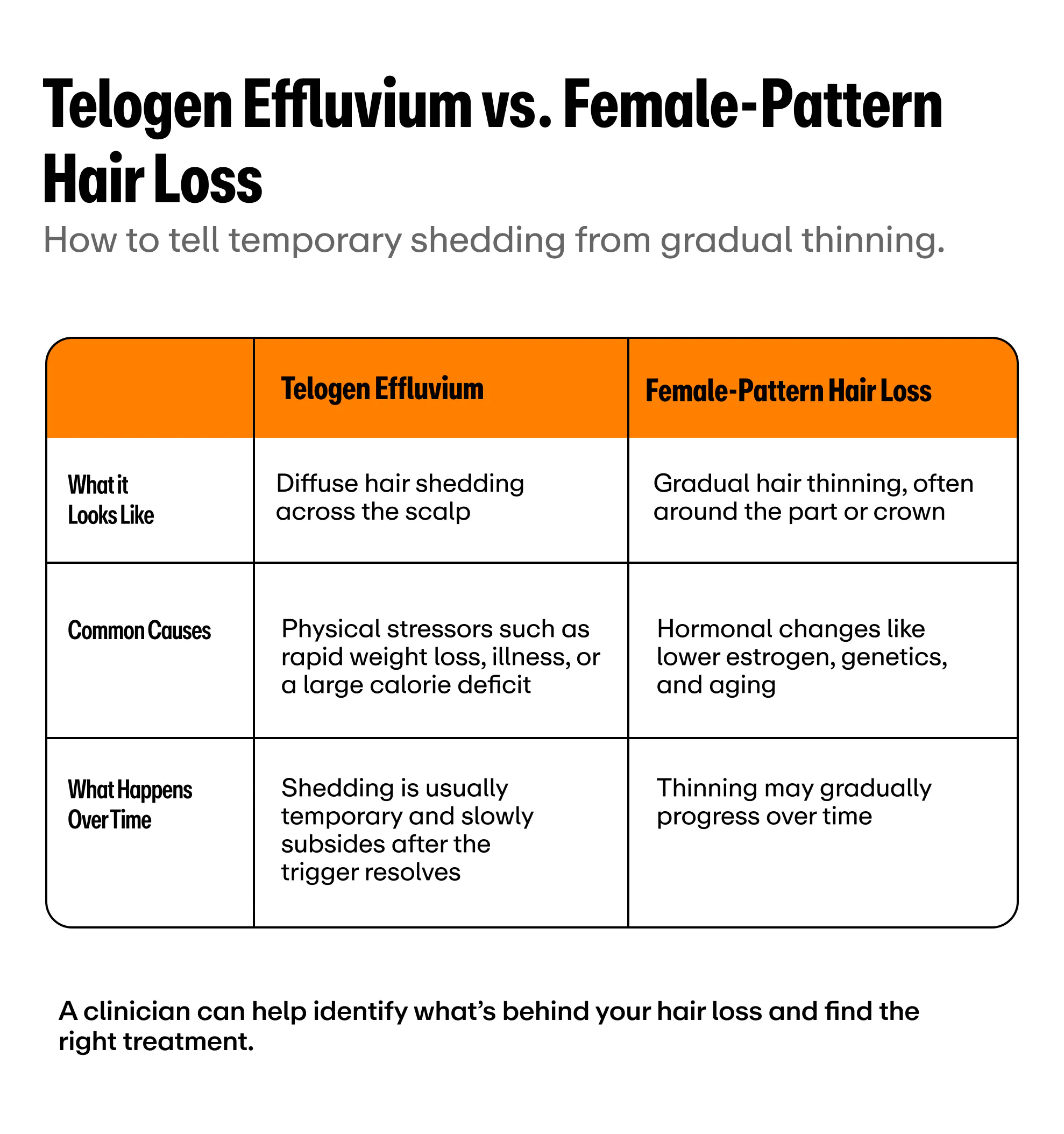
If tirzepatide isn’t directly causing the hair loss, then what explains all the extra strands you’re seeing in your brush? It could be due to a temporary type of hair shedding called telogen effluvium. When your body experiences a physical stressor, such as rapid weight loss, a large calorie deficit, or illness, more hair follicles than usual can enter the resting phase of the growth cycle at once. Those hairs typically shed a few months later.
For those taking a weight loss drug, rapid weight loss may be the trigger. Losing weight quickly can stress the body and disrupt the normal hair growth cycle, and greater weight loss may lead to more noticeable shedding.
You may also have less of an appetite on weight loss drugs, which can mean you’re getting less protein, iron, zinc, and other essential nutrients without even realizing it. Nutrient deficiencies, like low iron stores or vitamin D deficiency, can contribute to hair shedding. Other contributing factors may include high stress, thyroid changes, recent illness, or other medications you may be taking.
Tirzepatide side effects, such as nausea or food aversions, along with skipped meals early in treatment, can make it even harder to get adequate nutrition.
Why Midlife Women May Notice More Shedding: The Menopause Overlap
Women in midlife may experience more hair changes while taking tirzepatide or other weight loss medications. That’s because declining estrogen levels can affect the hair growth cycle. Shifts in the balance between estrogen and androgens (hormones such as testosterone) may also contribute to hair thinning around the crown and part, which is characteristic of female-pattern hair loss—even without weight loss medication.
Telogen effluvium related to rapid weight loss can occur on top of these hormonal hair changes, giving women in their 40s and 50s a double whammy when it comes to hair shedding.
Thankfully, an experienced clinician can help tell the two patterns apart. Telogen effluvium typically causes more diffuse shedding that begins a few months after a trigger, such as significant weight loss and eventually tapers off, while female-pattern hair loss tends to cause more gradual thinning, often seen as a widening part or thinning around the crown.
Other midlife factors can be at play, too. Thyroid disorders, iron loss from heavy perimenopausal periods, sleep disruption, and stress may all contribute to hair changes.
Hormone therapy (HRT, now commonly referred to as menopause hormone therapy, or MHT) isn’t prescribed specifically for hair loss. But because hormones can affect hair growth, it may be part of your treatment plan if you’re experiencing menopause symptoms like hot flashes alongside hair changes.
A Midi clinician can help figure out what's contributing to hair changes in midlife and discuss treatment options that may work for you.

When Does Shedding Start, and What Does It Typically Look Like?
If you do experience hair shedding, it will typically begin 2 to 3 months after a trigger like significant weight loss, rather than in the first few weeks of starting tirzepatide.
Telogen effluvium typically appears as diffuse or widespread thinning across the whole scalp. You may notice more hair strands on your pillow or in the shower, rather than distinct bald patches.
Signs that may point to something other than shedding from rapid weight loss include patchy hair loss, scalp itching or scaling, eyebrow or body hair loss, or thinning that keeps progressing even after your weight stabilizes. If you experience any of these changes, talk with your clinician about getting an evaluation.
If your hair loss is related to weight loss, you can take heart that it is usually temporary. Once the trigger has resolved, shedding typically subsides, and new hair growth resumes. But hair grows slowly, so it may take up to 6 months for hair regrowth to start—and even longer to return to its previous fullness.
How to Reduce Hair Loss on Tirzepatide (Zepbound or Mounjaro)
While you can’t always prevent hair shedding while taking tirzepatide or another weight loss medication, you can do a few things to help reduce it and support healthy hair along the way.
Prioritize protein
Try to include protein at every meal, even when your appetite is low. Protein provides the amino acids your body needs to build hair. Midi clinicians recommend women aim for about 1 to 1.6 grams (g) of protein per kilogram of body weight per day, including food and supplements. For a 170-pound woman, that’s about 95 g per day.
Get your vitamins
Protein is only one factor. Iron, zinc, vitamin D, vitamin B12, and biotin all play a role in hair health. You can get these nutrients with a balanced diet that includes foods such as meat, fish, eggs, dairy, beans, nuts, seeds, and leafy greens.
If you’re concerned that you may not be getting enough of any key nutrient, talk with your clinician about whether testing or a supplement makes sense. For example, if low iron is a concern, your clinician may check your ferritin, a measure of your body’s iron stores. And be sure to mention if you take biotin, since it can interfere with some lab test results.
Pace your weight loss
Because rapid weight loss can trigger telogen effluvium, a slower, steadier pace—around 1 to 2 pounds per week—may be easier on your hair. If you’re losing weight very quickly or struggling to eat enough, talk with your prescriber about your dose. Never adjust your tirzepatide dose on your own.

Manage nausea
Take steps to manage nausea and food aversions, so you can continue to get the nutrition you need. Try small, frequent meals throughout the day, eat protein first, and stay hydrated.
Be gentle with your hair
Avoid tight hairstyles such as high ponytails or tight buns, excessive heat, and harsh chemical treatments. You could even consider treating yourself (and your hair) to a satin pillowcase. These steps won’t fix the underlying cause of shedding, but they can help limit additional breakage.
Mind the basics
Don’t forget the other factors that can affect your hair in midlife. Get enough sleep, manage stress, and work with your clinician to address perimenopause or menopause symptoms as they come up.
Treatment Options if Hair Loss Is Already Happening
If you’re noticing hair loss while taking tirzepatide, treatment depends on what’s causing it. Tirzepatide hair loss treatment may involve addressing underlying issues or considering hair growth treatments, depending on your needs.
Some options include:
- Consider topical solutions: Midi's Hair Regrowth serum is formulated to target the hormonal root of midlife hair thinning and reduce shedding, strengthen follicles, and support thicker-looking hair. You can also look into topical minoxidil (Rogaine), which is available over the counter. Minoxidil can promote hair growth, but be patient with results—it may take several months to see regrowth and 6 to 12 months to know how well it’s working. Know, too, that some people may also experience increased shedding when they first start topical minoxidil.
- Ask your clinician about low-dose oral minoxidil. This is an off-label prescription treatment that may help support hair growth. A healthcare professional may consider oral minoxidil for hair loss if the topical version didn’t result in noticeable changes for you or otherwise wasn’t right for you.
- Ask about spironolactone or other options: Spironolactone is another off-label treatment your clinician may discuss with you if you have female pattern hair loss. Other options, such as platelet-rich plasma (PRP), may also be worth discussing, depending on the type and cause of your hair loss.
- Check for underlying contributors: Depending on your symptoms and hair loss pattern, your clinician may recommend lab work to check for issues such as low iron or vitamin D levels or thyroid problems.
- Talk with your clinician about treatment for underlying conditions: If testing finds an underlying issue, treating it may be part of your hair loss plan
Hair shedding doesn’t necessarily mean you need to stop tirzepatide. Shedding related to rapid weight loss usually improves once the trigger has passed, while stopping your medication may lead you to gain some of the weight back. Discuss any medication changes with your clinician first.
When to Talk With a Clinician (and How Midi Can Help)
A Midi clinician can help with concerns about hair loss. They can help figure out whether what you’re seeing is likely tied to weight loss, hormonal changes, or something else.
A more in-depth evaluation, including a visit with a dermatologist, may be appropriate if shedding lasts well beyond 6 months, you have patchy hair loss or scalp symptoms, or your hair keeps thinning even after your weight has stabilized.
Your clinician will likely review your medication and weight loss history. They may also go over your diet and order lab work to check for issues such as low iron or vitamin D levels or thyroid problems.
To get the most out of your visit, bring specific questions such as:
- What could be causing my hair loss?
- When should I expect my hair to start growing back?
- Is there anything I should change about my nutrition or treatment?
That way, you can get personalized answers based on what’s going on with your hair and overall health.
Hair loss can have more than one cause in midlife. Midi clinicians consider your entire health journey, including your tirzepatide dose, the pace of your weight loss, and hormonal factors like your menstrual cycles and menopause status. They will work with you to coordinate a treatment plan that includes menopause care and hair loss treatment when needed. You can book a visit to discuss what’s behind your hair loss and what you can do about it.

Key Takeaways
- Hair loss has been reported in people taking tirzepatide, but current evidence suggests the shedding is more likely related to rapid weight loss than a direct effect of the medication on hair follicles.
- Telogen effluvium can cause diffuse hair shedding a few months after a physical stressor like significant weight loss, but it's usually temporary. Eating less and not getting enough key nutrients may also contribute to shedding.
- Women in midlife may notice more shedding because menopause-related hormonal changes can affect hair at the same time.
- Getting enough protein and key nutrients, pacing weight loss, managing medication side effects such as nausea, and treating your hair gently may help reduce shedding while you lose weight.
- A clinician can help identify contributing factors and recommend treatments such as minoxidil when appropriate.
Frequently Asked Questions (FAQs)
Will my hair grow back after tirzepatide?
In most cases, yes. If your hair loss is caused by telogen effluvium related to rapid weight loss, the follicles aren't permanently damaged. Once your weight stabilizes, shedding should slow and new growth can begin, although it may take several months to notice a difference.
Which is worse for hair loss, tirzepatide or semaglutide?
There isn’t enough evidence to say that one medication is worse for hair loss than the other. Hair shedding has been reported with both tirzepatide and semaglutide, and research suggests that significant or rapid weight loss may be an important factor rather than a direct effect of either drug.
How to prevent GLP-1 hair loss?
You may not be able to prevent hair shedding entirely, but you can reduce potential triggers. Aim for a sustainable pace of weight loss, prioritize protein and adequate nutrition, manage nausea or other side effects that make it difficult to eat, and talk with your clinician if you’re losing weight very quickly.
Will hair loss from weight loss grow back?
Typically, yes. Hair shedding from weight loss (telogen effluvium) is generally temporary. Once the physical stressor has resolved and your weight and nutrition have stabilized, the normal hair-growth cycle can resume. Keep in mind that hair grows slowly, so returning to your previous fullness can take several months or longer.
How long does hair loss from tirzepatide last?
There’s no single timeline. But hair loss related to weight loss while taking tirzepatide typically begins a few months after significant weight loss, and the shedding itself generally lasts less than 6 months. Hair growth may take up to 6 months to begin, and it can take longer for your hair to regain its previous fullness.
If you’re in perimenopause or menopause and want guidance from clinicians who specialize in women’s midlife health, book a virtual visit with Midi today.
Hormonal change is at the root of dozens of symptoms women experience in the years before and after their period stops.
Our trained menopause specialists can help you connect the dots to guide you towards safe, effective solutions.
Whether you need personalized guidance or a prescription routine to tackle symptoms—including brain fog, hot flashes, sleep trouble, mood swings, and weight gain—we’ve got you covered. Learn more here.
Midi’s mission is to revolutionize healthcare for women at midlife, wherever they live and whatever their health story. We believe that starts with education, to help all of us understand our always-changing bodies and health needs. Our core values guide everything we do, including standards that ensure the quality and trustworthiness of our content and editorial processes. We’re committed to providing information that is up-to-date, accurate, and relies on evidence-based research and peer-reviewed journals. For more details on our editorial process, see here.