

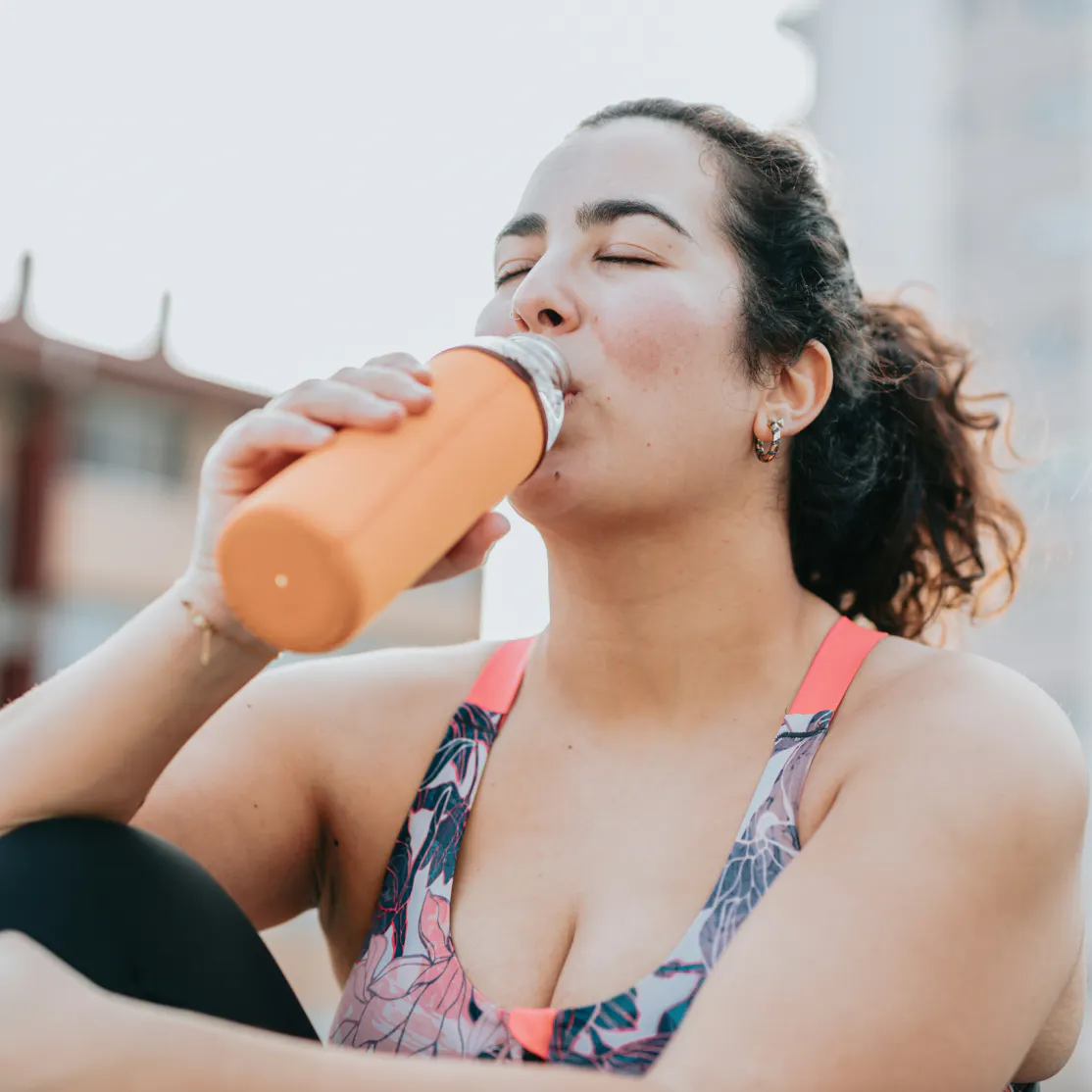
The best protein supplements for women can help you maintain strong muscles and support metabolic health—even when midlife hormonal changes make both more difficult. Protein powders for women are not substitutes for a well-rounded diet, but they can fill gaps in your nutrition and provide easy, concentrated sources of protein. Ultimately, the best supplement for you depends on your goals, preferences, and habits. Keep reading to learn more about protein supplements, and don't be afraid to reach out to a healthcare professional, such as a Midi Health clinician, for unique nutrition guidance.
Protein supplements for women are everywhere you look: supermarkets, big-box stores, and social media. No matter your health goals, someone (or some ad) has probably told you that eating more protein will do the trick—and it might be true.
The question is: Do you actually need a protein supplement, or can you meet your protein needs through food alone?
The answer matters more than ever during perimenopause and menopause. Our muscle mass peaks around age 30 before dropping about 3% to 5% per decade. Meanwhile, gut hormones that regulate appetite fluctuate, making weight gain easier and weight loss harder to achieve.
Protein helps maintain muscle and supports body-composition goals. However, the best protein sources depend on your diet, activity level, underlying health, digestive tolerance, and personal preferences.
We reviewed the research and consulted medical experts to help you understand when to tap into protein supplements, which ones to choose, what to skip, and how to use them without overcomplicating your routine.
Protein Supplements for Women: Do You Need One in Midlife?
If you eat enough protein-rich food, you don’t need protein supplements. It’s totally possible—and preferable—to get all the protein you need through dietary sources like eggs, Greek yogurt, turkey, chicken, and tofu.
However, sometimes convenience, timing, appetite problems, or food preferences get in the way and make it hard to hit your goals with a whole-food approach. That’s when a supplement can give you an assist.
“Protein supplements can be a really helpful tool, especially in midlife, when your protein needs are higher, but your appetite may be lower,” says registered dietitian nutritionist Chelsea LeBlanc, RDN, the owner of Chelsea LeBlanc Nutrition in Nashville. “I see this a lot with women who have busy schedules. A lot of times maybe they skip a meal or don't like breakfast or just aren't really hungry in the morning.”
Low appetite is also a common problem in women taking GLP-1 agonists for weight loss, a time when protein is especially important to help you retain muscle while you lose fat.
Keep some protein powder on hand to help you fill the gaps: “You can blend it into a smoothie, even stir it into oatmeal, or add it into coffee whenever your mornings are hectic, or even just have a premade shake,” LeBlanc says.
Protein supplements can also aid recovery after strength training. “Right after a workout, if it's going to be a couple hours until you're able to throw together a real meal, having something in that 30-minute window can help ensure that you're initiating the muscle repair process,” says Alissa Palladino, RDN, CPT, a registered dietitian nutritionist and certified personal trainer based in Atlanta.
Think of protein supplements as tools to help you meet your protein needs, especially when life gets busy or protein-rich foods are unavailable. They’re not shortcuts or miracles that can undo the effects of an otherwise poor diet or sedentary lifestyle.
Why Protein Matters More in Perimenopause and Menopause
“As estrogen declines, we naturally start to lose muscle mass and see shifts in body composition, so maybe a little bit more belly fat or slower metabolism,” LeBlanc says. “Then on top of that, the aging itself makes our bodies actually less responsive to protein, so that means that we actually need more protein to get the same muscle-building benefit that we used to from less.”
By consuming sufficient protein, you support your muscles, metabolism, bone health, and energy levels, so you can stay strong and do the things you want to do.
However, if you're adding protein without exercise, you’re not getting the full benefits. “Protein alone isn't really going to build muscle,” says Palladino. “You have to go to have to go to the gym and actually do the work, too.” She recommends at least 2 days of strength training per week.
You also need sleep to maximize energy and recovery. And you need an overall balanced diet rich in other key nutrients, like fiber, to support your metabolism.

Protein Powder for Women: The Main Types, Explained
There are a few different types of protein supplements for women.
Whey protein
Whey protein derived from milk is one of the most common ingredients in protein supplements. Whey is a complete protein, which means it has all nine essential amino acids—histidine, isoleucine, leucine, lysine, methionine, phenylalanine, threonine, tryptophan, and valine—that you need to build muscle and other tissues.
Whey protein contains a higher concentration of these essential amino acids than other popular protein sources. Whey is highly effective at stimulating the synthesis of new proteins in muscle cells to help you build muscle, research suggests.
Casein protein
Casein protein, another milk-based option, also packs a high concentration of all nine essential amino acids. Compared with whey, casein digests more slowly, providing a less dramatic spike in muscle protein synthesis but a more lasting protein balance. That makes it a good choice for nighttime supplementation or situations when you’ll have a long stretch between meals.
Plant-based protein (pea, soy, pumpkin seed, hemp)
If you prefer a dairy-free or vegan option, try a plant-based protein powder. They’re often made with pea, soy, pumpkin seed, or hemp proteins. While these plant-based powders have lower concentrations of essential amino acids than whey or casein, research suggests they can still support muscle growth and strength.
Collagen
Another popular protein supplement making the rounds is collagen. It’s useful in some routines, but it’s not a complete protein. “It doesn’t replace complete proteins with all the amino acids you need to build and repair muscles and all the organs and structures in your body, but it has a specific kind of use for joint health and bone health,” Palladino says. She recommends collagen as an add-on to complete protein sources for athletes recovering from injury.
The best protein ingredients for you will depend on your tolerance, preferences, and goals, rather than the marketing claims on the product. While some protein supplements are targeted to women, you don’t have to buy a women-only formula.
How Much Protein to Look for in a Supplement
After reviewing all the research, medical experts from Midi Health recommend aiming for roughly 1.2 or 1.3 grams (g) of protein per kilogram (kg) of body weight per day, considering food and supplements combined. For a 170-pound woman, that’s roughly 95 g per day. For steady muscle repair, spread your protein intake throughout the day, aiming for around 20 to 30 g of protein per meal and 10 g per snack.
There’s no standard serving size for protein powder, but many products give you around 18 to 25 g of protein, enough for a hearty snack that can help you make progress toward your daily total.
A protein supplement can support—not take the place of—balanced eating. It shouldn't be your top protein source for the day. Use it as an add-on. Stir protein powder into oatmeal, pair a protein smoothie with avocado toast, or mix protein powder into your coffee at breakfast. Try a quick protein shake after a workout or for an afternoon snack.
How to Choose a Quality Protein Supplement
First, make sure the product is third-party tested to ensure the ingredients inside truly match what’s listed on the label. Next, check for a simple ingredient list that starts with complete protein sources and ends with minimal additives. Some artificial sweeteners, gums, and flavorings can bother sensitive stomachs. Some products are sweetened with added sugar instead; just make sure the product has fewer than 5 g.
If you have food allergies or sensitivities to ingredients such as dairy, soy, or gluten, check for those, too—they’re common ingredients in protein powders.
From there, taste and mixability can be practical deciding factors. The best protein supplement for you is the one you’ll actually use consistently.
Protein Supplement Tablets, Protein Pills for Women, and High-Protein Pills
Protein supplement tablets and pills sound convenient, but they might not be the most practical way to meaningfully increase protein intake. The reason: Protein pills usually deliver far less protein per serving than powders or foods. You’d have to take several pills to get the same dose of protein you’d find in a serving of protein powder, ready-to-drink protein shake, or protein-rich snack.
In other words, high-protein pills are a misnomer, because you’ll get more protein scooping up the powder yourself. Protein pills may fit some routines, but they rarely replace the protein you’d get from other sources.
Our Top Picks for Protein Supplements for Women
These protein supplements are third-party certified and contain 18 to 30 g of protein per serving from complete protein sources, with no more than 5 g of added sugar per serving.
Best for Protein Newbies in Perimenopause or Menopause
Optimum Nutrition Gold Standard Whey in Vanilla Ice Cream
This supplement contains 24 g of muscle-building whey protein per serving, with less than 1 g of added sugar.
Best for Athletes
This supplement contains 25 g of whey protein isolate per scoop, which digests faster than whey protein concentrate—a great choice to stimulate muscle repair after workouts. It contains zero added sugar.
Best for Busy Moms
Raw Nutrition Protein Isolate RTD
This ready-to-drink protein shake is a great grab-and-go option that provides 30 g of milk protein, with no added sugars.
Best for Dairy-Free or Plant-Based Diets
This protein powder packs 30 g of protein per scoop from peas, pumpkin seeds, and sunflower seeds, with no added sugar.
When Whey Protein Powder for Women Makes Sense—and When It Doesn’t
Whey protein powder for women is popular for a reason. It offers a complete amino acid profile, easy absorption, and proven recovery and strength benefits. It comes in a few different forms that can all help you build muscle: whey protein concentrate, isolate, and hydrolysate.
Whey protein isolate is filtered and purified from the concentrated form, while whey protein hydrolysate is partially predigested using enzymes. Whey protein isolates and hydrolysates tend to be a bit pricier than whey protein concentrates because of the extra processing.
Whey protein might not work well for women with dairy sensitivity or lactose intolerance, especially the concentrated form, which has the most lactose. However, “some people with lactose intolerance can tolerate whey protein isolate instead of whey protein concentrate, because it has much more of just the protein and less of the lactose sugar,” says Palladino.
Some women also have a personal preference to avoid dairy products, making plant-based blends a practical alternative.
It’s easy to find protein powder for women, but you don’t need to buy a formula targeted for women specifically. The most important thing is that the product suits your needs and routines.
How to Use Protein Supplements Without Turning Them Into Meal Replacements
Start with a food-first approach to meeting your protein targets, considering your schedule and goals. Registered dietitian Jerlyn Jones, RDN, owner of The Lifestyle Dietitian in Atlanta, recommends keeping your fridge stocked with protein-rich, convenient foods you can grab on the way out the door to work or drop-off, such as hard-boiled eggs, cheese sticks, and small containers of Greek yogurt and cottage cheese.
Then, you can use a protein supplement as needed to bolster your breakfast, serve as a bridge between a workout and dinner, or give you a quick snack option on a busy day.
If you’re adding a protein supplement to a meal, make sure you’re including healthy fats and fiber from whole grains, fruits, or vegetables. For a smoothie serving as a snack or small meal on the go: “You can’t go wrong with a banana, berries, a handful of spinach or kale, and then a liquid that's also a good protein source, like milk or soy milk,” says Jones.
Experts don’t recommend relying on shakes as meal replacements for long stretches if whole-food meals are possible. The goal is to work more protein-rich foods into your routine.
Side Effects to Know and What to Avoid
Once you have the basics down (like third-party testing and ingredient quality), finding the right protein powder involves some trial and error. Taste matters, and with all the flavors and brands out there, you might find that some taste delightful and others are too sweet or cloying. Similarly, some products may have a chalky texture, while others blend up smoothly.
Some side effects can set in minutes to hours after taking your supplement, such as bloating or stomach upset. Sometimes the fiber in plant-based proteins, while beneficial, can cause gastrointestinal symptoms, especially if you’re blending them with other fiber-rich foods, says Palladino. Sugar alcohols like erythritol can have a laxative effect, especially if you eat multiple foods containing them over the course of the day.
Then there’s the potential long-term concern: Some products could be contaminated with toxic heavy metals like lead. Organizations like Consumer Reports and the Clean Label Project have found concerning levels of lead in some protein supplements, especially plant-based powders. Lead can be present in the soil where the ingredients grow, or it might be introduced during processing. This is another reason why third-party testing is critical. (None of the protein powder brands we list above were flagged by Consumer Reports for concerning levels of heavy metal contamination.)
As in many facets of life, less is often more. “The simpler, the better with protein supplements,” says Palladino. “I’m always cautious of products with a lot of greens or proprietary blends of things.”
Powdered fruits and vegetables in protein supplements—or extra added vitamins or antioxidants—aren’t a substitute for the complete package of nutrients you get when you consume real produce.
“You still need to eat your fruits and vegetables, because there are so many benefits of that as far as all the fiber and all the other plant compounds and the volume it adds to your meal and the way it crowds out less nutritious food,” Palladino says.
It’s also important to consider your unique health needs when thinking about supplements. While protein supplements are safe for most healthy people, it’s always a good idea to check with a healthcare professional before starting a new supplement.
For example, a protein supplement might not be advisable if you have impaired kidney function or chronic kidney disease, says Jones. If your kidneys aren’t functioning well, they might not be able to handle the waste products from extra protein.
Working With a Midi Clinician on Protein and Midlife Nutrition
Protein supplements aren’t a standalone fix for any health concern, and they’re not a substitute for a well-rounded diet and exercise routine. However, they can be part of your midlife care plan and help you meet your protein needs to stay strong during menopause and beyond.
Before starting a supplement, talk with a healthcare professional, like a Midi clinician, about your goals and how protein can complement other lifestyle strategies or medical treatments.
Maybe you’re noticing appetite changes, or you’re trying to amp up your exercise and lose weight. Maybe you want to improve digestive health, build stronger bones, or sleep better. Protein is just one part of the equation when you’re trying to reach these goals. A healthcare professional can recommend additional strategies to help you get where you want to go faster.
If you’re noticing new fatigue, body-composition changes, or digestive issues, a clinician can help you pinpoint what’s wrong. It’s possible that you’re already eating enough protein, and your symptoms have another cause. Work with a clinician to find solutions for your unique situation.

Key Takeaways
- Eating enough protein (about 1.2 to 1.3 g per kg of body weight a day) can support muscle strength, body composition, bone density, energy, and other important health goals that become more challenging during the perimenopause and menopause years.
- Spread out your protein intake throughout the day, aiming for 20 to 30 g per meal and 10 g per snack.
- A protein supplement isn’t a must-have, but it can help you fill gaps when life gets in the way and protein-rich whole foods aren’t convenient or accessible.
- Choose a supplement that meets your preferences for taste and ingredients, but make sure it’s third-party certified for purity and quality.
Frequently Asked Questions (FAQs)
What is the best protein supplement for women?
The best supplement for you depends on your goals, preferences, and routines. Talk with a clinician about your eating habits, exercise routines, and any symptoms you’re noticing to decide whether a protein supplement makes sense for you and, if so, which one to try first.
What is the best form of protein for women?
Whey protein has muscle-building properties that have been studied by scientists for decades, making it a good starting point for many protein newbies. However, it’s not the best option for everyone, especially if you have dietary allergies, sensitivities, or personal preferences that make you want a dairy-free option.
Can women take protein supplements daily?
If you’re otherwise healthy, yes—but dietitians recommend working more whole-food sources of protein into your diet over time instead of relying on protein supplements every day. Think of protein supplements as tools to help you fill the gaps when you’re falling short of your protein goals. Add more healthy protein sources, such as turkey, chicken, cottage cheese, yogurt, eggs, nut butters, and seeds, into your daily routine instead of using protein powder every day.
What’s the healthiest type of protein supplement?
The answer depends on your needs and goals, along with any food allergies or sensitivities that might limit your options.
What are 5 signs you need more protein?
Sometimes, there aren’t any. However, dietitians notice that women who don’t eat enough protein often report:
- weight gain
- body fat in new places
- increased desire to snack (which can be a sign of high blood sugar)
- trouble feeling full
- thinning hair
To understand how much protein you’re really eating, track your intake for a few days.
“Food logs can be super helpful in identifying how much you are eating, and you don’t have to do it for a long time,” says LeBlanc. “Even just a couple days can really help you capture how much you actually are eating.”
If you’re in perimenopause or menopause and want guidance from clinicians who specialize in women’s midlife health, book a virtual visit with Midi today.
Hormonal change is at the root of dozens of symptoms women experience in the years before and after their period stops.
Our trained menopause specialists can help you connect the dots to guide you towards safe, effective solutions.
Whether you need personalized guidance or a prescription routine to tackle symptoms—including brain fog, hot flashes, sleep trouble, mood swings, and weight gain—we’ve got you covered. Learn more here.
Midi’s mission is to revolutionize healthcare for women at midlife, wherever they live and whatever their health story. We believe that starts with education, to help all of us understand our always-changing bodies and health needs. Our core values guide everything we do, including standards that ensure the quality and trustworthiness of our content and editorial processes. We’re committed to providing information that is up-to-date, accurate, and relies on evidence-based research and peer-reviewed journals. For more details on our editorial process, see here.