

If you've been on health-focused social media lately, you've probably seen BPC-157. It's being called a "wolverine peptide," praised by influencers for healing everything from achy joints to leaky gut, and positioned as something midlife women have been missing. And honestly? The symptoms driving that interest are real. Joint pain, slow recovery, gut issues, low energy...these are things clinicians at Midi hear about from women every day, and they deserve real answers. And we pay close attention when something gains momentum in our community, which is why we dug into the research on this one. What we found: the promise sounds compelling, but the evidence isn't there yet. The good news is that effective, proven options for what you're actually feeling absolutely are. Read on for what you need to know.
Heard a lot about peptides and the FDA recently? On July 23 and 24, the FDA's Pharmacy Compounding Advisory Committee (PCAC) is meeting to consider whether certain peptides, including BPC-157, should be added to the 503A Bulks List, which is a list of drug substances that the FDA has approved for compounding. On July 23, the committee recommended that BPC-157 be moved to the list so that the peptide can be legally prescribed and compounded in the future. But the PCAC’s guidance is a recommendation, not a final ruling—and for now, nothing is changing for consumers. BPC-157 still isn’t prescribable through legitimate compounding pharmacies. We need to wait and see if the FDA decides whether or not to follow the committee’s recommendations. Midi’s team of health experts are monitoring the regulatory and scientific landscape closely.
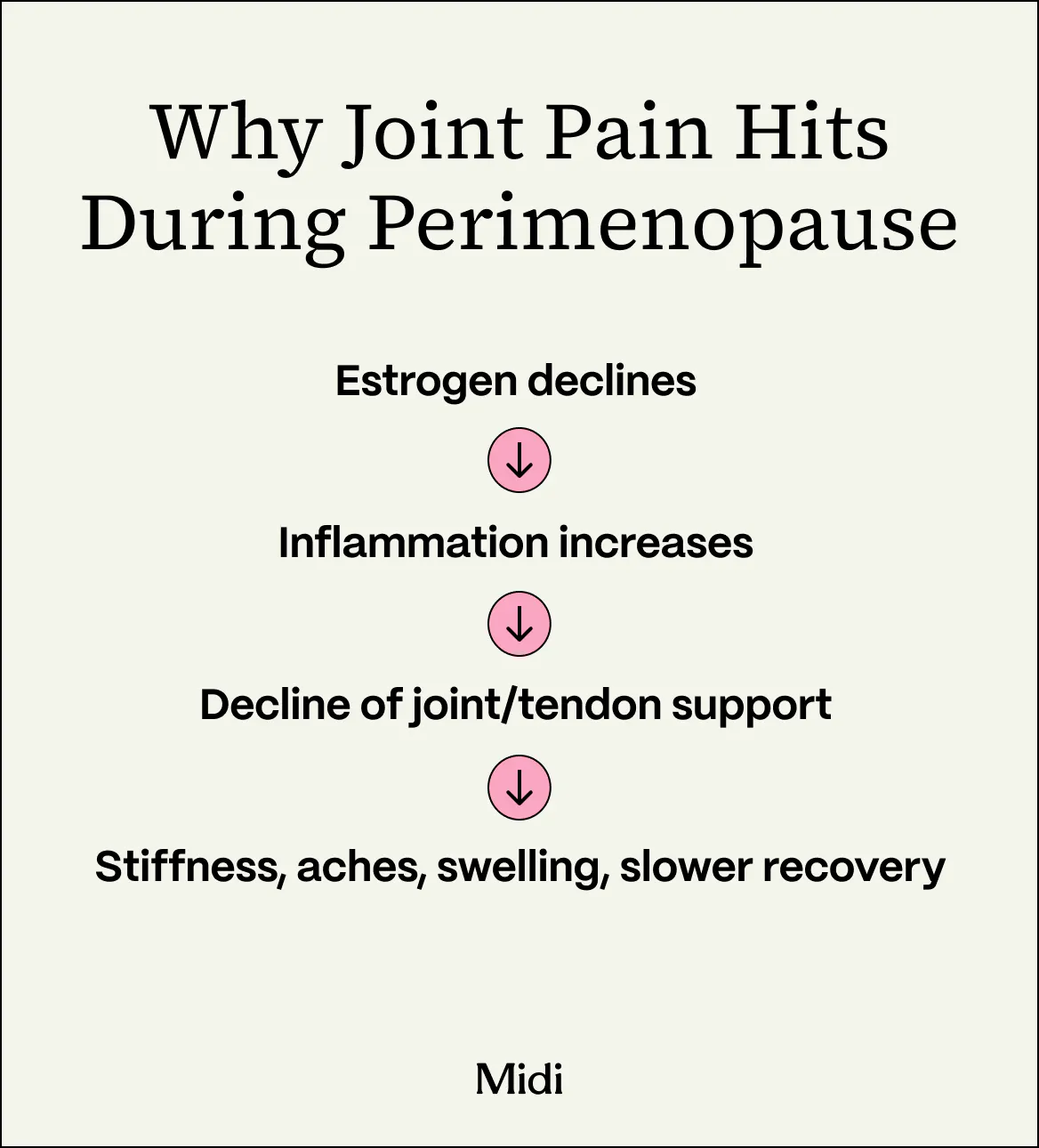
Perimenopause body aches can feel overwhelming at times—or, you know, every day. As a woman in midlife who has seen how simply bending down to unload the dishwasher can result in me tweaking my back, I know I’m not alone in this: Up-and-down estrogen levels can bring on all sorts of joint discomfort for women during this period of life.
So when peptide therapy came into play—more like, came crashing onto the scene—I felt as if I were behind the curve. Reality stars and people on the internet were chatting about a peptide I’d never heard of, called BPC-157, and, by their reports, they were feeling great.
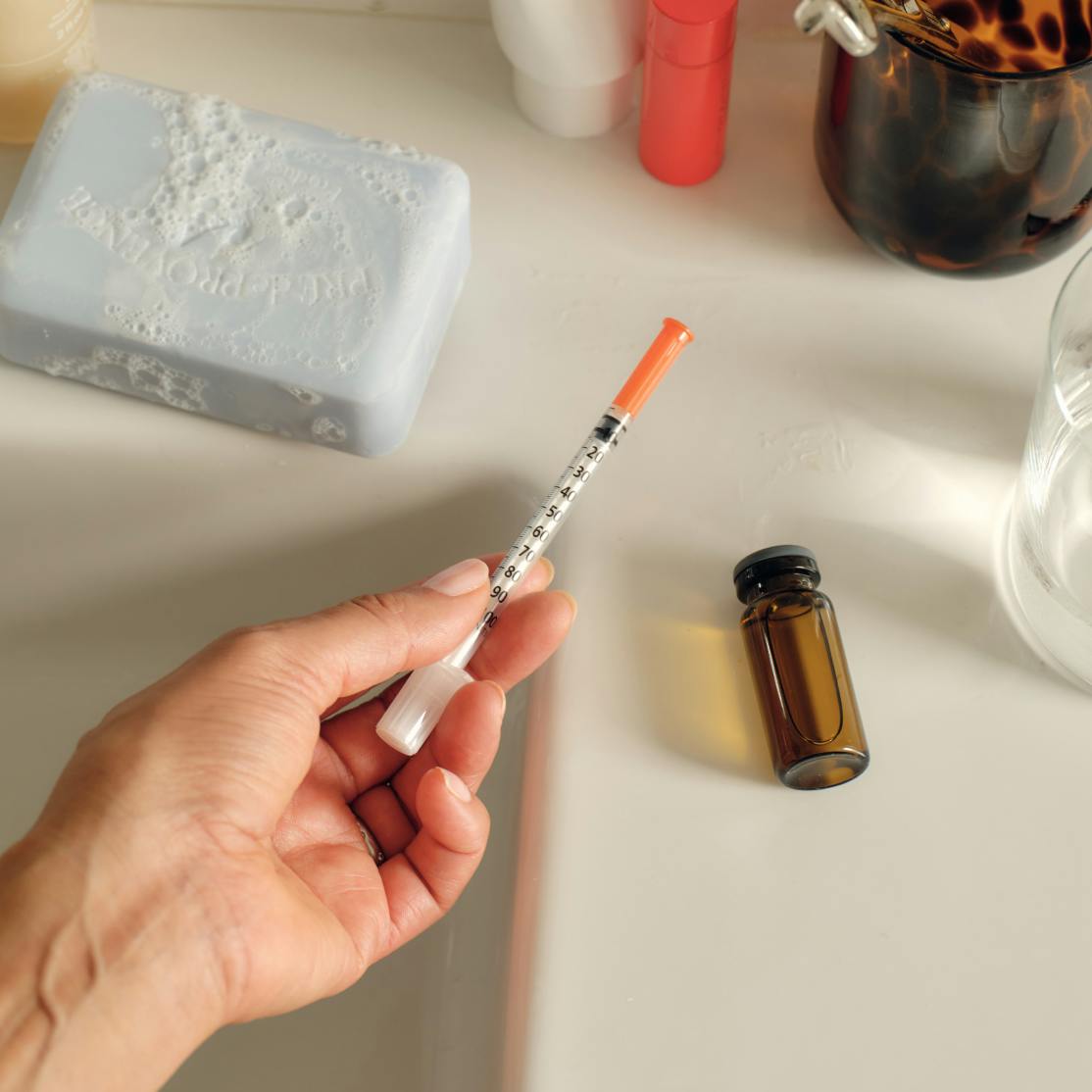
BPC-157, I learned, is one of the more common peptides used right now. It can be taken as an oral pill or injection, and it’s available from gray-market sellers online.
When your joints hurt or it takes longer to recover from a tough workout or your midlife body just feels different, a healing peptide may sound tempting. But the excitement for peptides, including BPC-157, is very premature: For one thing, the evidence that proponents rave about comes from animal data, not human studies. Plus, BPC-157 is unregulated and not approved by the FDA. (It's been placed on the FDA's list of bulk drug substances that cannot be used in compounded medications. This means that even if a platform is selling it, they may be operating outside current federal guidelines.)
The best way to identify the best treatment for you during perimenopause is to take a symptom-first (not trend-first) approach to body care. Let’s start by going through what you need to know about the BPC-157 peptide, plus how a clinician, like one at Midi, can help you find the help you need.
BPC-157: What It Is and Why Women Are Asking About It
Peptides are short chains of amino acids naturally found in the body. They’re signaling molecules that play a role in various physical processes.
To say that we’re having a peptide culture moment is an understatement. Both Instagram and TikTok are packed with men and women sharing their peptide secrets, and BPC-157 is among the more popular ones you see there.
BPC-157 is a synthetic (lab-made) version of a peptide that was first discovered in substances found in digestive fluid. (BPC stands for Body Protective Compound.) It’s available as an injection or oral pill, and it’s touted as a regenerative peptide that promotes tissue repair, improves exercise recovery, and prevents injury. Some people use it to boost physical performance (though it’s banned by the World Anti-Doping Agency, so it’s a no-go for athletic competition).
It’s easy to see why these claims can appeal to women in midlife, a time when body and joint pain pop up, along with slow recovery. Adding to the appeal is the fact that women’s complaints are sometimes brushed aside as just “normal aging” or ignored altogether. So it’s understandable why it might be tempting to try something that “promises” to fix your body woes without even needing to see a clinician.
What Does BPC-157 Do?
Colloquially, BPC-157 is referred to as the "wolverine peptide," and it's often "stacked" with another peptide, TB-500. You’ll see claims that BPC-157 peptide benefits include:
- quicker, more effective healing
- reduced joint pain
- reduced tendon issues
- less stiffness
- improved recovery
- less inflammation
- better gut health
Basically, it’s promoted as a do-it-all fix. The reality? It’s an experimental drug, and there’s no evidence that the BPC-157 peptide is effective or safe in humans.
What the Research on BPC-157 Actually Shows
Most of the evidence behind BPC-157 is preclinical, meaning the bulk of the research comes from animal studies, specifically on rats, or studies on cells in a lab. That’s not the type of rigorous research needed to establish standard medical care.
In a recent research review, scientists searched for articles on BPC-157 published between 1993 to 2024. They found a total of 544 articles, but once duplicate articles were taken out, only 36 studies remained. That included 35 preclinical studies and only one clinical study on humans. And that one involved only 12 people, who received peptide injection for knee pain.
But we know it can take studies time to catch up and people are eager to seek out alternatives to optimize their health now, not just fix problems later. Scientists think that BPC-157 may promote growth hormone expression, cell growth, and blood vessel formation, while reducing inflammatory proteins. This could have benefits for supporting the healing of muscle, tendon, ligament, and bone injury. But again, these are potential—not proven—benefits. And there’s a concern among many clinicians that, because BPC-157 seems to influence growth-related pathways, there’s a theoretical risk it could spur tumor growth if cancer cells are present.
Right now, treatment is at the “promising” stage. Translation: Researchers will continue to pursue it, but it’s not ready for primetime. We don’t have the quality human trials that we need to give us a clear understanding of the best ways to use this peptide, what it could treat, and whether it’s safe.
Science doesn’t yet know whether it really does help women reduce pain—and the influencers or “certified peptide coaches” who promote them don’t know either.
BPC-157 Side Effects, Risks, and Unknowns
When you look into BPC-157 side effects, this is what you’ll find: Research suggests that taking the peptide has potential risks, due to unregulated manufacturing and contamination, as well as a lack of clinical safety data on people.
The fact that the risks are unknown is a huge part of the overall picture—and that’s sometimes disguised by sellers or influencers pointing to “successful” research. For example, you may hear about a 2025 pilot study (considered preliminary research), which found that BPC-157 infusions were well-tolerated with no side effects. But here’s the catch: This study was done on only two people, a 58-year-old man and a 68-year-old woman.
BPC-157 is also not an FDA-approved treatment, and they've noted safety concerns surrounding this peptide, citing that it may contain impurities and may trigger an unwanted immune system response that could be dangerous. Because there's no safety data, the FDA says it may be harmful to people using it. The point is, we just don’t know, and there's so much more research that needs to be done.
Beyond the lack of research on BPC-157, there are concerns over how people are accessing peptides in general. Gray-market peptides can create risks beyond the peptide itself, raising concerns over product quality, purity, and inconsistent formulation.
In sum: Uncertain risks plus an unclear benefit equals a trade-off that’s just not worth it.
Why Women in Midlife May Be Especially Tempted by BPC-157
Social media is filled with images from midlife peptide influencers (yes, that’s a thing) who have your same achy joints, weird pains, and injuries that are slow to heal. They list BPC-157 as one of their “must-have peptides” in their stack, and their testimonials can sound really attractive.
It’s no secret that perimenopause and menopause can be tough life stages in so many ways, with a body that feels and looks different than it used to. No surprise, then, that you may be willing to try a treatment that sounds regenerative and anti-inflammatory and promises to turn back the clock.
You may feel that way especially if you don’t have enough validation and support or a doable plan from your own healthcare professional. What you need in this stage of life is someone, like a Midi clinician, who can deliver empathetic, evidence-informed care.
True Stories Of Transformation
BPC-157 Alternatives: What to Try Instead
If the Real Issue Is: Joint Pain, Stiffness, or Slow Recovery
During the menopause transition, you may be dealing with aches and pains, which may include:
- general aches and stiffness
- frozen shoulder
- tendinopathy
- osteoarthritis
If this is your reality, see a healthcare professional. They can help guide a diagnosis by taking a symptom history and, if needed, recommending a physical exam or imaging.
From there, they can recommend evidence-based treatments, including:
- physical therapy
- hormone replacement therapy (HRT)
- exercise
- sleep habit advice
- anti-inflammatory strategies
- pain management
This is a much better plan than a self-diagnosis and a peptide. True, this process may seem slower than the potential of a quick-fix peptide. But when you go that unproven route, there’s a bigger risk of missing the underlying cause and suffering side effects.
If the Real Issue Is: Gut Symptoms, Inflammation, or Body Changes
Besides joint and muscle pain and injury, another popular claim about the BPC-157 peptide is that it helps with gut healing. This is because BPC-157 is also associated with maintaining the gut barrier (the lining of the digestive tract) and is potentially helpful in conditions like inflammatory bowel disease.
Again, the evidence for this is preliminary, and the research has primarily involved animal or lab studies, not human.
It can take time to get a diagnosis when dealing with gastrointestinal (GI) issues like bloating, reflux, bowel changes, abdominal pain, or nausea. A clinician—such as a gastroenterologist—can properly consider your symptoms, rule out certain concerns, and order specific testing as needed.
Another claim for BPC-157 centers around inflammation. Chronic inflammation is definitely a health concern: It’s connected to a wide variety of diseases, including cardiovascular issues, diabetes, and autoimmune disorders. At the same time, the way we talk about inflammation these days is rather fuzzy, and in some circles, it’s become a catch-all for “bad things happening in the body.” Talking with a clinician about your concerns is a smarter step than trying an unproven treatment.
As for body composition or weight changes, there are peptides that are proven to help many people reduce weight: GLP-1s. They’re not right for every woman, but these are FDA-approved medications. A Midi clinician can help you figure out whether these medications are an option for you and help you with other lifestyle steps that have an impact on body composition, such as sleep, healthy nutrition, stress relief, and exercise like strength training to build muscle.
What all of this comes down to: Evidence-based, personalized care can help you identify the best way to address whatever is going on with your health. Then you’ll be able to consider a broad range of therapies that fit your goals and life, including habit changes, hormonal treatments, non-hormonal medication, complementary therapies, and more.

Working With a Clinician—and When to Seek Care
If you’re curious about BPC-157 and its potential to help you through perimenopause symptoms, we get it. But given the lack of clinical evidence and the fact that BPC-157 peptides are unregulated, we suggest instead that you bring your symptoms, timeline, and goals to a trusted clinician, like one at Midi.
Your clinician should talk you through potential next steps, which may be menopause care, joint evaluation, a gastrointestinal workup, physical therapy, or other forms of evidence-backed treatment.
Certain symptoms that indicate you should seek care ASAP:
- severe pain
- sudden weakness
- joint swelling
- fever
- blood in the stool
- unexplained weight loss
- symptoms that don’t go away or worsen with time
Midlife changes are real, often confusing, and typically frustrating. But experimenting with a treatment you’ve seen online or on social media can take you down a potentially harmful path—or at least one that doesn’t tackle the true issue.
Key Takeaways
- BPC-157 is a peptide that is taken orally or by injection. It has quickly become popular because of claims that it stimulates healing and decreases inflammation.
- Although some research has been done on BPC-157, the data can only be considered preliminary. Most of the studies have been done on rats, and it’s not clear if the benefits apply to humans.
- With unclear safety and efficacy, experts don’t recommend taking BPC-157.
- If you’re having menopausal joint pain, slow injury recovery, or gastrointestinal issues, or if you think you have chronic inflammation, we recommend seeing a clinician for a thorough evaluation, rather than self-administering the BPC-157 peptide.
Frequently Asked Questions (FAQs)
What is BPC-157 used for?
Proponents of BPC-157 claim that it helps with body healing and regeneration of muscles, tendons, ligaments, and bone injury. As of right now, the benefits are unsubstantiated.
Can you take BPC-157 every day?
Experts don’t recommend taking BPC-157 because it’s not an FDA-approved medication, and so far, there isn’t strong clinical evidence to support its use.
Did the BPC-157 peptide get approved by the FDA in 2026?
No. The FDA's Pharmacy Compounding Advisory Committee (PCAC) met July 23–24 to evaluate whether specific peptides, including BPC-157, belong on the 503A Bulks List, which is the FDA’s roster of substances eligible for pharmaceutical compounding. The committee voted in favor of adding BPC-157, a step that may eventually open the door to legal prescribing and compounding. That said, a PCAC vote is advisory, not binding, meaning real-world access for patients hasn't changed. For now, BPC-157 remains unapproved and off-limits through licensed compounding pharmacies. We still need to wait and see if the FDA decides whether or not to follow the committee’s recommendations.
Does BPC-157 affect the liver?
BPC-157 is metabolized in the liver. Right now, there isn’t data to show that BPC-157 is harmful to the liver—but we don’t have enough data to suggest it’s safe, either.
Does BPC-157 help muscle growth?
The BPC-157 peptide may work by stimulating growth factors to promote healing, but there is no evidence that it will cause muscle growth to improve body composition.
What are the side effects of peptides?
It depends on what peptide you’re taking. FDA-approved peptides like GLP-1 medications have a risk of side effects like nausea, vomiting, constipation, and diarrhea. The side effects of unapproved oral or injectable peptides are unknown, but they can be contaminated with heavy metals or be of questionable purity. In addition, there are case reports that self-injecting peptides can lead to compartment syndrome, a painful buildup of pressure in a muscle.
If you’re in perimenopause or menopause and want guidance from clinicians who specialize in women’s midlife health, book a virtual visit with Midi today.
Hormonal change is at the root of dozens of symptoms women experience in the years before and after their period stops.
Our trained menopause specialists can help you connect the dots to guide you towards safe, effective solutions.
Whether you need personalized guidance or a prescription routine to tackle symptoms—including brain fog, hot flashes, sleep trouble, mood swings, and weight gain—we’ve got you covered. Learn more here.
Midi’s mission is to revolutionize healthcare for women at midlife, wherever they live and whatever their health story. We believe that starts with education, to help all of us understand our always-changing bodies and health needs. Our core values guide everything we do, including standards that ensure the quality and trustworthiness of our content and editorial processes. We’re committed to providing information that is up-to-date, accurate, and relies on evidence-based research and peer-reviewed journals. For more details on our editorial process, see here.