


Somewhere between waking up sore from a weird sleeping position and needing 2 business days to recover from a workout, the internet starts whispering: “Have you tried peptides?” One popular example is TB-500, a synthetic peptide gaining steam among athletes and women in midlife for its alleged ability to reduce inflammation, speed up tissue repair, and promote anti-aging. But despite the intriguing theories behind TB-500, there’s very limited human research on safety or dosage.
Below, learn where the evidence stands on the TB-500 peptide and why it gets so much attention, plus find safer options to support your body and energy levels during perimenopause and menopause. And don’t hesitate to reach out to a healthcare professional, such as a Midi Health clinician, for supportive, personalized guidance.
Heard a lot about peptides and the FDA recently? On July 23 and 24, the FDA's Pharmacy Compounding Advisory Committee (PCAC) met to consider whether certain peptides, including TB-500, should be added to the 503A Bulks List, which is a list of drug substances that the FDA has approved for compounding. The committee recommended that TB-500 be moved to the list so that the peptide can be legally prescribed and compounded in the future. But the PCAC’s guidance is a recommendation, not a final ruling—and for now, nothing is changing for consumers. TB-500 still isn’t prescribable through legitimate compounding pharmacies. We need to wait and see if the FDA decides whether or not to follow the committee’s recommendations. Midi’s team of health experts are monitoring the regulatory and scientific landscape closely.
There’s a specific kind of midlife frustration that sneaks up on you fast: suddenly needing a recovery plan for completely normal life activities. You hit the gym, and your knees have opinions about it. A single bad night of rest takes you down, despite your committed sleep routine. You tweak your back doing something deeply humbling, like turning too confidently in the shower. (We’ve all been there.)
So when TB-500 peptides start showing up on your social media feed, promising faster healing, better recovery, and less inflammation, it makes complete sense to be curious. But here’s where we wave our yellow flags: While there’s a lot of hype around TB-500 benefits online, the claims don’t have much solid research behind them.
TB-500 is a synthetic peptide, meaning it’s a lab-created compound designed to mimic part of a protein involved in healing and tissue repair. The peptide is currently in a regulatory gray area, neither approved for compounding nor formally restricted—but as of now, a licensed clinician cannot prescribe it for use in compounded medications. That means even if you see TB-500 for sale online, the retailer selling it may be unsafely side-stepping federal regulations.
Ultimately, the safety data is limited, and we don’t have good evidence for how the peptide affects women in midlife—a chapter when complex physiological changes are already underway. And speaking of shifts, if your body suddenly needs more recovery time than it did in your 30s, it’s absolutely not a personal failing.
Perimenopause and menopause affect a whole lot more than just your period, including your sleep, energy levels, and how resilient your body feels. These changes deserve real attention and evidence-based care. At Midi, clinicians want to get to the root of what’s actually driving your fatigue, pain, or slow recovery in the first place, so you can feel like yourself again.
In the meantime, keep reading to learn more about the TB-500 peptide, from its purported benefits and side effects to the safer, evidence-based options to follow.
TB-500: What It Is and What It Isn’t
Online, TB-500 is usually described as a recovery peptide. Depending on who’s talking about it, it’s pitched as a solution for everything from workout soreness and tendon injuries to inflammation, joint pain, and simply “feeling old.”
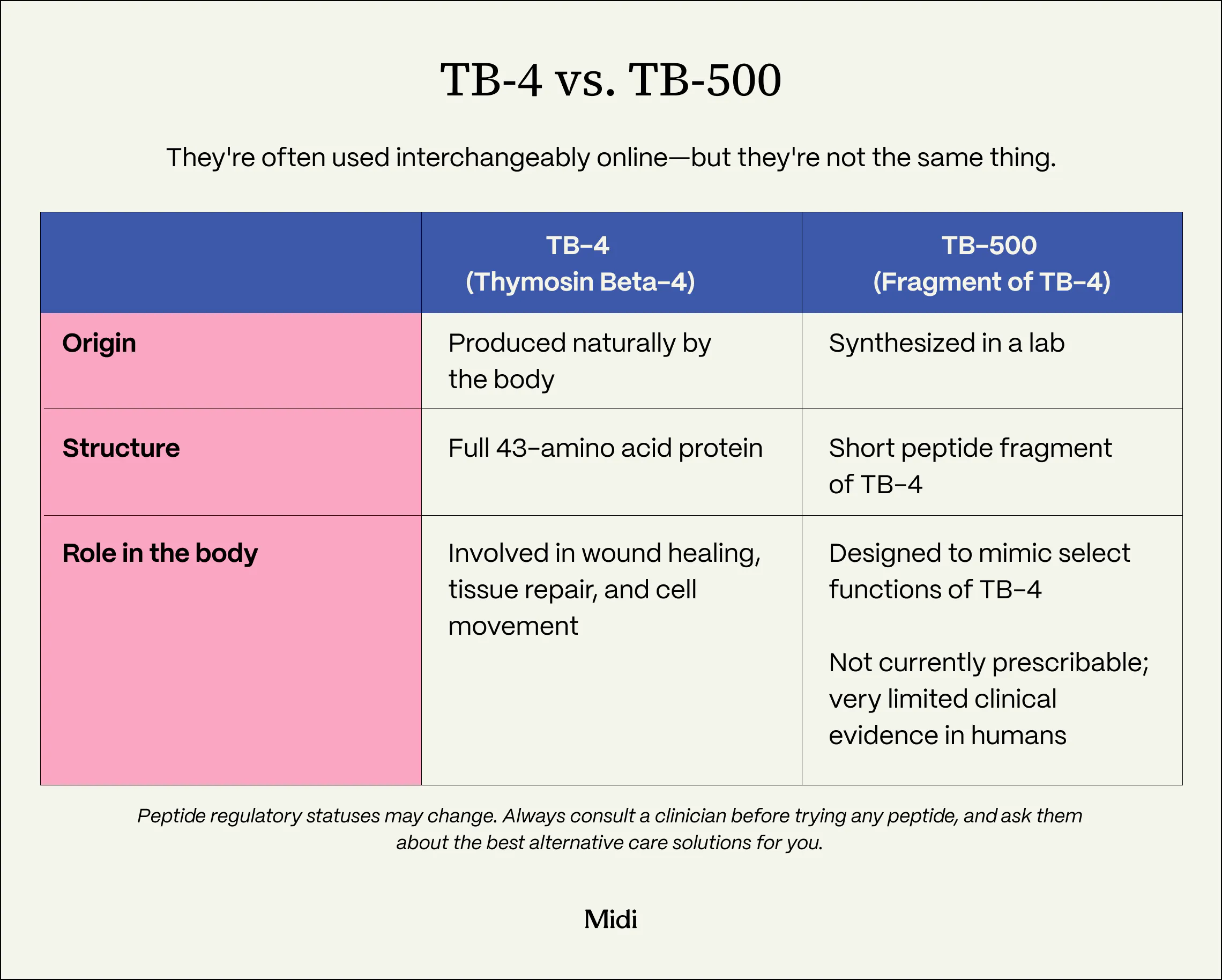
You may see thymosin beta-4 (TB-4) used interchangeably as a name for TB-500, but they’re not the same thing.
TB-4 is a naturally occurring protein your body makes. Made of 43 amino acids, TB-4 is found in just about every cell you have. It’s the multitasking “repair crew” involved in wound healing, tissue repair, and cell movement—and it’s what most of the solid research is based on.
TB-500 is a smaller, lab-made version of TB-4. It’s a short peptide fragment designed to imitate select functions of TB-4. What’s more, TB-500 does not behave identically in the body to TB-4, despite how casually the two are often equated online. TB-500 is being studied for muscle recovery and inflammation, but it’s lacking robust clinical evidence in humans.
That derivative connection to TB-4 is what pulls TB-500 into conversations about healing, recovery, and anti-aging. But that doesn’t mean it’s proven, regulated, or appropriate for what you’re trying to treat, and these compounds vary wildly in quality, evidence, and intended use.
Some peptides, like GLP-1s, are well-studied for specific medical uses. Others—like TB-500—are still largely experimental, with real unknowns around safety, dosing, purity, and long-term effects. Plus, because TB-500 is sold in loosely regulated spaces online, what’s actually in the vial doesn’t always match what’s on the label.
Why Midlife Women Are Searching for TB-500
You don’t have to be an elite biohacker to be tempted by promises of enhanced recovery. Hormonal shifts in perimenopause and menopause can affect your joints, connective tissue, muscle mass, sleep quality, and inflammation. So if your body suddenly feels different in ways that are hard to describe, you’re not imagining it.
When the routines that used to work for your body stop working the same way, it can be genuinely disorienting, and you just want to feel like yourself again. Even though the internet loves to sell quick fixes for midlife changes, the jury’s still out on TB-500 as an evidence-based solution.
Remember, it’s always best to speak with a trained healthcare professional about the best path forward for you. A Midi clinician can map out the right solutions to help you feel like yourself again.

Purported TB-500 Benefits You May Hear About
In online wellness clinics or anti-aging spaces, you may see the purported—but oftentimes not scientifically backed—benefits of TB-500 described as:
- speedier tissue repair
- improved flexibility
- reduced inflammation
- faster recovery from exercise, injury, or surgery
- a full-body “recovery reset”
You might also hear about the so-called benefits of combining TB-500 and BPC-157, another synthetic peptide. BPC-157 is a synthetic peptide based on a protein found in gastric juice, that’s being researched for its potential to support tissue repair. When combined with TB-500, the two are often marketed as a “dynamic duo” for recovery.
While BPC-157 and TB-500 are different compounds with different “jobs” in theory, both have claims around helping the body heal faster. In online forums, they’re frequently grouped together or “stacked”—meaning used in combination—as part of recovery protocols.
That constant pairing can make them seem more established or clinically validated than they actually are, simply because they’re discussed together so often. Terms like “Wolverine protocol” amplify this effect, giving the impression of superhero-level recovery and tapping into the desire to feel stronger and bounce back like you used to. But most of these alleged benefits come from early research, animal studies, or anecdotal reports—not large, high-quality human clinical trials.
True Stories Of Transformation
What We Know So Far About TB-500
At this stage in the game, the information available on TB-500 is a mix of theory, preclinical work, sports-testing literature, and promotional content, with widely variable quality. Much of the discussion focuses on proposed mechanisms—how TB-500 might benefit tissue repair and inflammation—rather than real-world patient outcomes.
A 2026 review in The American Journal of Sports Medicine found that TB-500 may show some promise in early preclinical research (meaning laboratory testing or animal research), but when it comes to high-quality human data on the benefits, we’re still very much in the “more questions than answers” phase. The review authors concluded that key questions around dosing, safety, and clinical outcomes remain unanswered.
What fills that gap online is largely individual reports of faster recovery, less pain, or improved healing. While these anecdotes can be compelling, they don’t account for natural recovery, placebo effects, or individual variation—which is why they sit firmly at the bottom of the evidence hierarchy.
What We Still Don’t Know
There are still major gaps in what we know about TB-500 in humans, including long-term safety, effects of repeated use, and impact across different populations over time.
Possible side effects discussed online include fatigue, headaches, and injection-site reactions. But because they’re mostly anecdotal, it’s difficult to know what’s truly caused by the compound, how common these effects are, or how much is tied to product quality or dosing variability.
There’s also limited data on who may be at higher risk for negative side effects. Women in midlife are already navigating hormonal shifts, underlying conditions, and existing prescription medications—all of which could influence individual safety concerns and side effects. While TB-500 has intriguing animal data, as it stands, there are no standardized, evidence-based TB-500 dosage guidelines from large human studies.
TB-500 Side Effects, Dosage, and Product Quality Concerns
While “TB-500 side effects” and “TB-500 dosage” feel like they should have clear, googleable answers, we don’t yet have enough data to define a reliable safety profile. What you see online may look like a protocol, but those very specific instructions are internet consensus—not medical consensus.
Because TB-500 is also sold outside regulated pharmaceutical systems, there are real concerns about purity, contamination, and consistency. Two products can carry the same label and still not be the same substance, which matters a lot more when something is being injected or used systemically.
BPC-157 and TB-500: Why the Combo Gets Attention
Like we mentioned before, TB-500 is often grouped together with BPC-157 as part of a recovery stack. The two are frequently paired for inflammation, joint pain, and faster recovery: BPC-157 for localized tissue repair and TB-500 for broader healing and inflammation support.
But stacking two experimental compounds doesn’t solve the underlying issue: Neither has strong human clinical evidence, and neither is expert recommended nor regulated for these uses. Most of what drives the “combo” narrative is driven by marketing rather than data.
Regulatory Reality, Red Flags, and Sports Context
TB-500 is not FDA approved for injury recovery, anti-aging, menopause symptoms, or any other medical use in humans. There’s also a significant lack of high-quality evidence surrounding the peptide.
Many products sold online are labeled “for research use only.” That means the product is not approved as a prescription medication and may not be held to the same quality or safety standards.
If you’re a competitive athlete, you’ll also see TB-500 come up in sports-testing and anti-doping discussions. Even though the real-world benefits of TB-500 remain unknown, the peptide is still banned from many athletic organizations, due to its potential performance and recovery effects.
A few red flags to watch for:
- claims of “miracle healing” or rapid recovery
- no ongoing relationship with a licensed healthcare professional
- unclear sourcing or manufacturing standards
What to Evaluate Instead of Chasing TB-500
Persistent pain, stiffness, fatigue, or changes in body composition can have multiple causes. They can reflect anything from overuse injuries or arthritis to sleep disruption, inflammatory conditions, or menopause-related shifts—and each one calls for a very different approach.
Teaming up with a healthcare professional, such as a Midi clinician, can help you move beyond the catch-all “aging” label and actually sort out what’s driving your symptoms. Depending on the root cause, the path forward might include:
- better sleep support
- hormone replacement therapy (HRT, now commonly referred to as menopause hormone therapy, or MHT)
- strength training
- physical therapy
- nutrition changes
- treatment for an underlying condition

Evidence-Based Options to Explore
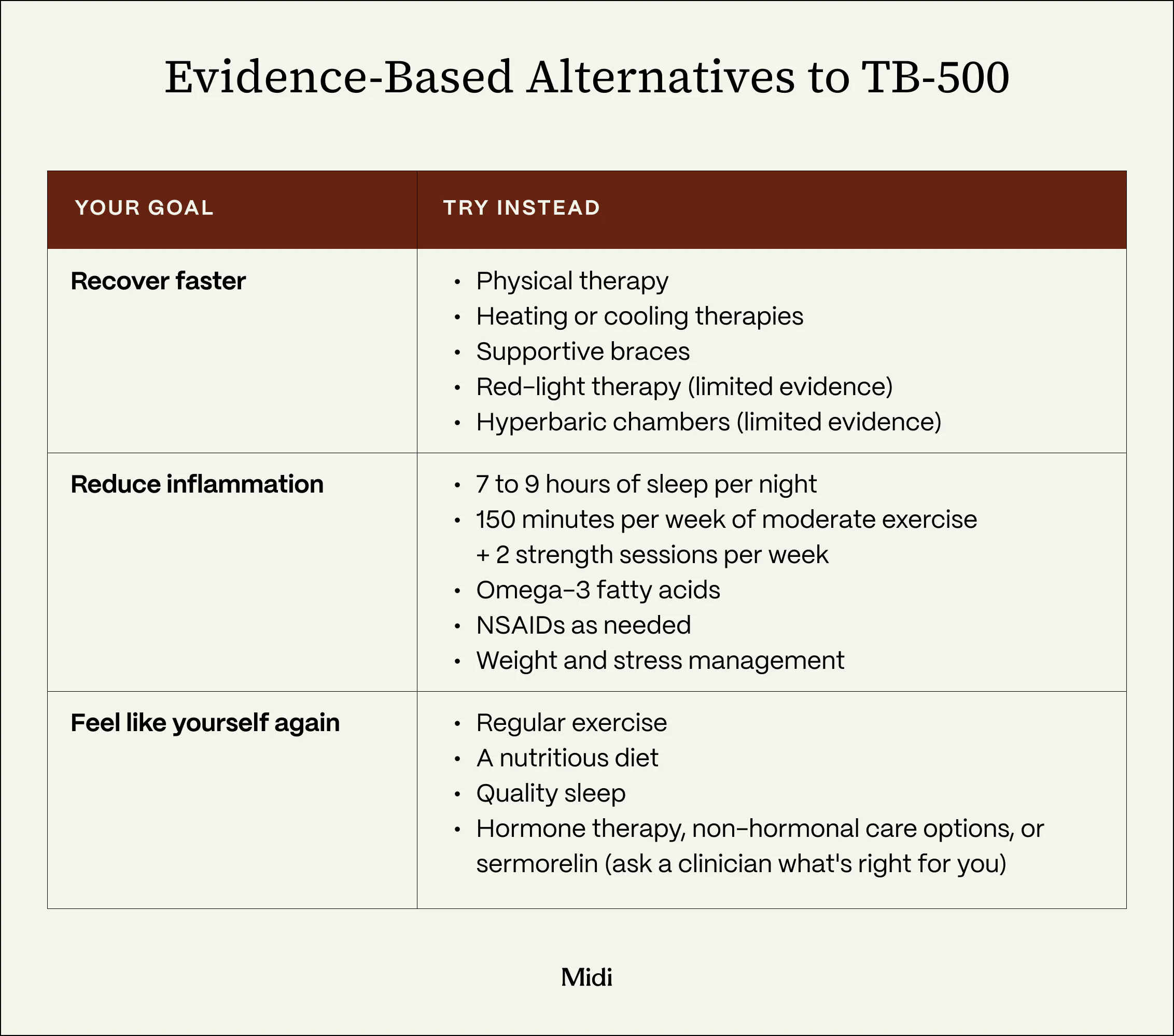
If slower recovery, reduced inflammation, or other body changes are what led you to TB-500 in the first place, it’s worth knowing there are evidence-based ways to address those symptoms. Midi’s team of medical experts currently recommend turning to other research-backed solutions, depending on what outcome you’re trying to achieve:
- If you want to recover faster: Physical therapy, cooling and warming therapies (like ice packs or heating pads), and functional support braces are the gold standard for speeding up healing. If you want to go the extra mile, you could try red-light therapy and hyperbaric chambers, which have limited evidence but may be worth a shot. If you’re recovering from a sports or joint injury, you can also ask your healthcare professional about platelet-rich plasma (PRP) injections.
- If you want to reduce inflammation: It may sound boring, but it’s crucial: get plenty of sleep and exercise. Generally, adults should aim for 7 to 9 hours of rest per night, and squeeze in 150 minutes of moderate-intensity exercise and 2 strength training sessions per week. Turn to non-steroidal anti-inflammatory drugs (NSAIDs) as needed (so long as your clinician doesn’t say otherwise), and make sure you get plenty of omega-3 fatty acids. Keeping an eye on your weight and stress levels may also help.
- If you want to generally feel “younger” or like yourself again: Ask your clinician about HRT or non-hormonal care solutions. Healthy habits like regular exercise, eating a nutritious diet, and prioritizing sleep can also be game changers. If you’re looking for a peptide solution specifically, ask a clinician about sermorelin.
When to Seek Care
If pain, fatigue, or difficulty recovering are interfering with your daily life, teaming up with a clinician is an important move. That said, the following symptoms warrant more urgent medical attention:
- new or worsening joint pain that limits movement or exercise
- swelling, redness, warmth, weakness, or sudden loss of function
- symptoms that persist despite rest, sleep, and basic recovery steps
- pain, fatigue, or body changes that seem menopause-related but could point to something else
Key Takeaways
- TB-500 is a synthetic peptide that hasn’t been well studied for injury recovery, anti-aging, menopause symptoms, or any medical use in humans.
- Most claims about TB-500’s benefits come from animal studies, early research, or anecdotal reports—not large, high-quality clinical trials.
- Midlife hormonal changes can affect recovery, sleep, joint health, muscle mass, and inflammation, but these issues deserve evidence-based care from a clinician.
- Online TB-500 peptide products may carry risks related to purity, contamination, inconsistent dosing, and unclear long-term safety.
Frequently Asked Questions (FAQs)
What is TB-500 used for?
TB-500 is a synthetic peptide promoted for reducing inflammation, supporting tissue repair, and speeding recovery from exercise or injuries. However, it is not well-studied for any medical use in humans. Plus, most claimed benefits are based on animal studies, early research, or anecdotal reports, rather than strong human clinical evidence.
Did TB-500 get approved by the FDA in 2026?
No. The FDA's Pharmacy Compounding Advisory Committee (PCAC) met July 23–24 to evaluate whether certain peptides, including TB-500, belong on the 503A Bulks List, the FDA's roster of substances eligible for pharmaceutical compounding. The committee voted in favor of adding TB-500 to the list, a step that may eventually give way to legal prescribing and compounding. That said, this PCAC vote is simply a recommendation, not a binding action, meaning real-world access for patients hasn't changed. For now, TB-500 remains unapproved and off-limits through licensed compounding pharmacies. We need to wait and see if the FDA decides whether or not to follow the committee’s recommendations
What is the difference between BPC-157 and TB-500?
BPC-157 and TB-500 are both experimental peptides marketed for recovery, but they work differently: BPC-157 is associated with localized tissue and gut repair, while TB-500 is promoted for broader inflammation support and whole-body recovery.
How does TB-500 affect the heart?
There’s very little human research on how TB-500 affects the heart. Early animal and laboratory studies have explored its potential role in tissue repair and inflammation, but its cardiovascular effects and risks in humans remain unknown.
What are TB-500 side effects?
Reported TB-500 side effects include fatigue, headaches, injection-site reactions, and appetite changes, but human safety research is very limited. Because most evidence is anecdotal, the long-term risks and side effects remain unclear.
What is the most powerful peptide for fat loss?
There’s only one category of peptide medications with strong clinical evidence for fat loss: GLP-1 receptor agonists (like semaglutide or tirzepatide).
If you’re in perimenopause or menopause and want guidance from clinicians who specialize in women’s midlife health, book a virtual visit with Midi today.
Hormonal change is at the root of dozens of symptoms women experience in the years before and after their period stops.
Our trained menopause specialists can help you connect the dots to guide you towards safe, effective solutions.
Whether you need personalized guidance or a prescription routine to tackle symptoms—including brain fog, hot flashes, sleep trouble, mood swings, and weight gain—we’ve got you covered. Learn more here.
Midi’s mission is to revolutionize healthcare for women at midlife, wherever they live and whatever their health story. We believe that starts with education, to help all of us understand our always-changing bodies and health needs. Our core values guide everything we do, including standards that ensure the quality and trustworthiness of our content and editorial processes. We’re committed to providing information that is up-to-date, accurate, and relies on evidence-based research and peer-reviewed journals. For more details on our editorial process, see here.