



Peptides have gone from niche wellness obsession to social media phenomenon seemingly overnight. Scroll long enough, and you'll find women crediting them for everything from weight loss and muscle gain to better sleep, more energy, and healthier aging. It's enough to make anyone wonder: Am I missing something?
At Midi Health, we’re fielding questions every day from women who want to know which peptides are backed by science, which are overhyped, and whether they actually need them. And we get it. As you enter perimenopause and menopause, you want nothing more than to feel like yourself again.
The challenge is that the enthusiasm for peptides has outpaced information and education. As interest has exploded, so has the number of women turning to the gray market to buy products from unregulated sources, without fully understanding what these compounds are, how they're supposed to work, or the potential risks involved.
That’s where we come in. Midi’s team of medical experts dug into the research to break down everything you need to know about 13 of today's most talked-about peptides for women. (And one pro tip: Bookmark this guide as an ongoing resource—the science and regulatory status of certain peptides is constantly changing, so we’ll be updating this regularly.)
What Are Peptides?
Peptides are short chains of amino acids, the building blocks of proteins. Your body naturally produces thousands of them, and they act as chemical messengers, helping cells communicate and directing everything from hunger and metabolism to sleep, mood, and recovery.
Think of peptides as text messages sent throughout the body. Each one carries a specific instruction, telling cells what to do and when to do it.
Many of the peptides making headlines today are synthetic, meaning they're made in a lab to mimic or enhance signals that already exist in the body. Some are designed to influence appetite; others target muscle growth, recovery, or hormone production.
The blockbuster weight loss medications that have transformed conversations about obesity and metabolic health—semaglutide (Ozempic and Wegovy), tirzepatide (Zepbound or Mounjaro), and retatrutide (a newcomer on the block that’s not yet FDA approved but highly anticipated for approval next year)—are all peptide-based drugs.
In fact, for many people, these GLP-1s served as their introduction to peptides. And as millions of people have embraced weekly injections and seen real results, interest has expanded into a much broader category of peptides. They promise everything from faster recovery and more muscle to better sleep, healthier aging, and improved cognition.
But this is also where things get more complicated. Unlike GLP-1 medications, many of today's trending peptides haven’t been studied in large human trials. Some show promise; others have very limited evidence behind them. That’s why it's important to evaluate each peptide individually.
How Are Peptides Regulated?
Peptides fall under one of three categories defined by the FDA: Category 1, Category 2, or Category 3. The FDA uses these categories as frameworks for substances used in pharmacy compounding, and it may move peptides from one category to another as safety data changes. (Pharmacy compounding refers to combining different drug ingredients to create customized medications, such as doses of a specific strength or formulations without certain allergens.)
You might hear that some popular peptides don’t fall in Category 1, Category 2, or Category 3. They’re technically in classification limbo as we await the FDA’s final determination on them. In practice, this changes nothing for patients: A licensed clinician still cannot prescribe these peptides through a legitimate compounding pharmacy until the FDA officially approves them.
Many (but not all) of the peptides in this guide currently fall into this unapproved middle ground, but that may change in the future. On July 23 and 24, the Pharmacy Compounding Advisory Committee (PCAC) met to consider whether seven peptides—BPC-157, KPV, TB-500, MOTS-c, Emideltide, Epitalon, and Semax—should be added to the 503A Bulks List. (The 503A Bulks List is a list of drug substances that the FDA has approved for compounding.) The committee recommended six of those peptides—BPC-157, KPV, TB-500, MOTS-c, Epitalon, and Semax—be moved onto the list so that they can be legally prescribed and compounded in the future. (The panel voted against including Emideltide.)
But the PCAC’s guidance is a recommendation, not a final ruling—and for now, nothing is changing for consumers. All of these peptides still aren’t prescribable through legitimate compounding pharmacies. We need to wait and see if the FDA decides whether or not to follow the committee’s recommendations. Midi’s team of health experts are monitoring the regulatory and scientific landscape closely.
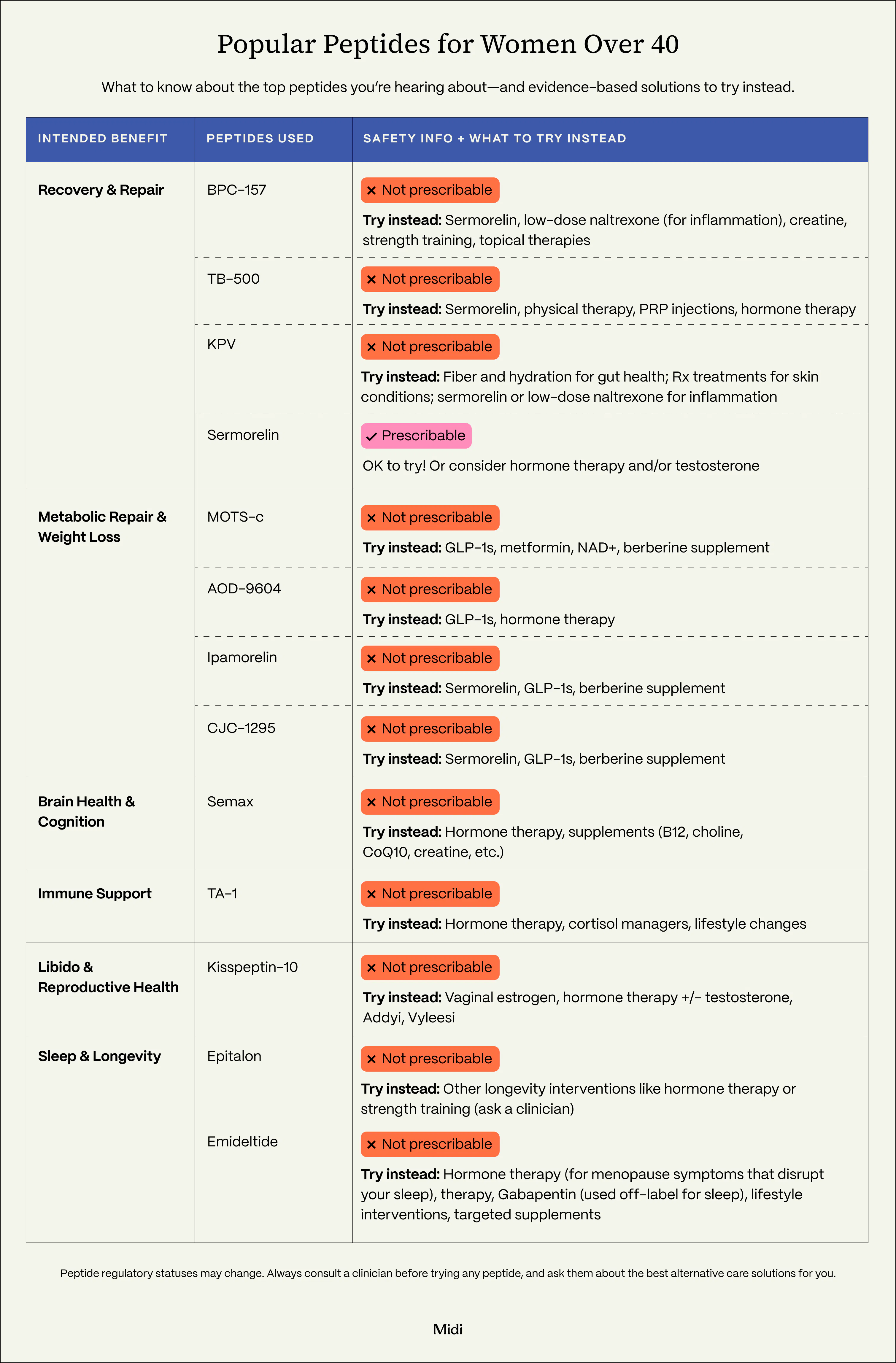
13 Popular Peptides for Women
Tap or click to jump ahead to the peptides you want to learn more about.
The science behind Epitalon’s anti-aging impacts is interesting but unproven. We need much larger, more thorough trials to determine whether this peptide is safe or even effective to try.
Fortunately, if your goal is to boost longevity and age well, there are lots of evidence-backed ways you can do so. Consider booking an AgeWell visit, where a Midi clinician can help you explore longevity interventions that actually have the evidence to back them up—from hormone therapy and metabolic health to sleep, strength training, and beyond, complete with lab testing and advanced screening.
Recovery and Repair Peptides for Women
For many women, midlife can come with a sudden surge in aches and pains. We’re talking everything from general stiffness to frozen shoulder to tendinopathy and beyond.
Estrogen helps support the health of muscles, tendons, ligaments, and joints, so as levels drop, connective tissues can become less resilient. Soreness and joint pain may linger longer after any sort of strenuous activity, like an afternoon working in your garden or lifting weights at the gym.
That’s why a class of peptides that promise to help your body feel less creaky have become so appealing.
BPC-157 “The Wolverine Peptide”
The basics: BPC-157 is a popular lab-made peptide thought to speed up healing (hence its Wolverine nickname, based on a superhero who heals almost instantly). It’s a synthetic version of a protein naturally found in human digestive fluid.
Why people use it: Proponents claim it may speed up postworkout recovery, reduce acute inflammation, improve athletic performance, help you heal faster from an injury or surgery, treat inflammatory bowel issues or other gastrointestinal (GI) symptoms, or even cure a hangover.
How it works: We need much more data to say for sure, but BPC-157 is thought to boost growth hormone (GH) receptors in muscles and tendons, build new blood vessels (a process called angiogenesis), cut inflammation markers, and boost blood flow to injured or achy areas of the body.
Regulatory and safety status: BPC-157 is currently awaiting FDA review. It is not currently prescribable through legitimate compounding pharmacies. (Midi does not prescribe this or other unapproved peptides.)
What the science says: The existing evidence on BPC-157 is almost entirely based on animal (namely rat) data. Preclinical studies suggest that BPC-157 acts as a biological “switch” that enhances healing in animals, telling their bodies to reduce swelling; grow new blood vessels; and speed up the repair of damaged muscles, tendons, and bones. These studies suggest that the peptide is well-tolerated, with no known toxic limit—but we don’t yet know if the same results would occur in humans. Human data on BPC-157 remains limited, and there have only been a handful of small, uncontrolled studies, none of them randomized. Much more research is needed.
Watch-outs to know: Because BPC-157 may help spur the growth of new blood vessels, there’s a theoretical fear it could speed up hidden tumor growth if cancer cells are present in your body.
BPC-157 is a popular peptide with impressive animal data, but there’s almost zero human data behind it. Midi’s medical experts have reviewed the research and, for now, our clinicians recommend turning to different evidence-based solutions instead, depending on your goal:
- Reduce inflammation or speed up healing: Consider sermorelin (a safer and more proven peptide) and low-dose naltrexone (used off-label to treat chronic pain). Old standbys still help, too, like physical therapy, over-the-counter (OTC) anti-inflammatory medications, ice compresses, or topical OTC therapies like Biofreeze.
- Build muscle or improve athletic performance: Along with regular strength training, consider taking a creatine supplement. Testosterone therapy, long used in men to build muscle, is increasingly recognized as an option for some women.
- Improve GI issues: Get plenty of fiber, either in your diet or with the help of a research-backed supplement (only 5% of Americans are getting enough!). See a clinician to identify what’s actually causing your GI troubles; conditions like irritable bowel syndrome (IBS), inflammatory bowel disease (IBD), or reflux could be at play.
Jump Back to Main Peptides List
TB-500
The basics: TB-500 is a synthetic peptide designed to mimic a small fragment of TB-4 (thymosin beta-4), a naturally occurring protein found throughout your body that’s involved in tissue repair, inflammation reduction, and cell movement. TB-500 is often paired with BPC-157 (known as the Wolverine stack), and the two are thought to work together to target different parts of the same healing cascade.
Why people use it: It’s thought to speed up recovery (like from exercise, injury, or surgery), reduce inflammation, and improve tissue repair.
How it works: In theory, TB-500 regulates actin, a protein that helps healing cells migrate to injury sites. It’s also thought to form new blood vessels, reduce inflammatory markers, and promote stem cell differentiation. Unlike BPC-157, which tends to act locally (where it’s injected), TB-500 appears to circulate systemically throughout your entire body, hence its purported “whole-body repair” benefits.
Regulatory and safety status: Pending FDA review. TB-500 is not currently prescribable through legitimate compounding pharmacies. (Midi does not prescribe this or other unapproved peptides.)
What the science says: As of now, there have been no human clinical trials testing TB-500; we currently only have preclinical data (aka animal and lab data) on the peptide. A recent narrative review of existing research found that TB-500 helps grow new blood vessels and promotes tissue repair, but it warned that there’s a lack of data proving the peptide does the same in humans.
Watch-outs to know: Similarly to BPC-157, because TB-500 circulates throughout your whole body and grows new blood vessels, there’s real concern that it could speed up hidden tumor growth if cancer cells are present in your body.
While TB-500 has compelling animal data, there’s almost no research performed on the peptide in humans. Midi’s medical experts currently recommend turning to other evidence-informed solutions instead, depending on what outcome you’re trying to achieve:
- Boost healing or speed up recovery: Optimize local therapies and support, such as physical therapy, expert-recommended cooling and warming approaches, and functional support braces as your mainstay. For those wanting to do “everything possible,” hyperbaric chambers and red light therapies have some limited evidence, with red light therapies often being more accessible to consumers. If you’re recovering from a joint or sports injury, platelet-rich plasma (PRP) injections may help as well.
- Reduce inflammation: Prioritize sleep (adults should generally aim for 7 to 9 hours per night) and do regular moderate exercise. Try anti-inflammatories like non-steroidal anti-inflammatory drugs (NSAIDs) as needed, and get plenty of omega-3 fatty acids. Managing your weight and stress can also play a role.
- Generally feel "younger” or like yourself again: Ask your clinician about hormone therapy or non-hormonal treatments, and prioritize other healthy lifestyle strategies like doing regular exercise, following a nutritious diet, and getting plenty of sleep. If you’re looking for peptides specifically, sermorelin may be an option.
Jump Back to Main Peptides List
KPV
The basics: KPV is a lab-made peptide derived from a hormone naturally produced by the pituitary gland in your brain called α-MSH, a hormone with potent anti-inflammatory properties. KPV is thought to retain those same anti-inflammatory effects in a smaller, more stable form.
Why people use it: The KPV peptide has gained traction in gut health circles, where people dealing with inflammatory bowel conditions (like Crohn’s disease or irritable bowel disease) want alternatives to steroids or other biologic medications and are looking for other ways to calm inflammation and support gut healing. Some people also use it to speed up recovery and wound healing and help treat skin conditions like eczema and psoriasis. And unlike many other peptides that need to be injected with a needle, KPV can be taken as a dissolvable oral lozenge.
How it works: KPV binds to receptors on immune and tissue cells, blocking a key signaling pathway that acts as the body's master switch for inflammation. This suppresses the production of several pro-inflammatory compounds, dampening the inflammatory response at its source—without the broad immunosuppressive effects that come with steroids. Unlike most other peptides, KPV is not deactivated by digestion, allowing it to be dosed orally and act locally in the GI tract. (Most other peptides break down in the gut quickly and need to be injected to deliver an active drug.)
Regulatory and safety status: KPV is not currently FDA approved for use and cannot be prescribed by an accredited, licensed clinician. It’s not prescribed at Midi. (A gray market of non-reputable pharmacies may dispense KPV for use with “for research purposes” labeling, but these are often nonaccredited and unregulated sources.)
What the science says: What we currently know about KPV comes almost entirely from lab and animal studies. Research in animal models has shown promising results for gut inflammation, wound healing, and skin conditions. But because there aren’t published human clinical trials on KPV, we simply don’t yet know how this translates to humans, what dosing ranges are best, or whether it's safe over the long term.
Watch-outs to know: We don’t know much about the KPV peptide’s safety profile. Without the human safety data and a lack of FDA approval, sourcing peptides from an unregulated gray-market source introduces real risks of contamination, inaccurate dosing, and unknown ingredients. Women managing conditions like Crohn’s or IBD should be cautious about changing their established treatments with an unproven peptide.
While the science behind KPV is compelling, there’s still so much we don’t know about the peptide and how it impacts humans. Here’s what Midi’s team of medical experts currently recommend:
- If you generally want to improve gut health: Make sure you have foundational gut-health habits in check, like getting plenty of fiber and staying hydrated. A clinician can help identify any underlying conditions and, if needed, recommend targeted treatments.
- If you’re dealing with Crohn’s disease, IBD, or other GI conditions: Talk with a clinician about evidence-based options first, which may include medications like mesalamine or budesonide as well as new lifestyle and dietary approaches.
- If you’re struggling with chronic skin conditions like psoriasis, rosacea or eczema: A dermatologist or other healthcare professional can walk you through topical and systemic treatments, including prescription topicals, low-dose antibiotics for rosacea, or biologics for more severe eczema. Over-the-counter options like gentle moisturizers and barrier repair creams can also make a meaningful difference.
- If you want to generally improve recovery and inflammation: Ask a healthcare professional, such as a Midi clinician, about alternative and more studied options like sermorelin for recovery or low dose naltrexone for inflammation.
Jump Back to Main Peptides List
Sermorelin
The basics: Sermorelin is a synthetic growth hormone-releasing hormone (GHRH) analog, meaning it’s a lab-made version of a natural hormone that boosts your body’s native growth hormone (GH). It tells the pituitary gland in your brain to release more of its own GH naturally, rather than introducing synthetic GH directly into your body. Sermorelin was first approved by the FDA as a medication called Geref to treat GH deficiency in children. Geref was later discontinued for commercial reasons. Today sermorelin is prescribed off-label by clinicians and prepared by compounding pharmacies to stimulate GH production in adults.
Why people use it: There’s some evidence that sermorelin can support muscle development, improve libido and fat metabolism, and help regulate blood sugar levels. Some people use sermorelin with the goal of improving muscle mass and boosting energy. It’s also been explored for potential benefits that relate to weight loss, skin health, muscle strength, mood, cognitive function, and bone density. That said, it’s worth noting that the evidence supporting these uses is still limited, and more research is needed.
How it works: Sermorelin doesn’t directly boost GH levels, but it will trigger your pituitary gland to make your own GH. As you age, your GH levels go down, which can lead to frustrating symptoms, like weight gain, muscle loss, and trouble sleeping. So when GH levels get a sermorelin-aided boost, you may notice a range of full-body benefits.
Regulatory and safety status: It’s currently classified as FDA Category 1, meaning sermorelin has met the FDA’s safety standards for human use, and a clinician can prescribe it to you. The peptide itself is prepared by a licensed compounding pharmacy, since the original FDA-approved drug is no longer manufactured or sold.
What the science says: Because the FDA originally approved sermorelin to treat children with a GH deficiency, medical experts have decades’ worth of real-world data and clinical use, giving the medication an extremely solid safety profile. However, just like any medication, sermorelin won’t be right for everyone.
Watch-outs to know: Sermorelin can interact with certain medications, so make sure you speak with a healthcare professional about your health history and medication list before taking it. Another important flag: We currently don’t have any safety data about the use of sermorelin in people with a history of cancer.
Sermorelin is an available peptide treatment that Midi can prescribe for women in midlife, as long as your personal health history and labs all meet the requirements. Unlike most other peptides floating around today, sermorelin has decades’ worth of safety approval and clinical use—and ample benefits, from improved weight loss and bone density to enhanced brain health and better moods. At Midi, we often find that women are interested in sermorelin when they’re seeking an alternative to traditional hormonal treatments for menopause or aren’t able to access other therapies, like testosterone for menopause (classified as a controlled substance by the federal Drug Enforcement Administration).
Jump Back to Main Peptides List
Metabolic Repair and Weight Loss Peptides for Women
Perimenopause and menopause come with near countless symptoms, from hot flashes to fatigue to mood shifts. But one of the more common signs you may notice is weight changes—in fact, 87% of Midi patients experience weight gain and body changes. So it’s natural to be curious about peptides for weight loss that purportedly help combat added pounds.
MOTS-c “Exercise in a Bottle”
The basics: MOTS-c, often referred to as exercise in a bottle, is a peptide derived from the mitochondria’s own genomes, meaning it comes from the unique DNA found inside your cells’ energy powerhouses. This lab-made peptide is thought to tell your muscles to behave like they’re exercising, even when you’re not.
Why people use it: Biohackers praise this peptide for its alleged ability to help you lose weight, improve energy levels, boost insulin sensitivity, tamp down inflammation, and generally age well.
How it works: MOTS-c activates AMPK, our body’s “energy sensor,” to theoretically mimic the effects of exercise at a cellular level. This is thought to have several effects: It may help muscles absorb glucose without needing insulin, build more mitochondria, burn fat, and reduce inflammation. But the science on this peptide is lacking (to put it lightly), so we don’t know for sure.
Regulatory and safety status: It's pending FDA review and not currently approved for use in humans. MOTS-c is not currently prescribable through legitimate compounding pharmacies. (Midi does not prescribe this or other unapproved peptides.)
What the science says: There’s promising preclinical (aka animal or lab) data on MOTS-c, and early research suggests that MOTS-c may improve metabolism by activating the AMPK pathway and help reverse age-related insulin resistance. This could have promising outcomes for age-related conditions and cardiovascular disease. But there’s no data showing how well it works in humans, and the long-term safety of this peptide in humans is simply unknown.
Watch-outs to know: Anecdotal reports from those who use unregulated MOTS-c peptides include side effects such as heart palpitations, insomnia, fever, and general injection-site reactions.
The mechanisms behind MOTS-c are fascinating, but the peptide has a notable lack of long-term safety data. For now, Midi’s medical experts recommend alternative, evidence-based solutions to help reach the benefits you’re after:
- Lose weight or improve insulin sensitivity: Talk with a healthcare professional about metformin, GLP-1s, and berberine.
- Boost brain health and energy levels: Consider NAD+, and make time for exercise (even a quick walk can help).
- Generally age well and boost longevity: Exercise is important here, too, along with other healthy habits like following a well-rounded diet and making sure you get 7 to 9 hours of sleep per night.
Jump Back to Main Peptides List
AOD-9604
The basics: AOD-9604 is a synthetic peptide designed to mimic certain effects of GH. Specifically, AOD-9604 is often marketed as a targeted fat loss peptide, with claims that it can hyperfocus on reducing visceral and abdominal fat.
Why people use it: Most people interested in AOD-9604 are those who’ve previously tried semaglutide (Ozempic, Wegovy) or tirzepatide (Mounjaro, Zepbound) and want to transition to something else, often due to side effects. You’ll often find that people pair AOD-9604 with CJC-1295 and ipamorelin (more on those peptides below).
How it works: AOD-9604 is a synthetic peptide copied from a small fragment of GH—specifically, from the fat-burning region at the tail end of the hormone. Hypothetically, this structure allows AOD-9604 to burn fat without the unpleasant side effects that can come with full-length GH, like joint pain, fluid retention, or blood sugar changes. This peptide is thought to have a dual-switch mechanism: burning existing fat and preventing your body from making new fat. Intriguing in theory? Absolutely. Effectively proven? Not quite.
Regulatory and safety status: AOD 9604 is currently awaiting FDA review; it’s not yet prescribable through legitimate compounding pharmacies. (Midi does not prescribe this or other unapproved peptides.)
What the science says: Unlike many other popular peptides out there, AOD-9604 has fairly solid and clean safety data behind it. So far, the peptide has been tested in six randomized controlled trials involving nearly 900 participants, and it has resulted in no serious adverse events. (It should be noted, however, that only male subjects were included in the first four trials.)
But here’s the catch: While scientists have currently found no alarm-sounding safety issues for AOD-9604, they also haven’t found evidence that the peptide actually helps you lose weight. In a 24-week trial involving more than 500 participants, AOD-9604 failed to induce significant weight loss.
Watch-outs to know: While AOD-9604 has a generally stronger safety profile than other peptides, a licensed clinician still can’t prescribe it to you, which means you’d need to buy it from unregulated gray-market retailers online. That presents serious safety concerns of its own.
While AOD-9604 is a safer peptide than others on this list, there are still more proven peptides and non-peptides that can help you lose weight much more effectively. Here’s what Midi’s medical experts recommend:
- Lose weight: Consider GLP-1s, like semaglutide or tirzepatide. Depending on your health history and unique goals, a clinician can determine which prescription medication is right for you.
- Lose weight without a GLP-1: Depending on your other symptoms, you may want to consider hormone therapy. This can indirectly support weight loss by helping to ease symptoms that make your best exercise and nutrition attempts more challenging.
Jump Back to Main Peptides List
Ipamorelin
The basics: Ipamorelin is a synthetic peptide designed to stimulate GH.
Why people use it: Most people interested in ipamorelin want to optimize their GH levels. Remember, your GH levels go down as you age, which can lead to unwanted side effects like weight gain, trouble sleeping, or muscle loss. It’s frequently grouped (or “stacked”) together with CJC-1295. This is sometimes referred to as the GH optimization stack because it creates a one-two GH punch, with ipamorelin surging GH and CJC-1295 keeping those levels elevated for a longer time.
How it works: Ipamorelin tells your pituitary gland to release natural GH without accidentally impacting cortisol (a stress hormone). It may also help move food through your digestive system by activating hunger hormone pathways.
Regulatory and safety status: Ipamorelin is pending FDA review; this peptide is not currently prescribable through legitimate compounding pharmacies. (Midi does not prescribe this or other unapproved peptides.)
What the science says: Ipamorelin has more clinical data than many other peptides featured in this guide, but the evidence is still lacking. A few human studies have investigated the impacts of ipamorelin with mixed results. In one randomized controlled trial, 114 participants were given ipamorelin intravenously (rather than by subcutaneous injection) to see if it could speed up their digestive tracts after major bowel surgery. While the peptide was generally well-tolerated, it failed to perform significantly better than a matching placebo. Another IV ipamorelin study confirmed that the peptide stimulated a natural, pulsing release of GH. But the FDA flagged a serious adverse event, including a death, associated with an IV ipamorelin infusion (although it wasn’t clear whether the peptide directly caused the participant's death). Meanwhile, a more recent research review concluded that there’s not enough proof to confirm whether ipamorelin improves body composition.
Watch-outs to know: Anecdotally, people who take ipamorelin report side effects like mild swelling and headaches, facial redness, injection-site reactions, tingling or numbness, and water retention. Because ipamorelin raises IGF-1 (insulin-like growth factor 1, a natural hormone), there’s a theoretical risk that the peptide could negatively affect your blood sugar levels or accidentally speed up the growth of hidden, pre-existing tumors. Those with a known history of cancer are typically highly discouraged from use of this peptide.
Compared with many other peptides, ipamorelin has more clinical data behind it—but it still lacks clean, clear evidence. Fortunately, the underlying goals behind the peptide are easily addressable through other treatment options. Here’s what Midi’s medical experts recommend:
- Optimize GH: Talk with a healthcare professional, such as a Midi clinician, about sermorelin. This prescription medication does essentially the same thing as ipamorelin and CJC-1295, but with much cleaner evidence and decades of safety data behind it.
- Lose weight or address body composition changes: Ask your clinician about GLP-1s (like semaglutide or tirzepatide), other meds like Contrave or metformin, supplements like berberine, and other lifestyle strategies.
- Reduce joint pain: Prioritize regular strength training and low-impact movement, get plenty of omega-3s, and take NSAIDs like aspirin or ibuprofen as needed or as directed by your healthcare professional. It’s best to see a clinician to rule out inflammatory arthritis, too. There is some evidence that hormone therapy may help some women with osteoarthritis. A holistic care plan that optimizes weight and lifestyle habits can also make a meaningful difference.
- Sleep better: Make sure your sleep hygiene is in tip-top shape (make time to wind down and keep your bedroom cool, dark, quiet, and comfortable). You can talk with your clinician about magnesium glycinate supplements and non-hormonal prescription medications for vasomotor-driven sleep concerns like night sweats (e.g., Veozah and certain SSRIs/SNRIs). You can also see a clinician to rule out sleep apnea.
Jump Back to Main Peptides List
CJC-1295
The basics: CJC-1295 is a synthetic peptide built to mimic GHRH, the hormone that signals your brain to release more GH. Peptide proponents often stack CJC-1295 with ipamorelin to create the ultimate “GH optimization stack.”
Why people use it: Fans of CJC-1295 use it to optimize their GH pathways, with the ultimate goal of sleeping better, combating weight gain or midlife body changes, improving physical recovery, enhancing skin appearance, and generally promoting anti-aging.
How it works: CJC-1295 functions as a lab-made version of GHRH. Once injected, the peptide is thought to tell your brain to release more natural GH—and keep that “on” signal active for an extended period of time. It also boosts IGF-1, a compound that can help build lean muscle mass. As mentioned above, when stacked with ipamorelin, the two peptides theoretically work together to quickly surge GH, then keep levels high for an extended time.
Regulatory and safety status: It is currently awaiting FDA review; CJC-1295 is not currently prescribable through legitimate compounding pharmacies. (Midi does not prescribe this or other unapproved peptides.)
What the science says: We need more long-term clinical human data on CJC-1295. One study from 2006 found that CJC-1295 successfully elevated GH levels for longer than normal and was generally well tolerated, but more research is needed to say for sure.
Watch-outs to know: The FDA has flagged serious side effects of CJC-1295, such as increased heart rate and a full-body vasodilatory reaction, meaning your blood vessels widen, which could present other concerns. People with a history of cancer should be particularly wary, as IGF-1 (which increases with CJC-1295) may be involved in the development of certain types of cancer. People with unmanaged diabetes, untreated sleep apnea, or significant cardiovascular disease should also stay away, as the peptide could make things worse.
While the idea of using CJC-1295 to keep your GH pathways active for longer periods sounds promising, the human evidence simply isn’t there to back up its claims or guarantee your safety. Fortunately, this gray-market peptide isn’t the only way to address midlife body changes. Midi’s medical experts recommend turning to safer, evidence-based alternatives to achieve your goals:
- Optimize GH: Talk with a Midi clinician about sermorelin. This medication functions similarly to stimulate your body’s natural GH production, but it is a Category 1 substance backed by decades of solid safety data.
- Manage weight or body composition shifts: Ask your healthcare professional about proven treatments like GLP-1s, berberine, or targeted nutrition and lifestyle strategies.
- Minimize joint pain: Regular strength training and low-impact exercise can go a long way in protecting your joints. Eating foods rich in omega-3s or taking an omega-3 supplement may also help. NSAIDs like ibuprofen or aspirin can provide relief when used as needed or as directed by your clinician. If joint pain is persistent, it's worth seeing a healthcare professional to rule out inflammatory arthritis.
- Sleep better: Give yourself time to wind down before bed and keep your room cool, dark, and quiet. If that's not enough, magnesium glycinate is a supplement worth discussing with your clinician. For sleep disruptions tied to vasomotor symptoms like night sweats, a healthcare professional can walk you through non-hormonal prescription options like Veozah or certain SSRIs/SNRIs. It’s also a good idea to rule out sleep apnea if you’re consistently waking unrefreshed.
Jump Back to Main Peptides List
Cognitive Peptides for Women
Brain fog is a common concern among women in midlife and Midi patients, second only to hot flashes. So it’s easy to understand the appeal of peptides that promise more mental clarity.
Semax “The Mental Clarity Peptide”
The basics: Semax is a nootropic, which is a natural or synthetic substance designed to boost cognitive performance.
Why people use it: Semax has gained popularity because people report feeling more mental clarity, greater focus, and an attention/creativity boost—without the jitters of a stimulant.
How it works: Scientists who have researched Semax for issues like stroke recovery believe that it may boost brain repair and connections, as well as reduce inflammation after brain injury.
Regulatory and safety status: Semax is currently awaiting FDA review; it’s not currently prescribable through legitimate compounding pharmacies.
What the science says: Many of the studies on Semax’s benefits for stroke recovery were small, not standardized, and conducted in Russia. And though the stroke data is considered interesting, there isn’t clinical evidence that it boosts mental clarity or focus.
Watch-outs to know: The FDA has flagged Semax as a peptide that might trigger an unwanted immune response, and it has raised concerns about impurity and lack of safety data in humans.
Brain fog is a real thing among midlife women, and it can be very disconcerting. At Midi, we have a range of available solutions to help treat brain fog during menopause, including hormone therapy, lifestyle changes, and supplements like our Daily Brain Boost.
Jump Back to Main Peptides List
Sleep and Longevity Peptides for Women
Women in perimenopause and menopause deserve to move comfortably throughout the day and get a solid night’s sleep—but midlife symptoms like night sweats, achy joints, and simply feeling worn out often get in the way. So when you hear rave reviews about peptides that supposedly induce a deep night’s rest “naturally,” without the use of traditional sleep meds? Sounds like a miracle. Or when you stumble across a peptide conversation that promises anti-aging benefits? Jackpot. As convenient as that’d be, there’s currently a strong lack of human clinical research for these peptides.
Epitalon
The basics: Epitalon is a synthetic peptide that’s touted as an alleged anti-aging treatment. It was first developed during research into the pineal gland, a small structure in the brain involved in regulating the body’s sleep-wake cycle and the production of melatonin, among other things.
Why people use it: Longevity biohackers have latched onto Epitalon as an anti-aging therapy, largely because of its purported ability to support our telomeres. Healthy telomeres provide buffers to our cellular health, and shortened fragmented telomeres are linked to more cell death and damage. Epitalon has been shown in basic science and laboratory studies to help keep telomeres long and healthy, with many people optimistic that this translates into better longitudinal cellular health. Devoted fans of the peptide use it in longevity routines, often for sleep optimization and general cellular health. But clinical data, dosing, and understanding of the broader effects in humans lacks study.
How it works: Epitalon mimics a natural peptide produced by the pineal gland (called epithalamin) and is thought to work primarily by reactivating telomerase, the enzyme responsible for rebuilding telomeres. Since telomeres shorten each time a cell divides—and telomerase activity declines with age—the theory is that Epitalon could lead to longer telomeres that would theoretically slow your cellular aging clock. Beyond telomeres, Epitalon is also thought to help regulate melatonin and serotonin production, reduce oxidative stress, and support immune function. In theory, these combined effects could support healthy aging—but “in theory” is doing a lot of heavy lifting here.
In reality, the association of telomere length to longevity is modest, and is linked to non-cancer causes of death, and lifestyle choices like smoking, stress, and obesity heavily influence telomere length—so we don’t know if alternative telomere manipulations from a peptide would help at all.
Regulatory and safety status: Epitalon is currently awaiting FDA review; Epitalon is not currently prescribable through legitimate compounding pharmacies. (Midi does not prescribe this or other unapproved peptides.)
What the science says: The majority of research on Epitalon is from animal studies and small human observational studies, not large, randomized controlled trials. While findings are interesting—like extended lifespan and reduced tumor incidence in mice, and improvements in lipid panels and immune function in elderly patients—most research comes from a single lab in Russia and hasn’t been replicated. While many scientists consider Epitalon biologically interesting, most agree that its safety and anti-aging benefits in humans remain unproven.
Watch-outs to know: Some scientists are concerned with Epitalon because the peptide interacts with telomeres. Because cancers also rely on telomeres for growth, researchers are theoretically concerned that Epitalon could unintentionally accelerate unknown existing cancers. And like other unapproved drugs, peptides like Epitalon that are bought from an unregulated gray-market source have the risk of toxicity, contamination, and unknown dosing and potency.
The science behind Epitalon’s anti-aging impacts is interesting but unproven. We need much larger, more thorough trials to determine whether this peptide is safe or even effective to try.
Fortunately, if your goal is to boost longevity and age well, there are lots of evidence-backed ways you can do so. Consider booking an AgeWell visit, where a Midi clinician can help you explore longevity interventions that actually have the evidence to back them up—from hormone therapy and metabolic health to sleep, strength training, and beyond, complete with lab testing and advanced screening.
Jump Back to Main Peptides List
Emideltide (DSIP)
The basics: Emideltide, also known as delta-sleep-inducing-peptide (DSIP), is a neuropeptide touted for its alleged ability to improve your deep sleep and reduce stress. Emideltide is a naturally occurring amino acid found in the brain, gut, and your peripheral organs; the peptide treatment touted by biohackers and longevity folks is a synthetic, injectable version designed to mimic this natural peptide.
Why people use it: The claims about Emideltide center around it being a “natural” way to get deep, restorative rest, as well as a route to less stress—both of which sound undoubtedly appealing. Some people use it to try to boost recovery from jet lag or ease chronic insomnia that doesn’t respond to melatonin. Some biohackers “stack” Emideltide with other treatments that stimulate GH in order to amplify the natural release of GH that occurs during deep sleep; others stack it with Epitalon or Semax.
How it works: Emideltide appears to gently nudge your natural sleep system toward deep, slow-wave rest rather than more forcefully knocking you out the way some sleeping pills do. It does this by interacting with NMDA receptors (cells in your brain) and the hypothalamic-pituitary-adrenal (HPA) axis (essentially your body’s stress response system). It also reduces the stress hormone cascade that might disrupt your Zzzzs if you’re chronically stressed.
Regulatory and safety status: Emideltide is not approved for use in humans and is currently pending FDA review. The peptide isn't currently prescribable through legitimate compounding pharmacies. (Midi does not prescribe this or other unapproved peptides.)
What the science says: Decades-old animal research showed a link between Emideltide and deep sleep as well as a reduced stress response. Human studies have been very small, with inconsistent doses and contradictory results—ranging from no sleep improvement to a very mild boost. There have been no large-scale studies on humans, and its role as a clinical therapy is considered scientifically controversial.
Watch-outs to know: Emideltide is often “stacked” with other peptides, but these combinations are also unstudied. As with the purchase of any currently unapproved peptide, there are concerns about the gray-market pharmacies that are skirting regulations, with unregulated processes introducing the risk of contamination and unknown potency.
Sleep is crucial for health and well-being, but there are many ways to achieve great sleep without using an unproven peptide to optimize your Zzzzs. Midi’s medical experts can help support your best sleep with these science-backed solutions to meet your health goals:
- If menopause-related symptoms like night sweats are disrupting your sleep: There are many approved and proven care solutions you can try. One option your clinician can walk you through is hormone therapy, as both progesterone and estrogen are helpful to many women in midlife with sleep issues. Intentional lifestyle habits can also improve sleep—keeping your room cool, limiting caffeine and alcohol later in the day, winding down before bed, and/or prioritizing daily exercise can be game-changers. Stress management, cognitive behavioral therapy (CBT), and targeted supplements (like magnesium glycinate) can also help. For eligible patients who need prescription support, Gabapentin is an off-label option designed to improve deep sleep.
- If you want to reduce stress: It may sound boring, but lifestyle interventions can make a huge impact here. Make time for mindfulness and meditation; prioritize regular exercise; make time for sleep; carve out time for self-care and hang-outs with friends; and consider CBT. Certain supplements can also help, including ashwagandha, magnesium glycinate, L-theanine, and Midi’s custom Daily Cortisol Support.
Jump Back to Main Peptides List
Immune Peptides for Women
In midlife, sometimes you just start to really feel the years. When you get sick, it’s harder to shake off, and you may wonder about your immune resilience. When your skin flares up with a breakout, it sticks around. And sometimes you feel brain-foggy and just…old.
So hearing about a peptide that biohackers and longevity folks are calling an immune reset and a route to feeling younger can be very appealing. But this category is another example where the claims are outpacing the actual evidence.
TA-1 “The Immune Reset”
The basics: TA-1 (thymosin alpha-1) is an immune-signaling peptide that’s naturally produced in the thymus, the organ involved in the development of the immune system. Researchers call it an immune modulator, meaning that it may help tune the immune system, rather than boosting it.
Why people use it: People have been drawn to TA-1 because of reports that it has helped with issues like long Covid and autoimmune disorders, which disproportionately affect women. That has morphed into claims about “anti-aging” benefits and immune system boosts.
How it works: In short, TA-1 works by coordinating the body’s immune response.
Regulatory and safety status: TA-1 is pending FDA review and not currently approved for use in humans. It isn't prescribable through legitimate compounding pharmacies. (Midi does not prescribe this or other unapproved peptides.)
What the science says: Preliminary studies (on Covid patients) have found that TA-1 seems to help regulate the immune system and restore immune function; the researchers stressed that more studies are needed, and other research has been mixed. The claims made about TA-1’s benefits—that it may help with anti-aging and concerns like chronic fatigue, mold illnesses, and “immune optimization”—go way past the actual evidence.
Watch-outs to know: Some experts have concerns that TA-1 could aggravate an autoimmune disorder, and while the reported side effects in clinical settings are mild, health experts are wary about the unofficial use of TA-1. They feel that anything that affects the immune system should be used with caution because of unknown long-term repercussions.
TA-1 is one of the more clinically credible peptides on this list, and it has a pretty great safety profile. Rather than turning to an unproven peptide, Midi’s medical experts recommend other lifestyle shifts that are immune-system powerhouses with real science behind them. For example:
- Make sleep a priority: Sleep is one of the strongest regulators of the immune system. Even short-term sleep deprivation has a measurable impact on immune cells.
- Take steps to ease stress: Chronic stress can impair immune function over time. Finding ways to lower cortisol levels with the help of a clinician will support your long-term health.
- Move your body on the regular: Even moderate exercise helps immune cells communicate and detect threats. If joint pain or other midlife woes are getting in the way of exercise, talk with your Midi clinician about fixes. (Bonus: Exercise helps with both sleep and stress! Win-win-win.)
Jump Back to Main Peptides List
Reproductive Health Peptides for Women
For many women, one of the first signs of perimenopause isn’t a hot flash—it’s realizing they just don’t feel the same spark. Interest in sex fades, arousal can be harder to come by, and the physical response they once took for granted may feel noticeably different.
Beyond being frustrating on a personal level, those changes can create tension, confusion, and stress in even the strongest relationships. The desire to turn things around is understandable, but peptides like Kisspeptin-10 probably aren’t your best bet quite yet.
Kisspeptin-10
The basics: Kisspeptin-10 is a signaling peptide that’s generating buzz because it stimulates the release of hormones involved in ovulation and fertility (researchers have used it during IVF to trigger egg maturation) and the production of sex hormones, including testosterone.
Why people use it: Clinics have marketed kisspeptin-10 as a peptide that can balance hormones, reverse menopause, spark up sex drive and mood, support testosterone, and even help clear up brain fog. There isn’t strong evidence for any of these claims.
How it works: Kisspeptin-10 stimulates part of the brain to release gonadotropin-releasing hormone (GnRH), the hormone that triggers the release of two key hormones that control ovulation and testosterone production. There’s some early, limited evidence, based on research on premenopausal women with hypoactive sexual desire disorder (HSDD), that it may influence the sexual desire pathways.
Regulatory and safety status: It’s currently classified as FDA Category 2, meaning a clinician cannot prescribe it to you. Short-term studies haven’t found acute safety issues, but because there are no long-term human studies, its safety over time is unknown.
What the science says: There’s no clinical evidence that kisspeptin-10 can “reverse menopause.” There’s also no evidence that it has an effect on brain fog. Early, small, short-term studies on premenopausal women diagnosed with HSDD have shown some evidence of increased libido, but there’s no evidence yet that it has this effect on menopausal women.
Watch-outs to know: Some researchers have discussed concerns that repeatedly stimulating reproductive hormones could create long-term health consequences.
At Midi, we hear from women every day who are coping with changes to their libido, and, in many cases, vaginal dryness can be one major culprit. The good news is that it’s one of the easiest symptoms of menopause to treat, such as with:
- medications like flibanserin and local vaginal estrogen
- hormone therapy and testosterone therapy
- OTC products, including vaginal moisturizers and lubricants
- peptide PT-141, which is FDA approved as the injectable brand-name medication Vyleesi (bremelanotide) for premenopausal women who have HSDD not caused by a medical or mental health condition
Jump Back to Main Peptides List
Peptide Do’s and Don’ts
There’s a lot to learn about peptides, and research is still ongoing. In the meantime, follow a few best practices to make sure you stay safe and achieve your health goals effectively.
Do’s:
- Ask a healthcare professional, such as a Midi clinician, about any peptides you want to try; they can walk you through what we know about them and discuss alternatives.
- Flag any bothersome symptoms or health concerns to your clinician to find treatments that help you feel like yourself again.
- Be open to other care solutions your clinician recommends that may be safer and have more human evidence backing them up.
Don’ts:
- Don’t believe everything you read on social media or hear on podcasts; while some people may swear by the “miraculous” power of peptides, that doesn’t mean every single one is safe for your health.
- Don’t buy unregulated peptides from unofficial gray-market retailers or “research chemical” websites; these bypass regulatory oversight and could be contaminated or contain things not listed on the label.
- Don’t assume that animal data is the same as human data; just because a peptide showed results with animals, rats, or cells in a lab, that doesn’t mean it’s safe or effective in your body.
- Don’t try any new peptides without talking with a healthcare professional first.
You Have Questions About Peptides—Midi Clinicians Have Answers
It’s normal to be curious about peptides. We regularly hear from women who are wondering whether peptides should have a place in their routine. While some peptides—namely, GLP-1s and sermorelin—are considered safe and have the necessary evidence to back them up, many peptides don’t currently have the clinical or scientific support needed to classify them as safe.
The good news: Plenty of other available solutions can help and, in many cases, may provide even more relief than peptides promise. It’s best to speak with a healthcare professional, like a Midi clinician, to figure out the right path for you, your symptoms, and your health history. At Midi, our goal is to present the evidence and inform you of all your options to find the best path forward for you.

If you’re in perimenopause or menopause and want guidance from clinicians who specialize in women’s midlife health, book a virtual visit with Midi today.
Hormonal change is at the root of dozens of symptoms women experience in the years before and after their period stops.
Our trained menopause specialists can help you connect the dots to guide you towards safe, effective solutions.
Whether you need personalized guidance or a prescription routine to tackle symptoms—including brain fog, hot flashes, sleep trouble, mood swings, and weight gain—we’ve got you covered. Learn more here.
Midi’s mission is to revolutionize healthcare for women at midlife, wherever they live and whatever their health story. We believe that starts with education, to help all of us understand our always-changing bodies and health needs. Our core values guide everything we do, including standards that ensure the quality and trustworthiness of our content and editorial processes. We’re committed to providing information that is up-to-date, accurate, and relies on evidence-based research and peer-reviewed journals. For more details on our editorial process, see here.


