
 Rebecca Yee, MD
Experiencing perimenopause rage—that intense anger that seems to come out of nowhere? You're far from alone, and you're not overreacting. These emotional changes are a common but often overlooked symptom of the menopause transition. The good news: effective treatments, including hormone therapy, lifestyle changes, and other personalized approaches, can help you feel more like yourself again. A Midi Health clinician can help you understand what's driving your symptoms and create a treatment plan tailored to your needs.
When excited couples, full of love and optimism, sit down to write their wedding vows, they probably don't think of including a "perimenopause rage" clause. But if you're reading this guide, you may wish you had, especially if you're in midlife and juggling a career, finances, children, aging parents, or all of the above while navigating the physical and emotional changes of perimenopause. Hot flashes and night sweats, brain fog, and a disappearing libido can be challenging enough. Then there’s the anger.
You may feel irritated all the time. Little things that once rolled off your back can suddenly make you want to scream, and your partner, kids, coworkers, or anyone nearby may end up in the direct line of fire. If this sounds familiar, know that you're far from alone. Perimenopause rage can feel confusing, isolating, and completely out of character—but it isn't a character flaw or a sign that your relationship is failing.
Hormonal fluctuations play an important role, but they're only part of the picture. Sleep disruption, chronic stress, other perimenopause symptoms, and the mental load of everyday life can all lower your fuse and make it harder to regulate your emotions.
Below, you'll learn why perimenopause rage happens, what it can feel like, what can help in the moment, and when it's time to talk with a Midi clinician about treatment options. Keep reading for everything you need to know.
Perimenopause Rage: What It Is and Why It Happens
Perimenopause rage, sometimes referred to as perimenopause anger, is a term many women use to describe episodes of sudden, intense anger, irritability, or emotional outbursts during the menopause transition. It isn't an official medical diagnosis, but the mood changes are real. Some people notice they have a much shorter fuse or react more strongly to everyday frustrations, sometimes without an obvious trigger.
While fluctuating hormones play an important role, they're only part of the story. Sleep disruption, chronic stress, anxiety, other perimenopause symptoms, and the demands of daily life can all make it harder to regulate emotions and increase feelings of overwhelm.
The good news is that you don't have to simply "power through" these changes. Tracking your triggers, prioritizing sleep, practicing stress-management techniques, working with a therapist, and exploring hormonal or non-hormonal treatment options with a qualified clinician can all help. Understanding what's driving your symptoms is the first step toward feeling more like yourself again.
What Perimenopause Rage Feels Like
Perimenopause rage can look different from person to person, but many women describe feeling like they have a much shorter fuse than they used to. You might snap over something minor, feel suddenly flooded with anger, or go from calm to furious in what feels like an instant. Afterward, you may feel guilty or embarrassed or wonder why you reacted so strongly. You may also notice it takes longer to calm down or that you're more easily overstimulated by everyday demands.
These changes often happen alongside other perimenopause symptoms during the menopause transition, including irregular periods, hot flashes, night sweats, sleep concerns, vaginal dryness, changes in libido, and symptoms of anxiety or depression. Together, these physical and emotional shifts can make it harder to cope with stress and regulate your emotions.
Feeling angry from time to time is a normal part of life. But if anger is disrupting your relationships, work, daily life, or sense of safety, it's worth talking with a healthcare professional, such as a menopause-trained Midi clinician. You don't have to navigate these changes on your own.

The Connection Between Menopause and Anger
If you've ever wondered why you suddenly feel like you have a much shorter temper in midlife, the answer isn't simply that you're "getting older." Perimenopause rage usually results from several factors working together, including hormone fluctuations, sleep disruption, physical symptoms, stress, and the mental load many women carry during midlife.
Here’s a deeper look at these factors, which can overlap and result in perimenopause rage:
Hormone shifts can affect mood
As with many perimenopause symptoms, increased irritability and intense anger can often be traced back to fluctuating hormone levels. During the 4 to 10 years leading up to menopause, estrogen levels rise and fall—sometimes dramatically—before their decline after menopause.
"As estrogen, dopamine, and serotonin levels decrease, that can trigger other symptoms, like hot flashes and night sweats, that can contribute to changes in mood and sense of well-being," says Midi Health Chief Medical Officer Kathleen Jordan, MD.
Research also suggests that women experiencing changing estrogen levels may respond more strongly to stressful situations than those with more stable hormone levels. As a result, everyday frustrations that once felt manageable may suddenly seem much harder to navigate.
But it's not just hormones
Hormones are only part of the picture. Many of the physical symptoms of perimenopause can also lower your emotional bandwidth and make it harder to cope with everyday stress, including:
- sleep disruption, insomnia, and night sweats
- hot flashes
- irregular periods
- joint pain and other physical aches and pains
- bladder symptoms
- vaginal dryness or painful sex
- changes in libido
- brain fog and difficulty concentrating
When several of these symptoms happen at once, it's understandable that your patience may wear thin. Many women don't immediately realize that these physical and emotional changes are connected to perimenopause, which can add fear, confusion, and frustration to an already challenging time.
Why You May Feel Angry at Your Partner, Kids, and Loved Ones
One of the most frustrating things about perimenopause rage is that it often seems to be aimed at the people you care about most. You may find yourself snapping at your partner, losing patience with your kids, feeling irritated by friends or coworkers, or becoming overwhelmed by caregiving responsibilities and the endless demands of being an adult. Sometimes, the anger even turns inward, leaving you feeling guilty or ashamed after an emotional outburst.
That doesn't necessarily mean there's something wrong with your relationships. More often, unresolved stress, physical symptoms, poor sleep, and fluctuating hormones can lower your emotional bandwidth, making everyday frustrations feel much bigger than they otherwise would.
Many women also report feeling misunderstood or unsupported during perimenopause. Research suggests that while friends may sometimes offer empathy, partners don't always recognize how disruptive menopause symptoms can be. Feeling dismissed, carrying more of the household's mental load, or trying to manage symptoms without support can all make conflict more likely.
Midlife can also bring unique stressors, including caring for children, supporting aging parents, navigating career demands, coping with body changes, and adjusting to shifts in intimacy and libido. When several of these challenges happen at once, it's understandable that patience may be in short supply.
The important thing to remember is that anger during perimenopause is rarely anger directed towards one specific person. Rather, perimenopause rage is usually the result of multiple physical, emotional, and life stressors building on one another.
How to Tell What's Driving Your Anger
If your mood has changed recently, keeping a symptom journal for 2 to 4 weeks can help you identify patterns. Track things like:
- sleep quality
- menstrual cycle changes
- hot flashes and night sweats
- stress levels
- alcohol and caffeine intake
- skipped meals
- conflicts or emotional triggers
- medications and supplements
Over time, you may notice that your irritability is worse after a poor night's sleep, during certain points in your cycle, or when you're juggling multiple stressors at once. Recognizing these patterns can help you better manage your symptoms and have more productive conversations with a healthcare professional, such as a Midi clinician.
Perimenopause is usually diagnosed based on your age, symptoms, menstrual history, and overall health, rather than a single lab test. In some situations—such as when symptoms begin unusually early, are severe, or could be related to another condition—a clinician may recommend blood work or other testing.
They can also help determine whether your symptoms are related to:
- perimenopause
- depression
- anxiety
- premenstrual dysphoric disorder (PMDD)
- thyroid disease
- attention-deficit hyperactivity disorder (ADHD)
- medication side effects
- another health condition

How to Deal with Perimenopause Rage in the Moment
When you feel anger building, the goal isn't to suppress it—it's to give your nervous system a chance to reset before you react. Even a brief pause can help interrupt the stress response and make it easier to react in a way that aligns with how you want to feel.
You may want to try one or more of these strategies:
- Pause before responding: If possible, give yourself a few moments before answering a text, email, or comment.
- Take a short break: Step into another room or go outside for a brief walk if you can safely leave the situation.
- Slow your breathing: Try taking 5 slow, deep breaths, focusing on a longer exhale than inhale.
- Cool down: Splash cold water on your face or hold a cool compress against your cheeks to help interrupt the stress response.
- Move your body: Stretch, walk around the block, or do another gentle activity to release tension.
- Ground yourself: Try the 5-4-3-2-1 grounding technique by noticing five things you can see, four you can touch, three you can hear, two you can smell, and one you can taste.
- Write it down first: If you're tempted to fire off a text or email, write it—but wait to send it until you've had time to cool down.
After the Moment Has Passed
Everyone loses their patience sometimes. What matters most is what happens next.
If you've had an outburst, acknowledge what happened without being overly hard on yourself. Apologize if needed, explain what might help next time, and revisit the conversation when everyone has had a chance to calm down.
Simple statements like "I'm feeling overwhelmed and need a few minutes to reset" or "Can we come back to this conversation later?" can help reduce conflict while keeping communication open.
How to Cope With and Prevent Perimenopause Rage
There's no one-size-fits-all solution for perimenopause rage. The best treatment depends on your symptoms, health history, preferences, and goals. For many women, a combination of lifestyle changes, medical treatment, and emotional support offers the greatest relief.
Lifestyle strategies
Healthy habits may not eliminate perimenopause rage on their own, but they can help reduce stress, improve resilience, and support your overall well-being:
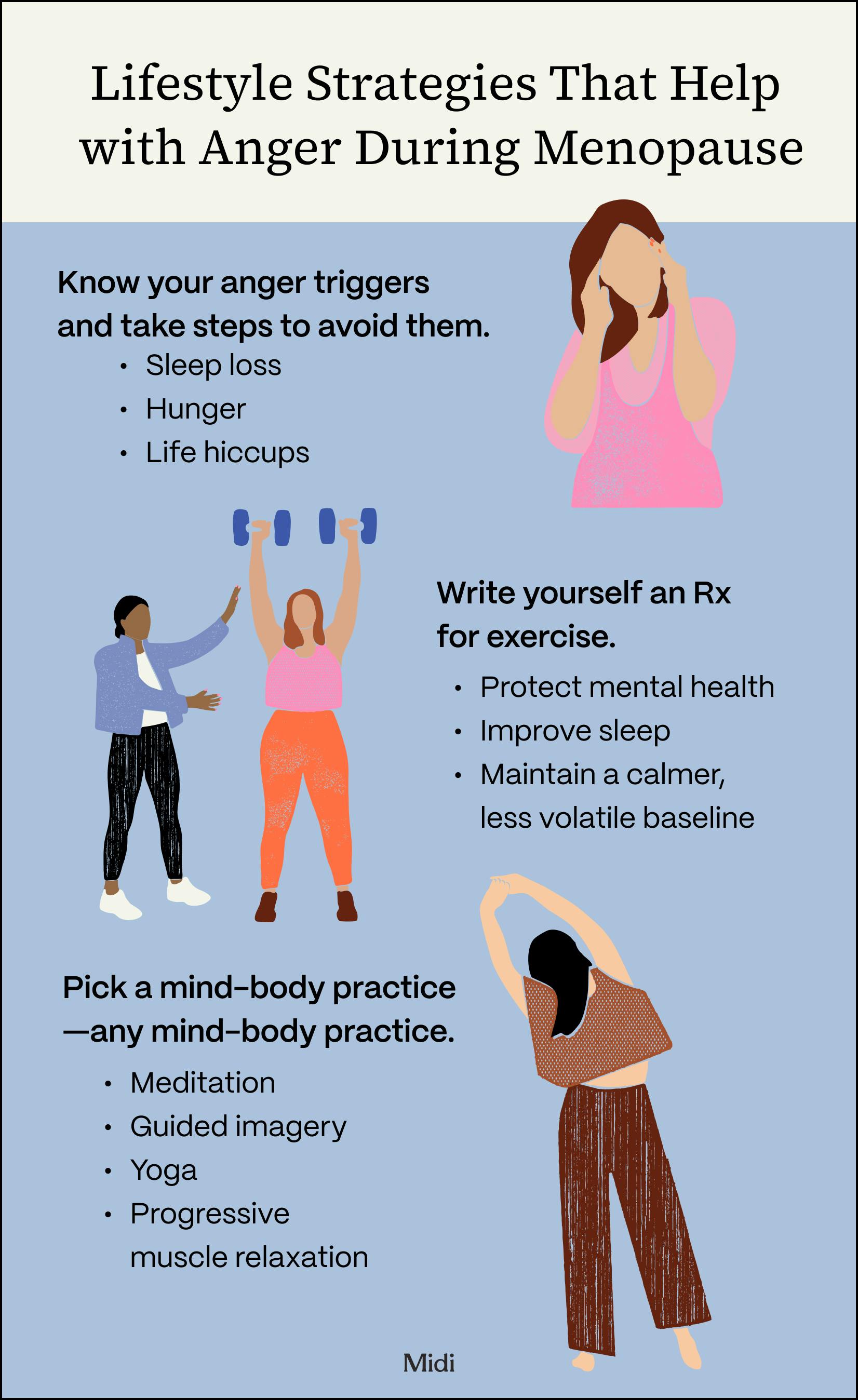
- Know your triggers: Sleep loss, hunger, loneliness, and chronic stress can all shorten your fuse, but your triggers may be unique. Keep track of situations, symptoms, or patterns that tend to precede emotional outbursts so you can plan ahead when possible.
- Move your body regularly: Working out supports emotional health by releasing mood-boosting chemicals like endorphins, dopamine, and serotonin while also helping reduce stress and improve sleep. Even moderate exercise can make a meaningful difference.
- Practice mind-body techniques: Meditation, yoga, guided imagery, progressive muscle relaxation, and other mindfulness practices can help manage anger, strengthen emotional regulation, and improve your ability to respond more calmly during stressful moments.
- Lower your overall stress load: Perimenopause rage often builds over time rather than appearing out of nowhere. Eating regular meals, prioritizing sleep, making time for movement, connecting with supportive people, and carving out even short periods of uninterrupted time for yourself can all help reduce your baseline stress. While lifestyle changes alone aren't enough for everyone, they can be an important part of a personalized treatment plan.
Hormone replacement therapy
Because fluctuating estrogen plays an important role in mood regulation, hormone replacement therapy (HRT, now commonly referred to as menopause hormone therapy, or MHT), may help improve emotional symptoms for some women. If you have a uterus, progesterone is typically prescribed along with estrogen.
Hormone therapy may also improve mood indirectly by helping reduce hot flashes, relieve night sweats, improve vaginal dryness, and eliminate or reduce sleep problems. When those symptoms improve, many women find they have more emotional bandwidth and better stress tolerance.
HRT is available in several forms, including pills, patches, gels, and creams. A healthcare professional, such as a Midi clinician, can help determine which option (if any) is appropriate based on your symptoms and medical history.
Non-hormonal prescription options
Hormone therapy isn't the right choice for everyone. Depending on your symptoms, health history, and treatment goals, your clinician may recommend non-hormonal prescription medications instead.
These may include antidepressants such as SSRIs or SNRIs to help manage mood symptoms, as well as other medications that target anxiety, sleep disturbances, or vasomotor symptoms like hot flashes, when appropriate.
Mental health solutions
Therapy can help you better understand your emotional responses and develop healthier ways to cope with stress, frustration, and anger.
Recent research supports cognitive behavioral therapy (CBT) as an effective non-pharmacologic treatment for menopausal symptoms, showing improvements in quality of life. Dialectical behavior therapy (DBT) and acceptance and commitment therapy (ACT) also offer practical tools for managing intense emotions, improving communication, and responding more thoughtfully during challenging moments.
A healthcare professional can help you determine which approach best fits your needs.
Supplements and botanicals
Some supplements may help support relaxation, sleep, or stress management for certain people. Options such as magnesium, L-theanine, and ashwagandha may be appropriate in some situations, although research is still evolving. Because supplements may not be right for everyone and can interact with medications, it’s best to talk with a healthcare professional before starting anything new.
No single treatment works for everyone. A Midi clinician can help you compare hormonal and non-hormonal treatment options and develop a personalized care plan based on your symptoms, health history, and preferences. Because mood changes often occur alongside sleep issues, hot flashes, brain fog, weight changes, low libido, and other symptoms of perimenopause, addressing the whole picture—not just the anger—can often lead to the greatest improvement.
How Partners and Family Can Support Someone With Perimenopause Rage
Watching someone you love struggle with perimenopause rage can be difficult—for both of you. While you can't make the symptoms disappear, your support can make a meaningful difference. Patience, empathy, and a willingness to learn can help reduce conflict and remind your loved one that they don't have to navigate this transition alone.
Learn about perimenopause
Understanding what's happening is one of the best ways to offer meaningful support. Perimenopause can affect far more than periods and hot flashes—it can also influence sleep, mood, memory, energy, libido, and stress tolerance. Learning about these changes can help you respond with empathy instead of frustration.
Listen without dismissing
Many women say one of the hardest parts of perimenopause is feeling unheard or misunderstood. Avoid labeling your loved one as "irrational," "too emotional," or "overreacting." Instead, listen without trying to immediately solve the problem or explain away what they're experiencing.
Ask questions like:
- "How can I support you right now?"
- "What would make today a little easier?"
Sometimes, simply feeling heard is incredibly validating.
Help lighten the load
Perimenopause often coincides with some of life's busiest years—raising children, caring for aging parents, managing a career, and keeping a household running. Taking something off your loved one's plate can reduce stress and create more space to rest and recover.
Offer to:
- handle a household task without being asked
- take over bedtime for children or dinner duties
- run errands
- help manage family logistics
- encourage time for rest, exercise, or connecting with friends
If sleep disruption is a major issue, look for ways to support better rest, such as adjusting the bedroom temperature, minimizing overnight disruptions when possible, or sharing nighttime responsibilities.
Revisit difficult conversations later
When emotions are running high, it's often better to pause than to keep arguing. Giving each other time to cool down can help prevent saying things you'll later regret.
Helpful phrases include:
- "I'm not mad at you; I'm overwhelmed and need a reset."
- "Can we pause this and talk again in 20 minutes?"
Returning to the conversation after everyone has had time to calm down often leads to better communication and problem-solving.
Practice mindfulness together
Mindfulness isn't just helpful for the person experiencing perimenopause—it can also help partners and family members respond with greater patience during stressful moments. Whether it's taking a walk together, practicing deep breathing, or simply slowing down before reacting, shared stress-management strategies can strengthen communication and reduce conflict.
Remember that perimenopause rage is usually the result of multiple physical, emotional, and life stressors—not a reflection of how someone feels about the people they love. Compassion, curiosity, and teamwork can go a long way during this transition.
When to Seek Care
You don't have to wait until perimenopause rage feels unmanageable to talk with a healthcare professional. If anger, irritability, or mood changes are affecting your quality of life, it's worth bringing them up with a clinician. Help is available, and you don't have to figure it out on your own.
Consider scheduling a visit if:
- Your anger feels difficult to manage.
- Mood changes are affecting your work, family, or relationships.
- You frequently feel guilty or ashamed after emotional outbursts.
- You're experiencing symptoms of anxiety or depression.
- You're having panic attacks or panic-like symptoms.
- Poor sleep isn't improving or is leaving you exhausted.
- Hot flashes or night sweats are disrupting your daily life.
- Your mood symptoms are new or worsening, or you don't feel like yourself.
A Midi clinician can help determine whether your symptoms are related to perimenopause or another condition, discuss hormonal and non-hormonal treatment options, and create a personalized Care Plan based on your symptoms, medical history, and goals.
Get immediate help if you feel unsafe
Seek immediate medical care or emergency assistance if you:
- have thoughts of harming yourself or someone else
- feel unsafe at home
- experience sudden, severe changes in mood or behavior
- develop symptoms such as extreme mood elevation, loss of touch with reality, or feeling unable to control your actions
These symptoms require prompt evaluation and support.
Key Takeaways
- Perimenopause rage is real. Sudden irritability, intense anger, and emotional outbursts are common mood changes during the menopause transition—not a character flaw or relationship failure.
- Hormones are only part of the picture. Fluctuating estrogen, poor sleep, hot flashes, physical symptoms, stress, and the demands of midlife can all contribute to perimenopause rage.
- Treatment is personalized. Lifestyle changes, hormone therapy, non-hormonal medications, therapy, and other approaches may all play a role in managing symptoms, depending on your health history and goals.
- You don't have to wait until things feel unmanageable to seek help. If mood changes are affecting your work, relationships, sleep, or quality of life, talk with a healthcare professional.
- A personalized treatment plan can help you feel like yourself again. A Midi clinician can help identify what's driving your symptoms and recommend treatment options for mood changes, sleep, hot flashes, brain fog, libido, and other symptoms of perimenopause.
If you’re in perimenopause or menopause and want guidance from clinicians who specialize in women’s midlife health, book a virtual visit with Midi today.
Hormonal change is at the root of dozens of symptoms women experience in the years before and after their period stops.
Our trained menopause specialists can help you connect the dots to guide you towards safe, effective solutions.
Whether you need personalized guidance or a prescription routine to tackle symptoms—including brain fog, hot flashes, sleep trouble, mood swings, and weight gain—we’ve got you covered.
Midi’s mission is to revolutionize healthcare for women at midlife, wherever they live and whatever their health story. We believe that starts with education, to help all of us understand our always-changing bodies and health needs. Our core values guide everything we do, including standards that ensure the quality and trustworthiness of our content and editorial processes. We’re committed to providing information that is up-to-date, accurate, and relies on evidence-based research and peer-reviewed journals. For more details on our editorial process, see here.