 Heather Hofflich, DO
A helpful guide can go a long way. DIY mechanics have their car’s manual, road trippers have maps, and world travelers have foreign-language dictionaries. And now women in midlife have this comprehensive, medically backed guide to their perimenopause symptoms.
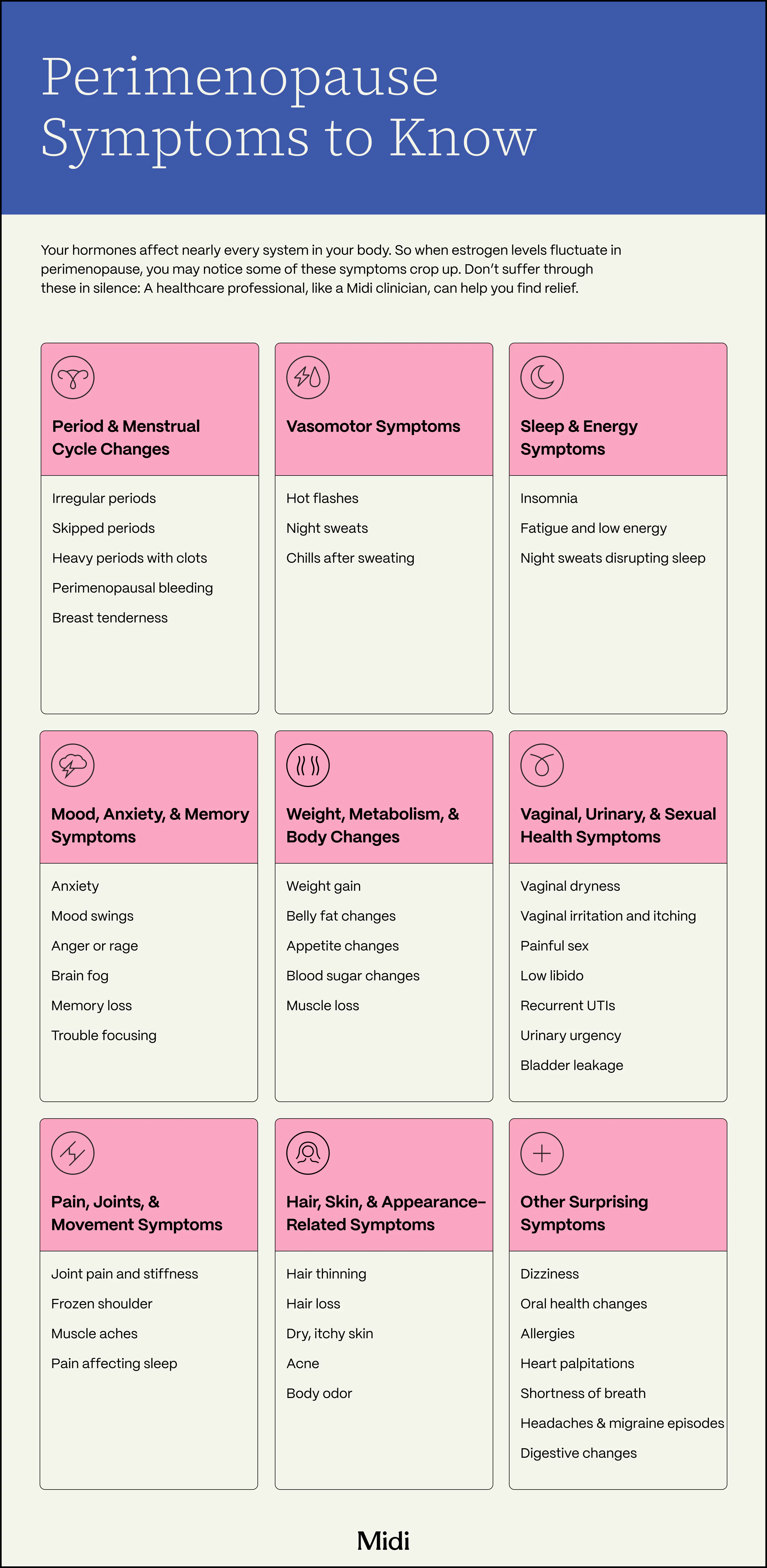
You’ll find everything you need to know about the changes brought on by fluctuating estrogen levels, from the expected (all-over-the-place periods and hot flashes) to the WTF (more body odor?!). While the list is extensive, don’t worry: You won’t experience all these signs of perimenopause. Rather, the point of this guide is to help you deal with the symptoms you’re experiencing or prepare you for what may lie ahead.
No matter what changes are impacting you, take comfort in knowing you don’t have to cope with them alone. Midi Health’s menopause-trained clinicians are here to provide the support and care you need so you feel like yourself again, stat.
Perimenopause is simple to define—it’s the years leading up to menopause, when levels of estrogen and progesterone start to decline—yet also hard to describe. As your hormones embark on their downward path, they fluctuate pretty wildly, triggering a wide variety of perimenopause symptoms, ranging from hot flashes to mental health conditions to changes in your appearance. The reason: There are estrogen receptors all over your body, so when levels of the hormones change, you can feel it everywhere.
Below, find our comprehensive guide to perimenopause symptoms, including links to follow for more information on why they’re happening and how to treat them.
Perimenopause Symptoms: Where to Begin
To understand perimenopause symptoms, you also need to understand the basics of perimenopause, like what’s going on in your body, ways it differs from menopause, and how to know if it’s actually happening.
Here are a few resources, all reviewed by Midi Health medical experts, that can help you find the answers you need:
- What is perimenopause?: your 101 guide to everything going on in your body right now
- Perimenopause vs. menopause: yes, they’re related; no, they’re not the same thing
- Perimenopause symptom tracker: a simple way to track symptoms and find clarity about what you’re experiencing
- Perimenopause test: why at-home tests have several limitations in what they can tell you, even though they may sound promising for determining whether you’ve reached perimenopause
- Menopause symptoms list: a guide to how things will change once you reach menopause and beyond
Perimenopause Symptom Clusters
Keep reading for all the potential signs of perimenopause to keep on your radar, or jump ahead to the symptom clusters you’re most interested in learning about using these links:
- Period and Menstrual Cycle Changes
- Hot Flashes, Night Sweats, and Vasomotor Symptoms
- Sleep and Energy Symptoms
- Mood, Anxiety, and Memory Symptoms
- Weight, Metabolism, and Body Changes
- Vaginal, Urinary, and Sexual Health Symptoms
- Pain, Joints, and Movement Symptoms
- Hair, Skin, and Appearance-Related Symptoms
- Other Surprising Perimenopause Symptoms
Period and Menstrual Cycle Changes
There’s a reason most people think of irregular periods when they think of perimenopause: It’s one of the earliest and most obvious signs that something’s going on with your hormones. While these changes can feel unnerving, they’re cardinal symptoms of the menopause transition that a healthcare professional, such as a Midi clinician, can help you understand. Here are some related signs of perimenopause to look out for.
Irregular periods
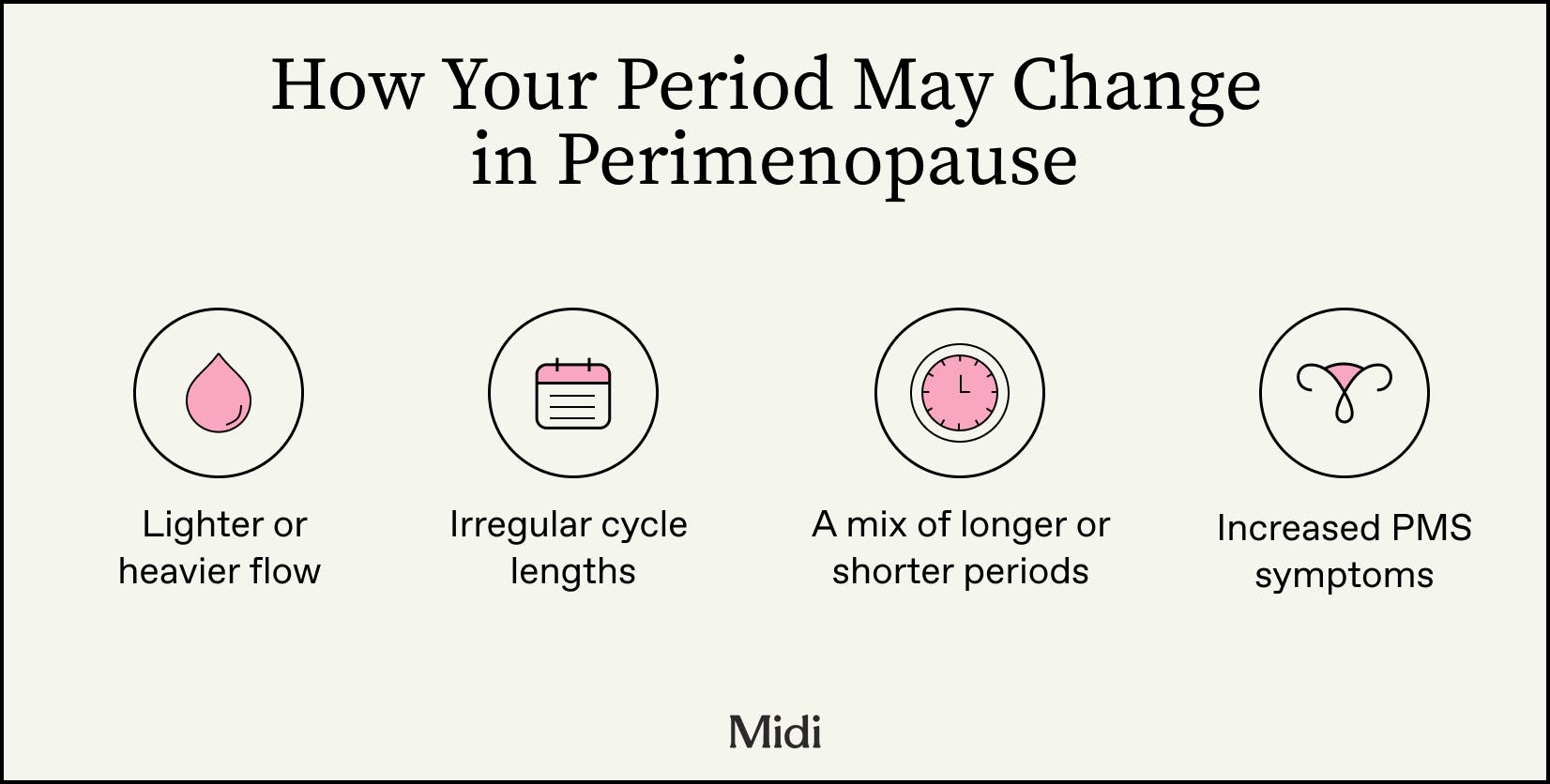
During perimenopause, your periods can start at seemingly random times. What used to occur every month like clockwork is suddenly way less predictable. So one month you may get your period early, after, say, 23 days; the next month it might take 38 days for it to come again. This can be stressful! You never know when it’s going to start and always need to be prepared.
Skipped periods
Not only can your cycle get much longer, you can also miss your period for an entire month, just to have it appear again the following month.
Heavy periods with clots
On top of your periods starting at random times, they can also be much heavier than they used to be. And along with the extra blood is something that can be kind of scary to see: clots. These small, jelly-like clumps in your blood don’t necessarily mean anything is “wrong,” it’s just something that occurs when your flow is heavier than usual.
That said, larger or more frequent clots, increased bleeding over time, or added symptoms like dizziness or shortness of breath all warrant a conversation with your healthcare professional.
Perimenopausal bleeding
In addition to changes to your period, you may also notice unpredictable bleeding at other points in your cycle. This spotting between periods occurs thanks to the mixed messages your hormones are sending your uterus.
Breast tenderness
Did you ever notice that during certain times of the month, your breasts feel achy, swollen, or tender? That’s due to changes in hormones, and it’s exactly why you may also notice breast pain in perimenopause. Because your hormones aren’t fluctuating in a nice, predictable cycle, you may also notice tender breasts more often.
Jump Back to Main Perimenopause Symptoms List
Hot Flashes, Night Sweats, and Vasomotor Symptoms
While irregular periods may be the big clue that you’re entering perimenopause, the symptom that tends to get the most attention is hot flashes. And for good reason: Along with their buddy night sweats, these wild swings in temperature are incredibly common—and incredibly disruptive. You can likely blame your body’s drop in estrogen for these uncomfortable perimenopause symptoms, as lower levels of the hormone can disrupt your body’s ability to control its own temperature.
Here’s the good news: These vasomotor symptoms are highly treatable. A Midi clinician can help decide what treatment is best for you. Available options include hormone replacement therapy (HRT), oral contraceptives, non-hormonal prescription medications, botanicals, and lifestyle modifications.
Hot flashes
Affecting around 4 out of 5 women during menopause, hot flashes don’t just make you feel a tiny bit warmer than usual. Rather, they can be intense, complete with sweating and sudden flushing, and can last up to 10 minutes.
When hot flashes strike, you can try to cool down by having a cold drink, using a cold compress, or removing some clothing (layers are your best friend). HRT is considered the most effective treatment for hot flashes and may reduce their frequency by up to 90%. (More on the available treatments to know below.)
While hot flashes tend to start in perimenopause, they can continue long after you reach menopause (the moment you’ve gone 12 months without a period). The good news is that the further you get from menopause, the less often they will happen and the less severe they will be.
Night sweats
Picture a hot flash that strikes in the middle of the night, and you’ve got night sweats. They can jolt you awake, and you find yourself covered in sweat, needing to change your pajamas just to be able to fall back to sleep.
Lifestyle changes like wearing breathable pajamas and keeping your bedroom temperature low can help, but talk with your clinician if the night sweats are disrupting your sleep regularly. HRT, other prescription medications, and botanical therapies may help decrease symptoms.
Chills after sweating
It’s not just the rush of heat that can leave you feeling out of whack. When the hot flash ends, the sudden drop in temperature can actually cause body chills (similar to how you feel when you’re sick).
What Success Looks and Feels Like
Sleep and Energy Symptoms
Hormonal changes in midlife can wreak havoc on your Zzzzs, messing with your sleep and your energy levels during waking hours. These signs of perimenopause can have a huge impact on your ability to get through your day. Fortunately, you can find real solutions, whether that’s addressing underlying hormonal fluctuations causing sleep disruptions or trying targeted behavioral strategies, supplements, or non-hormonal medications. A Midi clinician can help you find the best options for you.
Insomnia
About 40% to 60% of women have a hard time with sleep during perimenopause and menopause. But when you remember what’s at play—night sweats jarring you awake, stress and anxiety disrupting your calm, changing estrogen levels messing with your sleep/wake cycle—you can see why perimenopause insomnia is so common.
Fatigue and low energy
It doesn’t take a genius to realize that if you aren’t sleeping well, you aren’t going to have the same get-up-and-go springiness that you used to. On top of the poor sleep brought on by the menopause transition, stress and anxiety can worsen the fatigue.
Night sweats disrupting sleep
Even if you are able to turn off your brain and fall asleep easily, there’s no guarantee you’re going to stay that way, thanks to night sweats. During perimenopause, the part of your brain that controls your internal temperature doesn’t function as well as it used to, so you can wake up drenched in sweat for no reason at all.
Mood, Anxiety, and Memory Symptoms
Changes to your mental well-being are the kinds of perimenopause symptoms that can feel especially frustrating—like you aren’t yourself anymore. Whether it’s that you can’t remember a word that feels like it’s on the tip of your tongue or you’re suddenly a lot quicker to get mad at your partner, these signs of perimenopause can hurt your relationships, work, and more.
But these symptoms are treatable, not something you have to white-knuckle your way through. A healthcare professional, like a Midi clinician, can support your emotional health by walking you through your options. What’s right for you will depend on your symptoms and health history, but potential treatments include HRT, prescription medications like SSRIs or SNRIs, targeted supplements, and mindful lifestyle changes.
Anxiety
You can, of course, experience anxiety during any phase of life (as so many of us do), but perimenopause seems especially ripe for it. Part of it is the anxiety of going through menopause itself, part of it is all the other things going on in your life at the same time (like career stress, aging parents, raising teens), and part of it is your dropping estrogen, which impacts neurotransmitters involved in mood regulation. It’s a perfect storm for heightened anxiety.
Mood swings
One moment you’re fine, the next you’re beyond irritated with your spouse. Or you go from feeling pretty upbeat to wanting to cry within the span of 10 minutes. If that sounds familiar, you’re far from alone: About 40% of women going through perimenopause have mood shifts like these.
Like so many other symptoms of perimenopause, mood shifts are linked to your fluctuating estrogen levels. The hormone is involved in the release of feel-good hormones like serotonin, so as estrogen fluctuates and drops through perimenopause, your brain has a harder time keeping your emotions regulated.
Anger or rage
Feeling like you’re way quicker to fly off the handle lately? It’s not all in your head. Your body isn’t producing as much dopamine and serotonin as it used to (thanks to your dropping estrogen levels), you probably aren’t sleeping very well, and you’re dealing with other symptoms of perimenopause like hot flashes and weight gain.
It’s no wonder you may feel at the end of your rope. But as common as menopause anger is, you don’t need to just push through it. A health professional, such as a Midi clinician, can help you come up with strategies to find calm and stay centered.
Brain fog
This perimenopause symptom refers to when you can’t think of a word or someone’s name or why you walked into the living room. It’s like your brain just isn’t working the way it used to. Both estrogen and progesterone are involved in cognitive function, so as levels of those hormones drop, so does your ability to think clearly. Add on trouble sleeping and stress, and you can see why things may feel murky in your mind. Hormone therapy may help, as can other lifestyle changes like improving your sleep.
Memory loss
Similarly to brain fog, estrogen is also closely involved in learning and memory retention. So as levels of the hormone go up and down in perimenopause, you might have a harder time remembering things.
Trouble focusing
Dropping estrogen levels affect more than just your memory. They may also disrupt your ability to pay attention and focus. You may notice that your mind wanders a lot more easily or you just can’t get tasks done as smoothly as you used to.
Jump Back to Main Perimenopause Symptoms List

Weight, Metabolism, and Body Changes
While common, body changes during perimenopause aren’t solely due to what’s going on with your hormones. Instead, it’s likely a mix of hormones, metabolism, and lifestyle changes that all seem to hit at the same time.
A Midi clinician can help you understand what's driving these body changes and build a plan that actually addresses them. It may include care solutions like diet and exercise modifications, HRT, prescription medications such as GLP-1s, and targeted metabolic supplements.
Weight gain
Weight gain in midlife is far from rare—in fact, 87% of Midi patients report weight gain and body changes. Fluctuating hormones are largely to blame for this perimenopause symptom. The drop in estrogen can make you lose muscle and gain fat, which can slow down your metabolism.

Belly fat changes
Less estrogen can trigger your body to hold on to more fat in your midsection. Your body may even shift where it stores it fat, moving it from your thighs and hips to your belly.
It can help to talk with an expert, such as a Midi clinician, about this sign of perimenopause, which is sometimes referred to as meno belly. Your clinician can give nutrition and exercise recommendations and determine whether a weight loss medication like a GLP-1 may be a good option for you.
Appetite changes
This is another one of those perimenopause symptoms that has always probably happened during a specific time of the month (looking at you, luteal phase), but now that hormones are going haywire, it can hit way more often. Estrogen can help suppress your appetite, so lower levels of the hormone can make you hungrier. If this is happening to you, prioritize protein and fiber. Both can help you feel full for longer.
Blood sugar changes
One important role estrogen plays in your body is helping something called insulin sensitivity, or how efficiently your body uses insulin to process glucose. As levels of estrogen drop, so does your insulin sensitivity. And this can raise your risk of high blood sugar and even prediabetes and type 2 diabetes.
Make sure a healthcare professional checks your glucose levels throughout the menopause transition and, if they are creeping higher, talks with you about possible lifestyle and medication treatments to manage them.
Muscle loss
You’ve likely been losing muscle mass for years before perimenopause starts; age-related muscle loss, called sarcopenia, tends to begin around 30 years old. But the rate at which you lose muscle speeds up as you get older. This can cause body composition to change in midlife, with less muscle and more fat. Things that may help: dialing up how much strength training you’re doing, eating plenty of protein, and taking a supplement like creatine.
Jump Back to Main Perimenopause Symptoms List
Vaginal, Urinary, and Sexual Health Symptoms
Estrogen and progesterone are sex hormones, so it makes a lot of sense that as their levels fluctuate and drop in perimenopause, your sexual health is going to take a hit. Collectively, these symptoms are known as genitourinary syndrome of menopause (GSM).
You might feel nervous to bring these symptoms up with your healthcare professional, but take heart: These signs of perimenopause are nothing to be embarrassed about and are incredibly common. An empathetic expert, such as a Midi clinician, can walk you through the available treatment options (there are many!). These treatments include vaginal lubricants and moisturizers, vaginal estrogen, HRT, and non-estrogen prescription options.
Vaginal dryness
Just because your vaginal tissues have been well lubricated for most of your life doesn’t mean they’re going to stay that way through menopause. Estrogen is needed for healthy, elastic, moist vaginal tissue, so as the hormone drops, you’re likely to feel a lot dryer down there. It’s extremely common: More than half of women experience vaginal dryness after menopause. Luckily, vaginal estrogen and lubricants are great fixes for this.
Vaginal irritation and itching
Dry vaginal tissue can bring on lots of sensations, including irritation and itchiness. You might feel like your vagina has a “sandpaper” feeling to it (fun, right?).
Painful sex
Vaginal dryness doesn’t just make you uncomfortable, it can also make intercourse a lot more painful. You may feel nervous to have sex in the first place and, once you begin, you might want to stop it early.
Low libido
It’s hard to get in the mood when sex doesn’t feel as good as it used to—not to mention, when you’re feeling exhausted, stressed out, and altogether not your best. You don’t have to suffer in silence: Talk about it with your partner and a healthcare professional who understands the link between menopause, desire, and arousal, such as a Midi clinician. There are solutions available, from HRT to lifestyle changes.
Recurrent UTIs
In your younger years, urinary tract infections (UTIs) might have been triggered by new partners or having sex more frequently, but during menopause they’re caused by (surprise, surprise) lower levels of estrogen. The other vaginal perimenopause symptoms, like dryness and inelasticity, can make you a prime candidate for UTIs that keep coming back. It’s simply easier for bacteria to make its way up your urethra.
Urinary urgency
Your vaginal tissue isn’t the only thing impacted by dropping estrogen levels—your lower urinary tract is affected, too. Less estrogen can weaken the muscles there, making you need to pee more frequently (and more urgently).
Bladder leakage
The same weak urinary tract muscles that can increase your need to pee can also increase the likelihood that some urine leaks out away from the bathroom. It might happen when there’s sudden pressure in your pelvic floor, like when you sneeze, laugh, or jump.
Jump Back to Main Perimenopause Symptoms List
Pain, Joints, and Movement Symptoms
Hot flashes, mood shifts, and irregular periods may all feel like familiar perimenopause symptoms—but did you know midlife can trigger issues related to your joints and muscles, too? You might be tempted to brush these symptoms off as “getting older,” but they’re treatable.
You can talk with a healthcare professional, such as a Midi clinician, who may recommend HRT or testosterone therapy, diet changes, exercise, supplements, prescription medications for pain, or alternative therapies.
Here are a few signs to watch for.
Joint pain and stiffness
Is this talked about? Not really. Is this common? You betcha. More than 7 in 10 women have musculoskeletal pain in perimenopause, essentially meaning that their joints, bones, and muscles aren’t feeling so hot. Estrogen can help keep inflammation down and joint tissues healthy, so the menopause transition can make your knees, hips, elbows, and shoulders more inflamed and damaged. As a result, this can reduce your range of motion—the stiffer and more painful your joints feel, the harder it’s going to be to move them around.
Frozen shoulder
There’s joint pain, and then there’s such extreme pain and stiffness that you can’t move the joint at all. When the latter happens to your shoulder, it’s called frozen shoulder. It results from inflammation and adhesions developing in the joint.
Frozen shoulder is most common in women ages 40 to 60, perhaps due to the loss of connective tissues like collagen (which keeps joints healthy) that’s triggered by hormone changes during perimenopause.
Muscle aches
Estrogen is also involved in protecting your muscles from inflammation and damage, so low levels can make them more likely to feel achy. This is especially true after you exercise or get injured.
Pain affecting sleep
You also may be more susceptible to pain, due to higher levels of stress and poor sleep. In a vicious cycle, this could make it harder to get a good night’s sleep.
Jump Back to Main Perimenopause Symptoms List
Hair, Skin, and Appearance-Related Symptoms
Because estrogen plays a role in so many of your bodily systems, it makes sense that lower levels of the hormone can affect how you look as well. But a Midi clinician can help, and treatment options include topicals and serums, hormonal and non-hormonal prescriptions, and targeted supplements.
Here’s what to expect so you know when to get help from a clinician.
Hair thinning
Estrogen is involved in your hair’s growth cycle, so you may find that your hair isn’t growing in like it used to. This can make it look thinner or like you have a wider part than before. A clinician can recommend products you can use to help it fill in again, from supplements to topical treatments.
Hair loss
You may also notice clumps of hair falling out in the shower or when you run a brush through it. With less estrogen circulating in your body, your hair follicles can fall prey to testosterone, which can make your strands drier and more brittle.
Dry, itchy skin
Your skin has estrogen receptors that help it stay healthy and maintain its appearance. Specifically, estrogen helps keep skin hydrated, regulate oil production, and keep up a healthy skin barrier. When all that goes haywire, your skin can get dry and itchy.
External moisturizers can come to the rescue here; just look for gentle formulations that won’t irritate your skin further. You can also check out Midi’s prescription-strength solutions that support the vitality and longevity of your skin.
Acne
Changing hormone levels may have brought on zits during puberty, and it can do the same during perimenopause. As estrogen drops, your body becomes more sensitive to androgens (a group of sex hormones), which can result in your skin producing more oil. And more oil means more acne.
Body odor
You already don’t feel like yourself during perimenopause, now you don’t even smell like yourself? Estrogen helps regulate your sweat glands and your skin’s pH levels, so you might be sweating more than you used to—and that sweat can have a different chemical composition. This can lead to more body odor, which can also smell differently than it used to.
Jump Back to Main Perimenopause Symptoms List
Other Surprising Perimenopause Symptoms
Just when you think there can’t possibly be more perimenopause symptoms, there are. These may feel frustrating or full-on alarming to learn about, but rest assured that a healthcare professional, such as a Midi clinician, can help you get to the bottom of things and provide appropriate care solutions. Here are some other more surprising things to keep an eye out for.
Dizziness
Feeling lightheaded and disoriented more often? It could be due to how your hormone changes are affecting your cardiovascular and nervous system (and having a hot flash can make you feel even woozier).
Oral health changes
Lower levels of estrogen can reduce bone density throughout your body, including in your mouth. As your jawbone gets weaker, you may have a higher risk for tooth decay and sensitivity.
Allergies
You may have more severe allergies than you used to, since perimenopause can affect how well your immune system deals with triggers.
Heart palpitations
Because estrogen helps keep blood vessels healthy and relaxed, the perimenopause-induced drop in estrogen levels may affect your cardiovascular system and your heartbeat. This could feel like your heart is racing, fluttering, or even skipping beats. Occasional palpitations aren’t unheard of, but it’s always best to mention them to a healthcare professional.
Shortness of breath
Once perimenopause starts, women tend to have reduced lung function, which can make it harder for you to catch your breath sometimes. This is another symptom worth flagging to your healthcare professional.
Headaches and migraine episodes
Rapid fluctuations in estrogen throughout perimenopause can mess with how often you have migraine episodes and how severe they are.
Digestive changes
Perimenopause can impact how well the gut works and change its microbiome, possibly triggering things like bloating, gas, and constipation.
Jump Back to Main Perimenopause Symptoms List
When to Seek Care From a Clinician
Anyone who is experiencing perimenopause symptoms that affect their quality of life (or are even just bothersome!) should receive care. But certain red flags make it especially important to get help from a clinician.
These red flags include:
- heavy bleeding
- bleeding after sex
- bleeding after menopause
- chest pain
- fainting
- sudden neurological symptoms
- severe depression
- thoughts of self-harm
- new severe pain
- recurrent UTIs
- painful sex
Another benefit to speaking with a menopaused-trained expert, such as a Midi clinician: They will be able to go over your symptoms and medical history, determine whether you are in perimenopause or have hit menopause, and give advice on the best care options for your unique needs.

Perimenopause Symptom Treatments
Now that you know what signs of perimenopause may crop up in midlife, it’s important to know how to treat them. Remember: Just because certain symptoms are normal, that doesn’t mean you have to tough them out.
Here are some helpful resources on the various perimenopause treatment paths available:
- HRT benefits: For certain issues, like hot flashes and vaginal dryness, hormonal therapies are likely your best bet.
- Non-hormonal treatment for menopause: You can improve many symptoms through lifestyle changes or non-hormonal medications.
- Signs you may need HRT: Not sure whether hormone replacement therapy is right for you? This is a good place to start.
- Benefits of vaginal estrogen: This therapy can make a big difference in vaginal dryness and other localized issues.
- Estrogen cream vs. patch: Deciding to supplement your estrogen is one thing, but then you have to decide which form is best for you.
- Testosterone for menopause: It may not get as much attention as other forms of hormone therapy, and it’s not currently available in every state, but it’s still worth knowing about.
You don’t have to make treatment decisions alone. Talk with a menopause-trained healthcare professional, such as a Midi clinician, to figure out the right path forward. Even better news: Midi visits are virtual and covered by major insurance providers across the country.
Key Takeaways
- During perimenopause, levels of estrogen and progesterone decline in an erratic fashion, which can trigger symptoms.
- Because you have estrogen receptors all over your body, the drop in estrogen can impact many different areas.
- Physical symptoms of perimenopause include irregular periods, hot flashes, fatigue, weight gain, and vaginal dryness.
- Perimenopause can also cause mental health symptoms, like anxiety, brain fog, and mood shifts.
Frequently Asked Questions (FAQs)
What are the most common perimenopause symptoms?
Irregular periods, hot flashes and night sweats, trouble sleeping, and vaginal issues are some of the most common perimenopause symptoms.
What are the first signs of perimenopause?
While it varies from person to person, the first sign of perimenopause is often irregular periods. They may come at random times, the flow may be different, and you may skip months completely.
How do I know if my symptoms are perimenopause?
You don’t need to figure out if your symptoms indicate that you’re in perimenopause all by yourself. It’s best to talk with a clinician, who can go over any symptoms you’re experiencing (physical and mental) and determine whether perimenopause is likely to be the cause.
Can perimenopause symptoms be treated?
Absolutely! A lot of treatment options are available, including hormone replacement therapy (HRT), non-hormone medications, supplements and botanicals, and lifestyle changes. These can make a huge impact on many perimenopause symptoms.
When should I book care?
If you’re asking yourself this question, the answer is now. Don’t wait until symptoms are severe to get the help you deserve and start feeling like yourself again.
If you’re in perimenopause or menopause and want guidance from clinicians who specialize in women’s midlife health, book a virtual visit with Midi today.
Hormonal change is at the root of dozens of symptoms women experience in the years before and after their period stops.
Our trained menopause specialists can help you connect the dots to guide you towards safe, effective solutions.
Whether you need personalized guidance or a prescription routine to tackle symptoms—including vaginal dryness and irritation, brain fog, hot flashes, sleep trouble, mood swings, and weight gain—we’ve got you covered.
Midi’s mission is to revolutionize healthcare for women at midlife, wherever they live and whatever their health story. We believe that starts with education, to help all of us understand our always-changing bodies and health needs. Our core values guide everything we do, including standards that ensure the quality and trustworthiness of our content and editorial processes. We’re committed to providing information that is up-to-date, accurate, and relies on evidence-based research and peer-reviewed journals. For more details on our editorial process, see here.