

If you’re perimenopausal or postmenopausal, at some point you may have wondered: Does estrogen increase sex drive? It’s hard to know how to increase libido in women because desire is so complex—especially female desire. It’s not controlled by just one hormonal lever, but rather, it requires the pulling of many different levers throughout the physical body and the psyche. Desire is influenced by everyday stress, like work and little (or big!) annoyances in your relationships. Other factors that have an effect include how well you’re sleeping and how comfortable you feel in your body. All that said, there’s a lot to know and learn about estrogen and its impact on sex drive, which is why we break it all down for you below. (As always, you can get personalized sexual-wellness care from a healthcare professional, like a Midi clinician.
If you find yourself looking for excuses to avoid rendezvousing with your partner, or your vibrator is collecting dust in your nightstand, you’re not alone. It’s normal to experience sexual hiccups during menopause and perimenopause. Still, what’s normal can also feel disconcerting and distressing. And if you’ve heard friends talk about how supplemental estrogen (aka hormone replacement therapy, or HRT) helped give their own libido a boost, you may wonder: Does estrogen increase sex drive?
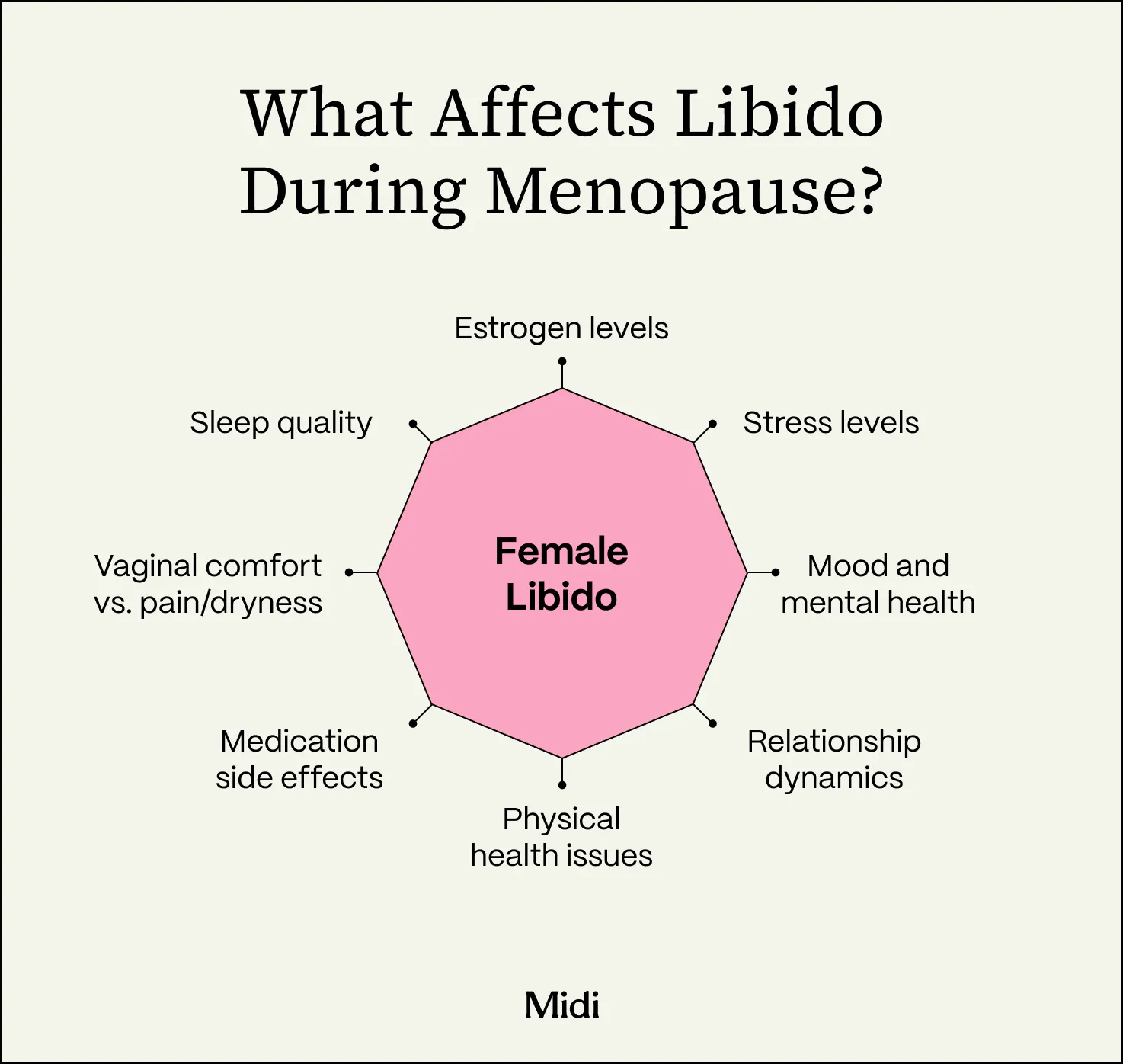
Here’s the thing: Increasing libido in women is not a one-dimensional process. Hormones do play a part, of course, but other factors have a role as well, including sleep quality (which can be ransacked by hot flashes), stress levels (who isn’t stressed right now?), and mood shifts (been raging or weepy lately?). You can add the potential side effects of medication, like from some antidepressants, and—perhaps most importantly—physical discomfort during sex from vaginal dryness.
In these moments, you may look to HRT estrogen for hope—and you should, because it can help with some of those symptoms. Learn more about the complex relationship between HRT and libido below, including what estrogen can and can’t do for your libido changes, what steps you can take now, and when it’s time to reach out to a healthcare professional (like one at Midi Health) for help.
Does Estrogen Increase Sex Drive? The Real Answer
Menopause means your body has stopped producing estrogen, and that has a big impact: The hormone supports sexual comfort and arousal by keeping vaginal tissue soft and lubricated.
“When your body isn’t making estrogen, then your vulva, vagina, and clitoris are not getting its benefit,” explained Lauren Streicher, MD, Professor of Obstetrics and Gynecology at Northwestern University and Founding Medical Director at Northwestern Medicine Center for Sexual Medicine and Menopause in a previous Midi webinar. The result can be what Dr. Streicher calls “sandpaper sex,” which is not fun at all.
HRT—in the forms of vaginal estrogen cream or oral or topical medications—can help by restoring hormones to vaginal tissues and, subsequently, making sex more comfortable. It doesn’t create desire, but it can aid it.
Put it this way: HRT works best to support your sex life when you also work to manage other factors that could be inhibiting your libido, such as stress, fatigue, pelvic pain (which can be managed with pelvic floor therapy, says Dr. Streicher), or relationship strain.
“Libido starts in the brain,” says Dr. Streicher. The sexual response cycle begins with desire and arousal, in which neurotransmitters like dopamine send your brain into reward-seeking mode (the reward being sex). And estrogen won’t necessarily help with that part of the process.
For many women, desire is “responsive,” meaning it needs you to feel safe, rested, and comfortable before moving forward. So, to really understand why you’re not in the mood, the best question to ask yourself first is: “What’s getting in the way of desire right now?”
The answer may change from day to day, and that’s totally fine. It’s all about keeping in touch with your mind and body and doing your best to give them each what they need, so you can have some much-deserved fun.
Estrogen and Sex Drive: What Changes in Midlife
Shifting estrogen levels can spur a few changes that can, in turn, impact your sexual wellness:
- During perimenopause: Before estrogen completely disappears, its levels wildly fluctuate, which creates inconsistent symptoms and unpredictable desire.
- When estrogen is gone: Vaginal dryness takes hold and can make sex a lot less enjoyable.
- Other effects: Estrogen depletion can also come with nonsexual symptoms like recurrent UTIs, urination urgency, burning, and itching. Lumped together, these symptoms are known as a condition called genitourinary syndrome of menopause (GSM).
According to Dr. Streicher, 70% to 80% of women have problems with vaginal dryness, and the low libido numbers are even higher. What’s more: “If untreated, vaginal dryness gets worse, the pain gets worse, and then, of course, your libido disappears,” she adds.
These symptoms can be worsened by sleep disruptions from night sweats and insomnia, mood changes, and body image fluctuations that may come with weight gain and other body shifts that are to be expected in menopause—but can also make sexual confidence and interest feel less accessible.
Does Estrogen Make You Horny? Clearing up a Common Myth
Besides easing some of the physical symptoms like vaginal dryness, estrogen provides other small boosts to libido. It improves blood flow, making arousal easier. And it can enhance dopamine and serotonin signaling in the brain, which can lead to more desire.
Even when HRT helps estrogen rise, you may still struggle with low libido, depending on the rest of the picture. That’s why it’s important to tune in closely to your body and your life. Focus on patterns: When is desire highest? What’s different in those moments?
It’s also worth noting that orgasms change during menopause, which is another potential cause of libido changes.
“Many postmenopausal women are unable to orgasm because of changes in the clitoris,” says Dr. Streicher. “The nerve endings may not be as sensitive, and the blood supply may not be what it used to be.”
Low Libido Isn’t Always Hormones: Common Non-Estrogen Drivers
In addition to GSM, stress, mood, and potential relationship factors, other non-hormonal factors that can affect libido in midlife include medications like selective serotonin reuptake inhibitors (SSRIs), some birth control methods, and blood pressure medications that may inhibit libido as a side effect.
Low libido can also be a sign of certain health conditions, such as:
- thyroid dysfunction (hypothyroidism or hyperthyroidism)
- anemia (iron deficiency)
- sleep apnea (loss of oxygen during sleep)
If you’re concerned that you might have any of these and have checked in with all other potential libido blockers, it’s worth bringing it up with your clinician.
How Midi Helps
Diagnosis and Testing: How Clinicians Think About Libido Changes
When you bring up libido changes with your clinician, they’ll likely have a list of questions to help you both figure out the root cause (or causes). Questions may include:
- Are you struggling with desire? If so, this may be aided by sex therapy, Dr. Streicher notes.
- Is physical arousal an issue? This may be due to vaginal dryness and pain, which estrogen can help ease.
- Are you finding it harder to orgasm? Less sensitive nerve endings can cause this, which may be better stimulated by a sex toy like a vibrator.
- Are you experiencing pelvic pain and pressure? This may require pelvic floor therapy.
You may be inclined to ask your clinician for hormone testing. This is a valid request, but it may not be a helpful one—especially if you’re in perimenopause, because hormones fluctuate so intensely that you won’t get a consistent or accurate read on your levels, Dr. Streicher explains. However, if you believe you have another condition, like one that’s thyroid- or anemia-related, bloodwork may at least help rule out complicating factors.
If you or your clinician suspect that you have GSM—which comes with pelvic pain, recurrent irritation, and sometimes bleeding after sex—a pelvic exam may be the best route forward.
Most important is that you don’t dismiss any distressing symptoms as a “normal” part of getting older. More often than not, you can find treatment and relief.
Treatment Options: What Helps Most, Including HRT and Non-Hormone Approaches
Which treatments will work best for you will depend on the symptoms that need treating.
- For vaginal dryness and GSM symptoms, definitely use lubrication and/or vaginal moisturizer, Dr. Streicher recommends. Your clinician can also prescribe transdermal vaginal estrogen creams to bring greater comfort and moisture to the area. Oral estrogen can help with that, too, if your clinician deems it a good fit.
- Review any prescription medications you’re on with your healthcare professional, who can consider potential side effects that may affect libido. Your clinician can help you make adjustments, if possible.
- If insomnia has you up at night, address it. If it’s due to night sweats, estrogen can help. If stress and ruminating are messing with your sleep, consider talk therapy or cognitive behavior therapy for insomnia, which works to restructure your approach to sleep, both mentally and physically.
- Consider your schedule. Don’t discount a packed calendar as a potential intruder on your sex life. If you can, make some adjustments to your work and social schedules to balance your obligations and make room for a little more spice.
HRT and Libido: Who Might Benefit and What to Expect
If you are perimenopausal or postmenopausal and low estrogen symptoms are leaving you with vaginal dryness and discomfort, messed-up sleep, or up-and-down moods, estrogen in the form of HRT may help tick your sex drive in a positive direction by addressing those underlying inhibitors.
If HRT is a good fit, your clinician (like one at Midi) can help you find the best version for you, whether that’s a local vaginal cream or a more systemic option that comes in pill or injectable form. Talking about your symptoms will help you and your clinician determine which would be best—because symptom relief is a key first step.
With any option, it’s important to know that related changes won’t happen overnight—they’ll happen gradually over a period of weeks. Based on your symptoms and health history, your clinician will outline a timeline and follow-up practice that can help you stay on track with your treatment and make adjustments as needed. Everyone has a different path to feeling their best during menopause.
How to Increase Libido in Women: A Practical Plan
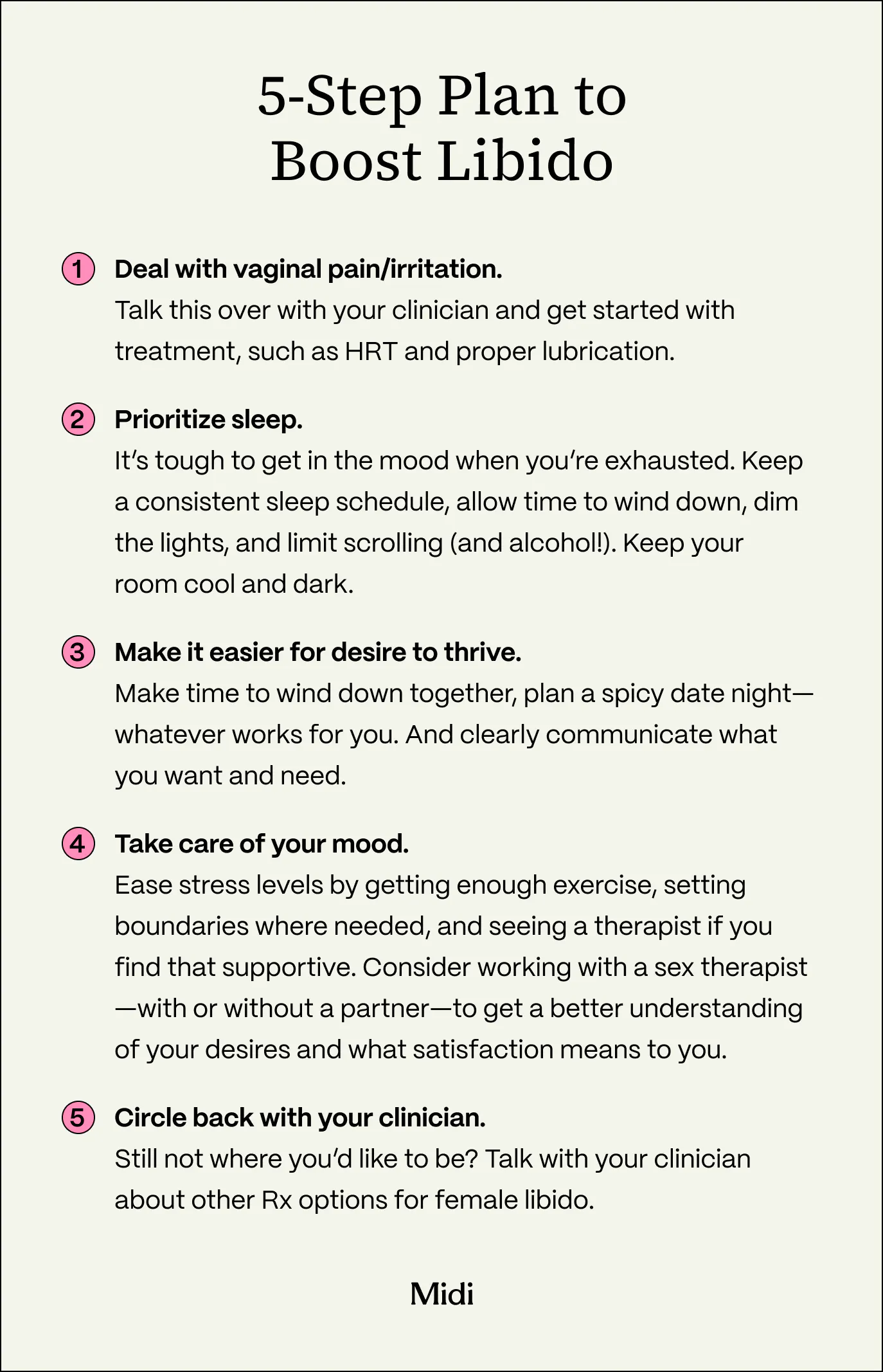
When it comes down to it, improving libido during perimenopause and menopause requires a step-by-step approach—with the guidance of a healthcare professional, of course:
- Step 1: Talk with your clinician about any pain or irritation that’s standing between you and pleasurable sex, and get started with treatment, such as HRT and proper lubrication.
- Step 2: Prioritize getting good, quality sleep. Before winding down, lower the lights, limit social media, and mute disruptive sounds. Keep your room and bedding cool. Keep your alcohol consumption as low as possible (and try not to drink within a couple of hours of light’s out) because alcohol is known to disrupt sleep. If these changes don’t help you sleep better, talk with your clinician about next steps.
- Step 3: Build a healthy environment for desire to thrive. Make time to wind down together, plan a spicy date night—it’s a personal thing, so think about what can work for you. And clearly communicate what you want and need.
- Step 4: Prioritize your mood and ease stress levels by getting enough exercise, setting boundaries where needed, and attending talk therapy if you find that supportive. You can also consider working with a sex therapist—with or without a partner—to get a better understanding of your desires and what satisfaction means to you.
- Step 5: If you’ve worked on these steps and are still not where you’d like to be, talk with your clinician about other prescription options for female libido.
Female Libido Booster: Where Supplements May Fit
If you’re on the quest to improve your libido during midlife, you may be wondering if supplements should have a place in your routine.
Some evidence-informed, research-backed supplements may be a good fit if you’re struggling with sleep or stress, two things that can have a big impact on libido. While supplements aren't a replacement for prescription medications, they can be used as an adjunct to medications to support your care. Many women also turn to supplements as an alternative if prescription medications aren't tolerated, used, or desired.
If you're interested in trying a new supplement, chat with a healthcare professional, like a Midi clinician, to see what's right for you and your health.
Working with a Clinician
If you decide to talk about your libido with a clinician, having the right information at hand will set you up for success. Look back and document your symptom timeline, including any cycle changes, physical pain, and medication changes. Also note your prescription medications.
Unsure how to begin the conversation? You can ask:
- “Do you think this is GSM?”
- “Would local estrogen help make sex more comfortable?”
- “Could any medications I’m taking contribute to low libido?”
You can also ask for help in treating and understanding hot flashes, sleep problems, and mood shifts. After an honest conversation, you and your clinician can agree on a treatment plan and follow-up timeline. If you both decide that HRT is worth a try, your healthcare professional will review the risks and benefits as they relate to your personal medical history.

Key Takeaways
- Female libido is multifaceted, especially during perimenopause and menopause.
- Because of its complexity, there is no single, quick-fix female libido booster.
- HRT can help treat physical symptoms of pain and discomfort associated with menopause.
- HRT can help make sex more physically comfortable during perimenopause or menopause, so while estrogen doesn’t create desire, it can support it.
- Other issues, such as stress management and sleep hygiene improvements, are important components of libido that should be addressed.
Frequently Asked Questions (FAQs)
What is the best hormone for sex drive?
There is no single hormone or hormone replacement therapy that universally improves sex drive for everyone. For menopausal women, estrogen may help improve physical discomfort that can get in the way of desire.
Does estrogen make you horny?
Estrogen can help manage physical discomfort or irritation that can happen with sex in midlife, such as pelvic pressure or vaginal dryness. It may also help improve hot flashes, which may indirectly inhibit libido by interfering with quality sleep. However, estrogen does not address the complete umbrella of desire and is not a magic bullet for libido.
What happens when you start taking estrogen?
Estrogen helps restore hormonal balance to your system, which can also restore muscle tissue softness and lubrication in the vagina, making it less painful to have sex. Its hormone-balancing effects may also help improve hot flashes, sleep problems, and mood shifts associated with menopause, but it affects everyone differently.
What are the first signs of low estrogen?
A year of missed periods defines the beginning of menopause, which means your body is no longer making estrogen. Before that, estrogen gradually declines. Hormonal fluctuations occur during perimenopause, including high estrogen and low estrogen.
How do I know if I need estrogen?
If you haven’t had a period for at least a year and are experiencing symptoms of GMS, you can talk with your doctor about HRT, which may help symptoms improve.
If you’re in perimenopause or menopause and want guidance from clinicians who specialize in women’s midlife health, book a virtual visit with Midi today.
Hormonal change is at the root of dozens of symptoms women experience in the years before and after their period stops.
Our trained menopause specialists can help you connect the dots to guide you towards safe, effective solutions.
Whether you need personalized guidance or a prescription routine to tackle symptoms—including brain fog, hot flashes, sleep trouble, mood swings, and weight gain—we’ve got you covered. Learn more here.
Midi’s mission is to revolutionize healthcare for women at midlife, wherever they live and whatever their health story. We believe that starts with education, to help all of us understand our always-changing bodies and health needs. Our core values guide everything we do, including standards that ensure the quality and trustworthiness of our content and editorial processes. We’re committed to providing information that is up-to-date, accurate, and relies on evidence-based research and peer-reviewed journals. For more details on our editorial process, see here.