



The list of menopause sleep problems is enough to keep anyone up at night, from trouble falling asleep, waking up too early, and who can forget hot flashes and bathroom breaks that rouse you in the middle of the night. Menopause insomnia is incredibly common; it’s a rare woman who doesn’t have trouble snoozing during the night after her estrogen has taken a nosedive.
The mood shifts that happen during this life stage can also have a significant effect on whether you can have a deep and restful sleep. Fortunately, natural remedies for menopause sleep problems can help get your sleep back on track, so you can start snoozing better and waking up refreshed.
I recently saw a funny (har har, not) meme on social media about sleep-deprived midlife women—just one of many that regularly pop up on my feed. It said something like “In 2.8 million years, we’ll catch up on our sleep.” Yeah, yeah, sigh. When we were younger, lack of sleep may have been no big deal. It was something you could handle. Today? Heck no. At least, not for me. I crankily told my son this morning that he can’t mooch off me and play video games for the rest of his life. He’s 10. My sleep is garbage these days, and I’m tired and irritable.
Yes, insomnia and other problems sleeping are common symptoms of menopause, and that can make everything—relationships, work, life—just seem tougher. But you don’t need to just push through and accept it. Natural remedies, mind-body tools, different sleep habits, and medical treatments can all help. There are better nights ahead.
Menopause Sleep Problems: Why Sleep Changes in Midlife
Next time you hang out with your friends of a certain age, compare notes on how well you’re all sleeping. Are they getting enough? Are they wondering whether the glass of wine they’re sipping will wake them up out of a dead sleep and keep them up for an hour? Do they have fantasies about actually sleeping uninterrupted at night?
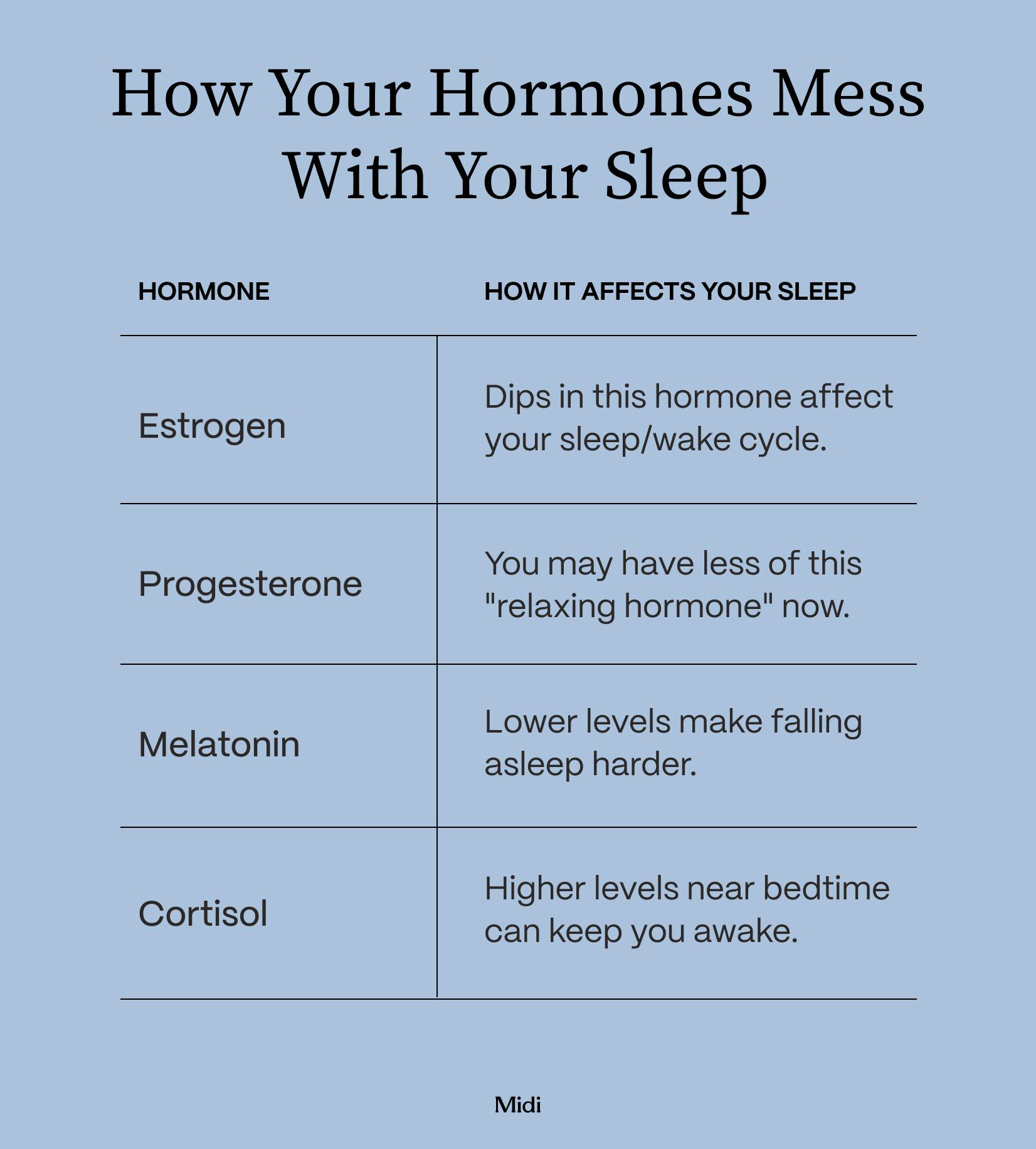
Research shows that 40% to 70% of women in the menopausal transition struggle with sleep. Next to hot flashes, night sweats, and moodiness, sleep problems are right up there with the most common pain points of midlife. This happens for many reasons:
- A decline in estrogen: This affects your ability to fall and stay asleep.
- A decline in progesterone: This affects the GABA system in the brain, which is responsible for helping you relax—and that makes it more challenging for your body to regulate your mood and sleep.
- Night sweats: These hot flashes happen while you sleep, and they can wake you up, too (sometimes drenched to the point that you want to swap out your pj’s for dry ones).
- Your mental state: For instance, if you’re down, depressed, or anxious, that can make it tough to fall and stay asleep.
- Changes in your urinary system: Menopause-related changes can make you need to pee at night more than you used to. This can be a huge sleep disrupter when you have to get up and stagger your way to the bathroom, especially when it happens more than once each night.
What Menopause Insomnia Looks Like Day-to-Day
Until you have a sleep problem, it can be hard to realize how fragile good sleep is. A variety of issues can interrupt your night, but here are some of the common problems you might run into:
- You’re lying awake for hours, possibly watching a mental ticker tape of to-dos, stresses, and anxious thoughts scroll by. This is often referred to as “tired but wired,” because even though you’re physically exhausted, your mind won’t calm down.
- Your sleep is fragmented, interrupted by a sudden urge to throw off the covers, waking up in sweat, or heading to the bathroom (again).
- When you wake up the next day, you feel unrefreshed, even if you’ve been in bed for the 7+ hours that health experts say you’re supposed to get.
You can recover from a single night of this. But when it happens chronically, it’s much harder to bounce back. Enter: fatigue, brain fog, and irritability. You know it, you’ve lived it.
Menopause insomnia is common, on some level or another. So you’re in good company. But you don’t need to just groggily power through—it’s treatable.
Natural Ways to Help Sleep: Set Up Solid, Strong Sleep Habits
A smart first step in getting a better night’s rest is to follow basic sleep habits, which research shows can help. (These habits are also called “sleep hygiene.”) Try these steps:
- Set a sleep schedule: Go to bed and wake up at consistent times each day, whenever possible. (Yes, even on weekends.)
- Play with light: Your environment helps set your circadian rhythm (aka body clock). In the morning, bring on the brightness by opening up shades, getting outside for natural light, and turning on lights in the house. In the evening, lights should go dim, and limit screens as bedtime approaches, especially those close to your face like your phone.
- Follow a wind-down routine: Try doing a few stretches, laying with your feet up on a wall, reading, or listening to a meditation app—find what works for you.
- Keep a restorative bedroom: Your bedroom can be an inviting place for sleep if you keep it cool, dark, and quiet. For night sweats, wear cotton sleepwear and use breathable, cooling bedding.
How Midi Helps Women Get More Sleep
Natural Supplements for Sleep in Menopause: What the Evidence Says
When it comes to sleep supplements for menopause, one option is Midi’s Daily Cortisol Support, which is designed to help regulate the hormone cortisol (aka the “stress hormone”). Chronic stress can upset the balance of that hormone, and one result can be insomnia.
Other supplements that many women turn to are melatonin or magnesium.
- Melatonin is a hormone that your body naturally produces; it starts rising during the evening and peaks at night, and it signals your body to wind-down in preparation for sleep. A melatonin supplement doesn’t directly induce sleep, but it helps shift your body clock so you feel sleepy when you want to conk out. Although research is mixed on the benefits of melatonin in menopause, some women may find taking a supplement helpful, especially when getting their sleep back on track after a disruption like jet lag. (If you already take melatonin, and wonder if it's bad to take melatonin every night, read up on that here.)
- Magnesium is a mineral that calms the nervous system and may help regulate sleep. Research suggests that magnesium supplements may help people who aren’t sleeping well get a better night’s rest, though more studies are needed. Magnesium has a well-known connection to balancing our stress response and mood, and many people don’t get enough of this mineral from the foods they eat. (Midi's Nightly Steady Sleep+ contains magnesium glycinate, among other ingredients, and is built to help women in midlife stay asleep.)
When considering either of these supplements, talk with your clinician (such as a clinician at Midi Health) about how to safely take them, which may include starting with lower doses, checking for interactions with medications, and choosing a brand that is third-party tested and clearly states the actual dose on the label.

Herbal and Botanical Natural Remedies for Sleeplessness
If you’ve ever Googled “botanicals for sleep,” you were no doubt hit with a range of products to buy, all promising a good night of Zzzzs. The options that usually pop up are valerian, chamomile, hops, lavender, kava, and passionflower.
Many of these botanicals don’t have great science behind them, partly because the clinical data is limited, and research hasn’t established standards for how much to take, what formula is best, and how long to take them. Without that, there’s no clear guidance on how to use these.
Here’s what we know:
- Ashwaganda: There’s research showing that the root of this plant may help people sleep more deeply and restfully.
- L-theanine: An amino acid found in green tea leaves, this may help people wind down and fall asleep more quickly by slowing racing thoughts, research shows.
- Magnolia + Philodendron: A combination of two bark extracts, this may help ease anxiety levels, which may indirectly lead to a better night’s rest.
- Valerian and hops: One review of herbal sleep aids suggests that valerian may help people fall asleep faster by calming the GABA receptors in the brain, though more studies are needed. The same was found for hops, especially when combined with valerian.
- Passionflower and lavender: There’s some evidence—though it’s limited— that passionflower might help people sleep longer. And inhaling the scent of lavender improved sleep quality for younger adults, says one study, though they were taught better sleep habits as well.
- Chamomile and kava: There’s not much evidence that either of these have an impact on sleep, and kava in particular has the potential for risky side effects.
Talk with your clinician before using any herbal supplement. Check for interactions with existing medications and use trusted brands, with clear labeling and independent testing. If you do use a supplement, it’s best when combined with good sleep habits—not as a replacement for them.
Mind-Body Natural Remedies to Help You Sleep
You can take some natural steps to shake off stress and lower the chance of insomnia—during the day, during the lead-up to bedtime, and in the middle of the night:
- Mind-body moves: Relaxation techniques can have a powerful effect on your sleep. Try some deep breathing exercises, which have been shown in multiple studies to lower the body’s stress response. Another science-backed stress reducer: Progressive muscle relaxation, in which you sequentially tense and relax different muscles in your body. A bonus: These techniques feel really, really good.
- Gentle movement: Research has long shown that you can set yourself up for a good night’s rest by moving your body during the day. Any kind of exercise can help, and it doesn’t have to be vigorous: Take a walk in nature, go for a leisurely bike ride, or take time to do some yoga or stretching exercises.
- Cognitive behavior strategies: When you have insomnia, getting to sleep can feel like the hardest thing you have to do each day. There are the middle-of-the-night, stress-induced thoughts that play over and over again, whether about the world’s problems or your own to-do list. And then there’s the worry that you won’t fall back asleep, leading to unhelpful clock-watching and the anxiety that produces.
Cognitive behavioral therapists suggest that rather than forcing sleep, you try to stay awake calmly. For example, head into another room with a (nonriveting) book and read. A sleep doctor told me that he embraces being awake when it happens—he tells himself, “It’s so cozy and warm, and no one is demanding anything from me right now.” This advice has helped me during my bouts of sleep anxiety; I’m able to calm down, snuggle up, and promise myself that sleep will come when my body is ready again. I tend to drift off faster and with much less drama.
Diagnosing Menopause (And Other) Sleep Problems
Sleep problems are so thorny, with a range of potential causes. You may need to consider medical concerns, like sleep apnea (a condition more common in menopause), that need to be diagnosed. Then there’s the hormonal changes of menopause that affect sleep, midlife stress that can be really intense, and poor bedtime habits (ahem, doomscrolling), among other possible culprits. It can all be tough to figure out. And it’s sometimes not just one thing.
It’s valuable to talk with a clinician about your sleep. (By the way, they should absolutely not dismiss your concerns with something like “Don’t we all!” or “That’s menopause for ya!”) Describe how long your sleep problems have been going on and what type you’re experiencing—for example, if your main issue is falling asleep or repeatedly waking up during the night. The clinician should also ask about other menopausal symptoms like hot flashes, night sweats, and mood changes, as well as your medical history.

Depending on that initial evaluation, your clinician might recommend additional testing, like a sleep study, anxiety or depression screening, or thyroid screening, among others.
A clear diagnosis will help decide what types of treatments—behavioral changes, natural remedies, medications, hormone therapy—make sense for you.
Options Beyond Natural Remedies
Besides natural ways to improve your Zzzzs, some medical treatments can help—and they’re often successfully combined with natural remedies:
Behavioral therapies
One powerful tool is cognitive behavioral therapy for insomnia, which targets things like unhelpful thinking patterns and how they factor into sleep problems—plus how to rewire your brain for a better night of sleep. Treatment can also include a specific exercise strategy to promote better sleep, nutritional advice, and structured stress management (for example, a set schedule of relaxation techniques).
Menopause-specific treatments
For hormonal support, hormone replacement therapy (HRT) has been shown to improve your ability to fall asleep and your sleep quality. This is especially true if you have hot flashes and night sweats, which are caused by fluctuating hormones.
Targeted medications
A prescription medication to treat vasomotor (hot flash) symptoms, called fezolinetant, comes with a bonus benefit: lessening sleep disruptions. One study in the journal Maturitas found that after 4 weeks, fezolinetant increased alertness and reduced daytime sleepiness, compared with a placebo. Other short-term medications may be used to help you sleep, such as gabapentin. These medications may not be right for everyone, but there are several options you and your clinician can consider for your care plan.
Working with a Healthcare Professional on Menopause Insomnia
It can be helpful to keep a sleep journal, where you write down your sleep symptoms, such as when you went to bed and what time you woke up, if you woke up several times to go to the bathroom, if you woke up at 4:30 a.m. and couldn't go back to sleep, and how you feel when you wake up—refreshed or dog-tired. Write down info on medications, supplements, and caffeine and alcohol, including how much you’re taking or drinking and when.
During midlife, there’s a lot of value in working with a hormone-informed clinician—like those at Midi—who understands both menopause and sleep medicine and employs a hefty dose of empathy. Because there are so many possible remedies to try, you’ll want a medical partner who can identify what might actually be helpful for you—rather than just throwing everything at the wall and seeing what sticks. They can balance natural, medical, and hormonal treatments in a way that makes sense for your body and symptoms.

This is your sleep. You’re the only one who truly knows yourself and your life. You don’t want a clinician to tell you to give up TV in the evening if that’s your one chance to chill out. You and your clinician are a team here, and the plan should feel doable and aligned with your preferences and values.
When to Seek Care: Red Flags
Sometimes, your symptoms might be telling you that something could be wrong—and no natural remedy or perfect sleep hygiene will address it.
If you notice any of these signs, call your clinician. If symptoms are serious or life-threatening, go to the ER or call 911.
- You feel hopeless, have uncontrolled anxiety, or are having thoughts of self-harm or not wanting to live.
- You snore loudly or gasp at night. (At least, your bed partner tells you you do.) Both are signs of sleep apnea.
- You have chest pain or severe shortness of breath.
- You have warning signs that signal a possible medical problem that needs treatment. Those signs include unintentional weight loss, sudden changes in appetite, night sweats with persistent fever or swollen lymph nodes, or new and intense pain.
Key Takeaways
- Insomnia and disrupted sleep are incredibly common in menopause, affecting up to 70% of women.
- Natural therapies for sleep include exercise and good nutrition, following sleep hygiene habits, cognitive behavioral therapy for insomnia, and certain supplements, when recommended.
- Additional medications for menopause can also help sleep, such as HRT or the vasomotor prescription medication fezolinetant.
- Talk with a menopause-informed clinician, who can help evaluate the factors causing your sleep problems and put together a sleep-better plan that works for your life.
Frequently Asked Questions (FAQs)
What helps menopausal insomnia?
Several treatments are available to help with menopausal insomnia. Practicing good sleep habits, using natural and herbal supplements that might help (like melatonin or magnesium), getting support through cognitive behavioral therapy for insomnia, treating underlying medical issues, and considering HRT and other prescription medications may help.
Why do I wake up at 3 a.m. in perimenopause?
Hormonal fluctuations that begin during perimenopause can make you more vulnerable to sleep disruptions. Factors like night sweats, needing to use the bathroom, or stress—all of which can increase during perimenopause—can wake you up.
What is the strongest natural sleep remedy?
One of the best natural sleep treatments available is a type of mental health treatment called cognitive behavioral therapy for insomnia, or CBT-I. This combines techniques including sleep hygiene habits and cognitive therapy to help you overcome physical and mental issues that prevent good sleep.
What herbal remedies are good for menopause sleep problems?
Although many herbal remedies for insomnia are available, valerian root, hops, and lavender are the ones that have some evidence of being effective.
How to improve sleep during menopause?
Talk with your clinician about an evaluation to identify underlying health conditions that can impair sleep, such as a thyroid disorder, so they can be treated appropriately. Next, improve your sleep hygiene with habits like maintaining a consistent sleep-wake time and relaxing before bed. Seeing a professional for cognitive behavioral therapy for insomnia can help. You can also discuss the option of taking HRT, other meds, or supplements, depending on the cause of your sleep problems.
If you’re in perimenopause or menopause and want guidance from clinicians who specialize in women’s midlife health, book a virtual visit with Midi today.
Hormonal change is at the root of dozens of symptoms women experience in the years before and after their period stops.
Our trained menopause specialists can help you connect the dots to guide you towards safe, effective solutions.
Whether you need personalized guidance or a prescription routine to tackle symptoms—including brain fog, hot flashes, sleep trouble, mood swings, and weight gain—we’ve got you covered. Learn more here.
Midi’s mission is to revolutionize healthcare for women at midlife, wherever they live and whatever their health story. We believe that starts with education, to help all of us understand our always-changing bodies and health needs. Our core values guide everything we do, including standards that ensure the quality and trustworthiness of our content and editorial processes. We’re committed to providing information that is up-to-date, accurate, and relies on evidence-based research and peer-reviewed journals. For more details on our editorial process, see here.