

 Claudia Levine, MD
A dark, quiet space, your favorite pajamas, phone docked in the other room, and the thermostat set to exactly 67 degrees—as women in midlife, we often go to great lengths to get a good night’s sleep. For many, supplements like melatonin have become part of the nightly routine.
But is it bad to take melatonin every night? If you’re wondering how much melatonin you can take, why it may not be working anymore, or whether it’s even the right sleep aid for you, read on for the facts about what melatonin can—and can’t—do for better sleep.
Many women in midlife struggle with sleep: trouble falling asleep, waking in the middle of the night, or feeling wired when they desperately want rest. For years, melatonin has been the go-to supplement for help falling asleep. But it’s natural to wonder: Is it bad to take melatonin every night?
If you’re questioning whether nightly melatonin is truly safe—or whether it can be part of a healthy long-term sleep plan when used wisely—you’re not alone. Frustrations are common. Some women feel melatonin isn’t working anymore, others wake up groggy, and many find themselves increasing the dose over time just to get the same effect. And with the rising popularity of magnesium for sleep, many women may wonder if switching to that supplement makes more sense.
Let’s break down how melatonin works, whether it helps for the type of sleep concerns you’re experiencing, and when it may fall short—especially for hormone-related sleep issues in perimenopause and menopause. We’ll also cover dosing basics, safety considerations, and other tools that may work better, so you can make informed choices and finally move toward more consistent, restorative sleep.
Is It Bad to Take Melatonin Every Night? Big Picture Overview
If you’re already taking melatonin for sleep or considering it, you may be wondering whether it’s something you can safely use in the long term. While short-term melatonin use is generally considered safe for many adults, there are still open questions when it comes to nightly, ongoing use.
Whether taking melatonin every night is “bad” depends on several factors, including the dose you’re taking, product quality, potential interactions with other medications, and the reason you’re using melatonin in the first place. What works well for one person may not be appropriate for another.
One of the concerns clinicians have with women using melatonin is that they may put off having a full medical exam that could uncover other underlying issues. Some medical conditions may actually get worse when taking substances that increase sleepiness, such as obstructive sleep apnea.
The key takeaway is that melatonin is a tool, not a cure-all. And when it comes to something as essential to your overall health as sleep, you deserve more than a temporary bandage. A thoughtful, whole-picture approach is far more likely to lead to lasting rest.
What Melatonin Is and How It Works in Your Body
Before starting a regimen or spending money on a supplement, you may be wondering what melatonin actually is. Melatonin is a hormone your body naturally produces to help regulate your circadian rhythm, aka your sleep-wake cycle.
Production increases in response to darkness and decreases with light, which is why melatonin plays such a key role in your internal sleep-wake cycle. As melatonin production declines with age, many people turn to supplements during midlife to help with sleep changes.
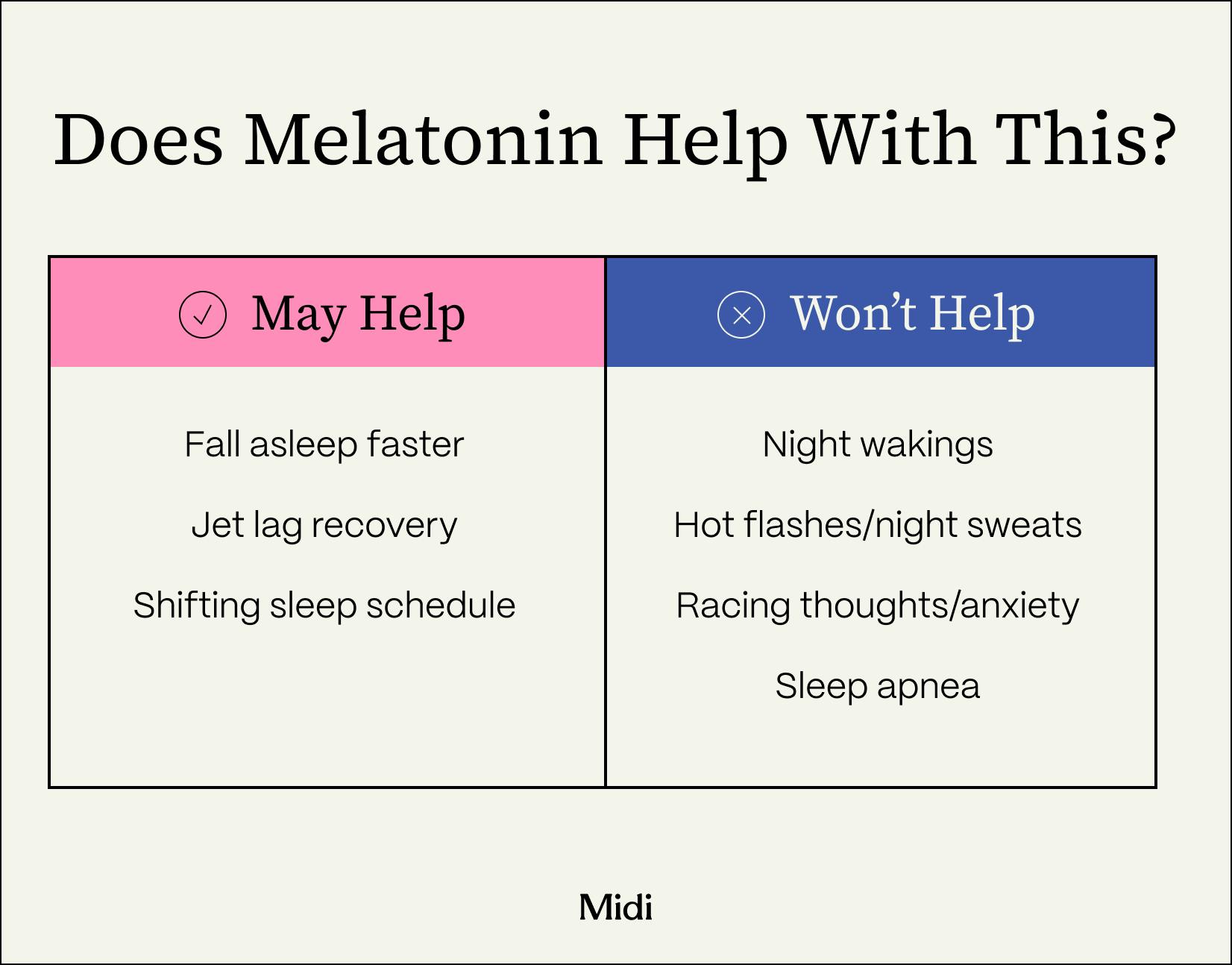
Melatonin supplements are widely available over the counter and come in many forms, including tablets, capsules, gummies, and liquids. However, it’s not a knockout pill that immediately puts you to sleep. Instead, it works by influencing sleep timing. It may help you fall asleep faster, but it does not reliably help you stay asleep through the night.
It’s also important to recognize how easily melatonin’s natural signal can be disrupted. Bright light exposure in the evening, screen use at night, travel across time zones, and shift work that conflicts with your body’s natural rhythms can all interfere with melatonin’s production and release. When those signals are out of sync, sleep can suffer, regardless of whether you’re taking a supplement.
Does Melatonin Work? When It Helps—and When It Doesn’t
Many women in perimenopause and menopause are familiar with repeated nighttime awakenings. Unfortunately, melatonin supplements generally won’t help with this.
What melatonin can do is help people who on occasion have trouble falling asleep a little faster, or regulate sleep onset timing, for people who do shift work or are handling jet lag. For many, even shaving off a few minutes to fall asleep can be invaluable. It can also be useful for jet lag, when sleep cycles are disrupted from traveling across time zones.
So although melatonin won’t put you to sleep instantly—again, it’s not a knockout pill—it can help regulate your sleep schedule.
Melatonin also won’t address hormonal issues that often disrupt sleep, such as hot flashes, night sweats, mood shifts, or anxiety. These are important factors to discuss with your clinician. It will also not treat insomnia disorder, but it may be supportive for occasional sleep disturbance, shift work, or jet lag.
Other common sleep disruptors—like inconsistent bedtimes, late-night caffeine or alcohol, screen time before bed, or underlying sleep disorders—also won’t be fixed by a melatonin supplement. That’s why it’s important to tackle these root causes first.
Is Melatonin Bad for You? Safety, Side Effects, and Long-Term Use
When it comes to taking melatonin for sleep, there are some common side effects to consider, especially at higher doses. These can include vivid dreams, morning grogginess, headaches, or simply feeling “off” the next day. That’s worth weighing before starting a nightly melatonin routine.
Another concern is that melatonin supplements are not regulated by the FDA. As a result, the actual melatonin content can vary widely between products and may not match what is listed on the label. Some supplements contain more or less melatonin than expected, along with added ingredients such as herbs or sugars. This lack of consistency makes dosing unpredictable.
Emerging research has also raised concerns about long-term melatonin use and cardiovascular health, including an observed association with a higher risk of heart failure. A recent observational study looked at adults with chronic insomnia who took melatonin for at least a year compared to adults who didn't take it and noted an increased risk of heart failure or death among those who took melatonin versus those that didn't. This study cannot prove a cause-and-effect relationship, but does raise safety concerns about the chronic use of melatonin.
While this does not prove that melatonin causes heart failure, it does highlight the need for caution with prolonged, nightly use. This is especially important for women who take other medications or have underlying health conditions. In those cases, it’s essential to talk with a healthcare professional before continuing or starting melatonin.
Finally, it’s important to remember that “natural” does not automatically mean risk-free. When melatonin is taken every night for months or even years, potential safety issues deserve closer attention.
How Midi Helps Women Get More Sleep
How Much Melatonin Can You Take? Dose, Timing, and Age Factors
When taking melatonin for sleep, finding the right dose is a delicate balance, and factors such as age and life stage play a role in how much you’ll need. Many women are surprised to find they do well on lower doses—anywhere from in the 0.5- to 4-milligram (mg) range. In menopausal women, most clinical trials have evaluated prolonged-release (PR) melatonin 2 mg, and that is the dose with the strongest evidence base behind it. Starting low gives you room to adjust upward if needed, but it’s always best to speak with your clinician first.
Because higher doses and long-term use carry potential side effects, it’s natural to wonder how much melatonin is safe before risks or diminishing returns become a concern. Larger doses don’t necessarily help you fall asleep faster—in fact, less is more.
Timing also matters. Studies show that taking melatonin three hours before bedtime is more effective than taking it closer to bedtime or even right at lights-out. This allows your body time to absorb the supplement and helps regulate your internal clock. But timing also depends on what you’re treating– i.e. sleep onset insomnia, sleep maintenance insomnia, sleep phase disorders, shift work disorders or jet lag - while overall the evidence is not conclusive, all these conditions require dosing and timing considerations that are slightly different. Again: this is a time to talk to your clinician for help to customize how you take melatonin.
It’s important not to chase sleep by gradually increasing your dose on your own. If melatonin isn’t helping, speak with your clinician. They can help you uncover underlying issues that might be keeping you from a good night’s sleep and determine the safest, most effective approach. There should be a sleep assessment and an evaluation for underlying issues. Finally, if you’re been taking it for more than three months, talk to your healthcare clinician about alternative treatment regimens you might also consider.
Why Does Melatonin Not Work for Me? Troubleshooting Common Sleep Scenarios
If you have found that melatonin simply doesn’t really help, you’re not alone. While melatonin can be helpful for falling asleep more easily when taken at the right time and dose, there are many common sleep challenges it simply can’t fix.
Night wakings are a huge issue for many women in midlife. If you’ve ever found yourself awake at 3 a.m., you know exactly what we mean. Unfortunately, getting back to sleep in the middle of the night isn’t something melatonin reliably helps with, especially when the underlying cause is hormonal, stress-related, or environmental. Those wide-awake moments often send women wandering into the kitchen or reaching for their phones on the way back from the bathroom, which can make falling back asleep even harder.
Perimenopause and menopause bring significant hormonal shifts that commonly disrupt sleep. Hot flashes, night sweats, mood changes, and anxiety can all interfere with rest, but these symptoms fall outside melatonin’s wheelhouse. In these cases, it’s worth talking with your healthcare professional about whether hormone replacement therapy (HRT) or other treatments might better address the root cause of sleep disruption.
If your to-do list starts running through your mind the moment your head hits the pillow, melatonin is unlikely to deliver a sound night’s sleep. Anxiety and racing thoughts create a state of mental alertness that supplements can’t override. Simple strategies, like writing worries or tasks down before bed, can help quiet the mind by giving those thoughts a place to land until the next day.
Finally, while melatonin plays a role in regulating sleep timing, it works best when your circadian rhythm is relatively stable. Irregular bedtimes, late-night scrolling, or inconsistent schedules can all blunt its effectiveness. If melatonin is not working, practical changes like putting your phone in another room, switching to a paper book at night, or creating a consistent wind-down routine may be more effective. For shift workers, tools such as blackout curtains and a structured sleep ritual, even during daytime hours, can be far more impactful than a supplement alone.
Diagnosis and Treatment Options: When Sleep Problems Need a Deeper Look
It’s never a bad idea to talk with your clinician about ongoing sleep issues, especially if you’ve been relying on melatonin. Having a clinician weigh in can help you understand whether it’s the right tool for you or whether something else may be contributing to your sleep challenges.
During an appointment, you can expect questions about how long you’ve been taking melatonin, along with your health history, work schedule, and bedtime routine. All of these details help guide more personalized sleep advice.
Your clinician may also screen for common conditions that affect sleep, such as insomnia, anxiety or depression, thyroid disorders, sleep apnea, or restless legs syndrome. Any of these can interfere with restful sleep and may need to be addressed directly rather than managed with supplements alone.
clinicians have several tools to help uncover the root cause of sleep problems. They may suggest keeping a sleep diary to spot patterns, completing questionnaires to better understand symptoms, or, when appropriate, undergoing a sleep study to evaluate breathing or movement-related disruptions during the night.
The benefit of a proper diagnosis is clarity. With a fuller picture, your clinician can help determine whether melatonin, magnesium, or another supplement has a role in your routine, or whether other interventions are more likely to improve your sleep long term.
Other Treatment Options: Beyond Melatonin for Better Sleep
Thankfully, you can do plenty of things on your own to get a better night’s sleep beyond taking supplements. Because restful sleep depends so much on good sleep hygiene, the encouraging news is that there are changes you can make starting tonight that can truly move the needle.
One of the most effective places to start is with consistent sleep and wake times. Going to bed and waking up at the same time each day helps your body learn when it’s time to rest and when it’s time to be alert.
You can support this rhythm by managing light exposure. Aim for a cool, dark bedroom with no screens or outside light at night. In the morning, letting natural light into your space can help reinforce your body’s internal clock and make it easier to feel sleepy at night.
Caffeine and alcohol are also worth a closer look. If caffeine affects your sleep, try limiting intake to earlier in the day and experiment to find a cutoff time that works for you. Alcohol may make you feel drowsy at first, but it often leads to more nighttime awakenings and lighter, less restorative sleep.
Cognitive behavioral therapy for insomnia (CBT-I) is a first-line gold standard treatment method for insomnia that can be especially effective. Techniques such as relaxation exercises and journaling before bed can also help offload worries so your mind can settle more easily at night.
It’s also important to acknowledge that perimenopause and menopause symptoms, including hot flashes, night sweats, and mood changes, are major sleep disruptors. In these cases, addressing hormonal changes with your clinician, including discussing whether hormone replacement therapy (HRT) is appropriate, may significantly improve sleep.
Finally, don’t underestimate the power of small, non-medication tools. Regular daytime physical activity, a calming evening wind-down routine, and simple environment tweaks (such as lowering the bedroom temperature, reducing noise, or using a sound machine) can all support more consistent, restorative sleep.
Supplements like melatonin or magnesium may still have a role, especially when used thoughtfully and for short periods. The key is remembering that supplements are just one tool in a larger sleep toolkit, not a standalone solution for long-term sleep health.
Working with a Healthcare Professional
When you meet with your clinician or clinician, bring a full list of any sleep aids or supplements you’re taking, including doses and timing. It also helps to write down questions ahead of time, such as whether melatonin is appropriate for your age, what dosage makes the most sense, and how long you should plan to use it—this way nothing gets forgotten.
A good clinician can help you create a plan to incorporate melatonin safely or gradually taper off if needed. They can also suggest long-term strategies that are more sustainable than relying on supplements alone.
Healthcare professionals who understand women’s health, like the ones at Midi Health, are especially equipped to tailor recommendations to your life stage. Their expertise in hormone shifts and midlife sleep challenges ensures you get a plan that’s more than just a quick fix.
When to Seek Care
Melatonin use is usually well-tolerated but always be aware of these red flags. Physical symptoms like loud snoring, gasping for air, or pauses in breathing during sleep also warrant medical evaluation, as they may signal conditions like sleep apnea. Excessive daytime sleepiness that interferes with driving, work, or daily functioning should not be ignored.
If you find yourself needing progressively higher doses of melatonin, or if you’re combining multiple sleep aids without a clinician’s guidance, it’s important to seek help. Self-medicating in this way can backfire, worsen sleep problems, and pose risks to your overall health.
Other symptoms—such as chest pain, unexplained weight changes, frequent nighttime urination, or other new or concerning health changes—should also prompt a conversation with your clinician.
Key Takeaways
- Melatonin can help you fall asleep faster, but it won’t fix night wakings, hormone-related sleep disruptions, or racing thoughts.
- Lower doses (often 0.5 to 4 mg) are usually more effective than higher doses—less is often more.
- Timing matters: Take melatonin three hours before bed for best results.
- Long-term nightly use carries potential risks, including side effects, inconsistent product quality.
- Good sleep hygiene is key to lasting rest, with supplements like magnesium serving as an optional support for those who need extra help relaxing and falling asleep.
- If sleep issues persist or you notice red flags like worsening mood, excessive daytime sleepiness, or breathing disruptions, seek medical evaluation rather than relying solely on supplements.
Frequently Asked Questions (FAQs)
What sleep-related issues can melatonin help me with?
For many people, nightly melatonin can help you fall asleep faster, but it won’t fix night wakings, hormone-related sleep issues, or racing thoughts. Melatonin is best used for occasional sleep disturbance. It can also be used in sleep phase disorders, shift work or jet lag when you’re trying to reestablish a better sleep schedule – a way to “re-tune” your body clock.
What sleep-related issue will melatonin NOT be able to help with?
Melatonin isn’t universally “not recommended,” but healthcare clinicians caution against nightly, long-term use without supervision. It doesn’t address root causes like hormonal changes, stress, sleep disorders, or lifestyle factors, so relying on it alone isn’t a sustainable solution. It will also not resolve insomnia disorder.
What are the downsides of melatonin?
Common downsides include vivid dreams, morning grogginess, headaches, and feeling “off” the next day. Supplements aren’t regulated by the FDA, so actual doses may differ from what’s on the label. Taking high doses over time may increase side effects without improving sleep.
Does long-term melatonin use cause heart problems?
There’s little data right now. One observational study found a possible link between long-term melatonin use and higher risk of heart failure, but a direct cause-and-effect relationship has not been proven. This is one reason why prolonged nightly use should be discussed with a healthcare professional.
Who should avoid melatonin?
People with certain health conditions, those taking other medications, or anyone who experiences side effects from melatonin should consult a clinician before use. Children, pregnant or breastfeeding individuals, and those with heart problems or sleep apnea may need extra caution.
If you’re in perimenopause or menopause and want guidance from clinicians who specialize in women’s midlife health, book a virtual visit with Midi today.
Hormonal change is at the root of dozens of symptoms women experience in the years before and after their period stops.
Our trained menopause specialists can help you connect the dots to guide you towards safe, effective solutions.
Whether you need personalized guidance or a prescription routine to tackle symptoms—including brain fog, hot flashes, sleep trouble, mood swings, and weight gain—we’ve got you covered. Learn more here.
Midi’s mission is to revolutionize healthcare for women at midlife, wherever they live and whatever their health story. We believe that starts with education, to help all of us understand our always-changing bodies and health needs. Our core values guide everything we do, including standards that ensure the quality and trustworthiness of our content and editorial processes. We’re committed to providing information that is up-to-date, accurate, and relies on evidence-based research and peer-reviewed journals. For more details on our editorial process, see here.