

 Rebecca Yee, MD
If you’re going through perimenopause or menopause, you may be considering your bone health for the first time, well, ever—so you may be wondering what are the best calcium supplements for women. It’s pretty well known that bone health can decline with age and calcium is a mineral that helps bones remain strong.
But other aspects of the mineral may be a mystery, such as other calcium benefits to consider and how much calcium per day is the right amount. At Midi Health, we’ve got info that can help midlife women keep their bones strong—keep reading for a guide to calcium supplements.
You can probably still hear your parents’ voice echoing in your brain: “Drink your milk for strong bones!” We learned as kids that calcium is key to a solid skeleton—true, and that’s even more important now in midlife—but it’s not only fuel for maintaining strong bones and teeth. The most abundant mineral in the human body, it also helps with muscle movement and nerve functioning, among other things.
The amount of calcium you need each day depends on your age, according to the National Institutes of Health, ranging between 1,000 and 1,300 milligrams (mg) per day. To put that in perspective, 1 cup of 2% milk contains 352 mg of calcium.
Milk is just one way to get calcium, of course. Whatever your diet, you may benefit from taking calcium supplements to get to that recommended amount. As with any supplement, though, you can find different kinds and varying qualities, which is what we’re here to help you understand.
The best calcium supplement for you will depend on your calcium needs—determined by how much you get via food—as well your health and medical history. Below is a guide with details about what calcium can do for your body, different types of calcium supplements, and how to add them into your daily wellness routine.
Best Calcium Supplements for Women: What “Best” Actually Means
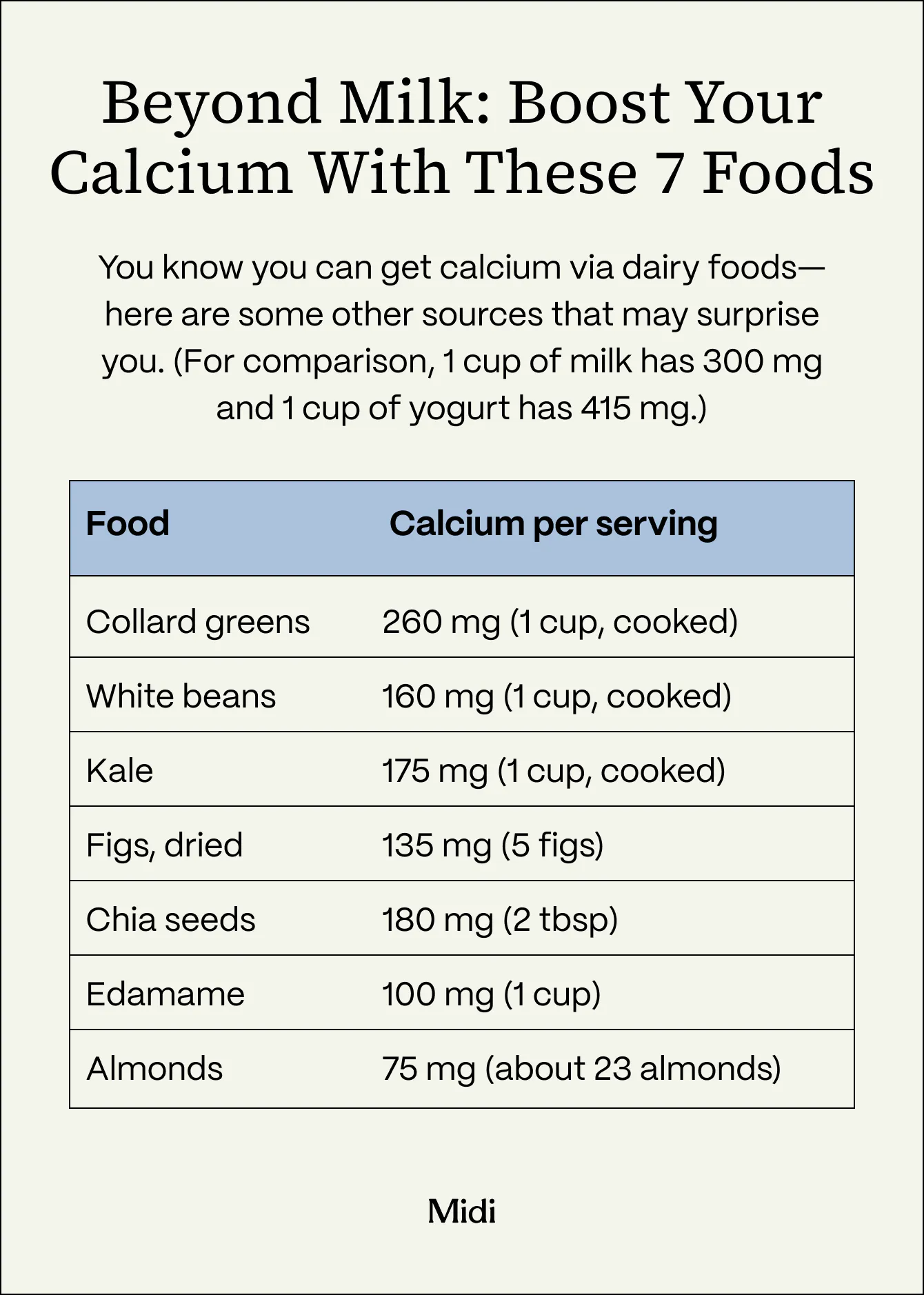
Getting enough calcium for your health starts with making sure you’re getting an optimal amount in the foods you eat. Aside from milk, main sources of the mineral include:
- cheese, including cottage cheese
- soybeans
- fortified plant milk
- yogurt
- kefir
- greens like collard greens, cabbage, and broccoli
Because calcium deficiency becomes more likely with age, especially in menopausal women, it’s important to prioritize getting enough of the mineral in your diet.
If you have a dairy allergy or resistance, you’re probably shaking your head right about now—and yes, it can be tough to get enough calcium if you have to skip the dairy aisle at the grocery store. Even for some people who aren’t lactose intolerant, excess dairy can be hard to digest and cause bloating, constipation, and other digestive icks.
A supplement can come in handy for all of these reasons, but choosing the right one matters just as much as choosing to take one at all. It’s important to think about the type of calcium supplement, what the right dosage is, and how to integrate it into your existing vitamin and medication routine.
On the flip side, there’s also such a thing as getting too much calcium, which can result in kidney stone risk and medication interaction. That’s why it’s good to know how much you need before you start supplement shopping, which is something a clinician—such as one at Midi—can help you determine.

What Does Calcium Do for Your Body?
Most of the calcium in your body is stored in your bones and teeth, where it provides the structural framework that keeps them strong. A tiny amount also circulates in your blood and tissues and helps a range of body processes.
Calcium is critical for:
- Muscle movement: Calcium is essential in the process of a muscle contracting, which allows the body to move (and the heart to pump!).
- Heart function: It also helps the heart keep pumping at a normal pace.
- Nerve signaling: Calcium is involved in communication between nerve cells.
- Hormone balance: It helps the body release hormones so they can do their various jobs.
True Stories Of Transformation
How Much Calcium per Day Do Women in Midlife Need?
Most women ages 50 and under should get 1,000 mg of calcium daily from food and supplements combined. Women ages 51 and older need a bit more: 1,200 mg daily from food and supplements.
It’s also important to know that for calcium to be absorbed, especially for bone density, you need vitamin D as well. That’s another nutrient that midlife women may be deficient in, so it’s
worth talking with your clinician about both. One study, for instance, found that supplementing with both resulted in a 16% reduced risk of hip fracture.
Think about your total calcium intake, including how much you get in the foods you’re eating. (One way to do that: Track a sample day of your intake using an online calcium calculator, like one from the International Osteoporosis Foundation.) You can view supplements as a way to bridge a dietary gap, not as a route to the entire amount that you need of a specific nutrient.

Calcium Citrate vs. Calcium Carbonate
When you peer at the back of a calcium supplement bottle, you may notice that they aren’t all the same. Some capsules use calcium citrate to deliver the nutrient, while others use calcium carbonate. Here’s the difference:
- Calcium carbonate has more elemental calcium and is usually more affordable. For best absorption, take it with food.
- Calcium citrate is often easier to absorb and may be a better fit for people with digestion issues or those who take acid-reducing medications. You can usually take it with or without food.
How to Take Calcium for Better Absorption
The body absorbs calcium best in small amounts, so it’s recommended to aim to take 500 mg or less at one time when taking it in supplement form. You can split higher doses into several doses to take throughout the day.
Also remember to check labels for the type of calcium you’re taking and its amount of pure elemental calcium (for example, a 1200 mg tablet may contain 500 mg of elemental calcium, depending on the form you’re taking). And pair calcium carbonate with food. It’s also important to talk to your clinician about the best timing for taking the supplement, because this can affect how certain meds are absorbed.
What to Look For in Calcium Supplements
Along with deciding between calcium citrate or calcium carbonate, you should also consider the form of calcium supplement that would work for you. Calcium supplements come in capsules, chews, and powders that you can add to breakfast oats or a smoothie—and there’s no difference in how they’re absorbed.
As is with many health moves, the best one for you is the one you’ll take consistently. And as is true with all supplements, make sure whatever you choose is labeled as third-party tested for quality.
Your clinician can help you determine whether it would make sense for you to pair calcium supplements with magnesium, vitamin D, or vitamin K. (While pairing these nutrients may help optimize calcium and support bone health, their roles are distinct. Vitamin D is essential for calcium absorption; vitamin K is thought to support bone metabolism but it’s uncertain whether it helps your body absorb calcium or vitamin D.)
And of course, it’s important to consider the cost per serving to gauge how each type would fit into your budget long term.
Potential Calcium Benefits in Midlife
The hormonal changes that happen in midlife significantly up the risk of osteoporosis. That’s because estrogen—which has been helping our bodies maintain bone density—sharply declines. Throughout our adult lives, our bones naturally break down and build back up, but with less estrogen, the breakdown process begins to speed up, and the bone formation process can’t keep up.
Calcium supplements on their own aren’t enough to support bone density, but it’s worth noting that a very low intake of dietary calcium is associated with lower bone density. Prioritize food sources of calcium whenever possible, but supplements can help fill the gaps.
Risks, Side Effects, and Interactions to Know
There are some recognized potential side effects of taking big doses of calcium supplements, though not everyone will experience them. These include constipation, bloating, and gastrointestinal discomfort.
Calcium supplements can also interfere with the absorption of iron and some medications, such as thyroid medication, certain antibiotics, and osteoporosis drugs. So if you take any of those, you should consider the timing of your supplements—for instance, you could take those meds in the morning and calcium later in the day.
Be extra cautious and talk with your clinician if you have a history of kidney stones. And if you have heart-health issues (high blood pressure, high cholesterol, or a history of heart attack or stroke), talk with your healthcare professional before starting calcium supplements to discuss dosage. If you’ve received a diagnosis of osteoporosis, your healthcare professional can weigh in on whether you should take supplements along with any other treatment they prescribe.
Food First, Supplements Second
As with many supplements, first prioritize getting the nutrients you need through a healthy, balanced diet. For calcium, you can do that by consuming:
- dairy milk
- fortified plant milks
- calcium-set tofu
- canned fish with bones
- cottage cheese
- yogurt
- Kefir
- calcium-heavy greens like cabbage and broccoli
The nutrients in these foods not only support the health of your bones—they also contain other nutrients and antioxidants that support overall cardiometabolic health.
Most women should be able to meet the recommended daily amount of the mineral with food, but calcium supplements can help fill the gap if needed. A good first step is to get a baseline sense of your calcium intake: Jot down what you usually eat in a week and do a rough count of how much calcium you’re typically getting. You can then talk over this info with your clinician and get advice on ways to bump it up if needed.
Working With a Clinician on Bone Health in Menopause
Calcium supplements, if needed, are just one aspect of taking care of bone health in midlife. Other things to discuss with your healthcare professional are fracture risk, family medical history, bone density testing, and the hormonal shifts of menopause that affect bone health.
To get the most out of a discussion like this, it can be beneficial to:
- Bring along a list of supplements and medications.
- Ask whether you should consider vitamin D supplements.
- Discuss whether your exercise routine should be tweaked for bone health.
- Go over your family history of bone loss and whether either of your parents fractured a hip.
- Talk over your own medical history, including steroid therapy, smoking, or alcohol use.
- Ask whether you should consider osteoporosis screening, which can also tell if you have osteopenia, a lower-than-normal bone density.
Once you’ve established a plan, make sure you’re clear on how and when you should follow up, as well as which symptoms you should keep an eye out for. When you work together with a menopause-informed healthcare professional, like a clinician at Midi, you can do your best to keep your bones and body strong.

Key Takeaways
- Calcium is the body’s most abundant mineral—it supports bone health, muscle health, nerve health, and more.
- Calcium deficiency risk increases with age, especially for women in menopause due to hormonal changes that affect bone density.
- Calcium supplements can support the nutrient’s function in midlife, and it can fill in the gaps if your eating habits aren’t sufficiently calcium-rich. Food sources of calcium should be your first go-to, though, because of the critical nutrients they contain.
- You can talk with your healthcare professional about finding the best calcium sources for you. There are different types and forms of calcium supplements, and it’s important to consider dosage and timing, as well as potential medication interactions, when choosing the one that’s right for you.
Frequently Asked Questions (FAQs)
What is the best calcium supplement for women in midlife?
The best calcium supplement for women in midlife is one that supports a person’s individual needs. This can be discussed with a trusted healthcare professional, who can help you choose the right type of calcium supplement and advise you on dosage.
How much calcium per day should I take in supplement form?
The recommended calcium amount for women—considering both food and supplements—is 1,000 mg/day for women ages 50 and under and 1,200 mg/day for women ages 51+. Calcium supplements are best absorbed in amounts of 500 to 600 mg of elemental calcium each.
What does calcium do for the body besides support bones?
Along with helping to maintain strong bones and teeth, calcium helps with muscle movement, nerve messaging from the brain, hormone balance, and blood vessel function.
Is calcium citrate better than calcium carbonate?
It depends on your needs. Calcium carbonate has more elemental calcium, is usually more affordable, and should be taken with meals. Calcium citrate is often easier to absorb, usually can be taken with or without food, and may be a better fit for those with digestion issues or who take acid-reducing medications.
Should women in menopause take calcium supplements automatically?
Not necessarily—it depends on how much calcium you typically get from food and your individual health situation, including your bone health. Talk it over with your healthcare professional.
If you’re in perimenopause or menopause and want guidance from clinicians who specialize in women’s midlife health, book a virtual visit with Midi today.
Hormonal change is at the root of dozens of symptoms women experience in the years before and after their period stops.
Our trained menopause specialists can help you connect the dots to guide you towards safe, effective solutions.
Whether you need personalized guidance or a prescription routine to tackle symptoms—including brain fog, hot flashes, sleep trouble, mood swings, and weight gain—we’ve got you covered. Learn more here.
Midi’s mission is to revolutionize healthcare for women at midlife, wherever they live and whatever their health story. We believe that starts with education, to help all of us understand our always-changing bodies and health needs. Our core values guide everything we do, including standards that ensure the quality and trustworthiness of our content and editorial processes. We’re committed to providing information that is up-to-date, accurate, and relies on evidence-based research and peer-reviewed journals. For more details on our editorial process, see here.