


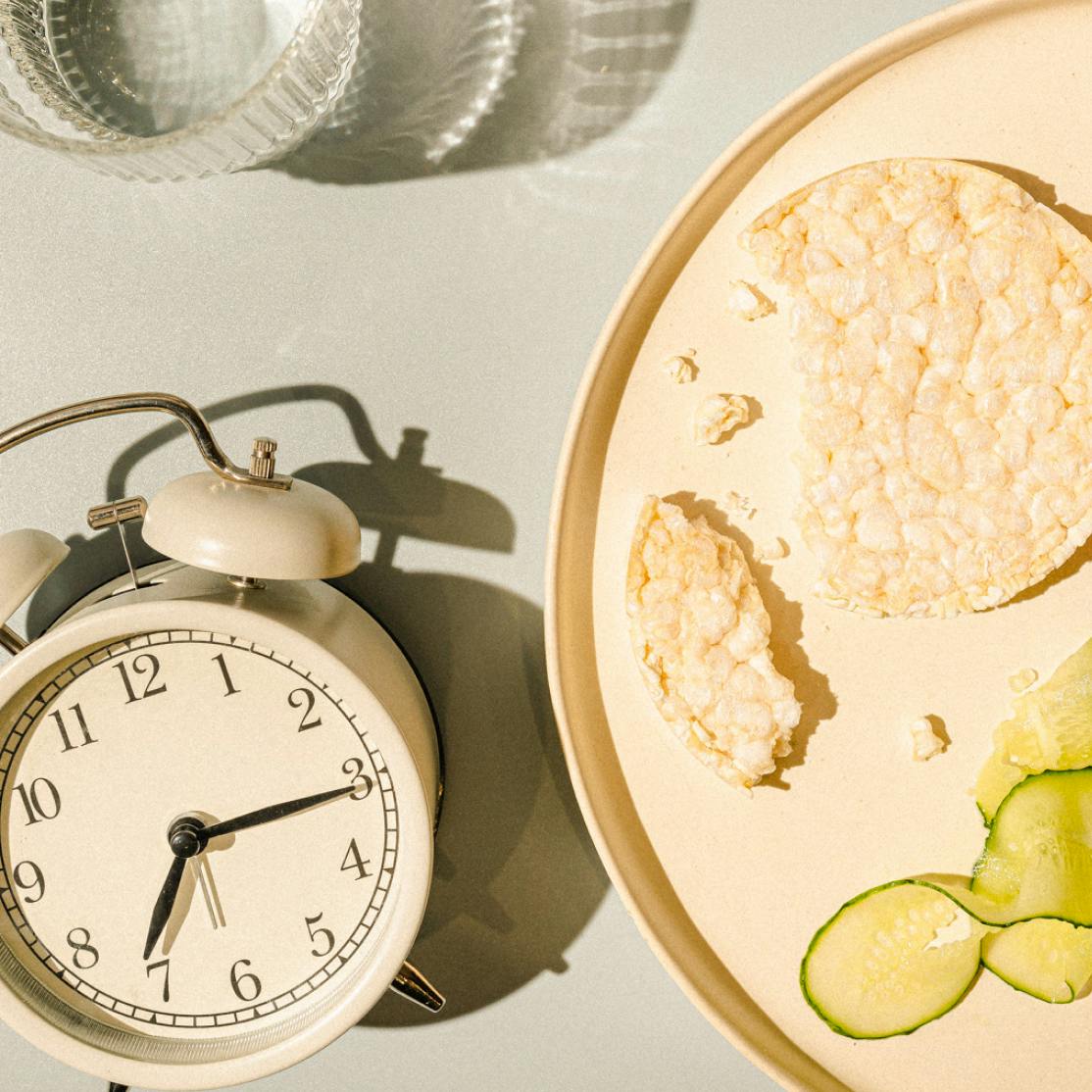
Intermittent fasting for weight loss during menopause has become a popular way for women in their 40s and 50s to reset their metabolism, adapt to hormonal changes, and shed stubborn belly fat. Instead of focusing on what you eat, this approach centers on when you eat, cycling between periods of eating and fasting. The key to making it work: Nourishing your body with protein-rich, nutrient-dense foods during eating windows to keep your energy high and your body happy.
At first glance, menopause and intermittent fasting seem about as related as peanut butter and pickles. One's a natural (if sometimes frustrating) biological transition, while the other is basically setting an eating schedule and sticking to it. But here's the thing: They actually make a pretty good team.
If you're going through menopause, you've probably noticed your body doing some things it never used to, like storing fat around your middle no matter what you eat or making the scale creep up despite your best efforts. Intermittent fasting is one technique used by many people (in menopause or not) to help them maintain a healthy weight.
So, is intermittent fasting actually a good idea for women dealing with menopause? Let's dive into what you can realistically expect, explore the different ways to make it work, and figure out whether it’s right for you.
Understanding Menopause and Weight Gain
Here's a fun fact that's not actually fun at all: Throughout their 40s and 50s, the average woman gains an average of 1.5 pounds per year. Sure, that doesn't sound like much, but if you do the math, it's 15 pounds per decade. And even if your weight stays relatively stable, you might notice your clothes fitting differently around your midsection. Suddenly, you've got this spare tire situation going on that wasn't there before.
So what's the deal? Menopause weight gain is a perfect storm of aging and hormones. As we get older, we naturally lose muscle (which is like having a slower metabolism engine), and as life gets busy, many women are less physically active.
But the real troublemaker here is the drop in estrogen that defines menopause. This hormonal shift completely changes how your body handles and stores fat. Add in lovely menopause symptoms, like night sweats that wreck your sleep and stress that makes you want to stress-eat everything in sight, and you've got a recipe for weight gain that can feel impossible to reverse.
What Is Intermittent Fasting (IF)?
Here's where intermittent fasting is different from every other "diet" you've tried: It's not really a diet at all. It’s not about what you eat—it's about when you eat. Instead of grazing all day long (hello, late night snack attacks), you compress your eating into specific time windows and then give your digestive system a break. While you can set up your fast any way that works for you, there are a few common methods.
- 16:8 method: Pick an 8-hour window to eat, then fast for 16 hours. So you might eat from 10 a.m. to 6 p.m., then call it quits until the next morning. It's like skipping breakfast or having an early dinner.
- 5:2 diet: Eat totally normally 5 days per week, then eat very little (around 500 calories) on 2 nonconsecutive days. Think of it as having two "reset" days per week. Maybe you pick Mondays and Thursdays, when you don't have dinner plans anyway.
- Alternate-day fasting: This one's pretty much what it sounds like—you alternate between normal eating days and very low-calorie days (about 500 calories if you normally eat 2,000, which is 25% of your daily intake). It's like the 5:2 method's more intense cousin. Research shows hunger doesn’t decrease on fasting days, though, which may make it harder to stick with.
The idea of intermittent fasting is that by extending how long your body goes without food, you impact hormonal patterns, metabolism, gastrointestinal function, and other body processes. (More on this below.) And that’s what can lead to health benefits like weight loss, fat loss, improved insulin sensitivity, better heart health, lower inflammation, and more. Another reason this approach to eating can be effective: By restricting when you can eat, you naturally will find yourself consuming fewer calories, which can further aid weight loss (no pre-bed handful of chocolate chips).
If you’re wondering whether there’s a best intermittent fasting method for menopause, there isn’t. The best one is the one you’re able to stick with consistently, without feeling deprived or overly ravenous (which may contribute to overeating).
Weight Loss Success Stories
How Intermittent Fasting Affects Menopausal Women
While anyone can use intermittent fasting as a tool to improve their health, intermittent fasting can be especially beneficial for women going through menopause. Here's why it could be your new best friend:
- It can reduce overall weight and belly fat: The research on this is actually pretty encouraging. Research shows that pre- and postmenopausal women can lose a significant amount of weight with intermittent fasting. For instance, postmenopausal women who did alternate-day fasting for 24 weeks lost an average of 12% of their body weight. And postmenopausal women who ate in a 6-hour window and fasted for 18 hours per day lost an average of 3.3% of their body weight in 8 weeks. That group also lost fat, including visceral fat, which is the kind in your belly that can be especially dangerous to your health. This is key for women in menopause, since the drop in estrogen can cause fat to get redistributed from elsewhere on your body to your belly.
- It can improve insulin sensitivity: The changing hormones of menopause can impact your gut microbiome, which can then lead to insulin resistance (a risk factor for type 2 diabetes). Intermittent fasting has been shown to improve insulin sensitivity and fasting insulin levels after 8 weeks in postmenopausal women.
- It can reduce inflammation and boost metabolic health: As we age and gain weight, our blood pressure and cholesterol often start to creep up, too. On top of that, lower estrogen levels brought on by menopause can lead to more plaque building up in your arteries (estrogen helps protect against plaque buildup). By helping you lose fat and reducing insulin spikes, intermittent fasting may help bring down overall inflammation, blood pressure, and LDL cholesterol. The result: a healthier cardiovascular system.
Potential Challenges of Intermittent Fasting During Menopause
Intermittent fasting isn’t always a walk in the park, even in the best of times (changing how you’ve eaten for decades is hard!). Layer on menopause, and the entire process can be even more challenging. Don’t beat yourself up. Instead, go in with an awareness of how you may feel. Here are the curveballs you might encounter and how to handle them:
Hormonal fluctuations may impact your hunger.
Thanks to dropping estrogen levels (which used to help keep your appetite in check), you might find yourself feeling hungrier than a teenager after soccer practice.
The fix: Make protein the star of the show during eating windows. It'll keep you fuller longer and help preserve your muscle mass while you lose weight. Win-win.
You’re already tired; fasting can make it worse.
Between night sweats turning your sleep into a hot mess and the natural fatigue that comes with hormonal changes, adding fasting to the mix might leave you feeling like you need a nap by 10 a.m.
The fix: Don't waste your eating windows on junk. Pack in the nutrients—especially on those 5:2 or alternate-day fasting days. And stay hydrated! Add some electrolytes to your water if you're feeling particularly drained.
Your mood is going to be all over the place, which can make you crave comfort food.
The hormonal changes of menopause can increase your risk of mood disorders like depression and anxiety. This helps explain why the risk of binge eating goes up during this transition. That’s going to make sticking to your intermittent fasting plan feel a little tougher.
The fix: Try to be more mindful. Research shows that mindfulness practices, such as mindful meditation, can reduce depression and risk of binge eating.
Combining Intermittent Fasting with Other Lifestyle Changes
In theory, could you do intermittent fasting and fill your eating window with pizza, cheeseburgers, and brownies? Yes, but that’s not going to give you the health benefits that you’re seeking—and will raise your risk of missing out on important nutrients. Instead, think of your eating window as a chance to pack as much protein, fiber, vitamins, and other nutrients into your body as possible.
Exercise is also an important aspect to this weight loss approach. Combining intermittent fasting and exercise will help you lose more fat and improve your heart health. Strength training is especially important, as it will help you hold on to more muscle while losing fat.
While working on other healthy habits, don’t forget to improve your sleep hygiene (menopause insomnia is real) and work at managing your stress. During menopause, both sleep and stress levels can suffer. Doing what you can to get quality sleep—whether that’s going to bed earlier, treating night sweats with medication, or finding a relaxation technique that works for you—can help your overall health while you’re doing intermittent fasting.
Practical Tips for Starting Intermittent Fasting During Menopause
Ready to give intermittent fasting a shot? Great! Here are some best practices to set yourself up for success:
- Start gradually: If you’re used to eating breakfast at 7 a.m. and dinner at 9 p.m., don’t suddenly shrink your eating window to 8 hours and think it’s going to feel easy. Instead, shave an hour off your eating window every couple of days, whether it’s moving breakfast back or dinner forward until you reach your desired eating window.
- Stay hydrated: Just because you can’t eat doesn’t mean you shouldn’t drink. Make sure to keep fluid and electrolyte intake up all day long with good ol’ H2O.
- Choose nutrient-rich, satisfying foods during eating periods: A good menopause eating plan to follow is one that’s full of lean protein, whole grains, healthy fats, and fruits and vegetables and that minimizes high-sugar, highly processed foods. You’ll feel better overall and less ravenous during your “fasting” periods.
Safety Considerations for Menopausal Women
Talk with a healthcare professional, like a Midi Health clinician, before you start intermittent fasting to make sure it’s safe for you. And, once you start it, keep an eye on both your weight and how you feel. If you’re tired all the time or losing weight too rapidly (more than 1 to 2 pounds per week), speak with your clinician to see what adjustments you should make. You also want to be mindful that you’re not losing muscle mass if weight loss is your goal since meeting higher protein goals can be challenging with a narrow eating window.
Certain people should use caution before trying intermittent fasting, including those who:
- have a history of disordered eating
- have diabetes and take insulin (going too long time without eating could cause blood sugar to drop too low)
- take medications at specific intervals with food
- are on a GLP-1 (decreased appetite and, at times, nausea while on a GLP-1 can make it harder to meet nutritional requirements)
This is why it’s good to consult your clinician—they will be able to review your complete medical history to make sure this eating plan is right for you.

Key Takeaways
- Intermittent fasting is an approach to weight loss that limits the time you spend eating. You can follow different approaches to intermittent fasting, including eating in an 8-hour window every day or alternating normal eating days with days where you restrict calories more aggressively.
- Following an intermittent fasting plan can help you lose weight and reduce belly fat, which is something that tends to increase during menopause due to changing hormone levels.
- In addition to weight loss and fat loss, intermittent fasting can help improve insulin sensitivity, reduce inflammation, and help heart health.
- While there aren’t any hard-and-fast rules about what foods you should eat while intermittent fasting, the healthiest approach is to prioritize lean proteins, whole grains, and fruits and vegetables while minimizing processed foods high in added sugar.
Frequently Asked Questions (FAQs)
Does intermittent fasting help with menopause?
While intermittent fasting doesn’t impact menopause symptoms like hot flashes, it can help you lose weight and reduce the belly fat brought on by menopause.
What is the best intermittent fasting method for menopause?
There is no single best approach to intermittent fasting for menopause, so you should choose one that feels sustainable. For many people, this means the 16:8 diet, which is when you fast for 16 hours and eat in an 8-hour window every day. Others may prefer the alternate-day diet, which is when you go back and forth between days you eat normally and days you eat only around 500 calories.
What is the best diet for a woman going through menopause?
When in menopause, your focus should be on eating in a way that helps preserve muscle and protect your heart. This means eating lots of lean protein, healthy fats, and plant-based foods like vegetables, fruits, nuts, and legumes.
Is intermittent fasting good for a 50-year-old woman?
Intermittent fasting can be good for anyone, but it can be especially beneficial to a woman in her 50s. That’s because this approach to eating can help you lose dangerous belly fat, which increases through the menopause transition, and improve your insulin sensitivity, which can go down during this age.
Can you do intermittent fasting while on GLP-1s?
While there’s no robust data on intermittent fasting while on GLP-1s, it may not be advisable at the outset. A decreased appetite and, at times, nausea while on a GLP-1 can make it harder to meet your nutritional requirements. As a result, you may be at risk for nutritional gaps and muscle mass loss when combining these approaches without supervision and proper nutritional guidance.
If you’re in perimenopause or menopause and want guidance from clinicians who specialize in women’s midlife health, book a virtual visit with Midi today.
Hormonal change is at the root of dozens of symptoms women experience in the years before and after their period stops.
Our trained menopause specialists can help you connect the dots to guide you towards safe, effective solutions.
Whether you need personalized guidance or a prescription routine to tackle symptoms—including brain fog, hot flashes, sleep trouble, mood swings, and weight gain—we’ve got you covered. Learn more here.
Midi’s mission is to revolutionize healthcare for women at midlife, wherever they live and whatever their health story. We believe that starts with education, to help all of us understand our always-changing bodies and health needs. Our core values guide everything we do, including standards that ensure the quality and trustworthiness of our content and editorial processes. We’re committed to providing information that is up-to-date, accurate, and relies on evidence-based research and peer-reviewed journals. For more details on our editorial process, see here.