

You might have spotted the word “estradiol” out in the wild—it’s a natural hormone that your body produces during your reproductive years. But in medication form, it’s also a major component of hormone therapy. So, what is estradiol used for? Hot flashes, night sweats, and bone health, to name just a few possible perks. Estradiol medication comes in many different forms and, like all forms of hormone therapy, it isn’t right for everyone. Read on to learn about estradiol uses and benefits, plus Midi Health clinicians can help you find the safest and most effective menopause treatment for you.
Ever notice the word “estradiol” on a lab report or a friend’s hormone therapy prescription? If so you might have wondered: “What is estradiol used for?”
Estradiol is the main form of estrogen your body makes during your reproductive years. Estradiol medication is used to treat menopause symptoms when your body’s natural estrogen fluctuates and declines.
Over the past couple of decades, there have been conflicting reports about using estradiol for menopause. Below, we’ll separate the facts from the noise about estradiol benefits and risks, possible side effects, and how healthcare professionals—including Midi clinicians—prescribe and monitor it. Keep reading to see whether estradiol medication might be something you want to discuss at your next clinician visit.
What Is Estradiol?
We may talk about estrogen as if it’s just one thing, but there are actually four different kinds of this essential hormone: estrone (E1), estradiol (E2), estriol (E3), and estetrol (E4).
Estradiol is the most potent and abundant type of estrogen present in the body during a woman’s reproductive years. It acts on estrogen receptors in the brain, bones, blood vessels, skin, vagina, and urinary tract.
Prescription estradiol is bioidentical, meaning it has the same chemical structure as the version of the hormone that your ovaries make. It’s approved by the FDA for menopause treatment, and it’s used in both estrogen-only and combination estrogen and progestogen therapy. Estradiol is available as a generic and under brand names, as well as in multiple different forms (more on those below).
So, what does your body’s estradiol do? So many things, including:
- helps regulate your cholesterol and triglycerides, helping to protect you from heart disease
- keeps vaginal and urinary tissue healthy
- is involved in regulating your temperature, mood, and sleep
- protects your bones and helps keep your skin plump and moisturized
When you reach perimenopause, natural estradiol can fluctuate dramatically. After 12 months without a period, you’ve officially hit menopause, and by then, your natural estrogen has seriously declined.
That means a lot of changes in the body parts that were previously protected, opening the door to classic menopause symptoms, including hot flashes, vaginal dryness, mood changes, and the loss of libido (sex drive), as well as raising the risk for weaker bones and heart problems.
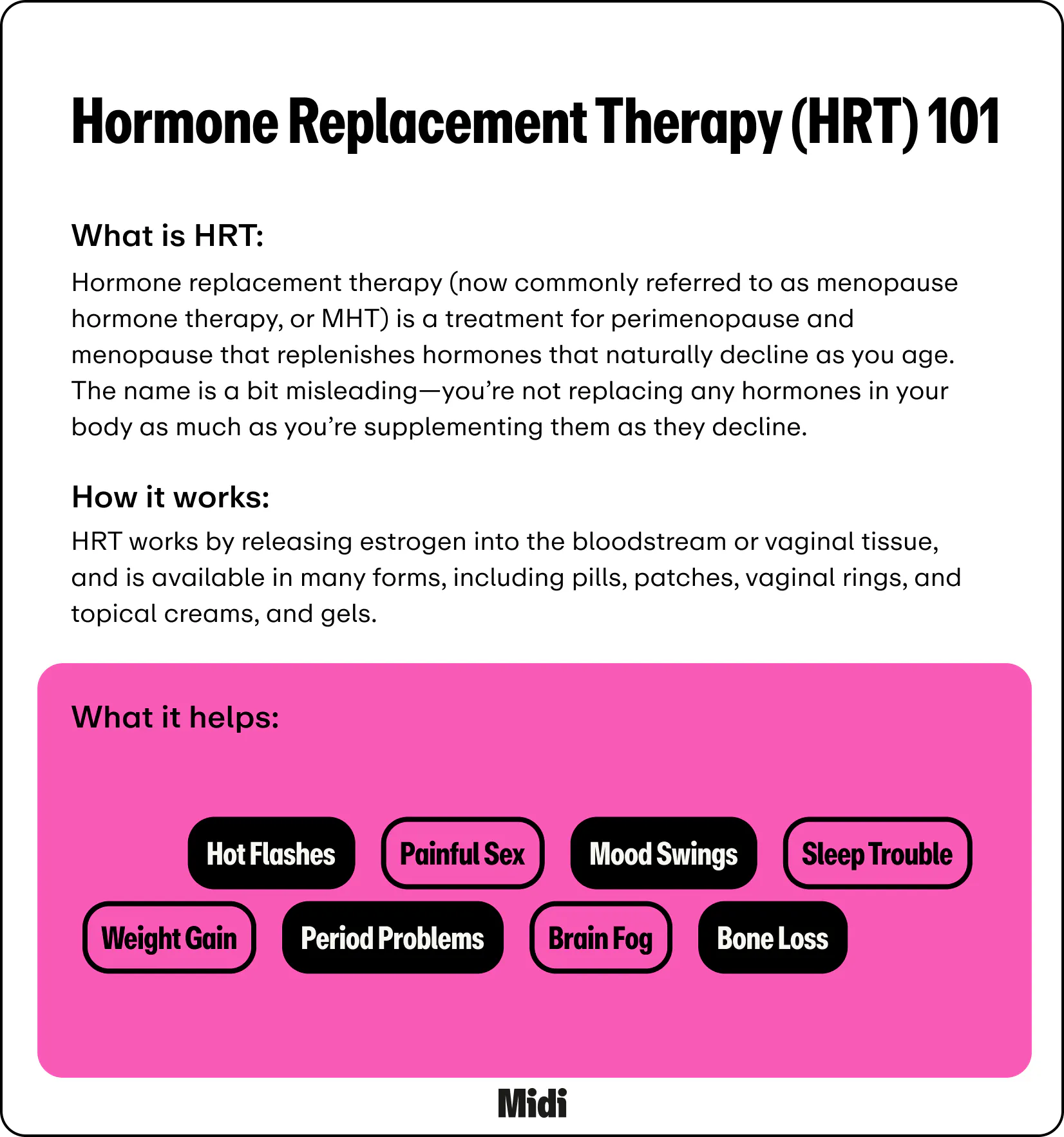
Using estradiol in hormone replacement therapy (HRT, now commonly referred to as menopause hormone therapy, or MHT) can help ease these and other symptoms.
Another approved menopause treatment is conjugated equine estrogen, but estradiol is the form of estrogen that most menopause specialists prescribe because it’s bioidentical to the estrogen made by your body. (You can learn more about this in our guide to estradiol vs. other estrogen.)

What Is Estradiol Used For? The Main Uses at a Glance
Systemic HRT containing estradiol is FDA approved for four main things:
- relieving hot flashes and night sweats
- preserving bone mineral density to prevent osteoporosis after menopause
- treating genitourinary syndrome of menopause (GSM), which is caused by changes to vaginal and urinary tissues; it can lead to vaginal dryness, irritation, pain during sex, and increased urinary frequency or urgency
- managing a loss of natural estrogen due to surgical menopause or other causes
Systemic estradiol circulates and targets symptoms throughout your whole body. As part of HRT, it may even help ease sleep problems, brain fog, and joint pain. It comes in tablet, patch, spray, or gel form, as well as a vaginal ring. (This is different from local vaginal estradiol, which can ease vaginal dryness and irritation, as well as painful sex.)
Women who still have a uterus will also need to take another hormone, called a progestogen, alongside an estrogen treatment like estradiol. That’s because estrogen hormone therapy alone can increase your chances of developing cancer in the lining of your uterus. Adding micronized progesterone (a bioidentical hormone) or progestin (a synthetic hormone) helps lower that risk.
Estradiol for Vaginal Dryness, Painful Sex, and Urinary Symptoms
GSM is the umbrella term for a group of disruptive symptoms caused by fluctuating and/or declining natural estrogen production.
Less estrogen means the tissue of your vagina, vulva, and bladder gets thinner, drier, and less elastic. That can cause vaginal dryness, burning, and other irritation; painful sex; changes in bladder habits like increased urgency and frequency; and repeated urinary tract infections (UTIs). GSM typically gets worse over time if left untreated.
Local vaginal estradiol is considered the most effective hormonal treatment for GSM. The different forms—creams, inserts, and rings—each deliver a low dose of estradiol directly to the affected vaginal tissue, easing GSM symptoms with typically only mild side effects.
Because so little estradiol is absorbed into your bloodstream, local vaginal estrogen has not been shown to increase your risk of system-wide side effects. You also don’t need to take a progestogen with it.
Can Estradiol Prevent Osteoporosis?
Bone loss can worsen significantly around menopause, but estradiol can help maintain existing bone structure and help prevent that loss.
It’s approved by the FDA to prevent osteoporosis (not treat it) after menopause, and per clinical guidance, it is typically considered in women younger than age 60 or within 10 years of menopause who are otherwise cleared to use hormonal therapy, according to The Menopause Society. In fact, hormone therapy can reduce fractures by 24%. Higher doses of estradiol provide the most protection, but even ultra-low doses increase bone density.
Lifestyle habits are important for bone health, too. You should aim to get enough calcium and vitamin D and prioritize weight-bearing exercise as even more protection against osteoporosis and fractures.
Estradiol for Early Menopause, POI, and Surgical Menopause
Estradiol isn’t just for naturally occurring menopause. Women may enter surgical, medical, or premature menopause and need hormone therapy to replace the estrogen that their bodies would be making, until at least the average age of natural menopause, which is 51 years old. This helps protect bone health in younger women, and may help lower the risk of heart disease and cognitive decline.
When someone has surgery to remove their ovaries (surgical menopause) or their ovaries otherwise stopped working as usual before age 40 (primary ovarian insufficiency, or POI), it causes a rapid drop in estrogen. This puts them at risk of heart, bone, brain, and genitourinary complications, even in their 30s.
To make up for that sudden dip, clinicians typically prescribe higher doses of estradiol than standard menopausal therapy to match women’s average premenopausal levels of estrogen.
True Stories of Transformation
Forms of Estradiol: Patch, Gel, Spray, Pill, and Vaginal Options
Estradiol medication comes in a number of different forms, with various uses, benefits, and risks.
Patches, gels, and sprays
These methods all deliver estradiol through your skin, called transdermal estradiol. These forms are the go-to options for many clinicians. This is because less of the medication gets processed in your liver, so it carries a lower risk of blood clots or stroke than oral forms of estrogen.
Estradiol patches come in different doses and are typically applied once or twice per week to your lower abdomen or upper butt. Estradiol gels are typically applied once per day to your upper thigh or arm, and estradiol spray is applied up to 3 times per day on your upper arm or thigh.
Oral tablets
The estradiol pill is taken once per day, at roughly the same time. Because oral estradiol is processed by the liver, it’s linked to an increased risk of blood clots.
Vaginal options
Vaginal estradiol can be systemic (meaning, it can help symptoms like hot flashes) or local (meaning, it mainly affects vaginal symptoms instead of working throughout the body).
Systemic vaginal estradiol is delivered via a ring inserted into the vagina and worn for 90 days, then replaced with a new one.
Local vaginal estradiol treats GSM—vaginal dryness, irritation, pain during sex, and urinary changes. It can be delivered in three different forms:
- Ring: Like systemic estradiol, this form of local vaginal estradiol is inserted for 90 days at a time.
- Cream: This is applied into the vagina via an applicator.
- Tablet: Your clinician will guide you on how often to insert a new tablet. Most of the time, you insert 1 per day for 2 weeks, then reduce that schedule to twice per week.
Estradiol Benefits vs. Risks: What the Evidence Actually Says
We’ve covered some pretty impressive estradiol benefits here. So, what’s the deal with the headlines (most of them from decades ago) about the risks of hormone therapy?
Hormone therapy got a bit of a bad reputation after a 2002 Women’s Health Initiative study linked estrogen plus progestin to higher risk of breast cancer and heart disease. This caused many women (and many healthcare professionals) to shy away from treatment for some years.
Today, we have a much clearer understanding of hormone therapy. (The dosage and types of hormones are different now as well.) The possible risks depend largely on the type of hormone therapy you take, your own medical history, and your age.
Now we know: For most women under age 60 or within 10 years of menopause, the benefits of HRT outweigh the risks. HRT can significantly reduce menopause symptoms and protect your bones and prevent fractures, according to an important 2022 position statement from the North American Menopause Society (now called The Menopause Society).
What about the risks? Here’s the current info:
- Heart disease: Timing matters. When women start taking estradiol close to menopause, hormone therapy seems to be protective or neutral for the heart. Women who start estradiol after age 60 face higher risks.
- Endometrial (uterine) cancer: Taking estrogen alone is associated with an increased risk. That’s why women who still have their uterus should always take a progestogen, too.
- Breast cancer: Taking estrogen on its own is associated with a lower risk of breast cancer. Taking estrogen and progesterone is associated with a slightly higher risk of breast cancer; an increase in deaths from the disease has not been proven. And formulation matters: Studies suggest that estradiol with micronized progesterone carries little or no added breast cancer risk for about 5 years, though this hasn’t been confirmed in randomized trials.
- Blood clots and stroke: Oral estrogen seems to increase risk; your clinician may recommend you avoid it if you have a history of either. (It’s also linked with a higher risk of gallstones, so if you have gallbladder disease, your clinician might recommend the transdermal approach.)
Yes, this may all sound confusing—but when you make the decision about HRT with a clinician’s guidance, you can do so with your individual risks and all the benefits in mind.

Who Should Not Take Estradiol?
Hormone therapy isn’t for everyone. According to The Menopause Society, you may not be a good candidate if you have:
- breast cancer
- uterine cancer
- unexplained vaginal bleeding
- liver disease
- a history of blood clots (for oral hormone therapy)
- known thrombophilia
- coronary heart disease and prior stroke or heart attack
- pregnancy
- certain ovarian cancers
- estrogen hypersensitivity
Other factors might require a little extra caution but aren’t an automatic “no” for hormone therapy:
- experiencing migraine with aura
- having high blood pressure
- having gallbladder disease
- being more than 10 years postmenopause
- an inherited clotting disorder (such as Factor V Leiden or protein C/S deficiency)
In some cases, certain aspects of your health history might make low-dose vaginal estradiol a better option for you than systemic estrogen. Plus, there are also non-hormonal treatments if estradiol is off the table. Midi clinicians are armed with all the relevant info to help determine the safest and most effective option for you.
Common Side Effects of Estradiol
Any medication can cause side effects. The most common ones that come with estradiol use are usually mild and temporary, and your clinician may be able to adjust your dosage if needed. These can include:
- bloating
- breast pain or tenderness
- nausea, vomiting, or stomach pain
If you use an estradiol patch, you might experience some irritation on your skin where you place the patch. And if you use vaginal estradiol, you might notice some irritation or a change in vaginal discharge.
Talk with your clinician as soon as possible if you experience any of the following side effects:
- new lumps, redness, pain in your breast, or discharge from your nipple
- severe stomach pain, nausea, or vomiting
- signs of liver problems, such as light-colored stool, dark yellow or brown urine, a yellowing of your skin or eyes, or pain in your upper stomach on the right side
- vaginal bleeding after menopause or unusual changes in vaginal discharge or odor
For any of the symptoms below, call 911 or go to an emergency room:
- signs of an allergic reaction, such as itching; hives; or swelling of your face, lips, tongue, or throat
- signs of a possible blood clot, such as pain, swelling, or warmth in one leg; shortness of breath; or chest pain
- signs of a stroke, such as sudden numbness or weakness, especially on one side; trouble speaking or walking; a severe headache; and vision changes
How Midi Clinicians Prescribe and Monitor Estradiol
Estradiol is only available by prescription; Midi clinicians prescribe it through virtual visits (which are in network with most major insurance providers across the nation).
At a Midi visit, you’ll share a detailed history of your overall health and perimenopause or menopause symptoms. Your clinician will discuss your risk factors, whether estradiol is a good fit, and the safest and most effective form and dose for you to try.
After starting hormone therapy, you’ll have a follow-up visit to discuss any side effects and how it’s working. If needed, your clinician can make adjustments to your estradiol dose.
When you work with a Midi clinician, your care goes beyond hormone therapy: It’s also support for your sleep, mood, bone health, sexual health, and more—at every step of the way.
Key Takeaways
- Estradiol is the main form of estrogen your body makes during your reproductive years. It’s also a medication prescribed to treat menopause symptoms, and it comes as a patch, gel, spray, or pill, plus vaginal options.
- What is estradiol used for? Hot flashes, night sweats, preserving bone density and reducing fracture risk, vaginal dryness, painful sex, and urinary symptoms.
- For women under age 60 or within 10 years of menopause, the benefits of HRT outweigh the potential risks, but it’s important to discuss your unique risk factors and health history with a menopause-informed clinician.
- You should not take estradiol if you’re pregnant, or if you have unexplained vaginal bleeding, breast cancer, blood clots, a history of stroke or heart attack, or liver disease.
Frequently Asked Questions (FAQs)
What happens when you start taking estradiol?
You’ll likely start experiencing relief from menopause symptoms like hot flashes and vaginal dryness. You might also experience temporary bloating, nausea, or breast tenderness.
When should I use estradiol?
You should use estradiol for relief from hot flashes and night sweats, to ease symptoms of genitourinary syndrome of menopause, to protect your bones after menopause, or to replace estrogen if you’re in surgical or medical menopause.
How long does it take for estradiol to work?
It can take up to 3 months for hormone therapy to work, but you might notice improvement in some symptoms within the first 1 or 2 weeks.
How long can you take estradiol?
There’s no set timeline. Most people receive HRT for 5 years or fewer, but there is no mandatory stop date. Your clinician will reassess duration regularly, and help you determine how long to take estradiol.
Does estradiol cause weight gain?
No, studies indicate that it doesn’t. In fact, systemic estradiol might actually help combat weight gain that’s common after menopause.
If you’re in perimenopause or menopause and want guidance from clinicians who specialize in women’s midlife health, book a virtual visit with Midi today.
Hormonal change is at the root of dozens of symptoms women experience in the years before and after their period stops.
Our trained menopause specialists can help you connect the dots to guide you towards safe, effective solutions.
Whether you need personalized guidance or a prescription routine to tackle symptoms—including vaginal dryness and irritation, brain fog, hot flashes, sleep trouble, mood swings, and weight gain—we’ve got you covered.
Midi’s mission is to revolutionize healthcare for women at midlife, wherever they live and whatever their health story. We believe that starts with education, to help all of us understand our always-changing bodies and health needs. Our core values guide everything we do, including standards that ensure the quality and trustworthiness of our content and editorial processes. We’re committed to providing information that is up-to-date, accurate, and relies on evidence-based research and peer-reviewed journals. For more details on our editorial process, see here.