


Hot flashes, night sweats, brain fog, sleep problems—sometimes, the list of perimenopause symptoms can feel truly endless. Fortunately, hormone replacement therapy (HRT, now commonly referred to as menopause hormone therapy or MHT) can provide game-changing relief for many women. There are different forms of HRT for perimenopause, and the best treatment is one that takes your symptoms, health history, and personal goals into account. Below, we’ll explain who may be a good candidate, when to start HRT in perimenopause, the pros and cons of HRT for perimenopause, and how a menopause-aware clinician, like one at Midi Health, can help create a personalized treatment plan.
Wouldn’t it be nice if menopause were as simple as waving goodbye to Aunt Flo? Instead, for many women, perimenopause can feel like being stuck on a years-long roller coaster, with lots of unwelcome system glitches along the way. Sleep goes off the rails, your emotional fuse seems shorter than ever, and your internal thermostat feels just plain haywire.
If this sounds familiar, know that you don’t have to just accept these symptoms as your new norm. HRT is considered a first-line, FDA-approved treatment for many women, according to leading organizations like The Menopause Society and the American College of Obstetricians and Gynecologists (ACOG).
If you're considering this treatment, you may have questions about, from when to start HRT for perimenopause to the benefits it may provide. For women who are good candidates, HRT is considered safe, and for many, the ideal time to begin treatment is during perimenopause.
One thing we hope you'll take away: Hormone therapy isn't one-size-fits-all. The right treatment depends on your symptoms, health history, and what matters most to you. That's why these decisions are best made with a menopause specialist—like a clinician at Midi—who can help you understand your options and create a plan that's tailored to you.
Keep reading to learn what HRT is, when it may be appropriate to start, the benefits of HRT for perimenopause, the different treatment options, and what to expect. (And if you’re interested in HRT, reach out to a healthcare professional—like a menopause-trained clinician at Midi—who can help you understand your options and create a plan that's tailored to you.)
What Is HRT, and How Does It Work in Perimenopause?
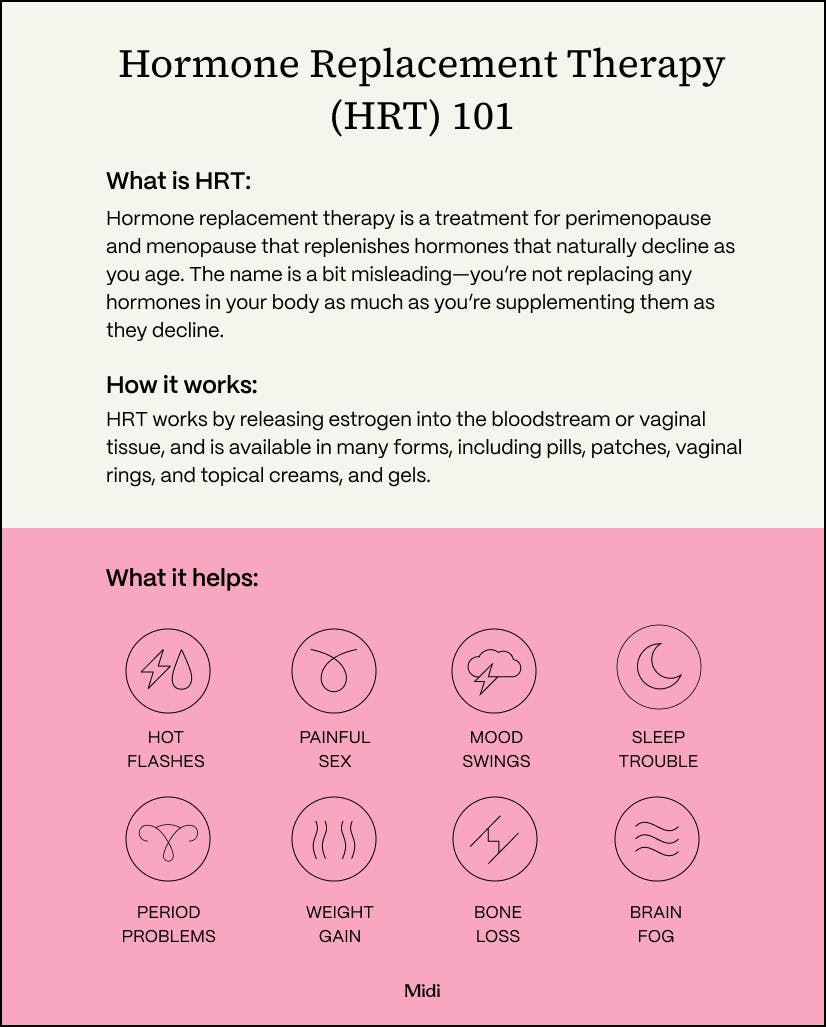
HRT is a treatment that helps relieve symptoms caused by the hormonal changes of perimenopause and menopause.
As your ovaries gradually begin producing less estrogen, those fluctuating hormone levels can trigger symptoms like hot flashes, night sweats, sleep disruptions, brain fog, and mood swings. HRT works by replenishing some of the estrogen your body is losing, helping ease these symptoms.
If you still have a uterus, your HRT plan will usually include both estrogen and progesterone, as progesterone helps protect the uterine lining. (Women who have had their uteruses removed can often take estrogen alone.)
"HRT doesn’t shut down or suppress your body's natural hormones," explains Heather Hofflich, DO, a clinician at Midi. "During perimenopause, your estrogen levels fluctuate unpredictably. Hormone therapy helps take the edge off those hormonal swings with a more consistent supply of estrogen."
Can You Start HRT During Perimenopause?
One of the biggest questions about HRT is when to start. A common misconception is that you have to wait until you've officially reached menopause.
"You don't need to wait to take HRT until your periods stop," says Dr. Hofflich. "If your symptoms are affecting your quality of life, you deserve to understand your options and find out if HRT is right for you.”
In fact, perimenopause may be an ideal time for many women to consider HRT. A large body of recent research suggests that starting treatment before age 60 or within 10 years of your final menstrual period is when many women will most likely experience benefits that outweigh the risks, especially if they’re otherwise healthy. And since HRT is shown to be the most effective treatment for relieving hot flashes, and night sweats, starting HRT in perimenopause can begin relieving these symptoms for many women.
Whether HRT is right for you isn't determined by your age or a hormone test. Instead, a menopause-trained clinician, such as a Midi clinician, will look at your symptoms, history, and overall health. That's because hormone levels bounce around so much during perimenopause that a single blood test can't give you an accurate read on your levels.
An important reminder: HRT is not birth control. "There's still a chance of getting pregnant during perimenopause,” says Dr. Hofflich. "If you're still menstruating and you want to avoid pregnancy, you still need contraception."

Benefits of HRT for Perimenopause Symptoms
Here’s how HRT can help calm the disruptions of perimenopause:
- Persistent hot flashes and night sweats: By replacing some of the estrogen your body is no longer producing consistently, HRT can reduce hot flashes significantly, making it the most effective treatment for these symptoms.
- Sleep, mood, and brain fog: Hormone fluctuations can send your sleep, focus, and mood off-kilter. By helping stabilize hormone levels, HRT can make a meaningful difference.
- Vaginal dryness and urinary symptoms: Lower estrogen levels can leave vaginal tissues drier, thinner, and more prone to irritation. Local vaginal estrogen is considered a gold-standard, targeted treatment, helping restore moisture and tissue health with minimal absorption into the bloodstream.
- Overall protection from chronic health conditions: For women who start HRT within 10 years of their last period, research suggests it may help lower the risk of heart disease and bone loss (both major concerns post-menopause). Some studies also show that HRT may be connected to a decreased risk of diabetes.
What Success Looks and Feels Like
Types of HRT: Estrogen, Progesterone, and the Delivery Methods to Know
HRT isn’t a one-size-fits-all treatment. There are different types of hormones and different ways to take them, and specific reasons why your clinician might recommend one option over another.
Here are the most common forms of systemic HRT (“systemic” means the hormones circulate to different organs and tissues):
- Patches: Worn on the skin and replaced every few days, patches deliver a steady dose of estrogen directly into your bloodstream. Because they bypass the liver, they may be associated with a lower risk of blood clots than oral estrogen.
- Gels and sprays: These transdermal options are applied directly to the skin and absorbed into the bloodstream. Some women prefer them because they're easy to use and allow for flexible dosing.
- Pills: Oral estrogen works well for many women. Your clinician will consider your overall health, risk factors, and preferences when deciding whether a pill or another delivery method makes the most sense.
There are also non-systemic HRT options, which work locally (meaning: in the area where it’s applied) to address specific symptoms, including vaginal dryness and irritation. These come in the form of:
- vaginal creams
- vaginal rings
- vaginal suppositories
You also may have come across the terms “bioidentical” and “synthetic” hormones and wondered if one is better. The truth? It depends on your individual needs. Bioidentical hormones have the same chemical structure as the hormones your body naturally produces, while synthetic hormones are made in a lab and may either closely match your natural hormones or have a slightly different structure. Both can be safe and effective when prescribed appropriately.
The best treatment plan for you will consider your symptoms, health history, risk factors, and what feels realistic for your day-to-day life. A menopause-trained clinician, like at Midi, can help you find the type of HRT that makes the most sense for you.

How to Choose the Best HRT for You
There isn’t one best type of HRT for perimenopause. When deciding what’s right for you, a clinician will consider:
- Your symptoms: Are hot flashes keeping you up? Is sleep a struggle? Are mood changes, brain fog, vaginal dryness, or other symptoms affecting your quality of life?
- Where you are in perimenopause: Your clinician will consider whether you’re still getting regular periods, having irregular cycles, or nearing menopause.
- Your health history: Medical history, family history, medications, and overall health all come into play.
- Your preferences: The best treatment plan is one you’re comfortable with and can realistically fit into your routine.
Most clinicians start with a lower dose of HRT and fine-tune it over time based on how your body responds. Finding the right dose can take a few adjustments. Some women feel improvements within weeks, while for others more time is needed to notice the full benefits.
Choosing HRT isn’t a one-and-done decision. Treatment can evolve as your symptoms and needs change. With a menopause-trained healthcare professional (like a Midi clinician), you have someone to help you weigh your options, make adjustments, and find the approach that works best for your body.
Risks, Side Effects, and Who Should Avoid HRT
HRT has been studied for decades, and leading medical organizations—including The Menopause Society, ACOG, and many others—recognize it as a safe option for many women when it’s personalized to their needs.
Still, some women have lingering concerns, which could stem from the 2002 Women’s Health Initiative study, which reported increased risks of breast cancer and heart disease. Decades of additional research have shown that the study was flawed, and we now have a clearer, more nuanced picture. Current evidence indicates that HRT does not cause breast cancer. The treatment's benefits and risks depend on factors like your age, health history, when you start treatment, and the type of hormone therapy you use.
“Today’s hormone therapy looks very different from what was studied more than two decades ago,” explains Dr. Hofflich. “While research is still evolving, current recommendations are based on decades of additional research, and we approach treatment in a much more individualized way.”
Some women experience temporary side effects when starting HRT, such as breast tenderness, bloating, headaches, mood changes, or irregular bleeding. These often improve as your body adjusts, and your clinician can help fine-tune your dose or treatment approach if needed.
That said, HRT isn't the right choice for everyone. Your clinician may recommend non-hormonal options if you have a history of:
- Stroke or certain types of blood clots
- Certain heart conditions, including a history of heart attack or unmanaged high blood pressure
- Certain liver conditions
- Certain types of breast or uterine cancer
- Unexplained vaginal bleeding
How to Get HRT for Perimenopause
If you’re interested in HRT, the first step is a conversation with a clinician about the symptoms you’re experiencing and what you’re hoping to improve, as well as details about your personal and family medical history.
Accessing menopause care has become easier than it used to be. With telehealth, you can find insurance-covered care from a menopause-trained clinician, like one from Midi, and discuss treatment options from home without having to wait months for a visit.
Starting HRT (if it’s right for you) is just the beginning of the process. Your clinician will typically follow up with you to see how you’re feeling and adjust your dose or treatment plan if needed. The most important thing is to look for a clinician who understands perimenopause and menopause specifically, because this stage of life deserves personalized care.
How Midi Health Can Help
Midi's expert clinicians specialize in perimenopause and menopause, providing virtual, insurance-covered care based on the latest evidence-based research and centered on you.
During your visit, your clinician will take time to understand your symptoms, medical history, and health goals. If you’re a good candidate for HRT, they'll recommend a personalized treatment plan. And if it’s not the best fit, they'll help you explore effective non-hormonal treatments and lifestyle strategies that can provide relief. Either way, your care is ongoing and doesn’t end after your first visit.
"Hormone therapy can be truly life-changing for many women, and you deserve to have a compassionate, informed conversation with a provider who understands menopause and can help you find the approach that’s right for you,” says Dr. Hofflich.
Whether you're wondering if HRT is right for you or simply looking for answers you can trust, we're here to help. Book a virtual visit with a Midi clinician to get the personalized care you deserve.
Key Takeaways
- HRT is an effective, evidence-based treatment option for many women looking for relief from menopause symptoms. Leading medical organizations recognize hormone therapy as a safe treatment when it’s tailored to your symptoms, health history, and personal goals.
- Research shows that it’s generally best to start HRT within 10 years of your last period. You can begin hormone replacement therapy at the first sign of menopause symptoms, even if you’re in perimenopause and still getting your period.
- HRT isn’t one-size-fits-all, and it’s not right for everyone. The best treatment plan depends on your unique needs, including your symptoms, health history, preferences, and the type and delivery method of hormones that work best for you.
- The right menopause care starts with the right conversation. A menopause-trained clinician can help you understand your options, weigh the benefits and risks, and create a plan that helps you feel like yourself again.
Frequently Asked Questions (FAQs)
What are the signs of low estrogen in perimenopause?
Low or fluctuating estrogen levels can contribute to symptoms like hot flashes, night sweats, sleep changes, vaginal dryness, mood shifts, brain fog, and changes in your period.
At what age is HRT most effective?
HRT is often most beneficial when started during the perimenopause or early menopause years, especially for healthy women under age 60 or within about 10 years of menopause. The right timing depends on your symptoms, health history, and personal risk factors—not just your age.
Can you start HRT while you are still having periods?
Yes. Many women start HRT during perimenopause while they are still getting their periods. You don’t have to wait until your periods stop—treatment decisions are based on your symptoms, health history, and whether HRT is a good fit for you.
Will HRT help with perimenopause weight gain?
HRT is not a weight loss treatment, but it may help with some changes that can make weight management harder, like poor sleep, hot flashes, and shifts in body composition. Building a healthy routine with movement, nutrition, stress support, and good sleep remains important during perimenopause.
Why are some doctors reluctant to prescribe HRT?
Some clinicians may be cautious about prescribing HRT because of outdated information, concerns about risks, or a lack of specialized menopause training. Today, we have a better understanding of how timing, type of hormone therapy, dose, and a woman’s individual health history all influence the benefits and risks.
If you’re in perimenopause or menopause and want guidance from clinicians who specialize in women’s midlife health, book a virtual visit with Midi today.
Hormonal change is at the root of dozens of symptoms women experience in the years before and after their period stops.
Our trained menopause specialists can help you connect the dots to guide you towards safe, effective solutions.
Whether you need personalized guidance or a prescription routine to tackle symptoms—including vaginal dryness and irritation, brain fog, hot flashes, sleep trouble, mood swings, and weight gain—we’ve got you covered.
Midi’s mission is to revolutionize healthcare for women at midlife, wherever they live and whatever their health story. We believe that starts with education, to help all of us understand our always-changing bodies and health needs. Our core values guide everything we do, including standards that ensure the quality and trustworthiness of our content and editorial processes. We’re committed to providing information that is up-to-date, accurate, and relies on evidence-based research and peer-reviewed journals. For more details on our editorial process, see here.