
 Amanda Alvelo-Malina, MD
At Midi, one of the most common questions we hear from patients is: How long does HRT take to work? And we get it: If you've been dismissed, bounced around from doctor to doctor, or told menopause symptoms are "just a part of aging," you're long overdue for some relief from disruptive symptoms like hot flashes and roller-coaster mood shifts. So it’s natural to wonder what to expect when you start hormone therapy (also referred to as menopause hormone therapy or MHT). And you've come to the right place for answers. Our clinicians have treated thousands of women in perimenopause and menopause and have seen just how transformational HRT can be. Here, we’ll go over what happens week by week, how different forms of the treatment may affect you, and, most importantly, how quickly your symptoms may ease.
When you’re dealing with the chaotic swing of menopause symptoms—from drenching hot flashes to cranky-weepy moods and beyond—you just want relief, now. Hormone replacement therapy (HRT) is a proven treatment, but you may be wondering: How long will it take to start working? When will you feel a difference?
The truth is, timelines for how long HRT takes to work differs from person to person. And how quickly you notice a difference also depends on the type of therapy you’re using—for example, a patch versus a pill or gel—as well as the dosage and which symptoms you’re targeting.
After you start HRT for menopause, you may notice that some symptoms, like hot flashes and sleep disruptions, improve faster than others—that’s normal. Other symptoms often take a bit longer, such as mood ups-and-downs or vaginal discomfort. That doesn’t mean HRT isn’t working; your body just needs time to adjust.
To know what to realistically expect when you start HRT, read on for a week-by-week timeline, as well as how to track changes and when it’s time to check in with your clinician. With a clear plan, you can monitor your progress, feel more confident during the process, and understand when adjustments might be needed.
Why Patience Matters with HRT
While we’d all love a quick fix for frustrating menopause symptoms, the reality is that there’s a delicate hormonal balance involved in feeling better. During perimenopause, estrogen levels often become unpredictable—sometimes dropping, sometimes spiking—and then decline significantly at menopause. These shifts play a major role in symptoms like hot flashes, mood changes, sleep disruption, and vaginal discomfort.
HRT for menopause works by boosting your levels of estrogen—and it’s important to know that you won’t feel dramatically different overnight. Instead, symptom relief often builds gradually as your brain and body respond over time.
This is why when you’re starting HRT, it’s smart to give it a fair chance to work. While results aren’t immediate, they can have a meaningful effect on your symptoms and make life feel, well, less hellish. Because HRT is highly individualized, though, finding the right dose or formulation can take a bit of trial and error. All in all, your Care Plan may need a few adjustments as time goes on to find what works best for you.
How HRT Works in Your Body (and Why Relief Isn’t Instant)
So how exactly does HRT work? Whether in patch, pill, gel, or spray form, HRT raises estrogen levels in the body. If you still have a uterus, progesterone is usually added to protect the uterine lining from excess estrogen. These hormonal changes aren’t instant—your brain and body need time to adjust, and improvements typically occur over weeks.
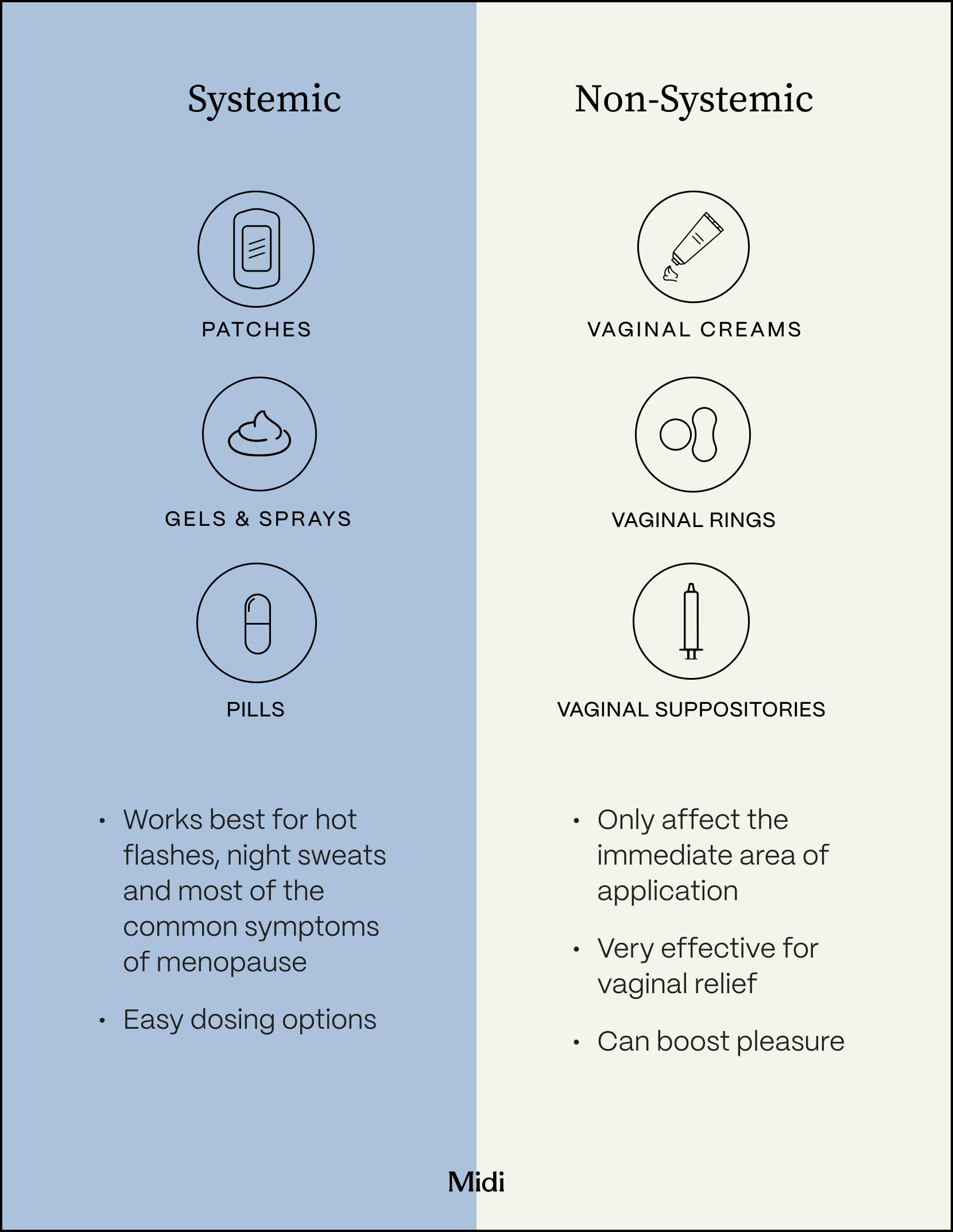
It’s important to distinguish between different forms of estrogen treatment. Local vaginal estrogen—in the form of a cream, tablet, or vaginal ring—treats vaginal atrophy, and may help dryness and ease discomfort during vaginal penetration. This type of estrogen can also help certain bladder symptoms, like urgency or discomfort. Systemic HRT, on the other hand, works throughout the whole body. Systemic HRT is most often prescribed as a pill, patch, gel, or spray. Local and systemic HRT can be used together or separately, depending on your individualized treatment plan.
As your hormone levels even out and your body gradually recalibrates, symptoms can start to ease. Over time, your sleep rhythms may improve as your body’s temperature regulation system stabilizes, reducing hot flashes and night sweats. And since estrogen has an effect on how your brain regulates emotions and reacts to stress, you’ll likely feel less weepy and irritable as your moods balance out.
What to Expect When You Start HRT: A Timeline
Since you’ll notice changes gradually, it’s helpful to understand the timeline of what to expect after starting HRT—and how your doctor may modify treatment if necessary.
First 1 to 2 weeks
In the first 1 or 2 weeks, you might notice subtle changes, like slightly fewer hot flashes or small shifts in your sleep patterns. Some women don’t notice any changes at all at this early stage, and that’s completely normal.
Bleeding on HRT
One thing to keep in mind: You may notice some vaginal bleeding in the first 1 to 3 months after starting HRT. If you’re fully menopausal (a full year without a period), this usually shows up as light spotting. If you’re still in perimenopause, bleeding can be heavier or more frequent. When this happens, many women panic but it's often not cause for concern. Bleeding happens because HRT can stimulate your uterine lining, causing it to shed. As your body adjusts, the spotting should taper off, and in most cases, it isn’t something to worry about. Just make a note to bring it up with your clinician—tweaking your HRT dose can usually stop the spotting. Very heavy bleeding that doesn’t stop is uncommon and requires immediate care. If you’re soaking through a pad or tampon every hour—especially with lightheadedness—head to an ER or urgent care.
Weeks 3 to 6
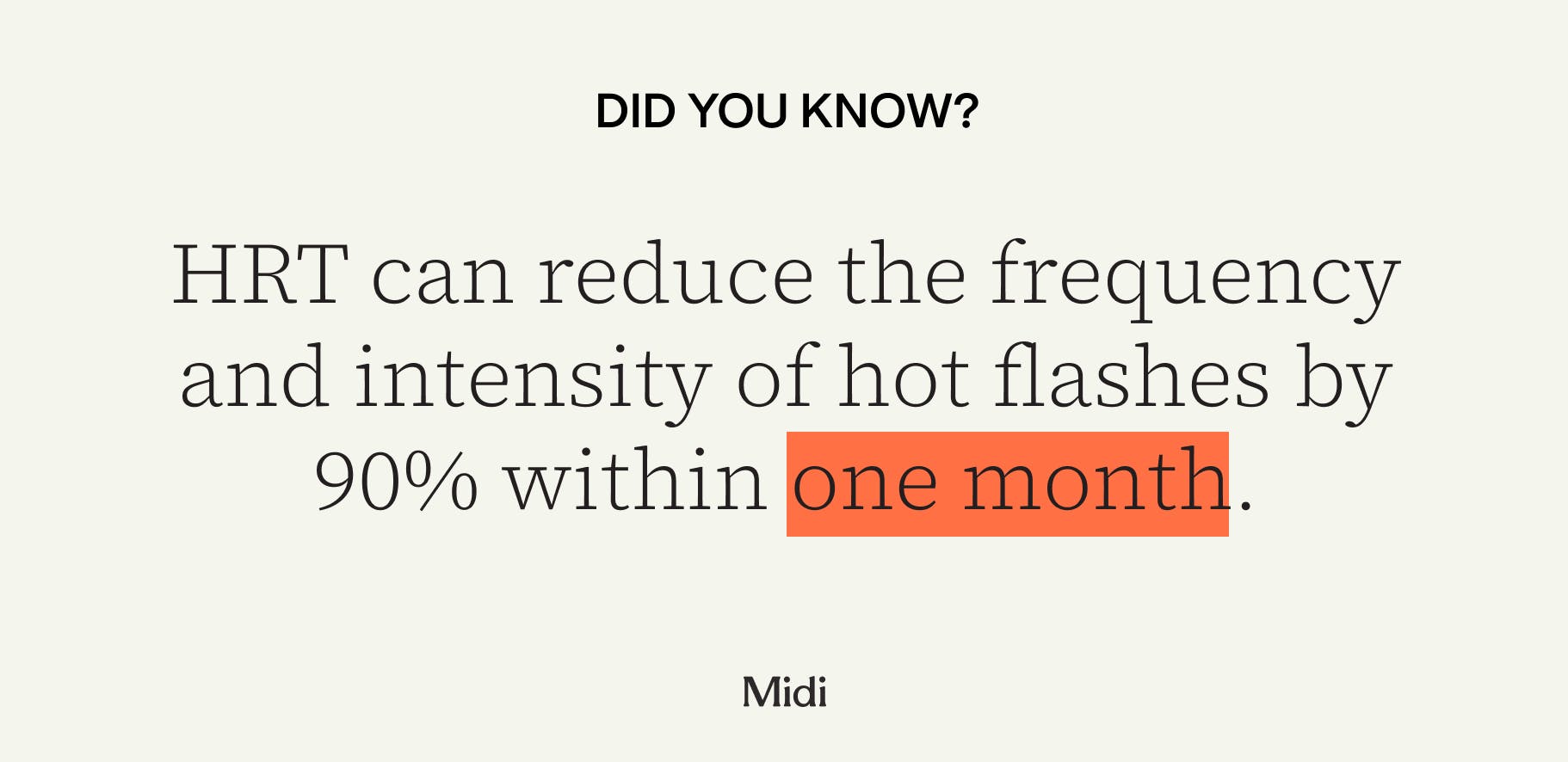
By now, many women start to see more noticeable improvements. Hot flashes often reduce or disappear, night sweats may lessen, and moods can feel less rocky.
Weeks 8 to 12
Around this point—typically the 4-week mark—your doctor will usually want to check in to review your response to HRT and see whether your plan needs reassessing. Many symptoms should be easing, though some may persist.
If HRT has you feeling off during these first few months, that’s not unusual. You may experience breast tenderness, mild nausea, mood changes, or spotting during this phase. Check in with your healthcare professional if you’re unsure about your reactions.
Keeping a simple journal of what you’re experiencing—improvements and side effects— can help you track your progress. Bring it to your follow-up visit. It’ll help your healthcare professional adjust your treatment plan if needed.
Estradiol Patch vs. Pills, Gels, and Sprays: Differences to Know
The various forms of HRT can all ease symptoms, even though they work in different ways:
- The estradiol patch (aka transdermal HRT) is a popular choice. It’s a small, clear, barely noticeable patch that delivers a steady dose of estrogen, which is absorbed through the skin directly into the bloodstream. Wondering how long it takes for the estradiol patch to start working? It’s common for women to see initial changes within a few weeks, with fuller effects typically seen over 6 to 12 weeks.
- Estrogen pills are another option, and the symptom relief follows a similar timeline (maybe slightly slower). Like the patch, the pills raise estrogen levels, but there are some important differences, mainly in how the hormone is delivered. Estrogen pills are taken orally and pass through the digestive system and liver before entering the bloodstream. Because of this, research shows, there’s a slightly higher risk of blood clots with estrogen pills than with the patch—because when estrogen is absorbed via the skin, it bypasses the liver. There also may be fewer gastrointestinal side effects with the patch. Your healthcare professional is the best person to help you figure out which form is right for you, depending in part on your health history.
- Estrogen gels and sprays are applied generally once per day and, like the patch, are absorbed through the skin. They work on a similar timeline, and some women prefer them because it’s easy to adjust the dose if needed.
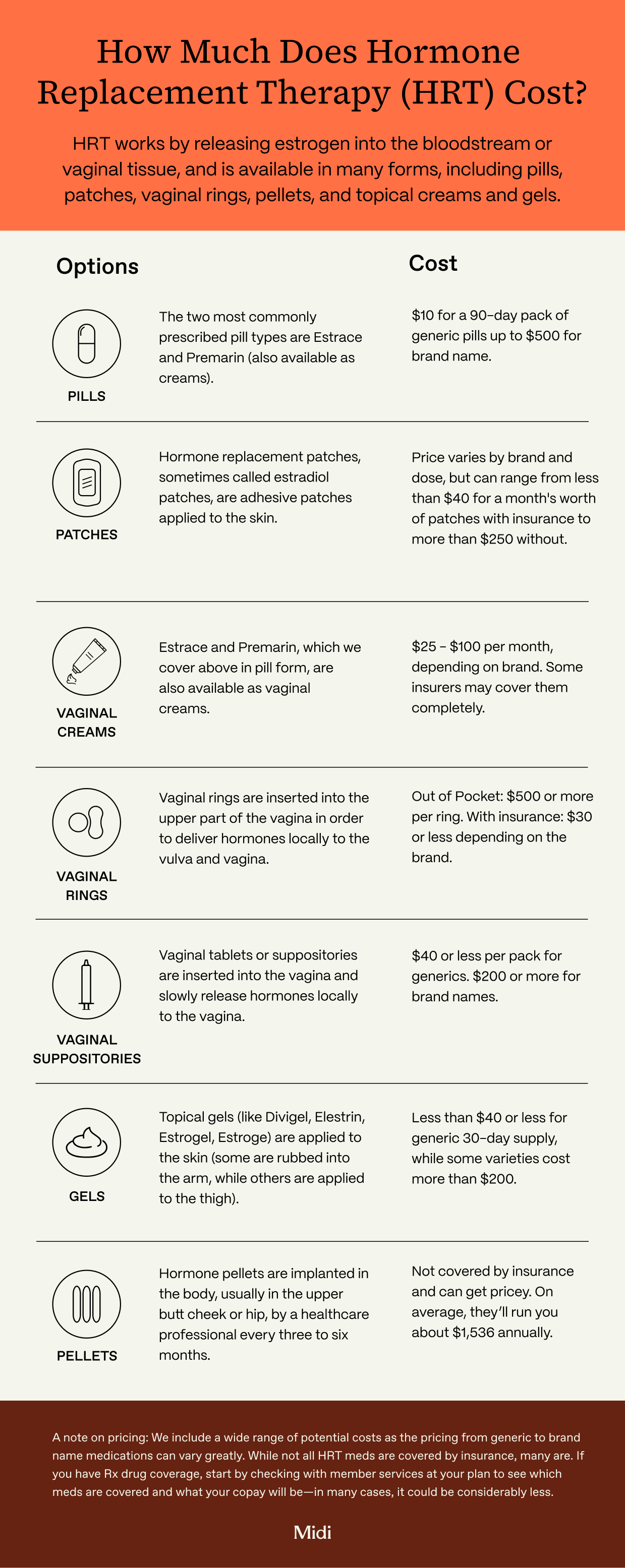
Overall, no matter which form you use, how quickly HRT starts working can vary. Factors like consistency of use, sensitivity to hormone changes, other medications you’re on, and your body weight can all influence how quickly you notice symptoms easing.
True Stories of Transformation
Symptom-by-Symptom Timeline: When to Expect Relief
If you’re wondering when you’ll get through the night without soaking the sheets, your pajamas, or even your sleeping partner, we’ve got good news. Hot flashes and night sweats are often the earliest symptoms to improve after starting HRT. And when this disruption is eased, it may indirectly start to improve your sleep. Keep in mind that complete hot flash relief can take longer, and your doctor may need to adjust your dosage until you find the right level that works for you.
HRT can help with symptoms such as mood shifts, anxiety, and brain fog, and these may start to stabilize as your sleep becomes more restful. But real improvements often take several weeks to months.
For some women, combining HRT with lifestyle strategies—like healthy eating, regular exercise, and steps to ease stress—gets them to a place where they’re feeling less volatile and foggy-headed. In certain cases, a prescriber might suggest additional meds.
If you’re experiencing vaginal dryness and discomfort, systemic HRT can help with that over time, though many clinicians also prescribe vaginal estrogen for better (and quicker!) outcomes.
It’s important to remember this: Not only do symptoms resolve on different timelines, the process also varies from person to person. And while HRT helps many women, for some, even an optimal dosage won’t ease every symptom.
Diagnosis and Treatment Options: Is HRT Right for You?
If you’re overwhelmed by the HRT options, take a deep breath. The first step is a full evaluation with a healthcare professional, like a Midi clinician. They’ll review your personal and family medical history, including any history of heart disease, stroke, blood clots, breast or uterine cancer, and even headache.
Together, you’ll discuss the potential benefits and risks before deciding whether HRT is right for you, as well as what type and dosage is best. You’ll agree on a follow-up plan to make sure the therapy is working as intended and to make adjustments if needed.
Your clinician may also suggest further evaluation if you’re experiencing certain symptoms, such as heavy bleeding, severe pain, or unusual discharge, since these symptoms aren’t always caused by menopause alone.
Keep in mind that HRT is just one option for managing perimenopause and menopause symptoms, and it isn’t required or appropriate for every woman.
Some non-hormonal medications may also ease hot flashes—especially helpful for women who can’t use hormones, don’t wish to take hormones, or need additional symptom support. Non-hormonal treatments for menopause may also include lifestyle changes, like getting more exercise and shifting the way you eat, and mind-body tools, such as cognitive behavioral therapy, relaxation techniques, yoga, and meditation.
An Effective Combo: HRT with Other Treatments
HRT can be highly successful in easing many menopause symptoms, and it often works best when paired with changes to your lifestyle. This is especially true when symptoms are overlapping or persistent. Don’t underestimate the power of these strategies:
- Prioritize sleep: Keep a consistent light’s-out and wake-up schedule, and avoid caffeine late in the day or alcohol too close to bedtime.
- Move your body routinely during the day: This includes regular exercise and just getting up and moving.
- Use cooling strategies: You might try breathable bedding and layered clothing to help manage hot flashes and night sweats.
- Find ways to help ease stress: This may help keep your mood on an even keel. It could look like carving out time for yourself to read or meditate, or using a relaxation technique such as deep breathing or yoga.
Your clinician may suggest other non-hormonal medications to use on their own or alongside HRT, such as meds to ease anxiety or depression, reduce nerve pain, or help you sleep (like magnesium).
And cognitive behavioral therapy can be especially helpful for symptoms like insomnia, anxiety, and mood changes. This and other mind-body tools can calm the nervous system, help you get a better night’s sleep, and steady your emotions.
Working with a Healthcare Professional to Fine-Tune HRT
HRT requires a different level of follow-up than other meds. The treatment is very individualized, and you and your clinician want to make sure it’s actually targeting the symptoms you care about. When starting HRT, you’re the best advocate for how it’s working for you.
It’s common to have regular check-ins with your clinician at the 4-6 week mark and beyond to review how well HRT is working. Keeping a symptom diary and bringing it to your visit is incredibly helpful. This doesn’t need to be anything formal—just track:
- any side effects
- changes in your cycle
- unusual bleeding
- questions that come up
That way, you're not trying to remember everything you want to discuss (especially if brain fog is a symptom!). If your clinician needs to adjust your dosage or change your medication, know that this is completely normal. They may switch you from the pill to the patch (or vice versa), add vaginal estrogen, tweak your progesterone regimen, or make other adjustments to get the best outcome for you.

You play an important role in these decisions—your clinician should take into account your values, goals, and risk tolerance to guide you toward the best course of HRT. Decisions on whether to continue, adjust, or even stop HRT are all within your control.
If You’ve Had a Hysterectomy: The Impact on HRT
When a woman has a hysterectomy (with or without ovary removal), it can significantly change hormone levels and may influence her HRT needs. When both ovaries are removed, it causes surgical menopause—meaning the body enters menopause abruptly due to the sudden loss of hormone production. In these cases, symptoms can come on more suddenly, and your doctor will typically monitor you closely and tailor HRT timing and dosing to best support your needs.
If you’re facing this surgery (for, say, fibroids, endometriosis, or cancer), it’s important to raise the topic of HRT with your doctor ahead of time so you understand your options before symptoms begin. Planning in advance with your clinician and care team can help set you up for the best possible outcome.
When to Seek Care After Starting HRT
There are plenty of changes that are completely normal when starting HRT, but certain ones should not be ignored, so don't just wait til your follow-up appointment if you're experiencing:
- chest pain
- sudden shortness of breath
- coughing up blood
- sudden, severe headaches
- leg swelling or pain
- heavy or unexpected vaginal bleeding
- new breast lumps or bumps
- severe mood shifts, or thoughts of self-harm.
These aren’t symptoms you should suffer through or try to wait out.
Persistent or escalating side effects such as ongoing severe breast tenderness, migraine headaches, or nausea that doesn’t settle with time also should be evaluated quickly. The bottom line: if you feel unwell after starting HRT or even simply feel off, call your clinician and don’t wait for your next routine follow-up.
Key Takeaways
- HRT doesn’t work instantly—symptom relief usually builds gradually over weeks, and some symptoms (like mood shifts or vaginal discomfort) may take longer to ease than hot flashes or night sweats.
- The type of HRT (patch, pill, gel, or spray), your dose, and how your body responds all affect how quickly you’ll notice improvements.
- Not every symptom eases at the same rate, and some may require adjustments in your dose or form of HRT, or combination approaches like lifestyle changes, non-hormonal medications, or mind-body strategies.
- Regular follow-ups and keeping track of your symptoms will help you and your prescriber fine-tune treatment for the best results.
- Red flags—such as chest pain, heavy or unusual bleeding, new breast lumps, or severe mood shifts—should be addressed promptly with a healthcare professional.
- HRT is an individualized treatment, and decisions about continuing, adjusting, or stopping should align with your goals and risk tolerance.
Frequently Asked Questions (FAQs)
What are the first signs that HRT is working?
Some early changes may include subtle easing of hot flashes or small shifts in sleep patterns. Not everyone notices changes right away, and some symptoms—like roller-coaster moods or vaginal dryness or discomfort—may take longer to improve.
What should I expect during the first week of HRT?
During the first few days to a week, changes are usually minimal. You may notice a mild decrease in hot flashes and slightly less disrupted sleep, but mainly your body is just starting to adjust to the new hormone levels.
How quickly does HRT kick in?
Initial changes can appear within days to a few weeks, but significant symptom relief often takes several weeks to a few months. The timeline varies depending on the form of HRT (patch, pill, gel, or spray), dosage, and which symptoms you’re targeting, as well as your own body.
How long does HRT take until you feel better?
Many women notice more noticeable improvements by weeks 3 to 6, and fuller symptom relief typically occurs around 8 to 12 weeks. Regular follow-ups with your clinician can help you make sure your treatment is working well.
What is the first thing you notice on HRT?
Early changes often involve hot flashes and night sweats. Sleep may also improve as night sweats decrease, but other symptoms like mood shifts or brain fog tend to take longer to improve.
Is it normal to bleed on HRT?
Yes—especially in the first 1 to 3 months after starting treatment. If you’re fully menopausal (a full year without a period), this usually shows up as light spotting. If you’re still in perimenopause, bleeding can be heavier or more frequent. Bleeding happens because HRT can stimulate your uterine lining, causing it to shed. As your body adjusts, the spotting should taper off, and in most cases, it isn’t something to worry about. Just make a note to bring it up with your clinician—tweaking your HRT dose can usually stop the spotting. Very heavy bleeding that doesn’t stop is uncommon and requires immediate care. If you’re soaking through a pad or tampon every hour—especially with lightheadedness—head to an ER or urgent care.
If you’re in perimenopause or menopause and want guidance from clinicians who specialize in women’s midlife health, book a virtual visit with Midi today.
Hormonal change is at the root of dozens of symptoms women experience in the years before and after their period stops.
Our trained menopause specialists can help you connect the dots to guide you towards safe, effective solutions.
Whether you need personalized guidance or a prescription routine to tackle symptoms—including brain fog, hot flashes, sleep trouble, mood swings, and weight gain—we’ve got you covered. Learn more here.
Midi’s mission is to revolutionize healthcare for women at midlife, wherever they live and whatever their health story. We believe that starts with education, to help all of us understand our always-changing bodies and health needs. Our core values guide everything we do, including standards that ensure the quality and trustworthiness of our content and editorial processes. We’re committed to providing information that is up-to-date, accurate, and relies on evidence-based research and peer-reviewed journals. For more details on our editorial process, see here.