 Rebecca Yee, MD

Dealing with heavy periods, sore breasts, or bloating? If so, you might be wondering how to lower estrogen. But what feels like high estrogen may actually be the effects of fluctuating hormones and declining progesterone, especially during perimenopause. Learn what estrogen dominance really means, which lifestyle changes can make a difference, and how Midi Health clinicians can help you understand your symptoms and find relief.
Figuring out how to lower estrogen starts with a surprising question: Do you actually have too much of it? While symptoms like weight gain, heavier-than-usual periods, or sore breasts might make you suspect high estrogen, your hormone levels might tell a different story.
Eating more fiber, limiting alcohol, and maintaining a healthy weight may help keep your estrogen levels in check. But during perimenopause, estrogen levels can fluctuate wildly as progesterone declines, making it seem like you have too much estrogen even when your levels aren't unusually high.
That's why understanding what's behind your symptoms matters more than simply trying to lower estrogen. We'll go over what causes high estrogen, which lifestyle changes actually help, when progesterone or other medical treatments might make sense, and why lowering estrogen isn't always the right move.
In the meantime, be wary of any products that make promises that seem too good to be true. There's no magic fix to flush estrogen from your body, and evidence supporting supplements is limited. A trusted, menopause-trained clinician, like those at Midi, can help you understand your hormone health and find an approach that works for you.
How to Lower Estrogen: What Actually Moves the Needle
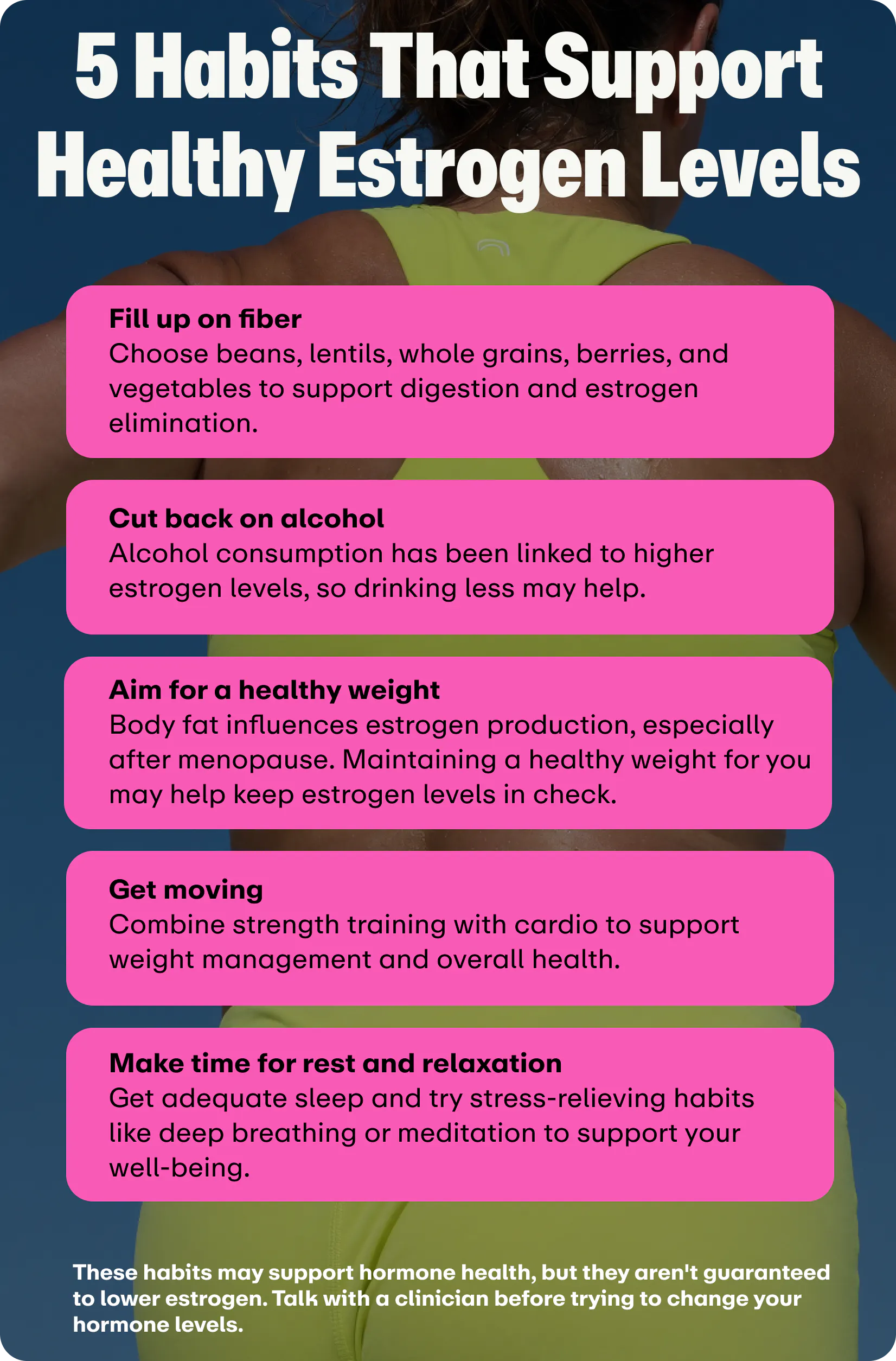
If you’re wondering how to lower estrogen naturally, certain lifestyle changes may help. These include eating more fiber, limiting alcohol, reaching or maintaining a healthy weight, managing stress, and getting adequate sleep. It’s also worth reviewing your medications, including any hormone therapy, with a clinician.
The liver helps break down estrogen, while the gut helps eliminate it from the body. That means what you eat and drink can affect how your body processes estrogen. Body fat can also influence how much estrogen you produce. Juice cleanses, “estrogen detox” kits, and restrictive elimination diets, on the other hand, haven’t been shown to lower estrogen levels.
The biggest question is whether your estrogen is actually too high or whether relatively low progesterone could be contributing to your symptoms. Perimenopause can make this distinction especially tricky. Talk with a clinician before making major changes, especially to any hormone medications you’re taking. They can help you sort through your symptoms and figure out next steps.
What Are the Symptoms of High Estrogen in Women?
It may be hard to recognize high estrogen symptoms because they often overlap with hormonal changes that happen during perimenopause. Your estrogen levels might actually be elevated, or they might just be high relative to progesterone. This is sometimes called estrogen dominance (but it’s not an official medical diagnosis).
Possible symptoms include:
- Heavy or prolonged periods: Estrogen builds up the uterine lining, which can lead to heavier bleeding when progesterone isn't keeping its effects in check.
- Breast tenderness: Hormonal changes can stimulate breast tissue, contributing to fullness or soreness.
- Bloating and fluid retention: Changes in estrogen can affect salt and water balance, sometimes causing puffiness or bloating.
- Mood shifts or irritability: Fluctuating estrogen levels can influence brain chemicals involved in mood.
- Headaches or migraine episodes: Hormonal shifts, especially sudden drops in estrogen, may trigger headaches.
- Low libido or weight changes: These frustrating symptoms might show up alongside changes in estrogen and progesterone, but they have several possible causes.
Estrogen can also play a role in conditions such as uterine fibroids and endometriosis, but having either one doesn't necessarily mean your estrogen levels are high.
Symptoms alone can't tell you whether your estrogen is high, progesterone is relatively low, or something else is going on.
What Causes High Estrogen in Women?
High estrogen can have several underlying causes, some of which become more relevant during midlife. Contributing factors may include:
- Excess body fat: Fat tissue can contribute to higher estrogen levels because it contains an enzyme that converts other hormones into estrogen. This becomes especially important after menopause, when your ovaries produce much less estrogen.
- Alcohol consumption: Regular drinking has been associated with higher estrogen levels and may affect how your body processes the hormone.
- Medications and hormone therapy: Birth control with estrogen and certain hormone therapies can increase estrogen exposure, depending on the type and dose.
- Liver and gut health: Liver conditions can interfere with how your body breaks down estrogen, while low-fiber diets and changes in gut bacteria may affect how estrogen is processed and eliminated.
- Certain medical conditions: In rare cases, ovarian tumors that produce hormones can increase estrogen levels.
Perimenopause adds another layer. Estrogen levels can rise and fall throughout the menopause transition, while lower progesterone can make estrogen's effects more noticeable, even when estrogen levels aren't consistently high.

Why Perimenopause Can Feel Like Too Much Estrogen
Perimenopause can trigger symptoms that look a lot like signs of high estrogen, even when your levels aren't always elevated. That's because estrogen and progesterone don't always change at the same pace as you get closer to menopause.
During perimenopause, ovulation becomes less predictable. When you don’t ovulate, your body doesn’t produce the usual rise in progesterone that follows ovulation. Meanwhile, estrogen can fluctuate dramatically and sometimes spike higher than it did in earlier years.
The result can be what's called estrogen dominance, or relative estrogen excess. While it's not a formal diagnosis, it means that estrogen may be normal or temporarily elevated, but there’s less progesterone to balance its effects. This might show up as heavier or closer-together periods, breast tenderness, bloating, mood shifts, or sleep disruption, sometimes beginning in your late 30s or your 40s.
Although estrogen fluctuations generally settle after menopause, symptoms don’t always go away on their own. These hormonal changes are common, and treatment can help you manage your symptoms.
Is It Really a Progesterone Problem?
What seems like too much estrogen might actually be a matter of too little progesterone. Estrogen helps build up the uterine lining, while progesterone helps balance that growth during each cycle. It may also play a role in sleep and mood. When progesterone levels drop during perimenopause, the lining can become thicker than usual, potentially leading to heavier periods.
For some women, clinicians may prescribe oral micronized progesterone, taken cyclically or continuously, to manage certain perimenopause symptoms. It may help with heavy bleeding and improve sleep, although its effects on mood are less certain. You should always check in with a clinician about unusually heavy bleeding, rather than assuming it’s hormonal.
But keep in mind that progesterone treatment doesn't lower estrogen levels. Instead, it helps counteract estrogen's effects on certain tissues. And it isn't appropriate for everyone, so it's important to discuss the potential benefits and risks with your clinician.
What Success Looks and Feels Like
Diet Changes That Help Lower Estrogen
If you’re looking for foods that lower estrogen, fiber is a good place to start. It supports healthy digestion, helps you feel fuller longer, and may also help your body eliminate estrogen instead of reabsorbing it into your bloodstream. Women ages 31 to 50 should aim for about 25 grams (g) of fiber daily, while women 51 and older need about 22 g. Beans, lentils, whole grains, berries, and chia seeds are all good sources.
Cruciferous vegetables such as broccoli, cabbage, kale, and Brussels sprouts are another smart choice. They contain compounds that break down into indole-3-carbinol and diindolylmethane (DIM), which may influence how your body processes estrogen. However, research hasn’t established that eating these vegetables significantly lowers estrogen levels.
Phytoestrogens found in foods such as flaxseed and soy can have estrogen-like effects, but that doesn’t mean they raise estrogen levels. So, there’s generally no reason to avoid foods just because they contain these plant compounds.
It’s also a good idea to limit ultraprocessed foods and added sugar, which can contribute to weight gain and insulin resistance, potentially affecting estrogen levels indirectly. But an estrogen dominance diet doesn’t mean cutting out entire food groups. Instead, focus on a balanced eating pattern with plenty of fiber-rich foods and vegetables.
And remember, there’s no food that can flush out estrogen overnight. It’s what you eat regularly that matters, not trendy cleanses with false promises.
Does Alcohol Raise Estrogen?
Yes, alcohol can increase estrogen levels, even with moderate drinking. Researchers think this may be because alcohol affects how your body processes and clears the hormone.
During perimenopause, many women notice that alcohol affects them differently. It can trigger or worsen hot flashes and night sweats, disrupt sleep, or contribute to breast tenderness.
But alcohol's effects go beyond your hormones and symptoms. For example, research shows that alcohol consumption increases breast cancer risk, even at relatively low levels, although estrogen is only one of several possible contributing factors.
If you drink, consider cutting back and tracking your symptoms over several weeks to see whether it makes a difference.
Weight, Exercise, and Estrogen Levels
Your weight and exercise habits can affect estrogen levels, especially during midlife. Hormonal changes can make it easier to gain weight, often around your midsection. Because fat tissue produces estrogen, gradual weight loss may help lower estrogen levels in women who carry excess body fat, particularly after menopause.
There are plenty of reasons to get moving. Regular exercise can also help by improving insulin sensitivity, which means your body can use blood sugar more efficiently. It also supports weight management and, when combined with dietary changes, may help modestly lower circulating estrogen levels, particularly after menopause.
Aim for a mix of strength training and moderate cardio, such as brisk walking, cycling, or swimming. Along with supporting your overall health, strength training and weight-bearing activities like walking can help preserve muscle and bone strength during perimenopause and menopause.
Sleep and stress management matter, too. Poor sleep and chronic stress can affect your appetite, energy, and weight, which may indirectly affect estrogen levels. While getting more sleep or reducing stress won’t necessarily lower estrogen, simple habits like keeping a consistent bedtime, taking daily walks, or practicing deep breathing can help you feel better day to day.
Do Supplements Like DIM Lower Estrogen?
DIM (diindolylmethane) is one of the supplements often marketed for estrogen balance. It’s a compound formed when your body breaks down substances found in cruciferous vegetables like broccoli and cabbage. But does it actually work? While human studies suggest it may change how estrogen is metabolized, there’s little evidence that it reduces estrogen. DIM may also interfere with certain medications, including tamoxifen, a breast cancer treatment.
What about other supplements? Calcium D-glucarate is promoted as a way to help your body get rid of excess estrogen, but convincing human evidence is lacking. While magnesium, B vitamins, and probiotics may offer other health benefits, research hasn’t shown that taking them lowers estrogen levels.
Safety matters, too. Dietary supplements aren’t regulated the same way as prescription drugs, and some can interact with medications. They’re also not a replacement for medical evaluation or necessary treatments.
The bottom line? If you're wondering how to lower estrogen in women, supplements aren't a proven solution. Don't use them to self-treat suspected high estrogen without first talking with a clinician about your symptoms and whether your estrogen levels are actually elevated.
Medical Options for Lowering Estrogen or Its Effects
If you're dealing with what seem like high estrogen symptoms, the right treatment depends on what's causing them and your health history. And lowering estrogen isn't always the answer.
During perimenopause, progesterone therapy may help counteract estrogen’s effects on the uterine lining and manage heavy or irregular bleeding and sleep problems. Hormonal contraception or a progestin-releasing IUD may also help control heavy bleeding and irregular cycles when appropriate.
Already taking hormone therapy? If you’re experiencing symptoms that could be related to your estrogen dose, your clinician may recommend adjusting the dose, formulation, or delivery method. Don't make these changes on your own.
Other medications are reserved for specific medical conditions. For example, aromatase inhibitors used to treat certain types of breast cancer can reduce estrogen production, but they're not routine treatments for perimenopause symptoms.
Sometimes, treating an underlying condition is the best approach. Managing conditions such as fibroids or endometriosis may help relieve symptoms without necessarily requiring estrogen-lowering medications. However, some treatments, such as GnRH agonists, do lower estrogen levels and can cause menopause-like side effects, including hot flashes.

When You Should Not Try to Lower Estrogen
Lowering estrogen isn't always a good idea. If you’re receiving hormone therapy, your clinician may have prescribed estrogen to relieve menopause symptoms. Trying to lower it with supplements or dietary changes could work against your treatment goals. Talk with your prescriber about any concerns instead.
The same goes for symptoms of low estrogen. Mood changes, headaches, and sleep problems can occur with both high and low estrogen, while hot flashes and vaginal dryness are more commonly linked to low or fluctuating levels. Because symptoms alone can't tell you whether estrogen is high or low, lowering estrogen unnecessarily could make some symptoms worse.
After menopause, estrogen levels are naturally much lower, so there’s generally no reason to reduce them further without medical guidance. If you have what seem like symptoms of high estrogen levels after menopause, it's important to find out what's causing them, rather than trying a DIY fix.
Anyone with a history of hormone-sensitive cancer or who is undergoing active cancer treatment should make estrogen-related decisions with their oncology team.
Before trying to lower estrogen, it's important to understand what's actually causing your symptoms. Your clinician can help you figure that out.
How to Test Estrogen Levels and When to See a Clinician
Testing estrogen levels typically involves a blood test to measure estradiol, sometimes alongside progesterone and follicle-stimulating hormone (FSH). Timing matters because hormone levels change throughout the menstrual cycle. During perimenopause, levels can also fluctuate significantly from day to day, so a single test may not tell the whole story. That's why your symptoms and medical history often matter more than one hormone test result.
If you’re experiencing very heavy or prolonged periods, any bleeding after menopause, a new breast lump, or symptoms that disrupt your daily life, see a healthcare professional as soon as possible.
Not sure what's behind your symptoms? Midi can help. Our clinicians specialize in perimenopause and menopause and can review your symptoms, determine whether testing is needed, and create a treatment plan tailored to you.
Depending on your needs, that may include progesterone, adjustments to hormone therapy, or nonhormonal options. With convenient virtual care and most major insurance plans accepted, you can book a visit and get started when you're ready.
Key Takeaways
- Symptoms such as heavy periods, breast tenderness, and bloating don’t necessarily mean your estrogen is too high. They can also be caused by hormonal changes during perimenopause.
- During perimenopause, progesterone may decline while estrogen fluctuates, creating symptoms sometimes described as estrogen dominance, which isn’t a formal medical diagnosis.
- Eating more fiber, limiting alcohol, maintaining a healthy weight, and exercising regularly may support healthy estrogen metabolism. But there's no proven way to “detox” estrogen from your body.
- Supplements such as DIM and calcium D-glucarate haven't been proven to lower estrogen and may interact with medications.
- Lowering estrogen isn’t always the right goal, especially if you’re experiencing low-estrogen symptoms or taking hormone therapy. Treatments like progesterone can help manage estrogen’s effects without lowering estrogen levels.
- A clinician can help identify what's causing your symptoms and whether hormone testing, lifestyle changes, or medical treatment makes sense for you.
Frequently Asked Questions (FAQs)
What vitamin decreases estrogen?
No vitamin has been proven to reliably lower estrogen levels. Although vitamin D and B vitamins are sometimes promoted for hormone balance, there's not enough evidence that taking them reduces estrogen. Talk with a clinician before starting supplements, especially if you're taking hormonal medications.
What foods flush out excess estrogen?
No food can flush excess estrogen out of your body. However, fiber-rich foods such as beans, lentils, whole grains, and berries support regular bowel movements and may help your body eliminate estrogen. Cruciferous vegetables, such as broccoli and Brussels sprouts, also contain compounds that may affect how your body processes estrogen.
Does flaxseed increase or decrease estrogen?
Eating flaxseed hasn't been shown to consistently raise or lower estrogen. It contains plant compounds called phytoestrogens that can have estrogen-like effects in the body, but that doesn't necessarily mean it changes estrogen levels. Flaxseed is also a good source of fiber and a nutritious addition to a balanced diet.
Can high estrogen cause hair loss?
High estrogen isn’t a well-established cause of hair loss. During perimenopause and menopause, shifting estrogen levels may contribute to hair thinning. Other potential causes include thyroid problems, iron deficiency, genetics, and certain medications, so talk with a clinician if you're experiencing persistent hair loss.
Can estrogen levels be high after menopause?
Yes, although estrogen levels are generally much lower after menopause. Excess body fat can contribute to estrogen production, and certain hormone medications may also affect levels. However, symptoms alone can’t confirm high estrogen. If you’re experiencing unusual symptoms, particularly bleeding after menopause, see a clinician for an evaluation.
If you’re in perimenopause or menopause and want guidance from clinicians who specialize in women’s midlife health, book a virtual visit with Midi today.
Hormonal change is at the root of dozens of symptoms women experience in the years before and after their period stops.
Our trained menopause specialists can help you connect the dots to guide you towards safe, effective solutions.
Whether you need personalized guidance or a prescription routine to tackle symptoms—including vaginal dryness and irritation, brain fog, hot flashes, sleep trouble, mood swings, and weight gain—we’ve got you covered.
Midi’s mission is to revolutionize healthcare for women at midlife, wherever they live and whatever their health story. We believe that starts with education, to help all of us understand our always-changing bodies and health needs. Our core values guide everything we do, including standards that ensure the quality and trustworthiness of our content and editorial processes. We’re committed to providing information that is up-to-date, accurate, and relies on evidence-based research and peer-reviewed journals. For more details on our editorial process, see here.