Rebecca Yee, MD

Whether it shows up as bladder leaks, chronic constipation, or painful sex, pelvic floor dysfunction is common, especially after menopause. But before you start doing endless Kegels, it's important to figure out what's causing your symptoms. The wrong treatment could actually make them worse. That’s why we put together this rundown on the different types of pelvic floor dysfunction, including common symptoms, causes, treatment options, and how Midi Health clinicians can help.
Pelvic floor dysfunction is no joke. When the muscles that support your bladder, uterus, and rectum aren’t working the way they’re supposed to—maybe they’re too tight, too weak, or uncoordinated—a whole range of uncomfortable symptoms can show up. You might find yourself leaking urine when you laugh, struggling with constipation, or avoiding painful sex.
Needless to say, that’s a whole lot to deal with. And because pelvic floor dysfunction is common, your symptoms might be dismissed as “just aging,” especially during perimenopause and menopause. But no one should have to live with them.
With the right approach, pelvic floor dysfunction is treatable. The only wrinkle is that you first need to figure out exactly what type of dysfunction you have. Consider this your guide to pelvic floor dysfunction, including common types and symptoms, causes, treatment options, and why Kegels aren't always the answer.
What Is Pelvic Floor Dysfunction?
First, let’s talk about the pelvic floor: It’s a hammock of muscles, ligaments, and connective tissue at the base of your pelvis that supports your pelvic organs, including the bladder, bowel, uterus, and vagina. When everything’s working properly, your pelvic floor helps control urination and bowel movements, and it adapts during sexual activity and exercise.
But sometimes, the muscles have a hard time contracting, relaxing, or working together. Pelvic floor dysfunction is an umbrella term for problems with pelvic floor muscles that are too tight, too weak, or uncoordinated, and it affects bladder, bowel, and sexual function.
The resulting symptoms can include urine leaks, pain, trouble emptying your bladder or bowels, and constipation. Some women also experience pelvic organ prolapse, which happens when one or more pelvic organs drop from their normal position and bulge into the vagina. Pelvic floor dysfunction can also overlap with related conditions like genitourinary syndrome of menopause (GSM) and overactive bladder.
Pelvic floor disorders are common, particularly as women age. One 2023 study of nearly 1,500 Spanish women found that more than 55% reported urinary incontinence, with higher odds after menopause. About 10% had fecal incontinence, 14% had uterine prolapse, and nearly 19% reported pelvic pain.
Hypertonic vs. Hypotonic Pelvic Floor: Which Type Might You Have?
There are two main types of pelvic floor dysfunction:
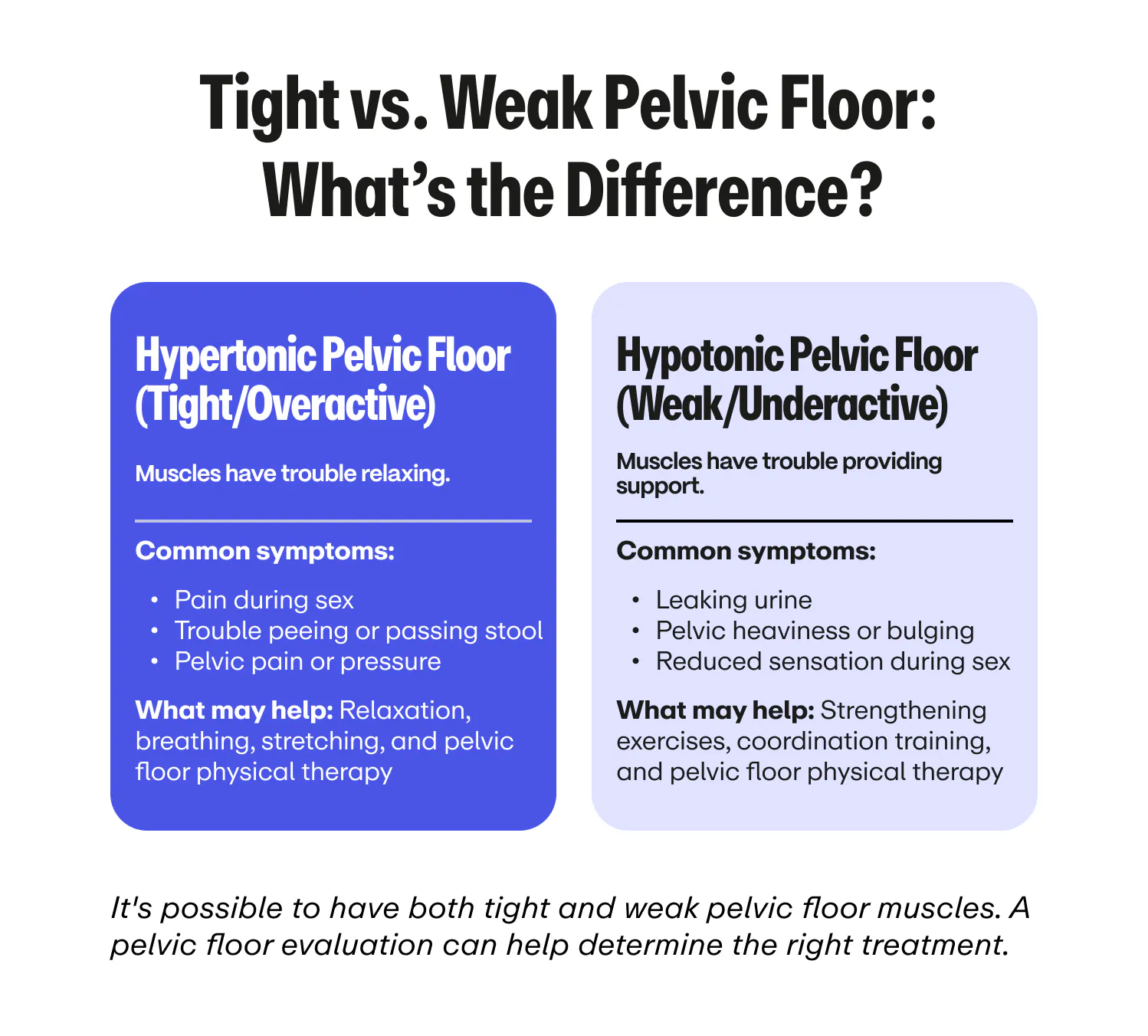
- Hypertonic pelvic floor: This is an overactive or “tight” pelvic floor, where there’s excess tension in the muscles, making it difficult for them to fully relax or lengthen. This can cause pain during sex, burning at the vaginal opening, or pelvic pressure. You might also have trouble starting urination, fully emptying your bladder, or passing stool.
- Hypotonic pelvic floor: This is when your pelvic floor muscles are weak or stretched and can't adequately support your pelvic organs. You might notice urine leaks when you cough or jump, a feeling of heaviness or bulging in the pelvis, reduced sensation during sex, issues with fecal or flatus (gas) incontinence, and difficulty passing stool.
Understanding the difference between these two is key, because they are treated very differently. For instance, doing Kegels with a hypertonic pelvic floor can make already tense muscles even tighter, potentially worsening symptoms. Instead, a hypertonic pelvic floor generally needs exercises and treatments that help the muscles relax.
Making things even more complicated, it’s possible to have pelvic floor muscles that are both tight and weak. This is why it's important to get evaluated rather than trying to diagnose and treat the problem yourself.
What Are the Symptoms of Pelvic Floor Dysfunction?
Since the pelvic floor stretches across the entire pelvis, pelvic floor dysfunction symptoms can show up in a bunch of different ways:
- Bladder: leaking urine when you laugh, cough, sneeze, or exercise; sudden urges to pee or needing to go frequently; burning when you pee; trouble starting urination or fully emptying your bladder; waking up more than once per night to pee (nocturia)
- Bowel: chronic constipation; pain or straining during bowel movements; feeling like you haven't fully emptied your bowels; flatus (gas) incontinence, especially after giving birth; less commonly, stool leakage
- Sexual health: pain with entry or deep penetration during sex; difficulty becoming aroused or having an orgasm; reduced genital sensation; involuntary muscle clenching during sex
- Pelvic and musculoskeletal: aching in the pelvis, tailbone, lower back, or hips; involuntary muscle tightening that gets worse after long periods of sitting or standing; a feeling of pelvic heaviness or bulging in the vagina
Your personal cluster of symptoms may depend on whether your pelvic floor is tight or weak. Tightness is more likely to cause pain, straining, and trouble fully emptying your bladder or bowels. On the other hand, a weak pelvic floor is more likely to cause a leaky bladder, a feeling of pelvic heaviness or bulging, and sometimes reduced sensation during sex.
What Causes Pelvic Floor Dysfunction?
Pelvic floor dysfunction can develop after a single event, but more often, what causes pelvic floor dysfunction is a combination of factors that affect how the pelvic floor muscles function over time:
- Pregnancy and childbirth: A vaginal delivery—particularly if you had a large baby or the clinician used forceps or a vacuum—can stretch or damage the pelvic nerves and muscle fibers. (FYI: Pelvic floor problems can linger or become more noticeable years after giving birth.)
- Chronic strain: Years of persistent coughing from smoking or asthma, heavy weightlifting without proper core support, or regularly straining from constipation can overload the muscles and supporting tissue.
- Gynecologic conditions: Endometriosis, adenomyosis, uterine fibroids, and pelvic surgeries like hysterectomy can contribute to pelvic pain or changes in muscle or nerve function. This can lead to involuntary pelvic floor muscle tightening.
- Chronic stress, anxiety, or trauma: Believe it or not, stress and anxiety may contribute to pelvic floor dysfunction. For example, you might subconsciously clench your pelvic floor muscles when stressed, much like clenching your jaw without realizing it.
- Age and hormonal changes: The natural loss of muscle mass and strength as we age affects the pelvic floor, too. For women, the drop in estrogen after menopause can affect vaginal and urinary tissues, contributing to symptoms that overlap with pelvic floor dysfunction.
- Other factors: A higher body weight, connective tissue disorders, and certain kinds of intense exercise (like gymnastics and heavy weightlifting) can put additional strain on the pelvic floor.
Why Perimenopause and Menopause Make Pelvic Floor Dysfunction Worse
When it comes to the pelvic floor, menopause brings hormonal changes that affect more than you might realize. That's because estrogen helps maintain tissue thickness and elasticity in the vagina and surrounding pelvic tissues, supports collagen, and promotes healthy blood flow.
As estrogen levels decline around menopause, vaginal and urinary symptoms can emerge or worsen, sometimes making existing pelvic floor problems more noticeable. With less estrogen, vaginal tissues can become thinner, drier, and less elastic, making sex uncomfortable or painful.
Nearly half of menopausal women experience symptoms of GSM—including vaginal dryness, irritation, urinary problems like recurrent UTIs, and pain during sex—which can contribute to or worsen pelvic floor symptoms.
A vicious cycle can start: When sex hurts, the pelvic floor muscles may tighten up to guard against the pain. This can make the muscles even tighter and penetration even more difficult.
Meanwhile, age-related muscle weakness and changes from earlier pregnancies or childbirth can also contribute to a leaky bladder and pelvic organ prolapse that become more noticeable in midlife.
The good news? Treatments can help relieve menopause-related vaginal dryness and discomfort, which may also ease the pain that contributes to pelvic floor muscle tightness (more on treatment options later).

How Is Pelvic Floor Dysfunction Diagnosed?
If you think you might be dealing with pelvic floor dysfunction, checking in with a gynecologist or menopause-focused clinician—like the experts at Midi—is a good place to start. They can evaluate your symptoms by asking about your bladder and bowel habits, sexual health, childbirth and surgical history, medications, menopause status, and stress levels. Bringing a short symptom log can help you prepare for your visit.
Your clinician may recommend an in-person pelvic exam with a gynecologist or an evaluation with a pelvic floor physical therapist. With your consent, this can include an external and internal assessment of your pelvic floor muscles, using a gloved, lubricated finger to gently check for weakness, tightness, tenderness, and coordination problems. A gynecologist can also check for prolapse or other structural concerns.
Depending on your symptoms, your clinician may also recommend urine testing to rule out infections, an exam to check for skin conditions, or imaging if needed.
Pelvic Floor Physical Therapy: What Treatment Actually Looks Like
Pelvic floor physical therapy is often a go-to treatment for pelvic floor dysfunction. But the exact plan of action looks different depending on whether your muscles are too tight, too weak, or uncoordinated:
- For a tight pelvic floor: A therapist will help you focus on relaxing and lengthening your muscles. Treatment may include gentle internal or external massage, belly breathing, and stretching to ease muscle tension. Vaginal dilators may also be used to gradually make penetration more comfortable.
- For a weak or uncoordinated pelvic floor: Treatment focuses on building strength, improving muscle control, or both. That means more than just Kegels: A therapist may guide you through progressively more challenging exercises that emphasize proper technique and coordination with your core muscles. They may also use biofeedback, which uses sensors to help you see when your pelvic floor muscles tighten or relax, so you can learn to control them more effectively.
Just know that it takes time. Pelvic floor dysfunction treatment often involves regular sessions, plus exercises to practice at home over several weeks to months. How long you need therapy depends on your symptoms and how you respond to treatment.
Vaginal Estrogen, Pessaries, and Other Medical Treatments
Although pelvic floor therapy is often a first-line pelvic floor dysfunction treatment, it may work best alongside other treatments that address related conditions or symptoms.
For instance, women with pelvic floor dysfunction who also have menopause-related vaginal or urinary symptoms may benefit from vaginal estrogen. This low-dose, local medication can come as a cream, ring, or insert. Unlike systemic hormone therapy, vaginal estrogen works mainly on vaginal and urinary tissues, with minimal absorption into the bloodstream. It can help relieve dryness, irritation, pain during sex, and some urinary symptoms, while also reducing the risk of recurrent UTIs.

For women with prolapse or urine leakage, a pessary can help support the pelvic organs and relieve symptoms without the need for surgery. These removable devices are typically made of soft silicone and fitted by a clinician to sit inside the vagina.
Sometimes, a healthcare professional will recommend treatment that directly targets a particular symptom. For instance, they may prescribe medication for an overactive bladder or consider muscle-relaxing treatments for persistent pelvic floor tightness.
If these more conservative options aren’t helping, a healthcare professional may discuss surgery for significant pelvic organ prolapse or stress urinary incontinence.
Lifestyle Changes That Support Your Pelvic Floor
Certain daily habits can help your pelvic floor, too. Of course, they don’t replace your clinician’s recommended treatment plan, but they can support it:
- Train your bladder: This technique involves gradually increasing the time between bathroom breaks to help manage urinary urgency and frequency. But ask your clinician whether bladder training is right for you before you try it.
- Hydrate smart: Stay hydrated to keep your urine from becoming too concentrated, which can irritate your bladder. If caffeine or alcohol worsens your urinary symptoms, try cutting back.
- Try a toilet stool: Placing your feet on a small footstool when you’re having a bowel movement can help make it easier to go and reduce straining.
- Prioritize fiber: Getting enough fruits, vegetables, and whole grains (along with plenty of water!) can help prevent constipation and reduce straining.
- Learn proper lifting technique: If you’re into weightlifting, practice good form and avoid holding your breath or bearing down too much when lifting. A trainer can help assess your form.
- Breathe strategically: You can help relax tense pelvic floor muscles with slow, deep belly breathing.
- Manage body weight: If you are overweight, losing weight can will help improve many symptoms of pelvic floor dysfunction.
Why Kegels Aren’t Always the Answer
Doing Kegels—exercises that involve contracting and relaxing your pelvic floor muscles, similar to squeezing to stop your urine—can help strengthen a weak pelvic floor. But you don’t want to just start up a Kegel routine on your own.
For one, many women don't do them correctly. It’s common to bear down or tighten your abs or glutes instead of properly engaging your pelvic floor muscles.
And if your pelvic floor is already tight, Kegels can sometimes worsen symptoms like pain, urinary urgency, and constipation. What you need instead may be relaxation-based exercises, sometimes called reverse Kegels, along with breathing and stretching techniques guided by a pelvic floor physical therapist.
This is why it’s important to get your pelvic floor assessed before starting an exercise program, particularly if you’re experiencing pain or trouble emptying your bladder or bowels.
And for those who’ve tried Kegels with no success? That doesn't mean nothing will work. Kegels might simply have been the wrong approach for your particular pelvic floor problem.
When to See a Clinician About Pelvic Floor Symptoms
Pelvic pain and urinary problems are real medical issues that can have a significant effect on your quality of life. And while they're common, they aren't something you have to accept as an inevitable part of aging. If you're experiencing new or persistent leaking, urgency, constipation, pain with sex, or pelvic heaviness, especially if it's affecting your daily life, it's a good idea to check in with a clinician.
Most pelvic floor symptoms aren't emergencies, but some warning signs need prompt medical attention, including:
- sudden, severe pelvic pain
- blood in your urine or stool
- a new or visible bulge from your vagina
- fever or vomiting along with urinary symptoms
- inability to urinate
Seek emergency care if you can't urinate or have sudden, severe pelvic pain.
For other symptoms, you can schedule a regular visit. At Midi, clinicians consider pelvic floor symptoms in the broader context of perimenopause and menopause, including how hormonal changes may contribute. They might discuss vaginal estrogen options, if appropriate, or recommend an evaluation with a pelvic floor physical therapist.
Remember: As frustrating as these symptoms might be, they're very common—and treatable. If you're ready to take the next step, you can book a visit with a menopause-focused clinician at Midi to talk through your symptoms and options.
Key Takeaways
- Pelvic floor dysfunction is common, especially as women age. Symptoms can include bladder leaks, constipation, pelvic pain, and painful sex.
- Your pelvic floor muscles can be too weak, too tight, or uncoordinated. The right treatment depends on what's causing your symptoms.
- Hormonal changes during perimenopause and menopause can contribute to vaginal and urinary symptoms that overlap with or worsen pelvic floor problems.
- Pelvic floor physical therapy is often a go-to treatment for pelvic floor dysfunction. Clinicians may also recommend vaginal estrogen, lifestyle changes, or other treatments based on your symptoms.
- Kegels aren't right for everyone. While they can help strengthen weak pelvic floor muscles, they may worsen symptoms if your muscles are already too tight. Getting evaluated can help you find the right approach.
Frequently Asked Questions (FAQs)
Does pelvic floor dysfunction ever go away?
Yes, pelvic floor dysfunction can improve significantly, and symptoms may even resolve with the right treatment. Pelvic floor physical therapy is often a first-line option, sometimes alongside other treatments, based on your symptoms and their causes.
What does a pelvic floor problem feel like?
Depending on the type of pelvic floor problem you have, you might find sex or urination painful or experience bladder leaks, constipation, or a feeling of heaviness or achiness in your pelvis or vagina. Some women describe feeling like something is bulging out of their vagina.
Can pelvic floor dysfunction cause bloating?
Yes, pelvic floor dysfunction can contribute to digestive symptoms like bloating. When the pelvic floor muscles have trouble relaxing or coordinating properly, it can be harder to pass gas or have a bowel movement, leading to constipation, bloating, and abdominal discomfort.
Can pelvic floor dysfunction cause back pain?
Yes. Pelvic floor dysfunction can lead to aching in the pelvis, tailbone, lower back, or hips. Your pelvic floor works with your core and back muscles to support your pelvis and spine, so when these muscles are too tight or weak, you can end up with an achy back.
Can anxiety cause pelvic floor dysfunction?
Yes, anxiety can make muscles throughout your body tighten up, including your pelvic floor muscles. And research suggests that anxiety and depression are linked to more severe pelvic floor symptoms and less improvement with treatment.
If you’re in perimenopause or menopause and want guidance from clinicians who specialize in women’s midlife health, book a virtual visit with Midi today.
Hormonal change is at the root of dozens of symptoms women experience in the years before and after their period stops.
Our trained menopause specialists can help you connect the dots to guide you towards safe, effective solutions.
Whether you need personalized guidance or a prescription routine to tackle symptoms—including brain fog, hot flashes, sleep trouble, mood swings, and weight gain—we’ve got you covered.
Midi’s mission is to revolutionize healthcare for women at midlife, wherever they live and whatever their health story. We believe that starts with education, to help all of us understand our always-changing bodies and health needs. Our core values guide everything we do, including standards that ensure the quality and trustworthiness of our content and editorial processes. We’re committed to providing information that is up-to-date, accurate, and relies on evidence-based research and peer-reviewed journals. For more details on our editorial process, see here.