



An estrogen patch is a helpful solution for many women dealing with bothersome menopause symptoms. It provides several benefits, like relieving hot flashes and night sweats and slowing bone loss after menopause. Plus, it’s easy to use, and it delivers a steady dose of hormones that can help you feel like you again. Ultimately, the decision to use estrogen patches or any form of hormone therapy should be made with a healthcare professional, like a Midi Health clinician, who can help you choose a treatment plan based on your symptoms, overall health, and goals.
When it comes to menopause, there’s some good news and some not-so-good news. While waving goodbye to your period may feel seriously liberating, all the other stuff that can come with this particular stretch of life, from hot flashes and mood shifts to brain fog and sleep issues, aren’t exactly what we’d call a fun time.
Now, for the good news: You don’t have to struggle through symptoms as the years go by. These days, a variety of science-backed options, including estrogen patches, can help treat menopause symptoms, which can work wonders for your body, mind, and mood.
An estrogen patch, also called an estradiol transdermal patch, is a form of hormone therapy that can help manage many of the most frustrating symptoms of menopause.
While hormone therapy comes in several forms, you may hear about it as a pill or a patch first.
“The decision to take an oral estrogen versus using a patch, or even a skin gel or spray, is not just about personal preference, insurance coverage and convenience, it’s also about safety,” says Lauren Streicher, MD, a clinical professor of obstetrics and gynecology at Northwestern University’s Feinberg School of Medicine and the founding medical director of the Northwestern Medicine Center for Sexual Medicine and Menopause. “It’s about potential risks and your personal medical history. And you should know those differences so you can participate in that decision.”
Read on to learn how estrogen patches work, their benefits and side effects, and how to use them safely and effectively.
What Is Hormone Replacement Therapy?
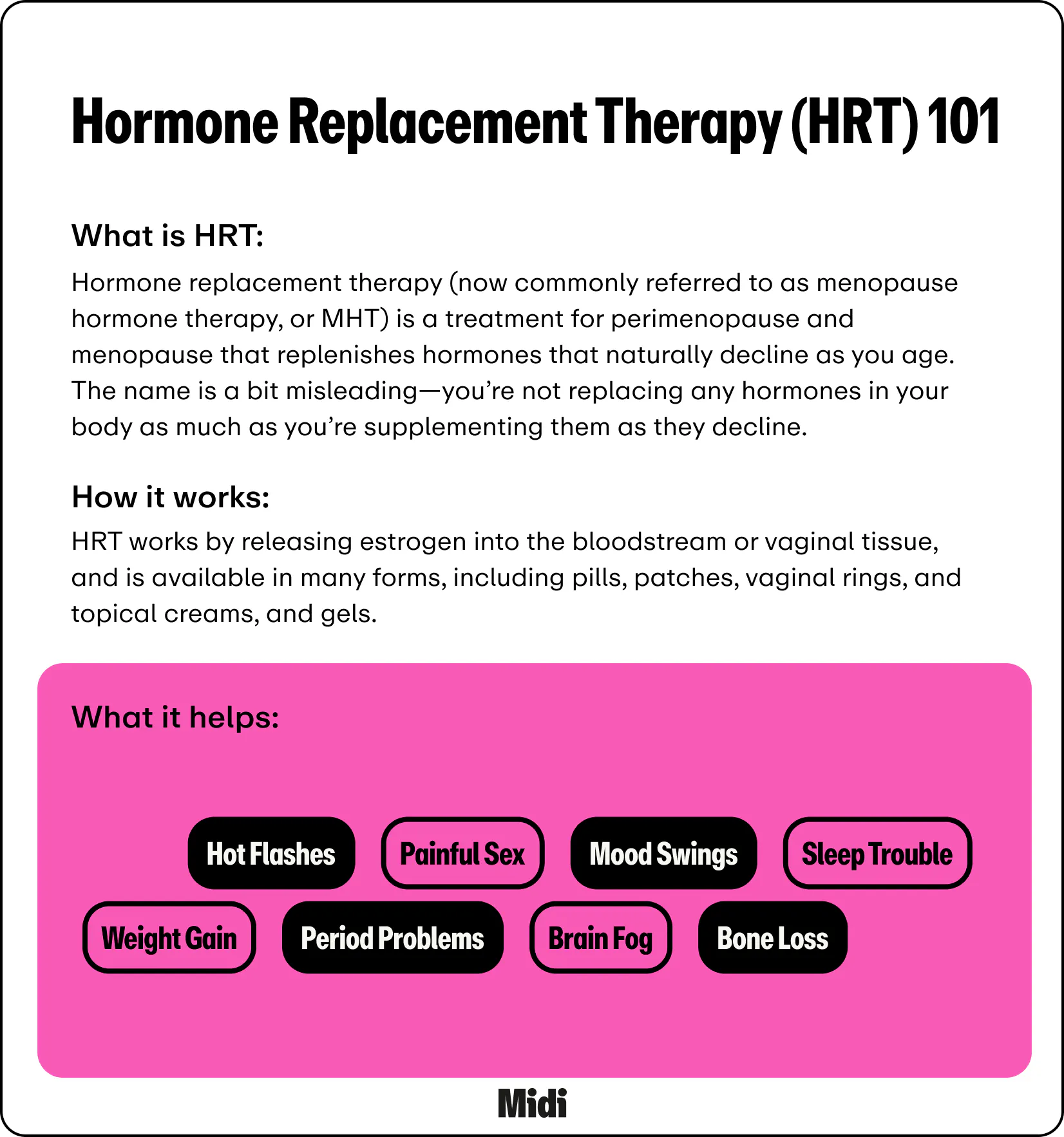
Hormone replacement therapy (HRT, now commonly referred to as menopause hormone therapy, or MHT) is a treatment used during perimenopause and menopause to boost hormone levels, namely estrogen and progesterone, that naturally decline as your reproductive years wind down. The name is a bit misleading—you’re not replacing any hormones in your body as much as you’re supplementing them as they decline. HRT is the most effective treatment for managing many menopause symptoms that result from changes in estrogen and progesterone.
What many women don’t realize is that we have estrogen receptors all over our bodies—in our brains and bones as well as our skin and hair. So it’s not just wonky periods or breast changes we’re contending with, and that’s what can make estrogen withdrawal so frustrating. As our levels rise and fall unpredictably, we’re met with a confounding array of symptoms that deserve our attention.
Enter HRT. It works by releasing estrogen throughout the body or directly to vaginal tissues,
and it is available in many forms, including:
- pills
- patches
- vaginal rings
- topical creams and gels
- pellets (Midi clinicians don’t recommend these for treating menopause symptoms)
You may have noticed that the conversation around HRT has shifted somewhat recently. In November 2025, the FDA started removing “black box” warnings about cardiovascular disease, breast cancer, and probable dementia from hormone therapy products, saying they no longer reflect the latest research on HRT’s benefits and risks.
That doesn’t mean HRT is risk-free: The boxed warning about endometrial cancer remains for systemic estrogen-only therapy. So unless you’ve had a hysterectomy, clinicians generally add progesterone or progestin to estrogen. This is necessary because, while estrogen can ease symptoms, it can also thicken the uterine lining (which is called endometrial hyperplasia), increasing the risk of endometrial cancer. Adding progesterone to HRT helps control this thickening and reduce that risk. (Certain forms of progesterone may still be recommended for women without a uterus to help improve symptoms like insomnia and night sweats.)

How Estrogen Patches Help Provide Menopause Relief
An estrogen patch is a thin, adhesive patch that delivers a steady dose of estrogen through the skin and into the bloodstream to help relieve menopause symptoms. It’s a form of transdermal (through-the-skin) hormone therapy that may have some safety advantages over oral estrogen for certain women.
Types of HRT Patches
There are two main types of menopause patches:
- Estrogen-only patches, sometimes called transdermal estradiol patches, contain estradiol (a form of estrogen). Common brands include Alora, Climara, Lyllana, and Menostar.
- Combination patches contain estrogen and a progestin (a synthetic form of progesterone). Brands include Climara Pro and CombiPatch.
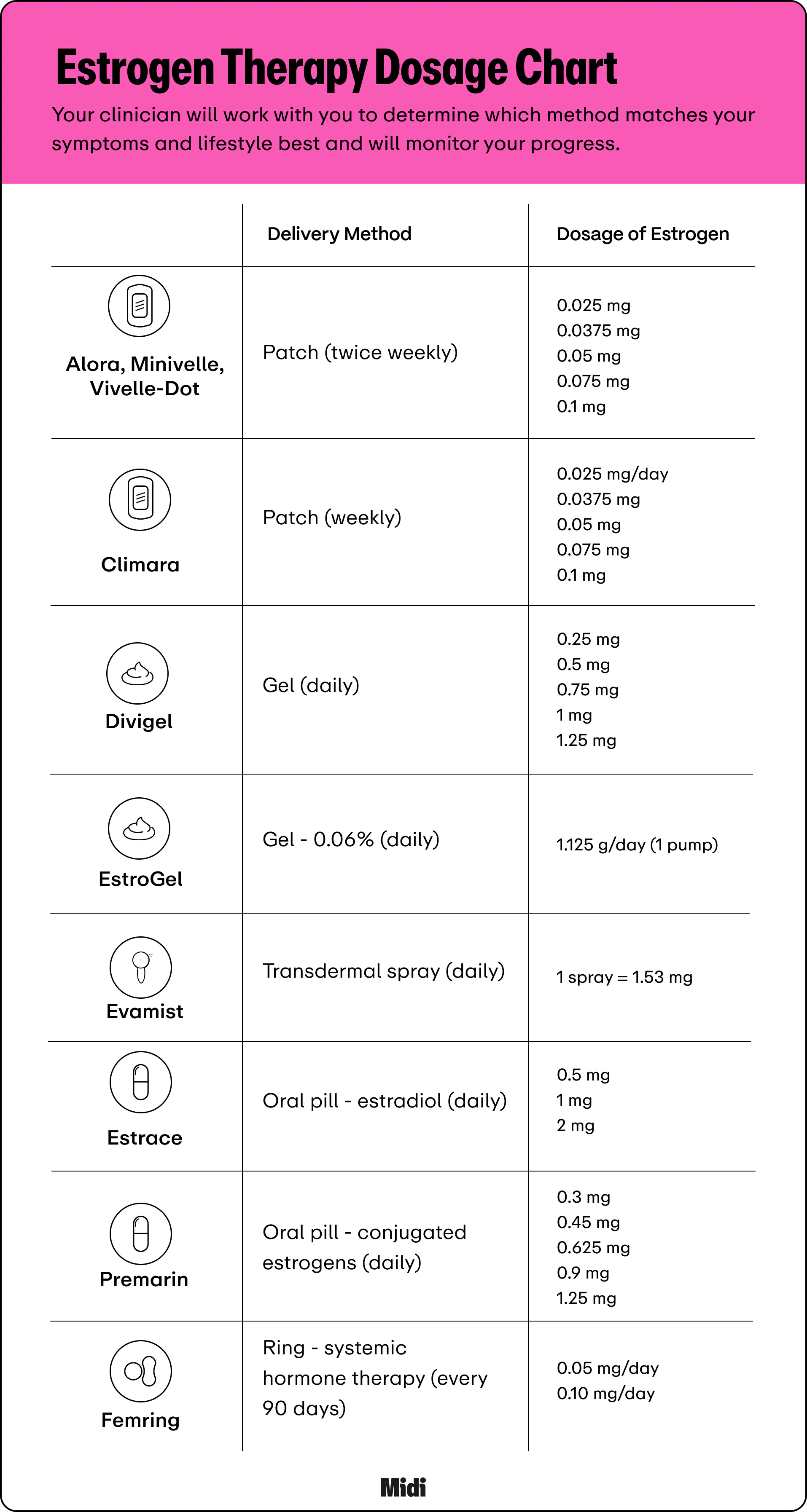
HRT patches come in a variety of doses and are usually applied once or twice per week, depending on the product and your treatment plan. Climara, Climara Pro, and Menostar are applied once weekly, while Alora, Lyllana, and CombiPatch are applied twice weekly.
You put estrogen patches on clean, dry skin in specific areas. (We’ll cover the best place to put an estrogen patch—and spots to avoid—below.)
Estrogen Patch Doses and Strengths: What the Numbers Mean
The number on your estrogen patch tells you how much estradiol it releases each day. Estradiol is one of three types of estrogen, and it’s the most prominent one during your reproductive years, though typical levels vary by age.
Estrogen patch doses are available in various strengths that generally range from 0.025 milligrams (mg) to 0.1 mg per day:
- 0.025 mg/day: This is a low-dose estradiol patch. Your clinician may prescribe this dose if you’re sensitive to certain medications, have very mild symptoms, or prefer to start HRT slowly.
- 0.0375 mg to 0.05 mg/day: This is a common starting range for women with mild to moderate menopause symptoms.
- 0.075 mg to 0.1 mg/day: These higher doses may be used for more severe menopause symptoms or for women with premature ovarian insufficiency, which happens when the ovaries stop working normally before age 40.
Your clinician will set up regular check-ins to track how well your treatment is working over time. They may increase the dosage or recommend a different form of HRT if you’re still having bothersome symptoms or estrogen patch side effects.
How Long Does It Take for an Estrogen Patch to Start Working?
It can be hard to stay patient when you’re waiting for symptom relief. So, how long does it take for an estradiol patch to start working? Some women start to notice improvements within the first few weeks of using estrogen patches, but it can take up to 3 months for HRT to take full effect.
How quickly you feel better can also depend on the symptom. Hot flashes and night sweats may start improving within several weeks, while vaginal symptoms may take longer to improve. Sleep and mood symptoms can also take time. For example, in a clinical trial, perimenopausal women using transdermal estradiol had less anxiety and more enjoyment in everyday life after 8 weeks.
When you first start HRT, you might notice temporary side effects—like headaches, breast tenderness, or mood changes—that can make you feel worse before you start feeling better. These usually improve as your body adjusts, but let your clinician know if they’re especially bothersome or don’t improve.
Midi clinicians typically check in after about 4 weeks to see how your symptoms are responding. If you still have ongoing symptoms at that point, your clinician can help determine whether you need more time or an adjustment to your estrogen patch dose.
How Women Feel on Estrogen Patches
Estrogen Patches vs. Estrogen Pills
“Most of the oral and all of the transdermal estrogens have the exact same form of estrogen—a plant-derived, bioidentical beta estradiol,” says Dr. Streicher. “The differences come down to how your body metabolizes the estrogen, which is determined by if it is absorbed through the skin as opposed to making the trip through your gastrointestinal system.”
When you take oral estrogen, it travels from the stomach into the intestines and through the liver, where your body metabolizes it. Transdermal estrogens skip that trip through the liver because it’s absorbed straight through the skin and enters the bloodstream. This matters because oral estrogen can affect the liver in ways that transdermal estrogen cannot.
Oral estrogen products have risks that usually don’t occur with transdermal estrogen, including:
- gallstones
- higher levels of inflammatory markers associated with heart disease
- increased production of clotting factors in your liver, which can raise the risk of blood clots like stroke, pulmonary embolism, or deep vein thrombosis
That certainly doesn’t mean estrogen pills are off the table: “Most low-risk women do just fine taking pills,” says Dr. Streicher. “The risk of developing a blood clot when taking postmenopausal estrogen is really small—and much smaller than if someone is taking birth control pills, which most women don’t hesitate to do.”
Estrogen cream is another option, but it works differently from estrogen patches and pills. It’s a form of local hormone therapy that works in and around the vagina and vulva to help treat vaginal dryness, irritation, and recurrent urinary tract infections (UTIs). But it doesn’t treat vasomotor symptoms like hot flashes and night sweats, which require systemic (whole-body) therapy.
Where Do You Put an Estrogen Patch?
The best place to put an estrogen patch is on clean, dry skin in a spot recommended for your specific patch, which may include the lower abdomen or upper buttocks.
Keep these tips in mind when you’re ready to apply your estrogen patch:
- Remove the old patch first: Always take off your old estrogen patch before applying a new one.
- Rotate application sites: Try to avoid using the exact same spot for at least a week to help reduce skin irritation. You can rotate the spot slightly, but don’t switch back and forth between your abdomen and buttocks, since differences in body fat can change how estrogen is absorbed.
- Avoid certain spots: Skip broken or irritated skin, oily or freshly moisturized areas, and spots where tight clothing may rub against the patch, such as your waistband.
- Check before applying the patch elsewhere: Unless the instructions for your patch say otherwise, don’t apply it to your breasts, arms, or legs.
Want a visual? Watch Midi’s Chief Brand Officer and patch user, Jill Herzig, demonstrate how to apply an estrogen patch:
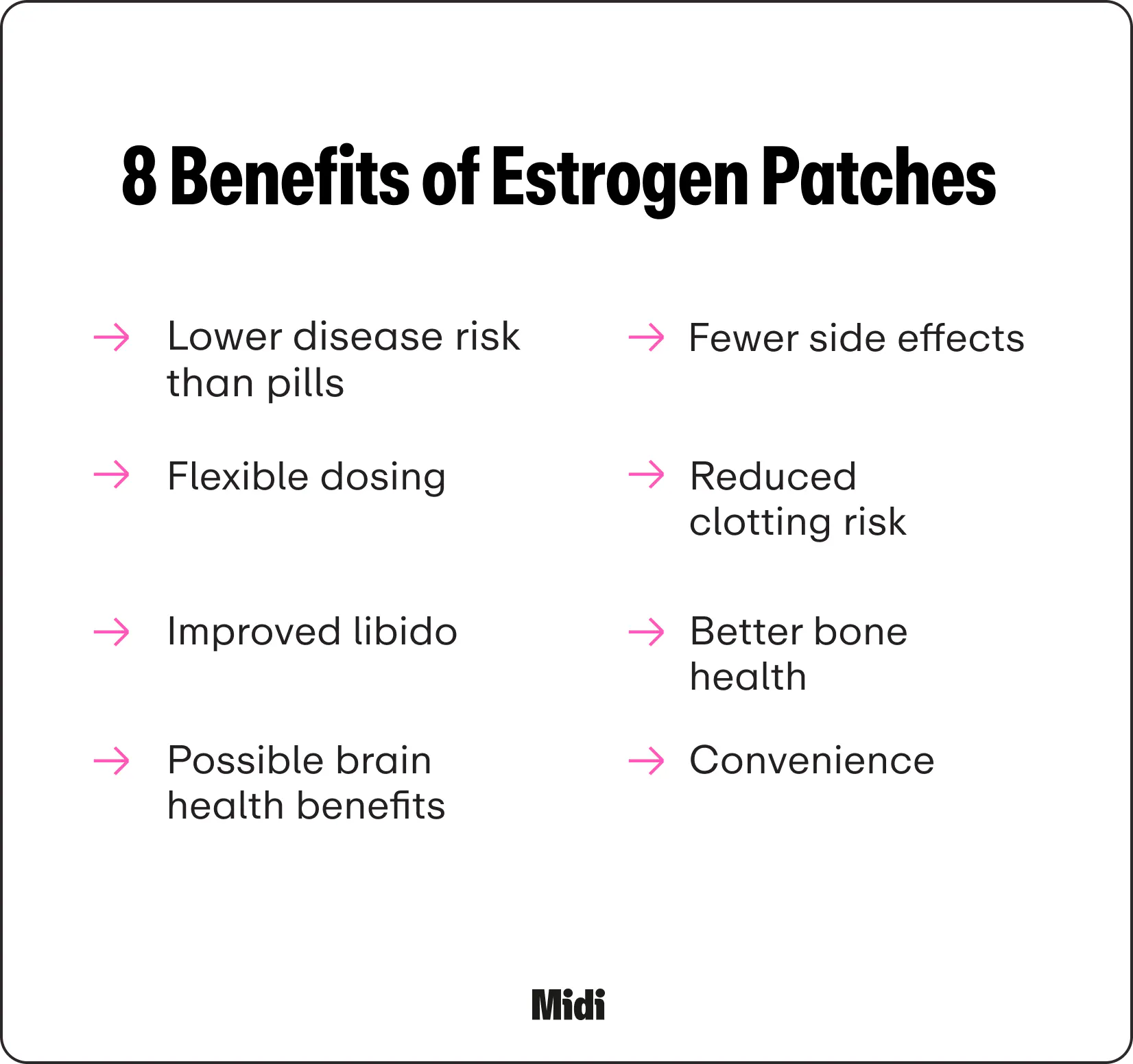
8 Benefits of Estrogen Patches
Estrogen patches help relieve common menopause symptoms, such as hot flashes, night sweats, and insomnia or other sleep problems. But they also offer several advantages over other forms of hormone therapy. Here’s how they may benefit you.
Lower disease risk than pills
One of the main advantages of estrogen patches is that they deliver estradiol while bypassing the liver, which can lower certain risks associated with oral estrogen. One study found that transdermal hormone therapy was associated with a lower risk of gallbladder disease than hormone therapy pills.
Fewer side effects
All forms of HRT can come with side effects, but because estrogen patches deliver estrogen directly through the skin and into the bloodstream, they can provide symptom relief at lower doses than oral estrogen.
Patches also provide a steady dose of estrogen, which may help reduce some side effects associated with fluctuating hormone levels, such as bloating, breast tenderness, and mood changes.
Reduced clotting risk
Compared with HRT pills, patches are less likely to lead to blood clots.
“Oral drugs increase the risk of blood clots much more so than patches,” says Midi's Chief Clinical Officer, Mindy Goldman, MD, a practicing OB/GYN at the University of California, San Francisco (UCSF).
This lower clotting risk is one reason transdermal estrogen is typically Midi’s first-line therapy. A systematic review found that oral hormone therapy was linked to a higher risk of blood clots than transdermal hormone therapy in postmenopausal women.
Improved libido
Estrogen helps keep vaginal tissues healthy by supporting blood flow, lubrication, and elasticity. When estrogen levels drop, vaginal dryness, irritation, or other symptoms can affect sexual function.
Estrogen patches can ease some of these symptoms. But a local form of estrogen, such as vaginal estrogen cream, makes the greatest impact to vaginal health, supporting sexual functioning as a result. Where estrogen patches shine is by improving your sleep and mood, restoring the energy and mental bandwidth needed for intimacy, indirectly supporting sexual desire.
Better bone health
As estrogen declines during menopause, bone loss can speed up, increasing the risk of postmenopausal osteoporosis. Because estrogen helps maintain bone density, patches may help slow that loss and reduce fracture risk. Some low-dose estrogen patches are also approved specifically to help prevent postmenopausal osteoporosis.
Possible brain health benefits
Experts are still studying how hormone therapy affects the brain. While some earlier research suggested possible cognitive benefits from transdermal estrogen, a 2024 follow-up study found that starting hormone therapy shortly after menopause did not preserve or improve memory or thinking in the long term.
More recently, in a 2026 study, women who had used estrogen-only hormone therapy had lower rates of Alzheimer’s-related brain changes and dementia. But the study couldn’t show that estrogen was responsible for the difference, so more research is needed.
For now, hormone therapy isn’t recommended specifically to prevent cognitive decline.
Flexible dosing
Patches are available in various doses, allowing your clinician to individualize treatment based on your symptoms and needs and adjust your dose if needed. Plus, you can wean off them quickly if you’re having side effects. Check out our handy estrogen patch doses chart below, including dosages for other forms of hormone therapy, so you can see how they all stack up.
Convenience
Estrogen patches are an appealing set-it-and-forget option for many busy women. Unlike oral medications that need to be taken daily, most estrogen patches are applied once or twice per week, depending on the product. This reduces the likelihood of missed doses.
Side Effects of HRT Patches
Wondering about estrogen patch side effects? All forms of HRT can come with some side effects, including transdermal options like patches. Some women may experience:
- skin irritation
- breast tenderness
- changes in vaginal discharge
- light vaginal spotting
- headaches
- nausea
- back pain
These side effects are usually temporary and often improve as your body adjusts. But let your clinician know if they’re especially bothersome or don’t seem to get better.
Skin irritation or redness where you apply the patch is especially common. Rotating application sites, lightly dusting cornstarch on your skin before applying the patch, or using over-the-counter hydrocortisone on the area after removal can help minimize skin irritation.
Less common but more serious side effects may also occur. Contact your clinician promptly or seek medical care right away, depending on the severity of your symptoms, if you notice:
- breast tissue changes, such as new lumps or skin dimpling
- vaginal bleeding changes after taking estrogen for more than a few months or any vaginal bleeding after menopause
- redness, pain, or swelling in one leg, especially in the calf, which can be signs of a blood clot
Seek immediate medical care if you have chest pain, trouble breathing, trouble speaking, or difficulty moving an arm or leg; one side of your face starts drooping; or you have signs of a serious allergic reaction.
Who Should Not Use an Estrogen Patch?
Estrogen patches are safe for most women. Your clinician will review your health history to determine whether an estrogen patch, another form of HRT, or a different menopause treatment is right for you. HRT may not be recommended if you:
- have a history of hormone receptor-positive breast cancer or are actively undergoing cancer treatment
- are pregnant or think you may be pregnant
- have a history of ischemic stroke or true transient ischemic attack (TIA)
- have a history of blood clots
- have unexplained vaginal bleeding that hasn’t been evaluated
- have active liver disease
Other conditions, such as migraine with aura or high blood pressure, don’t necessarily mean you can’t use an estrogen patch, but they’re important to discuss with your clinician.
Remember: If you have a uterus, you’ll typically need progesterone or a progestin along with systemic estrogen to protect against endometrial cancer. You can take it separately or use a combination patch, such as Climara Pro or CombiPatch.
When in doubt, review your options with your clinician. Even if estrogen-only or combination patches aren’t considered right for you, other treatments can offer relief from menopause symptoms.

Do Estrogen Patches Cause Weight Gain?
Current research doesn't suggest that estrogen patches or other forms of hormone therapy cause weight gain. While HRT isn’t a weight loss treatment, it may improve sleep, energy, and insulin sensitivity, which can support weight management during the menopause transition.
Some research suggests it may even enhance the effects of GLP-1 weight-loss medications. In one study, postmenopausal women receiving hormone therapy lost more weight with tirzepatide than women using tirzepatide alone, though more research is needed to understand the connection.
That said, it’s common for many women to gain weight during menopause, and body composition changes might become noticeable around the same time that you start taking HRT.
The timing can make it seem like your estrogen patch is causing weight gain when midlife changes may actually be responsible.
Some women also experience side effects when they first start taking HRT that can be confused with weight gain, such as bloating or fluid retention. These side effects can temporarily affect your weight, but they aren’t the same as gaining body fat and may improve as your body adjusts to treatment.
What to Do if You Can't Fill Your Estrogen Patch Prescription
An estrogen patch shortage has affected women across the United States in 2026. The FDA reports that increased demand has made some estradiol patches harder to find, although the organization hasn’t officially declared a shortage.
In a Midi Health survey polling nearly 8,000 women around the country, 44% of respondents reported difficulty filling their estrogen patch prescriptions; of those women, 34% said they feel the shortage has significantly impacted their well-being.
If you’re having trouble filling your estrogen patch prescription, call ahead to different pharmacies and ask whether they have your usual patch or another brand in stock. It might also help to refill early, or ask about a 90-day supply if your insurance allows.
There are also other transdermal alternatives, such as estradiol creams and gels that deliver systemic estrogen through the skin without a patch. Whether you’re having trouble finding your usual patch or exploring HRT for the first time, book a visit with a Midi clinician who can help you navigate your options and find a treatment that works for you.
Key Takeaways
- An estrogen patch, or estradiol transdermal patch, is a form of hormone replacement therapy that can help treat menopause symptoms like hot flashes and night sweats.
- Estrogen patches deliver estrogen through the skin and into the bloodstream, so it doesn’t have to pass through the liver first. This is one reason patches have a lower risk of blood clots than estrogen pills.
- Patches come in several doses and are usually applied once or twice per week, depending on the product. Some women notice symptom relief within a few weeks, but HRT can take up to 3 months to take full effect.
- The best place to put an estrogen patch depends on the specific product, but common spots include the lower abdomen and upper buttocks. Rotating application sites can help reduce skin irritation.
- If you have a uterus, you’ll typically need progesterone or a progestin along with systemic estrogen to protect against endometrial cancer. Your clinician can help decide whether an estrogen patch is right for you and which dose to use.
Frequently Asked Questions (FAQs) About HRT Patches
What if my patch irritates my skin?
The adhesive in estrogen patches can irritate your skin. If that happens, try slightly rotating where you put the patch or using 1% hydrocortisone cream on the area after you remove your patch.
Can exercise, like swimming, make my HRT patch fall off?
Yes, an HRT patch can fall off during exercise, but patches are designed to stay on through activities like swimming, sweating, showering, and using a sauna or hot tub. How well your patch sticks in the first place matters a lot—apply it to clean, dry skin with no moisturizer, and avoid applying it right after a shower, since damp skin can weaken the initial stick. Check to make sure your patch is still firmly attached after these activities.
What happens if my HRT patch falls off?
If your HRT patch falls off, you may be able to reapply it or replace it with a new one. Check the instructions for your specific patch or ask your pharmacist or clinician what to do.
Is there a difference between generic and brand-name HRT patches?
Nope, there’s no major difference between brand-name and generic HRT patches. They contain the same active medication and work similarly, but there may be differences in the adhesive or patch size. Cost can also vary. Patches can range in cost from less than $40 per pack to more than $250, depending on the brand, dosage, and insurance coverage.
What happens if I miss a patch change?
It happens! If you miss an estrogen patch change, apply a new patch as soon as you remember, then follow the instructions for your specific patch about when to make your next change. You might experience a temporary uptick in symptoms until you’re back on schedule.
Are estrogen patches safe?
Estrogen patches are generally considered safe for most women when used as directed. The transdermal delivery method offers several safety advantages, including a lower risk of blood clots than oral estrogen. However, like all medications, estrogen patches are not without risks, and they should be used under the guidance of a healthcare professional.
How does a woman feel when her estrogen is low?
Low estrogen levels can affect your mind and body in many ways. You might notice hot flashes and night sweats, irregular periods, brain fog, mood changes, vaginal dryness, or a lower sex drive, among many other possible symptoms.
What does an estrogen patch do for your body?
An estrogen patch delivers the hormone through your skin and into your bloodstream to supplement estrogen that your body produces less of during perimenopause and menopause. This can reduce symptoms such as hot flashes, vaginal dryness, irritation, and painful sex. It also protects bone density, which slows down bone loss to help prevent osteoporosis and fractures.
Can you use an estrogen patch without progesterone?
It depends on whether you have a uterus. If you still have a uterus, clinicians typically add progesterone or a progestin to systemic estrogen to protect against endometrial cancer. You can take it separately or use a combination patch with both hormones. If you don’t have a uterus, you can typically use estrogen alone.
How long can you stay on an estrogen patch?
There’s no set limit for how long you can use an estrogen patch. You and your clinician can regularly review your symptoms, health risks, and treatment goals to decide whether continuing hormone therapy is right for you.
Can you cut an estrogen patch to make a dose last longer?
No, you shouldn't cut an estrogen patch to make it last longer. Cutting it can change how the medication is delivered and may give you the wrong dose. If you need to adjust your dose or make your patches last longer, talk with your clinician about your options.
If you’re in perimenopause or menopause and want guidance from clinicians who specialize in women’s midlife health, book a virtual visit with Midi today.
Hormonal change is at the root of dozens of symptoms women experience in the years before and after their period stops.
Our trained menopause specialists can help you connect the dots to guide you towards safe, effective solutions.
Whether you need personalized guidance or a prescription routine to tackle symptoms—including brain fog, hot flashes, sleep trouble, mood swings, and weight gain—we’ve got you covered. Learn more here.
Midi’s mission is to revolutionize healthcare for women at midlife, wherever they live and whatever their health story. We believe that starts with education, to help all of us understand our always-changing bodies and health needs. Our core values guide everything we do, including standards that ensure the quality and trustworthiness of our content and editorial processes. We’re committed to providing information that is up-to-date, accurate, and relies on evidence-based research and peer-reviewed journals. For more details on our editorial process, see here.