
It can feel scary to get an osteopenia or osteoporosis diagnosis—or even to hear your bone density is on the decline. But take a breath: You have options, and medication doesn’t always have to be the first step. Lifestyle habits, including what you eat and how you exercise, can support stronger, healthier bones and a fracture-free future. So can other healthy habits.
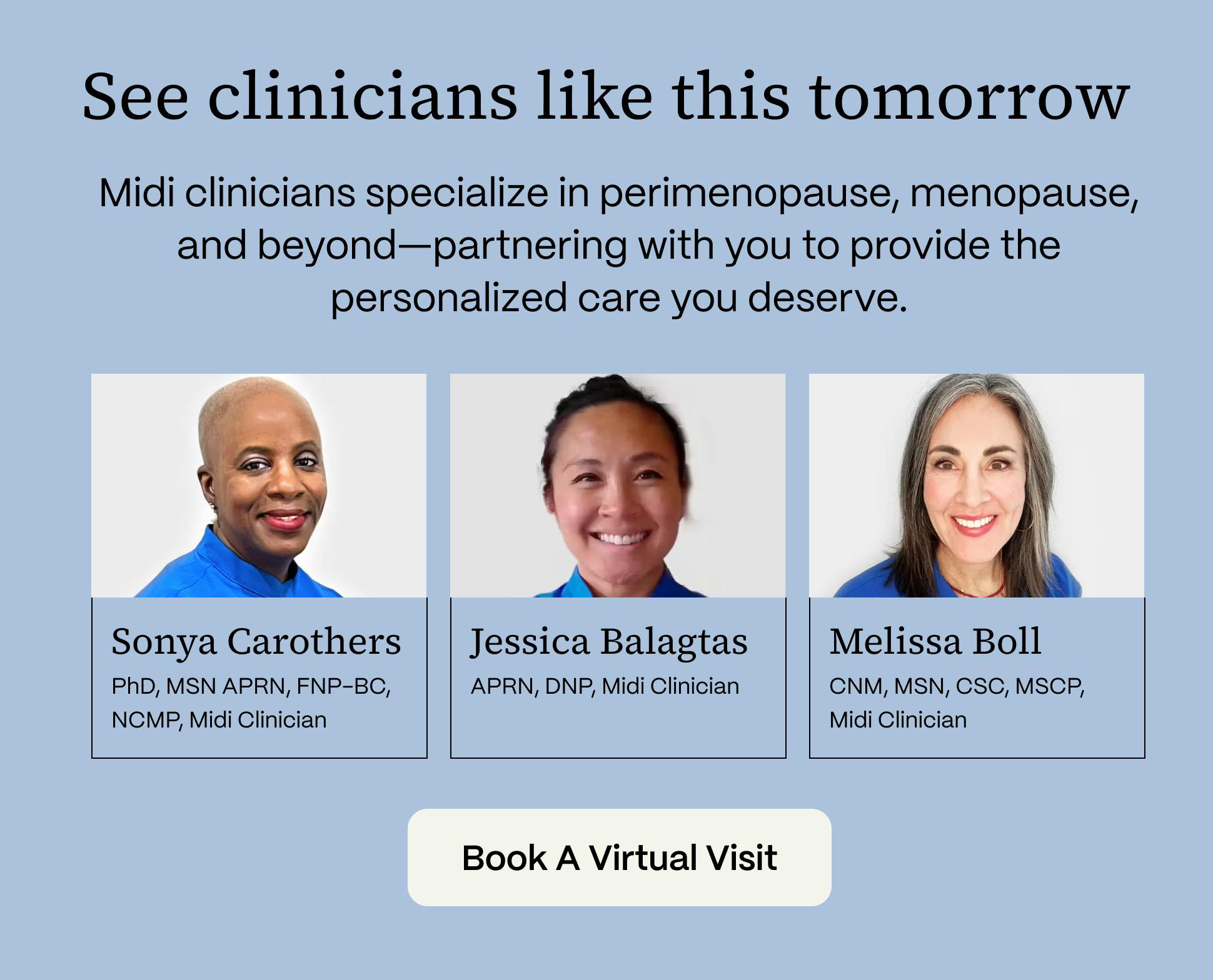
You don’t have to navigate making these changes alone, either. A Midi Health clinician can discuss how to treat osteoporosis, explain how weight-bearing exercises can help, and work with you to build a personalized bone health plan.
Been thinking recently about brittle bones? If you've found yourself searching for how to treat osteoporosis without medication, you're probably realizing that bone health deserves a lot more attention that most people give it..
Bone health should be something we consider and protect our whole lives—but for many women, it rarely makes the list of things to worry about until midlife, when falling estrogen levels begin to speed up bone loss. And osteoporosis is more common than you might think, affecting 1 in 5 women over age 50.
Hearing that your bone density is less than ideal can be unsettling, but it doesn’t mean that a future fracture is inevitable. You can actually do a lot to protect your bones and potentially rebuild some of what you’ve lost, from fueling them with the right nutrients to giving them the kind of movement that helps keep them strong. For some people, medication can be another valuable tool. The best approach depends on your bone density, fracture risk, overall health, and what feels right for you.
Osteoporosis may be known as a silent disease, but keeping quiet on issues that affect women’s health has never been our thing at Midi. Stay with us to learn more about the evidence behind nutrition, exercise, lifestyle changes, and medication for osteoporosis, including what each approach can realistically do, when they're most effective, and how a Midi clinician can help you set up a personalized approach to bone health.
Can You Really Treat Osteoporosis Without Medication?
First, a quick bone-health decoder. Osteopenia and osteoporosis may sound similar, but they’re not the same thing.
- Osteopenia means your bones are less dense than they should be, but you’re not yet in osteoporosis territory.
- Osteoporosis is a more advanced form of bone loss that leaves bones more fragile and likely to break, even after what seems like a minor fall or injury.
Both are typically diagnosed with a DEXA scan (also called a DXA scan). This quick, painless imaging test is similar to a typical X-ray and measures your bone density. Your results come back as a T- score, which compares your bone density with that of a person in their 20s or 30s.
Here’s what your T- score might mean:
- -1.0 or higher: normal
- -1.0 to -2.5: indicative of osteopenia
- -2.5 or lower: indicative of osteoporosis
While your T- score is great intel, your actual risk of breaking a bone also depends on factors like:
- your age
- whether you've already had a fracture
- family history
- certain medical conditions or medications
For many people, especially those with osteopenia or early osteoporosis, lifestyle changes can help improve bone and muscle strength and make you more resilient overall—which can lower your risk of a fracture. In some cases, that may be enough to manage osteoporosis without medication, but it depends on your overall fracture risk.
Lifestyle changes can’t completely reverse or “cure” significant osteoporosis, particularly after a fragility fracture. If your fracture risk is high, based on tools like FRAX (a calculated fracture risk) or other risk factors, medication is often the safest and most effective way to protect your bones.
The right treatment for osteoporosis depends on your situation. A clinician who understands menopause and bone health, like a Midi clinician, can help you put your DEXA results, T- score, fracture risk, and overall health into context, then create a plan to keep your bones as sturdy as possible.

How Menopause Speeds Up Bone Loss
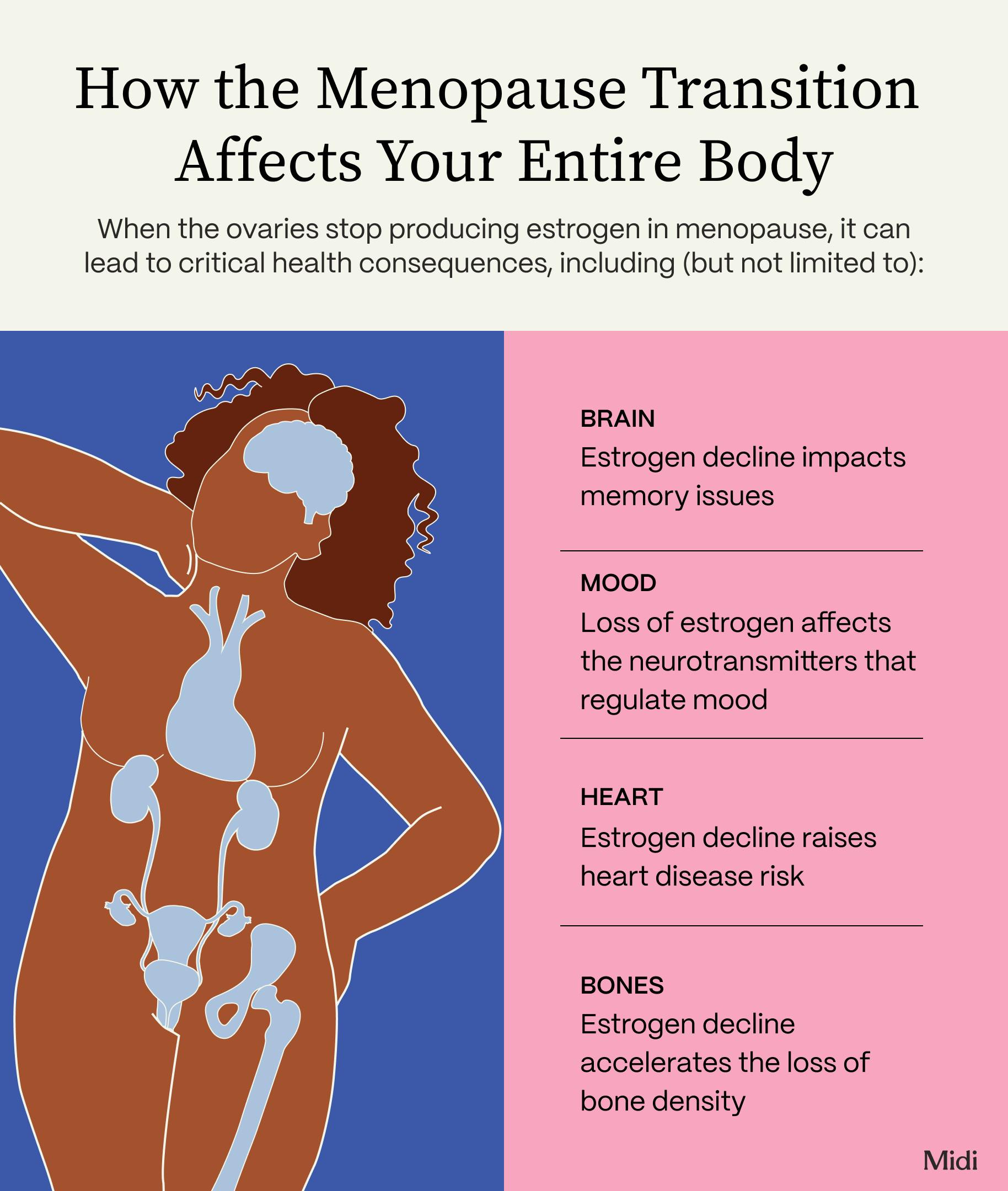
Wondering what menopause has to do with bone loss? Estrogen does a lot more than you might realize. In your first few decades, the hormone helps keep your bones strong by supporting new bone formation. Then, that magical midlife transition comes along, and estrogen levels begin their long, disorderly descent.
During this time, bone breakdown speeds up, on top of the normal wear and tear of aging. Over time, you can end up losing bone faster than your body can rebuild it, which can raise your risk of osteoporosis.
One important thing to know: Bone loss can begin before you hit menopause.
The SWAN study (aka the Study of Women's Health Across the Nation, a multi-site longitudinal, epidemiologic study created to examine women’s health in midlife) found that bone loss was fastest from about 1 year before the final menstrual period through the first 2 years afterward. During that relatively short window, women lost about 7.4% of their lumbar-spine bone density—more than two-thirds of the total loss seen over the study’s 10-year follow-up.
It’s safe to say that perimenopause is not the time to put bone health on the back burner. For some women, hormone replacement therapy (HRT, now commonly referred to as menopause hormone therapy, or MHT) may be one part of that proactive approach (among other solutions, which we’ll get into below).
A 2026 study found that women who initiate early HRT face a significantly lower risk of osteoporosis over the long term, and it also reduces the risk of fracture in postmenopausal women by 13%. HRT isn’t right for everyone, though, so it’s worth talking with a healthcare professional, such as a Midi clinician, about the potential benefits and risks for you.
Nutrition: The Foods and Nutrients That Rebuild Bone
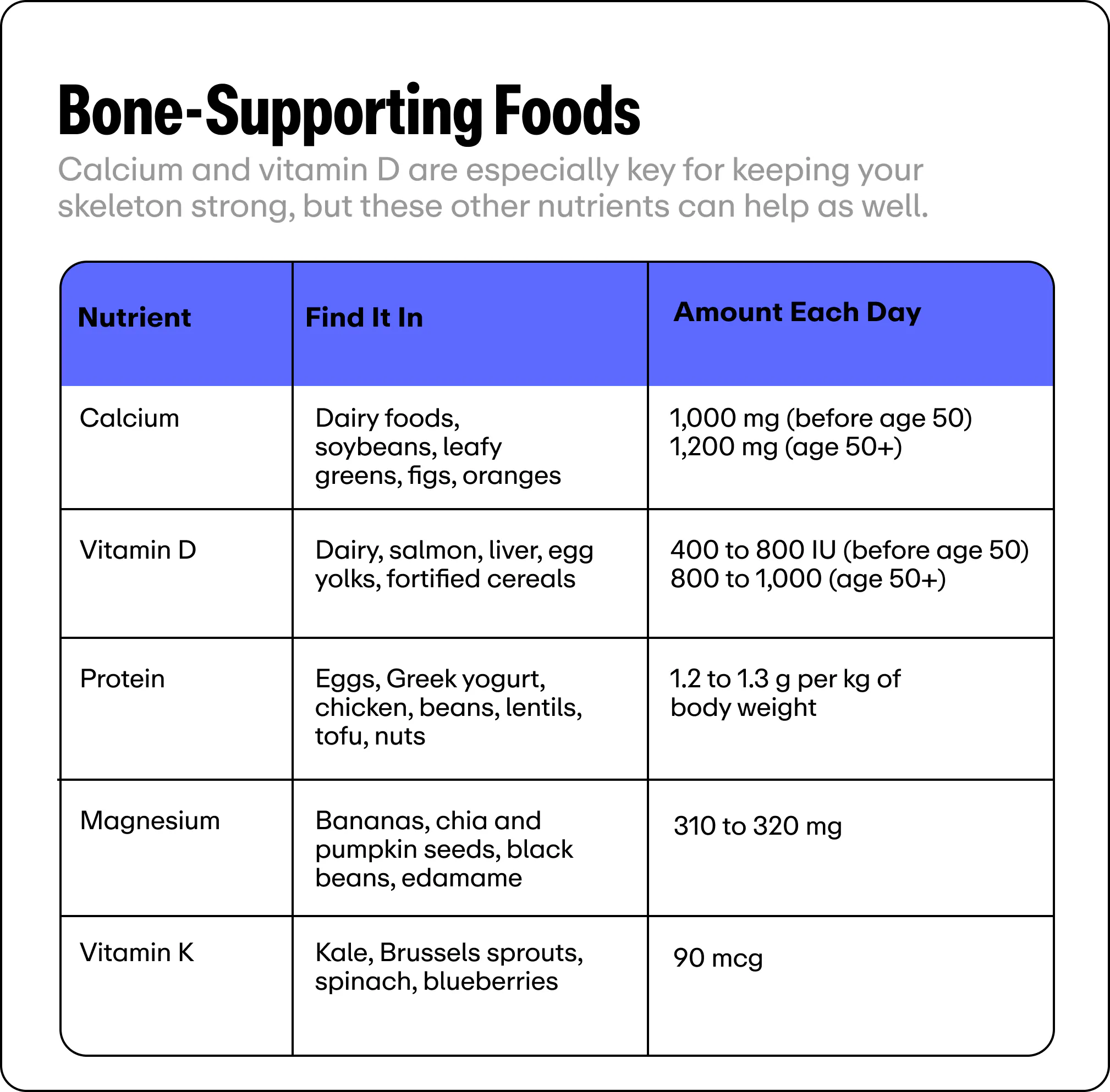
As a kid, you may have been told that what you eat matters for strong bones, and that was no lie. Calcium and vitamin D are especially important: Most of the calcium in your body is stored in your bones and teeth, while vitamin D is needed to absorb calcium. Protein, magnesium, and vitamin K also play important supporting roles.
Here are some food-first sources of the nutrients your bones need, along with daily targets:
- Calcium: Calcium is found in milk, yogurt, cheese, soybeans, leafy greens like kale, collard greens, broccoli, cheese, dried figs, and oranges, among other foods. Aim for 1,000 milligrams (mg) before age 50 or 1,200 mg after age 50.
- Vitamin D: Salmon, certain mushrooms, tuna, wild-caught mackerel, milk and dairy products, beef liver, egg yolks, orange juice, and fortified cereals contain vitamin D. Aim for 400 to 800 international units (IU) before age 50 and 800 to 1,000 IU after age 50, though this number is variable based on where you live and the season.
- Protein: Eggs, Greek yogurt, turkey, chicken, beans, lentils, tofu, nuts, and seeds all have protein. Aim for roughly 1.2 or 1.3 grams (g) of protein per kilogram (kg) of body weight per day, spreading your intake throughout the day. That’s around 20 to 30 grams of protein per meal and 10 grams per snack.
- Magnesium: You can get magnesium from bananas, pumpkin seeds, almonds, cashews, chia seeds, spinach, black beans, edamame, avocados, and dark chocolate. Aim for 310 to 320 mg.
- Vitamin K: Brussels sprouts, kale, spinach, cabbage, and blueberries have vitamin K. Aim for 90 micrograms (mcg).
If your diet isn’t quite covering your nutrient needs, talk with your clinician about whether a supplement could help fill the gap.
Also, know that there are also dietary choices that can work against your bones. Be mindful of:
- Too much sodium: This can increase calcium loss, so it’s best to cut back on heavily processed foods, canned goods with added sodium, and salty snacks.
- Too much caffeine: Your daily coffee isn’t a problem, but high caffeine consumption (more than 200 to 300 mg per day) may affect bone density.
- Smoking: This can reduce bone mass and interfere with calcium absorption.
- Heavy alcohol use: Chronic, heavy drinking is linked to low bone density, more fractures, and slower healing.
And one last thing: Give your body plenty of fuel. Getting enough calories and protein matters. Chronically undereating can undermine bone health, so nourishing your body well is vital.
Weight-Bearing and Resistance Exercise for Stronger Bones
Your bones aren’t just a frame holding you up. They’re living tissue, constantly breaking down and rebuilding themselves. In fact, your skeleton completely replaces itself every 10 years (how’s that for a fun fact?).
That’s why it’s never too early or late to start moving in ways that help keep your bones strong. A 2025 review found that exercise can help improve bone mineral density in people over age 50—but the type of exercise you choose matters.
Here are the best types for safeguarding bone health:
- Weight-bearing exercise: These activities keep you upright and moving against gravity, which stimulates bone-building cells. Walking, jogging, climbing stairs, playing tennis or pickleball, and dancing all count as weight-bearing exercise.
- Resistance exercise: Grab some weights or bands, or use your own body weight. Squats, planks, free weights, and weight machines all put healthy stress on your bones and build the muscle that supports them.
- Balance exercises: Stronger, steadier muscles can help lower your risk of falls, a major concern when it comes to osteoporosis. Tai chi, Pilates, yoga, and simple home exercises can all help improve balance.
The Bone Health and Osteoporosis Foundation recommends about 30 minutes of weight-bearing exercise most days, plus resistance training 2 to 3 days per week. But if it’s been many moons since you worked out—or that target feels totally unattainable—start where you are. Doing a 10-minute walk, a few squats, or some light strength work is still a win.
When you start a bone-strengthening routine, have a conversation with your clinician. This is especially important if you have osteoporosis, a history of fragility fractures, or a high fracture risk—you may need to modify certain movements for safety.
True Stories Of Transformation
Balance, Fall Prevention, and Protecting Fragile Bones
To keep your bones out of harm’s way, it’s important to work on the balance, stability, and strength that helps you stay upright. Tai chi and yoga can help improve balance and body awareness. Targeted strength exercises for your legs and core can also help you stay steadier on your feet.
Preventing falls and fractures in your home is another worthy goal. A few small tweaks can make a surprisingly big difference:
- Clear the clutter: Take care of loose rugs, cords, and random stuff on the floor.
- Light it up: Keep stairs, hallways, and bathrooms well lit, and add night-lights where needed.
- Wear supportive shoes: The best options fit well and give you good traction.
- Get your vision checked: Good vision helps you spot that rogue step, rug, or laundry basket before it’s in your path.
And if your bones are already fragile, be thoughtful about how you move. Some exercises and positions—especially repeated or forceful forward bending of the spine—can put extra stress on vulnerable vertebrae. A clinician or physical therapist can help you figure out which movements should be modified for safety.
Lifestyle Habits That May Weaken Bones
We’ve already talked about how smoking and heavy alcohol use can sabotage healthy bones, but this is worth repeating. Both are linked to a higher risk of fractures, as well as other health dangers.
Something else we’ll shout from the rooftops: Getting enough sleep and finding ways to manage stress can support your overall health, including the hormonal and metabolic systems that play a role in bone health. Small, sustainable habits—like protecting your “me time” and putting your phone away before bed—pay off.
It’s also important to know that certain medications may be associated with bone loss. These include corticosteroids, selective serotonin reuptake inhibitors (SSRIs), proton pump inhibitors (PPIs), certain diabetes medications, and more. You should never stop taking medication on your own, but if you have risk factors for osteoporosis, ask your clinician to review your meds and health history.
Working With a Clinician When Lifestyle Changes Aren’t Enough
While lifestyle changes are nonnegotiable for healthy bones, sometimes they’re not enough. There’s no cure for osteoporosis, but many safe and effective medications can help improve bone mineral density, or slow or stop bone loss. In some cases, the best protection comes from combining medication with lifestyle changes.
Signs that you may need medication include:
- You’ve had a fragility fracture or broken bone past the age of 50.
- Your T-score is -2.5 or lower.
- Your FRAX score puts you in a higher-risk category.
- You’ve lost more than 1.5 inches of height.
- You have multiple risk factors for bone loss or fracture, such as certain medications, medical conditions, age, or a history of fractures.
A menopause-trained clinician, like one at Midi, can help you connect the dots on your DEXA results, T-score, fracture history, risk factors, and overall health to create a bone health plan with ongoing support. Because there are many factors to consider, your care plan will be personalized to your body and where you are in your menopause journey, so you can thrive in your next era.
Key Takeaways
- Falling estrogen levels can speed up bone loss, especially from the year before your final period through the first few years after—making perimenopause an important time to prioritize bone health.
- Lifestyle changes can make a real difference in protecting your bones. Nutrition, exercise, fall prevention, and healthy habits can help strengthen bones and muscles and reduce fracture risk, particularly for people with osteopenia or lower fracture risk.
- Calcium, vitamin D, protein, magnesium, and vitamin K all play important roles in bone health. A nutrient-rich diet is the gold standard, with supplements helping fill gaps when needed.
- Weight-bearing exercise, resistance training, and balance work can help support bone density, muscle strength, and stability. It’s never too early or too late to start moving for stronger bones.
- Preventing falls matters just as much as building bone. Improving balance, clearing household hazards, wearing supportive shoes, and being mindful of high-risk movements can help reduce fracture risk.
- Lifestyle changes are important for everyone, but people with osteoporosis, a fragility fracture, a T-score of −2.5 or lower, or other significant risk factors may benefit from medication, too. The best plan depends on individual fracture risk and overall health.
Frequently Asked Questions (FAQs)
What are the 5 worst foods to eat if you have osteoporosis?
There’s no single list of “worst” foods for osteoporosis, but try to limit choices that work against bone health. This includes high-sodium foods, alcohol, heavily processed foods, and foods that displace calcium-rich and nutrient-rich choices.
What drink is good for bone density?
The best drinks for bone density are cow's milk, plant milks (such as soy or almond milk) fortified with calcium or vitamin D, and fortified orange juice.
How do you stop osteoporosis from progressing?
Lifestyle changes, such as getting the right nutrients for bone health, weight-bearing exercise and resistance training, and proactive fall prevention, can play an important role in slowing the progression of osteoporosis. In some cases, medication may be needed.
Can bone density be improved without medication?
Yes, it’s absolutely possible to improve bone density without medication. You can adopt lots of bone-supporting habits to see a meaningful change.
Can osteoporosis be reversed without medication?
Osteoporosis can’t be fully reversed or cured, but lifestyle changes can help stop it from getting worse and significantly lower your risk of future fractures.
If you’re in perimenopause or menopause and want guidance from clinicians who specialize in women’s midlife health, book a virtual visit with Midi today.
Hormonal change is at the root of dozens of symptoms women experience in the years before and after their period stops.
Our trained menopause specialists can help you connect the dots to guide you towards safe, effective solutions.
Whether you need personalized guidance or a prescription routine to tackle symptoms—including brain fog, hot flashes, sleep trouble, mood swings, and weight gain—we’ve got you covered. Learn more here.
Midi’s mission is to revolutionize healthcare for women at midlife, wherever they live and whatever their health story. We believe that starts with education, to help all of us understand our always-changing bodies and health needs. Our core values guide everything we do, including standards that ensure the quality and trustworthiness of our content and editorial processes. We’re committed to providing information that is up-to-date, accurate, and relies on evidence-based research and peer-reviewed journals. For more details on our editorial process, see here.