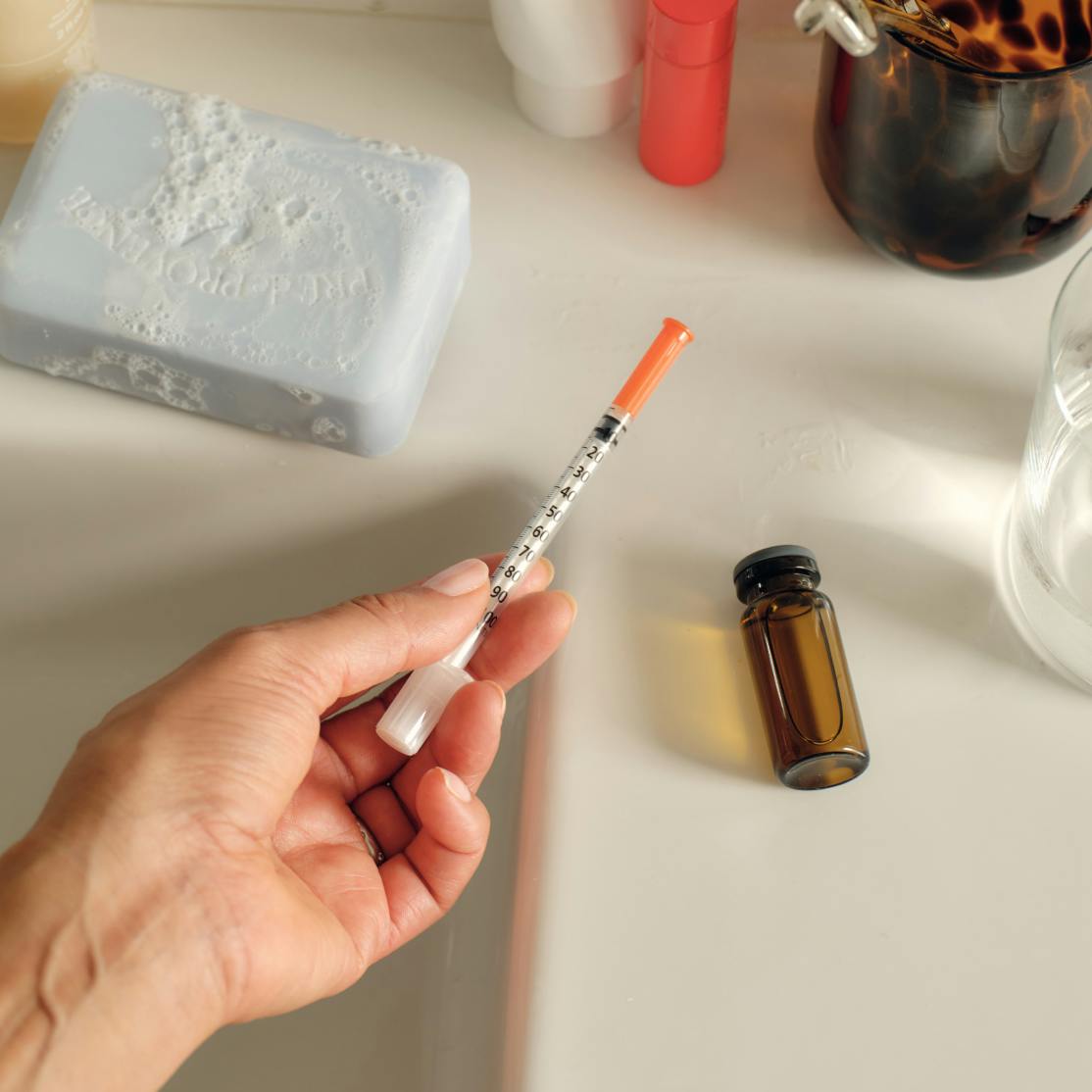


Retatrutide (or reta, as it’s casually known on social media) is a next-gen weight loss drug. While it’s still in clinical trials and under FDA review, current public data has shown that retatrutide produced greater average weight loss than any currently available GLP-1 medication, including tirzepatide, though these are cross-trial comparisons rather than head-to-head results.
Given all the buzz, it’s not surprising if you’re wondering about retatrutide side effects—but that’s getting a little ahead of things. The medication is not yet FDA approved, and a licensed clinician cannot currently prescribe it to you except for research purposes through a clinical trial. That said, retatrutide might be approved and available in late 2027 or 2028, so consider this a rundown of what’s coming. And if you’re interested in weight loss medications ASAP, Midi Health clinicians can help you find the right treatments and get moving on your goals now.
Retatrutide is already a buzzy topic—and this medication hasn’t even become available for prescription yet. One point of particular interest is its potential side effects, so first things first: Retatrutide side effects, like so many of the other GLP-1 medications, are mostly gastrointestinal (GI) in nature. They depend on the dose, and they usually ease over time.
Retatrutide is still considered investigational, meaning it’s not officially available yet, because its efficacy and safety are still being researched. Still, this is a potentially game-changing medication, which is why people are searching far and wide for it—and why some retailers are selling it on the gray market.
Retatrutide is expected to be FDA approved, maybe even by next year, but it’s not here yet. Learn about potential side effects of retatrutide—including which are temporary, which are serious, and what remains unknown—as well as how a trained weight loss specialist, like a Midi clinician, can help you figure out the best treatment for you in the meantime.
What Are the Most Common Retatrutide Side Effects?
Retatrutide is a triple-agonist medication, meaning it hits three hormone pathways and receptor types: GLP-1, GIP, and glucagon. That means it has three ways in which it:
- quashes appetite
- slows the movement of food out of your stomach (so you stay fuller for longer)
- promotes fatty acid breakdown due to its effects on glucagon, which increases energy expenditure, or calorie burn
Clinical trials show that GI effects were the most common reta side effects (similar to other weight loss medications in this category), including:
- nausea
- diarrhea
- vomiting
- constipation
These side effects were:
- most common when dose was increased
- more common at higher doses
- typically mild to moderate in severity
- less severe when the starting dose was lower
Data from clinical trials is important because it lets clinicians know what to expect in their own patients. But real-world use also informs treatment and how to manage side effects. Retatrutide isn’t yet available, so we’re missing that latter piece.
People who buy retatrutide from gray-market retailers may experience irregular or unreliable potency and dosing from unregulated pharmacies and thus more severe adverse effects. (More on this later.)
Nausea, Vomiting, and Other Gut Side Effects
The longer food sits in your stomach, the longer you stay satiated and full. But this slow movement along the GI system, when taken to an extreme, can make you nauseous and even vomit.
Retatrutide appears to be a stronger medication than the other GLP-1-based therapies we have right now. And—ding, ding, ding—you guessed it: Early studies show that there’s a higher risk of experiencing GI side effects. In fact, 43% of people on a 12-milligram (mg) dose of retatrutide reported nausea, and 20% experienced vomiting. These side effects are more pronounced after the dose is increased, but they do get better as your body adjusts.
If retatrutide becomes available and you start taking it with a prescription, the strategies that help while you’re on other GLP-1s could reduce reta peptide side effects, too:
- Eat small portions slowly.
- Eat more frequent meals.
- Avoid eating fatty, highly processed foods.
- Stop eating when you feel full.
- Avoid drinking with a straw.
- Avoid lying down after a meal.
If these tips don’t do the trick, your clinician can consider a trial of reducing your dose and then increasing it again or keeping you at a lower dose. They can also recommend prescription anti-nausea medications like Zofran (ondansetron) for people taking other GLP-1s.

Dysesthesia: The Skin Sensation Side Effect Most People Haven't Heard Of
Ants crawling up your skin. Burning or electric zings. Sensations of cold or wet that make no sense. Welcome to dysesthesia, a term for neurological symptoms in the form of unusual skin sensations—and another possible side effect of retatrutide.
Dysesthesia happens in about 12% of people on both the 9-mg and the 12-mg retatrutide dose, compared with just 1% on placebo. Dysesthesia is associated with other GLP-1s like orforglipron (Foundayo), semaglutide, and tirzepatide as well, although it has been reported more commonly with retatrutide.
Experts don’t know why these hot, chilly, or creepy-crawly sensations happen, but GLP-1s may indirectly affect nerve function. Sometimes this resolves on its own while continuing treatment. If not, stopping the medication (following the guidance of a clinician, of course) clears up these odd sensations.
Heart Rate Changes and Other Cardiovascular Effects
When people who are overweight or obese went on GLP-1s, their heart rates increased, according to a meta-analysis in the European Journal of Medical Research. This happened with liraglutide, semaglutide, orforglipron, tirzepatide—and, yes, retatrutide. It is, however, seen more commonly with retatrutide than other GLP-1s.
Why? That’s not well understood, but GLP-1 medications might activate a receptor on cardiac cells that affects the heart’s rhythm, or they may increase heart rate via an impact on nervous system activity. The increase in heart rate, for most people, is modest and not a concern.
It’s also worth noting a huge plus: certain GLP-1s are approved to reduce cardiovascular risks like stroke and heart attack in certain patient populations. (To be clear, we don’t yet know for sure if retatrutide will offer long-term cardiovascular benefits, as the drug is still being evaluated.)
Many women are also surprised to find that heart palpitations are a common perimenopause symptom. So if you’re starting a GLP-1 in midlife, these heart pitter-patters could be from the medication or from menopause (or both). That’s for your clinician to help you figure out, and it’s one reason why your health should be monitored while on any weight loss medication.
True Stories Of Transformation
Fatigue, Low Blood Sugar, and Energy Changes
Does retatrutide make you tired? It may: Fatigue is a known side effect that happens with semaglutide (11% of people) and tirzepatide (7% of people) in trials, and early research suggests the rate of fatigue is similar with retatrutide, too.
When you eat less and/or develop a nutrient deficiency, this can change your energy levels. Symptoms like fatigue are also very common in perimenopause, another possible culprit. (It can’t hurt to keep a symptom log so your clinician can help you figure out exactly what’s behind dragging energy levels—say, whether it’s from a medication side effect, disrupted sleep from menopause symptoms, or something else.)
If you have type 2 diabetes and are taking additional blood-sugar-lowering medication like insulin or sulfonylureas, you’ll also want to keep a close watch on symptoms of hypoglycemia (low blood sugar), like shakiness or sweating. Retatrutide affects both insulin and blood sugar through three receptors, so theoretically it could push your blood sugar too low when combined with some diabetes drugs. Your clinician will keep an eye out and can adjust your diabetes medications if needed.
Think of all this as another reason to have a thorough conversation with your clinician about your specific risks.
Does Retatrutide Cause Hair Loss?
The question of hair loss comes up because, in general, GLP-1s are indirectly associated with thinning strands, per research. Fortunately, it’s not permanent—it’s a temporary type of hair shedding called telogen effluvium, the same type that shows up a few months after your body goes through something physically taxing, like having a baby. The stress “shocks” hair follicles into the resting phase, and eventually more strands shed at once.
This can happen whenever you lose weight (with or without weight loss medications), since the stress of rapid weight loss may trigger shedding. At the same time, nutritional deficiencies can possibly contribute too. These deficiencies can occur with decreased food intake associated with these medications or any weight loss program. Iron, zinc, and protein are needed for hair growth, which is why a healthy diet should have a starring role in weight loss medication treatment.
Discussing your rate of weight loss and medication dosing with a clinician can help address hair thinning, too. And if you’re in midlife, hair shedding can stack on top of hair thinning that’s already happening due to declining estrogen.
If hair loss is a problem while you’re losing weight, be sure that you are meeting your nutritional needs, and your clinician will probably also want to check your lab work to look for these deficiencies.
Muscle Loss and Bone Health Risks
When you lose weight, you lose fat, but you can also lose lean mass like muscle. It’s a reality that not only affects your body composition, but also long-term weight loss, because with less muscle your body’s metabolism can change, making it easier to regain weight. Plus, in midlife, your muscle and bone density are often already naturally declining—the goal is to hold on to as much as possible as you lose weight.
Retaining muscle mass is a priority whenever you are losing weight and no matter which GLP-1 medication you take. Early research indicates that people lose the same proportion of body fat and muscle on retatrutide as similar weight loss medications. So as with any weight loss, supporting muscle mass is important while on any of these drugs. Healthy aging includes preserving muscle and bone mass, as this helps with balance, avoid falls and fractures, and helps with joint stability.
That’s why Midi clinicians generally recommend twice-weekly strength training sessions, plus adequate protein intake of at least 1.0 gram per kilogram of body weight each day. For bone health, weight-bearing exercise is also important, and targeted GLP-1 support supplements with bone-supportive nutrients can help preserve bone during calorie restriction.
Serious Retatrutide Side Effects and Warning Signs
Since retatrutide isn’t being legally used outside of research yet, it’s difficult to know what serious side effects should spur you to contact your clinician or go in for emergency treatment.
However, Midi clinicians generally advise patients taking any GLP-1-type medication to stop their medication and seek immediate or emergency care in the event of:
- pain in the upper abdomen that spreads to the back
- fever
- jaundice
- clay-colored stools
- decreased urination
- swelling of the legs and/or ankles
- rash, itchiness
- swelling of the face/throat or difficulty breathing
- dizziness, fainting
- fast heartbeat
- changes in vision
- suicidal behavior or ideation
Are Retatrutide Side Effects Worse Than Those of Semaglutide or Tirzepatide?
We don’t know for sure because retatrutide is still an investigational drug, but according to one review and meta-analysis, there’s a higher risk of experiencing some side effects on retatrutide than on other diabetes and weight loss medications like semaglutide or tirzepatide. But until we have head-to-head studies comparing all of these medications, we won’t know for certain.
There’s always a delicate balance of factors in finding the best medication among the options available. This larger weight loss from reta may also come with a higher rate of side effects, and it may not be the right drug for you even when it becomes available.
If you take retatrutide in the future and side effects aren’t tolerable, even with clinician-guided dosage changes, switching to a different medication (even if it’s not as “powerful”) might be a better option for you. Your quality of life and how you feel on these medications matter.
Why Gray-Market Retatrutide Carries Extra Risk
Remember, retatrutide cannot currently be prescribed outside of research settings. It’s not yet FDA approved, so the only way to access it right now is through a clinical trial or through gray-market retailers, which isn’t recommended. These unregulated sellers may dispense and get around the rules by marketing and labeling their products “for research purposes only,” but that doesn’t mean the product is safe or reliable, as most reputable pharmacies do not support this practice. Purchasing gray-market retatrutide (or any medication or peptide, for that matter) means taking on real unknowns: how much active drug is actually in the vial, the risk of contamination, and the inclusion of unknown ingredients.
The retatrutide side effects we do know about come from research using a specific formulation at a verified dose. Vials purchased from gray-market sources do not have these guarantees. Because the source is often from uncertified and unregulated pharmacies, you don’t know how much of the drug you’re actually taking. And if you’re taking other medications, you may be at risk of drug interaction.
Until retatrutide is approved, talk with a healthcare professional about which alternatives could be a good match. A Midi clinician can help you figure out the best treatment for your goals and your health history.
How to Reduce GLP-1 Side Effects with a Clinician's Help
If you feel lousy on a GLP-1 drug, talk with your clinician rather than trying to tough out side effects like nausea or fatigue. At Midi, your clinician can help you find the right strategy to feel your best while taking a GLP-1. That might include:
- trying slower-than-normal dosage increases
- adjusting the dose or schedule
- prescribing supportive medications that treat individual symptoms
A menopause-informed specialist, like a Midi clinician, can also help unravel which side effects are coming from a weight loss medication and which ones are triggered by (or made worse by) perimenopause and menopause symptoms.
Plus, there are several weight loss medications available, so there’s no need to stick with one that makes you sick. Shared decision-making with your clinician will help you find an option that you can feel good on while still going after your goals.
Treatments to Consider Instead of Retatrutide
It’s possible that retatrutide may become available in late 2027 or 2028, but that’s far from finalized. Fortunately, there are plenty of research-backed, effective weight loss treatments available now, including semaglutide (Wegovy injection and oral), tirzepatide (Zepbound), liraglutide (Saxenda), and orforglipron (Foundayo), among others.
Lifestyle changes—including a healthy, balanced diet, exercise, and adequate sleep—are a foundation of weight loss, whether you’re taking medication or not. Plus, supportive weight loss supplements could also help you along—just check with your clinician before combining any supplement with a prescription medication).
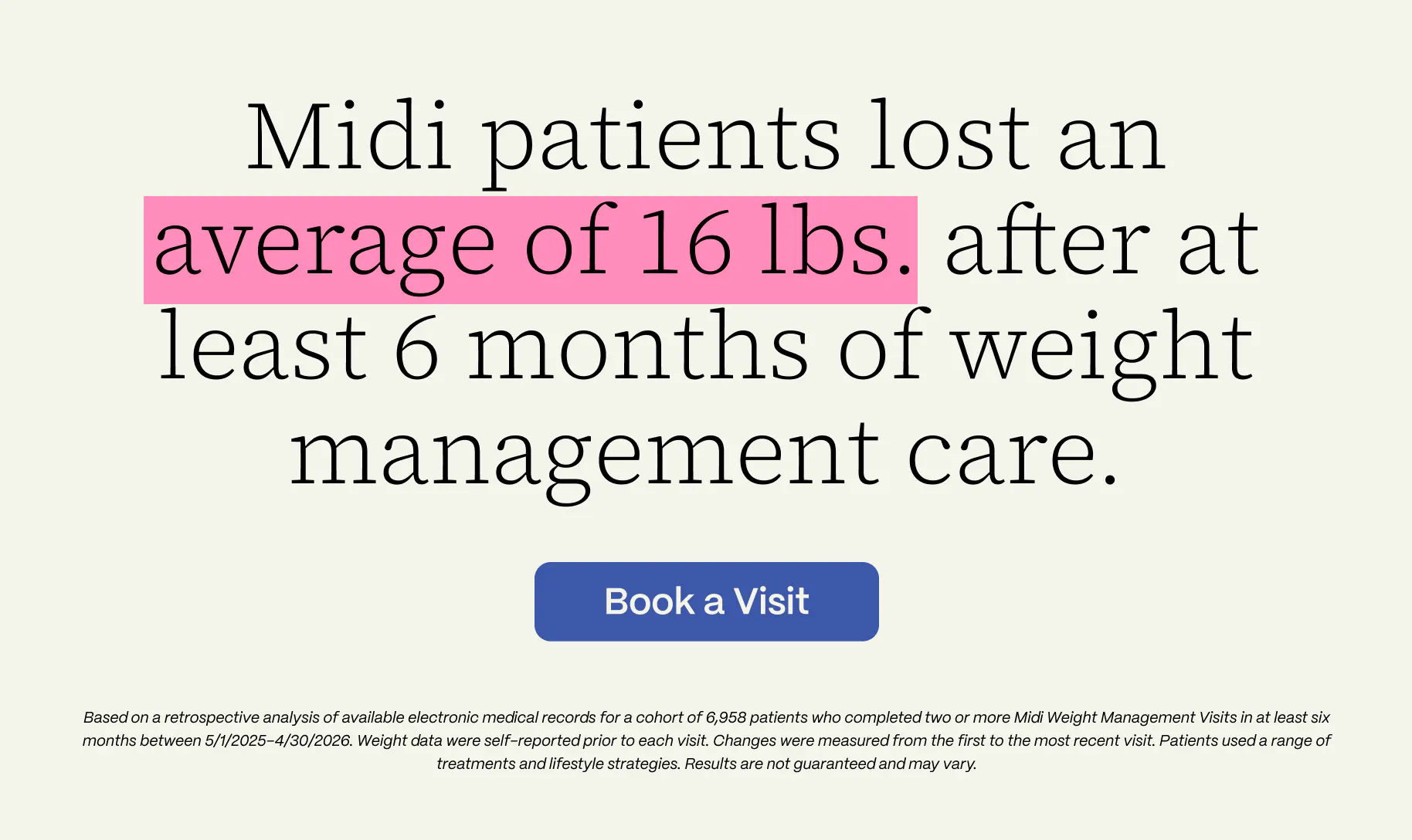
Midi clinicians are here to help you find the best treatment for you and your goals. Your clinician will work with you to build a personalized Care Plan around your health history, nutrition and lifestyle. Plus, Midi is in-network with most major insurance plans and offers virtual visits nationwide, making it easy to get the care you need. Book a visit today.
Key Takeaways
- Retatrutide is an investigational triple-agonist medication for weight loss, hitting three hormone pathways in the body to decrease appetite, manage blood sugar, and possibly increase energy expenditure.
- Retatrutide side effects appear to be mostly gastrointestinal and dose-dependent, and they usually ease over time.
- Other side effects may include dysesthesia, heart rate changes, fatigue, hair loss, and muscle loss, and some may be more commonly experienced than with other weight loss medications.
- Retatrutide is not yet FDA approved, so it’s not legally available in the United States just yet outside of research. That may change in 2027 or 2028.
- Until retatrutide earns FDA approval, you can consider many other approved weight loss medications, including semaglutide, tirzepatide, and orforglipron. A healthy diet and exercise are cornerstones of any weight loss treatment.
Frequently Asked Questions (FAQs)
Is retatrutide safe?
Early data suggests retatrutide is reasonably well-tolerated, with mostly mild to moderate side effects. But the medication cannot be prescribed yet, as it hasn’t been approved by the FDA. Right now, retatrutide is not commercially available yet. Current access is through a clinical trial, which is also the safest way to access it, since you’ll be monitored closely and know exactly what you’re taking, although many of the trials are already closed to enrollment. Alternative gray-market retatrutide introduces risks with supplies coming from uncertified pharmacies not offering guardrails or guarantees on dose and ingredients.
What are the dangers of retatrutide?
Initial research suggests that the side effects of retatrutide are mostly gastrointestinal in nature, such as nausea, vomiting, diarrhea, and constipation. Research is still ongoing, so we don’t have a full picture of the medication’s safety profile.
What happens when you stop taking retatrutide?
Although we don’t have that research, we do have studies that look at what happens when people stop taking GLP-1 medications. This research tells us that people tend to regain at least some of the weight that they lost. Experts believe that the same would happen after stopping retatrutide.
Can retatrutide cause cancer?
Research is ongoing, but early trials did not find that retatrutide was associated with medullary thyroid cancer. Early GLP-1 research on rats and mice showed an elevated risk of this cancer, but so far, large human studies have not indicated an increased rate.
Does retatrutide cause muscle loss?
Yes, but that’s typically true of any weight loss, not just weight loss from retatrutide specifically. Any time you lose weight, you lose fat and lean tissue like muscle. You can preserve as much muscle as possible during weight loss (and after) by eating adequate protein and doing full-body resistance exercise.
Can you drink alcohol while taking retatrutide?
Retatrutide isn’t yet FDA approved, so its full risk profile—including alcohol interactions—isn’t established. That means we don’t know for sure whether it’s safe to drink while taking it.
If you’re in perimenopause or menopause and want guidance from clinicians who specialize in women’s midlife health, book a virtual visit with Midi today.
Hormonal change is at the root of dozens of symptoms women experience in the years before and after their period stops.
Our trained menopause specialists can help you connect the dots to guide you towards safe, effective solutions.
Whether you need personalized guidance or a prescription routine to tackle symptoms—including brain fog, hot flashes, sleep trouble, mood swings, and weight gain—we’ve got you covered. Learn more here.
Midi’s mission is to revolutionize healthcare for women at midlife, wherever they live and whatever their health story. We believe that starts with education, to help all of us understand our always-changing bodies and health needs. Our core values guide everything we do, including standards that ensure the quality and trustworthiness of our content and editorial processes. We’re committed to providing information that is up-to-date, accurate, and relies on evidence-based research and peer-reviewed journals. For more details on our editorial process, see here.