
Whether you’re lying awake unable to fall asleep, waking at the same “witching hour” every night, or struggling to get back on a sleep schedule after traveling, we know how frustrating sleep disruptions can be. The right natural sleep aid depends on what’s keeping you up at night. Some options have better evidence than others, and knowing what’s disrupting your sleep can help you narrow down the choices.
And when you need more support, Midi Health clinicians can help you get to the bottom of your sleep troubles and find an approach that best supports your needs.
The right natural sleep aid depends on what’s going wrong with your sleep, not on which supplement is the most popular. You might have trouble falling asleep or staying asleep (hello, middle-of-the-night awakenings). Maybe you sleep through the night but still wake up exhausted. Or perhaps you can’t seem to get your schedule to sync with your body’s natural clock.
When it comes to sleep supplements, several options have real evidence behind them. But none of them can fix an underlying medical issue if that’s what’s causing your sleep issue.
We’ll help you identify your sleep pattern, break down which natural sleep aids are worth considering and how to take them, and explain when it may be time to check in with a clinician (like the ones at Midi).
What Counts as a Natural Sleep Aid?
Natural sleep aids are one category of over-the-counter (OTC) products marketed for sleep. These natural options can include plant compounds, vitamins and minerals already in your diet, and supplemental forms of substances that your body makes on its own.
Non-herbal OTC sleep aids, on the other hand, often contain sedating antihistamines and may come with different risks. Prescription sleep medications are another category, and clinicians may prescribe them specifically to treat insomnia.
It’s important to know that sleep supplements are regulated differently from medications, so if you decide to take them, pay attention to the product’s quality and dosing. Look for a brand that uses third-party testing to ensure the supplement contains what it says it does.
Finally, remember that “natural” doesn’t mean harmless. Several of the supplements we’ll cover can interact with common medications, so let your clinician know about any you currently take or plan to try.
First, What Kind of Sleep Problem Do You Have?
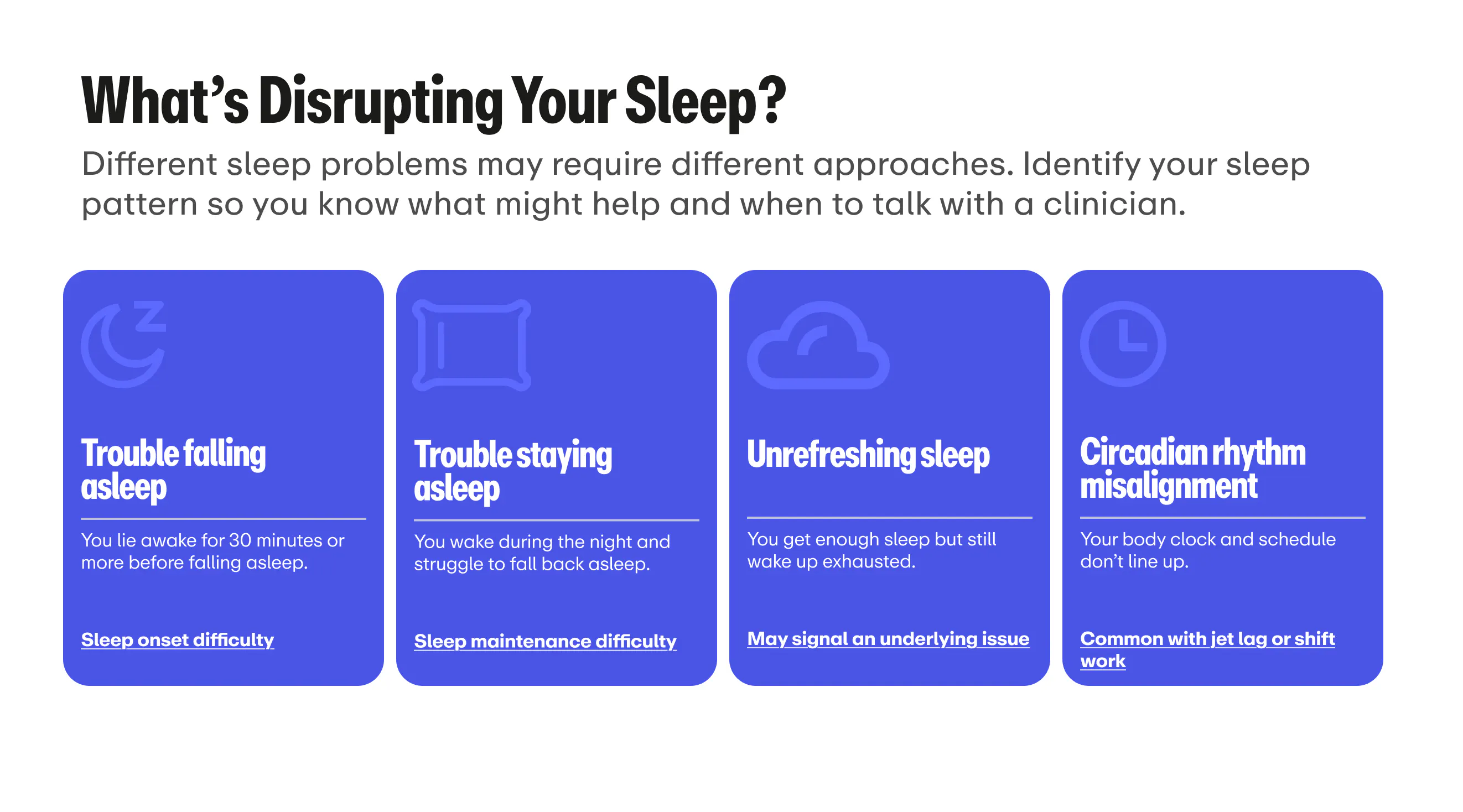
Before you start shopping for a natural sleep aid, it’s important to identify what kind of sleep problem you’re actually dealing with. Some sleep issues, like insomnia, can have different causes and may call for different approaches:
- Trouble falling asleep (sleep onset difficulty): You lie awake for 30 minutes or more before falling asleep, perhaps because your thoughts are racing or your mind is busy.
- Trouble staying asleep (sleep maintenance difficulty): You fall asleep easily enough but wake up in the middle of the night and struggle to fall back asleep.
- Unrefreshing sleep: You get adequate sleep but still wake up feeling exhausted, which can be a sign of an underlying sleep disorder or another health issue worth looking into with a clinician.
- Circadian misalignment: Your internal clock and your schedule aren’t aligned, such as when you’re jet-lagged after traveling, so you end up feeling groggy or sleepy at the wrong times.
Knowing what’s disrupting your sleep matters more than any single product recommendation. So before you try a supplement, figure out what kind of sleep problem you’re dealing with, so you can choose an approach that actually makes sense for you.
Melatonin: Useful but Almost Always Overdosed
You’ve probably heard of or even tried melatonin, but what does the popular sleep aid actually do? Melatonin is a hormone your body naturally produces that helps signal when it’s time to sleep. When you take it as a supplement, it can reinforce that signal, which may help you fall asleep faster.
So, how much melatonin do you actually need? Adults often take 3 to 5 milligrams (mg), though doses as low as 0.3 mg have been shown to work. Timing matters, too: Taking melatonin about 2 hours before bed may be more helpful than taking it right at bedtime.
And more melatonin does not necessarily mean better results. Research suggests that its effectiveness depends on both dose and timing, and higher doses may increase side effects like next-morning drowsiness.
Melatonin can be a hero in situations such as jet lag, shift work, or delayed sleep timing, when your body clock is out of sync with your schedule. But if waking up during the night is your main issue, melatonin probably isn’t the best sleep aid for the job.
If you decide to give it a try, you’ll also want to read the label carefully. In a 2023 study of 25 melatonin gummy products, 88% were inaccurately labeled, with the actual amount of melatonin ranging from 74% to 347% of the amount listed on the label. In other words, you could get considerably more or less melatonin than you think with some products.
And while melatonin is generally considered safe for short-term use, we don’t have enough high-quality evidence to say that taking it nightly over the long term is risk-free.
Magnesium: The Best First Try for Most People
Magnesium is a popular go-to for sleep, and for good reason—it supports nervous system regulation and muscle relaxation, two things your body needs to wind down.
Foods like pumpkin seeds, almonds, spinach, and black beans are good sources of magnesium. But many people get less than the recommended amount from their diet alone. That’s one reason people take magnesium supplements, which come in different forms. Magnesium glycinate is commonly used for sleep because it tends to be easier on the digestive system than other forms, like magnesium citrate.
If you want to try magnesium glycinate for sleep, a lower dose around 120 to 240 mg, taken 30 to 60 minutes before bed, is a reasonable place to start.
The research is promising, though the effects may be modest. In a 2025 randomized controlled trial of 155 adults with poor sleep, participants who took 250 mg of magnesium bisglycinate daily for 4 weeks had a greater improvement in insomnia symptoms than those who took a placebo. The difference was small, however, and the short study relied on participants reporting their own sleep.
Magnesium supplements aren’t a good fit for everyone, though. If you have reduced kidney function, talk with your clinician before taking one.

Glycine and L-Theanine: Quieting a Racing Mind
If you’re looking for sleep supplements to help you relax, glycine and L-theanine might be worth considering.
Glycine is an amino acid that may help lower core body temperature, a normal part of the transition to sleep, and improve sleep quality. Studies often use 3 grams of glycine before bedtime.
L-theanine is another amino acid, naturally found in tea leaves, that may help calm your mind without acting as a sedative. Studies have shown that a 200- to 400-mg dose of L-theanine may ease stress and anxiety, which could make it easier to get some sleep.
Both are generally well tolerated and aren’t considered habit-forming. You’ll also find glycine and L-theanine in combination sleep formulas, though the amounts may be lower than the doses studied for sleep.
The evidence is promising but still preliminary. Small studies of glycine have reported sleep benefits, while research on L-theanine has found improvements in some sleep measures. Larger, higher-quality studies are still needed to know how effective either supplement is.

Valerian, Passionflower, and Other Herbal Options
There are many herbal options, but how well they actually work is debatable. Valerian root has been used for centuries and is one of the most studied herbal sleep aids. Researchers think it affects GABA, a brain chemical that helps calm the nervous system and promote relaxation. But trial results are inconsistent, in part because studies have used different preparations and doses.
Passionflower is another herbal remedy that may help you sleep longer, but there’s not enough research using it as a sleep aid. The same goes for other popular herbs, including chamomile, lemon balm, and hops (yes, the same ones used in beer). Much of the research is mixed or limited.
The problem is that studies on herbal remedies for sleep tend to be small and short, and researchers don’t always use the same formulas or doses, so it's hard to know exactly how well they work.
Some of these herbs can also interact with medications or other substances, so let your clinician know if you’re taking them or plan to. And when you shop for supplements, look for third-party certification, which means an organization has checked the ingredients and tested for contaminants. Third-party certification doesn’t prove that a supplement works, but it can give you more confidence that what’s on the label matches what’s in the bottle.
Tart Cherry, Ashwagandha, and CBD
Some people turn to tart cherry juice as a natural sleep aid because it contains melatonin and tryptophan, both of which are involved in your body’s sleep-wake cycle. It may have some benefits, but the evidence is limited, and we don’t know how much it can actually improve sleep. For now, it’s probably better to think of it as an option to experiment with, rather than a go-to sleep aid.
Ashwagandha is an herb used in traditional Ayurvedic medicine, and some people take it for stress or anxiety. Because it may help you feel calmer, it may modestly improve sleep. That said, it’s not a quick fix, and more high-quality research on the supplement is needed.
CBD—the compound in cannabis that doesn’t produce a high—has become a popular option for various health concerns. But it hasn’t been studied extensively for sleep. Product quality, long-term safety, and potential drug interactions are still concerns. If you decide to try it, talk with your clinician first, particularly if you take other medications.
Overall, these options aren’t as well established for sleep as some of the supplements we’ve already covered, so you may want to be more selective with them.
Which Sleep Aid Fits Your Situation?
The best sleep aid depends on what’s interfering with your sleep. Here’s a quick guide to what may help in different situations—but as always, talk with a clinician for personalized guidance.
Other Powerful Tools for Better Sleep
If you’re still wondering how to sleep better at night, the answer may not come in a pill bottle. Behavioral and lifestyle changes can make a bigger difference than you might think. Here are some strategies to help:
- Try CBT-I: Cognitive behavioral therapy for insomnia (CBT-I) helps you change thoughts and behaviors that can interfere with sleep, and it’s one of the most effective treatments for chronic insomnia. You can work with a clinician or try an app-based program.
- Stick to a consistent sleep schedule: Try to go to bed and wake up at the same time every day. A consistent schedule, along with some natural light in the morning, can help keep your circadian rhythm on track.
- Keep your bedroom cool, dark, and quiet: A comfortable sleep environment can make it easier to stay asleep.
- Set a caffeine cutoff: Caffeine can affect you long after you consume it, so try to have your last cup around 6 hours before bedtime.
- Time your last drink: Limiting or avoiding alcohol, especially close to bedtime, may help, since drinking can disrupt sleep later in the night.
- Keep it moving during the day: Regular exercise and daytime activity can improve sleep quality, too.
These actions aren’t always as convenient as taking a supplement, but they can go a long way toward helping you get the restful sleep you need.
When a Natural Sleep Aid Isn’t Enough
There comes a point where natural sleep aids just aren’t enough, and it’s time to talk with a clinician, like one of the women’s health specialists at Midi. If your sleep problems last more than 3 or 4 weeks or start affecting your ability to function during the day, it’s worth getting evaluated.
Sometimes, the problem isn’t insomnia but an underlying issue. Sleep apnea, for example, can be harder to recognize in women. It may cause insomnia, fatigue, and frequent nighttime waking in addition to—or instead of—more familiar signs like snoring. Your clinician may also want to rule out restless legs syndrome, thyroid disease, iron deficiency, chronic pain, and depression.
Certain medications can disrupt sleep, too, including some antidepressants, blood pressure medications, and steroids. So, reviewing everything you take with your clinician can help identify possible culprits.
For women in perimenopause or menopause, hormonal changes can also take a toll on sleep. Addressing symptoms like hot flashes and night sweats may help more than simply adding a sleep aid.
“Poor sleep is not an inevitable fact of aging,” says Midi’s Chief Medical Officer Kathleen Jordan, MD. “My best advice is to seek help because sleep is a huge contributor to both quality of life and overall health.”

How to Try a Natural Sleep Aid Safely
When you’re ready to try a natural sleep aid, keep these tips in mind:
- Try one at a time: Give a new sleep supplement about 4 weeks before switching to another one, so you have time to figure out whether it’s actually helping.
- Read the label carefully: Look for third-party certification, the dose per serving, and any unnecessary added ingredients.
- Check for drug interactions: Be sure to check for any drug interactions before you start a sleep aid, especially if you take prescription medications, such as antidepressants or blood thinners. Your clinician can help you check for interactions and review the supplement alongside your current medications.
- Set realistic expectations: You’re more likely to see modest improvements in how quickly you fall asleep or how rested you feel, not a total transformation.
- Watch for next-day effects: Stop anything that causes symptoms that disrupt your daily routine.
And finally, keep in mind that a sleep disorder can not be treated with a supplement. Occasional sleep disturbances may benefit from a natural product used as needed—however, if sleep remains non-restorative, a clinician should evaluate the underlying cause.
Key Takeaways
- The best natural sleep aid depends on the type of sleep problem you’re trying to address, whether that’s trouble falling asleep, staying asleep, or getting your body clock back on track.
- Melatonin can be useful for circadian rhythm disruptions such as jet lag, but the timing matters, and more isn’t necessarily better.
- Magnesium glycinate may improve sleep quality, while glycine and L-theanine may help when relaxation or a racing mind is the issue.
- Evidence for herbal supplements and other popular sleep aids—including valerian, tart cherry juice, and CBD—is more limited or inconsistent.
- Supplements aren’t the only tools for better sleep. CBT-I and habits such as consistent sleep timing, regular exercise, and limiting caffeine and alcohol can make a meaningful difference.
- If sleep problems persist or affect your daily life, it’s worth talking with a clinician, who can look for underlying causes and help you find the right treatment. (Remember, a true sleep disorder can’t be treated with a supplement.)
Frequently Asked Questions (FAQs)
What is the most powerful natural sedative?
There isn’t one natural sleep aid that works best for everyone, and most don’t act like powerful sedatives. Melatonin, magnesium glycinate, glycine, and L-theanine may help in different situations, but their effects tend to be modest. The right choice depends on what’s disrupting your sleep.
What is my body lacking if I have insomnia?
Insomnia doesn’t necessarily mean your body is deficient in a particular vitamin or mineral. Sleep problems can have many causes, including stress, hormonal changes, medications, and sleep disorders. Low levels of nutrients like magnesium or iron may play a role, but it's worth talking with your clinician to figure out the cause.
What will knock me out for sleep?
If you’re looking for something to “knock you out,” a natural sleep aid probably isn’t the answer. Sleep supplements generally have modest effects and shouldn’t leave you heavily sedated. Ongoing trouble sleeping is a reason to talk with a clinician about possible causes, rather than looking for a stronger sleep aid.
What are the top 10 sleeping pills?
There isn't an official list of top 10 sleeping pills. Sleep medications recommended for the treatment of insomnia are chosen based on your health, other medications you might be taking, and whether you have trouble falling or staying asleep. OTC sleeping aids are popular but not recommended for the long-term treatment of insomnia.
If you’re in perimenopause or menopause and want guidance from clinicians who specialize in women’s midlife health, book a virtual visit with Midi today.
Hormonal change is at the root of dozens of symptoms women experience in the years before and after their period stops.
Our trained menopause specialists can help you connect the dots to guide you towards safe, effective solutions.
Whether you need personalized guidance or a prescription routine to tackle symptoms—including brain fog, hot flashes, sleep trouble, mood swings, and weight gain—we’ve got you covered. Learn more here.
Midi’s mission is to revolutionize healthcare for women at midlife, wherever they live and whatever their health story. We believe that starts with education, to help all of us understand our always-changing bodies and health needs. Our core values guide everything we do, including standards that ensure the quality and trustworthiness of our content and editorial processes. We’re committed to providing information that is up-to-date, accurate, and relies on evidence-based research and peer-reviewed journals. For more details on our editorial process, see here.