


Who knew that shopping for magnesium would be like this? There’s magnesium glycinate vs. citrate vs. L-threonate vs. oxide (and the list goes on). Each form of magnesium touts different benefits, from sleep support to mood regulation and constipation relief. In this article, we’re diving deeper into two forms, magnesium glycinate and magnesium citrate, exploring their potential health perks and how they may be used at different stages of life.
And if you’re not sure where magnesium fits into your wellness routine—or if it belongs there at all—Midi Health clinicians can review your symptoms, medications, and supplements to help you sort it out.
Picture this: You’re in the grocery store or pharmacy and staring at the rows (and rows) of supplements. Sound familiar? If you’ve ever shopped for magnesium supplements, you know one thing to be true: There are several forms of magnesium and not enough clear guidance on which one to choose.
We’re hoping to bring some clarity here. Two common forms, magnesium glycinate and magnesium citrate, are readily available, but they address different concerns. Magnesium glycinate is better suited for sleep and a calm mood, whereas magnesium citrate shines for general health or when your gastrointestinal (GI) system is backed up, depending on the dose and product you take.
Midlife is when sleep problems, anxiety, and constipation may arrive together—sometimes all at the same time (lucky you!)—and magnesium supplements may be a convenient way to help get your body back on track.
Keep reading to dive deeper into magnesium glycinate vs. citrate, what each form is and how they differ, how to choose one based on your symptoms, and side effects to watch for.
Why Magnesium Comes in So Many Forms
Magnesium is magnesium, right? Not exactly. First, magnesium is a mineral that plays a role in more than 300 processes in the body. It’s not worth getting into all of them now, but here’s the headline: Magnesium helps your body build proteins, regulate blood sugar and blood pressure, and keep your muscles and nerves working properly.
When you eat foods containing magnesium—whole grains, nuts, seeds, and beans are all good sources—you don’t have to worry about the form of magnesium. Your body takes care of it for you, absorbing the magnesium from food so the mineral can get to work.
The form of magnesium comes into play only with supplements. Magnesium is highly reactive on its own, so it has to be combined with a carrier substance to form a stable compound that you can take as a supplement. The magnesium itself is the same, but the carrier it’s paired with in a supplement affects how well your body absorbs, tolerates, and uses the mineral.
Forms of magnesium include magnesium glycinate, citrate, oxide, sulfate, chloride, and aspartate. Some forms are easier to absorb than others, which can affect their uses and side effects.
The amount of elemental magnesium—the actual amount of magnesium you get from a supplement—also varies by form and product, so it's important to check the label.

What Is Magnesium Glycinate?
Magnesium glycinate pairs magnesium with glycine, an amino acid that may have calming properties.
Magnesium glycinate’s main claim to fame is supporting your sleep. A 2025 trial found that taking magnesium glycinate daily for 4 weeks improved insomnia symptoms in adults who had trouble sleeping.
Magnesium glycinate is also praised for its ability to boost relaxation and anxiety, but the science here is less specific. For example, magnesium may support GABA, a calming neurotransmitter that helps dial down brain activity and inhibit NMDA receptors that stimulate it. However, it’s important to note that benefits on relaxation and anxiety generally draw from data on magnesium in general, rather than magnesium glycinate specifically.
The mineral helps your muscles contract and relax, so you’ll also see magnesium glycinate marketed for muscle relaxation. But research on whether magnesium supplements actually relieve muscle cramps is limited.
Magnesium glycinate is generally easy to absorb and tends to be gentle on the GI tract, with fewer laxative effects than some other forms of magnesium. That’s a huge win if you’re trying to stay calm—not run to the bathroom.
What Is Magnesium Citrate?
Magnesium citrate is magnesium bound to citric acid. It’s generally well absorbed, but this type of supplement shines in an entirely different way: It’s a top-notch laxative.
So if you’re wondering which magnesium is best for constipation, magnesium citrate is it. It has laxative effects, which means that it pulls water into the bowel, making your stool softer and easier to pass.
When taken at laxative doses, magnesium citrate can be used as a short-term treatment for constipation. Effective and fast-acting, magnesium citrate will usually produce a bowel movement within 30 minutes to 6 hours.
Here’s another way to think about it: If you’ve ever had a colonoscopy, you might recognize magnesium citrate as one of the active ingredients in the bowel prep solution. In much higher doses, it can help empty the bowel before a colonoscopy or other medical procedure.
But magnesium citrate isn’t just a laxative. It may also help support bone and heart health. Some research suggests that magnesium supplements, including magnesium citrate, can improve bone mineral density and reduce the risk of fracture.
The difference between magnesium citrate as a laxative and as general health support comes down to the dose and product. When you use it as a laxative, you’ll typically take a much higher dose, often as a liquid. For general magnesium supplementation, citrate is available in lower-dose pills or capsules designed for regular use.
Magnesium Glycinate vs. Citrate: The Head-to-Head Comparison
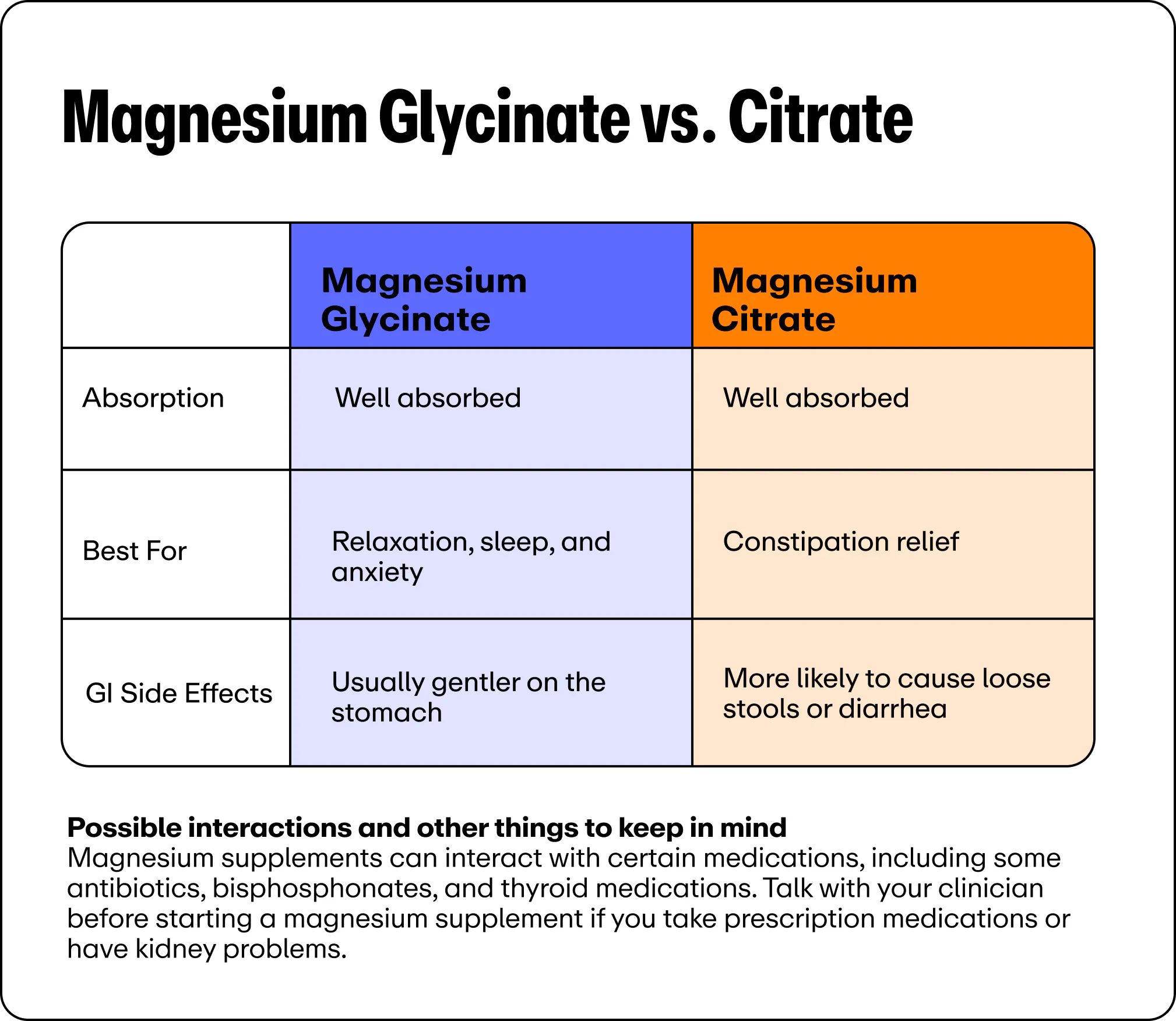
When we’re talking about the difference between magnesium citrate and glycinate, here’s a quick rundown of the factors that matter most when choosing between the two:
- Absorption: Both magnesium glycinate and citrate are bioavailable, meaning your body can readily absorb them so they can get to work. And both also tend to be easier to absorb than other forms, such as magnesium oxide. So absorption might not be what makes or breaks your decision.
- Tolerability: Magnesium glycinate tends to be gentler on the stomach, while magnesium citrate is more likely to cause loose stools or diarrhea, especially at higher doses. And how well you tolerate a supplement may matter more than small differences in absorption. After all, you’re more likely to stick with one that doesn’t upset your stomach.
- How it helps: They have different benefits, so it depends on your goals. For relaxation or better sleep, you might grab magnesium glycinate. For constipation, magnesium citrate is the better fit because of its laxative effect.
Bottom line: Both forms are well absorbed, so the bigger difference between magnesium glycinate and citrate comes down to how they affect your body and what you’re hoping to get from them.
Which One Should You Take? A Symptom-by-Symptom Guide
Still wondering: “What kind of magnesium should I take?” We get it. And the answer is…it depends. With so many types of magnesium supplements on the market, Midi clinicians recommend choosing one based on your symptoms:
- For trouble falling or staying asleep: You might try magnesium glycinate in the evening, about 30 to 60 minutes before bed, to promote relaxation and make it easier to fall and stay asleep. Clinicians often recommend starting with a 240-milligram (mg) dose and increasing as recommended.
- For constipation: Magnesium citrate can soften stool and improve bowel movement frequency. Check with your clinician about an appropriate dose for you, since larger doses can be used for short-term constipation relief.
- For gentler magnesium support: Magnesium glycinate may be the better choice if you have a sensitive stomach because it tends to cause fewer GI side effects.
What Success Looks and Feels Like
How Much Magnesium Do You Actually Need?
The Recommended Dietary Allowance (RDA) for magnesium is 320 mg per day for women ages 31 and older. But exactly how much you need can vary depending on your overall health.
This recommendation includes magnesium from both food and supplements. So not everyone needs a magnesium supplement—you can meet your needs by eating a balanced diet with leafy green veggies, beans, nuts and seeds, and whole grains.
Your body absorbs 30% to 40% of the magnesium in foods. But even with plenty of magnesium-rich options out there, many of us still fall short. In fact, about half of Americans don’t get enough of the mineral from food alone. That’s where supplements can help fill the gap.
If you do take one, check the label for the amount of elemental magnesium. That tells you how much actual magnesium you’re getting, rather than the total weight of the magnesium compound.
One important catch: There’s a separate upper limit of 350 mg per day for magnesium from supplements and medications. The limit doesn’t include magnesium from food and is meant to help prevent side effects.
Side Effects, Interactions, and Who Should Be Careful
Magnesium supplements are generally safe for most people when taken as directed, but they can cause side effects—especially at higher doses. Magnesium citrate is more likely to cause GI side effects like diarrhea, nausea, and stomach cramps because of its laxative effect. If that happens, lowering the dose or switching to magnesium glycinate may be easier on your stomach.
Very high doses of any form of magnesium from supplements or medications can lead to magnesium toxicity, or hypermagnesemia. While rare, it can become serious, causing symptoms such as low blood pressure, nausea, vomiting, weakness, difficulty breathing, and an irregular heartbeat.
If you have kidney disease or reduced kidney function, check with your clinician before taking magnesium supplements. Your kidneys clear excess magnesium, so if they aren’t working properly, magnesium can build up to unsafe levels.
You should also check with your clinician before starting magnesium if you take prescription medications. Magnesium can interact with certain antibiotics, bisphosphonates used to treat osteoporosis, thyroid medications, and diuretics. With some medications, you may need to take magnesium a few hours before or after your dose to keep it from interfering with the medication’s absorption.
Finally, as with all supplements, make sure you choose a brand that undergoes third-party testing to confirm purity, quality, and potency. That way, you know what you’re taking is safe.
Magnesium in Perimenopause and Menopause
Midlife women are touting the benefits of magnesium for good reason. During perimenopause and menopause, symptoms like sleep disruption, anxiety, and sometimes even constipation can show up at the same time. So it makes sense that you might find yourself comparing magnesium citrate vs. glycinate to figure out which one could help.
Magnesium also plays important roles in bone and muscle health. As estrogen levels decline, bone loss speeds up, and the risk of osteoporosis increases. That makes nutrients that support bone health—including magnesium, calcium, and vitamin D—especially important in midlife. Some research has also linked higher magnesium intake with more grip strength and muscle mass in women.
Of course, magnesium supplementation can take you only so far. Getting enough can support sleep, mood, muscle, and bone health, but taking more isn’t necessarily better—and magnesium can’t replace treatment for symptoms driven by hormonal changes.
Instead, think of magnesium as one piece of a broader menopause care plan. Depending on your symptoms, that might also include hormone therapy or non-hormonal medications, lifestyle changes, and supplements for menopause. If symptoms are interfering with your sleep, mood, or daily life, a Midi clinician can help you figure out what’s driving them and what treatment options may help.

When a Different Form Makes More Sense
We may have started with a closer look at magnesium glycinate vs. citrate, but those aren’t your only options. There are plenty of other types of magnesium supplements, and some may make more sense depending on what you’re looking for.
First one up: magnesium L-threonate. Research on its cognitive benefits is still limited. But a 2026 study of a patented L-threonate formula reported improvements in areas like working memory, attention, and reaction time in some adults. The manufacturer funded the trial, though, which doesn’t discount the findings but is worth keeping in mind.
Forms like magnesium malate may aid muscle performance, and magnesium taurate may help support cardiovascular health.
Magnesium oxide is commonly available (and it’s cheap), but it’s not as well absorbed as some other forms, like citrate. The main perk is that it can help relieve constipation because it acts as a laxative.
Finally, topical magnesium or magnesium soaks (like Epsom salts) don’t have great data showing that they can be absorbed through the skin. However, if you feel especially relaxed from an Epsom salt bath, there’s no need to give it up. It just can’t be trusted to fix low magnesium levels.
If you want to combine different forms of magnesium and take more than one supplement, talk with your clinician first about whether it's a safe option for you. Taking multiple forms can make it easier to get more supplemental magnesium than you intended without necessarily giving you additional benefits.
Key Takeaways
- There are many different types of magnesium supplements. Two common options are magnesium glycinate and magnesium citrate, and the better choice depends largely on what you’re hoping to get from them.
- Magnesium glycinate is well absorbed, tends to be gentle on the stomach, and may help support relaxation and sleep.
- Magnesium citrate is also easy to absorb, and its laxative effect makes it especially useful for short-term constipation relief. Higher doses are more likely to cause diarrhea and other GI side effects.
- The mineral is often used for concerns that commonly come up during perimenopause and menopause, including sleep problems, anxiety, and constipation. But magnesium supplements can’t replace treatment for your symptoms.
- Magnesium can interact with some common medications. And if you have kidney disease or reduced kidney function, check with your clinician before taking a supplement.
Frequently Asked Questions (FAQs)
What is the downside of magnesium glycinate?
Magnesium glycinate is generally well tolerated, but it isn’t completely risk-free. It can interact with certain medications, and taking too much magnesium can cause side effects.
Which is better for leg cramps, magnesium citrate or magnesium glycinate?
There isn’t enough evidence to say whether magnesium citrate or glycinate is better for leg cramps. Unfortunately, there isn’t solid research showing that magnesium supplements help prevent or relieve nighttime leg cramps, and evidence for other types of muscle cramps is limited.
What is the healthiest form of magnesium to take?
While there are many different forms of magnesium, there isn’t one that’s best or healthiest. Each has different potential benefits, so the right choice depends on why you’re taking it.
Is magnesium glycinate or magnesium citrate better?
Both are well absorbed, but the better choice depends on what you need. Magnesium glycinate may help with relaxation and sleep, while magnesium citrate is especially useful for constipation relief.
Is magnesium OK to take with other medications?
Magnesium interacts with some medications, so it’s best to clear this with your clinician first. This includes certain antibiotics, diuretics, proton pump inhibitors, and osteoporosis treatments (such as bisphosphonates).
If you’re in perimenopause or menopause and want guidance from clinicians who specialize in women’s midlife health, book a virtual visit with Midi today.
Hormonal change is at the root of dozens of symptoms women experience in the years before and after their period stops.
Our trained menopause specialists can help you connect the dots to guide you towards safe, effective solutions.
Whether you need personalized guidance or a prescription routine to tackle symptoms—including vaginal dryness and irritation, brain fog, hot flashes, sleep trouble, mood swings, and weight gain—we’ve got you covered.
Midi’s mission is to revolutionize healthcare for women at midlife, wherever they live and whatever their health story. We believe that starts with education, to help all of us understand our always-changing bodies and health needs. Our core values guide everything we do, including standards that ensure the quality and trustworthiness of our content and editorial processes. We’re committed to providing information that is up-to-date, accurate, and relies on evidence-based research and peer-reviewed journals. For more details on our editorial process, see here.