

If you’ve been feeling more anxious than usual, especially during perimenopause or menopause, you might be wondering whether supplements for anxiety can help. The short answer? Some might, but the research is still limited. And supplements aren't a substitute for proven treatments like talk therapy or prescription medications. That said, certain supplements may have a place in your treatment plan, depending on your symptoms and health needs. At Midi Health, menopause-trained clinicians can help you make sense of your symptoms and find an approach that works for you.
Supplements for anxiety are everywhere these days, from your social media feeds to the shelves of your local pharmacy. It makes sense: Anxiety is common. In a CDC report that looked at data from 2022, about 18% of U.S. adults reported experiencing anxiety symptoms in the previous 2 weeks. So, the idea of finding relief with an over-the-counter (OTC) supplement is understandably appealing.
Anxiety can look different for everyone. Some people feel on edge, irritable, or have trouble concentrating, while others experience physical symptoms like a racing heart, muscle tension, or shortness of breath—or maybe all of the above. Sometimes, these symptoms are part of a condition like generalized anxiety disorder.
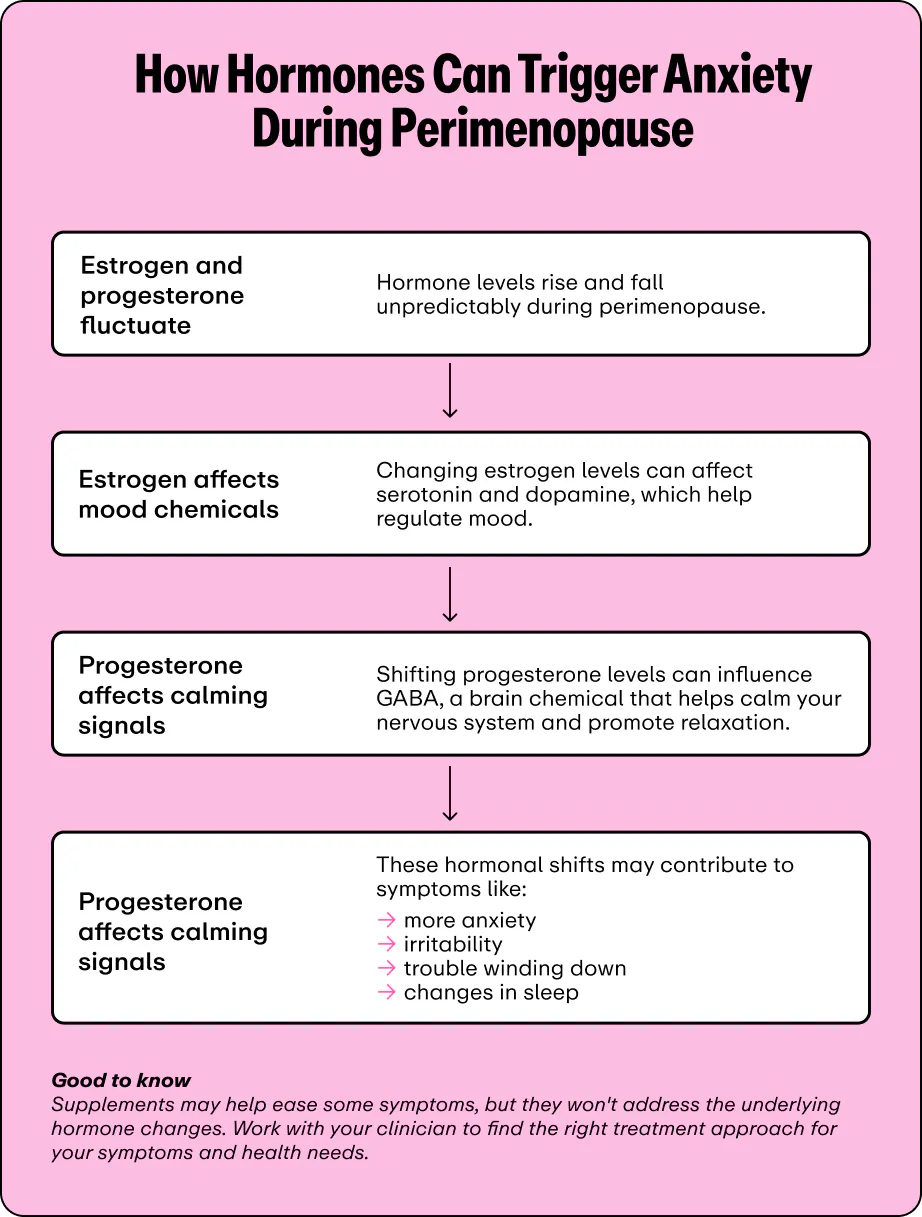
It’s also common to experience new or worsening anxiety in your 40s and 50s, especially during perimenopause, when estrogen and progesterone levels start to fluctuate and decline. These hormonal changes can affect your mood and how you respond to stress.
But here's the thing: No supplement is a substitute for understanding what's behind your anxiety. If you're feeling anxious often or it's getting in the way of daily life, a clinician can help you figure out what's going on and whether treatments like talk therapy, prescription medications, or both might help.
As for supplements or herbs for anxiety? They're not a first-line treatment for anxiety disorders, but some may help ease symptoms alongside other treatments. The catch is that some supplements have more promising research behind them than others, and results can vary.
Find out what the research says about supplements for anxiety, potential risks and medication interactions, and what to consider before trying one.
- TK
Why Does Stress Feel Worse in Perimenopause and Do Supplements for Anxiety Actually Work?
Some supplements for anxiety may help ease mild symptoms, but the research is mixed, and many studies are small or short term. Plus, the evidence varies from one supplement to another. Some have been studied in multiple clinical trials, others have only a handful of promising studies, and still others have little research behind them.
You'll also come across different types of supplements, from vitamins and minerals to herbs and amino acids. But keep in mind that even though you can obtain them without a prescription, natural supplements for anxiety aren’t always risk-free. Some might interact with other medications or supplements you’re taking, or they may not be safe for you if you have certain health conditions.
There's also the question of quality. Supplements aren't reviewed the same way that prescription medications are, and ingredient quality and potency can vary, depending on what brand or product you buy.
So, are they worth trying? Some may help, especially alongside healthy habits, but they shouldn't replace proven treatments when needed.
Bottom line: The best supplements for anxiety are backed by research and make sense for your symptoms, so check with your clinician before trying one.

Why Anxiety in Perimenopause and Menopause Changes What a Supplement Can Do
Between hot flashes, irregular periods, and poor sleep, perimenopause can throw a lot your way. And for some women, shifting hormones can also bring new or worsening anxiety.
Your estrogen levels go on a roller-coaster ride during perimenopause. Estrogen helps regulate neurotransmitters like serotonin and dopamine that affect your mood. So, when levels rise and fall unpredictably, you may notice more anxiety, irritability, or other mood changes.
Shifting progesterone levels can play a role, too. Progesterone influences GABA, a brain chemical that helps calm your nervous system and promote relaxation. As progesterone levels change, you may feel more anxious or have trouble winding down.
In other words, if you're looking for supplements for perimenopause anxiety, it's worth considering what else might be contributing to your symptoms. If anxiety shows up alongside other menopause symptoms, such as hot flashes or irregular periods, your clinician may recommend hormone therapy to help manage those changes.
As for supplements? Some may help take the edge off anxiety, but they won't address underlying hormonal changes. Think of them as possible additional support, rather than a replacement for other treatments you may need.
Magnesium: The Most Popular Supplement for Anxiety
If you’re searching for one of the best supplements for stress and anxiety, magnesium is worth a closer look. This essential mineral helps regulate your nervous system and your body's response to stress.
Magnesium glycinate, in particular, is a popular choice for anxiety, sleep, and muscle tension. It's generally well tolerated and might be less likely to cause digestive issues like diarrhea than some other forms, such as magnesium citrate.
As for the research, results are promising but mixed. A 2024 review found that magnesium supplements may help ease mild anxiety and improve sleep, but researchers couldn't say which forms or doses work best. A more recent clinical trial also found that magnesium glycinate modestly improved sleep problems after 4 weeks, but it didn't significantly reduce anxiety symptoms. (Generally, the connection between sleep and mood is particularly relevant in midlife, as sleep disturbances and insomnia—which are common during perimenopause and menopause—can amplify anxiety, while anxiety can in turn worsen sleep problems.)
Magnesium may be especially helpful if you're not getting enough through your diet, which is pretty common. If you’re trying magnesium glycinate for anxiety, Midi clinicians generally recommend starting with 250 milligrams (mg) daily, although the right amount depends on your individual needs. Higher doses can cause digestive side effects, and people with kidney problems should check with their clinician before supplementing.
L-Theanine and GABA: Calming Amino Acids
L-theanine, an amino acid found naturally in green tea, may help relieve stress and anxiety without making you drowsy.
One reason? L-theanine may increase alpha-wave activity in your brain, which is associated with a state of “alert relaxation”—meaning, less mental chatter and more calm, without feeling overly groggy. That makes it an appealing option for daytime stress or anxiety.
The research is promising but mixed, and only a few studies have focused on midlife women. Research suggests that L-theanine can ease stress and anxiety in people facing stressful situations, although the evidence is still limited. A 2025 review found that L-theanine may lead to subjectively better sleep quality. Studies have typically used around 200 to 400 mg daily.
GABA (gamma-aminobutyric acid) supplements are a different story. This brain chemical helps calm your nervous system, but researchers aren’t sure how much GABA from supplements actually reaches your brain. A 2020 review found limited evidence that oral GABA supplements reduce stress, with even weaker evidence for sleep benefits. Studies have used different doses, and there's no established dose for anxiety.
Ashwagandha and Other Adaptogens: Do Herbs for Anxiety Help?
Ashwagandha is an adaptogen, a type of herb traditionally used to help the body manage stress. Although more high-quality studies are needed, research suggests that ashwagandha can help take the edge off stress and anxiety.
It may work partly by regulating your body's stress response, reducing the stress hormone cortisol, and influencing GABA.
But the research is mixed. While ashwagandha has been shown to lower cortisol levels, its effects on how stressed people actually feel are less consistent. Still, other research suggests it may help improve anxiety symptoms.
Ashwagandha is often taken in doses of 250 to 600 mg daily, depending on the formulation. Ashwagandha (in the form of Ashwagandha KSM-66) is one of the key ingredients in Midi's Daily Cortisol Support supplement, along with L-theanine and magnesium glycinate—a combination designed to support your body's response to everyday stress.
Other adaptogens and herbs for anxiety, like rhodiola and lemon balm, have also been studied, but evidence of their benefits remains limited.
Ashwagandha isn't recommended during pregnancy or breastfeeding. It can also affect thyroid function and has been linked to rare cases of liver injury, so check with your clinician before taking it.
Omega-3s, B Vitamins, and Vitamin D: Filling Nutrient Gaps
Some midlife women may not get enough omega-3 fatty acids, B vitamins, or vitamin D from their diet alone. These nutrients help support your brain and nervous system, but taking extra won't necessarily ease anxiety, especially if you're already getting enough.
- Omega-3s: These are healthy fats found in foods like fatty fish, walnuts, and chia seeds. Two types found in fish (EPA and DHA) are especially important for brain and heart health. One large industry-funded study found that people with higher omega-3 levels were less likely to develop depression or anxiety, but researchers couldn't prove that omega-3s were the reason. Meanwhile, another systematic review and meta-analysis found that any benefits on omega-3s for anxiety were very preliminary, as researchers could only identify one trial to review.
- B-complex vitamins: This includes vitamins B6, B9 (folate), and B12, which help keep your nervous system working properly. Low levels can contribute to fatigue, mood changes, and trouble concentrating, but there's no robust evidence that taking extra B vitamins helps with anxiety if you're getting enough already.
- Vitamin D: This supports brain and bone health and helps your body absorb calcium, which is especially important around menopause as bone loss speeds up. Low vitamin D has been linked to anxiety and depression, but a 2024 meta-analysis found no significant effect of vitamin D supplementation on anxiety symptoms.
Your clinician can help determine whether you need supplements based on your diet and blood tests when appropriate. And remember, more isn't always better. Taking too much of certain nutrients, like vitamin D, can be harmful.
Saffron, Lavender, and Chamomile: Herbal Options With Real Trials
Several herbs for anxiety have shown promise in clinical trials, though more research is needed. These include:
- Saffron: Some clinical trials have shown that saffron extract may help ease mild-to-moderate symptoms of depression and anxiety. For example, a 2026 review found that saffron supplements significantly reduced anxiety and depression scores, though the authors noted that more high-quality trials are needed.
- Lavender: Oral lavender oil supplements, such as Silexan, have been shown to help improve anxiety in clinical trials. A 2019 review found that oral lavender oil helped reduce anxiety symptoms. Lavender aromatherapy also showed potential benefits, though the findings were less consistent.
- Chamomile: Ever sipped chamomile tea to unwind after a stressful day. There’s a reason for that. Chamomile extract may improve anxiety symptoms, including in people with generalized anxiety disorder.
- Passionflower: Passionflower has decent evidence for easing anxiety symptoms, potentially making it another herbal option worth asking your clinician about.
One to skip? Kava. This plant is often included in natural supplements for anxiety, but it’s been linked to rare yet serious cases of liver injury. It may also cause side effects like headaches, dizziness, and digestive upset.
Can You Take Supplements for Anxiety With HRT or SSRIs?
During the menopause transition, it’s common for women to receive hormone replacement therapy (HRT, now commonly referred to as menopause hormone therapy, or MHT) or take several medications, including antidepressants like SSRIs.
OTC supplements might seem harmless to add to the mix—you can grab them at your local pharmacy, after all—but some can interact with your medications and cause serious side effects.
Here are a few interactions to keep in mind:
- St. John's wort and SSRIs: Taking SSRIs with St. John's wort, a popular herbal remedy for depression, can raise your risk of serotonin syndrome, a potentially dangerous buildup of serotonin in the body. Other supplements that affect serotonin may also pose risks.
- Ashwagandha and certain thyroid medications: Ashwagandha may interact with thyroid medications and sedatives.
- Magnesium and certain medications: Magnesium can interfere with how your body absorbs certain antibiotics and osteoporosis medications, making them less effective.
- Herbal supplements and hormone therapy: St. John's wort can make certain types of menopause hormone therapy less effective. For many other herbal supplements, there simply isn't enough research to know how they interact with hormone therapy.
- Supplements and sleep aids: Some calming supplements, like ashwagandha and chamomile, may increase drowsiness when combined with sleep aids or other sedatives.
Before adding any new supplements for anxiety, bring a complete list of your medications and supplements to a clinician, like the women’s health experts at Midi. They can review everything you're taking and help you decide which supplements, if any, are safe to add to your routine.

When Supplements for Anxiety Aren’t Enough
If anxiety is new for you, especially during perimenopause, or it gets in the way of everyday life, talk with a healthcare professional. Anxiety is treatable, and you don't have to manage it on your own. It's especially important to reach out if your anxious thoughts feel overwhelming or persist or worsen, as well as if you're having panic attacks.
Supplements for anxiety may offer modest benefits, but they're not a substitute for proven treatments. For example, cognitive behavioral therapy can help you recognize anxious thought patterns, identify triggers, and develop strategies to manage anxiety.
Medication is another option. SSRIs and SNRIs, two types of antidepressants that help regulate brain chemicals involved in mood and anxiety, are generally the first-line options.
For women dealing with anxiety alongside hot flashes or night sweats, HRT may help ease those symptoms. Your clinician can explore which treatments make the most sense for you.
Seek prompt medical care for new or severe panic symptoms and emergency care for chest pain or significant shortness of breath. If you're having thoughts of self-harm or are in emotional crisis, call or text 988 for immediate support.
How to Choose and Try a Supplement for Anxiety Safely
Before trying a supplement for anxiety, it pays to know what you're buying. Here are a few tips to consider as you’re shopping:
- Check with your clinician first: They can help you decide whether a supplement is worth trying and check for potential interactions with medications you're already taking. They may also evaluate you for medical conditions that can worsen anxiety symptoms such as thyroid dysfunction.
- Look for third-party testing: Choose supplements with certification seals from independent third-party organizations. These help verify that a product contains what's listed on the label and meets certain quality standards.
- Try one supplement at a time: Give it a few weeks to see whether it helps, and keep track of your symptoms and any side effects. Some supplements may take longer to show benefits, depending on the ingredient and dose.
- Know when to reassess: If you experience side effects, develop new symptoms, or don't notice any improvement after a reasonable trial, check back with your clinician.
What to Ask a Clinician Before Starting Supplements for Anxiety
If this all feels super overwhelming, know that a clinician is there to help you navigate the process of finding the right treatment for your anxiety, whether that includes supplements or not. It can also help to bring a list of questions along with you to your visit, such as:
- Could my anxiety be related to perimenopause or menopause?
- Which supplements are safe to take with my current medications?
- Are there any supplements you'd recommend for my symptoms?
- Could I benefit from hormone therapy or other treatments instead of an OTC supplement?
- What non-pharmacologic lifestyle changes can help me with anxiety?
If you're looking for support with anxiety during perimenopause or menopause, you can book a visit with a Midi clinician. They can review your symptoms, hormonal changes, medications, and supplements to build an individualized Care Plan that takes into account your mental health as well as where you’re at in the menopause transition. Be sure to mention everything you're taking, including OTC blends and gummies.
Key Takeaways
- Feeling more anxious than usual in your 40s or 50s? Hormonal changes during the menopause transition might be part of the reason, even if anxiety has never been an issue for you before.
- Certain supplements for anxiety, such as magnesium, L-theanine, and ashwagandha, may help improve symptoms, but more research is needed.
- Other supplements, including B vitamins and vitamin D, may be worth considering if you're not getting enough of these nutrients from your diet. But taking extra doesn't necessarily improve anxiety symptoms.
- If you have an anxiety disorder, proven treatments like cognitive behavioral therapy and medications like SSRIs can help. Hormone therapy may also help if menopause symptoms like hot flashes are making anxiety worse.
- Supplements aren’t regulated by the FDA the same way medications are, and they can interact with other medications you’re taking. Look for third-party testing and check with your clinician before trying anything new, especially if you're taking hormone therapy or antidepressants.
Frequently Asked Questions (FAQs)
What is the 3-3-3 rule for anxiety?
The 3-3-3 rule is a coping strategy that can help ground you when you’re feeling anxious. Look around and name three things you can see; name three sounds you can hear; and then move three parts of your body, like your fingers, shoulders, or feet.
How to eliminate anxiety naturally?
Lifestyle habits like exercising regularly, getting enough restful sleep, avoiding excessive caffeine, and practicing mindfulness techniques like deep breathing can help manage anxiety. Natural supplements for anxiety aren’t considered a first-line approach, though your clinician might recommend them, depending on your symptoms and overall health.
What is a natural anxiety pill?
There isn’t exactly such a thing as a natural anxiety pill, but some supplements may help take the edge off. Magnesium glycinate is a popular option for anxiety and sleep, though the evidence is mixed. Check with your clinician before trying it, especially if you take other medications or supplements.
What are the best anti-anxiety medications?
Antidepressants called SSRIs and SNRIs are generally the first-choice medications for anxiety. They may be used alone or alongside cognitive behavioral therapy. Your clinician can help determine which care solutions are right for you.
What vitamins are good for depression and anxiety?
Vitamins B12 and D play a role in mood and brain health. Low levels have been linked to mood changes and symptoms of depression or anxiety, but taking extra isn't likely to help if you're already getting enough.
If you’re in perimenopause or menopause and want guidance from clinicians who specialize in women’s midlife health, book a virtual visit with Midi today.
Hormonal change is at the root of dozens of symptoms women experience in the years before and after their period stops.
Our trained menopause specialists can help you connect the dots to guide you towards safe, effective solutions.
Whether you need personalized guidance or a prescription routine to tackle symptoms—including vaginal dryness and irritation, brain fog, hot flashes, sleep trouble, mood swings, and weight gain—we’ve got you covered.
Midi’s mission is to revolutionize healthcare for women at midlife, wherever they live and whatever their health story. We believe that starts with education, to help all of us understand our always-changing bodies and health needs. Our core values guide everything we do, including standards that ensure the quality and trustworthiness of our content and editorial processes. We’re committed to providing information that is up-to-date, accurate, and relies on evidence-based research and peer-reviewed journals. For more details on our editorial process, see here.


