


Magnesium glycinate for anxiety is becoming more and more popular, with a reputation for promoting better sleep and helping you feel more at ease. This isn’t just anecdotal—there’s real research to back it all up. Plus, the supplement has other benefits for midlife women that are worth considering, like improved bone health. You can work with a Midi Health clinician to determine whether magnesium glycinate is a good fit for your regimen, especially if you’ve been experiencing an endless stream of anxious thoughts.
Magnesium glycinate for anxiety is having a full-blown moment, especially among midlife women navigating perimenopause or menopause. And honestly, it’s easy to see why.
Fluctuating hormone levels can result in a wave of anxious feelings, from 3 a.m. thoughts that race through your head when you should be asleep to a nagging sense of stress while you’re trying to work. Enter: magnesium glycinate, a supplement that promises to help regulate your nervous system; lower cortisol levels; and leave you feeling less anxious, more at ease, and ready for a good night’s sleep.
But it’s understandable to wonder: Does magnesium help with anxiety, or is it all hype? The scientific research behind magnesium glycinate for anxiety is actually promising. Multiple studies and reviews, spanning years, have found magnesium to be beneficial for anxiety, though they’re still not definitive. It’s not a one-size-fits-all approach, either. Magnesium glycinate likely isn’t the best option for more severe anxiety, and dosage and timing matter when it comes to how well the supplement works.
In this guide, we’re answering all of your magnesium glycinate questions, including exactly how the supplement makes anxiety chill out, what the science says, how to take it so it benefits you the most, and which side effects to look out for. We’ll also fill you in on when you need to do something more for your anxiety and how a clinician (like one at Midi) can help you find the best treatment plan possible.
Magnesium Glycinate for Anxiety: How It’s Thought to Work
Magnesium glycinate is a form of magnesium that is bound to glycine, an amino acid. Pairing magnesium and glycine together helps to improve absorption and reduce potentially uncomfortable gastrointestinal (GI) side effects. This makes it a popular supplement option for promoting relaxation, reducing stress, and relieving anxiety.
Magnesium glycinate works by modulating neurotransmitters in the brain, specifically NMDA and GABA receptors. (Translation: It helps tell certain brain chemicals how to behave.)
NMDA receptors are part of the nervous system, and they help manage things like your stress response and emotional behavior. NMDA needs magnesium to keep these feelings under control. While blocking NMDA, magnesium is also working to boost GABA, a calming neurotransmitter that helps you fall asleep faster and keeps anxiety at bay. Magnesium helps make GABA receptors more responsive and enhances their activity.
But wait, there’s more! Animal data suggests that magnesium has a regulating effect on the HPA axis, which is your body’s way of responding to stress. If you don’t have enough magnesium, your body releases more cortisol in response to stressors. Getting the proper amount of magnesium has been suggested to have a dampening effect on cortisol levels in clinical studies and has been linked to subjective decreases in stress and anxiety.
To sum it up: Magnesium blocks NMDA, enhances GABA, and regulates the HPA axis to lower cortisol. This may support our response to stressors and can potentially contribute to less anxiety and a calmer stress response.
While other forms of magnesium are available in supplement form, magnesium glycinate is the preferred choice for anxiety and mood because it includes glycine. Not only does glycine help prevent uncomfortable side effects, but research shows that it can promote relaxation by activating NMDA receptors in the nervous system.
When magnesium and glycine are paired together, you get magnesium glycinate—a supplement that really helps you calm down and get better sleep while lessening unwanted side effects.

Does Magnesium Help With Anxiety?
A magnesium supplement is never going to cure or eliminate anxiety. That said, the research on magnesium helping improve anxiety is promising.
One review of several studies found that magnesium can be beneficial when it comes to lessening anxious feelings and helping people feel calmer, especially people who experience mild anxiety. Another review similarly found that magnesium supplementation could help lessen anxiety and improve sleep quality, particularly when high doses of magnesium were taken.
While that all sounds really positive, both reviews noted that more research needs to be done on exactly how magnesium can help with feelings of anxiety.
Since magnesium is an essential mineral for keeping the body healthy, supplementation is especially important if you’re deficient in magnesium—and, surprisingly, many people are. It’s estimated that 60% of adults don’t get enough magnesium through dietary intake, and 45% of Americans are deficient in it.
Plus, magnesium deficiency becomes more common as you age, since absorption in the gut decreases. For postmenopausal women, magnesium deficiencies have even been linked to an increased rate of bone loss.
If you’re considering taking magnesium, it’s important to be realistic about what it can do. Magnesium is not going to get rid of anxiety completely and may not help in every single case. It also won’t replace the need for therapy or prescription anxiety medication. It’s still worth discussing with your clinician, but it shouldn’t be thought of as a miracle cure.
What Success Looks and Feels Like
Why Anxiety Spikes in Perimenopause and Menopause
Magnesium supplementation can sound particularly tempting if you’re going through perimenopause or menopause. These midlife transitions can make anxiety worse, while also adding mood shifts into the mix.
One study notes that 15% to 50% of perimenopausal and postmenopausal women will experience psychological symptoms like anxiety. This is largely due to hormonal changes, such as fluctuating estrogen that can also lead to shifting levels of serotonin and higher levels of cortisol.
Sleep disturbances during menopause can also make anxiety worse—if you’re kept awake by insomnia or night sweats, you’re going to feel more irritable and more prone to anxious thoughts throughout the day.
If you’re in your 40s and feel like you’re suddenly experiencing anxiety in a way you never have before, magnesium supplementation can be a good idea. But it’s still worth chatting with a clinician about it first.
A healthcare professional can talk with you about everything that’s going on to help you come up with a better treatment plan. Magnesium can potentially fit in with this plan, especially since it has other benefits aside from relieving anxiety, but you may need other treatment options as well. A Midi clinician can discuss exactly what you’re feeling and help you come up with a Care Plan to help relieve your anxiety.

Which Magnesium Is Best for Sleep and Anxiety?
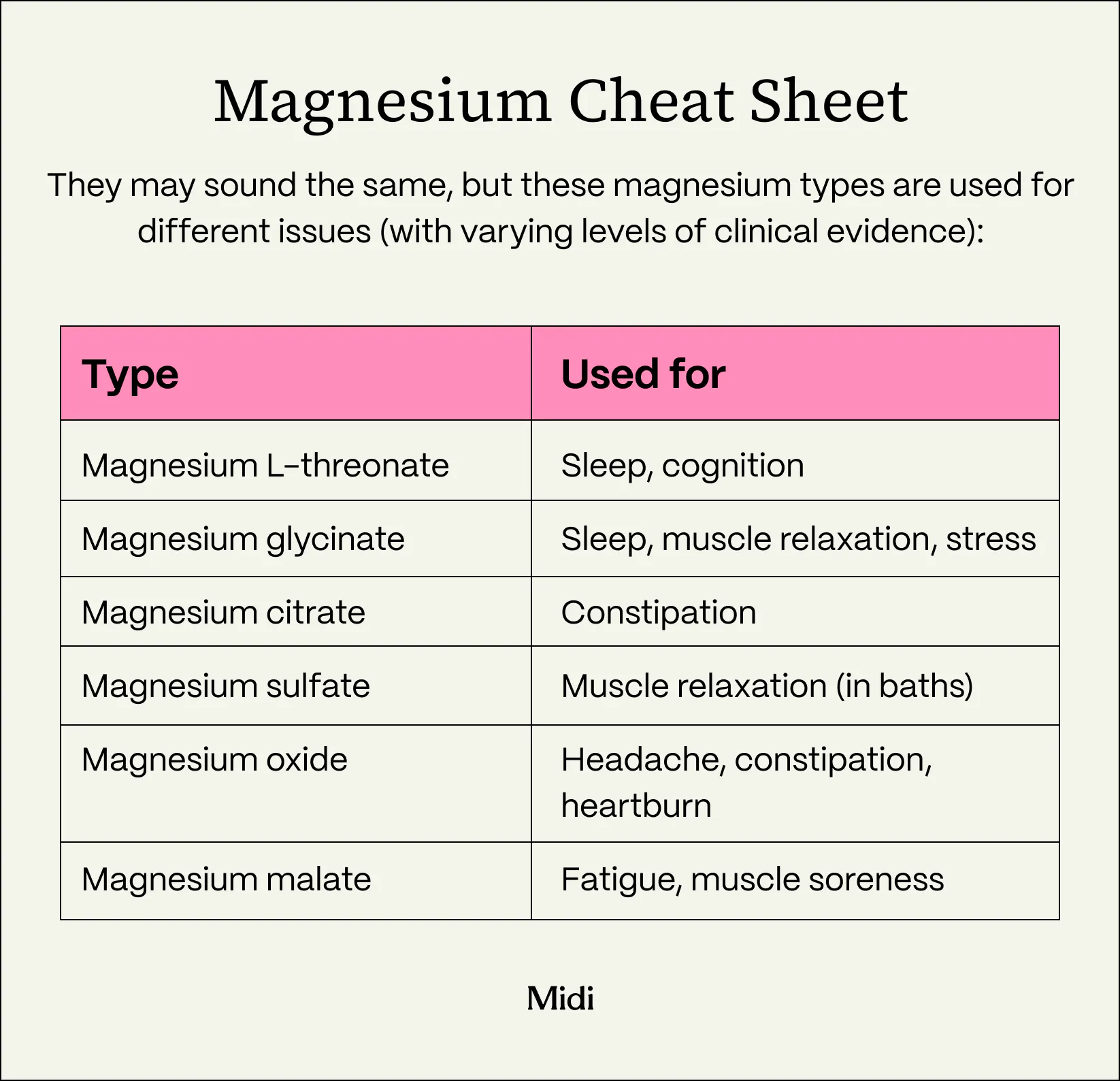
There are a few different types of magnesium. Here are five common types and what they’re typically favored for:
- Magnesium glycinate: best for easing anxiety and stress, promoting sleep, and relaxing muscles without leading to GI symptoms
- Magnesium citrate: a well-absorbed saline laxative that can treat occasional constipation by increasing the amount of water in your intestines
- Magnesium L-threonate: a generally well-absorbed supplement known for improving sleep, enhancing cognitive function, and calming feelings of stress
- Magnesium oxide: can help relieve constipation, neutralize stomach acid to help with heartburn and indigestion, and treat migraine; not generally well-absorbed and can lead to digestive issues
- Magnesium malate: best for boosting your mood and helping with depression, enhancing exercise performance, fighting fatigue and increasing energy, and reducing chronic pain; generally well-absorbed
When it comes to promoting feelings of calmness and lessening anxiety, your best bet is magnesium glycinate or magnesium L-threonate, with magnesium glycinate generally being the top choice. They both help boost GAMA and regulate the HPA axis to manage anxious, stressed feelings and lower cortisol. They are also both well-absorbed into the body and can even help improve sleep.
When shopping for a magnesium supplement, always read the label to ensure you’re buying the correct kind. Also look for trusted brands that use research-backed ingredients and third-party testing.
Magnesium Glycinate Benefits for Women Beyond Anxiety
Magnesium glycinate isn’t just for relieving anxiety. It has additional benefits for midlife women that make it worth considering, such as:
- Improves sleep quality: Some studies have found that magnesium glycinate can improve insomnia in adults. Insomnia and trouble sleeping are common during perimenopause and menopause.
- Improves physical performance and relaxes muscles: One small study found that magnesium supplementation may help improve performance, reduce muscle soreness, and boost recovery.
- Promotes bone health: One review of research found that low levels of magnesium can be related to osteoporosis and noted that some studies have found that postmenopausal women struggling with bone health can benefit from magnesium supplementation. The study found that the average bone density significantly increased when postmenopausal women took magnesium glycinate for a long period of time. This can be especially important for menopausal women, since a decline in estrogen is known to negatively affect bone health.
- Improves PMS: Some limited research has shown that magnesium may help improve PMS symptoms, especially if paired with vitamin B6, although the available evidence is not conclusive.
A benefit of magnesium glycinate over other forms of magnesium is that the addition of glycinate means it absorbs really well into your body. This can prevent uncomfortable GI symptoms you might experience with other forms of magnesium, making it so much easier to take on a consistent basis.
Magnesium Glycinate Dosage
Generally, the recommended daily amount of magnesium for women ages 31 and up is 320 milligrams (mg) per day. But how much magnesium glycinate you should supplement with largely depends on why you’re taking it in the first place. If you’re taking it to help relieve anxiety, Midi clinicians generally recommend starting with 250 mg, increasing if needed and recommended by your clinician.
Starting with a lower dose allows your body to adjust to the supplement and gives you a chance to see how it will react to taking it. Taking too much magnesium glycinate can result in digestive discomfort, fatigue, and even difficulty breathing. You can always increase the dose if you feel it’s necessary after a few weeks of use.
It's important to note that different magnesium supplements may contain different amounts of elemental magnesium, and that might be different than the total milligram amount listed on the bottle—so pay attention to the label carefully and ask a healthcare professional if you have any questions.
You’re also likely going to be getting magnesium from your diet. Magnesium can be found in leafy green vegetables, legumes, nuts and seeds, whole grains, and even dark chocolate. You’ll even find that certain medications and laxatives contain magnesium, which is another reason it’s essential to discuss it with your clinician before you start taking it.
If you’re unsure of where to start, speak with a Midi clinician. They can help you figure out how much you need and what’s best for you to try based on your personal health history and your ultimate goal.

Best Time to Take Magnesium for Anxiety
Because magnesium glycinate calms your body and makes you feel more relaxed, it’s often recommended to take it about 30 to 60 minutes before bed, especially if you’re taking it for nighttime anxiety, frequent wake-ups, or improved sleep. But if you feel the most stressed during the day and you’re trying to feel calmer, you can take magnesium in the morning or afternoon as well.
There is no right or wrong time to take it—it really just depends on what works for you and what you’re taking it for. However, regardless of the timing, consistency is key. You should take your magnesium supplement at the same time each day, as this keeps levels stable in the body and also helps you establish a routine.
While magnesium glycinate is generally well-absorbed and shouldn’t result in GI issues, it may be a good idea to take it with a small amount of food to really try and prevent any unwanted side effects. Plus, taking it with food can help improve absorption even more.
It’s also worth noting that magnesium glycinate can have some drug interactions with the following:
- bisphosphonates (osteoporosis medications)
- antibiotics like ciprofloxacin, doxycycline, and nitrofurantoin
- gabapentin (for seizures and nerve pain)
- diuretics
- high doses of zinc
- calcium (take these at separate times so they don’t compete for absorption in your gut)
- proton pump inhibitors (for gastroesophageal reflux disease and chronic heartburn)
- HIV (human immunodeficiency virus) medication
- levothyroxine
- iron
Always ensure your clinician reviews your current medication list before you start taking magnesium to ensure there are no interactions.
Side Effects, Safety, and Who Should Skip It
Magnesium glycinate might be an over-the-counter supplement, but it can still have side effects. The most common are digestive distress, such as diarrhea, irritation, nausea, bloating, and cramping. Though these are less frequently seen with magnesium glycinate and more often with magnesium citrate or oxide, they’re still possible.
While very rare with an oral supplement, it’s possible to take too much magnesium, especially in people with impaired kidney function, which can result in some uncomfortable side effects as well. (That’s why magnesium should not be taken unsupervised.) The signs that you’re taking too much may include:
- diarrhea
- nausea and vomiting
- abdominal cramping
- low blood pressure with feelings of dizziness and lightheadedness
- muscle weakness and impaired muscle control
- irregular heartbeat
- difficulty breathing
If you’re experiencing persistent symptoms that seem to keep getting worse and won’t go away, you may want to adjust your dose or reach out to your clinician. This is especially true if you notice signs of low blood pressure, muscle weakness, irregular heartbeat, or difficulty breathing.
Unfortunately, magnesium glycinate isn’t safe for everyone. The following people should avoid this supplement or speak with their clinician before taking it:
- anyone with kidney disease or impaired kidney function
- anyone who takes certain antibiotics, diuretics, blood thinners, or medications for heartburn or blood pressure
- anyone with chronic gastrointestinal or endocrinologic disorders, such as adrenal gland dysfunction
- people with older age
Another important note: If you’re experiencing anxiety that’s significantly impacting your daily life, magnesium glycinate may not be enough to make a difference. If your anxiety feels debilitating, reach out to your clinician or get urgent professional care to find a solution that will work for you.
Beyond Supplements: Real Support for Midlife Anxiety
If magnesium glycinate doesn’t feel like the right fit for you, don’t worry—there are other ways to deal with midlife anxiety. Here are some to try:
- Make some lifestyle changes: Daily movement and meditation can calm you down, ease anxiety, and improve your sleep. You can try giving up caffeine and alcohol (or at least stop having any after 3 p.m.), both of which can lead to anxiety and insomnia. You can also try starting a daily nighttime routine that calms you down before bed and leads to a more restful sleep.
- Consider therapy or medication: Psychotherapy (specifically cognitive behavioral therapy) can be an excellent way to deal with feelings of anxiety and stress. In some cases, if you feel like you can’t manage the anxiety on your own, prescription medication (like SSRIs) may be necessary. For anxiety related to perimenopausal or menopausal symptoms, your clinician may recommend hormone therapy as a highly effective option to balance your mood and relieve anxiety.
If you’re not sure how to deal with your anxiety, reach out to a clinician. A Midi clinician can evaluate your midlife anxiety by discussing symptoms and working alongside you to determine the best care solutions. All you have to do is book a virtual visit to get a personalized Care Plan.
Key Takeaways
- Magnesium glycinate helps regulate your nervous system and neurotransmitters in the brain to make you feel calmer, relieve anxiety, and improve sleep.
- Because magnesium glycinate is generally well-tolerated and absorbs easily into the body, it is a great option for midlife women dealing with perimenopausal-related anxiety.
- Magnesium glycinate can also improve bone health, sleep quality, performance, and PMS symptoms.
- You don’t want to take an excessive amount of magnesium glycinate, as this can result in unwanted side effects. You should start slowly and speak with a clinician about your dosage.
- Avoid magnesium glycinate if you have impaired kidney function or are taking certain medications that would cause interactions. If your anxiety is persistent and feels debilitating, speak with your clinician about a different plan.
Frequently Asked Questions (FAQs)
How much magnesium glycinate should I take for anxiety?
The daily recommended amount of magnesium for women ages 31 and up is 320 mg a day. For anxiety, your best bet is to start supplementing on a somewhat lower dose (generally 250 mg) to see how your body reacts before potentially going up.
How long does it take for magnesium glycinate to relieve anxiety?
It depends. Some people will find that they start feeling the calming effects of magnesium glycinate shortly after taking the supplement, while others note that they don’t really notice a significant difference until they’ve been taking it consistently for a few weeks.
How to calm anxiety at night naturally?
Natural ways to ease anxiety include lifestyle changes and daily routines. Start trying regular meditation, exercise, yoga, and breathing exercises. You can also cut down on caffeine and alcohol, start a nighttime routine to try to improve sleep, and avoid blue light 30 to 60 minutes before bed. Consider talking to a healthcare professional, such as a Midi clinician, about taking a natural supplement to support rest and relaxation in the evening.
If you’re in perimenopause or menopause and want guidance from clinicians who specialize in women’s midlife health, book a virtual visit with Midi today.
Hormonal change is at the root of dozens of symptoms women experience in the years before and after their period stops.
Our trained menopause specialists can help you connect the dots to guide you towards safe, effective solutions.
Whether you need personalized guidance or a prescription routine to tackle symptoms—including vaginal dryness and irritation, brain fog, hot flashes, sleep trouble, mood swings, and weight gain—we’ve got you covered.
Midi’s mission is to revolutionize healthcare for women at midlife, wherever they live and whatever their health story. We believe that starts with education, to help all of us understand our always-changing bodies and health needs. Our core values guide everything we do, including standards that ensure the quality and trustworthiness of our content and editorial processes. We’re committed to providing information that is up-to-date, accurate, and relies on evidence-based research and peer-reviewed journals. For more details on our editorial process, see here.


