

You may have seen zinc supplements on store shelves and wondered whether you could benefit from taking one, especially in midlife. While most women get enough zinc from food, a supplement may make sense in some situations, such as if you have a zinc deficiency. Midi Health clinicians can help you sort the facts from the hype and decide whether adding zinc to your routine makes sense for you.
Taking zinc supplements is something to consider carefully, because even though zinc is an essential mineral, not every woman needs a supplement. While you may have heard that zinc can boost immunity or help with concerns like hair loss, skin changes, and hormone balance, the truth is that most women in the United States already get enough zinc from food.
Taking zinc may benefit you in certain situations, but whether you need a supplement depends on your individual health. And there can be too much of a good thing: taking high doses of zinc over the long term can interfere with copper absorption and potentially lead to copper deficiency.
We’ll go over research-backed zinc benefits, who may be more likely to have low levels, and how to decide whether you actually need more zinc or if this is one supplement to leave on the shelf.
What Does Zinc Do in the Body?
Zinc helps hundreds of enzymes in your body work properly. It plays a role in essential processes like cell division, DNA production, and the creation of proteins, which your body relies on to grow, repair, and maintain tissues. One of zinc’s best-known roles is supporting your immune system. That’s why you might see products containing zinc that claim to help fend off or shorten colds.
Beyond immune health, zinc supports everything from wound healing and healthy skin to your sense of taste and smell. Not getting enough can affect your hair and nails, too. In fact, zinc deficiency can lead to hair loss and nail changes.
Your body doesn’t have a dedicated way to store zinc, so you need to get enough regularly through food or, when needed, supplements.
Are You Actually Low in Zinc?
Before you start shopping for zinc supplements, the first step is to consider whether you actually need more of it. Zinc deficiency is uncommon in the United States, even though some people may still not get enough of the mineral regularly.
Vegetarians and vegans, for example, may be at higher risk because it’s harder to absorb zinc from plant foods. People with celiac disease or inflammatory bowel disease, those who have had bariatric surgery, and people who drink heavily are also at higher risk because they may absorb less zinc, consume less of it, or both. For women taking GLP-1 medications, eating less overall may also mean getting fewer vitamins and minerals, including zinc.
Signs of zinc deficiency can include frequent infections, slow wound healing, hair thinning, changes in taste, and skin problems. The tricky part is that these symptoms can have many other causes, and testing isn’t always straightforward. Blood testing for zinc levels has limitations because factors like the time of day, infection, and hormones can affect the results. That means a normal result doesn’t necessarily rule out zinc deficiency, just as a low result may not give the full picture.
Benefits of Zinc Supplements
Some zinc benefits are better supported by research than others, and whether a supplement helps can depend on why you’re taking it. Here’s what the evidence suggests:
- Shorter colds: Taking zinc may help shorten the duration of a cold by around 2 days, although the evidence isn’t conclusive. Zinc lozenges are the most commonly studied form, but researchers haven’t established the ideal dose or duration of treatment.
- Improved wound healing: Zinc has been shown to help wounds heal, especially in certain groups. For example, a 2025 review found that zinc supplementation may improve wound healing in people with chronic ulcers, but the available studies are limited and more research is needed.
- Slower progression of age-related macular degeneration (AMD): Zinc may also play a role in AMD, an eye condition that affects central vision. Research from the Age-Related Eye Disease Studies found that a high-dose combination of antioxidants, zinc, and copper can reduce the risk of progression to advanced AMD in people at high risk of the condition.
- Less acne: Some people take zinc for acne or other skin concerns, and research suggests the mineral may help with inflammatory acne. But studies have used different forms and doses of zinc, making it difficult to say how much to take specifically for acne.
Remember, more zinc isn’t necessarily better (and may even be harmful in the long run). If you’re already getting enough, taking additional zinc hasn’t been shown to provide additional benefits and can increase the risk of side effects.
Zinc and Women’s Health in Midlife
Zinc benefits for women may sound especially appealing in midlife when concerns like hair thinning, skin changes, and even lower libido can show up. But zinc supplements are most likely to help when you aren’t getting enough zinc in the first place.
Take hair thinning, for example. Zinc deficiency can contribute to hair loss, so correcting a deficiency may help. But midlife hair changes can have many other causes, including thyroid problems, low iron levels, and hormonal changes like declining estrogen. Taking extra zinc won’t address those underlying causes.
The same goes for skin changes. Zinc plays a role in skin health, but there isn’t good evidence that taking zinc will improve menopause-related skin changes if you already get enough. And while some zinc supplements claim to balance hormones, the research behind these claims is limited. Your immune system may also change with age, but that doesn’t necessarily mean you need extra zinc as you get older.
There’s one more thing to consider: Many women in midlife take iron supplements, and taking higher-dose iron supplements at the same time as zinc may interfere with zinc absorption. Talk with your clinician about whether you need both and how to time your doses.

How Much Zinc Do Women Need?
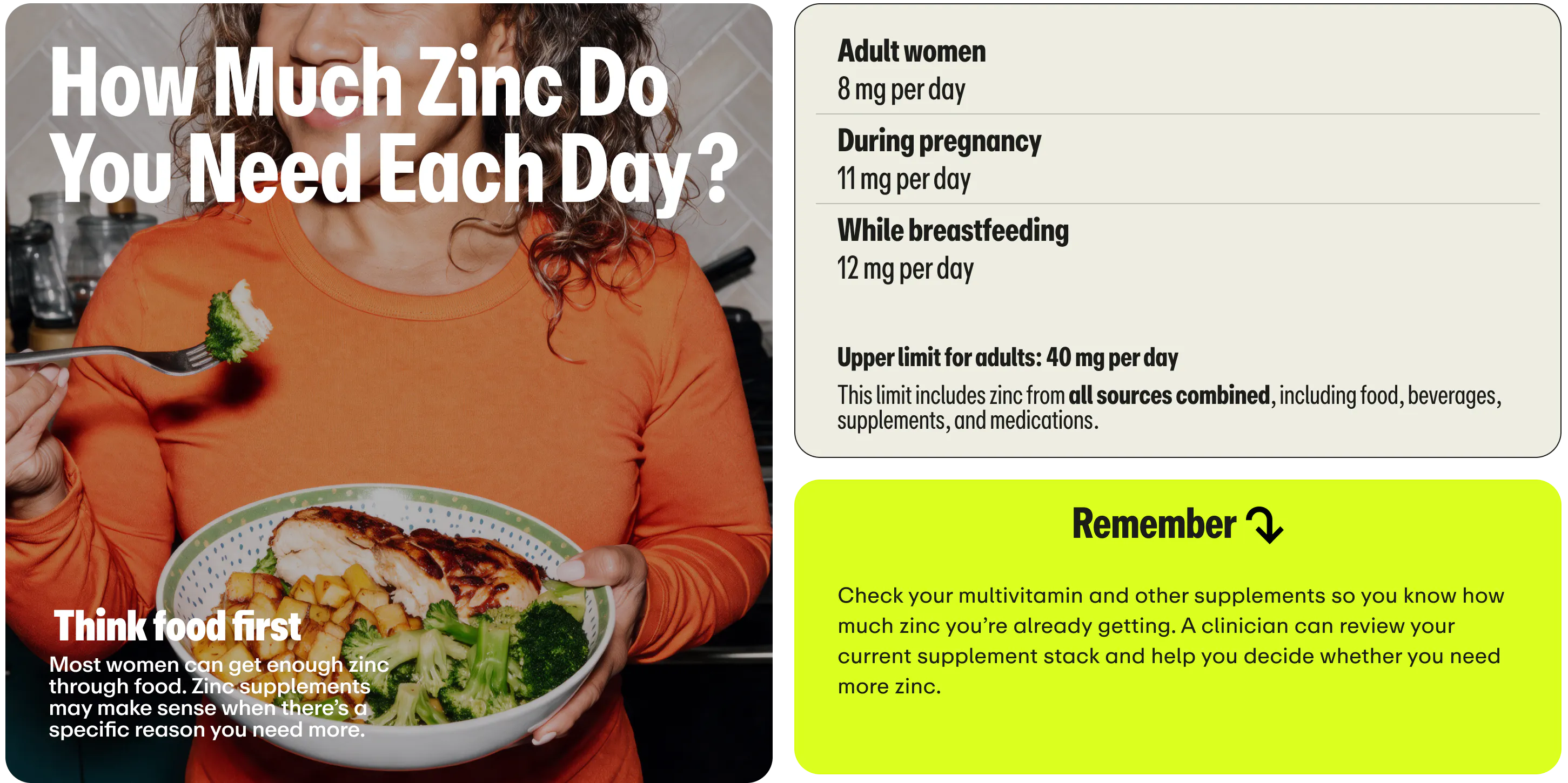
So, how much zinc per day do you actually need? The recommended dietary allowance for adult women is 8 milligrams (mg) per day. That increases to 11 mg during pregnancy and 12 mg while breastfeeding. And the upper limit for all adults is 40 mg per day from food, beverages, supplements, and medications combined. Many popular zinc products contain several times the daily requirement, so be sure to read the label carefully before taking a dose.
If you take a zinc supplement, be sure to add up how much you’re getting from all sources and consult a clinician. Check the label on your multivitamin and any stand-alone zinc supplement, and factor in zinc from your diet. For example, if your multivitamin contains 10 mg of zinc and a zinc supplement contains 25 mg, you’re already getting 35 mg before counting food.
Some studies on zinc for colds have used higher doses for short periods, but that’s different from taking a higher dose every day on a regular basis. The 40 mg upper limit is intended for ongoing daily intake, so you shouldn’t use short-term cold studies as a guide for your everyday dose.
The Copper Problem with High-Dose Zinc
Another problem with taking high doses of zinc is that it can interfere with copper absorption.
The two minerals compete for absorption in your gut, so consistently getting too much zinc can make it harder for your body to absorb enough copper. Over time, that can lead to copper deficiency. If your copper levels get too low, you can develop anemia as well as neurological symptoms like numbness, tingling, or trouble walking.
The risk of copper deficiency becomes more of a concern if you’re taking 50 mg or more of zinc daily for weeks. Some products include copper alongside high-dose zinc to help make up for the reduced copper absorption and lower the risk of deficiency. But that doesn’t mean everyone taking zinc needs a separate copper supplement. Your clinician can advise you on whether this combination is appropriate.
If you take zinc supplements regularly, don’t exceed the upper limit of 40 mg per day, unless instructed to by your clinician. And remember that limit includes zinc from all sources, not just a standalone supplement. Make sure your clinician knows how much you’re getting from your diet and other supplements, as well as any medications you take.
Which Form of Zinc Is Best?
There isn’t one form of zinc that’s best for everyone, and the right choice can depend on why you’re taking it. Here’s how some common forms compare:
- Zinc gluconate: You’ll commonly find zinc gluconate, which is easy to absorb, in supplements, especially lozenges.
- Zinc sulfate: An older, inexpensive option, zinc sulfate may be harder on the stomach.
- Zinc acetate: Like zinc gluconate, zinc acetate is commonly used in cold lozenges.
- Zinc picolinate: Although zinc picolinate is often marketed as especially easy to absorb, it hasn’t been clearly shown to be better than other forms.
- Zinc citrate: Zinc citrate is another commonly used form that’s well absorbed.
Pay attention to the amount of elemental zinc, which is the number that counts toward your daily zinc intake. Rather than relying on the claims on the front of the bottle, check the Supplement Facts panel to see how much zinc each serving actually provides. And whichever form you choose, look for zinc supplements from reputable brands that use independent third-party testing to help verify the quality and ingredients.
If you’re taking zinc for a cold, zinc lozenges may help shorten how long it lasts. But other forms or ways of taking zinc don’t necessarily have the same benefits. Intranasal zinc, for example, which is sprayed into the nose, should be avoided because it has been linked to loss of smell.
Taking zinc with food can help reduce nausea, although certain foods can reduce zinc absorption. If zinc makes you feel queasy, speak with your clinician about the best way to take it.
True Stories Of Transformation
Side Effects and Interactions
Some of the short-term side effects of zinc supplements include nausea, dizziness, stomach upset, and a metallic taste in your mouth. Taking too much zinc can cause other problems, including headaches, loss of appetite, and even reduced immune function.
Zinc can interact with some medications, but that doesn’t always mean you can’t take them together. Sometimes, you just need to space out your doses. For example, certain antibiotics should be taken at least 2 hours before or 4 to 6 hours after zinc. If you take penicillamine for rheumatoid arthritis or Wilson disease, leave at least 1 hour between it and zinc. Thiazide diuretics (water pills) work a little differently: They can increase the amount of zinc you lose in your urine—so if you’ve been advised to take zinc for a zinc deficiency while on thiazide diuretics, keep in mind that you may need longer or need higher doses to correct your zinc level.
If you take the thyroid medication levothyroxine, talk with your clinician or pharmacist about how to time it with any supplements, since certain medications, supplements, and foods can affect how well your body absorbs the medication.
Before adding a new supplement, check in with a clinician, like the ones at Midi, who can review it along with your current medications and other supplements. They can help you spot potential interactions and figure out whether you need to adjust when you take anything.
Getting Zinc From Food First
When it comes to getting adequate zinc, think of food first. Foods high in zinc include oysters, red meat, poultry, crab, and pork. But meat and seafood aren’t your only options. Plant sources of zinc include beans, chickpeas, nuts, seeds, and whole grains.
But phytates, natural compounds found in plant foods, can make zinc more difficult for the body to absorb. That doesn’t mean you need to avoid these foods. Simple preparation methods—such as choosing fermented foods and soaking beans, grains, and seeds before cooking—may improve zinc bioavailability (how much zinc your body can absorb and use).
Vegetarians and vegans can get enough zinc from food but may need to pay extra attention to meeting their daily needs because zinc from plant foods is harder to absorb. Eating a variety of zinc-rich foods can help.
Bottom line: Get your zinc from food when you can, and turn to zinc supplements when there’s a specific reason you need more or your clinician recommends them.
Key Takeaways
- Zinc is an essential mineral that supports immune function, wound healing, and many other processes in the body.
- Most women can get enough zinc through food and don’t need a zinc supplement. Some people may be more likely to fall short, including vegetarians and vegans, people with conditions that affect nutrient absorption, or those requiring certain medications that inhibit zinc absorption or promote its depletion.
- Zinc supplements can be useful for people with a deficiency and may help shorten the duration of a cold. Zinc may also help with concerns like wound healing or acne, depending on your individual health and why you’re taking it.
- Purported zinc benefits for women might sound especially appealing in midlife, but supplements aren’t a quick fix for concerns like hair thinning, skin changes, or hormone balance. They’re most likely to help when you aren’t getting enough zinc in the first place.
- More zinc isn’t necessarily better. Taking high doses over the long term can interfere with copper absorption and lead to copper deficiency.
- If you’re considering a zinc supplement, check the amount of elemental zinc, and talk with your clinician about the right dose and any potential medication interactions.
Frequently Asked Questions (FAQs)
Is it healthy to take a zinc supplement daily?
It can be for some who have a zinc deficiency, but most women get enough through food. If you do take zinc daily, consider how much you’re already getting from food and other supplements, and don’t exceed the upper limit of 40 mg per day unless your clinician recommends it.
What are the signs of lacking zinc?
Signs of zinc deficiency can include frequent infections, slow wound healing, hair loss or thinning, changes in taste or smell, and skin problems. But these symptoms can have many other causes, so having them doesn’t necessarily mean you’re low in zinc.
Why do I feel so good after taking zinc?
There isn’t one clear reason that taking zinc would make everyone feel better. If you are deficient, taking zinc can improve related symptoms. But if you already get enough zinc, taking more isn’t likely to give you a general boost in energy, mood, or well-being.
What are the 5 benefits of zinc?
Zinc supports your immune system, wound healing and healthy skin, your sense of taste and smell, cell growth and division, and protein and DNA production. These are just some of the important roles zinc plays in your body, but getting more than you need doesn’t necessarily provide additional benefits.
What are the benefits of taking zinc supplements?
Zinc supplements can help correct a zinc deficiency. Short-term intake may also help shorten the duration of a cold and support wound healing in some people. But whether a supplement will benefit you depends on why you’re taking it and whether you’re already getting enough zinc.
If you’re in perimenopause or menopause and want guidance from clinicians who specialize in women’s midlife health, book a virtual visit with Midi today.
Hormonal change is at the root of dozens of symptoms women experience in the years before and after their period stops.
Our trained menopause specialists can help you connect the dots to guide you towards safe, effective solutions.
Whether you need personalized guidance or a prescription routine to tackle symptoms—including brain fog, hot flashes, sleep trouble, mood swings, and weight gain—we’ve got you covered. Learn more here.
Midi’s mission is to revolutionize healthcare for women at midlife, wherever they live and whatever their health story. We believe that starts with education, to help all of us understand our always-changing bodies and health needs. Our core values guide everything we do, including standards that ensure the quality and trustworthiness of our content and editorial processes. We’re committed to providing information that is up-to-date, accurate, and relies on evidence-based research and peer-reviewed journals. For more details on our editorial process, see here.