

Even though you probably wish zits were a thing of the past, perimenopause pimples can pop back up in midlife as hormones shift with menopause on the horizon. The rapid fluctuations in estrogen and progesterone that happen around this time can trigger inflamed, painful perimenopause chin acne and jawline bumps.
You don’t have to settle for hormonal acne in perimenopause. A number of over-the-counter (OTC) treatments, prescription medications, hormonal options, and lifestyle tweaks can help clear up your skin. But it might take support from a healthcare professional, such as a Midi Health clinician, to figure out the best approach for you when it comes to fighting perimenopause acne and preventing breakouts from returning.
As you near menopause, you might be on the lookout for symptoms like hot flashes, night sweats, and stubborn weight gain. As if those weren’t enough, noticing perimenopause pimples can feel like adding insult to injury in midlife.
While perimenopause acne is definitely frustrating, try not to take it personally: It’s not any reflection on your skin care or hygiene habits, and it’s not about anything you’re doing “wrong.”
Instead, you have hormones to thank for this and the other “gifts” of perimenopause. Here, we’ll explain why haywire hormones lead to breakouts, where on your body you’re likely to spot your midlife acne, and how a comprehensive range of treatments can help. (We’ll also touch on how guidance from a healthcare professional, like a Midi clinician, can help you find the right skin care solutions during this chapter.)
Are Pimples a Normal Part of Perimenopause?
Sorry to be the bearer of bad news, but, yes, acne and pimples are common and totally normal for many women during perimenopause.
While acne is most common during the teenage years, some research estimates that around 12% of women ages 41 to 50 have pimples. It’s possible to develop hormonal acne in perimenopause even if you didn’t have acne as a teen.
Still, just because perimenopause pimples are normal doesn’t mean you have to live with them. If your skin changes bother you, you can take steps to address them (more on that momentarily).
Why Perimenopause Triggers Breakouts: The Hormone Shift
Here’s what you need to know the next time you’re looking in the mirror and wondering: “Can perimenopause cause acne?”
Like so many aspects of perimenopause, midlife acne is largely driven by hormone changes.
During perimenopause, estrogen fluctuates unpredictably, with wild spikes and dips, while progesterone declines as ovulation becomes less regular. Meanwhile, testosterone levels decrease much more gradually. This tips your hormone balance in the favor of testosterone and other androgens, which are considered “male” hormones, even though everyone has them.
As a result, this shift can trigger perimenopause acne. That’s because androgens stimulate the production of sebum, an oily substance made by glands in your skin. Sebum is designed to moisturize and protect the skin, but it can also combine with dead skin cells and bacteria hanging out on your face to clog your pore and cause pimples.
It doesn’t help that stress can make hormonal perimenopause acne worse (and we don’t need to tell you about all the stress you might be facing in midlife). That’s because, in a real lose-lose scenario, stress can cause your body to produce more of those acne-promoting androgens.
What Do Perimenopause Pimples Look Like, and Where Do They Show Up?
Perimenopause pimples often show up as inflammatory papules, pustules, or nodules on your face or other areas of the body, like the neck, chest, upper back, and upper arms. These are all areas where you can find sebum-producing glands that respond to hormonal changes.
- Papules are small, solid bumps.
- Pustules have a yellow or white pus-filled tip.
- Nodules don’t have pus-filled tips but are larger and often more painful than papules.
Some women experience perimenopause chin acne; the pimples cluster on the lower part of your face and jaw. Some also notice deeper, tender bumps or cysts, rather than pimples that come to a head on the surface of the skin.
While you still have a period, you might also notice your acne flares in the days before you bleed. In fact, up to 85% of women report worsening pimples during the days before menstruation.

Perimenopause Acne vs. Teenage Acne: What’s Different?
Even if you had acne as a teenager, your perimenopause pimples are probably a bit different.
For starters, adolescent acne usually shows up on your face, forehead, and cheeks, while perimenopause pimples frequently crop up along your chin, mouth, and jaw.
Although both teenage and adult acne can be fueled by hormone changes, perimenopause pimples are generally deeper and more inflamed.
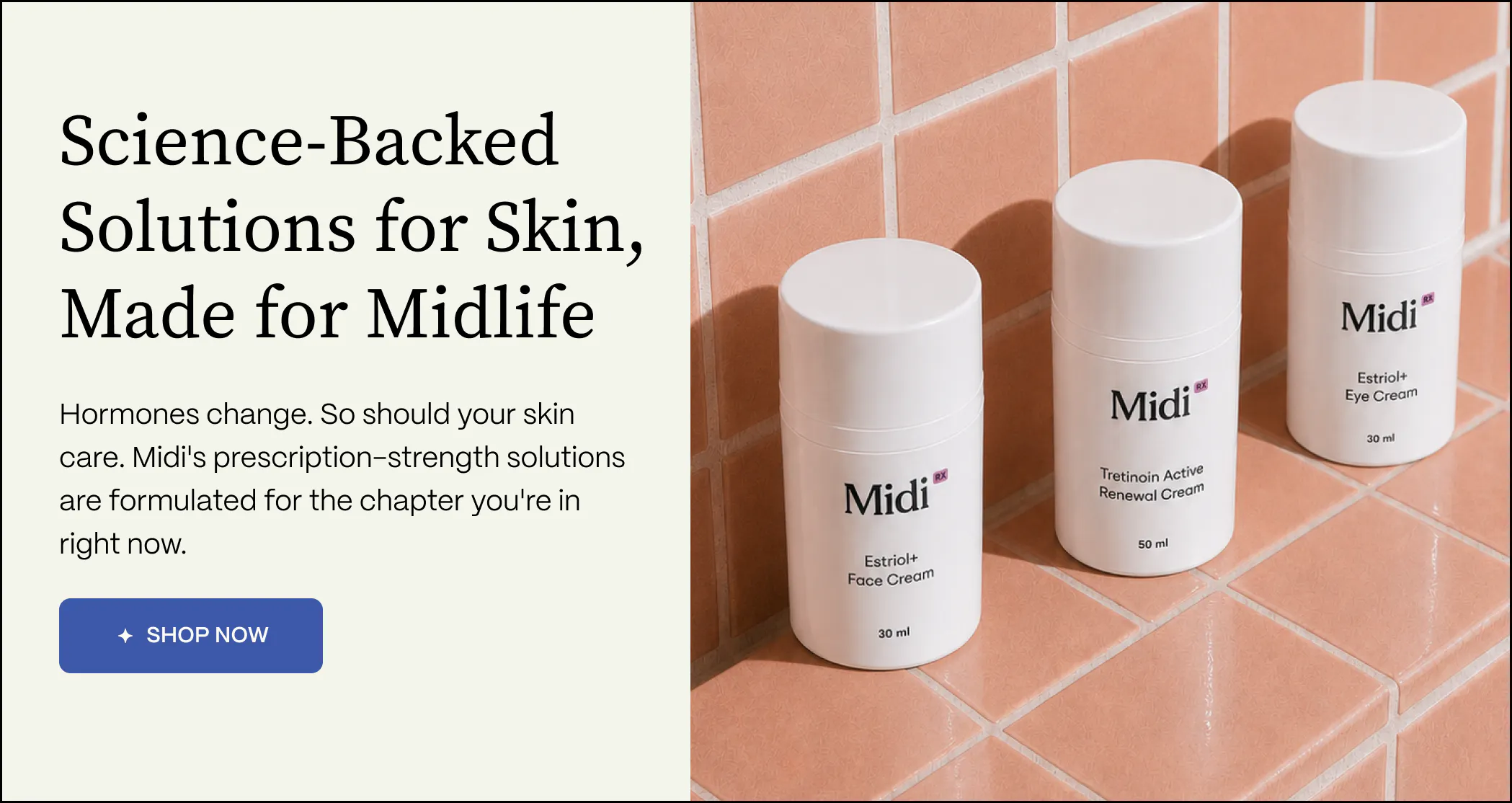
Your skin itself is different in your 40s than it was in your teens. As we age, our skin gets drier, thinner, and less elastic. That means the drying acne products marketed to teens might be too harsh during perimenopause, leading to sensitive, irritated, or itchy skin. Instead, treatment should be gentler and carefully tailored to this life stage. (Check out Midi’s prescription-strength care solutions for the skin you're in right now.)
Could It Be Something Else? Conditions That Mimic Acne
Pimples that show up during midlife can also be caused by genetic, environmental, and dietary factors, not just your changing hormones.
Plus, conditions like rosacea, perioral dermatitis (a rash of small red bumps usually around your mouth and nose), and folliculitis (inflammation around your hair follicles) can all look similar to perimenopause pimples.
It’s worth talking with a healthcare professional (like a Midi clinician) about your pimples, especially if they’re persistent or painful, or if they come on suddenly. Lookalike conditions like rosacea or folliculitis respond better to treatments designed specifically for them, rather than acne treatments—but you won’t know what you need without a professional’s evaluation.
You should also talk with a clinician about acne if it comes with any other signs of high levels of androgens, such as rapid changes in body or facial hair.

How to Treat Perimenopause Pimples at Home
When it comes to managing perimenopause pimples, several OTC acne treatments may help.
Introduce these one at a time, and give them several weeks to kick in before you try something else:
- Salicylic acid cleanses and exfoliates.
- Benzoyl peroxide kills acne-causing bacteria on the skin.
- Azelaic acid fights inflammation and helps with pigmentation.
- Adapalene (a topical retinoid) helps prevent acne and encourages skin cell turnover.
Use sunscreen daily, as many acne treatments can make your skin more sensitive to the sun.
Prescription and In-Office Treatments That Work
Sometimes OTC options aren’t enough to fight hormonal acne in perimenopause. In these cases, a clinician with experience managing the hormonal changes of midlife can guide you toward the best prescription treatment for you.
These might include:
- Tretinoin: This increases skin cell turnover, unclogs pores, and reduces inflammation. Consider Midi’s Tretinoin Active Renewal Cream, which combines tretinoin with tranexamic acid, niacinamide, and panthenol to improve skin clarity, firmness, brightness, and texture.
- Topical spironolactone: It reduces hormonally driven sebum production.
- Oral spironolactone: This slows your production of androgens to fight acne, hair growth, and certain symptoms of polyendocrine metabolic ovarian syndrome (PMOS, formerly known as polycystic ovary syndrome, or PCOS).
- Topical antibiotics: Used alongside other treatments, these can kill acne-causing bacteria on the skin. They’re helpful for acute flares but not long-term pimple prevention.
A healthcare professional might also suggest in-office dermatology treatments that may help reduce inflammation or prevent scarring, including comedones extraction, chemical peels, and laser or light therapy.
Can Hormone Therapy Help Clear Perimenopause Acne?
It’s a question on many perimenopausal women’s minds: Could hormone therapy help perimenopause chin acne?
While hormone replacement therapy (HRT, now commonly referred to as menopause hormone therapy, or MHT) isn’t prescribed for acne alone, it’s worth discussing your symptoms and medical history with a menopause-trained clinician to determine whether it might be right for you.
If it is, you might see some skin benefits. Birth control pills help reduce acne by slowing down sebum production, so the theory is that HRT might do the same by adjusting the hormonal imbalance behind perimenopause pimples. That said, we need more research to say for sure.
HRT can have other positive effects on your skin, too. For example, it improves the health of your skin barrier by thickening your skin, improving moisture retention, and increasing your skin’s elasticity.
If you have other symptoms of perimenopause, HRT might be worth pursuing. A Midi clinician can help you weigh the pros and cons.

Skin Care and Lifestyle Habits That Support Clearer Skin
Certain tweaks to your everyday habits might help you manage perimenopause acne, too:
- Wash your face once or twice per day to avoid over-drying.
- Use a gentle, non-stripping cleanser and a moisturizer that won’t clog your pores.
- Avoid harsh scrubs that might be too severe on sensitive midlife skin.
- Try to limit how frequently you touch your face, and don’t pick at or pop pimples.
- Always wash any makeup off before heading to bed.
While your diet isn’t likely to be solely responsible for perimenopause chin acne, what you eat can affect your skin.
Prioritize fruits, veggies, and lean protein while limiting fried foods and added sugars. Some people also find dairy products trigger their acne; if that’s you, try cutting back and see what happens. Make sure you’re drinking plenty of water, too. You’ll know you’re drinking enough if your urine is a pale yellow color.
While it’s often easier said than done, aim to keep your sleep schedule consistent and your stress at a minimum. Unfortunately, lack of sleep and excessive stress can both make hormonal acne worse. And that’s particularly unfair, considering perimenopause can trigger anxiety and make it harder to sleep.
Like with topical treatments, these lifestyle tweaks also take time to help. Staying consistent with these healthy habits over weeks and months is key.
When Should You See a Clinician About Perimenopause Breakouts?
Any time any perimenopause symptoms disrupt your daily life or bother you, you should consider talking with a clinician about them. In the case of perimenopause pimples, definitely speak up if your breakouts are:
- severe
- painful
- scarring
- not responding to OTC treatments
- changing suddenly
At a menopause-informed visit, your clinician will ask about your perimenopause pimples and any other symptoms, talk with you about your skin care habits, and go over treatment options.
And remember: While adult acne of any kind can be a pain (weren’t you supposed to be done with this after puberty?!), there are effective treatments that can be personalized to your needs. A clinician can help guide you toward the best options for your skin.
Book a virtual visit with Midi clinicians who specialize in women’s health to evaluate your skin and assess the best treatment for you.
Key Takeaways
- Perimenopause pimples are relatively common and normal, even if you didn’t have acne as a teen.
- Hormonal acne in midlife is generally caused by the fluctuations in estrogen and progesterone as menopause approaches.
- Perimenopause pimples often appear as swollen bumps clustered around the chin or jaw.
- Over-the-counter acne treatments, prescription medications, and lifestyle habits can all help manage perimenopausal acne. Talk with a clinician about your symptoms and the best course of treatment for you.
Frequently Asked Questions (FAQs)
Is acne a sign of perimenopause?
Yes, it can be. As estrogen levels fluctuate and your body becomes more sensitive to androgens, your skin may produce more oil, triggering pimples or acne in perimenopause.
Why am I suddenly getting cystic acne in my late 40s?
It may be perimenopause pimples. Hormonal acne in midlife can look like cysts or nodules, often around the chin and jaw. It’s caused by the rapid decline in estrogen and progesterone around menopause.
How long do perimenopause pimples usually last?
It can be different for everyone. Some people experience hormonal acne for days or weeks, others for months, especially if left untreated. If your perimenopause pimples don’t respond to OTC treatment after a few weeks, talk with a clinician.
Does acne go away on its own after menopause?
There’s very little research on what happens with hormonal acne after menopause. But generally speaking, younger women experience acne more frequently than women ages 50 and older do.
Is jawline and chin acne always caused by hormones?
Not always. Hormonal shifts are the most common causes of jawline and chin acne, but stress, lack of sleep, and diet may also be involved.
Can stress or diet make perimenopause breakouts worse?
Yes. Stress, diet, and lack of sleep are linked with worse perimenopause pimples.
If you’re in perimenopause or menopause and want guidance from clinicians who specialize in women’s midlife health, book a virtual visit with Midi today.
Hormonal change is at the root of dozens of symptoms women experience in the years before and after their period stops.
Our trained menopause specialists can help you connect the dots to guide you towards safe, effective solutions.
Whether you need personalized guidance or a prescription routine to tackle symptoms—including brain fog, hot flashes, sleep trouble, mood swings, and weight gain—we’ve got you covered. Learn more here.
Midi’s mission is to revolutionize healthcare for women at midlife, wherever they live and whatever their health story. We believe that starts with education, to help all of us understand our always-changing bodies and health needs. Our core values guide everything we do, including standards that ensure the quality and trustworthiness of our content and editorial processes. We’re committed to providing information that is up-to-date, accurate, and relies on evidence-based research and peer-reviewed journals. For more details on our editorial process, see here.