
When every little annoyance suddenly feels like a big one, you might start wondering, “Why am I so irritable?” The reason could be as simple as too much stress or not enough sleep. But irritability could also be a matter of hormones gone wonky, especially during perimenopause.
Getting to the root cause can help you figure out what might help. A Midi Health clinician can look at your hormones, sleep, mood, and other symptoms together to create a personalized treatment plan and help you find your calm again.
I’m going to be honest: I’ve been snapping at my husband quite a lot lately. Then complaining about our noisy neighbors, feeling grumpy at my email inbox, getting peeved at my dog for taking too long to pee—and later feeling guilty for all of it.
Why am I so irritable? There’s usually a reason when you suddenly find your fuse has gotten a whole lot shorter. Often it’s stress, poor sleep, blood sugar swings, hormone changes, or some combination of the above.
But irritability can also point to an underlying mood or medical condition. For women in their late 30s and 40s, irritability can be a sign of perimenopause—but that connection often flies under the radar, so you may not realize that’s what’s going on.
If you’re wondering why you’re suddenly feeling irritable and intolerant of others, we’ve got your back. We’ll break down the everyday, hormonal, medical, and mental health reasons you might be feeling this way, plus what you can do to get your chill back and when to see a clinician.
What Is Irritability, and How Is It Different From Anger?
Irritability generally means having a lower threshold for frustration and being more likely to respond with anger. Put simply: You’re feeling on edge, easily annoyed, impatient—and quick to snap because of it.
Irritability often overlaps with anger, and both can be signs of underlying mood changes or concerns like anxiety or part of premenstrual syndrome (PMS). But irritability is an ongoing mood state, while anger is an emotion. Anger may show up as a more immediate reaction, while irritability can feel like a slow burn of frustration. Think of it this way: An irritable person might repeatedly sigh and complain, while their angry friend might yell out a profanity.
Some common signs you’re irritable include:
- annoyed or grumpy feelings
- extra sensitivity to sounds or smells
- a constant undercurrent of tension
- getting easily overwhelmed
- outsized reactions to small inconveniences
- impatience
- difficulty relaxing
Of course, it’s completely normal to get irritable from time to time. But if it’s becoming your vibe all day, every day, or affecting your daily life, it’s worth getting to the bottom of what’s going on.
What Is Irritability, and How Is It Different From Anger?
Irritability generally means having a lower threshold for frustration and being more likely to respond with anger. Put simply: You’re feeling on edge, easily annoyed, impatient—and quick to snap because of it.
Irritability often overlaps with anger, and both can be signs of underlying mood changes or concerns like anxiety or part of premenstrual syndrome (PMS). But irritability is an ongoing mood state, while anger is an emotion. Anger may show up as a more immediate reaction, while irritability can feel like a slow burn of frustration. Think of it this way: An irritable person might repeatedly sigh and complain, while their angry friend might yell out a profanity.
Some common signs you’re irritable include:
- annoyed or grumpy feelings
- extra sensitivity to sounds or smells
- a constant undercurrent of tension
- getting easily overwhelmed
- outsized reactions to small inconveniences
- impatience
- difficulty relaxing
Of course, it’s completely normal to get irritable from time to time. But if it’s becoming your vibe all day, every day, or affecting your daily life, it’s worth getting to the bottom of what’s going on.
Why Am I So Irritable? The Most Common Everyday Causes
So you might be wondering: “Why am I always angry and irritated for no reason?” Sometimes it’s easy to connect the dots between what’s going on in your life and your grouchy reactions. Common everyday culprits include:
- Bad sleep: Even one night of tossing and turning can make it harder to regulate your emotions the next day; over time, poor sleep can also disrupt your body’s stress response, leaving you more vulnerable to irritability.
- Stress overload: A heavy workload, caring for kids or aging parents, and having little time to rest or recharge can affect stress hormones like cortisol and keep your body’s stress response on high alert, making it harder to stay calm when one more thing goes wrong.
- Not eating enough or regularly: What you eat can affect how you feel. If you’re cutting back too far on calories, skipping meals, or fueling with little more than snacks like chips or cookies, blood sugar swings and hunger can go hand in hand, leaving you feeling tired, edgy, or “hangry.”
- Too much or too little physical activity: Pushing yourself too hard without enough recovery—or barely moving at all—can contribute to fatigue and a grouchier mood.
- Alcohol: Although you might reach for a glass of wine to unwind after a stressful day, alcohol can disrupt your sleep, including REM sleep, a stage important for emotional processing. That could leave you less rested and less able to cope the next day. And as alcohol wears off, some people may experience restlessness, anxiety, or irritability.
- Caffeine: Coffee may boost your energy for a little while, but too much can make you feel jittery or on edge. And if you regularly consume a lot of caffeine, cutting back or going without it can also trigger irritability.
Can Hormones Make You Irritable? Estrogen, Progesterone, and Mood
Yep, you can definitely blame some of your crankiness on hormones.
Estrogen does a lot of work in the brain, including influencing neurotransmitters that help regulate mood and emotions. When estrogen levels shift, your mood may change along with them. Meanwhile, progesterone can have calming and downright sedating effects. One reason is that progesterone can enhance the effects of GABA, a brain chemical that helps quiet the nervous system.
Hormones help explain why some people reliably get more irritable during the luteal phase, a week or two before their period. Estrogen and progesterone levels change throughout this phase, and some people are especially sensitive to those ups and downs. PMS can include irritability and other mood changes, while premenstrual dysphoric disorder (PMDD) causes more severe mood symptoms that can get in the way of daily life. Similar hormone shifts after having a baby or stopping hormonal birth control can have the same effect.
Sure, it’s easy to wave away irritability during these times as “just stress.” But hormonal irritability is real, and tracking when your symptoms crop up in relation to your menstrual cycle can help you and your clinician connect the dots.

Why Perimenopause and Menopause Can Make Irritability Worse
When perimenopause begins—typically in your 40s, though it can start earlier—you might notice a pretty dramatic uptick in mood changes, including the kind that have you frantically Googling, “Why am I so irritable all the time?” You’re not alone: According to the American College of Obstetricians & Gynecologists, about 4 in 10 perimenopausal women report mood changes that feel like PMS.
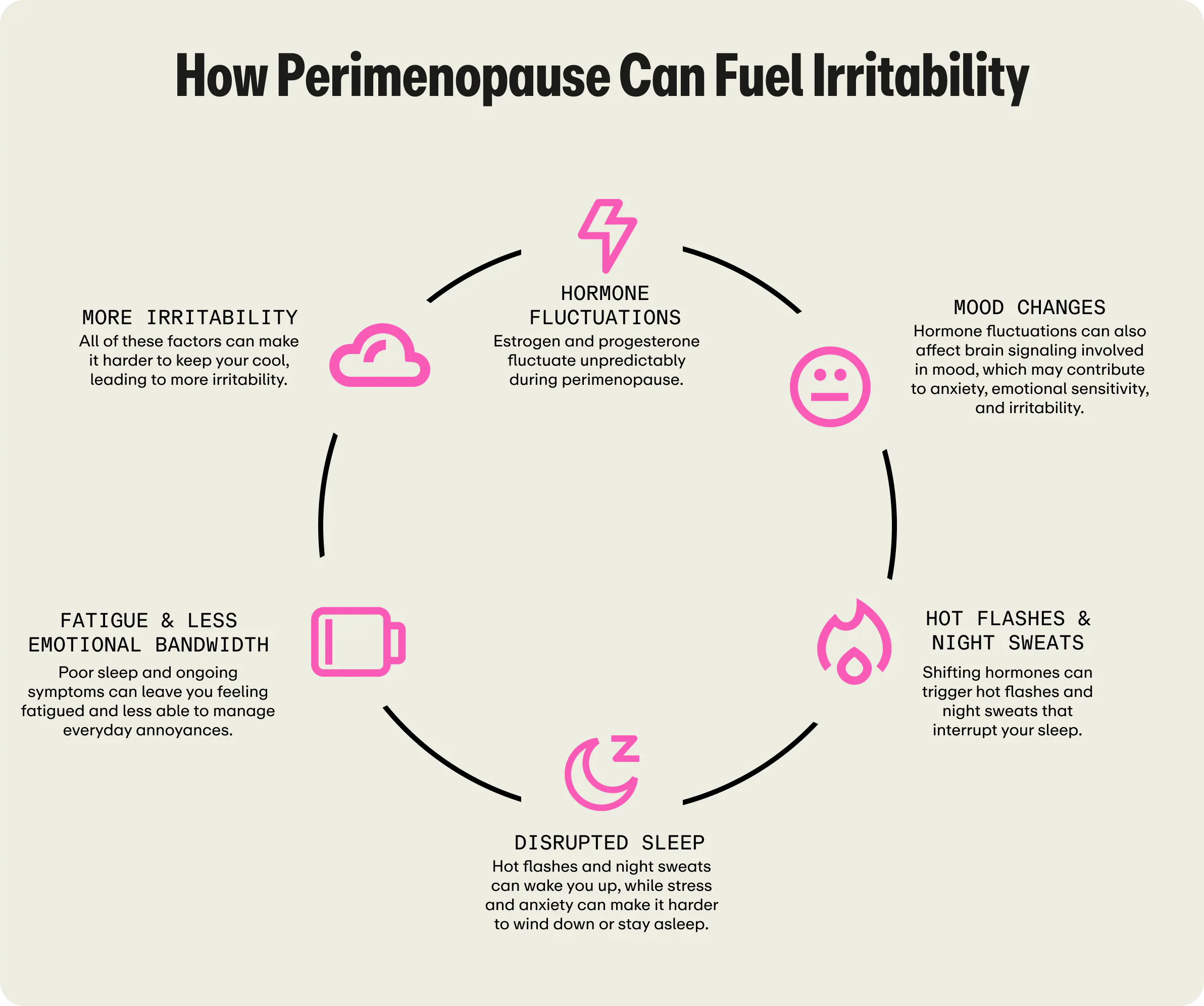
This largely ties back to hormones. During perimenopause, ovulation becomes less predictable, and estrogen and progesterone can fluctuate considerably from one cycle to the next. Those hormonal highs and lows can contribute to perimenopause mood shifts and irritability.
Those hormone changes can also set off symptoms that make irritability even worse.
“As estrogen, dopamine, and serotonin levels decrease, that can trigger other symptoms, like hot flashes and night sweats, that can contribute to changes in mood and sense of well-being,” Midi Chief Medical Officer Dr. Kathleen Jordan, MD, previously told Midi.
Read: If hot flashes and night sweats keep waking you up, you may be exhausted and even more irritable the next day. Anxiety and sleep problems can pile on, creating a cycle that makes it harder to keep your cool.
Perimenopause doesn’t necessarily cause anxiety or depression, but it can worsen either condition or bring symptoms to the surface that weren’t noticeable before. Irritability can come with both, adding another reason this can be a prime time for short-fused snapping and griping.
How do you know if it’s menopause irritability you’re dealing with? You’ll likely notice some other signs of perimenopause, like irregular periods, hot flashes, trouble sleeping, new or worsening anxiety, and brain fog. You may also notice that your irritability comes and goes or changes from week to week, rather than feeling exactly the same all the time. Try tracking your symptoms over the course of a couple of cycles to see whether you notice patterns.
Could a Medical Condition Be Causing Your Irritability?
In some instances, irritability can signal that something else is going on. Certain health conditions can affect your mood directly or leave you tired, anxious, or sleep-deprived, all of which can shorten your fuse:
- Thyroid disorders: It’s common for midlife women to have an overactive or underactive thyroid, and either one can affect mood. Thyroid problems may cause anxiety, irritability, fatigue, or low mood. Because these symptoms overlap with perimenopause, the two can be easy to confuse.
- Sleep apnea: In women, obstructive sleep apnea (OSA) doesn’t always come with that signature loud snore, so it can fly under the radar. Instead, poor sleep may show up during the day as fatigue, brain fog, and irritability.
- Blood sugar problems: Changes in blood sugar can affect how you feel. Low blood sugar, in particular, can leave you shaky, anxious, and irritable.
- Iron deficiency: Low iron often shows up as fatigue and trouble concentrating. It may also contribute to restless legs syndrome, disrupting sleep and potentially making you cranky.
- Certain medications: Some medications, including corticosteroids and stimulants, can affect your mood. Irritability can also happen when you abruptly stop or cut back on certain medications.
If your irritability is persistent, new, or comes with other unexplained symptoms, it’s worth talking with your clinician. Depending on what else is going on, they may recommend blood tests to check your thyroid, blood sugar, or iron levels.
When Irritability Is a Sign of Depression, Anxiety, or ADHD
Irritability that just won’t let up could point to a mental health issue or prolonged emotional stress. And it doesn’t always come with the symptoms you might expect. A few different things could be going on:
- Anxiety: Anxiety doesn’t always look like obvious worry or panic. It can also leave you feeling constantly on edge, tense, overwhelmed, or quick to snap, especially when you’re already stretched thin.
- Depression: Depression doesn’t always look like sadness, either. Irritability and anger can come along with low mood, loss of interest in things you usually enjoy, fatigue, and changes in sleep or appetite.
- ADHD: ADHD can make it harder to regulate emotions and cope with frustration, which may show up as impatience, overwhelm, or irritability. And for some women, hormone changes during the menopause transition may make existing ADHD symptoms more noticeable.
- Trauma, grief, or burnout: Going through a traumatic experience, a major loss, or prolonged stress can leave your nervous system overloaded, making you more easily overwhelmed or irritable. Burnout can also come with exhaustion, trouble concentrating, and feeling emotionally drained.
The occasional bad mood doesn’t necessarily point to a mental health condition. But if irritability sticks around for a couple of weeks, feels hard to manage, or comes with symptoms like persistent low mood, loss of interest, anxiety, or major changes in sleep or appetite, talk with a clinician about what’s going on. They can help determine whether a mental health condition may be contributing and what treatment, if any, could help.
What Success Looks and Feels Like
How to Stop Feeling So Irritable: What Actually Helps
You can make some simple (though not always easy) changes to your day-to-day routine to minimize irritability. You don’t have to tackle them all at once. Start with one or two changes that feel manageable, so trying to feel better doesn’t become one more thing making you irritable or stressed.
- Protect your sleep: Give yourself the best shot at a good night’s rest by keeping a consistent sleep schedule and making time to wind down before bed. Cutting caffeine after noon and avoiding alcohol 3 to 4 hours before bedtime may also help, as can turning off screens during the final 30 to 60 minutes before bed.
- Get moving regularly: Almost any form of exercise can help relieve stress. But getting your heart rate up with moderate-intensity cardio can boost your mood. You can work up to about 150 minutes per week.
- Fuel your body and mind: Going too long without food can leave you hungry, tired, and irritable. Aim for regular meals with a mix of protein, healthy fats, fiber-rich carbs, and other whole foods to keep your energy steadier throughout the day.
- Build your stress-relief toolkit: Find a few go-to ways to manage stress, whether you need to decompress after a long day or cool down in the moment. Slow, deep breathing; taking a short walk; or stepping outside for some fresh air can all help.
- Do less: It’s easy for responsibilities to pile up in midlife. Give yourself permission to set boundaries, ask for help, and make space for downtime.
Treatment Options When Lifestyle Changes Aren’t Enough
Making a few changes at home doesn’t always fix the problem. Treatment depends on what’s driving your irritability, which is why it helps to look at your hormones, sleep, mood, and overall health together.
Depending on what’s going on, a clinician might recommend:
- Hormone therapy: If hot flashes, night sweats, or sleep problems are adding to your irritability in perimenopause, hormone therapy may help by getting those symptoms under control. Estrogen is usually the go-to treatment and may help with mood, too. If you have a uterus, progesterone is added to protect the uterine lining, and oral micronized progesterone may have the added benefit of helping you sleep.
- Prescription medications: Moderate to severe symptoms that point to depression or anxiety may call for antidepressants like SSRIs or SNRIs. Some options also help reduce hot flashes and night sweats, which may improve sleep and mood, too. Your clinician can help you choose an option based on the symptoms that are bothering you most.
- Treating underlying issues: If an underlying issue is contributing to irritability, treating it may help you feel better in more ways than one. That might mean thyroid medication, iron supplementation, or a plan to better manage blood sugar.
- Cognitive behavioral therapy (CBT): This is a structured form of talk therapy that can help you recognize and change patterns in how you think, feel, and respond. CBT has been shown to help with anger, stress, depression, and anxiety.
- Supplements: Some supplements, including ashwagandha and L-theanine, may help with stress, anxiety, or sleep. Just be sure to run them by your clinician first, especially if you take prescription medications. If supplements are a good fit for you, Midi’s Daily Cortisol Support is an option designed to help manage everyday stress.

When Should You See a Clinician About Irritability?
You can do a lot to manage irritability on your own, but some situations call for extra support. Here are a few signs that it’s worth talking with a clinician:
- Symptoms last more than a few weeks.
- Irritability is damaging your relationships or work.
- You’re feeling hopeless or panicked.
If you’re having thoughts of self-harm, get help right away. You can call or text 988 for free, confidential support.
For women in their late 30s or 40s, irritability that comes with changes to your period, hot flashes, night sweats, sleep problems, or new anxiety could signal perimenopause.
A women’s health specialist (like a Midi clinician) can consider your mood, sleep, and hormones together to get the full picture. They will ask about your symptoms (and how they line up with your cycle) and will review your sleep and stress levels. They may also order labs to check things like your thyroid, blood sugar, or iron levels. Then, they can build a personalized plan based on what’s driving your irritability and what feels right for you.
Remember: Irritability isn’t a personality problem. It’s a common experience that can be brought on by a whole bunch of things. Figuring out the answer to “Why am I so irritable?” is the first step toward finding relief.

Key Takeaways
- Poor sleep and nutrition, stress, exercise habits (or lack thereof), and substances like alcohol and caffeine can all make you more irritable.
- Perimenopause is prime time for irritability, thanks to shifting hormones and symptoms like hot flashes and sleep problems that can make it even harder to keep your cool.
- Irritability can also be a symptom of an underlying medical or mental health concern, including thyroid problems, anxiety, or depression.
- Lifestyle changes like getting consistent sleep, eating regularly, staying active, and finding ways to manage stress can help dial down irritability.
- If lifestyle changes aren’t enough, a clinician, like the ones at Midi, can help figure out what’s driving your irritability. They may recommend hormone therapy, CBT, or treatment for an underlying health condition.
Frequently Asked Questions (FAQs)
What lies at the root of irritability?
A number of factors can cause irritability: lifestyle issues like too little sleep or too much stress, hormone changes from PMS or perimenopause, mental health conditions like depression or anxiety, and medical causes like low iron or thyroid dysfunction.
Why am I suddenly irritated all the time?
If your mood has abruptly taken a downturn, take stock of recent changes to your sleep, stress, diet, exercise, or alcohol and caffeine intake. Hormone changes during perimenopause or after giving birth could also play a role. If it persists, a clinician can help rule out causes like thyroid problems or low iron.
What does ADHD irritability look like?
Research shows that 30% to 70% of adults with ADHD experience emotional dysregulation, which can include irritability. It may show up as a short temper, frustration, or strong emotional reactions that feel hard to control.
How to stop being extremely irritable?
Sometimes lifestyle changes alone—getting more sleep and exercise; managing stress; and eating regular, balanced meals—are enough to ease irritability. Cognitive behavioral therapy can also help change thought patterns and reactions that may contribute to irritability. Other times, hormone therapy or prescription medication may be needed, depending on the underlying cause.
Is there medication for irritability?
There isn’t one medication specifically for irritability. If it’s related to depression or anxiety, a clinician may prescribe an antidepressant like an SSRI or SNRI. The right medication depends on what’s driving your irritability and what other symptoms you’re experiencing.
If you’re in perimenopause or menopause and want guidance from clinicians who specialize in women’s midlife health, book a virtual visit with Midi today.
Hormonal change is at the root of dozens of symptoms women experience in the years before and after their period stops.
Our trained menopause specialists can help you connect the dots to guide you towards safe, effective solutions.
Whether you need personalized guidance or a prescription routine to tackle symptoms—including vaginal dryness and irritation, brain fog, hot flashes, sleep trouble, mood swings, and weight gain—we’ve got you covered.
Midi’s mission is to revolutionize healthcare for women at midlife, wherever they live and whatever their health story. We believe that starts with education, to help all of us understand our always-changing bodies and health needs. Our core values guide everything we do, including standards that ensure the quality and trustworthiness of our content and editorial processes. We’re committed to providing information that is up-to-date, accurate, and relies on evidence-based research and peer-reviewed journals. For more details on our editorial process, see here.