Midi Team


A lot gets thrown at you in midlife: menopause symptoms, mammograms, and a whole lot of preventive care to-dos. That’s why Midi Health and Solis Mammography partnered up to bring you a free webinar series designed to help you better understand breast health, preventive care, and menopause, from what to keep on your radar to how to find expert support along the way. Check out the key highlights, Q&As, and top takeaways from each session below, and watch the webinars on demand to learn more.
Knowledge is power—and that’s especially true when it comes to your health in midlife. But if staying knowledgeable on all things preventive health feels like a tall order, we don’t blame you. The questions can add up quickly, especially during this chapter: What does safe, effective care for menopause look like? How often do I really need to get a mammogram? How do hormone therapy and family history impact my breast cancer risk? Can I take hormone therapy if I have increased risk for breast cancer?
It’s a lot, but you definitely don’t have to figure it out on your own. That’s why Midi’s Chief Clinical Officer, Mindy Goldman, MD, and Solis Mammography’s Chief Medical Officer, Emily Sedgwick, MD, teamed up to break down everything you need to know about mammograms, menopause, and breast cancer risks in a three-part webinar series.
Keep reading for what you missed in each webinar and the top takeaways to know—and book a virtual visit with a Midi clinician or schedule an appointment with Solis Mammography for your mammogram.
Recap: Mammograms Made Easy
Key Highlights
- If you are of average risk, start annual mammograms at age 40: Dr. Goldman, Dr. Sedgwick, and the American College of Radiology recommend this for average-risk women. Those with a family history or other risk factors may start earlier and may need supplemental imaging tests like breast MRI.
- Cost shouldn’t be a barrier: For women 40 and older, your 3D mammogram is a covered preventive health benefit with a $0 out-of-pocket cost under most plans. And, Solis Mammography is in-network with most major insurance companies.
- Come prepared for your screening: Wear a two-piece outfit and skip deodorant, lotion, and powder (they can mimic specks on the image). Bring prior images if it’s your first visit to a facility, and tell your technologist about any concerns, implants, or mobility needs. If you’re concerned about discomfort from the compression, schedule your screening the week after your period (when breasts are generally less tender), consider ibuprofen or acetaminophen beforehand, and ask for less compression or a warm blanket.
- Callbacks are not uncommon and are rarely cancer: About 7 to 12% of women are called back after a screening mammogram. A callback does not mean that you have breast cancer—it simply means that the radiologist wants to take a closer look at something that was seen on the mammogram. Most people who come in for a callback will receive the results at the time of their visit.
Top Audience Questions and Expert Answers
Why are so many women nervous about mammograms?
Some women feel nervous about the discomfort, the cost, feeling embarrassed, being called back for additional pictures, or the fear of bad news. “Uncertainty itself drives much of the anxiety, and that's why it's important to empower yourself with information so you understand the risks and benefits, and actually what goes into having a screening mammogram,” Dr. Sedgwick said.
How often should I get a mammogram and when can I stop?
Women with an average risk should start getting mammograms at age 40 (but your healthcare professional may recommend you start earlier based on individual risk factors). The Society of Breast Imaging and the American College of Radiology support continuing mammograms as long as you’re healthy with a 5+ year life expectancy.
Do 3D mammograms work well with dense breasts, and should I get an ultrasound?
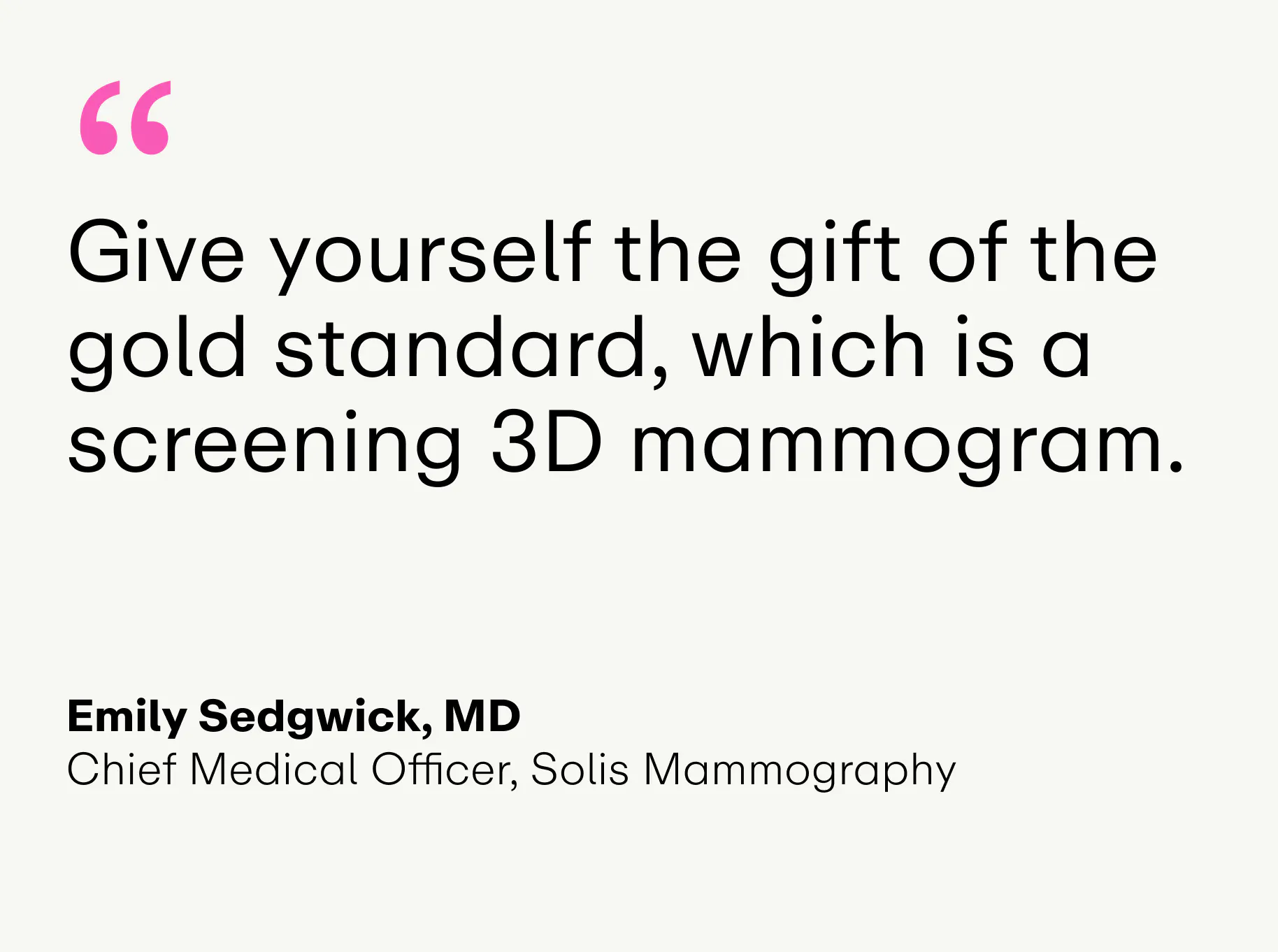
A 3D mammogram is still the gold standard for early breast cancer detection, particularly in women with dense breast tissue. Ultrasound or MRI are supplemental screening tests and are not a replacement for a mammogram. They are used in addition to a mammogram, when additional imaging insight is required. The earliest sign of breast cancer can be tiny calcifications seen on a 3D mammogram, which are not captured on ultrasound. Your doctor will guide you if you require supplemental screening in addition to an annual mammogram.
Should I worry about cysts or implants during compression?
No. Dr. Sedgwick said she’s never seen a cyst or implant rupture from a mammogram, and Dr. Goldman added that cysts are benign by definition.
Suggested Reading
- 25 Health Tests for Women Who Want to Live Longer, Healthier Lives
- Breast Tenderness During Menopause: Causes, Symptoms, and Relief
- 20 Reddit Questions About Breast Cancer, Menopause, and HRT, Answered
Recap: Menopause Myths
Key Highlights
- Menopause is the point in time when you’ve gone 12 months without a period, with the average U.S. woman hitting it at 51. Perimenopause is the lead-up, typically starting in your 40s and lasting 4 to 6 years on average, but it can run as long as 10 to even 14 years and sometimes begins in your 30s.
- Menopause symptoms go far beyond hot flashes: There are estrogen receptors throughout the body, and estrogen supports nearly every organ—so when estrogen levels fluctuate, you may notice a whole host of symptoms. Those can include sleep problems, brain fog, joint pain, palpitations, hair and skin changes, vaginal dryness, low libido, urinary urgency, painful sex, and recurrent UTIs. Dr. Goldman said about 85% of women have at least one menopause symptom and most women have three or more.
- Hormonal decline also raises long-term disease risk: When estrogen levels decline, the risks of heart disease go up. There’s also a higher incidence of bone loss, diabetes, and metabolic syndrome, among other health concerns.
- What’s not normal: Heavy or irregular bleeding in perimenopause (such as bleeding every few days or soaking through a pad or tampon every hour) and any bleeding after menopause needs evaluation from a healthcare professional. This is important, as Dr. Goldman pointed out that endometrial cancer rates are rising in the U.S., and mortality rates are nearly double for Black women compared to white women.
- Weight gain and bone loss are health issues—they’re not just a “normal part of aging”: Fat shifts to the abdomen, which is associated with insulin resistance and metabolic changes that increase cardiovascular risk. Meanwhile, the major rate of bone loss, which is about 2 to 3% per year, happens around menopause. Waiting until 65 for a bone density test may be too late to start thinking about protecting your bones if you have risk factors such as smoking, living a sedentary life, and a family history of osteoporosis, among others.
- Many hormone therapy myths don’t hold up: Dr. Goldman cleared up several: You don’t have to be fully menopausal to start, and FDA-approved bioidentical estradiol and progesterone are available and covered by insurance. There’s also no set cutoff for stopping, like 5 years or age 60, so the decision should be reviewed regularly with your clinician.
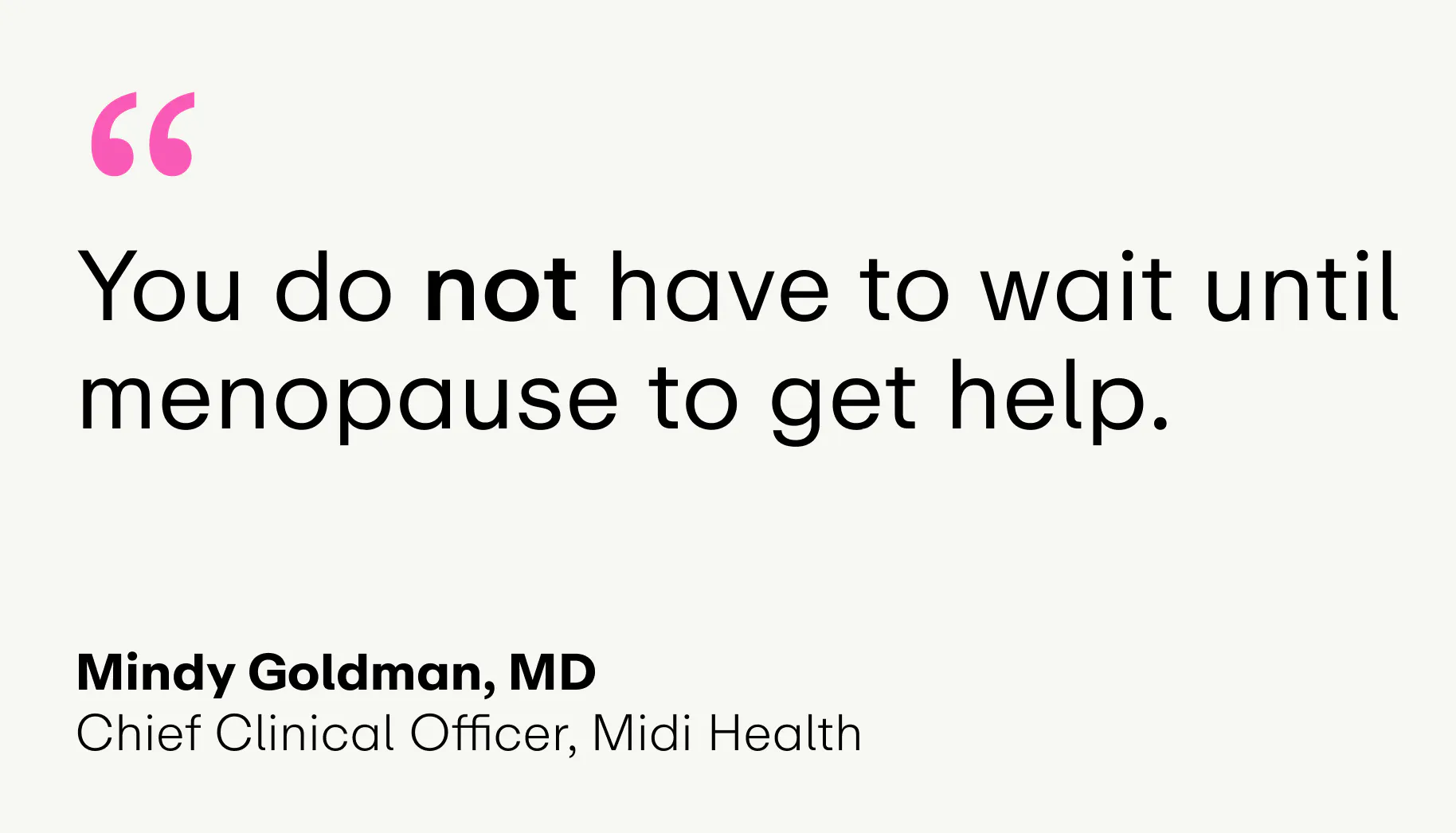
- Your OB/GYN may not be trained in menopause: Currently, only about 30% of OB/GYN residencies include dedicated menopause training, and women often see six or more healthcare professionals during perimenopause as they search for answers to their symptoms. A clinician who has specialized training in perimenopause and menopause can help you find solutions.
Top Audience Questions and Expert Answers
I’ve had a hysterectomy or an endometrial ablation. How do I know if I’m in menopause?
In these situations, hormone testing may help confirm if you’re menopausal. Because hormone testing measures your levels at one moment in time, a premenopausal-range result doesn’t rule out perimenopause. And even if your hormone levels don’t show levels that are consistent with menopause, that doesn’t mean you can’t use menopause hormone therapy.
Do I still need Pap smears in menopause?
Yes. Current guidelines say that women can stop getting Pap smears at 65 if there have been no high-grade abnormalities in at least 20 years. But when women go through menopause (which happens, on average, at age 51), they’re still in that recommended screening range. Current screening recommendations advise getting a Pap every 3 years or HPV testing every 5 years if your prior results have been normal.
Can a mammogram detect perimenopause?
Not yet. Researchers are exploring whether or not changes in breast density could predict menopause, but right now, there’s no scientific evidence behind it.
Will hot flashes last forever?
Most women have symptoms soon after menopause, and then they tend to taper off by about year 3. But as many as 15% of people will have symptoms throughout their life.
Suggested Reading
Recap: Hormones, Family History, and Breast Cancer Risk
Key Highlights
- Know the numbers on breast cancer risk: About 1 in 8 women (roughly 13%) will develop breast cancer. The top two risk factors are being a woman and age. The median diagnosis age is 63, and about 1 in 10 cases occur before 45, with rising incidence in younger women.
- Early detection is one of your most powerful tools: Stage 1 cancers (about fingertip-sized) have a 5-year survival above 99%, per the American Cancer Society. Annual mammograms starting at age 40 remains the recommended screening standard for all women of average risk.
- Family history runs on both sides: Understanding all aspects of your family history on both your mother’s and father’s side of the family is key. Ask specifically about breast, ovarian, and other glandular cancers, such as colon, pancreatic or adrenal cancer.
- Breast density is a risk factor and a masking problem: Dense breast tissue can raise risk about as much as having a mother or sister with breast cancer, and it can hide tumors on a mammogram. Dense breast tissue is white and so are cancers. That’s why 3D mammography is so important—it can “see” breast tissue in slices and can find early stage cancers that may be hiding on a 2D, one-dimensional mammogram.
- Know how to lower your risk: About 150 minutes of exercise a week, minimal alcohol (even one drink a day is linked to roughly 10% higher risk), and a healthy weight all help, and they protect your heart too.
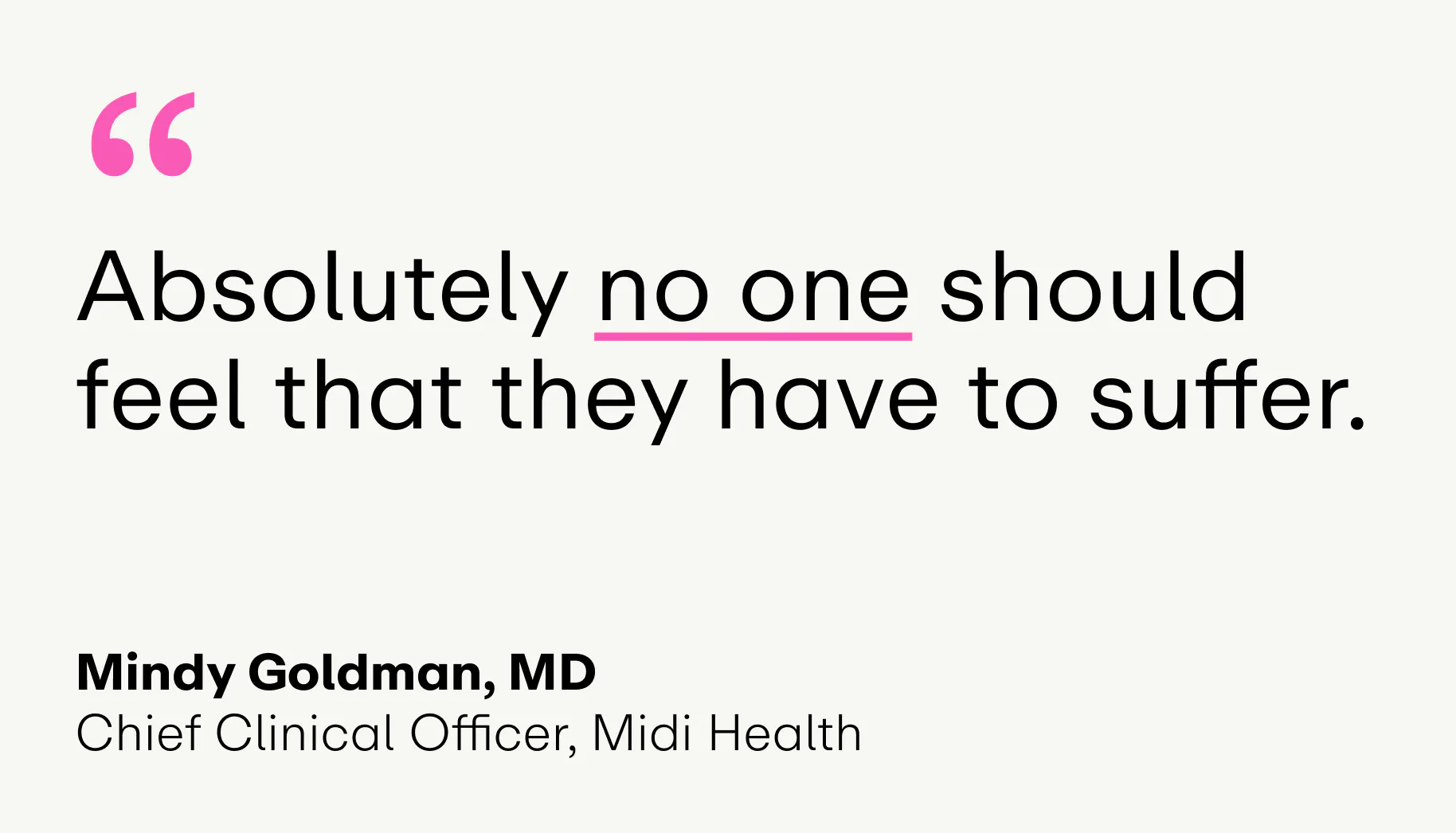
- No one has to suffer: Even when hormones aren’t an option, lifestyle changes, CBT, acupuncture, certain supplements, and FDA-approved or off-label non-hormonal medications can relieve symptoms.
- Risk is not cause: Decades ago, a large trial called the Women’s Health Initiative linked specific formulations of estrogen and synthetic progestin to higher breast cancer risk. Today, bioidentical formulations of progesterone are used most often and are thought to be more “breast neutral”, though there are no large randomized trials proving it 100%.
Top Audience Questions and Expert Answers
How do I advocate for a breast MRI or ultrasound if I have dense breasts?
Many states now require supplemental screenings to be covered at low or no cost for the patient. After your mammogram, you’ll get a breast density letter. If it says heterogeneously or extremely dense, discuss it with your healthcare professional along with family history, biopsy history, and other factors. They’ll help you determine your risk level and whether a breast MRI or a supplemental ultrasound would be appropriate.
How does tamoxifen lower breast cancer risk for high-risk women?
Tamoxifen belongs to a class of drugs called SERMs (selective estrogen receptor modulators). It works by competing with the hormone receptor in the breast. For people at high risk of breast cancer, tamoxifen blocks estrogen receptors so hormones can’t feed abnormal cells. The drug can lower risk by as much as 50%, which can bring a high-risk person’s risk back down to baseline.
If I have dense breasts and get a breast reduction, does my long-term risk change?
Dr. Sedgwick said she wasn’t aware of studies on the topic. Intuitively it makes sense, because you’re reducing the volume of breast tissue, but there’s currently no evidence she could cite. What she did stress: mammography is incredibly effective.
Suggested Reading
Key Takeaways
- Annual screening mammograms starting at age 40 are quick, low-radiation, and usually fully covered by insurance, and most of the common fears are far more manageable than people expect. Using a facility with breast-specialized radiologists and 3D mammography gives you the most accurate screening experience.
- Perimenopause usually starts in your 40s and affects nearly every system in the body, yet many symptoms get brushed aside. You don’t need a hormone test to be diagnosed, and a menopause-trained clinician is here to help you find the right care solutions.
- Knowing your personal breast cancer risk, from family history to breast density, shapes how and when you should be screened and which menopause treatments are right for you. Even after a breast cancer diagnosis or with high-risk factors, no one has to suffer through menopause symptoms. There are an array of treatments available.
What Success Looks & Feels Like
If you’re in perimenopause or menopause and want guidance from clinicians who specialize in women’s midlife health, book a virtual visit with Midi today.
Hormonal change is at the root of dozens of symptoms women experience in the years before and after their period stops.
Our trained menopause specialists can help you connect the dots to guide you towards safe, effective solutions.
Whether you need personalized guidance or a prescription routine to tackle symptoms—including brain fog, hot flashes, sleep trouble, mood swings, and weight gain—we’ve got you covered.
For educational purposes only; not medical advice.
Midi’s mission is to revolutionize healthcare for women at midlife, wherever they live and whatever their health story. We believe that starts with education, to help all of us understand our always-changing bodies and health needs. Our core values guide everything we do, including standards that ensure the quality and trustworthiness of our content and editorial processes. We’re committed to providing information that is up-to-date, accurate, and relies on evidence-based research and peer-reviewed journals. For more details on our editorial process, see here.