

Hot flashes crashing the party? Dry spells becoming a bit too literal? Perimenopause and menopause symptoms can come at you fast, but you don’t have to tough it out. When needed, prescription menopause treatments can help bring relief and help you feel more like you again. Below, we’ll explain the different menopause medication options available—including hormone therapy for menopause and non-hormonal menopause medication—and how Midi Health clinicians can help you find a plan that meets your needs.
Did you know that menopause medication goes way beyond estrogen patches? If you feel like a crazed raccoon has taken over your internal thermostat, you may well be wondering what menopause treatments are out there. The truth is, there are a range of options, so you don’t have to just grin, bear it, and hope the raccoon moves out.
Medications have come a long way since your mother’s menopause treatments, with important FDA labeling changes about hormonal medications and new non-hormonal options, adding up to an expanded conversation around care.
That means you’ve got options, and there’s never been a more promising time to explore them. Whether you’re dealing with hot flashes, night sweats, vaginal dryness, painful sex, mood changes, sleep issues, or concerns about bone health, you deserve to know which treatments are available, what the latest research says, and which treatments might make sense for you.
Consider this your complete guide to menopause medications. We’ll break things down symptom by symptom, point you toward our more in-depth guides when you want to dig deeper, and explain how a menopause-trained clinician (like one at Midi) can help you make sense of it all.
- TK
Which Menopause Medication Options Are Available?
So, you’ve been sleeping with your leg outside the covers and cursing at sheep or wandering into rooms and forgetting what you came in there for. Solutions for these and other concerns are out there—but menopause treatment isn’t one size fits all, and the right fit for you depends on your symptoms, your age, and where you are in the menopause transition.
Here’s a look at all the potential recruits on your menopause relief team:
- Systemic hormone therapy: Prescription estrogen, plus a progestogen when needed, travels through your bloodstream to tackle whole-body symptoms like hot flashes.
- Local hormone therapy: Vaginal estrogen delivers targeted relief for dryness, painful sex, and urinary symptoms.
- Neurokinin (NK) receptor agonists: Newer, FDA-approved treatments, including Veozah and Lynkuet, work on your brain’s temperature-control system to help cool down hot flashes and night sweats without using hormones.
- Repurposed non-hormonal prescriptions: Certain antidepressants, gabapentin, and oxybutynin can also help tame hot flashes. These are prescribed off-label, meaning they’re approved for another use but can help with menopause symptoms, too.
- Bone-protecting medications: Treatments such as bisphosphonates and denosumab help protect against osteoporosis and reduce fracture risk.
Ultimately, there’s no single best menopause medication, just the best match for you.

Hormone Therapy for Menopause: Estrogen and Progesterone
In midlife, symptoms like hot flashes and night sweats may strike far more often than you’d like—but you don’t have to just sweat it out. Systemic hormone therapy is a first-line, FDA-approved treatment for hot flashes and night sweats—and it’s the most effective option for easing those symptoms. Bonus: It can also help prevent bone loss.
Estrogen comes in several forms, including pills, patches, gels, sprays, and vaginal rings that deliver hormones throughout the body (aka systemic estrogen). If you have certain risk factors for blood clots or cardiovascular disease, then patches, gels, or sprays may be worth discussing with your clinician. These options initially bypass the liver and may carry a lower risk of blood clots.
If you have a uterus, progestogen most likely needs to join the party. When you take systemic estrogen, a progestogen (such as micronized progesterone) helps protect your uterine lining from overgrowth that could be caused by estrogen alone.
Combination products exist, too, if you prefer a two-in-one option. For instance, Duavee pairs estrogen with bazedoxifene to protect your uterine lining—no separate progesterone needed.
Want to compare your options, including forms and dosing? Check out our guide to the various forms of hormone therapy for menopause.
What Changed With the FDA’s 2025 Hormone Therapy Label Update?
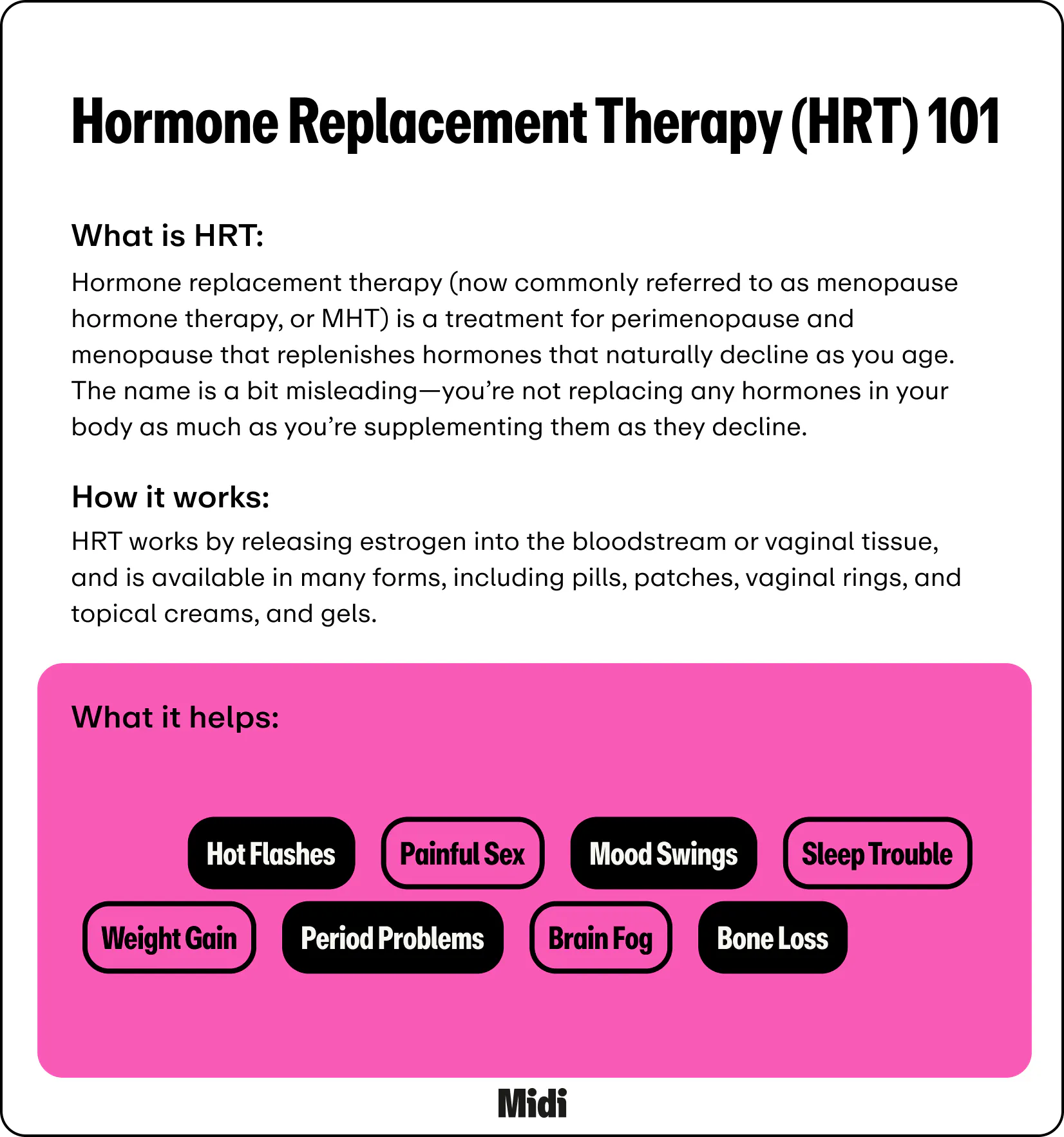
Heard mixed messages about hormone replacement therapy (HRT, now commonly referred to as menopause hormone therapy, or MHT)? Much of the concern traces back to the 2002 Women’s Health Initiative (WHI) study, which reported increased risks for breast cancer and heart disease. But decades of additional research have brought a more informed picture of who may benefit, what the risks really are, and how to make decisions based on individual needs.
In November 2025, the FDA announced plans to remove several boxed warnings from hormone therapy labels, including those related to cardiovascular disease, breast cancer, and probable dementia. Updated labels began rolling out in 2026, though changes vary by product. One important exception: The boxed warning for uterine cancer remains on systemic estrogen-only products.
Removing a boxed warning doesn’t mean hormone therapy is risk-free. But recent research suggests that the balance of benefits and risks is generally more favorable for healthy women who start HRT younger than age 60 or within 10 years of menopause than for women who start later.
Translation? You don’t have to wait until symptoms become unbearable to seek help—especially since you may benefit from starting hormone therapy during perimenopause. Your medical history, including any previous breast cancer, blood clots, stroke, or liver disease, can affect which treatments are safe for you, so the best step is a conversation with your clinician.
Is There New Menopause Medication for Hot Flashes?
If hormones aren't an option for you or you just prefer non-hormonal treatment, there are newer, highly effective non-hormonal medications worth knowing about. Veozah and Lynkuet are two medications that work on NK receptors in the brain's temperature-control system.
When estrogen dips, that system can get a little overenthusiastic, triggering hot flashes out of nowhere. These hot-flash medications help regulate the signals behind hot flashes to turn down the heat:
- Veozah (fezolinetant): This drug was FDA approved in 2023 for moderate to severe menopausal hot flashes. In clinical trials, it reduced hot flash frequency by 56% to 61% after 12 weeks, with benefits sustained through the year-long study period. (It carries a boxed warning for rare but serious liver injury, so liver-function tests are required before and during treatment.)
- Lynkuet (elinzanetant): This medication was FDA approved in 2025 for moderate to severe hot flashes associated with menopause. It targets two NK receptors (NK1 and NK3), and studies have also found improvements in menopause-related sleep disturbances. It’s also being reviewed as a treatment for hot flashes caused by breast cancer treatment.
Another promising note: An October 2026 meta-analysis published in Menopause showed that NK antagonists may improve sleep disturbances in just 4 weeks.
Both of these medications have their own safety considerations and drug interactions, and insurance coverage can vary. Keep in mind that they’re also newer brand-name medications, which may mean a bigger hit to your wallet than generic options.
What Success Looks and Feels Like
Other Non-Hormonal Hot Flash Medication Options
Several other non-hormonal medications can help with hot flashes, too, even if menopause wasn’t their original calling. Here are a few worth knowing about:
- SSRIs and SNRIs: Certain antidepressants, including low-dose paroxetine (Brisdelle), venlafaxine, and escitalopram (Lexapro), can help turn down the heat. Brisdelle is FDA approved specifically for menopausal hot flashes; the others are commonly prescribed off-label.
- Gabapentin: Originally approved for nerve pain and seizures, it’s been shown to help with hot flashes, especially when night sweats keep you awake. Drowsiness and dizziness are possible.
- Oxybutynin: This overactive-bladder medication can also dial down hot flashes. Side effects include dry mouth and constipation, and long-term cognitive risks are a concern, particularly in older adults.
One important heads-up: If you're taking tamoxifen for breast cancer, certain antidepressants can interfere with how your body activates the medication. Be sure your prescriber knows your full medication list, so they can help you choose the safest option.
For deeper comparisons, check out our non-hormonal treatment guide.
Menopause Medication for Vaginal Dryness, Painful Sex, and Bladder Symptoms
More than half of postmenopausal women experience genitourinary syndrome of menopause (GSM), yet many don’t even know it has a name—or that it’s highly treatable. At Midi, we’re trying to change that, because early treatment can make a real difference.
GSM happens as estrogen levels drop, causing vaginal and urinary tract tissues to become thinner, drier, and more easily irritated. The result can be dryness, burning, itching, painful sex, and urinary urgency. And unlike hot flashes, which can ease over time, GSM symptoms often worsen without treatment because the underlying estrogen loss continues.
The bright spot: You’ve got options that can help:
- Low-dose vaginal estrogen: Available as creams, tablets, inserts, and rings, this treatment delivers estrogen directly to vaginal tissues, with much less absorption into the bloodstream than systemic HRT. It can ease dryness and painful sex, and it may help prevent recurrent UTIs.
- Vaginal DHEA (Intrarosa): This is a prescription vaginal insert that treats painful sex associated with menopause-related changes.
- Ospemifene (Osphena): Prefer a pill to a vaginal treatment? This oral medication is FDA approved for moderate to severe painful sex caused by menopause-related changes.
A couple of important things to know: Low-dose vaginal estrogen generally doesn't require progesterone, even if you have a uterus. But if you have unexplained vaginal bleeding or a history of hormone-sensitive cancer, talk with your clinician about which options are safest for you.
Medications for Sleep and Mood Changes During Menopause
It’s no secret that hormone shifts, night sweats, and the general chaos of midlife (we see you, sandwich generation!) can all mess with your sleep and mood. Treatment depends on what's driving your symptoms:
- Treat the hot flashes: Hormone therapy or non-hormonal medication may help you sleep by reducing nighttime symptoms.
- Ask about progesterone: Some people find that oral micronized progesterone taken at bedtime helps with sleep, although results vary.
- Treat mood symptoms directly: SSRIs and SNRIs can help with anxiety and depression. As an added bonus, some also reduce hot flashes.
Most importantly, don't brush off persistent insomnia, sadness, anxiety, or loss of interest as “just menopause.” You deserve to feel better, not simply get better at tolerating feeling terrible, so tell your clinician what’s going on.
Protecting Bone Health After Menopause
Add this to the list of things no one told you about estrogen: It helps keep your bones strong. So, when estrogen levels drop during menopause, your bones feel the loss, too. Between this and the normal wear and tear of aging, your bones are left more vulnerable to osteoporosis and fractures.
Hormone therapy is FDA approved to help prevent postmenopausal osteoporosis in appropriate patients. But if your main concern is bone health, more targeted medications may be a better fit. These may include:
- Bisphosphonates: Medications such as alendronate and zoledronic acid slow bone breakdown and are commonly prescribed to treat osteoporosis.
- Raloxifene (Evista): This helps prevent and treat osteoporosis in postmenopausal women and lowers the risk of certain breast cancers.
- Denosumab (Prolia): An injection that slows bone breakdown, it helps reduce fracture risk.
So, which option is right for you? That depends on your bone density, fracture risk, medical history, and any treatments you’ve tried before. Your clinician can help you find the right fit.
And don’t forget the supporting cast: bone-density screening when appropriate, enough calcium and vitamin D, and weight-bearing and resistance exercise. They all play an important role in keeping your bones healthy and strong.
How to Choose the Right Menopause Medication for You
Your clinician will consider:
- Your most disruptive symptoms: Hot flashes, poor sleep, vaginal dryness, and mood changes may call for different treatments.
- Your age and menopause stage: These affect the benefits and risks of different treatment options.
- Whether you have a uterus: This generally determines whether you need endometrial protection if you’re prescribed systemic estrogen.
- Your health history: Breast cancer, blood clots, stroke, migraine with aura, liver disease, and other conditions can affect your options.
- Your budget and preferences: Different medications come with different costs, coverage rules, and levels of convenience.
A history of breast cancer or blood clots doesn't necessarily mean every option is off the table. Non-hormonal treatments may be available, and some people may be candidates for carefully considered local vaginal treatments.
It may help to bring a few questions to your visit, such as:
- What treatment is most likely to help my main symptoms?
- What risks matter most, given my health history?
- What will insurance cover?
- How will we know whether the treatment is working?
Menopause treatment isn't one size fits all, and it’s very normal for your plan to change over time as your hormone levels and needs shift. If something isn't working, you can revisit it with your clinician.

Why Midlife Women Often Go Undertreated and Where to Get Help
Hot flashes, sleepless nights, mood shifts…and, too often, a shrug from the healthcare system. Too many women struggle for years without realizing how many treatment options exist. A 2025 Mayo Clinic study of 5,000 midlife women found that more than 75% experienced menopause symptoms, yet only about 25% received treatment.
One reason? Menopause education (and let’s be real, women’s healthcare in general) has historically gotten short shrift in medical training, leaving symptoms dismissed as part of aging, due to stress, or just something to live with. And perimenopause can make things even more confusing, with fluctuating hormones and symptoms that change from month to month.
That’s where Midi comes in. Midi’s clinicians specialize in perimenopause, menopause, and postmenopause, helping women explore hormonal and non-hormonal treatments, find the right fit, and adjust their care as their needs change. If you’re ready to take the next step and talk through your options, book a virtual visit.
Key Takeaways
- Menopause medication goes way beyond estrogen. More options are available than you might think for symptoms like hot flashes, vaginal dryness, sleep and mood changes, bone protection, and more, so don’t deal with symptoms in silence.
- Hormone therapy deserves a fresh look. Research has added to our understanding of the risks and benefits, and 2025 labeling changes marked an important shift. The right choice still depends on your age, health history, and personal risk factors.
- You have non-hormonal options for relief from menopause symptoms, too. Newer medications like Veozah and Lynkuet target the brain’s temperature regulation system to help reduce hot flashes, while other non-hormonal prescriptions can help with specific symptoms.
- There’s no one-size-fits-all menopause treatment. You have options, but you also shouldn’t have to figure it all out alone. A clinician experienced in midlife care, like one at Midi, can help you make sense of it all and find a plan that’s right for you.
Frequently Asked Questions (FAQs)
What are the best natural supplements for menopause symptoms?
Research-backed supplements for menopause include vitamin D, calcium, magnesium, omega-3 fatty acids, ashwagandha, and black cohosh. But there’s no magic supplement that brings relief to everyone. The best way to find out whether a supplement will help with your symptoms is to talk with your clinician.
What are the treatment options for perimenopause?
Perimenopause treatment depends on your symptoms, health history, and personal preferences. Options include systemic hormone therapy, local vaginal estrogen, non-hormonal medications like certain antidepressants or newer treatments like Veozah and Lynkuet, and more.
How can you fight menopause symptoms without medication?
Everyday healthy habits can help ease menopause symptoms. These include getting regular exercise (especially strength training), eating a balanced, protein-forward diet; prioritizing sleep; managing stress; and getting enough calcium and vitamin D. That said, if lifestyle changes aren’t providing enough relief, you don’t have to tough it out. Plenty of treatment options are available.
Is there an over-the-counter menopause medication?
There’s no true over-the-counter medicine for menopause. Prescription hormone replacement therapy is considered the most effective treatment for many menopausal symptoms, but it’s not right for everyone. Lifestyle changes and non-hormonal prescription treatments can also help manage symptoms.
Is there a menopause medication that helps with weight gain?
There is no medication specifically FDA approved for menopause-related weight gain. Hormone therapy isn’t a weight loss treatment, but it can help relieve symptoms that make weight management harder. GLP-1s and other prescription weight loss treatments may also be an option for women who meet certain medical criteria, though they’re not specifically designed to treat menopause.
This article is for informational purposes only and does not constitute medical advice. The information contained herein is not a substitute for professional medical advice, diagnosis, or treatment. Always consult a qualified healthcare professional with any questions regarding a medical condition or before starting any new treatment.
If you’re in perimenopause or menopause and want guidance from clinicians who specialize in women’s midlife health, book a virtual visit with Midi today.
Hormonal change is at the root of dozens of symptoms women experience in the years before and after their period stops.
Our trained menopause specialists can help you connect the dots to guide you towards safe, effective solutions.
Whether you need personalized guidance or a prescription routine to tackle symptoms—including vaginal dryness and irritation, brain fog, hot flashes, sleep trouble, mood swings, and weight gain—we’ve got you covered.
Midi’s mission is to revolutionize healthcare for women at midlife, wherever they live and whatever their health story. We believe that starts with education, to help all of us understand our always-changing bodies and health needs. Our core values guide everything we do, including standards that ensure the quality and trustworthiness of our content and editorial processes. We’re committed to providing information that is up-to-date, accurate, and relies on evidence-based research and peer-reviewed journals. For more details on our editorial process, see here.