
Menopause weight gain is incredibly common, but that doesn't mean it's an inevitable part of getting older. Hormonal changes during menopause can make maintaining your weight more challenging, especially around your midsection, but some evidence-based strategies can help. Below, learn why menopause weight gain happens, what actually works, and how Midi Health clinicians can create a personalized plan to support your health and weight goals.
Menopause weight gain is a very real and very common part of the menopause transition. It’s so common, in fact, that it affects at least half of women during perimenopause and menopause.
For many women, weight gain begins during perimenopause and continues gradually through their 50s. Hormonal changes, along with age-related shifts in muscle mass, metabolism, sleep, and body composition, can all make maintaining a healthy weight more challenging.
In this article, we'll explain why menopause and perimenopause weight gain happens, why fat often shifts to your belly, and the evidence-based strategies—including nutrition, strength training, hormone therapy, and prescription medications—that may help.
Is Menopause Weight Gain Real?
Both the natural aging process and the hormonal changes of the menopause transition contribute to weight gain and changes in body composition. For many women, perimenopause weight gain begins years before their final menstrual period, at an average of about 1.5 pounds per year through their 50s.
Even if the scale doesn't move much during midlife, your body may look and feel different. As you age, you naturally lose lean muscle mass while gaining body fat, which can slow your metabolism and change how your body stores fat. Menopause can speed up these shifts, making it harder to maintain your usual weight despite keeping the same eating and exercise habits.
Menopause weight gain isn't inevitable or untreatable, though. Understanding the changes happening in your body is the first step toward finding strategies that work with your hormones, metabolism, and overall health.
Does Menopause Cause Weight Gain? The Hormonal Drivers
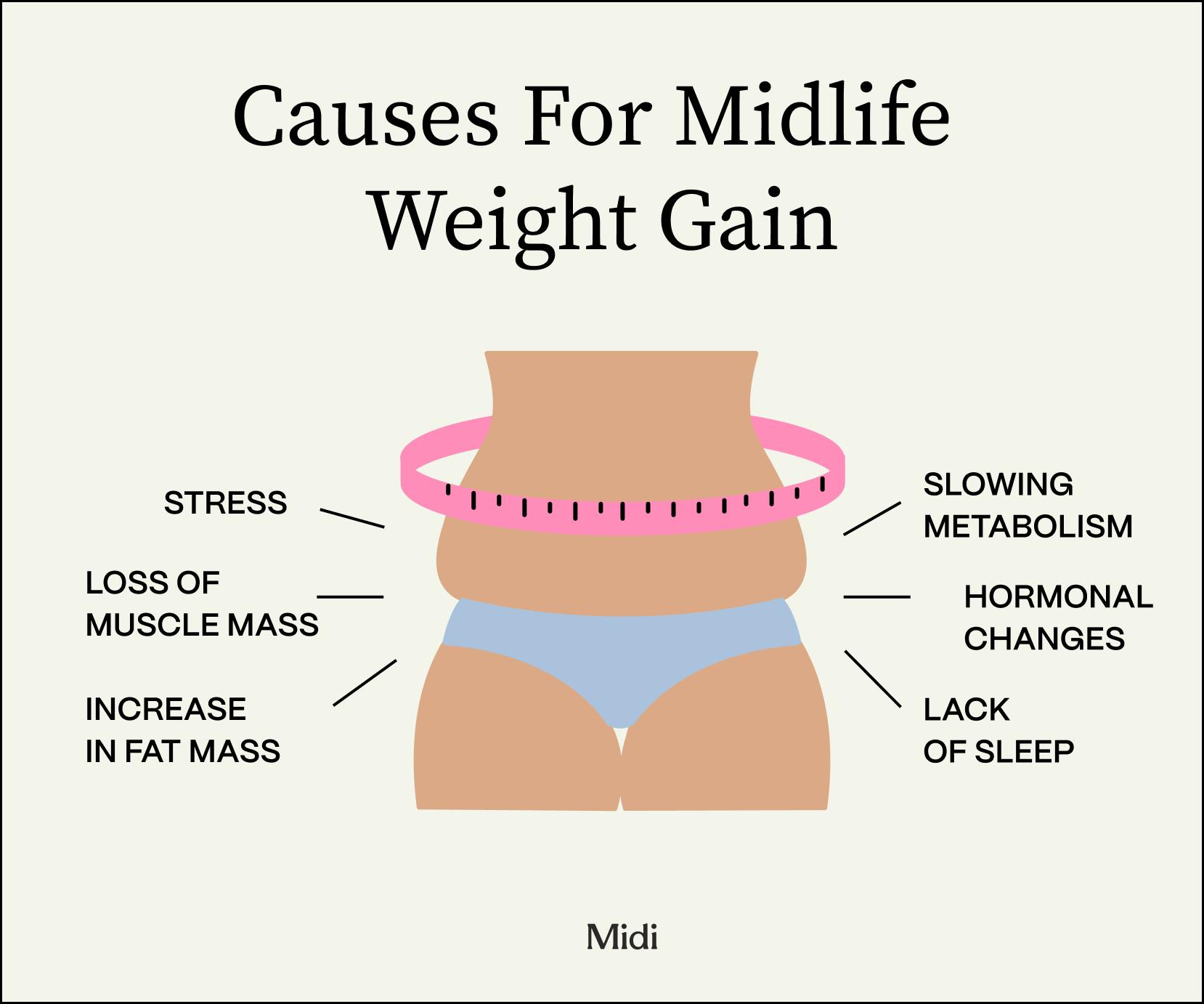
Clearly, hormonal changes during menopause can contribute to weight gain. But menopause isn't the only reason you might gain weight in midlife. While declining estrogen plays a big role, aging, muscle loss, sleep disruption, and lifestyle changes all work together to influence your weight.
Estrogen also affects metabolism and insulin sensitivity. So as estrogen levels fluctuate during perimenopause and menopause, it becomes easier for your body to gain weight and harder to lose it.
Another important factor is the gradual loss of muscle mass as you get older, known as sarcopenia. Because muscle burns more calories than fat, losing muscle slows your resting metabolic rate over time. Unless your nutrition and physical activity evolve with these changes, maintaining your weight may become more difficult.
Sleep and stress have starring roles in perimenopause weight gain, too. Hot flashes and night sweats can disrupt sleep, while chronic stress may affect the hormones that regulate appetite and metabolism. Both of these factors make healthy habits like exercising and eating balanced meals harder to maintain.
Menopause Belly: Why Weight Moves to Your Middle
One of the most common changes during menopause is a shift in where your body stores fat. Instead of building up around your hips and thighs, fat becomes more likely to settle around your abdomen, a phenomenon many women refer to as menopause belly.
But what’s behind this change? What causes belly fat in females during midlife? While aging plays a role, fluctuating estrogen levels during the menopausal transition make fat more likely to build up around the abdomen.
Before menopause, estrogen helps direct fat storage to the hips and thighs. As estrogen levels gradually decline, fat is more likely to accumulate in the abdomen as visceral fat, which surrounds the internal organs. This shift can happen even if the number on the scale changes very little, which is why your clothes may fit differently during midlife.
Visceral fat isn’t something to shrug off, as it's linked to a higher risk of conditions like heart disease, type 2 diabetes, and metabolic syndrome. That's why healthcare professionals often look beyond the number on the scale and consider waist circumference and overall health when assessing cardiometabolic risk.
It's also important to distinguish menopause belly from bloating. Bloating is temporary and may come and go throughout the day, often making your abdomen feel full or tight. On the other hand, meno belly develops gradually and doesn't fluctuate from one day to the next.
If you're noticing persistent changes around your waist, a healthcare professional (like a menopause-trained Midi clinician) can help find the right care solutions for you.

When Does It Start, and How Long Does Menopause Weight Gain Last?
For many women, perimenopause weight gain begins long before their final menstrual period and can last for years. As estrogen levels fluctuate during the menopausal transition, weight gain often speeds up, and fat begins to shift toward the abdomen.
After you reach menopause, hormone levels stabilize, but factors such as aging, muscle loss, genetics, and lifestyle continue to influence body weight and body composition. As a result, some women may continue to gain weight over time, while others find it becomes easier to maintain their weight with healthy habits after menopause.
The good news is that menopause weight gain isn't inevitable or permanent. Whether you're in perimenopause, menopause, or postmenopause, healthy eating, regular physical activity, strength training, quality sleep, and medical treatment when appropriate can all help support a healthy weight. It's never too early—or too late—to take steps that benefit your long-term health.
True Stories Of Transformation
Health Risks of Midlife Weight Gain
Weight gain during midlife isn't just about how your clothes fit. Extra weight—particularly around the abdomen—can increase the risk of several health conditions, including type 2 diabetes, heart disease, and some cancers.
That's because visceral fat, which surrounds the internal organs, is more metabolically active than fat stored just beneath the skin. It can contribute to inflammation, insulin resistance, and other changes that affect long-term health.
For many women, waist circumference can be just as important as the number on the scale. While body mass index (BMI) is one tool that healthcare professionals use to assess weight, it doesn't show where fat is stored or distinguish between fat and muscle. Measuring waist circumference alongside BMI can provide a more complete picture of cardiometabolic health, especially during and after menopause.
But these risks aren't a reason to blame yourself or feel discouraged—rather, they're a reason to seek support. Menopause-related changes in body composition are super common—in fact, nearly 9 in 10 Midi patients say they have issues with weight gain and body composition changes during menopause.
The right combination of lifestyle changes, personalized care, and ongoing support can help reduce health risks and improve your overall well-being.
What Helps: Food and Movement That Work With Your Hormones
Although menopause-related changes can make weight management more challenging, healthy habits still make a meaningful difference. Focus on strategies that help preserve muscle, support metabolic health, and create sustainable habits, such as:
- Prioritizing protein and strength training: Muscle naturally declines with age, so eating enough protein and incorporating strength training at least twice per week can help preserve lean muscle and support a healthy metabolism.
- Choosing balanced, fiber-rich meals: Meals centered on vegetables, fruit, whole grains, lean protein, and healthy fats can help support blood sugar balance and keep you feeling full longer. Rather than crash dieting, aim for a sustainable, nutritious eating pattern.
- Prioritizing sleep and stress management: Poor sleep and chronic stress can increase hunger, cravings, and fatigue, making weight management more difficult. A comprehensive approach to losing weight during menopause includes eating enough protein, strength training, prioritizing sleep, managing stress, and building sustainable habits that support long-term health.
Can HRT Help With Menopause Weight Gain?
Hormone replacement therapy (HRT, now commonly referred to as menopause hormone therapy, or MHT) is not a weight loss medication, and it isn't prescribed to help women lose weight. However, for women experiencing bothersome menopause symptoms, HRT may help address some of the factors that make weight management more difficult.
By relieving hot flashes, night sweats, sleep disruption, and other menopause symptoms, HRT may improve energy levels, support better sleep, and make it easier to maintain healthy eating habits and regular physical activity. Some research also suggests that estrogen therapy may help reduce the shift toward abdominal fat that commonly occurs after menopause and improve certain metabolic health markers, although these effects are generally modest.
Whether HRT is right for you depends on your symptoms, medical history, age, and personal risk factors. At Midi, clinicians take a personalized approach to evaluating whether hormone therapy is appropriate and work with you to develop a treatment plan that aligns with your health goals. Even when HRT is recommended, it's considered one part of a comprehensive approach that also includes nutrition, physical activity, sleep, and other healthy lifestyle habits.
Medications and Medical Support for Menopause Weight Gain
For some women, healthy eating, exercise, and lifestyle changes aren't enough to achieve their weight or health goals. In those cases, prescription medications or other medical interventions may be appropriate, particularly if excess weight is affecting overall health or increasing the risk of chronic conditions.
For starters, GLP-1 medications and other weight loss medications may be recommended for women who meet certain medical criteria. While these medications can help support significant weight loss, they work best when combined with healthy eating, regular physical activity, and long-term lifestyle changes.
Some women may also be interested in supplements for menopause weight loss. While supplements aren’t a cure-all solution, they may support weight loss by promoting healthy blood sugar levels or suppressing your appetite. For example, you might look into fiber or berberine supplements.
Talk with a healthcare professional, such as a Midi clinician, before starting any new medication or supplement. They can help you figure out the ideal solutions for your health and personal weight goals.

When to Talk with a Clinician
Remember, while weight gain is common during menopause, that doesn't mean it’s unavoidable or untreatable. If you're experiencing rapid weight gain, noticing your waistline expanding, feeling unusually fatigued, or struggling to lose weight despite healthy eating and regular exercise, it's worth talking with a clinician.
A menopause-trained clinician can help determine whether hormonal changes, lifestyle factors, or other health issues may be contributing to your symptoms. During a Midi visit, your clinician will review your symptoms, medical history, and health goals to create a personalized treatment plan. Depending on your needs, that may include lab work, hormone therapy, weight loss medications when appropriate, nutrition and lifestyle counseling, and ongoing follow-up to monitor your progress.
Midlife weight gain is one of the most manageable menopause concerns—with the right support. Meet with a Midi clinician to get a personalized treatment plan that can help improve your metabolic health, preserve muscle, and help you feel stronger and healthier, whether your goal is losing weight, preventing further weight gain, or simply feeling your best.
Key Takeaways
- Weight gain during menopause is common, but it's driven by a combination of aging, hormonal changes, muscle loss, and lifestyle factors—not estrogen decline alone.
- Menopause often shifts fat to the abdomen, increasing visceral fat, which is associated with a higher risk of heart disease, type 2 diabetes, and other metabolic conditions.
- Healthy habits—including eating enough protein, strength training, prioritizing sleep, and managing stress—can help support a healthy weight and preserve muscle during midlife.
- Hormone replacement therapy (HRT) is not a weight loss treatment, but it may help reduce menopause symptoms that make weight management more challenging, and it may have modest benefits for body composition.
- If you're struggling with weight changes despite your best efforts, a personalized treatment plan including lifestyle changes, hormone therapy, or weight loss medications can help you reach your health goals.
Frequently Asked Questions (FAQs)
At what stage of menopause do you gain the most weight?
Weight gain often begins during perimenopause, when estrogen levels start to fluctuate, and may continue through menopause. Aging, muscle loss, and lifestyle changes also contribute. While some weight gain is common, healthy eating, regular exercise, and strength training can help reduce its impact.
Does HRT stop weight gain?
No. HRT is not a weight loss treatment and isn't prescribed to prevent weight gain. However, it can improve symptoms such as hot flashes, night sweats, and poor sleep, which may make it easier to stay active and maintain healthy habits. Some studies also suggest modest benefits for body composition.
Is it normal to gain 10 pounds during menopause?
Yes. Many women gain weight during the menopause transition, although the amount varies. Hormonal changes, aging, muscle loss, genetics, and lifestyle all play a role. If your weight changes rapidly or you're having trouble managing it despite healthy habits, talk with a healthcare professional.
How can a menopausal woman lose weight quickly?
There isn't a safe or sustainable way to lose weight quickly during menopause. The most effective approach combines a balanced diet, strength training, regular physical activity, quality sleep, and stress management. Some women may also benefit from hormone therapy or prescription weight loss medications when appropriate.
How can I stop menopause weight gain?
You may not be able to prevent every menopause-related weight change, but you can help limit it by eating a balanced diet, staying active, preserving muscle through strength training, prioritizing sleep, and managing stress. If these strategies aren't enough, a personalized treatment plan may help.
If you’re in perimenopause or menopause and want guidance from clinicians who specialize in women’s midlife health, book a virtual visit with Midi today.
Hormonal change is at the root of dozens of symptoms women experience in the years before and after their period stops.
Our trained menopause specialists can help you connect the dots to guide you towards safe, effective solutions.
Whether you need personalized guidance or a prescription routine to tackle symptoms—including brain fog, hot flashes, sleep trouble, mood swings, and weight gain—we’ve got you covered. Learn more here.
Midi’s mission is to revolutionize healthcare for women at midlife, wherever they live and whatever their health story. We believe that starts with education, to help all of us understand our always-changing bodies and health needs. Our core values guide everything we do, including standards that ensure the quality and trustworthiness of our content and editorial processes. We’re committed to providing information that is up-to-date, accurate, and relies on evidence-based research and peer-reviewed journals. For more details on our editorial process, see here.