 Rebecca Yee, MD

If you’re in your 40s or 50s and your vaginal tissues seem noticeably thinner and drier lately, vaginal atrophy may be to blame. As many as 70% of women develop symptoms of vaginal atrophy—now referred to using the broader (and less wince-inducing!) term “genitourinary syndrome of menopause (GSM).” Even though GSM is very common, many women don’t tell their clinicians about their symptoms out of embarrassment, and that gets in the way of treatment. A clinician, like one at Midi Health, can recommend vaginal atrophy treatment options to help reduce vaginal burning and irritation.
When you think of menopause symptoms, the first to come to mind are probably hot flashes or night sweats. What may not be on your radar is vaginal atrophy—these days, it’s more commonly referred to as genitourinary syndrome of menopause (GSM). This condition, another side effect of lower estrogen levels, is common in midlife. With vaginal atrophy, you may experience thinner, drier, and more inflammation-prone tissues in your vaginal area.
Clinicians use the term “GSM” to acknowledge that the symptoms are broader than just vaginal changes. Though those are one possible symptom related to declining estrogen, perimenopausal and menopausal women may also experience related effects, like the frequent need to pee and a burning sensation while urinating, as well as pain during sex.
Research suggests as many as 70% of women may experience GSM, and the symptoms can have a significant effect on quality of life. Symptoms of vaginal atrophy can be difficult or embarrassing to talk about, and that leads many women to avoid seeking help—even though treatment options are available.
Having a conversation with your clinician about vaginal atrophy symptoms is critical, because GSM symptoms can get worse without the right treatment. Below, learn what women need to know about vaginal atrophy and GSM in general, including the different vaginal atrophy treatment options available to you and how a menopause-trained clinician, like one at Midi, can help you find relief.
What Is Vaginal Atrophy, and Why Is It Now Called GSM?
Vaginal atrophy refers to changes that can occur in the vagina and vulva during the menopause transition. As estrogen levels decline, there’s less elasticity and lubrication in the vagina. Vaginal tissues can become thinner, drier, and easily inflamed. Symptoms can include a down-there itchy or burning sensation, pain during sex, frequent urination, or light bleeding after sex.
The updated term “GSM” came about in 2014 when major medical organizations determined that the term “vaginal atrophy” was overly restrictive, since it focused exclusively on the vagina. GSM is an umbrella term that accurately reflects the chronic, progressive condition that can affect the entire genitourinary tract, including the vagina, vulva, vestibule, clitoris, urethra, and bladder.
These symptoms are common. And unlike some menopause symptoms that may resolve in postmenopause, GSM can continue without treatment. An estimated 15% of women have some GSM symptoms before menopause, but the vast majority—that 70% figure we mentioned earlier–develop vaginal atrophy after menopause. And the condition is thought to be underdiagnosed, which means many more women may be quietly dealing with these symptoms.

What Actually Changes in the Tissue When Estrogen Drops?
Estrogen is the primary protective hormone for your lower urogenital tract. As levels of this hormone begin to fluctuate during perimenopause, your vaginal lining, vulva, urethra, and bladder base can all be affected. Here’s how this can look in your body:
- As estrogen levels drop, there’s less blood flow to your vaginal area. Eventually your vaginal lining becomes thin, pale, dry, less elastic, and more fragile—you might tear more easily during penetration, for example.
- The vagina has many estrogen receptors, and when estrogen levels fall, the cells in the vagina produce less glycogen, a substance that feeds protective Lactobacilli bacteria and helps keep your vaginal environment healthy. With less glycogen, the cells in the vagina become thinner and more fragile.
- With a higher vaginal pH, your vaginal microbiome is more vulnerable to infection and irritation. This is why women with GSM may have a more irritated vaginal environment and are at increased risk of urinary tract infections (UTIs).
Over-the-counter vaginal lubricants and moisturizers can help with some of these symptoms, particularly painful sex. The changes are hormone-driven, though, which is why hormone therapy can often help improve symptoms more effectively, especially if they’re severe.
Vaginal Atrophy Symptoms: It's More Than Dryness
Vaginal dryness may be the best-known GSM symptom, and it’s also one of the most common: In a 2018 study of Spanish postmenopausal women, more than 93% received a diagnosis of vaginal dryness. But declining levels of estrogen can show up in numerous ways in your genitourinary tract, some of which you might not expect.
Besides dryness, vaginal atrophy symptoms include:
- Vulvar and vaginal symptoms: This can be perimenopause vaginal itching, burning, a raw sensation, abnormal or watery discharge, and vulvar soreness. Or you might feel less well-lubricated when you’re having sex. Your vulva may look different, too—paler, with thinner labia, possibly with patches of redness.
- Sexual symptoms: You might have pain or a burning, stinging sensation. Drier tissues can lead to cracking or fissures at your vaginal opening, and you might also experience light bleeding after sex.
- Urinary symptoms: This includes a burning sensation when you pee or the urge to urinate more often—even if you don’t have to go. There’s also a higher risk for bladder discomfort and frequent UTIs.
If you notice symptoms like these, tell a clinician. GSM can be mild at first, but it gradually builds and gets worse. Treatment can help ease these symptoms before they’re severe.
What Success Looks and Feels Like
What Causes Vaginal Atrophy, and Who Is Most at Risk?
Women currently going through the menopause transition are the most at risk of vaginal atrophy, since the primary cause is declining levels of estrogen. As your ovaries produce less and less of that hormone, GSM symptoms can develop.
Symptoms can have other causes, though. You might experience them if you’ve gone through surgical menopause, such as from the removal of both ovaries. Same if you’re a cancer survivor or are undergoing chemotherapy, pelvic radiation, or endocrine suppression therapy (such as tamoxifen or aromatase inhibitors). These medications shut down peripheral (outside the ovaries) estrogen production.
Other potential causes:
- having premature ovarian insufficiency (POI), which causes loss of ovarian function before age 40
- breastfeeding, which can temporarily lower systemic estrogen, creating a state called genitourinary syndrome of lactation (GSL)
- transitioning off combined oral contraceptives after long-term use, which might also lead to atrophy and pain
But remember: Treatment options exist for any form of vaginal atrophy, and they can improve your symptoms and quality of life.

Can Vaginal Atrophy Be Reversed, or Does It Go Away on Its Own?
Can vaginal atrophy be reversed? Unlike hot flashes and night sweats, which can gradually improve in postmenopause, GSM gets progressively worse without treatment and it will not go away on its own because the culprit—menopause-related estrogen loss—is permanent.
But targeted treatments have been found to improve tissue thinning, increase blood flow and lubrication, and re-establish a healthy acidic pH. It helps to get timely treatment, so don’t hesitate to get in touch with your clinician if you start noticing symptoms. There are both hormonal and non-hormonal treatment options, and your clinician can recommend the right one for your specific symptoms.
Keep in mind: Managing symptoms requires long-term maintenance. If you stop using treatment, tissue changes that cause vaginal atrophy will eventually return.
How Is Vaginal Atrophy Diagnosed, and What Is It Mistaken For?
A menopause-trained clinician (like one at Midi) can diagnose GSM and vaginal atrophy. They’ll review your medical history and have a thorough conversation with you about your symptoms. Your clinician does not need to request blood work to make a GSM diagnosis, but sometimes they may order a lab test—say, a urine culture if recurrent UTIs are suspected.
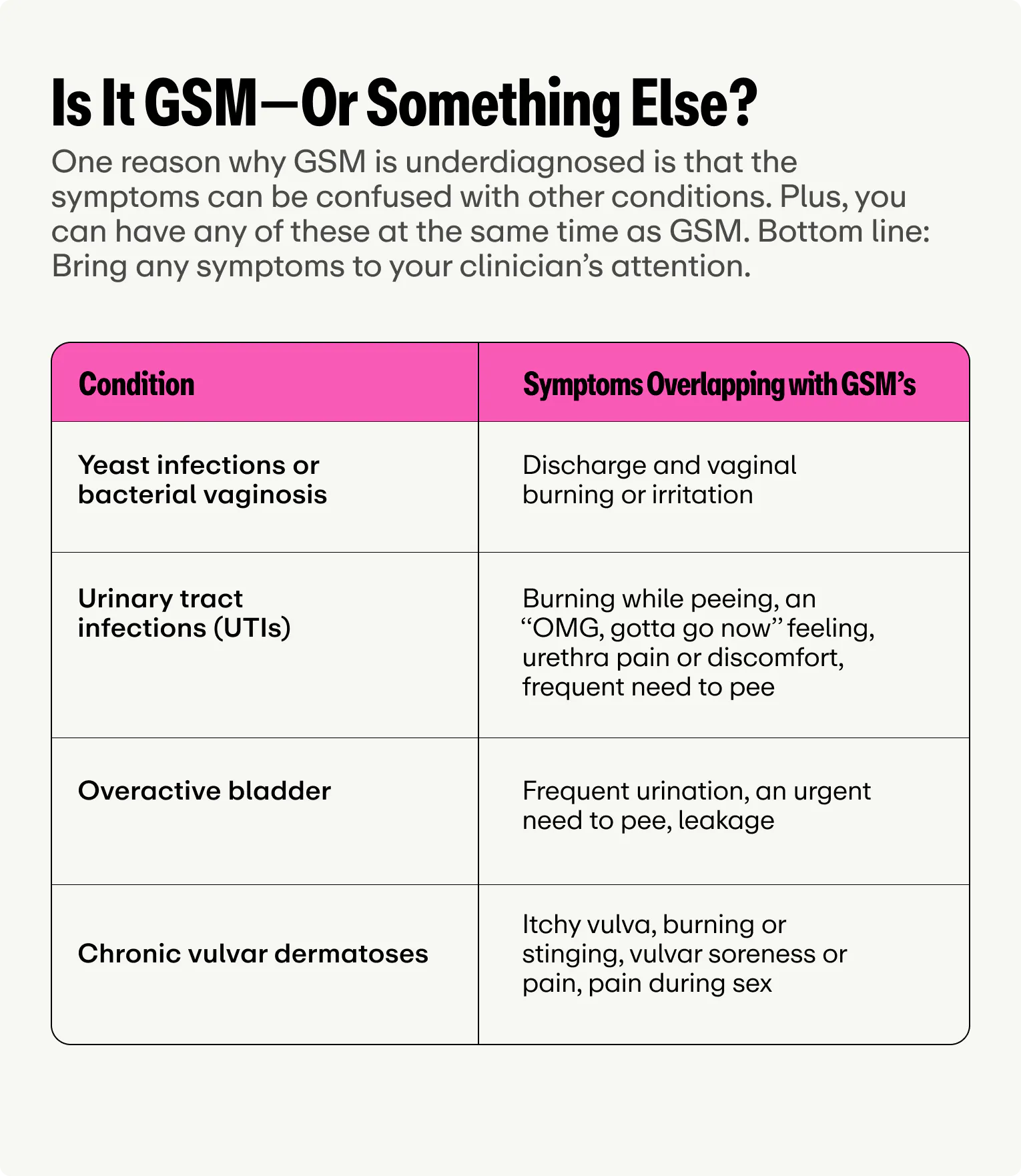
Unfortunately, from a broad perspective, GSM is underdiagnosed. It’s also easily confused with other conditions that can have some similar symptoms, such as:
- Recurrent yeast infections or bacterial vaginosis: Low estrogen can cause watery discharge, burning, and irritation, similar to these two conditions.
- Unexplained UTIs: GSM symptoms (like urinary urgency) mimic those of UTIs. A healthcare professional who doesn’t have experience with GSM might prescribe unnecessary antibiotics if a UTI is wrongly diagnosed.
- Overactive bladder (OAB): The urgency and frequency from estrogen loss might be misdiagnosed as primary OAB, which can also cause urinary urgency.
- Chronic vulvar dermatoses: Conditions like lichen sclerosus or lichen planus cause intense itching, skin whitening, or scarring. Some vaginal atrophy symptoms, like red patches or paler labia, might seem similar.
Because of all these overlap with many other conditions, it can help if you share a complete symptom list with your clinician. Mention, too, any changes in your menstrual cycle (for example, periods becoming less regular or heavier bleeding), as well as any urinary or sexual symptoms you’ve noticed.
Vaginal Atrophy Treatment: A Step-by-Step Ladder
As frustrating as vaginal atrophy can be, a range of treatment options may help. Clinicians may use a step-by-step treatment ladder that includes:
- Non-hormonal options: This would typically be the first strategy you try. It can include water- or silicone-based vaginal lubricants, which can help make sex more comfortable, plus vaginal moisturizers 2 or 3 times per week to address dryness (they help bind moisture to tissues).
- Low-dose vaginal estrogen: This may come in the form of a vaginal estrogen tablet, cream, or ring. It’s the gold-standard treatment for vaginal atrophy and delivers a low dose of estrogen directly to genitourinary tissues with minimal systemic absorption, restoring tissue thickness and pH.
- Vaginal DHEA: Vaginal dehydroepiandrosterone therapy, or a Prasterone vaginal insert, is also considered to be very effective for dryness and painful sex. It works by converting locally into both estrogens and androgens.
- Systemic hormone therapy: This treatment is systemic, meaning it works throughout the whole body. Hormone therapy treats symptoms like hot flashes in addition to GSM symptoms and
- Oral ospemifene: Another systemic treatment, ospemifene is a type of medication (a selective estrogen receptor modulator, to be specific) that’s approved for painful sex. But its side effects are hot flashes and night sweats.
If you’ve had breast cancer, your clinician will likely recommend non-hormonal moisturizers and topical oils as first-line care. If your oncology team approves local estrogen, your clinician may prescribe a low-dose vaginal tablet, ring, or cream instead of intravaginal cream applicators.
Do Natural Treatments for Vaginal Atrophy Work?
You may hear about vaginal atrophy natural treatments and wonder whether they actually ease symptoms. The options above are most effective because they rebuild estrogen-dependent tissue. But if you’d prefer not to use medications, your first step may be to try natural oils like coconut or olive as lubricants and moisturizers. They’re not as effective as OTC lubricants and don’t restore vaginal tissue like moisturizers do, and their long-term vaginal safety hasn’t been studied. But you can try them (however, not with latex condoms).
Other interventions that are sometimes mentioned include:
- Physical interventions like yoga, pelvic floor training, and acupuncture. Studies on these approaches have had very small sample sizes, but some suggest that there may be benefits for women experiencing symptoms of GSM.
- Mind-body practices such as cognitive behavioral therapy, mindfulness techniques, and stress-reduction programs may also be worth trying—even though the evidence for GSM specifically is limited, these approaches have other known benefits, like helping to lower stress levels.
If you’re interested in complementary and alternative therapies, bring them up to your clinician. Even when you’re using hormone therapy or another prescription medication for GSM symptoms, some of these approaches may be useful as an add-on or starting point.
You might hear about vaginal laser and radiofrequency devices as non-hormonal options for treating vaginal atrophy, but major medical organizations and Midi clinicians don’t recommend their use. There have been small studies on these, but larger, better-controlled ones haven’t established their effectiveness. And they’re not FDA approved for vaginal atrophy or GSM.
Vaginal Atrophy in Perimenopause: Catching It Early
Vaginal atrophy tends to be at its most intense and bothersome in the postmenopause stage, research suggests, but many women begin to experience vaginal changes during perimenopause—even years before periods stop, while estrogen is fluctuating rather than steadily low. And while vasomotor symptoms like hot flashes may improve in postmenopause, GSM steadily gets worse if untreated.
In this early stage, you might be apt to dismiss symptoms like vaginal dryness, painful sex, or irritation and itchiness. The symptoms often feel non-specific and mild, and they may seem not important enough to bring up with a clinician.
Starting treatment for vaginal atrophy as soon as possible, though, is important. Remember: The longer you go without treatment, the worse GSM can become. Vaginal atrophy doesn’t become better on its own, and keeps progressing as estrogen levels continuously decline. It can be harder to treat those symptoms if you wait to address them when they’ve become truly severe.
Is Vaginal Estrogen Safe? What Midlife Women Should Know
Low-dose vaginal estrogen is a type of hormone therapy, and (like with just about any medical treatment) all forms have some risks and side effects that you can discuss with your clinician. But unlike some other types of hormone therapy, vaginal estrogen acts locally, with minimal absorption into the bloodstream. This means it may have fewer health risks than systemic forms of hormone therapy—but it also means that it doesn’t treat vasomotor symptoms like hot flashes and night sweats.
Low-dose vaginal estrogen creams or suppositories are considered a first-line, gold-standard treatment for GSM symptoms, including vaginal dryness, painful sex, irritation, and more. Plus, progesterone is generally not required alongside vaginal estrogen since the amounts that enter your body are so low.
Adding to low-dose vaginal estrogen’s safety profile: The FDA recently removed the boxed warning that had previously been on low-dose vaginal estrogen products (a holdover from long-ago, outdated studies). Leading expert groups such as The Menopause Society and the American College of Obstetricians and Gynecologists released statements supporting this change.
When to Talk With a Clinician About Vaginal Atrophy
If you’re experiencing any symptoms of GSM—vaginal dryness, irritation, burning, urinary urgency, frequent UTIs, painful sex—don’t hesitate to reach out to your clinician. Many women avoid bringing up vaginal symptoms out of embarrassment, but a menopause-trained clinician, such as one at Midi, is there to support you.
Let your clinician know:
- which symptoms you’re experiencing and when they tend to occur
- whether symptoms are affecting your sex life, sleep, daily activities, or overall comfort
- how many UTIs you’ve had in the past year, if relevant
- whether you’ve had any pain or bleeding during sex
Treatments are available for GSM and can really bring relief. And remember: The sooner you receive treatment for vaginal atrophy, the better chance you have of managing symptoms and finding your way to less pain and better health.
Key Takeaways
- “Vaginal atrophy” is a term that was historically used to describe uncomfortable or painful changes to the vaginal area that can occur during the menopause transition. These days, clinicians typically use a new name: genitourinary syndrome of menopause, or simply GSM.
- GSM includes a broader range of symptoms that can develop as estrogen levels decline starting in perimenopause. As well as vaginal changes, this can include urinary frequency, painful sex, frequent UTIs, and burning when you pee.
- These symptoms are common, and they can seriously impact quality of life. Still, many women feel embarrassed to talk about vaginal symptoms and don’t bring them up with a clinician as a result.
- Several treatment options are available, including topical moisturizers and lubricants, low-dose vaginal estrogen cream or vaginal DHEA, as well as systemic hormone therapy for more severe symptoms.
- Getting treatment for GSM is important, because unlike hot flashes—which tend to eventually improve—symptoms can get worse over time, and the condition is harder to treat as it becomes more severe.
Frequently Asked Questions (FAQs)
What does vaginal atrophy look like?
If you have vaginal atrophy, your labia may look thinner and drier than is typical for you, and the skin around your vulva may be paler or possibly have patches of redness.
How long does vaginal atrophy last?
Some menopause symptoms, like hot flashes, may improve over time—but vaginal atrophy isn’t one of them. GSM symptoms tend to get worse without treatment, which is why bringing them up to your clinician is so important.
How do I tell if I have atrophy?
Vaginal atrophy can make the tissues around your vagina appear thinner, drier, and more shrunken. You may also feel an itching or burning sensation, pain when you have sex, or frequent urges to pee when you don’t have to.
Can vaginal atrophy cause discharge?
Yes, in addition to other symptoms, you may notice vaginal discharge (usually yellowish) when you have vaginal atrophy.
How can you prevent vaginal atrophy?
You can’t prevent vaginal atrophy, but you can support your vaginal health by not using irritating products; also try using lubricants during sex and vaginal moisturizers a couple of times per week. Because sex increases blood flow to the vagina, regular sexual activity may reduce some GSM symptoms. (Again, rely on that lube!) And most importantly, talk with your clinician about any early symptoms.
If you’re in perimenopause or menopause and want guidance from clinicians who specialize in women’s midlife health, book a virtual visit with Midi today.
Hormonal change is at the root of dozens of symptoms women experience in the years before and after their period stops.
Our trained menopause specialists can help you connect the dots to guide you towards safe, effective solutions.
Whether you need personalized guidance or a prescription routine to tackle symptoms—including vaginal dryness and irritation, brain fog, hot flashes, sleep trouble, mood swings, and weight gain—we’ve got you covered.
Midi’s mission is to revolutionize healthcare for women at midlife, wherever they live and whatever their health story. We believe that starts with education, to help all of us understand our always-changing bodies and health needs. Our core values guide everything we do, including standards that ensure the quality and trustworthiness of our content and editorial processes. We’re committed to providing information that is up-to-date, accurate, and relies on evidence-based research and peer-reviewed journals. For more details on our editorial process, see here.