

Desire can be complicated in midlife. Your libido can come and go—and maybe even hit the floor with a thud. Truth is, low libido is incredibly common during the menopausal transition, and many women wonder whether certain medications or peptides could help turn things around. One you might have heard of is Vyleesi, a prescription medication that’s FDA approved for premenopausal women with low sexual desire. The same compound is also increasingly being marketed online as the peptide PT-141. But taking PT-141 yourself without a diagnosis, prescription, and guidance from a healthcare professional (such as a Midi Health clinician) isn’t currently considered safe—and may not even be effective. Here’s what can help with libido issues and what to know about PT-141.
Hearing a lot of chatter about peptides lately? There’s definitely a buzz, whether it’s from online influencers or, say, those women at the table next to you at lunch. And here at Midi, tons of patients are wondering if peptides should have a place in their perimenopause and menopause Care Plan. One peptide in particular, PT-141, is gaining notice as a supposed libido booster.
The PT-141 peptide, also known as bremelanotide, is sold as a prescription medication under the brand name Vyleesi. The medication is FDA approved to treat hypoactive sexual desire disorder (HSDD) in premenopausal women. But the same peptide compound, which is not regulated by the FDA, is also being advertised by gray-market sellers online, and that’s where you can run into issues—there’s no guarantee of those products’ purity and dosage.
Low sex drive is incredibly common in perimenopause, so it’s totally understandable why midlife women may be searching for solutions anywhere they can. But since the causes of low desire can be complex, there isn’t a one-size-fits-all treatment. Some women may get some success with prescription PT-141, but it isn’t a solution for everyone.
If you’re struggling with your sex drive, a safe first step is to have a conversation with a clinician (like one at Midi), so you can get a diagnosis, symptom evaluation, and personalized treatment. In the meantime, keep reading for everything you need to know.
What Is PT-141?
PT-141 is a synthetic peptide that’s also known as bremelanotide. (In case you need a refresh, synthetic peptides are lab-made versions of short chains of amino acids that act as signaling molecules, helping your body regulate certain processes.) Specifically, PT-141 impacts brain pathways connected to sexual desire. It activates melanocortin receptors, which are proteins in the brain and body that play a role in sexual function.
While unregulated compounded versions of PT-141 can be found online, the peptide may be prescribed as an injection under the brand name Vyleesi. Vyleesi is FDA approved to treat HSDD in premenopausal women that’s not caused by a medical or mental health condition, relationship issues, or medication side effects. It can be prescribed for acquired HSDD (meaning low libido developed after a period of normal desire) or generalized HSDD. Clinicians sometimes prescribe it off-label to women who have gone through menopause.
Vyleesi is injected in the thigh or abdomen about 45 minutes before having sex, and studies have shown that it can spark sexual desire. Whether or not it’s right for you depends on the cause of your libido concerns.
PT-141, Vyleesi (Bremelanotide), and Online Peptide Products
Peptides have become a hot topic in recent years, largely because of the rising popularity and use of GLP-1s, peptide medications that treat obesity and diabetes. What’s come about in the wake of that popularity is an entire industry of lab-created peptides, advertised and sold online, that people can use to treat themselves at home, unsupervised by health professionals. This is what’s happened with PT-141.
Some compounded versions of peptides, including PT-141, are sold by gray-market retailers online, making them accessible to people without a prescription. This can be risky: Although compounded drugs (which are specially mixed medications) are safe in certain circumstances, they may carry safety and efficacy concerns in others.
Using an unregulated compounded peptide like PT-141 means that you can’t be confident about what’s in it—like whether it’s contaminated with unwanted substances or if the dosage is right. If you use peptides sourced from gray-market retailers, you won’t know whether it’s a safe or smart option for your circumstances, or if other paths should be explored first.
On the other hand, medications like Vyleesi are regulated, with quality control and safety standards, as well as guidance about which women can benefit from the drug.
True Stories Of Transformation
PT-141 for Women: Who It May Actually Work for (or Not)
PT-141 in the form of Vyleesi has clear definitions about who the medication is for. It’s approved for premenopausal women (though it’s sometimes prescribed off-label for women past menopause). It’s designed to treat HSDD, which has symptoms like:
- lack of sexual fantasies and thoughts
- lack of desire for sexual activity
- personal distress caused by the lack of desire
If low libido doesn’t bother you and isn’t causing problems in your relationship? No problem—you don’t have to treat it. This medication is for the woman who is upset by her diminished libido and wants it back.
To be eligible for the medication, your low desire shouldn’t be caused by:
- another medical or psychiatric condition
- problems in your relationship
- side effects from a medication or drug
If one of these factors is the reason for low sexual desire, PT-141 won’t get the job done. Instead, other care solutions may be more effective. It can take more time and effort, but PT-141 is not a fix if you don’t need it.
What's more, bremelanotide does not improve sexual performance or solve every arousal issue. Since libido is so personal and multifaceted, before pursuing medication, ask yourself: “What’s driving my low desire?” (More on those potential causes below.)
PT-141 Dosage, Timing, and Why DIY Use Is Risky
The regulated form of PT-141, Vyleesi, is an injection, given in your abdomen or thigh, that you use at least 45 minutes before you think sexy time might start. (It works within 30 to 60 minutes.) It’s not something you take every day; you use it when you want the mood to strike.
You’re not supposed to take more than 8 doses in a month or more than 1 dose in a 24-hour period, because using it more often can increase the risk of side effects. (Some of those side effects, which we’ll dive into below, will definitely push you out of the mood.)
Remember: It’s important to follow the prescribing instructions for taking this medication, rather than purchasing PT-141 online on your own and dosing it yourself. You can’t necessarily replicate the dosages you find online with a DIY peptide—again, you can’t be totally sure which ingredients and how much of them are an unregulated version.
Claimed PT-141 Peptide Benefits vs. What to Realistically Expect
The PT-141 peptide benefits you might hear about seem pretty great: greater satisfaction, better relationship connections, more sexual confidence, and better sexual performance.
The reality is more straightforward: Published phase 3 trials found that premenopausal women with HSDD who took bremelanotide had increased sexual desire and decreased distress about low sexual desire after 24 weeks, compared with those in placebo groups.
That said, the women in the placebo groups also showed meaningful improvement, suggesting that there was a noticeable placebo effect that boosted desire as well. Also, though the improvements in desire were statistically significant, some experts pointed out that overall, the impact was mild.
It's also important to note that these women were taking regulated forms of bremelanotide at standardized doses, rather than unregulated gray-market versions of the drug. Also good to consider: This study was funded by the company who created bremelanotide and a pharmaceutical company who licensed it.
Risks, Side Effects, and Medication Considerations
Bremelanotide is safe and regulated, but just like any drug, it has side effects and risks. A 52-week study found that the most common side effects were:
- nausea (experienced by 40% of participants)
- flushing (20%)
- headache (12%)
You also might notice that your blood pressure goes up and your heart rate goes down each time you take it. In the clinical trials, those changes were small and temporary, and they shouldn’t be an issue for healthy women. But talk with your clinician if you have existing cardiovascular issues, because this medication may not be for you.
Some other things to consider:
- If you experience severe nausea, you can ask your doctor about taking anti-nausea medication—or you may decide to stop taking the prescription drug.
- The medication can slow gastric emptying (the movement of food out of your stomach), so it may affect how well oral medications are absorbed if you take them at the same time.
- Bremelanotide isn’t safe to take when pregnant, and you should use contraception while on the medication.
- A rare side effect: About 1% of people using the max dose experienced darkening in areas of the face, gums, and breasts. This is because bremelanotide also activates melanocytes, the pigment-producing cells in the skin. The risk was higher when it was used more times than recommended and higher for women with darker skin tones.
What May Really Cause Low Desire in Midlife
Given all the challenges of midlife—in our bodies and in life’s general chaos—it’s impressive that intimacy even happens at all. Any of the factors below can be libido dampening, and it’s not unusual to experience a range of them at once:
- hormonal changes that affect arousal
- vaginal dryness or pain with intercourse
- lack of sleep from night sweats or insomnia
- medication side effects that decrease libido and arousal
- increased stress
- caregiving responsibilities, such as for kids and aging parents
- relationship challenges
- discomfort and distress from hot flashes
- body image and confidence concerns
It’s normal for sexual desire to ebb and flow over the years, months, and days. Whether or not treatment is needed depends on how bothersome it is for you personally.
When talking with a healthcare professional, they’ll consider your symptom history and mental wellness, talk with you about relationship problems, and conduct a medication review. If needed, they may suggest lab work to pinpoint any deficiencies or underlying medical conditions that should be addressed separately. Midi clinicians are trained experts who can help talk through your experience and guide you toward effective sexual-wellness solutions.

Safer Alternatives That May Make More Sense for Midlife Women
Buying an unregulated compounded PT-141 peptide online is a risky business, but taking bremelanotide when it’s prescribed as Vyleesi by a clinician can be a helpful treatment for some women with low desire.
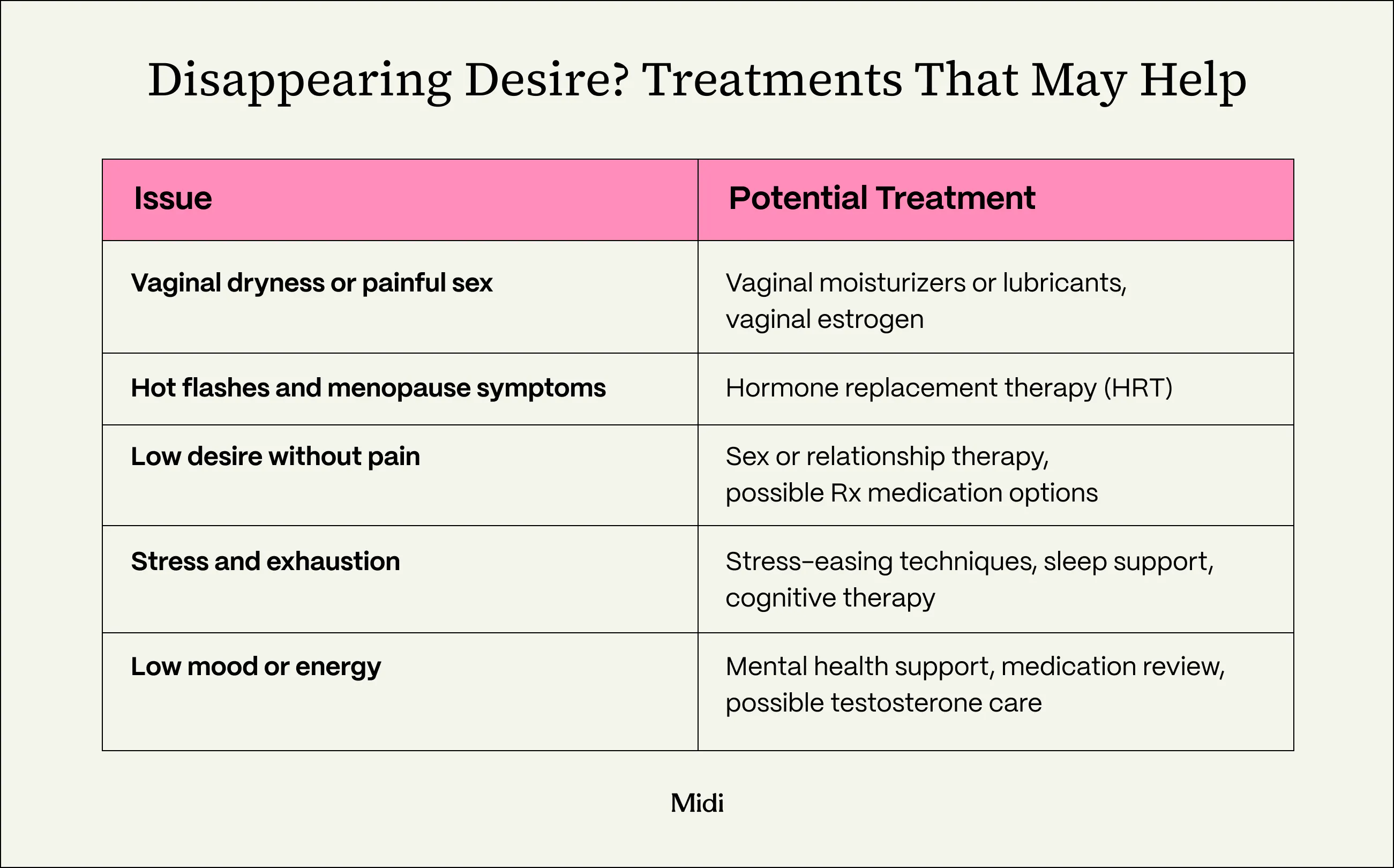
Still, there are other options to enhance your sexual well-being, especially if you don’t fit the diagnostic criteria for HSDD:
- First, treat any vaginal pain or dryness: That might include using vaginal estrogen, non-hormonal vaginal moisturizers or lubricants, and other treatment for genitourinary symptoms.
- Consider hormone replacement therapy (HRT): If you have other menopausal symptoms, such as hot flashes, then HRT—sometimes in addition to vaginal estrogen—can address symptoms from head to toe.
- Try testosterone: For some women, testosterone care can help support libido (as well as boost mood and energy).
- Look beyond medication: Other options include pelvic floor physical therapy, vibrator use, sex therapy, relationship therapy, trauma-informed counseling, stress reduction, and sleep support.
Ultimately, the best treatment for you will depend on the reasons why your sexual desire has dropped. A healthcare professional, such as a Midi clinician, can help you find the best care solutions.
Why It's Best to Talk With a Clinician About Low Libido
Sex can be a tough thing to talk with your clinician about—especially if you’re not accustomed to or comfortable with opening up about this topic. (Or, even tougher, if your clinician appears squeamish or unwilling to discuss it.)
Start by finding a trusted, menopause-informed provider who doesn’t shy away from any topic, like a Midi clinician. They'll know how to take a 360-degree view of your libido, factoring in hormonal changes, vaginal symptoms, mood, sleep, stress, and relationship factors. It’s a safe, effective way to figure out the therapies that may work for you to get your desire back on track—rather than reaching for an unregulated PT-141 peptide on your own.

Key Takeaways
- PT-141 is a peptide that works in the brain to influence sexual desire. It’s available as an FDA-approved medication called Vyleesi (bremelanotide), though it can be found online as an unregulated injection. The latter has safety and efficacy concerns.
- Bremelanotide is designed for women who have not yet gone through menopause who have been diagnosed with hypoactive sexual desire disorder (HSDD). This is defined as a lack of sexual fantasies and thoughts that causes distress for the individual and isn’t caused by an underlying medical condition or relationship problem. Clinicians may prescribe it off-label to postmenopausal women.
- Other therapies for low libido during the menopause transition include systemic hormone replacement therapy (HRT); vaginal estrogen; vaginal moisturizers or lubricants; and lifestyle changes such as sleep, stress, and mood support.
- For your health, PT-141 should be taken only as the prescription medication bremelanotide and only after a proper diagnosis and recommendation from your clinician. Otherwise, it may not address the real reason for your low libido. Plus, this can increase the risk of side effects and pose a danger to your health.
Frequently Asked Questions (FAQs)
What does the PT-141 peptide do?
The PT-141 peptide works on brain pathways connected to sexual desire, potentially increasing your libido.
How long does PT-141 take to kick in?
PT-141 takes 30 to 60 minutes to work in the body. The FDA-approved medication Vyleesi (bremelanotide) is designed to be injected 45 minutes before you want to have sex.
Is PT-141 FDA approved?
The PT-141 peptide is FDA approved as the injectable brand-name medication Vyleesi (bremelanotide), which is indicated for premenopausal women who have hypoactive sexual desire disorder not caused by a medical or mental health condition, relationship problems, or medication side effects. Other forms of PT-141 are not FDA approved.
Is PT-141 the same as bremelanotide?
Bremelanotide and peptide PT-141 are the same compound. Bremelanotide is the active ingredient in Vyleesi, an FDA-approved medication. PT-141 is a type of synthetic peptide that people can buy online, but it’s not evaluated for safety or effectiveness. It’s important to get a prescription from a clinician for bremelanotide if you are interested in taking this peptide.
What actually helps low libido during perimenopause or menopause?
Because there are so many causes of low libido in midlife, there are many options for treatment. Among these are vaginal estrogen therapy to treat vaginal dryness or painful intercourse and menopause hormone therapy to address hormonal changes that lower desire. Lifestyle changes, such as treating mood issues and seeking sleep support, can also make a difference, as can solo or couples therapy to tackle relationship problems.
If you’re in perimenopause or menopause and want guidance from clinicians who specialize in women’s midlife health, book a virtual visit with Midi today.
Hormonal change is at the root of dozens of symptoms women experience in the years before and after their period stops.
Our trained menopause specialists can help you connect the dots to guide you towards safe, effective solutions.
Whether you need personalized guidance or a prescription routine to tackle symptoms—including brain fog, hot flashes, sleep trouble, mood swings, and weight gain—we’ve got you covered. Learn more here.
Midi’s mission is to revolutionize healthcare for women at midlife, wherever they live and whatever their health story. We believe that starts with education, to help all of us understand our always-changing bodies and health needs. Our core values guide everything we do, including standards that ensure the quality and trustworthiness of our content and editorial processes. We’re committed to providing information that is up-to-date, accurate, and relies on evidence-based research and peer-reviewed journals. For more details on our editorial process, see here.