


Sex should leave you feeling good—not sore, burning, or aching hours later. If you’re wondering “Why does my vagina hurt after sex?,” you’re not the only one, you’re not doing anything wrong, and—most importantly—you don’t have to just live with it. Many common causes are highly treatable, so relief may be closer than you may think. Let’s break down what’s behind vaginal pain after sex and how a clinician, like one at Midi Health, can help you get back to looking forward to getting frisky again.
If your vagina has been feeling sore, raw, stinging, or weirdly bruised after fooling around in bed recently—and you find yourself wondering, “Why does my vagina hurt after sex?”—here’s some welcome news: You don’t have to tough it out. Solutions are available.
Post-sex soreness during these midlife years is often caused by something treatable, and finding out what’s behind it is the first step to feeling comfortable again. For women in their 40s and 50s, one of the biggest culprits is shifting estrogen. During perimenopause and menopause, vaginal tissue can become thinner, drier, and more sensitive, which puts a damper on your afterglow, to say the least.
But fluctuating hormones aren’t the only possible explanation. Infection, pelvic floor muscle tension, skin dermatis, and even certain positions can leave you sore afterward, too.
We’ll walk through what’s common, what might be causing post-sex soreness, and immediate care solutions to try. We’ll also cover treatments that address the underlying problem and which symptoms call for a visit with a clinician, like one at Midi.
Is It Normal for Your Vagina to Hurt After Sex?
Pain during or after vaginal penetration is a common experience among women of any age, and when it’s persistent and not just an occasional thing, the medical term for it is “dyspareunia.” And yes, pain after sex is more common in postmenopausal women, but it’s never something you have to accept.
But why might it be happening? One way to zoom in on the possible cause: Pay attention to when the pain shows up. If sex itself feels fine but you’re sore, raw, stinging, or burning afterward, that often points to the result of friction, more delicate or dry vaginal tissue, or pelvic floor muscles that are tired and tight after sex.
“People may initially attribute pain after sex to positioning, their partner, or where they are in their cycle,” says Midi Clinical Leader and Physician Lily Hanna, MD, FACOG. “But when discomfort keeps happening, declining estrogen and changes in vaginal tissue may be part of the picture.”
A little tenderness that fades within a few hours is normal, especially after longer or more vigorous sex than usual. But bleeding, unusual discharge, fever, or burning when you pee is not. And if you’re sore after most sexual encounters, the pain lasts more than a day or keeps getting worse over several months, or sex feels noticeably different from how it used to feel, those are red flags that deserve attention.

Dryness and Friction: The Most Common Reason for Soreness After Sex
When you consider biology, it makes sense why sensations may have changed for you. Less estrogen leads to less natural lubrication, which results in more friction. That increased friction can cause tiny tears and irritation in the vaginal lining.
All of this results in sex that’s more “ouch” than “ooh.” And this is extremely common: A reported 15% of women in perimenopause, and half of women postmenopause, experience vaginal dryness.
It doesn’t signal that you weren’t turned on. Beyond shifting hormones, you may not make enough lubrication due to things like:
- rushing through arousal
- experiencing stress, depression, and anxiety
- taking certain antihistamines and antidepressants
- taking hormonal birth control
- compromised blood flow to the area
- breastfeeding
- experiencing dehydration
The issue may be fixed with more time for arousal and a generous amount of lube—and if so, that points to situational dryness. But if you’re using plenty of lube and are still sore after sex, especially if this is a new and ongoing issue, pay attention. Persistent dryness in your 40s and 50s can be a sign that declining estrogen is changing the vaginal tissue (a natural progression).
A few lube basics: Using more is usually better, and you can use it every time you have sex. Here are two types to know—test both to see which you prefer:
- Silicone-based lube lasts longer and can be especially helpful when painful friction is the issue.
- With water-based lube, look for a brand that has a low osmolality number (ideally 380 mOsm/kg max—you may need to check a brand’s website to find this). Simply put, a number higher than that means it may be drying to vaginal tissue.
Genitourinary Syndrome of Menopause: Why Sex Starts Hurting in Your 40s and 50s
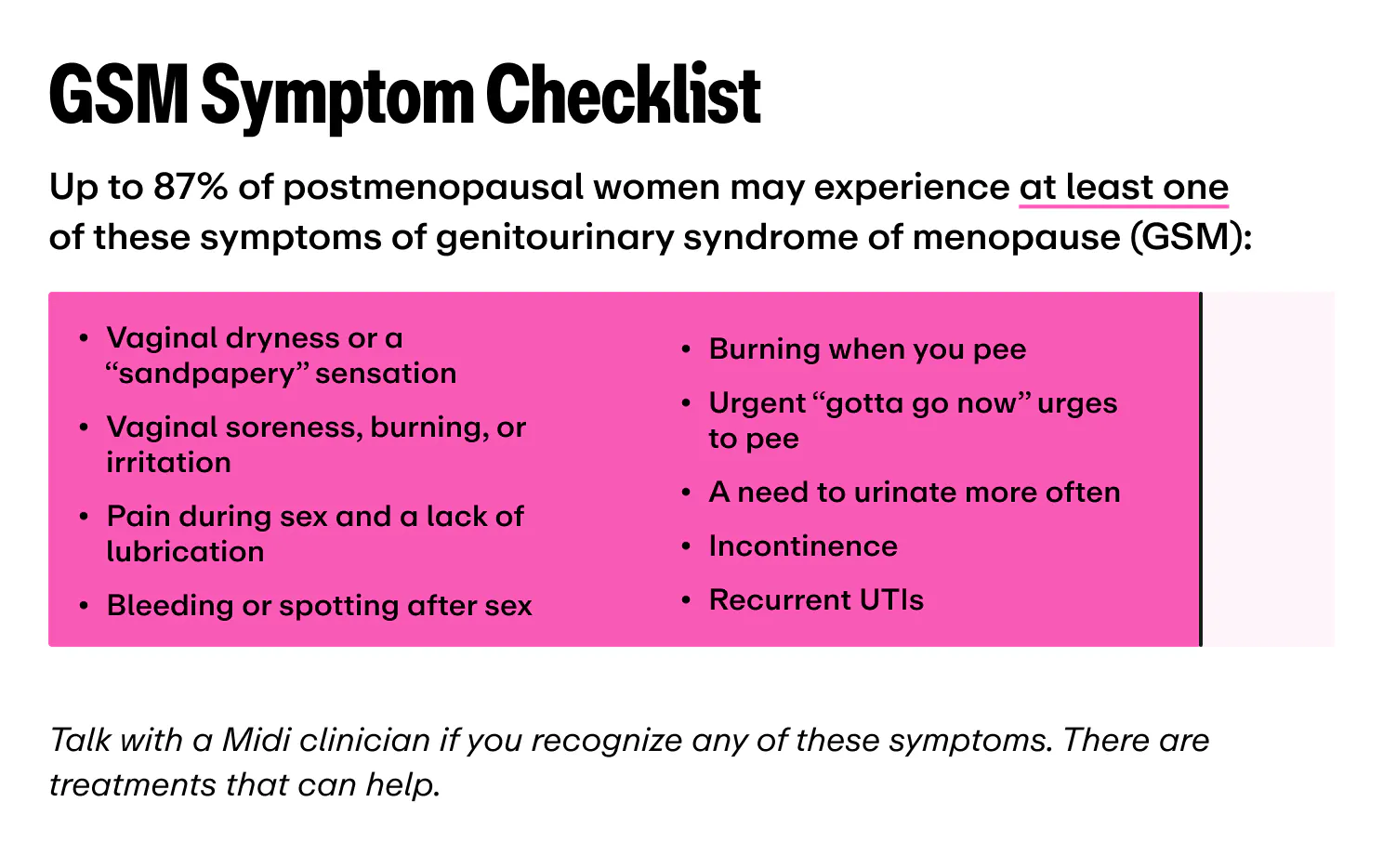
Genitourinary syndrome of menopause (GSM), formerly called vaginal atrophy, is an umbrella term for a collection of symptoms affecting the labia, clitoris, vagina, urethra, and bladder. It happens when estrogen loss starts changing the vaginal and vulvar tissue, making it thinner, drier, less elastic, and slower to heal.
GSM is incredibly common, but it often goes undiagnosed and untreated. Some research shows that up to 87% of postmenopausal women experience at least one symptom of GSM, and estimates suggest that half of women don’t get the treatment they need.
With GSM, after sex you may experience a scraped-with-sandpaper feeling, tiny tears around the vaginal opening, light spotting, or burning when you pee. It can start during perimenopause, and unlike hot flashes, which often fade with time, GSM tends to stick around and worsen without treatment.
“Once GSM is diagnosed, there are so many treatment options,” says Dr. Hanna. “Over weeks to months, treatment can improve the health and elasticity of vaginal tissue, making sex more comfortable. The tissue is resilient, and permanent damage is uncommon.”
Other Times Estrogen Dips: Breastfeeding, Birth Control, and Cancer Treatment
Breastfeeding, some types of hormonal birth control, surgical menopause, and certain cancer treatments can all lower estrogen enough to make vaginal tissue drier, thinner, and more sensitive.
A prescription for local vaginal estrogen can help, but it isn’t a one-size-fits-all fix. Women with certain hormone-sensitive cancers may need to stick with non-hormonal options like vaginal moisturizers and lubricants. Bring it up with your clinician to find a workable treatment plan.
Infections That Cause Pain or Burning After Sex
Burning after sex isn’t necessarily a lubrication problem—it can be due to an infection (and some symptoms can overlap). A few common ones include:
- Yeast infections can leave the vulvar tissue itchy, inflamed, and extra sore after friction, often with thick white discharge that resembles cottage cheese.
- Bacterial vaginosis (BV) can cause irritation, thin grayish discharge, and a fishy odor that’s often much more noticeable after sex.
- Urinary tract infections (UTIs) can cause burning when you pee, a frequent or urgent need to go, and pelvic pressure, sometimes starting within a day of sex.
- Sexually transmitted infections (STIs), including chlamydia, gonorrhea, trichomoniasis, and herpes, can cause burning, soreness, discharge, sores, or bleeding. STI rates are rising among the 55+ crowd, so having a new partner is a good reason to get tested—even with no symptoms.
A visit with a healthcare professional (and testing when necessary) can often tell you what you’re actually dealing with, so you can feel better ASAP.
Pelvic Floor Tension and Vaginismus
Just like any other muscle, your pelvic floor muscles can experience chronic tightness. And after sex, that can cause a deep ache, a bruised feeling, cramping, or like everything down there is still clenched, even hours later.
In midlife, dryness and muscle tension can feed off each other. When penetration hurts, your pelvic muscles may instinctively tighten to protect you. The catch? Those tight muscles can make sex hurt even more, creating a vicious cycle.
When the muscles involuntarily tighten around the vaginal opening, it’s called vaginismus. It’s a physical muscle response, not something you’re doing wrong. Treatment often includes pelvic floor physical therapy, where a trained therapist helps you relax your muscles through breathing exercises, stretching, hands-on release, and gradual desensitization.
Allergies and Irritants: Latex, Spermicide, Lubricants, and Soaps
Contact irritation or an actual allergy can be caused by a number of things: latex condoms, spermicides, flavored or warming lubes, scented wipes and washes, and even laundry detergent lingering on your underwear. This can bring on burning, redness, swelling, or itching that shows up within minutes to a few hours after sex.
And here’s the annoying part: A product you’ve used for years can suddenly become an agent of chaos. That’s because midlife’s thinner and more sensitive vaginal or vulvar tissue is less tolerant of ingredients that used to be fine.
If you suspect a reaction to an irritant, try one swap at a time so you can identify the problem. If latex seems suspicious, try polyurethane or polyisoprene condoms. Choose a simple, fragrance-free lubricant and skip the scented washes, wipes, and anything marketed as “tingly” or “warming.”
Positions, Depth, Duration, and Deep Pain After Sex
As important as when vaginal pain flares up is where you feel it. Unlike friction pain or dryness in the vagina or vulva, pain deep in the pelvis can involve the cervix, uterus, ovaries, or bowel.
Sometimes, it really is a matter of mechanics. Deep penetration can bump the cervix or put extra stretch on the tissues supporting your pelvic organs, leaving you crampy or achy afterward. You may notice it more around ovulation or your period, when your pelvis can be more sensitive.
But persistent deep pain deserves a closer look. Endometriosis, fibroids, ovarian cysts, pelvic inflammatory disease, and scar tissue from previous surgery can all cause pain during or after sex.
Sometimes, it’s because you simply went all in: Longer, more vigorous sex means more friction and more work for your tissues and muscles, which can leave you sore afterward. A few things to try for more comfort:
- Choose positions where you control the depth and speed.
- Take more time for foreplay—it can bring more blood to the area.
- Put a pillow under your hips to change the angle.
- If things start feeling dry or uncomfortable, pause and add more lube.
If deep pain keeps happening or getting worse, don’t just keep switching positions and hope for the best. It’s time to talk with a healthcare professional.
Less Common Causes: Skin Conditions, Vulvodynia, and Scarring
A few less-common issues can also make sex leave you sore, raw, or burning, and they’re worth knowing about. The reassuring part? Each has a treatment path that you can talk about with a healthcare professional.
- Lichen sclerosus is a vulvar skin condition that is more common after menopause. It can cause white, fragile skin that tears or feels sore after sex.
- Vulvodynia causes ongoing burning, stinging, or rawness around the vaginal opening.
- Old scars (from childbirth, an episiotomy, or pelvic surgery) can become more noticeable when vaginal tissue gets less elastic with age.
When Pain After Sex Plus Bleeding Needs Evaluation
Sometimes, spotting after sex happens due to tiny tears in vaginal tissue, and it’s often nothing serious. But actual bleeding after sex is worth paying attention to.
And any bleeding after menopause should be evaluated. It can have benign causes, like a cervical polyp or inflammation. Less commonly, it can be a sign of precancerous or cancerous changes on the cervix.
“When a patient mentions vaginal pain, the first step is to make sure there isn't something more serious going on,” says Dr. Hanna. “An evaluation can help rule out infection, injury, and other causes before we attribute the symptoms to hormonal changes.”
Book a visit sooner rather than later if you:
- have a fever or feel generally unwell
- notice foul-smelling discharge
- experience pain that lasts more than a couple of days
- have pain that keeps getting worse over several months
- have burning or pain when you pee
The rule of thumb: If bleeding after sex is new, unexplained, happens repeatedly, or occurs after menopause, book an in-person visit with a healthcare professional.
How to Relieve Soreness After Sex in the First 24 Hours
If you’re sore after sex, give your vagina a little TLC—and ideally, some time off. Here’s how else to relieve soreness:
- Urinate soon after sex and rinse the vulva with plain water (no scrubbing, douching, or scented anything).
- Cool things down with a cool compress or 10 to 15 minute sitz bath.
- Wear cotton underwear and loose clothing.
- Take ibuprofen or acetaminophen if you normally can take them.
- Use a plain, fragrance-free vaginal moisturizer and/or a thin layer of petroleum jelly on the external vulvar skin to ease irritation while it heals.
If friction is the culprit, you should notice a clear improvement within about a day. If you’re not getting better, or the pain is getting worse, talk with your clinician.
Treatments That Fix the Cause: Vaginal Estrogen, Moisturizers, Dilators, and Pelvic Floor Therapy
If changing vaginal tissue is the issue, treating the tissue itself can make a meaningful difference.
When declining estrogen is to blame, vaginal estrogen is often the go-to treatment. Available in low-dose creams, tablets, rings, and inserts, it treats many symptoms of GSM and helps vaginal tissue become healthier, more elastic, and better hydrated.
Because the dose is very low and the medication is used locally, vaginal estrogen can be an option for many women who aren’t candidates for—or don’t want—systemic forms of hormone therapy, like an estrogen patch or gel. But if you’re also dealing with hot flashes, night sweats, or other disruptive menopause symptoms, it may be worth discussing, because systemic hormone therapy can address those symptoms alongside vaginal changes.
There are also non-hormonal treatments for GSM. A few basics:
- Vaginal moisturizer: Used separately from sex and regularly—often a few times a week—vaginal moisturizers can help keep vaginal tissue hydrated.
- Lubricant: This is your in-the-moment friction fighter during sex. (You can use both moisturizer and lubricant, since they’re doing different jobs.)
- Pelvic floor physical therapist: When tight or overactive pelvic muscles are part of the problem, a pelvic floor physical therapist can help retrain them to relax.
- Vaginal dilators: These devices, often used with guidance from a pelvic floor physical therapist, can help when penetration itself is painful or the vaginal opening feels tight.
- Vaginal DHEA treatment: This is available in a cream or insert; it converts locally to estrogen to relieve symptoms of GSM.
What to Expect From a Visit About Pain After Sex
Keeping a few notes for a while can help you and your clinician connect the dots. Jot down when the pain starts, where you feel it, how long it lasts, what lubricant or products you used, where you are in your cycle if you’re still getting periods, and whether you noticed bleeding or discharge. Those details can make any patterns easier to identify.
Your clinician will likely ask about your menopause symptoms, periods, medications, sexual symptoms, and anything that’s changed recently. Depending on your symptoms, they may recommend an external or internal exam and a test for infections.
Much of the initial evaluation comes down to your history and symptoms, so telehealth can be a great place to start. Depending on your symptoms, your clinician may be able to recommend treatment or prescribe medication remotely. And a menopause specialist, like one of the clinicians at Midi, can offer compassionate virtual care that’s tailored to your needs. When needed, they can also help point you to an in-person specialist for additional care.

Key Takeaways
- Pain after sex is common in your 40s, 50s, and beyond, and it’s highly treatable. Dryness, changing estrogen levels, irritation, infection, and pelvic floor tension are some of the most common causes.
- During perimenopause and menopause, lower estrogen can make vaginal tissue thinner, drier, and more sensitive, sometimes causing soreness or burning hours after sex, even if penetration itself feels fine.
- Lubricants can help reduce friction, while vaginal moisturizers help with ongoing dryness. Depending on the underlying issue, treatments may also include vaginal estrogen, pelvic floor physical therapy, or dilator therapy.
- You don’t have to accept vaginal pain after sex as “just getting older.” Identifying the cause can help you enjoy intimacy again.
Frequently Asked Questions (FAQs)
Is it normal for down there to feel sore after sex?
A little soreness can happen after sex, especially if things were vigorous, lasted a while, or involved friction from dryness. But if soreness is severe or keeps coming back, check in with your clinician.
How long is it normal to hurt after sex?
Mild soreness from friction or prolonged sex should generally improve within 1 or 2 days. If the pain lasts longer, keeps returning, or gets worse instead of better, it’s worth an evaluation. Pain that’s severe or comes with bleeding deserves prompt medical attention.
Can deep sex cause pain after?
Yes, deep penetration can bump the cervix or stretch the tissues supporting your pelvic organs, leaving you crampy or achy afterward. Try positions where you can control the depth and speed. If the pain keeps happening or gets worse, talk with your clinician.
Why does it hurt to pee after sex?
Burning after sex when you pee can happen when friction irritates sensitive vulvar tissue, especially if you’re experiencing vaginal dryness. But it can also be a sign of a urinary tract infection (UTI), particularly if you’re also feeling a burning or urgent need to pee.
If you’re in perimenopause or menopause and want guidance from clinicians who specialize in women’s midlife health, book a virtual visit with Midi today.
Hormonal change is at the root of dozens of symptoms women experience in the years before and after their period stops.
Our trained menopause specialists can help you connect the dots to guide you towards safe, effective solutions.
Whether you need personalized guidance or a prescription routine to tackle symptoms—including brain fog, hot flashes, sleep trouble, mood swings, and weight gain—we’ve got you covered.
Midi’s mission is to revolutionize healthcare for women at midlife, wherever they live and whatever their health story. We believe that starts with education, to help all of us understand our always-changing bodies and health needs. Our core values guide everything we do, including standards that ensure the quality and trustworthiness of our content and editorial processes. We’re committed to providing information that is up-to-date, accurate, and relies on evidence-based research and peer-reviewed journals. For more details on our editorial process, see here.