


Can you drink on Ozempic or Wegovy? It’s a common question for women taking these semaglutide medications. The short answer is yes, but you’ll want to be a little more mindful about drinking alcohol while taking them. Alcohol may affect you differently on semaglutide, and drinking can worsen certain side effects, especially if you're also experiencing perimenopause symptoms. Keep reading for what to know about semaglutide and alcohol, plus how a Midi Health clinician can help you make safer, healthier choices while taking GLP-1s.
Wine with dinner, a nightcap after a long week, a glass of champagne at a celebration—for many women, alcohol is simply part of life. But if you’ve recently started taking semaglutide, a GLP-1 medication sold under brand names like Ozempic® and Rybelsus® (FDA-approved for type 2 diabetes) and Wegovy® (FDA-approved for chronic weight management and other uses in certain adults), you might be wondering whether it's still safe to enjoy an occasional drink.
So, can you drink alcohol on Wegovy or Ozempic? The short answer is yes. But it’s a good idea to drink more cautiously, because alcohol may affect you differently and potentially worsen certain side effects.
In fact, some women notice that alcohol hits harder or simply feels different after starting semaglutide. The medication can affect the brain's reward pathways and slow how quickly food leaves your stomach, which may help explain the changes.
Read on for more about why alcohol might feel stronger (or even a little less appealing) when taking semaglutide, the potential risks to watch for, and what women in midlife should know. Plus, learn how a clinician can help you make informed choices about drinking based on your health and medical history.
Semaglutide and Alcohol: Is It Safe to Drink?
Drinking alcohol while taking semaglutide isn't specifically prohibited, but that doesn't mean it's risk-free. The prescribing information for Wegovy and Ozempic doesn't list alcohol as a contraindication or identify a specific interaction with alcohol.
That said, experts generally recommend limiting alcohol while taking semaglutide medications, including Wegovy and Ozempic. That's partly because alcohol comes with its own health risks, including disrupted sleep, unwanted weight gain, and an increased likelihood of certain cancers.
Alcohol use is also strongly associated with gastrointestinal (GI) symptoms like nausea, heartburn, and even diarrhea—all side effects you may notice from semaglutide, too. So consuming both alcohol and semaglutide together can increase these symptoms and make your treatment a bit more challenging.
Excessive drinking can also increase the chances of illness, injury, and premature death. Even moderate drinking carries some health risks, according to the CDC. And those risks aren't limited to people taking GLP-1 medications, so drinking less alcohol can be helpful overall.
Semaglutide and alcohol also each affect your stomach, blood sugar, and appetite, so combining them may change how you feel. Some people also find that alcohol becomes less appealing after starting semaglutide.
If you're taking semaglutide and want to cut back on alcohol, talk with your clinician about the best approach for you. If you drink heavily or regularly, don't stop abruptly without medical guidance, since alcohol withdrawal can be dangerous.
Why Does Alcohol Hit Harder on Semaglutide?
Many women discover that alcohol affects them differently when they start taking semaglutide. There’s still limited research on this topic, but early evidence suggests a few possible reasons:
- Your stomach empties more slowly: Semaglutide slows down how quickly food and liquids leave your stomach, a process called delayed gastric emptying. This may change how quickly alcohol is absorbed and when you feel its effects.
- Alcohol may take longer to hit: Some people might notice that alcohol takes longer to “hit” than usual. In a 2025 study published in Scientific Reports, people taking GLP-1 medications reported feeling less intoxicated and noticed that it took longer for the effects of alcohol to kick in.
- Your body may absorb alcohol faster if you’ve eaten less: Semaglutide also suppresses appetite, you may end up drinking with less food in your stomach, allowing your body to absorb alcohol more quickly in some instances, too.
- Drinking may feel less satisfying: Semaglutide affects pathways in your brain involved in appetite, pleasure, and reward. These effects help regulate your appetite but may also dampen the “buzz” you get from alcohol, making drinking feel less satisfying.
Again, research on semaglutide and alcohol is still limited, and experiences can vary. If you drink alcohol, your best bet may be to start with less than you normally would, pay attention to how you feel, and talk with your clinician if you experience side effects.
Can Semaglutide and Alcohol Cause Low Blood Sugar?
Yes, combining semaglutide and alcohol may increase your risk of low blood sugar (hypoglycemia), especially if you take certain diabetes medications or drink on an empty stomach.
Alcohol can actually lower your blood sugar, even if you're not taking a GLP-1 medication. Because your liver is busy metabolizing the alcohol, it can produce and release less glucose (blood sugar) into your bloodstream, particularly when you haven't eaten enough. So it's important to be careful when drinking alcohol, particularly if you take diabetes medications like insulin or sulfonylureas, because these can also cause your blood sugar to drop. The American Diabetes Association recommends avoiding alcohol on an empty stomach to help reduce this risk.
Meanwhile, semaglutide also lowers blood sugar by helping your pancreas release more insulin when blood sugar is high and suppressing glucagon, a hormone that raises blood sugar. While semaglutide alone is less likely to cause low blood sugar, taking it with certain diabetes medications increases that risk, and alcohol can increase the risk further.
Whenever using these medications or drinking alcohol, watch for signs of low blood sugar, which can include shakiness, sweating, dizziness, a rapid heartbeat, sudden hunger, or confusion. Some of these symptoms can be mistaken for feeling tipsy. If you have diabetes, talk with your clinician about how to recognize and treat low blood sugar, especially if you plan to drink. And in general, if you take semaglutide, ask your clinician how alcohol may affect your blood sugar.
Does Alcohol Make Semaglutide Side Effects Worse?
It can. Semaglutide and alcohol can trigger some of the same uncomfortable side effects, and drinking while taking semaglutide may make them worse.
The most common side effects of Ozempic and other semaglutide medications involve your digestive system. A 2025 study published in Annals of Internal Medicine found that nearly 70% of emergency room visits attributed to semaglutide were related to gastrointestinal (GI) side effects like nausea, vomiting, and abdominal pain. Other common semaglutide side effects include diarrhea, constipation, and acid reflux (also called “heartburn”).
Alcohol can make some of these symptoms worse. It can slow digestion and trigger or worsen acid reflux. And because semaglutide slows down how quickly your stomach empties, drinking may make you feel even more nauseated or uncomfortably full. Alcohol can also contribute to dehydration, especially if you're already dealing with vomiting or diarrhea, which can lead to headaches and worsen fatigue.
You may not be able to avoid semaglutide side effects completely. But you can take steps to minimize unpleasant symptoms while taking GLP-1s. Stay hydrated, limit alcohol, and consider skipping drinks altogether if you're already feeling nauseated or experiencing other digestive symptoms.
It's also worth being extra cautious when starting semaglutide or increasing your dose, since side effects are often more noticeable during these times.
Alcohol, Pancreatitis, and Other Serious Risks to Know
Serious side effects from semaglutide are uncommon, but the medication does carry a warning about pancreatitis, or inflammation of the pancreas. Heavy alcohol use is also a known cause of pancreatitis, so drinking heavily while taking semaglutide may put you at greater risk, although the combined effects haven't been well studied.
It's important to know the warning signs of pancreatitis, even if you don’t drink alcohol. These include severe, persistent abdominal pain that may spread to your back, with or without nausea and vomiting. If you experience these symptoms, stop taking semaglutide and seek medical attention right away. Talk with your clinician about your risks if you have a history of pancreatitis, gallbladder problems, or heavy alcohol use.
Alcohol is also hard on the liver. Drinking heavily over time can damage your liver and increase your risk of alcohol-related liver disease. While semaglutide may improve certain types of fatty liver disease, that doesn't cancel out the harmful effects of alcohol. Severe vomiting or diarrhea, whether from alcohol or semaglutide, can also cause dehydration and, in rare cases, acute kidney injury.
Bottom line? When it comes to GLP-1 and alcohol, drinking less or skipping alcohol altogether is generally better for your health. Even occasional drinking carries some risks, but regular heavy drinking is especially concerning.
Does Semaglutide Reduce the Desire to Drink?
Does Wegovy help with alcohol cravings? What about Ozempic? Semaglutide isn’t FDA-approved to treat alcohol use disorder or to reduce drinking, and it hasn’t been formally shown to be safe or effective for those uses. Researchers are studying whether GLP-1 medications affect alcohol use, and some people taking them report that alcohol feels different or less appealing. These reports are early and don’t apply to everyone.
Researchers are exploring whether GLP-1 receptors in the brain’s reward pathways play a role, but how this might work isn’t yet understood. A 2023 study that analyzed Reddit posts and surveyed people taking semaglutide or tirzepatide found that participants reported drinking less alcohol and were less likely to binge-drink. Because this study relied on self-reported data and was not a controlled trial, it can’t show that the medications caused these changes.
Two small clinical trials published in 2025 and 2026 studied semaglutide in adults with alcohol use disorder. Participants who took semaglutide reported fewer drinks on days they drank and fewer heavy drinking days than those taking a placebo, and some reported reduced cravings. But these studies were small, and larger studies are needed before researchers can say whether semaglutide is safe or effective for this use.
Again, semaglutide is not FDA-approved to treat alcohol use disorder.
If you notice you're drinking less while taking semaglutide or have concerns about your drinking, it's worth mentioning to a healthcare professional, who can help you understand what's happening and find the right support.
How Alcohol Affects Weight Loss on Semaglutide
An occasional drink or two probably won’t derail your weight loss goals while taking semaglutide. But drinking alcohol can affect your ability to maintain a healthy weight, and that’s true regardless of whether you’re taking these medications. Here’s why:
- Alcohol is calorie-dense: Each drink can pack plenty of empty calories. Alcohol contains 7 calories per gram but provides little nutritional value, making it easier to exceed your daily calorie goals.
- Alcohol can lower your inhibitions around food: After drinking, you may eat more than usual and make less nutritious food choices, sometimes without even realizing it.
- Alcohol can interfere with sleep: Drinking can disrupt your sleep, even if it makes you feel sleepy at first. And regularly getting too little sleep can contribute to weight gain over time. During midlife, when you might already be dealing with night sweats and menopause insomnia, getting enough restful sleep becomes extra important.
- Alcohol affects your metabolism, too: Because your body prioritizes breaking down alcohol, it temporarily burns less fat for energy. Over time, the extra calories from frequent drinking may make it harder to reach your weight loss goals.
GLP-1s may curb your appetite, but choosing nutritious foods is just as important while on these medications. A healthy, balanced diet on semaglutide means getting enough protein to help preserve muscle, eating plenty of fiber and healthy fats, and staying hydrated.
Alcohol and Semaglutide During Perimenopause and Menopause
What if you're taking semaglutide while going through perimenopause or menopause? There are a few extra things to consider when it comes to semaglutide and alcohol during midlife.
Your relationship with alcohol may shift during this time, regardless of whether you’re taking a GLP-1. Many women notice they tolerate alcohol less well in their 40s or 50s. Perimenopause is marked by fluctuating and declining estrogen, which can shift body fat toward your midsection, increase insulin resistance, and contribute to muscle loss. These changes to your body composition can also affect how your body handles blood sugar, and drinking regularly may make it harder to manage your weight and overall health.
Alcohol may also make some menopause symptoms like hot flashes and night sweats worse and interfere with sleep and mood. In fact, a recent study following midlife women found that drinking, especially in larger amounts, was linked to more bothersome menopause symptoms. A 2025 study, meanwhile, found that some perimenopausal women avoided alcohol because it made their symptoms worse, while others drank more often to cope.
Midlife can be a good time to rethink your drinking habits, whether or not you take a GLP-1 medication. That's important, considering that alcohol increases breast cancer risk, even at relatively low levels of drinking, and heavy drinking can also affect bone health. Cutting back may benefit your sleep, heart health, and overall well-being as you age.
A menopause-informed clinician, like the ones at Midi, can help you navigate your health concerns during this stage of life. They can review your medications, hormone therapy (if you use it), and drinking habits, plus discuss any concerns about a semaglutide alcohol interaction or other health risks.
If You Choose to Drink: How to Do It More Carefully
If you choose to drink while taking semaglutide, being a little more mindful about how and when you do it may help you avoid some unpleasant side effects. These tips can come in handy, even if you’re not taking a GLP-1 medication:
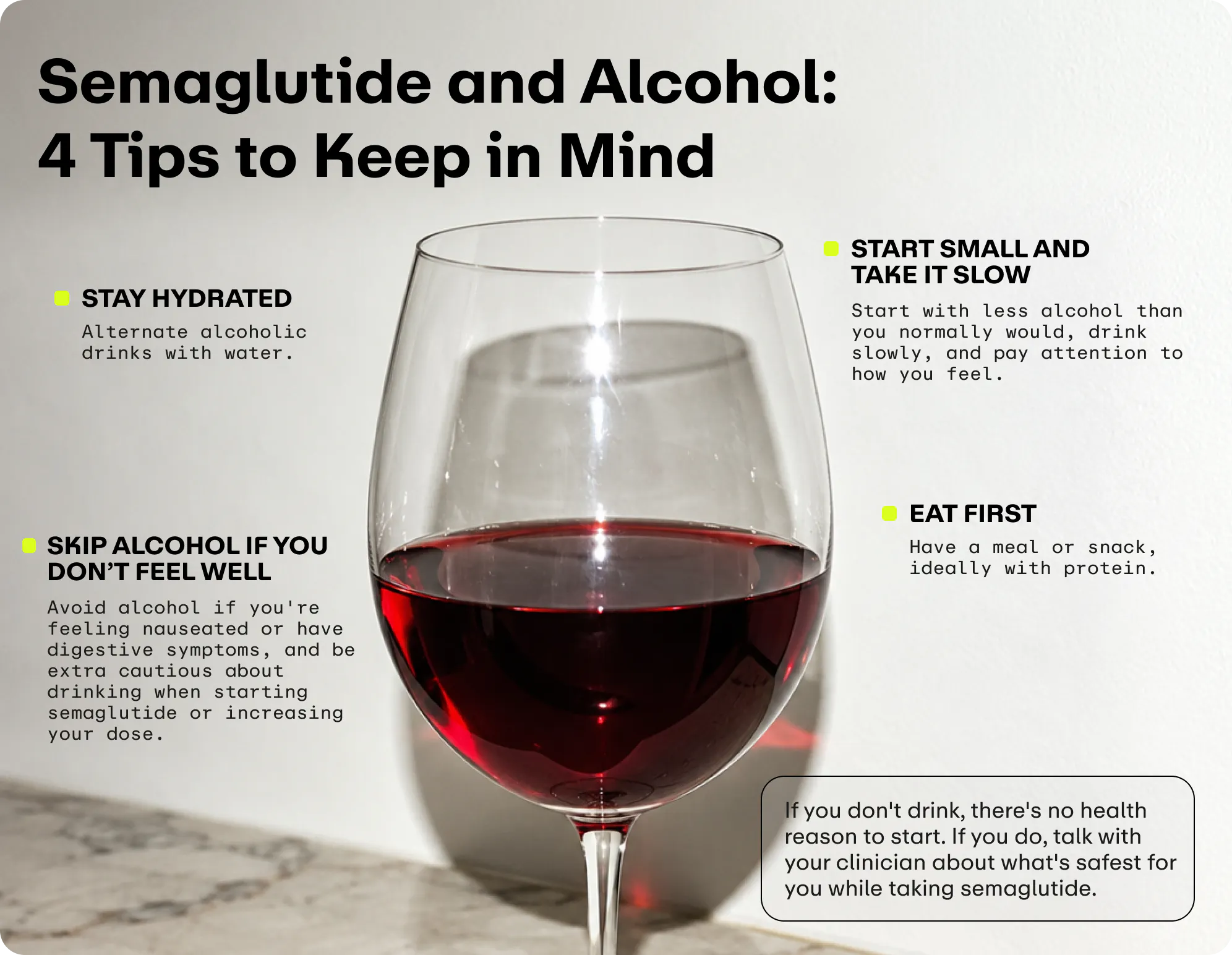
- Start small and take it slow: For women, moderate drinking means one drink or fewer on days when you drink, according to the CDC. Start with less than you normally would, drink slowly, and pay attention to how you feel. If you don’t currently drink, it’s better not to start.
- Remember to eat and stay hydrated: Don’t drink on an empty stomach. Have a protein-rich meal or snack, and try alternating alcoholic drinks with water to stay hydrated.
- Skip alcohol if you’re experiencing side effects: Alcohol can worsen semaglutide side effects like nausea, vomiting, indigestion, or diarrhea. Consider skipping alcohol when you first start semaglutide or increase your dose, too, since digestive side effects are often more noticeable during these times.
- Talk with your clinician about drinking: If you’re concerned about how much you drink, your clinician can help connect you with the right support. You can also call the Substance Abuse and Mental Health Services Administration (SAMHSA) national helpline at 1-800-662-4357 for free, confidential support.
When to Talk With a Healthcare Professional About Semaglutide and Alcohol
Having an open conversation with your clinician about alcohol can help you understand your risks and make informed decisions about drinking while taking semaglutide. Your clinician isn’t there to judge; they can help you come up with a plan that takes the full picture of your health into account.
At your visit, you might discuss:
- Any health conditions you have, such as a history of pancreatitis, type 2 diabetes, liver concerns, gallbladder problems, or a history of heavy drinking.
- Other medications you’re taking and how they might interact with semaglutide and alcohol. That might include glucose-lowering medications, hormone therapy, oral contraceptives, blood thinners, or any other prescription medications, along with over-the-counter supplements.
- Menopause symptoms you’re experiencing, like night sweats, hot flashes, insomnia, and perimenopause anxiety, plus how semaglutide and alcohol might affect those.
But you shouldn’t wait for a routine visit for certain symptoms. Seek urgent medical care if you experience severe or persistent abdominal pain, repeated vomiting, fainting, or signs of low blood sugar that don't improve with treatment. These could signal complications like pancreatitis, dehydration, or hypoglycemia.
Let’s be honest—navigating health changes in midlife can feel like a lot. A trained clinician can help you get support with weight management, menopause symptoms, and everyday lifestyle questions. If you are a Midi patient with questions about alcohol and your medications, you can book a visit to talk through your options.
Key Takeaways
- Drinking alcohol while taking semaglutide isn't specifically prohibited, but it's best to be cautious. Wegovy and Ozempic don't list a specific alcohol interaction, but drinking still carries risks.
- Alcohol may hit you differently on semaglutide, whether that means taking longer to feel its effects or finding drinking less enjoyable. Semaglutide is not FDA-approved to treat alcohol use disorder or reduce drinking, and research on this question is still early.
- Drinking can make semaglutide side effects like nausea, vomiting, and acid reflux worse. It can also increase your risk of low blood sugar, especially if you take certain diabetes medications or drink on an empty stomach.
- During perimenopause and menopause, alcohol may aggravate symptoms like hot flashes, night sweats, and sleep problems. Regular drinking can also make it harder to manage your weight.
- If you choose to drink while taking semaglutide, start with less than usual and pay attention to how you feel. Eat before drinking, include some protein, and stay hydrated.
- A clinician, like those at Midi, can help you review your medications, menopause symptoms, and drinking habits to make a plan that fits your needs.
Frequently Asked Questions (FAQs)
What not to mix with semaglutide?
Several medications can interact with semaglutide, including insulin and other diabetes drugs that may increase your risk of low blood sugar. Combining semaglutide with other GLP-1s also isn't recommended. It's best to check in with your clinician about any prescription or over-the-counter medications you’re taking.
What is the best alcohol to drink while taking semaglutide?
There’s no “best” alcohol to drink while taking GLP-1 medications like semaglutide, and all types carry some risk. But in general, choosing drinks with lower alcohol content and fewer calories may help limit some of those risks.
Is semaglutide hard on the liver?
The FDA has approved Wegovy to treat a liver disease called metabolic dysfunction-associated steatohepatitis (MASH), an advanced form of what is sometimes referred to as “fatty liver disease,” in certain adults. That said, rare cases of liver injury have been reported, though it's not always clear whether semaglutide caused them. Talk with your clinician if you have liver concerns.
Does alcohol stop semaglutide from working?
No, alcohol doesn't directly stop semaglutide from working. An occasional drink probably won’t impact your weight loss goals on semaglutide, but regular drinking can make weight management harder. Alcohol is calorie-dense, can disrupt your sleep, and may lower your inhibitions around food.
Can you take semaglutide after drinking alcohol?
You can generally take semaglutide after drinking alcohol. Alcohol isn't specifically prohibited while taking semaglutide, but there are good reasons to be cautious about combining the two. Alcohol may affect you differently and worsen side effects like nausea, vomiting, and dehydration.
This article is for informational purposes only and does not constitute medical advice. The information contained herein is not a substitute for professional medical advice, diagnosis, or treatment. Always consult a qualified healthcare professional with any questions regarding a medical condition or before starting any new treatment.
If you’re in perimenopause or menopause and want guidance from clinicians who specialize in women’s midlife health, book a virtual visit with Midi today.
Hormonal change is at the root of dozens of symptoms women experience in the years before and after their period stops.
Our trained menopause specialists can help you connect the dots to guide you towards safe, effective solutions.
Whether you need personalized guidance or a prescription routine to tackle symptoms—including vaginal dryness and irritation, brain fog, hot flashes, sleep trouble, mood swings, and weight gain—we’ve got you covered.
Midi’s mission is to revolutionize healthcare for women at midlife, wherever they live and whatever their health story. We believe that starts with education, to help all of us understand our always-changing bodies and health needs. Our core values guide everything we do, including standards that ensure the quality and trustworthiness of our content and editorial processes. We’re committed to providing information that is up-to-date, accurate, and relies on evidence-based research and peer-reviewed journals. For more details on our editorial process, see here.