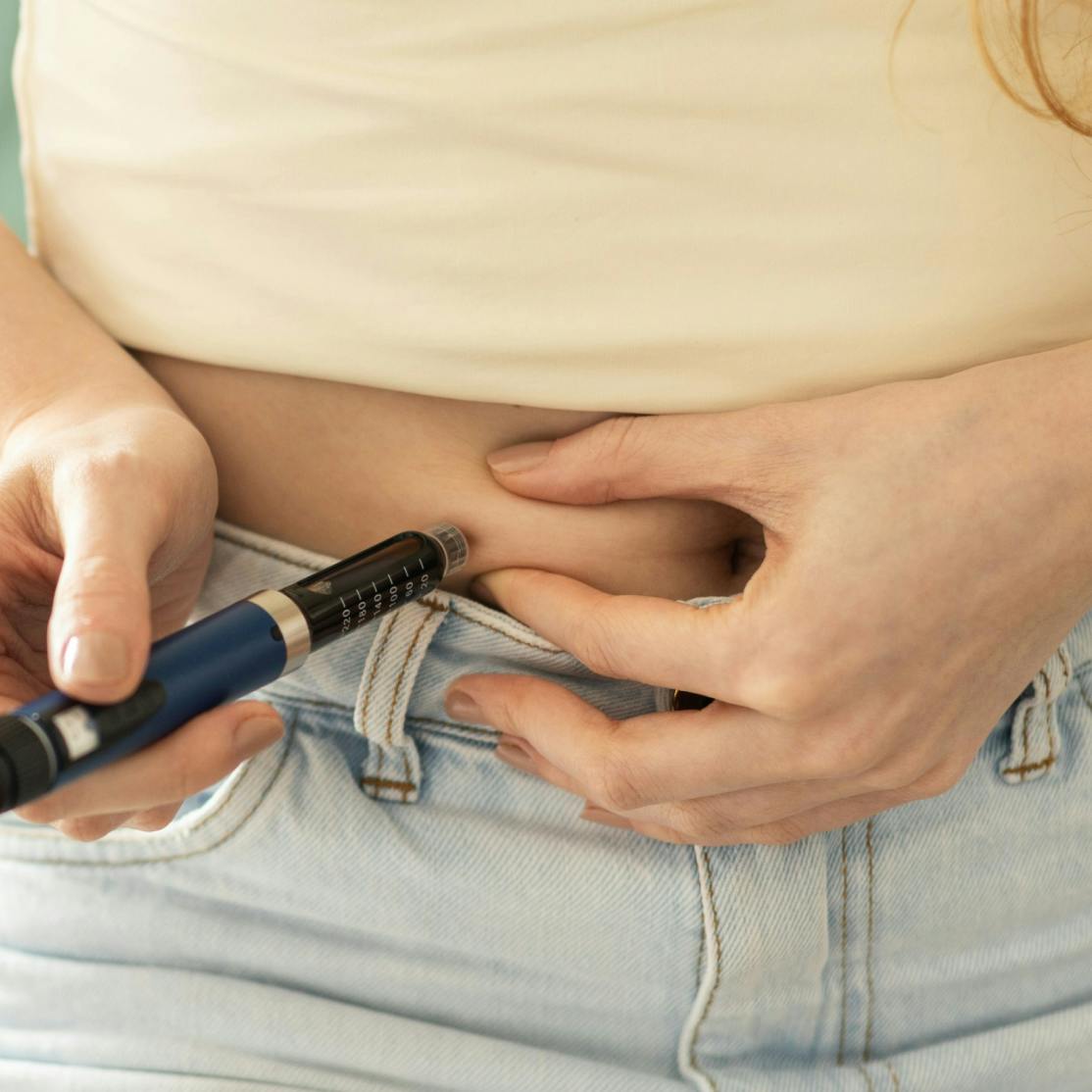



How long does it take for Wegovy to work? For most women, the effects aren’t immediate, but that doesn’t mean the weight loss medication isn’t working. Some women notice appetite changes after a few weeks, while more obvious weight loss can take months. If you're worried about Wegovy not working, remember that everyone's timeline is different. A Midi Health clinician can guide you through each step of the journey, so you’ll know what to expect and when to change course.
If you’ve recently started Wegovy (semaglutide), you’re probably wondering: “How long does it take for Wegovy to work?” The truth is, it works in stages, rather than delivering overnight results.
Some women observe changes in their appetite within the first few weeks, but noticeable weight loss typically happens over the first several months as the dose increases. And if you’re in midlife, your experience may look different from what you’ve heard from younger friends or read about online. That's because perimenopause and menopause can affect metabolism, appetite, and sleep patterns. But that doesn’t mean Wegovy can’t work for you.
Ahead, we’ll break down how Wegovy works and what to expect week by week, including what progress looks like beyond the number on the scale. We’ll also explain why results may be slower in midlife and when it’s time to talk with a healthcare professional, like a Midi clinician, about your dose or treatment plan.
How Long Does It Take for Wegovy to Work? The Short Answer
So, how fast does Wegovy work? You might notice appetite changes—like feeling less hungry than usual—within the first few weeks. Measurable weight loss may start within the first month, but more noticeable results typically take several months, with progress continuing month after month.
At Midi, clinicians titrate the dosing along with you, aiming for a dose that supports a weight loss of 1 to 2 pounds per week. This rate of weight loss can typically be reached within one to several months, depending on the person and how much you have to lose.
There isn't a standard timeline for everyone. For Wegovy injections, treatment starts at a low dose that gradually increases over about 4 months. A slow start to weight loss on the lowest doses is expected and doesn't mean Wegovy won't work for you—most respond with increasing dosing.
Keep in mind that clinical trial results reflect averages across many participants, not what everyone can expect month by month. So if you're wondering, “When will I start losing weight on Wegovy?” it ultimately depends on your dose, how consistently you take the medication, and how your body responds.
How Does Wegovy Work in the Body (and Why Isn’t It Instant)?
Wegovy (semaglutide) works by mimicking the GLP-1 hormone, which helps regulate hunger and fullness signals in the brain. It also slows stomach emptying, helping you feel full longer, while regulating blood sugar.
Each weekly injection builds on the last, so levels of the medication in your body gradually rise and reach a steady state after several weeks at a given dose. The starting dose is designed to help your body adjust to the medication and reduce the risk of digestive side effects, not deliver major weight loss right away.
Wegovy works similarly to tirzepatide (sold under the brand names Zepbound and Mounjaro) on GLP-1 receptors, but tirzepatide has an additional mode of action on GIP receptors. While Wegovy acts on GLP-1 receptors, tirzepatide acts on both GLP-1 and GIP receptors. (GLP-1 receptor agonists primarily slow digestion and quell appetite, while GIP receptor agonists increase insulin sensitivity and impact fat metabolism.)
Both medications can help reduce appetite and result in significant amounts of weight loss. That said, although tirzepatide produced, on average, a slightly greater amount of weight loss than semaglutide in a head-to-head clinical trial in participants with obesity. Your clinician can help you decide which medication is best for your needs.

Wegovy Timeline Week by Week: The First Month on the Starting Dose
The Wegovy weight loss timeline begins with the 0.25-milligram (mg) starting dose, which you take once weekly for the first 4 weeks. This stage is designed to help your body get used to the medication, and it may not produce substantial weight loss until you increase the dose subsequently. Some women may notice less hunger or feel full sooner after eating, while others may notice very little change at first.
During the first month, you may also see a little weight loss, no change at all, or even small fluctuations on the scale. All of these are possible and normal early on. Early side effects can include nausea, fatigue, or constipation, which often ease as your body adjusts to Wegovy.
It’s a good idea to track more than just your weight this month, including how hungry you feel, whether you're eating smaller portions or snacking less, and how quickly you feel full. These changes can be early signs that Wegovy is having an effect, even if the scale hasn't moved much yet.
True Stories Of Transformation
Months 2 Through 4: What Changes as the Dose Increases
During months 2 through 4, you'll typically increase your Wegovy dose every 4 weeks. The standard schedule is:
- Weeks 5 to 8: 0.5 mg once weekly
- Weeks 9 to 12: 1 mg once weekly
- Weeks 13 to 16: 1.7 mg once weekly
As the dose increases, you might have even less of an appetite or feel full sooner, and weight loss may become more consistent. Still, everyone's Wegovy weight loss timeline is different, and you may not see steady results right away.
Side effects like nausea or constipation can reappear after each dose increase. Your clinician may choose to keep you at a particular dose longer if you’re having trouble with side effects. That doesn't mean treatment isn't working. A slower escalation can help your body adjust.
You may also notice that weight loss is uneven, with some weeks showing more movement on the scale than others. That’s normal, and your overall progress over several weeks matters more than any single weigh-in. Bring your tracking notes to your check-in visits, so you and your clinician can make informed decisions about your dose.
Month 5 and Beyond: Reaching the Maintenance Dose and Realistic Results
By month 5, you may have reached your maintenance dose, which is typically 2.4 mg once weekly. While many people reach this dose at week 17, others may stay at 1.7 mg or need more time before increasing their dose.
By this point, weight loss can start to add up. In one clinical trial, people taking semaglutide lost an average of 10.6% of their starting body weight by week 20. In another trial, people taking 2.4 mg of semaglutide lost an average of 14.9% of their starting body weight over 68 weeks, compared with 2.4% in the placebo group. Keep in mind that these are averages, not individual predictions.
Wegovy is intended for long-term weight management, and weight loss may slow or plateau over time. This doesn’t necessarily mean that the medication has stopped working. Plateaus are a common part of weight loss, but if yours persists, it’s worth discussing with your clinician. There’s no universal time limit for staying on Wegovy. Your clinician can help determine whether continuing treatment is appropriate based on your response, health history, and goals.
Wegovy Pill vs. Injection: Does the Timeline Differ?
With the availability of the Wegovy pill, it’s natural to wonder whether it works faster or slower than the weekly injection. Both forms contain the same active ingredient, semaglutide, and can produce substantial weight loss, but there's no clear evidence that one works faster than the other.
You take the Wegovy injection once per week and the pill once per day. Both follow a gradual dose-increase schedule, reaching the maximum dose over several months.
In a 2025 clinical trial, people taking the standard maintenance dose of oral semaglutide (25 mg daily) lost an average of 13.6% of their starting body weight after 64 weeks. This is slightly less than the weight loss seen with the injectable Wegovy.
The practical differences between the Wegovy pill and injection are also worth considering. While a pill may seem more convenient, you have to take it on an empty stomach, with no more than 4 ounces of plain water. Then, you have to wait at least 30 minutes before eating, drinking, or taking other oral medications. These instructions matter because food and too much water can affect how much semaglutide your body absorbs. The weekly injection doesn't have these food or water restrictions.
Talk through both options with your clinician to see which method, if either, is right for you. For some, a quick weekly injection is easier than having to remember a daily medication, while for others, taking a daily pill is easier to work into their lifestyles.
How Long Do Other GLP-1 Medications Take to Work?
Other weight loss medications, like Zepbound (tirzepatide) and Saxenda (liraglutide), also work gradually, but their timelines aren’t identical to Wegovy’s. Like Wegovy, Saxenda targets GLP-1 receptors, while Zepbound targets both GLP-1 and GIP receptors, which help regulate appetite and blood sugar.
The two injectables also follow different dosing schedules: Zepbound starts with a low weekly dose that can increase at intervals of at least 4 weeks, while Saxenda starts with a low daily dose that usually increases each week. As with Wegovy, some people may notice appetite changes early on, but more substantial weight loss generally takes several months.
You may be wondering about GLP-1s like Ozempic and Mounjaro. Ozempic contains semaglutide, the same active ingredient as Wegovy, while Mounjaro contains tirzepatide, the same ingredient as Zepbound. Unlike Wegovy and Zepbound, though, Ozempic and Mounjaro are FDA approved for treating type 2 diabetes, not for weight management.
Ultimately, how quickly a medication works is just one factor to consider. Midi clinicians specialize in midlife women's health and can help you sort through your options to find a weight loss treatment that works for your body and goals.
What Does ‘Working’ Look Like Beyond the Scale?
The scale isn’t the only measure of whether Wegovy is working. Before you see the number on the scale drop, you might spot other changes that can help you stay the course. Some of these non-scale victories include less “food noise” (constant thoughts about food), more satisfaction from smaller portions, fewer cravings, and less interest in snacking. If your appetite and eating habits are changing, that can be a sign that Wegovy is working, even when the scale isn't moving much.
Your clinician may also track other signs of progress, including changes in your waist size, blood sugar, and blood pressure. You can also keep simple weekly notes to track your hunger, your cravings, your energy levels, and how your clothes fit. Together, these measures can give you a fuller picture of your progress on Wegovy than the number on the scale alone.
Why Might Wegovy Take Longer to Work for Women in Midlife?
When it comes to Wegovy and menopause, your weight loss experience may look different than it did when you were younger.
As estrogen levels fluctuate and gradually decline during perimenopause and menopause, your body tends to store more fat around your middle, and muscle mass also tends to decline with age. These changes in body composition, fat distribution, and metabolism can make weight loss trickier than it used to be. That certainly doesn't mean Wegovy won't work during menopause, though. How much weight you lose and how quickly can vary from person to person.
And it's not just hormonal changes that can make it harder to manage your weight in midlife. Disrupted sleep, night sweats, stress, and mood changes can also make it harder to stick with healthy habits.
For some women, hormone replacement therapy (HRT) may be recommended. While it isn't a weight loss treatment, hormone therapy can help relieve menopause symptoms that interfere with sleep and daily activities. Some research suggests it may help limit changes in body fat distribution. Your clinician can help determine whether hormone therapy is appropriate for you while taking Wegovy.
Lifestyle habits also matter. Strength training and getting enough protein can help preserve muscle during weight loss, which is especially important in midlife. Building these habits can support your overall progress while taking Wegovy.

Wegovy Not Working? Common Reasons Results Stall
Worried about Wegovy not working? A slow start or a stretch without weight loss doesn't necessarily mean the medication isn't effective. Many women see little weight loss during the first few months, particularly while taking lower doses. Missed doses or inconsistent dosing can also affect progress, whether you’re taking weekly injections or daily pills. Eating beyond fullness, drinking high-calorie beverages or alcohol, and getting very little physical activity can also play a role.
Your clinician may also look for underlying factors that make weight management more challenging, such as thyroid conditions, certain medications, sleep apnea, or insulin resistance.
Some people respond less strongly to Wegovy than others, even when following their treatment plan. If that’s the case, your clinician might reassess your dose, your dose-increase schedule, or whether another medication would be more appropriate.
Skipping ahead in the dosing schedule or escalating dosage too rapidly can lead to more side effects. That’s why titrating doses in collaboration with an experienced clinician is recommended. Purchasing medication from unverified sources can put your health at risk.
When Should You Talk With a Clinician About Your Wegovy Dose?
It's worth checking in with your clinician if you haven't noticed any changes in your appetite or weight after a few weeks at an effective dose or if your side effects aren't getting better. You should also reach out if your weight loss has stalled for several weeks or you're experiencing unusual symptoms.
It can help to bring a few questions to your visit:
- Should my dose or dose-increase schedule change?
- Could side effects be affecting my progress?
- Could menopause symptoms be making weight management harder for me and, if so, could hormone therapy be an option?
A clinician-led GLP-1 program should include regular check-ins, dose management, help with side effects, and attention to your overall health. Midi clinicians specialize in women’s health and can review your progress on Wegovy while considering hormonal changes, sleep, and other concerns.
You can book a virtual visit with a Midi clinician who understands the unique challenges of managing your weight during perimenopause and menopause. Most major insurance plans are accepted, making it easier to get the support you need.
Key Takeaways
- Wegovy works gradually. Some women notice appetite changes within the first few weeks, while more noticeable weight loss typically develops over several months.
- Both the Wegovy injection and pill follow gradual dose-increase schedules to help your body adjust, so a slow start doesn't necessarily mean the medication isn't working.
- Progress isn’t just about the scale. Less food noise, fewer cravings, and feeling satisfied with smaller portions can be early signs that Wegovy is working.
- Perimenopause and menopause can make weight management more challenging due to changes in body composition, sleep, and muscle mass, but that doesn't mean Wegovy won't work for you.
- If weight loss stalls or side effects persist, a clinician can help review your progress, adjust your treatment plan, and address other midlife health concerns.
Frequently Asked Questions (FAQs)
How long does it take to lose 20 lb with Wegovy?
There’s no set timeline for losing 20 pounds (lb) on Wegovy. Results depend on your starting weight and dose, as well as how your body responds to the medication. Some people may reach that milestone within several months, while others take longer. Your clinician can help you set realistic goals and track your progress over time.
What to expect on day 1 of Wegovy?
On your first day of Wegovy, you may not notice much of a difference. Some people experience early appetite changes or side effects such as nausea, while others feel no immediate effects. If you’re starting injections, the initial dose is 0.25 mg. The pill starts at 1.5 mg and is taken once daily.
Does 0.25 mg Wegovy suppress appetite?
Yes, some people notice reduced hunger while taking the 0.25 mg starting dose of Wegovy injections. However, this dose is primarily intended to help your body adjust to the medication. If you don’t experience appetite suppression during the first 4 weeks, it doesn’t necessarily mean Wegovy won’t work for you.
When do you start losing belly fat on Wegovy?
Wegovy can help reduce overall body fat, including abdominal fat, but there’s no way to predict when you’ll notice changes around your waist. You can’t choose where your body loses fat first. Tracking waist measurements alongside your weight may help you spot progress that isn't obvious on the scale.
How much weight can you lose in 2 months on Wegovy?
Weight loss during the first two months of Wegovy varies from person to person. If you’re taking injections, you’ll typically still be on the lower starting doses during this period. Some people notice measurable weight loss, while others see only modest changes. More substantial results often develop as treatment continues and doses increase.
If you’re in perimenopause or menopause and want guidance from clinicians who specialize in women’s midlife health, book a virtual visit with Midi today.
Hormonal change is at the root of dozens of symptoms women experience in the years before and after their period stops.
Our trained menopause specialists can help you connect the dots to guide you towards safe, effective solutions.
Whether you need personalized guidance or a prescription routine to tackle symptoms—including brain fog, hot flashes, sleep trouble, mood swings, and weight gain—we’ve got you covered. Learn more here.
Midi’s mission is to revolutionize healthcare for women at midlife, wherever they live and whatever their health story. We believe that starts with education, to help all of us understand our always-changing bodies and health needs. Our core values guide everything we do, including standards that ensure the quality and trustworthiness of our content and editorial processes. We’re committed to providing information that is up-to-date, accurate, and relies on evidence-based research and peer-reviewed journals. For more details on our editorial process, see here.