

 Claudia Levine, MD
Losing weight after age 40 might feel (a lot!) harder than it used to, but it's not impossible. Hormone fluctuations, muscle loss, and lifestyle changes all play a role in weight loss for women over 40. The good news: You don't need a strict diet or extreme rules to reach a comfortable weight. Instead, focus on strength training, eating nutritious meals, improving your sleep, and managing both stress and perimenopause symptoms. This can help you lose weight and stay healthy, even as your body changes in midlife.
If losing weight after 40 feels different or harder than it did in your 20s or 30s, it’s not just you. A lot of women find that the strategies that used to work don’t deliver the same results anymore. You might eat less and move more, but the scale still won’t budge.
Here's the truth: You can still lose weight after age 40. But you may need to adjust your approach. Midlife brings hormonal fluctuations, muscle loss, and lifestyle changes that can affect everything from your appetite to your mood. Sustainable weight loss at this stage isn't about restriction or searching for the fastest way to lose weight. It's about building habits that work with your body, not against it.
We’ll walk you through what can drive weight changes in your 40s, how to build consistent habits that account for those shifts, and when it helps to get support from a healthcare professional like a Midi Health clinician.
Losing Weight After 40: What Changes (and What Doesn’t)
Many women notice that losing weight after 40 feels different, only to be told that their metabolism must be slowing down. But the reality is a little more nuanced than that. Understanding what’s actually happening can make weight loss in your 40s (and beyond) feel less frustrating and more predictable.
Your metabolism does shift with age, especially as you transition to menopause—but it may not be the sudden slowdown you think it is. What often matters more are the factors that affect how your body uses and stores energy.
“Weight changes in midlife are rarely caused by one factor alone,” says Midi Clinician Sonya Carothers, APRN, PhD, FNP. “It’s usually a combination of muscle changes, hormones, and lifestyle patterns that evolve over time.”
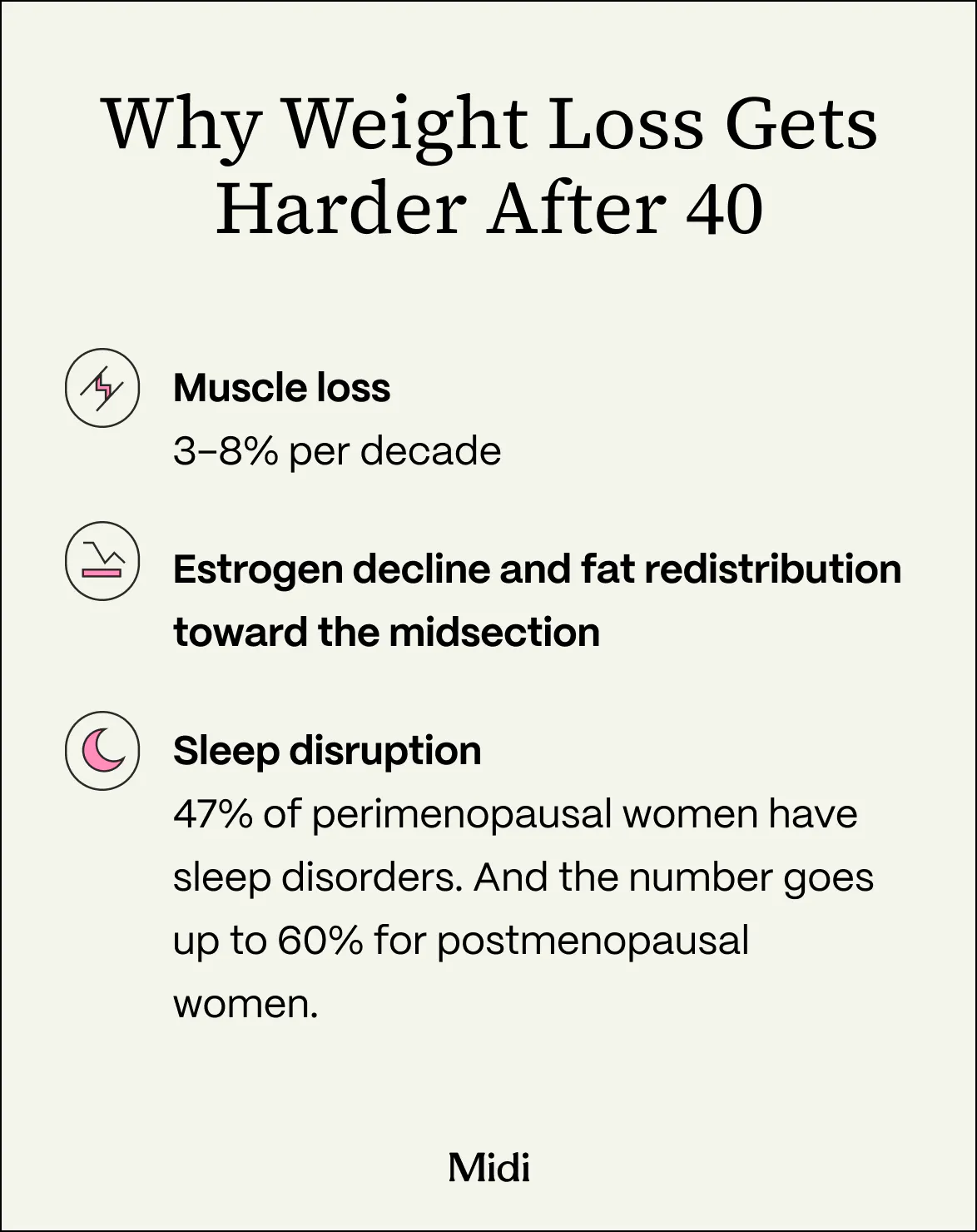
Muscle mass decreases approximately 3–8% per decade after the age of 30 and this rate of decline is even higher after the age of 60. Because your body uses more energy to maintain muscle than fat, having less muscle means your body may need fewer daily calories to maintain the same weight. Lower muscle mass can also reduce strength and endurance, making everyday movement harder.
Of course, hormones play a role, too. Estrogen, for example, is more than a reproductive hormone—it also supports heart health, bone density, and metabolism. Lower estrogen levels lead to significant muscle mass loss. As estrogen declines in perimenopause and menopause (the years leading up to and following your final period), it can change how your body stores fat, often shifting it toward the midsection. Hormone fluctuations during this time can also disrupt sleep and appetite signals.
Lifestyle changes after age 40 add another piece to the puzzle. Many women have more responsibilities at work and at home, which can increase stress. Sleep may also get lighter or less restful thanks to stress or menopause symptoms. Eventually, these changes can mean less daily movement and less time for things like healthy meal planning.
The good news is that the basics of healthy weight loss still work. Eating a nutritious diet with adequate protein and doing regular strength training can help preserve muscle; support metabolism; and create a small, sustainable calorie deficit. The challenge isn’t that these strategies stop working after age 40. It’s that midlife often makes them harder to practice or maintain.
Why Weight Loss for Women Over 40 Can Feel Harder
As you move through your 40s, you may find that sleep patterns shift, stress hits differently, and hormone fluctuations affect everything from your mood to your appetite. These aren’t personal failures. They’re normal midlife changes that can affect your weight.
Sleep changes
Sleep problems are common in midlife. In fact, research suggests that up to 47% of perimenopausal women have sleep disorders. And the number goes up to 60% for postmenopausal women.
Lower estrogen and progesterone, along with changes in the sleep hormone melatonin, can trigger symptoms––such as restlessness, night sweats, and frequent trips to the bathroom––that may disrupt sleep.
Poor sleep can also throw off appetite signals, making hunger and cravings harder to ignore. Between fatigue and increased hunger, it’s understandable that planning meals, sticking to routines, or resisting quick comfort foods feels harder.
Stress and emotional load
In midlife, many women juggle so many responsibilities—like handling career pressure, raising kids, and caring for aging parents—that add to daily stress. Chronic stress may increase hunger and cravings, so you might find yourself eating in response to your emotions, rather than hunger. This can look like reaching for comfort foods or snacking more often to soothe stress and discomfort. Ongoing stress can also wear down your body’s ability to recover, making it difficult to relax and fully recharge.
Hormonal shifts and body composition changes
Hormone fluctuations in your 40s can affect your body weight, size, and shape.
Sometimes the change is more about where weight is stored than what the scale says. As estrogen declines, body fat is more likely to build up around the midsection rather than the hips and thighs. That doesn’t mean weight gain is inevitable, but it can make changes more noticeable.
Because estrogen helps regulate blood sugar, lower levels may increase the risk of insulin resistance for some women, especially with more abdominal weight gain. That could show up as energy dips or increased hunger.
Medications and health conditions
Medications and health conditions can also influence your weight. Certain antidepressants, steroids, and sleep medications can affect your appetite or metabolism. Conditions like hypothyroidism and sleep apnea may also be a factor in weight gain. That’s why it helps to understand what’s going on with your body before starting a weight loss journey.
Fastest Way to Lose Weight (Safely): Set a Realistic Target
When you're looking for the fastest way to lose weight, it's worth reframing what "fast" actually means. The fastest pace for weight loss is one you can maintain without feeling miserable or rebounding later. Weight loss plans that promise rapid results with strict diets and extreme calorie deficits may lower the number on the scale at first. But they often lack balanced nutrition and feel very different from your usual eating habits. Quick-fix plans that are hard to stick with rarely lead to long-term weight loss. Here's how to create a realistic, sustainable plan:
- Aim for a safe, realistic weight loss target, around 1 to 2 pounds per week. While that might not sound fast, it’s a pace that can support steady progress and lasting change. In one study, people who lost weight gradually were more likely to preserve muscle and lose more body fat, including around the waist. This can lead to more sustainable results over time. If you're trying to lose weight during menopause, progress may be even slower at times, and that's normal.
- “Don’t rely only on the scale—pay attention to how your clothes fit and how your body feels,” says Dr. Carothers. Water retention, hormones, and muscle gain can make your weight fluctuate from day to day and can sometimes mask fat loss, she explains. So it helps to track non-scale progress markers like waist measurements, energy levels, and strength gains. If you’re tracking labs with your clinician, improvements in blood sugar, cholesterol, or other tests can also signal progress. Tracking these markers can help you stay motivated, since weight loss is rarely linear and plateaus are common along the way.
- Optimize with small tweaks, like eating more protein or changing your workouts. This can often help you get over a plateau. And it's natural for weight loss to slow or stall as your body adapts to healthier habits. Try not to let it discourage you.
Meaningful changes like losing weight and building muscle take time. Instead of thinking in terms of quick changes, like a 10-day reset, try adopting a 12-week mindset. That way, you give yourself time to build new habits and allow your body to adjust to them. Remember: Consistency always wins in the end.
True Stories Of Transformation
How to Lose Weight Fast Naturally and Permanently: The Foundations
If you’re wondering how to lose weight fast—naturally and permanently—the answer isn't a quick fix. It's building a strong foundation with simple, repeatable habits. Here's what actually helps with weight loss for women over 40.
- Focus on eating a nutrient-dense diet that works for you and your lifestyle.
- Prioritizing protein-forward meals is a practical place to start. Protein can help you feel fuller longer, protect muscle, and support your metabolism. High-protein diets may help you lose fat while maintaining muscle, which is especially important in midlife. Try adding a protein source to meals, such as Greek yogurt, chicken, or tofu.
- Fiber also plays an important role. Eating more fiber has been shown to help people lose weight and maintain healthier eating habits. Fiber-rich foods—like vegetables, fruits, and whole grains—add volume to meals without adding a lot of calories. This “volume eating” approach may help you feel satisfied with less, making it easier to stay consistent.
- Pay attention to your beverages. It’s easy to overlook liquid calories from specialty coffees, alcohol, and other drinks, but they can add up quickly without providing much nutrition. You don’t have to avoid them entirely, but being mindful can make a difference. That might mean adding less sweetener to your coffee, swapping soda for sparkling water, or having alcohol a little less often.
- Daily movement matters. Everyday activities like walking or doing chores help reduce long periods of sedentary time, which often increase as we get older. Consider adding more “movement snacks” to your day by taking the stairs, going for a short walk between meetings, or just standing up to stretch. While it’s not a substitute for exercise (more on that later), it can help you establish a more active routine.
The less you have to think about your approach to weight loss, the easier it can be to follow through. Meal templates (like pairing a protein with high-fiber foods and healthy fats), a repeatable grocery list, and a simple tracking method can reduce decision fatigue and help create consistency.

How to Lose Belly Fat After 40: What Works vs. What’s Marketing
Belly fat becomes more common in your 40s for several reasons. Hormonal fluctuations may change where fat is stored, often leading to more fat around the abdomen. Age-related muscle loss lowers daily calorie burn. And as if that weren't enough, lifestyle factors such as high stress and poor sleep can increase hunger and belly fat. So if your midsection feels different, you’re not imagining it. But it’s not a personal failure, either.
Many programs and products promise to melt belly fat, but unfortunately, that’s marketing, not science. Here’s the truth: You can’t target fat loss to a specific part of your body. Fat loss happens across your whole body, and a combination of genetics and hormones may determine where you notice it first.
That doesn’t mean there’s nothing you can do. It just means that strategies for how to lose belly fat should take a whole-body approach. Strength training and getting adequate protein can improve overall body composition while you lose weight.
Strength or resistance training alone produces minimal weight loss in midlife adults (typically 1-3 kg), but it is highly effective for improving body composition by reducing fat mass while preserving or increasing lean muscle mass. Cardio has its place in a complete fitness routine. It helps burn calories, reduce body fat, and support heart health. But it’s not a replacement for muscle-strengthening exercise. That’s why including both strength training and cardio can support your health goals.
A whole-body approach should also take into account your stress level and sleep habits, since both can affect hunger and cravings. Simple steps like doing deep breathing exercises, keeping a consistent bedtime, and limiting screen time before bed can help lower stress and improve sleep quality.
A Training Plan That Works After 40 (Without Burning Out)
The best training plan after 40 is one that you can recover from, build on, and stick with over time. There’s no one-size-fits-all approach to active movement, but working up to a mix of strength, cardio, and mobility exercises can go a long way toward your goals.
Strength training is a great place to start because it helps preserve muscle, protect bones, and support heart health, all of which become more important as women get older. Aim for 2 to 4 strength training sessions per week. You can use weights, machines, resistance bands, and even your own body weight.
Focus on compound exercises that help build total-body strength, such as:
- squats or sit-to-stands
- hip hinges or deadlifts
- push-ups or bench presses
- rows or pull-ups
- farmer’s carries or suitcase carries
These moves work multiple muscle groups at once, so you can get more benefit in less time. Middle-aged women who did strength training more consistently tended to have more muscle and less body fat in a research study.
Aim for 150 minutes of moderate cardio per week to support heart health and fitness. Think brisk walking, swimming, or cycling at a pace where you can talk but not sing. You can spread your cardio workouts out in a way that works for you, whether that’s more frequent but shorter sessions on weekdays or longer workouts on weekends.
Don’t forget about mobility and recovery. Gentle stretching, yoga, and rest days between workouts can help reduce injury risk and keep you feeling good enough to stay active.
Start simply and progress gradually (especially if you’re new to exercise) to avoid burnout and stay consistent. Give your body time to adjust to your routine, then slowly add weight, reps, or sets.
Nutrition Strategy: Simple, Repeatable, and High in Protein
You don’t need fad diets or strict rules to lose weight in your 40s. The key is to focus on nutrient-dense foods that support your body as your appetite and energy needs shift in midlife. A few simple strategies can help turn small changes into habits.
A simple way to think about meals is to build them around protein, fruits and vegetables, smart carbs like whole grains and beans, and healthy fats like olive oil, avocado, and nuts. This combination provides key nutrients to keep you full and energized. For example, you might have Greek yogurt with berries and nuts for breakfast, a chicken and veggie wrap with hummus for lunch, and salmon or tofu with roasted vegetables and quinoa for dinner.
Starting the day with protein and high-fiber carbs—like eggs with whole-grain toast—helps slow digestion, which may keep your blood sugar steady and reduce cravings later on. And when you do want a snack, the same combo (protein and fiber) is usually more filling than carbs alone. Options such as apple slices with nut butter or carrots with hummus can hold you over between meals.
But try not to go too long between meals. When you get too hungry, it’s harder to make thoughtful choices or stop eating when you’re full.
You don’t have to get every meal or snack “just right” (there’s no such thing, anyway). Instead, aim for balance with nutrient-rich foods you actually enjoy. When you go out to eat, for example, look for a protein you like and be mindful of portions instead of trying to find the “healthiest” thing on the menu.
Diagnosis and Testing: When Weight Loss Stalls for a Medical Reason
There is perhaps nothing more frustrating than when weight loss slows or stalls, despite your best efforts. When these all-too-common plateaus occur alongside other changes, checking in with a healthcare professional can help.
If you notice new or ongoing symptoms—such as fatigue, hair loss, constipation, or loud snoring—it’s worth mentioning. Evaluation usually starts with a closer look at your routine, symptoms, and medications before any testing, says Dr. Carothers.
These symptoms provide helpful context about changes in your weight, appetite, or energy levels.
“Fatigue and hair loss can sometimes point to thyroid concerns, which can affect weight,” says Dr. Carothers. Loud snoring and daytime sleepiness may point to sleep apnea, which is more common with abdominal weight gain.
Depending on what you’re experiencing, a healthcare professional may consider labs, for example check thyroid markers, iron stores and or blood sugar levels. Personalized testing, if needed, can help guide next steps.
Treatment Options: When Lifestyle Alone Isn’t Enough
Sometimes, consistent habits still don’t move the needle. That’s not a personal failure, but it may be a sign that you need more targeted support. A healthcare professional can help you decide on the best treatment option to support your weight loss plan.
Structured nutrition support
A healthcare professional or registered dietitian can help you set realistic goals if you've been dieting off and on or feel stuck. Clear protein or fiber targets, meal templates, and regular check-ins can improve accountability and take some of the guesswork out of balanced nutrition. Personalized nutrition programs have been shown to help people improve their health and maintain weight loss.
Sleep support and menopause symptom management
Sleep problems, whether from stress or hormonal shifts, often increase in midlife. These changes––along with menopause symptoms like hot flashes, night sweats, and mood shifts––can affect your energy, appetite, and daily routine. Who has time to work out or plan meals when you’re stressed, tired, or overwhelmed?
A trained menopause specialist, like a Midi clinician, can recommend treatments to address symptoms that get in the way of your health goals. This may include improving your sleep habits or starting cognitive behavioral therapy for insomnia. Depending on your needs, your clinician may also discuss hormone replacement therapy (HRT) or non-hormonal options to relieve menopause symptoms. Ultimately, the goal is to help you feel better, so healthy habits are easier to maintain.
Weight loss medications
In some cases, your clinician may recommend prescription weight loss medications, like injectable semaglutide (found in Ozempic and Wegovy), tirzepatide (found in Mounjaro and Zepbound), or other oral GLP-1s. These medications work in different ways, such as regulating hunger and fullness signals to reduce appetite. They can help some people make meaningful progress, especially when prescribed as part of a holistic plan that includes nutrition, exercise, and other support.
Working With a Healthcare Professional
There isn’t a single best approach to losing weight after 40. A healthcare professional, like a Midi clinician, can tailor your plan to your symptoms, hormones, and lifestyle. That kind of personalization can help you find strategies that feel more manageable.
Be honest about where you are now and where you’d like to be. Your clinician can help set realistic nutrition targets, suggest exercise routines to protect muscle mass, and recommend ways to monitor your progress. They might discuss whether medication is right for you and walk you through potential benefits and side effects.
If your weight loss plateaus, your clinician can also adjust your plan without resorting to extreme calorie deficits or other restrictions that can backfire. When you reach a comfortable weight—which is different for every woman—the focus shifts to maintenance, including practical routines you can sustain.
Losing Weight After 50: What Stays the Same and What to Prioritize
Losing weight after 50 might feel different than it did in your 40s, as your body and hormones keep changing with age. According to some estimates, women gain an average of 1.5 pounds per year in their 50s and 60s, which can gradually add up. Lifestyle plays a big role, too.
Fortunately, many factors are still within your control, and weight loss after 50 is still possible.
The foundations of healthy, sustainable weight loss remain the same, but a few priorities matter more. For example, bone density declines with age, and muscle loss may speed up after 60. Bone density loss rates are highest in the 1-2 years before to about 5 years after your final menstrual period. (Rates slow afterwards but continue yearly.) Getting enough protein, strength training, and engaging in proper recovery become especially important for protecting your muscles, bones, and joints. Sticking to your strength-training routine may ease some menopause symptoms, improve body composition, and support overall well-being.
Low-impact, joint-friendly movement—like walking, cycling, and strength training with modifications—can help you stay consistent without overdoing it. Mindful exercises like Pilates, yoga, and tai chi may do double duty by helping you stay active while lowering stress and improving sleep.
Progress might be slower, but steady habits still work. Maintaining muscle, managing stress, and prioritizing sleep can go a long way toward supporting long-term weight goals.
When to Seek Care
Weight changes often happen in midlife. But some symptoms require medical attention, especially if they are sudden, severe, or unusual for you. A healthcare professional can help figure out what’s going on.
Seek care if you notice:
- rapid, unexplained weight loss or gain
- chest pain, severe shortness of breath, or fainting during exercise
- depression, anxiety, or insomnia that affects your diet or daily functioning
- signs of disordered eating, such as bingeing, purging, extreme restriction, or obsessive behaviors around food or weight
- new digestive or abdominal symptoms
- concerning medication side effects
Key Takeaways
- Losing weight after 40 may feel harder than it used to, thanks to hormone fluctuations, muscle loss, and lifestyle changes like less physical activity and more stress.
- Weight loss for women over 40 is still very possible, but it often requires a more holistic approach. Focusing on balanced nutrition, regular exercise, sleep, and stress management supports healthy, sustainable weight loss.
- Strength training and eating protein-rich meals can help maintain muscle mass, support metabolism, and improve overall body composition.
- Progress might be slower in midlife, but small, consistent habits still add up. The goal is to build a routine that is realistic and sustainable for you.
- A clinician can offer more personalized support, like nutrition coaching, if lifestyle changes aren’t enough or progress stalls.
Frequently Asked Questions (FAQs)
Is it really harder to lose weight after 40?
Yes, weight loss can be harder after age 40 due to hormonal changes (especially declining estrogen), muscle loss, and lifestyle factors like stress and poor sleep, and perimenopausal symptoms like hot flashes and mood changes. These changes affect metabolism, appetite, and where your body stores fat. But it's not impossible—focusing on strength training, adequate protein, and consistent habits can help you lose weight sustainably.
How can I jump-start weight loss after 40?
While there’s no magic trick to jump-start weight loss, you can build momentum by prioritizing protein-rich meals, moving more throughout the day, and starting strength-training workouts at least twice per week. Focus on small, sustainable changes instead of harmful extremes like rigid calorie restriction, which may backfire.
What is the 3-3-3 rule for weight loss?
The 3-3-3 rule for weight loss is a framework meant to encourage balanced nutrition. It involves choosing three go-to sources of protein, carbohydrates, and fats; building balanced meals with one food from each category; and spacing meals about 3 hours apart. It isn’t a formal guideline or proven method, but the general idea—eating balanced meals and avoiding long gaps between meals—might make it easier to stick with a nutrient-rich diet.
How do you reset your metabolism?
You can't really "reset" your metabolism, but you can support it. Eating balanced, high-protein meals; resistance training to build and strengthen muscles; getting adequate sleep; and managing stress can help your metabolism function properly.
How to avoid weight gain after 40?
Healthy habits can help you maintain your weight as you age. Prioritizing strength training and nutrient-dense meals with adequate protein is a good place to start. Staying active throughout the day (not just while exercising), getting restful sleep, and managing stress also play an important role. Creating simple routines you can stick with can help you adjust as your body’s needs change.
If you’re in perimenopause or menopause and want guidance from clinicians who specialize in women’s midlife health, book a virtual visit with Midi today.
Hormonal change is at the root of dozens of symptoms women experience in the years before and after their period stops.
Our trained menopause specialists can help you connect the dots to guide you towards safe, effective solutions.
Whether you need personalized guidance or a prescription routine to tackle symptoms—including brain fog, hot flashes, sleep trouble, mood swings, and weight gain—we’ve got you covered. Learn more here.
Midi’s mission is to revolutionize healthcare for women at midlife, wherever they live and whatever their health story. We believe that starts with education, to help all of us understand our always-changing bodies and health needs. Our core values guide everything we do, including standards that ensure the quality and trustworthiness of our content and editorial processes. We’re committed to providing information that is up-to-date, accurate, and relies on evidence-based research and peer-reviewed journals. For more details on our editorial process, see here.


