


Hitting a weight loss plateau? As annoying as it is, a stalled-out scale is normal—and often temporary. If you’re in midlife, getting “unstuck” may mean paying a little more attention to things that may not have been top of mind before, like building muscle and getting restful sleep. But know this: A plateau is not a dead end. Read on to learn how to break a weight loss plateau and how a Midi Health clinician can provide personalized support.
Few things are more frustrating than a weight loss plateau when you’re eating well, exercising, and generally doing all the “right” things. It can leave you questioning: “Why am I not losing weight?” Or you might be wondering whether your metabolism is on an extended sabbatical—or has left the building entirely. The reality is that plateaus are a totally normal (albeit annoying) part of weight loss.
In fact, some research suggests that nearly 85% of people on a weight loss journey hit a plateau at some point. And if you’re in your 40s or beyond, there’s another fun wrinkle: Your biology has changed.
As estrogen shifts during perimenopause and menopause, changes in muscle mass, sleep, stress, and other hormones can all affect your weight. The tricks that worked in your 30s may not cut it anymore, and a midlife plateau may mean it’s time for a few new hormone-smart moves.
Generic advice to go harder at the gym or cut more calories isn't always the answer (and don't get us started on crash diets). Ahead, we'll unpack the physiology behind stubborn midlife plateaus, what you can actually do about them, how GLP-1 medications factor into the mix, and when it’s worth talking with a clinician, like one at Midi.
What Is a Weight Loss Plateau (and Is Yours Really a Plateau)?
A weight loss plateau happens when you stop losing weight for several weeks or longer, even though you’re sticking to the same diet and exercise habits that previously helped you lose weight.
But a few days (or even 1 or 2 weeks) without progress doesn't necessarily mean you've hit a plateau. Weight loss rarely happens in a straight line, especially in midlife, when twists and turns may be part of the path.
In the first few weeks, it can feel like the pounds are practically melting off—but much of that early drop is water weight. As your body uses up stored carbohydrates (called glycogen), it also releases the water stored with them. It’s completely normal for weight loss to slow down after those dramatic first few weeks.
And even when you are losing body fat, the number on the scale can temporarily stay put—or even go up—because of things like:
- eating more sodium (salt) than usual
- constipation or other changes in bowel habits
- water retention related to the menstrual cycle
- changes in how much water you drink or lose
- weighing yourself at different times of day or under different conditions
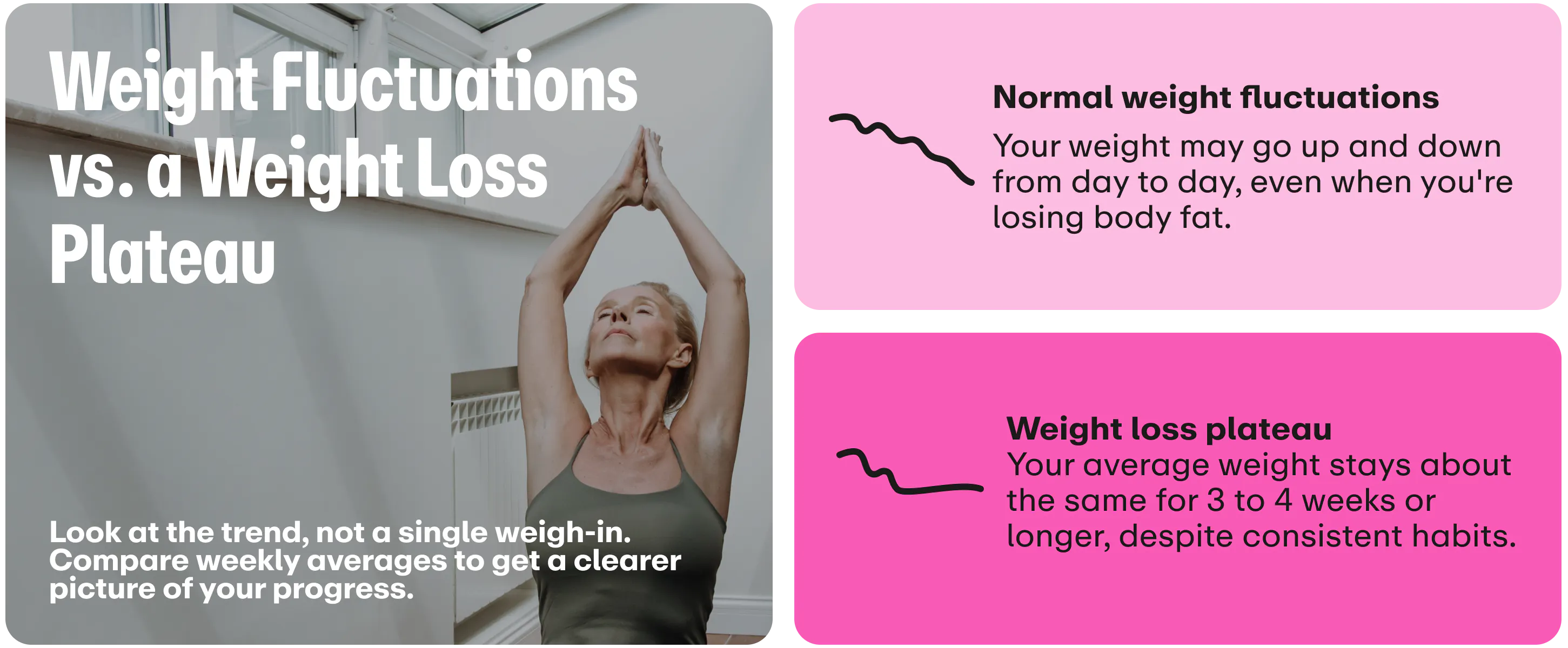
So, instead of judging your progress based on one weigh-in, zoom out and look for the trend. Compare weekly averages and watch what happens over 3 to 4 weeks. If your average weight truly hasn’t budged during that time, even with a consistent routine, you may have reached a genuine plateau.
Still, the number on the scale isn’t the sole measure of your progress. If your waist is changing, your clothes fit better, or you’re feeling stronger and more energized, those are wins worthy of celebration.
Why Do Weight Loss Plateaus Happen? The Science of Metabolic Adaptation
So, now that we’ve established that entering Plateauville is not a personal failing, you may be wondering where to address your formal complaint. There’s no single culprit, but one piece of the puzzle is how your body adjusts to weight loss, including a process called adaptive thermogenesis.
Here’s the gist:
- As you lose weight, your body needs fewer calories to fuel itself.
- The calorie deficit that initially helped you lose weight gradually shrinks.
- Your metabolism also adapts, burning even fewer calories than your weight loss alone would predict.
Basically, your body gets a little more energy-efficient as you lose weight. As you get used to the same exercise routine, your body may also burn fewer calories doing it. Your appetite hormones (leptin and ghrelin) can shift, too. Ghrelin may turn up the “I’m hungry” dial, while leptin may send fewer fullness signals. Plus, when you lose fat, you can lose some muscle as well. Because muscle is metabolically active, having less of it means your body may burn fewer calories at rest.
Finally, there’s one very human factor at play: food-tracking fatigue. Keeping tabs on every single snack or meal is a lot to keep up with. Over time, portions may creep up or tracking may become less precise without you even realizing it.
So, what looks like a stubborn weight loss plateau is often a sign that your body is responding to weight loss (annoying, we know). But there's no reason to blame yourself or lose hope—a plateau may simply mean it's time to tweak the approach that got you started.

Why Am I Not Losing Weight in a Calorie Deficit?
If you’re confused by a lack of progress despite maintaining a calorie deficit—meaning you’re consuming fewer calories than your body burns—there are a few possible explanations. For starters, calorie math is rarely as precise in the real world as the math makes it sound. Nutrition labels can round numbers, and it's surprisingly easy to miscalculate portion sizes and overall calorie intake.
Plus, your calorie needs change as your body weight changes. It’s worth reassessing them periodically to make sure your target still makes sense. An online calculator, like the Body Weight Planner from the National Institute of Diabetes and Digestive and Kidney Diseases, can help.
There’s also a lot that the scale can’t tell you. A new exercise routine and hormonal shifts can increase water retention, making it look like your weight loss has stalled even when you're losing body fat. If you’ve really hit a weight loss plateau, it’s also worth considering whether something beyond calories is involved, including thyroid conditions, insulin resistance, or medications that can affect weight.
Most importantly, don’t assume that eating less is always the answer. A calorie deficit that’s too strict can increase hunger and make it harder to stick with your weight loss plan. It can also increase the risk of muscle loss and leave you short on protein and other essential nutrients. A safe, realistic goal for sustainable weight loss is generally 1 to 2 pounds per week.
How Midlife Hormones Make Plateaus More Common for Women Age 40+
If losing weight after 40 suddenly feels harder, it’s not just in your head.
“You are not alone if you’re having issues with weight at midlife,” Kathleen Jordan, MD, Midi Health's Chief Medical Officer, previously explained. “Hormonal changes contribute to a lot of what you’re going through. But relief is possible.”
Female weight loss plateaus over 40 may feel especially frustrating. During perimenopause and menopause, shifting hormones can set off a cascade of changes that affect where your body stores fat, how it uses energy, and how easily you maintain muscle.
For instance, maybe you’ve always been pear-shaped, but you’re suddenly noticing a little more padding around your middle. As estrogen levels decline, your body tends to store more fat around your abdomen, including deeper belly fat that can contribute to insulin resistance (when your cells don't respond as well to the insulin your body naturally produces). That can make it more challenging to shed pounds or maintain your weight.
Or perhaps you used to maintain muscle without much effort, but now those routine reps and sets are wiping you out. As you age, you naturally lose muscle, and menopause may contribute to declines in muscle mass and strength. Having less muscle also means your body may burn fewer calories at rest.
Chances are, you’re also juggling a million things at once (midlife is gonna midlife, after all). And all that stress can affect cortisol, your body's main stress hormone, which also plays a role in appetite, food choices, and abdominal fat. Factor in poor sleep, which can also mess with hunger and fullness signals. When hot flashes or night sweats keep you up at night, those challenges can really pile up.
There’s one more 40+ factor to keep in mind: Thyroid conditions become more common with age and can affect metabolism and weight. If your weight loss plateau is particularly stubborn, it may be worth talking with a clinician about thyroid testing.
True Stories Of Transformation
How to Break a Weight Loss Plateau: Strategies That Work
First things first: Remember that weight loss plateaus are normal and, more importantly, often temporary. Rather than getting discouraged or feeling like you need to start over, try to focus on small, sustainable changes that support your health.
If you think you’re in plateau territory, resist the urge to slash calories or double your workouts. Start by taking stock of your food intake, activity levels, and sleep over a couple of weeks to see whether anything has changed.
Next, it’s time to make a few midlife-minded tweaks. Your body is going through some real physiological changes, so the approach that worked before may need a little updating, too. Focus on:
- Protein: Getting enough protein can help keep you feeling full and preserve muscle. For women over age 50, Midi clinicians generally recommend eating around 1 to 1.6 grams (g) of protein per kilogram of body weight daily, though individual needs vary. In one small study, people who ate more protein after losing weight burned more calories at rest, suggesting that protein may help offset some of the metabolic slowdown that can happen with weight loss.
- Fiber: Fiber helps you feel fuller for longer, supports digestion, and can help regulate blood sugar. Aim for roughly 25 to 35 g per day from foods like vegetables, fruit, beans, lentils, and whole grains. (Need help meeting your fiber goal? Ask your clinician whether a supplement, such as Midi’s Daily Fiber+, could be right for you.)
- Strength training: Twice-weekly strength training is one of the best ways to maintain muscle as you age and support your metabolism. Try exercises like squats, lunges, or lifting weights. If you're already hitting the gym, gradually increase the weight or resistance as you get stronger to keep making progress.
- Everyday movement: Non-exercise activity thermogenesis is the fancy term for all the movement that happens outside of structured workouts: walking, taking the stairs, or running errands. Don’t let “non-exercise” fool you—it all adds up. Try taking short walks after meals, standing up more often, or adding movement breaks throughout your day.
- Sleep and stress management: Poor sleep and chronic stress can crank up hunger, cravings, and fatigue, which can make it harder to manage your weight. Aim for 7 to 9 hours of sleep per night. And try a consistent bedtime, relaxing wind-down routine, or a few minutes of deep breathing to help manage stress.
If you’ve been pushing hard for months, stepping away from active calorie restriction for a bit—while keeping up your healthy habits—may be more sustainable than running yourself into the ground.
Research suggests planned pauses can produce about the same weight loss as continuous restriction, though they haven’t been shown to deliver more. Talk with a healthcare professional, such as a Midi weight loss specialist, about whether a temporary pause fits your goals.

Hitting a Plateau on a GLP-1 Like Zepbound?
If you’ve hit a weight loss plateau while taking a GLP-1 medication, it doesn’t necessarily mean the medication has stopped working. The less-talked-about reality is that weight loss naturally slows over time, and plateaus are common even with these medications.
A 2025 analysis found that nearly 90% of tirzepatide trial participants reached a weight loss plateau within about 16 months. But hitting one didn’t signal a dead end to treatment. People whose progress stalled later tended to lose more weight overall—a good reminder that plateaus can be a normal part of the weight loss journey.
According to a recent Stanford Medicine report, most people taking GLP-1s notice their weight loss slowing about 4 to 6 months in, with a more complete plateau typically happening between 12 and 18 months. And some people continue losing weight for up to 2 years.
Beyond your body’s natural adjustments to weight loss, other factors may play a role. For example, you might not have reached your target dose yet, or the medication's initial appetite-suppressing effect may feel less noticeable over time, leading to changes in your appetite or eating habits. If your progress is persistently or unexpectedly stalling, you may also want to reflect on how well you’ve been adhering to your treatment and healthy habits like exercise and eating a balanced diet.
That doesn't mean the next step is automatically to increase your dose. And you should never stop the medication, change doses, or combine weight loss medications on your own. A healthcare professional, such as a Midi clinician, can review your weight loss progress, current dose, side effects, and overall treatment plan to determine what comes next.
In the meantime, the basics still matter: Prioritize protein and strength training to help preserve muscle, and remember that slower weight loss doesn't necessarily mean your treatment isn't working.

When a Stall Signals Something More: What to Rule Out
Sometimes a plateau is just a plateau. But if the scale is stuck and you’re noticing things like persistent fatigue, hair loss, feeling unusually cold, heavy or irregular periods, or significant mood changes, it’s a good idea to take a closer look.
Your clinician can help rule out or address any underlying issues, including thyroid dysfunction, insulin resistance or prediabetes, and hormonal changes related to perimenopause. Certain medications, including some antidepressants and steroids, can also affect your weight. That doesn’t mean you should stop taking them (especially on your own), but it is something to bring into the conversation.
Ultimately, a persistent plateau isn’t always a cue to push harder. If you’ve been consistent with your habits and nothing is budging, especially alongside new symptoms, a medical evaluation may help uncover what’s going on.
How Midi Can Help You Get Unstuck
You don’t have to navigate a frustrating weight loss plateau alone. Midi clinicians specialize in women’s health and look at the bigger picture—including hormonal, medical, and lifestyle factors that may be getting in the way of your progress—to support you with a personalized Care Plan.
Depending on your needs, that might mean running metabolic or hormone-related lab tests, treating menopause symptoms, discussing hormone therapy when appropriate, or making targeted lifestyle changes. And if medical weight loss is right for you, Midi clinicians can also prescribe and monitor medications, such as GLP-1s.
Virtual visits are covered by many insurance plans. Feeling ready to make a change? Take the first step and book a visit.
Key Takeaways
- Weight loss plateaus are common and often temporary, even if you’re taking a GLP-1 medication. A true plateau generally means your average weight hasn’t budged for several weeks, despite consistent habits.
- Midlife can change the weight loss equation. Shifting hormones, muscle loss, stress, and poor sleep can all affect body composition, appetite, energy, and the number on the scale.
- Resist the “eat less, exercise more” panic button. Instead, focus on protein-rich meals, strength training, everyday movement, and healthy sleep habits.
- A persistent plateau—especially alongside new symptoms—may warrant a conversation with your clinician. Thyroid conditions, insulin resistance, or certain medications could be playing a role, and an evaluation can help you figure out your next steps.
Frequently Asked Questions (FAQs)
Is it normal to have a weight loss plateau at 6 weeks?
Yes, it's common for weight loss to slow or temporarily stall around 6 weeks. Weight loss often happens faster at first, but 1 or 2 weeks without progress doesn't necessarily mean you've hit a true plateau.
How long do weight plateaus last?
It varies from person to person, but a weight loss plateau can last for weeks or months. Remember that plateaus are often temporary, and weight loss may resume as your body adjusts or you make changes to your routine.
Why does my weight loss stall on a calorie deficit?
Your weight can stall for several reasons, including changes in your calorie needs, muscle loss, hormonal shifts, or portions gradually creeping up. Water retention can also temporarily hide your progress.
What to do if you plateau on tirzepatide?
Hitting a plateau on tirzepatide is common, and it doesn’t mean the medication has stopped working. If your weight loss has stalled, check in with your clinician to review your progress and current dose. Don’t stop taking tirzepatide or change your dose on your own.
Can a cheat day break a plateau?
A cheat day isn’t a magic fix for a weight loss plateau, but building some flexibility into your plan can make it easier to stick with healthy habits long term without feeling burned out.
If you’re in perimenopause or menopause and want guidance from clinicians who specialize in women’s midlife health, book a virtual visit with Midi today.
Hormonal change is at the root of dozens of symptoms women experience in the years before and after their period stops.
Our trained menopause specialists can help you connect the dots to guide you towards safe, effective solutions.
Whether you need personalized guidance or a prescription routine to tackle symptoms—including brain fog, hot flashes, sleep trouble, mood swings, and weight gain—we’ve got you covered. Learn more here.
Midi’s mission is to revolutionize healthcare for women at midlife, wherever they live and whatever their health story. We believe that starts with education, to help all of us understand our always-changing bodies and health needs. Our core values guide everything we do, including standards that ensure the quality and trustworthiness of our content and editorial processes. We’re committed to providing information that is up-to-date, accurate, and relies on evidence-based research and peer-reviewed journals. For more details on our editorial process, see here.