
 Rebecca Yee, MD
Hot flashes, fatigue, an up-and-down mood, periods that completely ignore a schedule—if you’ve been hit by perimenopause symptoms like these, you’re probably wondering: How long does menopause last, exactly?
Though menopause itself is technically a line in the sand—the point when your period hasn’t appeared in the previous 12 months—the symptoms can continue for more than 4 years after that final period. A menopause-trained clinician, like one at Midi Health, can be invaluable for helping you navigate these changes, and they can recommend treatments that make you feel better now and as the years go on.
How long does menopause last? It’s a question on most midlife women’s minds. The truth is that while menopause itself is a point in time—when you haven’t had a period for 12 consecutive months—the transition around it, perimenopause and postmenopause, can last many years. And so can the accompanying sweaty, brain-foggy, and otherwise disruptive symptoms.
In fact, vasomotor symptoms such as hot flashes can stick around, on average, for over 7 years, research shows. Other symptoms that emerge during the menopause transition—like genitourinary syndrome of menopause (GSM), which encompasses vaginal dryness, irritation, painful sex, and frequent urinary tract infections (UTIs)—can progress with age and might never improve without treatment.
Here’s what you need to know about the menopause timeline by stage, including how long major menopause symptoms tend to last, what might affect your personal timeline, and how a Midi clinician can work with you to minimize symptoms, so you can feel more comfortable.
Menopause Is 1 Day (and Why That Answer Confuses Everyone)
Menopause itself is a single moment in time, when you’ve gone 12 consecutive months without a menstrual period. Once this happens, your reproductive years are considered to be over, and you’re officially in postmenopause.
Confusingly, though, the word “menopause” is often used to describe a much broader time frame (like, “I’m in menopause”). When people talk about the signs of menopause—hot flashes, sleep disturbances, brain fog, and the like—they’re usually referring to the experience a woman has in the years leading up to menopause, as well as the years afterward, too.
Here’s how this timeline breaks down:
- Perimenopause: The transition often begins sometime in a woman’s mid-40s, when estrogen levels decline. This stage can last anywhere from 4 to 8 years.
- Menopause: When does menopause start? It’s actually a retroactively marked moment in time, when you look back and see you haven’t had a period for 12 months in a row.
- Postmenopause: The day after you hit menopause, you’re in postmenopause. You’re in this stage for the rest of your life.
These terms matter, because your symptoms and the appropriate treatments often depend on the stage you’re in. For example, you can still get pregnant in perimenopause, even as estrogen levels decline. And certain types of hormone therapy may be considered safe for a woman in perimenopause but riskier for someone who’s long past menopause.

How Long Does Perimenopause Last?
Perimenopause typically lasts between 2 and 8 years, with 4 being the average. But there’s a wide range of “normal”—some women remain in this stage for longer, up to 14 years, whereas others may be in perimenopause for only a few months before officially reaching menopause.
As for when perimenopause starts, there isn’t an exact age of onset, though the average woman starts to experience a decline in estrogen sometime in her mid-40s. Still, it’s possible to enter this stage in your late 30s or even early 50s. As ovarian function drops, it leads to fluctuating estrogen and progesterone levels. This causes perimenopause symptoms to develop, including hot flashes, mood changes, difficulty sleeping, fatigue, and brain fog.
Often one of the earliest signs of perimenopause is a menstrual period that’s less regular than it used to be: Even if they were predictable as a clock for decades, your periods may suddenly become shorter or longer, less or more frequent, or heavier or lighter. When gaps between periods become longer and longer, that’s a possible sign that perimenopause is ending.
How Long Do Menopause Symptoms Stick Around After Your Last Period?
Some perimenopause symptoms improve once you officially reach menopause, but frustratingly, others can continue into the years beyond. The timeline for how long symptoms last after that point depends a lot on which ones you’re experiencing.
Take vasomotor symptoms like hot flashes: These primarily happen when the brain’s thermostat (the hypothalamus) misfires, triggered by fluctuating estrogen levels. Vasomotor symptoms tend to peak and then gradually improve as hormone levels stop shifting, but you can continue experiencing those bursts of heat for years after your period stops.
Other perimenopause and menopause symptoms can become chronic and progress with time, particularly those of GSM. This cluster of symptoms—vaginal burning, dryness, painful intercourse, urinary urgency, and recurrent UTIs—don’t tend to improve after you reach menopause and can get worse without treatment.
Symptom by Symptom: How Long Each Usually Lasts
When you’re struggling with sweaty days and nights, you’re naturally going to wonder: How long does perimenopause last? The truth is that there’s a lot of variation in when you’ll wave goodbye to specific symptoms.
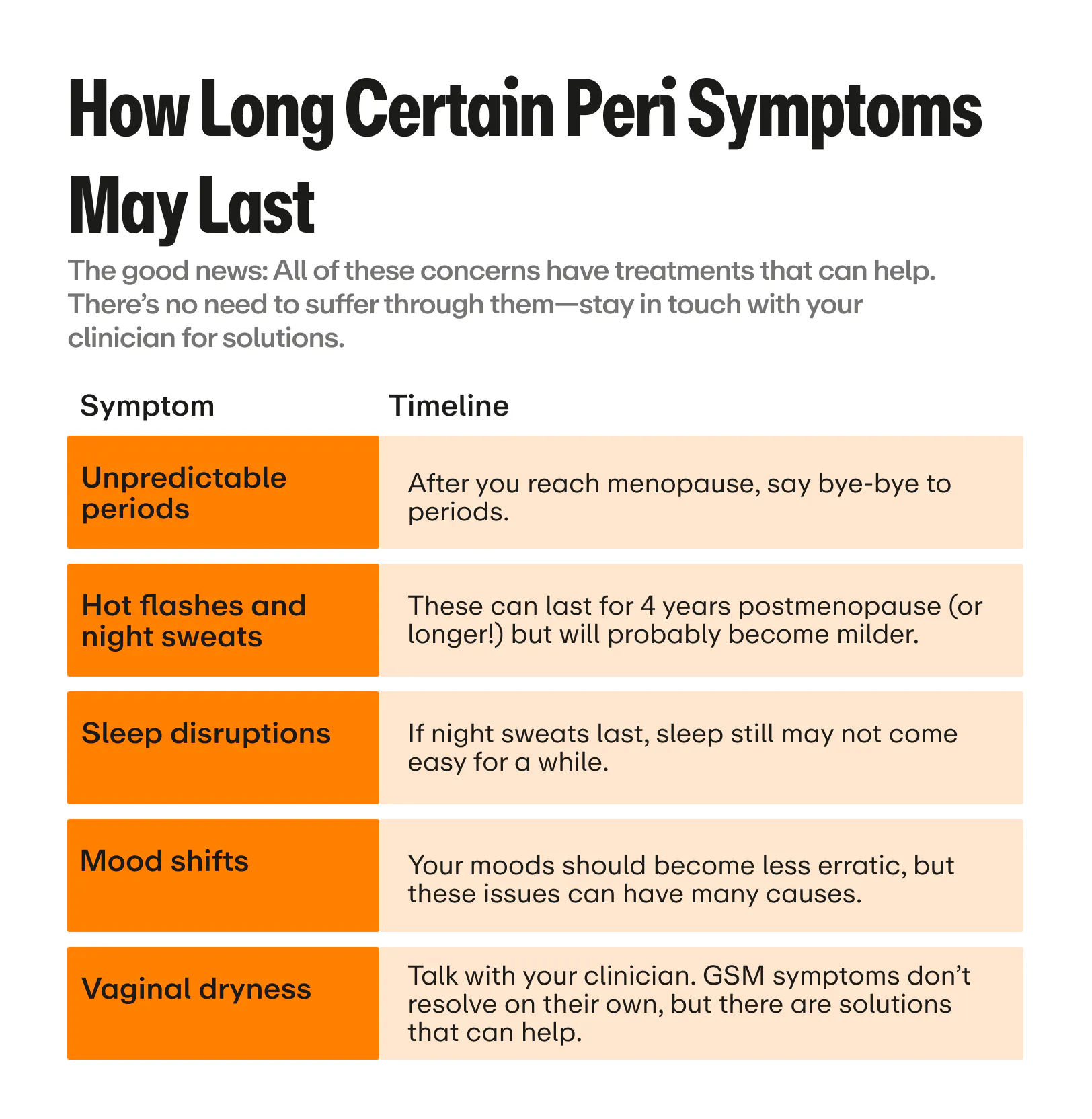
Here’s the expected duration for some of the most common signs of menopause:
- Irregular periods: If these have been plaguing you throughout perimenopause, the good news is that they will definitely stop when you reach menopause. If you ever notice vaginal bleeding after menopause, reach out to your clinician right away, since it can signal a health problem.
- Vasomotor symptoms, such as night sweats and hot flashes: A significant percentage of women—as much as 69%—experience moderate-to-severe hot flashes during the menopause transition, a large study found. And they’re potentially long-lasting: Hot flashes may persist for 4 or more years after the final menstrual period, and 1 in 3 women have them 10 years or more after menopause. Women who experienced their first hot flashes earlier in perimenopause seem to have them for longer.
- Trouble sleeping: It may feel impossible to log high-quality sleep when you’re dealing with night sweats. Stress, mood shifts, and hormone fluctuations can also contribute to perimenopause insomnia. Sleep issues can linger after menopause, especially if you’re still experiencing night sweats.
- Mood changes: Hormone shifts can trigger mood ups and downs as well as perimenopause anxiety, and these symptoms can continue postmenopause: A 2026 review found that roughly a third of perimenopausal and postmenopausal women experience depression and anxiety. Other research found that depression risk is highest in late perimenopause and early postmenopause, with depression rate declining 7 years after having your final menstrual period.
- GSM: Unlike many other symptoms, which may become milder as time goes on, GSM symptoms can become chronic if they’re not treated.
Treatment can improve many menopause symptoms, even the ones that last into postmenopause. Working with a menopause-trained clinician can start you on a path to feeling better.
What Determines Whether Your Transition Is Short or Long
Knowing the symptoms of perimenopause, who wouldn’t want it to pass as quickly as possible?! But the truth is that the length of your own menopause transition is largely out of your control, though lifestyle does play a part.
In a 2017 study published in the journal Menopause, researchers found that a woman’s age when she starts perimenopause seems to be a major factor. This means that the younger you are when you start experiencing menopause symptoms, the longer they may stick around.
Plus, this study found that certain factors play a role in when symptoms may start: Smoking cigarettes was associated with earlier perimenopause onset, while having a higher BMI was linked to symptoms developing later. Ethnicity may play a factor as well, with some research showing that Black women have a longer menopause transition than white women.
When your mother started perimenopause may come into play as well (though the research isn’t recent or definitive). An older 2001 study found that genetics explains about half of the impact affecting when women go through menopause, and the rest comes down to health and lifestyle.
You can try to read the tea leaves from the research—but keeping an eye on your own symptoms and experiences is the best barometer.
What Success Looks and Feels Like
What Stage Am I In? A Practical Way to Tell
Lab tests, such as blood tests that measure follicle-stimulating hormone (FSH) or estradiol levels, aren’t considered a reliable indicator of perimenopause stage, since hormone levels fluctuate. So, if you’re wondering where you’re at in this whole menopause transition, your best bet is to pay close attention to your menstrual cycle:
- In early perimenopause, your menstrual cycle may start to shorten. For example, if you previously had a reliable 28- to 30-day cycle, you might notice your period arriving every 24- to 26-days instead.
- In late perimenopause, the spacing between menstrual periods becomes longer and highly unpredictable, and you may skip some cycles entirely.
- Once you haven’t had a menstrual period at all for the past 12 months, you’ve officially reached menopause.
Can’t use your periods as a guide? If you have an IUD, have had a hysterectomy, or are using hormonal contraception, it can be trickier to assess your perimenopause stage. A conversation with a healthcare professional (like a Midi clinician) can help; they’ll consider those symptoms, your age, and your menstrual history.

Early Menopause and Premature Menopause: A Different Timeline
The terms “early menopause” and “premature menopause” sound like they’re describing the same thing, but they’re defined differently:
- Early menopause: when periods completely stop before age 45
- Premature menopause: when periods stop before age 40
When the ovaries stop working normally before age 40, it’s referred to as premature ovarian insufficiency (POI). While it may sound similar to premature menopause, they’re different: WIth premature menopause can happen if you’re receiving chemotherapy or radiation to treat cancer, if you’ve had surgery to remove your ovaries or uterus, or due to natural causes, and pregnancy is no longer possible. On the other hand, the cause of POI is usually unknown, and some women still have periods every now and then, and pregnancy may still occurl.
Underlying health conditions can cause early or premature menopause, including:
- certain autoimmune diseases, such as rheumatoid arthritis or Crohn’s disease
- HIV
- genetic factors
- an infection
- endocrine disorders
You might also go into menopause early if you’re receiving chemotherapy or radiation to treat cancer, as well as if you’ve had surgery to remove your ovaries or uterus. Certain groups of people also seem to be at higher risk, such as women who got their first period before age 11, those who smoke cigarettes, and those who have a female family member who also went through early menopause.
It’s extra important to have regular visits with a menopause-trained clinician if you go into menopause early or prematurely.
Estrogen has many beneficial effects on the body, and losing its protection earlier in life can increase the risk of osteoporosis and cardiovascular disease. Early or premature menopause also changes the dose you’ll need if your clinician recommends trying hormone therapy to treat your symptoms.
Does Treatment Shorten Menopause?
No, menopause treatments (such as hormone therapy) don’t shorten the amount of time that you’re in this stage of life. But they can make symptoms easier to manage and eliminate some symptoms entirely. Remember, you don’t need to just grit your teeth through menopause symptoms—a menopause-trained clinician, such as one at Midi, can recommend many care solutions that can make the whole transition less bumpy.
Probably the most well-known is hormone replacement therapy (HRT, now commonly referred to as menopause hormone therapy, or MHT). This comes in the form of a pill, patch, gel, or spray (and vaginal cream, ring, or tablet), and it replenishes reproductive hormones that begin to fluctuate during perimenopause.
HRT can ease symptoms and shield certain organs (such as your bones and, if started within 10 years of menopause, your heart) from the systemic effects of estrogen deprivation. Still, it’s important to have a conversation with your clinician about the benefits versus risks for you. After starting HRT, many women start to experience relief from symptoms within a few weeks or months.
If you can’t or prefer not to use hormone therapy, other options are available to you, including:
- prescription non-hormonal medications that help treat hot flashes, vaginal dryness, and painful sex
- over-the-counter products for vaginal discomfort
- targeted supplements and botanicals
- healthy lifestyle strategies
Life After Menopause: What Changes and What Doesn’t
Some menopause symptoms may gradually get better during postmenopause, such as hot flashes and night sweats, while others, like GSM symptoms, may not improve without treatment. You may also experience insomnia, mood changes, urinary incontinence, and a low libido during this time.
Your health priorities shift once you enter postmenopause—a focus on heart health and bone strength are especially important, because you don’t have estrogen’s protective effects any more. (Yet another important reason to stay in regular contact with a healthcare professional, like one of Midi’s trained clinicians.)
By staying up-to-date with preventive screenings (mammograms, colonoscopies, and lipid checks), eating healthy foods and moving your body every day, and using hormone therapy or other medications when appropriate, you can protect your health and remain active, strong, and vibrant.
Key Takeaways
- How long does menopause last? When people ask this question, they’re usually wondering about the duration of the entire menopause transition, including symptoms you can experience in perimenopause and postmenopause.
- Most women enter perimenopause sometime in their mid-40s, at which point estrogen levels start to decline. This stage can last anywhere from 2 to 14 years, with 4 years being the average, and the typical woman in the United States reaches menopause around age 52.
- Less often, it’s possible to go into early menopause (when periods completely stop before age 45), premature menopause (when they stop before age 40). This is often caused by an underlying health condition, surgery to remove the ovaries or uterus, or treatments like chemotherapy or radiation. Smoking cigarettes has an impact, too. Some women have premature ovarian insufficiency (aka POI, a condition in which the ovaries stop functioning normally before age 40).
- You can have menopause symptoms both throughout perimenopause and for years after your final menstrual period. Vasomotor symptoms like hot flashes can continue into postmenopause, while genitourinary syndrome of menopause can progress with age and become chronic if not treated.
- Treatment can ease symptoms and improve your quality of life. Hormone therapy can improve symptoms like hot flashes and mood changes within a few weeks or months, while non-hormonal medications are also available for those who can’t or prefer not to use hormone therapy.
Frequently Asked Questions (FAQs)
What are the 5 stages of menopause?
There aren’t necessarily five stages of menopause; rather, the three main stages of the menopause transition are perimenopause, menopause, and postmenopause. But experts sometimes break perimenopause into separate phases: early perimenopause, when your menstrual cycle is shortening, and late perimenopause, when missed cycles become more frequent.
What is the hardest stage of menopause?
It really depends on the person and the specific menopause symptoms being experienced, but a 2025 survey in the journal Nature included more than 4,000 U.S. women and found that the severity of menopause-related symptoms seemed to peak among 51- to 55-year-olds.
What are the signs of the end of menopause?
Periods that are increasingly less frequent are a sign that menopause is nearing and perimenopause is ending. Once you’ve skipped your menstrual period entirely for 12 consecutive months, you’re considered to have officially reached menopause.
How do I know what stage of menopause I am at?
Because hormones fluctuate wildly during perimenopause, a single blood test isn’t usually a reliable indicator of your stage. But your menstrual period can provide some clues: If you still get a period—even if it’s irregular—you’re in perimenopause; when you experience many missed cycles and wider, highly unpredictable spacing between periods, you may be in late perimenopause.
What are the worst menopause symptoms?
There’s no one-size-fits-all answer, but that same Nature survey found that the symptoms that women were most likely to reach out to their clinician about included hot flashes, pain during sex, vaginal dryness, frequent urination, irregular cycles, and heart palpitations.
If you’re in perimenopause or menopause and want guidance from clinicians who specialize in women’s midlife health, book a virtual visit with Midi today.
Hormonal change is at the root of dozens of symptoms women experience in the years before and after their period stops.
Our trained menopause specialists can help you connect the dots to guide you towards safe, effective solutions.
Whether you need personalized guidance or a prescription routine to tackle symptoms—including vaginal dryness and irritation, brain fog, hot flashes, sleep trouble, mood swings, and weight gain—we’ve got you covered.
Midi’s mission is to revolutionize healthcare for women at midlife, wherever they live and whatever their health story. We believe that starts with education, to help all of us understand our always-changing bodies and health needs. Our core values guide everything we do, including standards that ensure the quality and trustworthiness of our content and editorial processes. We’re committed to providing information that is up-to-date, accurate, and relies on evidence-based research and peer-reviewed journals. For more details on our editorial process, see here.