
In the skin care world, there’s plenty of hype around treatments that don’t quite live up to their promises—but when it comes to using tretinoin for wrinkles, that hype is actually deserved. This topical ingredient has been proven to penetrate the skin and act directly on the cells.
Tretinoin prompts fibroblasts to hurry up and make more types of collagen, as well as blocking the enzymes that break collagen down. It also works to regulate skin cell turnover that becomes sluggish over time (especially in menopause). And since it started out as a groundbreaking acne medication before researchers realized it can improve signs of aging, tretinoin can also help keep skin clear and radiant. Keep reading to learn exactly how tretinoin helps with wrinkles, and book a visit with a Midi Health clinician for personalized guidance.
Let’s talk about the skin care ingredient your dermatologist won’t stop talking about: tretinoin. This topical is the active form of vitamin A in the skin (technically called all-trans retinoic acid).
Originally FDA approved as an acne treatment back in the 1970s, tretinoin was found to also improve signs of photoaging, such as wrinkles, brown spots, and skin laxity. Cut to the present day, and tretinoin is the preeminent, science-backed treatment for acne and wrinkles, not to mention skin sagging, dullness, and brown spots—all the concerns we deal with as we get older.
Tretinoin is the well-established gold-standard topical ingredient for treating fine lines and wrinkles, with decades of clinical research to support the claims and proven benefits. It’s widely recommended by dermatologists as an essential part of a menopause skin care routine for improving wrinkles as well as hyperpigmentation, skin laxity, and adult acne.
Below, learn everything you need to know about tretinoin for wrinkles—how it works, how to use it the right way, and how long it takes to see results. Plus, learn the differences of tretinoin vs. retinol for wrinkles, and what strength of tretinoin cream is best for wrinkles? Below, take a deep dive into this skin care game changer. (And if you’re looking for a plan tailored to your skin, a Midi clinician can help you find the right routine for you.)
What Is Tretinoin?
Tretinoin is the active form of vitamin A in the skin (all-trans retinoic acid), available as a prescription-only cream or gel. It’s FDA approved for the treatment of both acne and photoaging of the skin (i.e., fine lines and wrinkles, hyperpigmentation, rough texture).
Common brand names of tretinoin include Retin-A, Retin-A Micro, Renova, Atralin, Avita, and Altreno.
While tretinoin is available by prescription only in the United States, a milder retinoid called adapalene 0.1% is available over the counter (OTC) under a variety of brand names. Recent research shows that consistent use of adapalene 0.1% cream significantly improved signs of aging, particularly wrinkles and pigmentation.
Does Tretinoin Help With Wrinkles? What the Research Shows
Yes. Tretinoin is one of the most studied and clinically proven topical ingredients for treating fine facial wrinkles and skin laxity by stimulating collagen production.
Collagen and elastin are the structural proteins in your skin that keep it firm and elastic. They are an essential part of your skin’s “scaffolding,” so when they begin to diminish over time, skin loses firmness and fine lines form. Research has proven that prescription-strength tretinoin penetrates the dermis and acts directly on skin cells like fibroblasts to prompt production of collagen, ultimately increasing volume and firmness and softening fine lines.
Tretinoin is also proven to regulate skin cell turnover, the natural healthy shedding of dead cells from the surface as fresh new cells replace them, conveyor belt–style. This process begins to slow down as early as your 30s, though. By interacting with receptors inside skin cells, tretinoin helps regulate skin cell turnover to keep pores clear, brighten dull skin, and help fade brown spots. In lab studies, tretinoin has been shown to block collagen-degrading enzymes, which is one reason dermatologists consider long-term tretinoin use protective as well as corrective.
How Tretinoin Works on Aging Skin
Tretinoin works by communicating with retinoid receptors on the skin cells and signaling chemical reactions that slow down with age, such as collagen production and skin cell turnover. After age 30, the body’s natural production of collagen and elastin starts to dwindle, and studies show that collagen can decrease by 30% in the 5 years following menopause.
So exactly how does tretinoin work for wrinkles? Prescription-strength tretinoin gets to work deep in your skin’s dermis layer, acting directly on fibroblast cells to kickstart collagen production. This hard work gradually pays off, leading to skin that looks plumper, thicker, and firmer, with wrinkles that are less pronounced.
Tretinoin is also proven to help regulate skin cell turnover, which starts to slow down as early as your 30s. Speeding that process back up helps reveal fresher, smoother-looking skin.
True Stories Of Transformation
Tretinoin Before and After: What Results to Expect (and When)
While tretinoin is a proven game changer for everything from acne to aging skin, it is definitely not an overnight fix. Its many visible results happen over time and with regular use. The effects of tretinoin are gradual and may take up to 12 weeks of consistent use to show up. (This is one of those tried-and-true things that’s worth the wait!)
The key to success is to start gradually—and stick with it. This typically means applying a thin layer of tretinoin (a pea-sized amount is all you’ll need) and spreading it thinly over your face (avoiding the eyelids, nostrils, and lips). If you have sensitive skin, start by applying tretinoin every third night for the first 2 weeks. After about 3 weeks, move to every other night. Once you’ve hit the 5-week mark, work up to nightly application as your skin begins to tolerate it.
Here’s a timeline of what to expect when using tretinoin for wrinkles:
- Weeks 1 to 2: This is the adjustment period. You start by applying tretinoin every third night. Your skin may flake and become itchy, red, or irritated because skin cell turnover is revving up, triggering exfoliation and purging. It’s essential to moisturize skin with a mild lotion or cream after applying tretinoin to help prevent these side effects. If you have sensitive skin, you can apply a moisturizer to your skin before applying the tretinoin to act as a buffer.
- Weeks 3 to 4: As your skin adjusts to tretinoin, increase the number of nights that you apply it. This is when people typically begin to notice smoother skin texture and a brighter complexion. This is also when flaking and irritation should decrease with each week if you keep up with moisturizing your skin.
- Weeks 5 to 6: This period is when you will notice even more visible improvement, such as a more even skin tone, fading hyperpigmentation, and clearer skin and pores that appear tighter.
- Weeks 7 to 12: Fine lines begin to soften, and skin laxity is better by the 12-week mark. But keep in mind that this is a subtle yet significant improvement over time.
- Months 3 to 6: This is when the long-term collagen-building benefits kick in. Studies have shown that the collagen- and elastin-boosting improvements of tretinoin get even better over 12 months of consistent tretinoin use.

What Strength of Tretinoin Is Best for Wrinkles?
It’s important to follow a clinician’s guidance when using a prescription topical like tretinoin. If you start with a strength that’s too high (the strongest is 0.1%), it will likely irritate your skin so much that you stop using it completely. Because continued and consistent use is the key to success, your clinician will guide you on the correct strength.
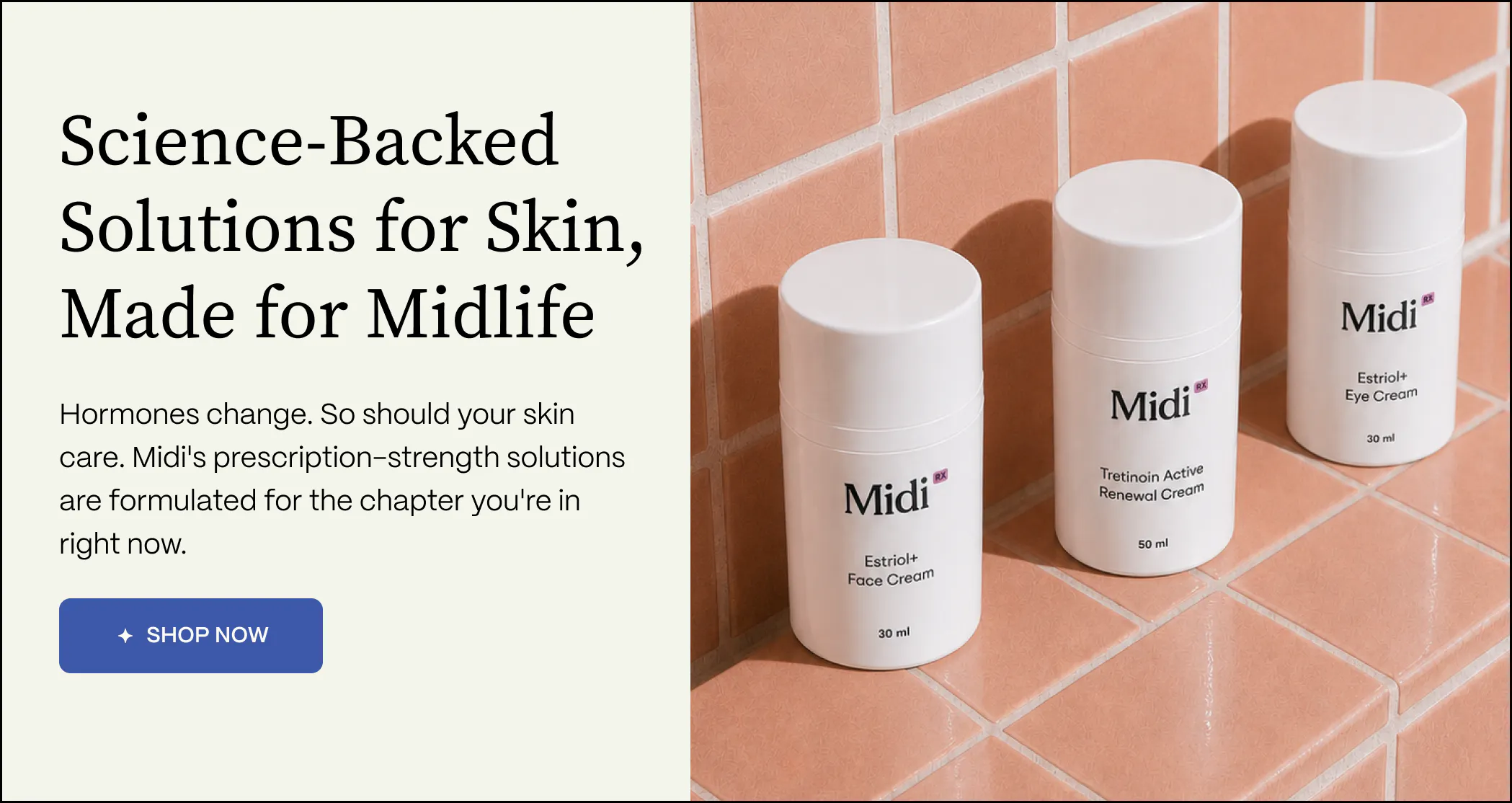
This may be 0.05%, the standard mid-strength option that can be tolerated without too much irritation. Studies have shown that using a higher strength is not necessarily better or faster, and a lower, mid-range strength allows for long-term use, which is what can give you optimal results. (Midi’s Tretinoin Active Renewal Cream contains 0.05% tretinoin along with 3% tranexamic acid to help fade dark spots, plus niacinamide and panthenol to moisturize.)
Tretinoin vs. Retinol (and Other Retinoids) for Wrinkles
Retinol is a milder OTC version of a prescription-strength retinoid like tretinoin. Retinol, which is also a derivative of vitamin A, is converted into retinoic acid in the body.
This means it’s a little bit more indirect and less potent, but it’s still proven to be very effective (though the benefits are more gradual). Retinol has been proven in numerous studies to improve signs of photoaging, like wrinkles, brown spots, and skin laxity by regulating skin cell turnover and stimulating collagen and elastin production.
When you’re deciding between retinol and tretinoin for wrinkles, think about what kind of skin you have and where you are in your skin care journey. Retinol is a great starting point for some because, while it is still clinically proven to be very effective for treating wrinkles, the irritation factor is much lower. But a prescription retinoid like tretinoin can counter everything from slow skin cell turnover to collagen depletion, making it a gold-standard addition to your routine. A healthcare professional can help you decide the right path for your skin.
What about tretinoin vs. adapalene? As we briefly touched on above, adapalene is a different type of prescription-strength retinoid that is available OTC in 0.1% strength, while higher strengths require a prescription. Adapalene is a slightly milder retinoid that is FDA approved for treating acne (remember that retinoic acid was first discovered as an acne medication). It also boosts collagen and elastin production in the skin. Tretinoin and adapalene are both clinically proven to effectively treat photoaging (i.e., wrinkles and dark spots), but tretinoin is the more potent heavy hitter for wrinkles.
How to Use Tretinoin for Wrinkles
The key to using tretinoin successfully is to start gradually and be consistent. After using a mild facial cleanser—stay away from potentially irritating acne washes with benzoyl peroxide or exfoliating cleansers with glycolic or salicylic acid—pat your skin dry and apply tretinoin.
This may sound obvious, but when using a prescription-strength product like tretinoin, it’s critical to follow instructions carefully. For example, a pea-sized amount is the dosage for the entire face. It will seem like you’re not using enough product, but you do not want to slather on tretinoin like a regular facial moisturizer. (Think of a tretinoin gel or cream not as a moisturizer but as a prescription medication, which it is.) The idea is to apply a very thin layer of tretinoin onto clean, dry (not damp) skin.
Tretinoin can be irritating for sensitive skin types and can trigger redness, flaking, and dryness, which is why you should start slowly, as outlined above. On the nights that you apply tretinoin, do not use exfoliating products, like a glycolic or salicylic acid cleanser or peel pad. It’s also important to use tretinoin only at nighttime since (by regulating skin cell turnover) it makes the skin more vulnerable to UV damage. This is why daily use of broad-spectrum sunscreen with a minimum SPF of 30 is a must.
To minimize retinoid-induced dryness and irritation, dermatologists recommend applying a hydrating moisturizer after applying tretinoin. Be sure to use one without additional active ingredients that are potentially irritating, such as retinol or vitamin C.
This clinician-approved “sandwich technique” can help prevent irritation:
- First apply a lightweight hydrating serum with hyaluronic acid onto clean skin.
- Once the serum has absorbed and your skin is no longer damp, apply tretinoin.
- Top that with a cream or lotion that contains hydrating ingredients and emollient ones like ceramides to seal in that moisture.
Clinical trials have shown that moisturizers won’t dilute the efficacy of the active ingredient, but they will help counter irritation, redness, dryness, and peeling from tretinoin use.
Side Effects and the Adjustment Period
Tretinoin speeds up shedding of surface skin cells and temporarily disrupts the skin's moisture barrier, which is why dryness and flaking are so common in the first few weeks of taking it. This makes your skin more photosensitive, so daily sunscreen (a facial moisturizer with broad-spectrum SPF 30 at a minimum) is a must. Side effects like dryness and flaking can be eased by moisturizing the skin after applying tretinoin.
As your skin adjusts to tretinoin in weeks 3 and 4, flaking and irritation should decrease if you keep up with moisturizing. If your skin becomes red or irritated or if a product stings when you put it on, take a break. Use a simple, bland hydrating cream instead and avoid active ingredients until your skin calms. And remember to be patient. Tretinoin takes time to work; consistent use is key to its effectiveness and the way to get results over the next 6 to 12 weeks.
If you are pregnant or trying to become pregnant, avoid using tretinoin completely. While systemic absorption of retinoic acid into the bloodstream is low with topical tretinoin, doctors recommend a better-safe-than-sorry approach. If you are pregnant or planning to become pregnant, talk with a healthcare professional about the use of tretinoin.
How to Get Tretinoin for Wrinkles
Because tretinoin is a topical medication that requires a prescription, you will need to consult a healthcare professional, such as a Midi clinician or a dermatologist, before getting a tretinoin prescription.
Your clinician can recommend the right strength and how often to apply it. They can also walk you through your personal tretinoin game plan over time and answer any questions that you have. Midi clinicians specialize in providing personalized care during perimenopause, menopause, and beyond—and they can guide you through a customized tretinoin regimen.

Key Takeaways
- Tretinoin is the active form of vitamin A (all-trans retinoic acid), available by prescription only as a cream or gel. It is designed to treat both acne and photoaging of the skin (i.e., improving the appearance of fine lines and wrinkles, hyperpigmentation, and rough texture).
- Studies of treated skin show that tretinoin increases collagen in the dermis and blocks the enzymes that break collagen down. Over months of consistent use, that translates into thicker, smoother-looking skin and softer fine lines.
- The key to using tretinoin successfully is to start gradually and be consistent. Start slowly because tretinoin can be irritating and can trigger side effects like redness, flaking, and dryness—especially during the first few weeks of application. Apply tretinoin every third night to start, then work up to using it nightly as your skin begins to tolerate it.
- Tretinoin is a topical medication that requires a prescription from a healthcare professional, and your clinician can recommend the right strength or dosage, advise you on how often to apply it, and walk you through your personal tretinoin game plan over time and answer any questions that you have.
Frequently Asked Questions (FAQs)
Is age 40 too late to start tretinoin?
Absolutely not! In fact, it’s the perfect time to upgrade from an OTC retinol product to a prescription-strength tretinoin since it bolsters collagen, which helps firm the skin and minimize lines and wrinkles. After age 30, the body’s natural production of collagen and elastin starts to dwindle and studies show that collagen can decrease by 30% in the 5 years following menopause.
Does tretinoin really help deep wrinkles?
Tretinoin is proven to stimulate the production of collagen in the skin, which helps to increase volume, decrease laxity, and soften the appearance of fine lines and wrinkles. But it’s important to have realistic expectations. Tretinoin won’t completely erase deep wrinkles and furrows, such as the 11 lines in between the eyebrows, but it can help to soften lines like crow’s feet and horizontal forehead wrinkles, and it will improve the appearance of more severe wrinkles.
Can tretinoin tighten saggy skin?
By building collagen over months of use, tretinoin can make skin look firmer and denser, and it may soften the appearance of early crepiness. But it will not lift jowls or replace an in-office tightening procedure.
Does tretinoin prevent new wrinkles from forming?
Not only does tretinoin stimulate the production of new collagen, it has also been proven to inhibit enzymes, like matrix metalloproteinases (MMPs), that break down collagen and elastin. By boosting collagen production and blocking the degradation of these important proteins, tretinoin can help prevent new wrinkles from forming.
Can you use tretinoin on under-eye and neck wrinkles?
You can use tretinoin for fine lines around the eyes and for neck wrinkles, but you have to be extra careful on both of these areas because the skin here is very delicate and easily irritated. When applying a topical medication like tretinoin to the skin around the eyes, be careful to put it only on the orbital bone (where crow’s feet typically show up) and not too close to the eyes or on the eyelids. The skin on your neck is especially sensitive and has fewer oil glands, so it’s prone to tretinoin dryness, redness, and inflammation. It’s important to top your tretinoin with a rich moisturizer to counter those side effects.
If you’re in perimenopause or menopause and want guidance from clinicians who specialize in women’s midlife health, book a virtual visit with Midi today.
Hormonal change is at the root of dozens of symptoms women experience in the years before and after their period stops.
Our trained menopause specialists can help you connect the dots to guide you towards safe, effective solutions.
Whether you need personalized guidance or a prescription routine to tackle symptoms—including vaginal dryness and irritation, brain fog, hot flashes, sleep trouble, mood swings, and weight gain—we’ve got you covered.
Midi’s mission is to revolutionize healthcare for women at midlife, wherever they live and whatever their health story. We believe that starts with education, to help all of us understand our always-changing bodies and health needs. Our core values guide everything we do, including standards that ensure the quality and trustworthiness of our content and editorial processes. We’re committed to providing information that is up-to-date, accurate, and relies on evidence-based research and peer-reviewed journals. For more details on our editorial process, see here.