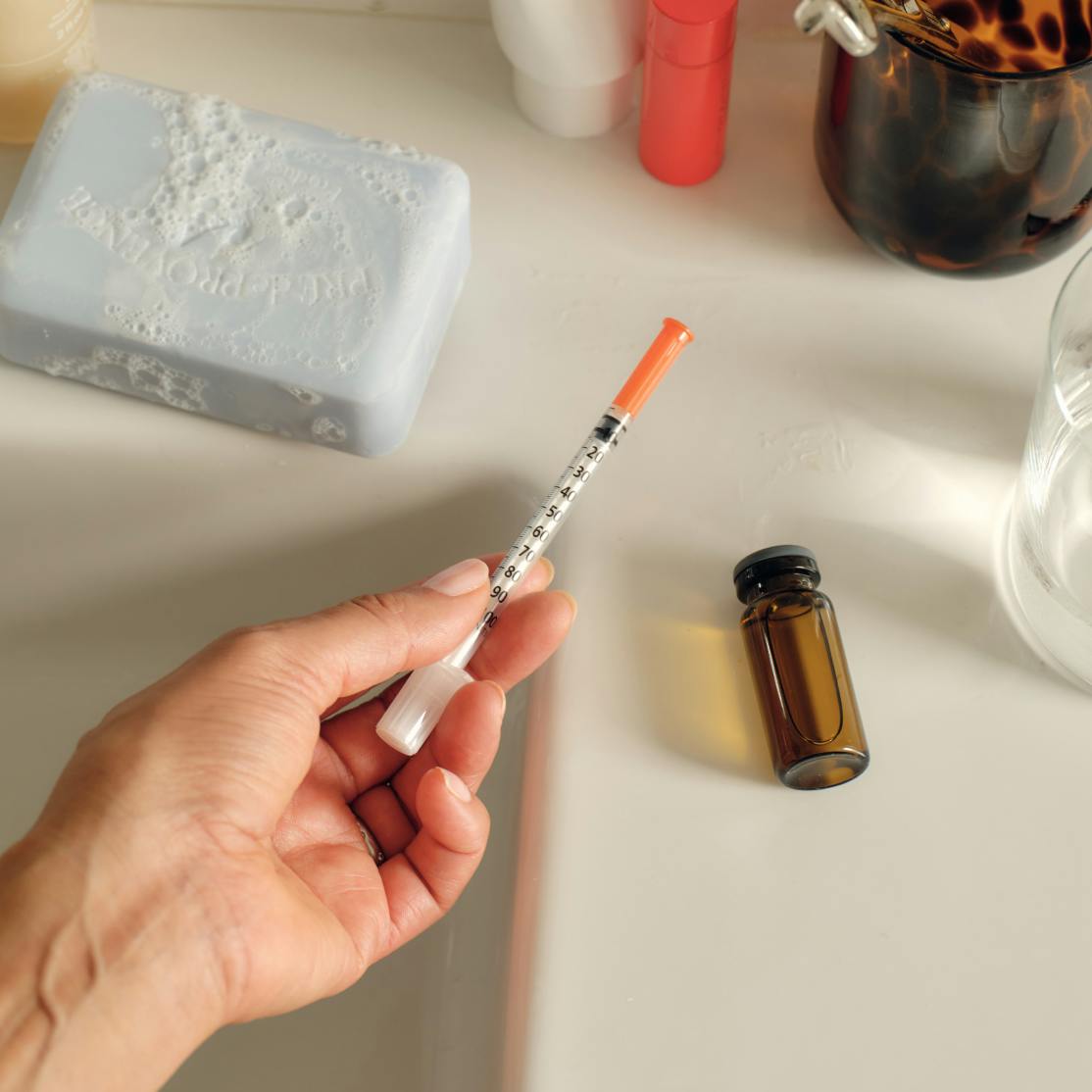


Retatrutide is a new injectable weight loss medication that’s in its clinical trial phase. Though there’s no FDA-approved retatrutide dosage, people are still buzzing about it online. To dig into what’s known so far about retatrutide dosing, we’ll look at how it’s being handled in the clinical trials—this may give us some intel about how it might be administered when it’s eventually released. (Let’s all keep in mind, though, that this information can change.) Read on to learn more about retatrutide, as well as how a trained weight loss specialist (like a clinician at Midi Health) can give you personalized support to reach your health goals.
Retatrutide is a new injectable medication that targets hormone receptors in your body—in fact, it’s so new that retatrutide dosage hasn’t been officially established. So don’t be fooled by the dose charts and titration calculators floating around online: Retatrutide is still an investigational drug undergoing clinical trials, hasn’t been approved by the FDA yet, and isn’t available to the general public, so there’s currently no official dosing schedule.
That said, the excited chatter about the drug may be justified. Retatrutide is a little different from other injectable weight loss medications because it’s a triple-agonist, which means it activates three hormone receptors that help to regulate blood sugar and appetite, rather than one or two (like other available treatments like semaglutide or tirzepatide). So far, research has shown it can be very effective for significant weight loss and improving other health markers, like blood pressure and blood sugar.
Below, we’ll break down the latest information on retatrutide in clinical trials, such as what doses are being used, how titration works, and what it all means for women. None of this information should be taken as a self-dosing guide—it’s based on what we know from clinical trials. Read on to learn more about retatrutide dosing and how a Midi clinician can help you reach your personal weight goals.
What Is the Retatrutide Dosage Used in Clinical Trials?
Retatrutide is currently in phase 3 clinical trials and has been studied at once-weekly injected doses, starting at 1 milligram (mg) and going up to 12 mg, which is the highest dose studied.
It helps to understand exactly what this research involves. A clinical trial involves researching a new way to detect, manage, or prevent a disease, such as by studying new drugs (like retatrutide). There are typically four phases of a clinical trial: phase 1 involves testing a drug or treatment in a small group of people; phases 2 and 3 give the drug to much bigger groups of people to further study its safety and effectiveness; and phase 4 takes place after the drug becomes FDA-approved and made available to the public, when researchers track its safety and benefits in the general population.
The retatrutide doses used in clinical trials so far has varied:
- In phase 2 clinical trials, retatrutide was evaluated in doses of 1 mg, 4 mg, 8 mg, or 12 mg once weekly for 48 weeks.
- In phase 3 clinical trials, it was evaluated in doses of 4 mg, 9 mg, and 12 mg once weekly for 80 weeks.
These numbers don’t mean that these amounts are the recommended doses; they’re just the doses that have been studied in clinical trials. These retatrutide dosages are just what’s being researched, so don’t take them as medical guidance for self-dosage. There’s no approved label yet for retatrutide and no official starting, maintenance, or maximum dose.
The Retatrutide Dosing Schedule: How Titration Actually Works
Like other weight loss medications, retatrutide works on a gradual titration schedule, which means you’re first prescribed a low dosage that’s slowly increased as your body adjusts. Once you reach a target dose that works for you, you’ll stay on it.
In trials, retatrutide dosing has been increased about every 4 weeks, ultimately reaching the 12-mg dose. In one phase 3 trial the retatrutide dosing schedule, given in once-per-week injections, looked like this:
- Weeks 1 to 4: starting dose at 2 mg
- Weeks 5 to 8: 4 mg
- Weeks 9 to 12: 6 mg
- Weeks 13 to 16: 9 mg
- Weeks 17 and beyond: 12 mg
Theoretically, this incremental dosing schedule not only gives the body the chance to adjust to the medication; it also lets users and researchers observe and deal with side effects and monitor for a healthy weight loss response. But again, it’s important to remember that retatrutide is still undergoing clinical trials, and the final dosing and escalation guidelines that your clinician follows may change as researchers learn more.
In a clinical trial, participants follow the same fixed schedule based on the protocol. But in real-world use, a clinician can adjust the titration schedule, increasing or adjusting at different time intervals, based on how the person is feeling and how they’re responding to the medication.
Why the Retatrutide Starting Dose Is So Low
Like similar injectable weight loss medications, retatrutide slows gastric emptying, which keeps you feeling fuller for a longer period of time. This comes with some potentially unpleasant gastrointestinal (GI) side effects, like nausea, vomiting, diarrhea, constipation, and stomach pain.
In an attempt to minimize these responses, the retatrutide starting dose in clinical trials is low; it starts at 1 or 2 mg to give the body a chance to adjust to the slower digestive process. If you jumped right into a higher dose, you would feel those GI side effects a lot more intensely. Starting at a high dose can also lead to vomiting, dehydration, or more serious complications, like gastroparesis.
Does a Higher Retatrutide Dosage Mean More Weight Loss?
Generally, yes—in clinical trials, higher doses of retatrutide led to greater average weight loss:
- In a phase 2 clinical trial, adults who took the lowest dose (1 mg) once weekly for 48 weeks lost 8.7% of their body weight, while adults who took the highest dose (12 mg) lost 24.2%.
- In one phase 3 clinical trial, adults who took the lowest dose (4 mg) once weekly for 80 weeks lost 17.6% of their body weight, while adults who took the highest dose (12 mg) lost 25%.
That said, unpleasant side effects also increased when the retatrutide dose increased. For example, in the same phase 3 clinical trial, nausea was experienced by 28.6% of participants at the 4-mg dose and 42.4% at the 12-mg dose.
Other important things to note: Clinical trial results do not dictate what any one person will feel. Your health history, diet, and lifestyle can have an impact on the way retatrutide affects you individually. So it’s important to consult with a clinician to see if retatrutide is right for you, if you’re interested in taking it once it’s approved.
Also, not everyone will need to progress to the higher 12 mg doses of retatrutide—lower doses have also been linked to significant weight loss. Your particular health goals would also be considered in determining your best dose.
True Stories Of Transformation
How Retatrutide Dosage Compares With That of Semaglutide and Tirzepatide
Retatrutide might sound the same as other injectable weight loss medications like semaglutide (Wegovy) and tirzepatide (Zepbound), but they’re not the same thing. While each of them have proven to be effective for many patients, there are differences. Here’s a breakdown:
- Semaglutide: This is a single agonist that targets GLP-1 receptors. It slows gastric emptying and reduces appetite and improves insulin response, all contributing to weight loss and better glycemic control for many patients.
- Tirzepatide: Tirzepatide is a dual agonist that targets GLP-1 with additional GIP activity. Targeting both receptors enhances the insulin response with some added potency and slightly higher amounts of weight loss than semaglutide.
- Retatrutide: This is a triple agonist that targets GLP-1, GIP, and glucagon pathways. Evolving research shows that retatrutide may result in even higher percentages of weight loss than semaglutide or tirzepatide.
With all this in mind, it’s important to note that many patients are successfully achieving their weight goals and meeting their other health needs with semaglutide and/or tirzepatide, and would not necessarily benefit from a higher percentage weight loss. Side effects vary, too. One drug is not deemed overall “better” than the others, and the choice of drug should be individualized. That's why it's best to discuss which option is right for you with a clinician.
The reta dosing schedule (“reta” is a nickname some people use for retatrutide) may sound similar to those for semaglutide and tirzepatide—but again, they’re different. The milligram amounts are not comparable: 4 mg of retatrutide is not the same as 4 mg of semaglutide. And while semaglutide and tirzepatide work on titration schedules as well, they’re not interchangeable with the retatrutide titration schedule. Examples include:
- Recommended semaglutide (Wegovy) dosing schedule: Starting dose is 0.25 mg for 4 weeks, increasing to 0.5, 1, and 1.7 mg every 4 weeks, with a maximum dose of 2.4 mg.
- Recommended tirzepatide (Zepbound) dosing schedule: Starting dose is 2.5 mg for 4 weeks, increasing to 5, 7.5, 10, and 12.5 mg every 4 weeks, with a maximum dose of 15 mg.
- Retatrutide dosing schedule in phase 3 clinical trial: Starting dose of 2 mg for 4 weeks, increasing every 4 weeks (moving through 4, 6, and 9 mg) to reach an assigned target dose of either 4 mg, 9 mg, or 12 mg. (Again, these dosages are from clinical trials and aren’t official guidelines.)
If you’re interested in switching between weight loss medications, speak with a clinician.

Why Retatrutide Dosage Calculators and Charts Online Are Risky
While phase 3 trial protocols show us what researchers are currently studying, online retatrutide calculators try to turn that experimental data into DIY medical advice. These dosing schedules are not yet approved and aren’t tools you can rely on, and they shouldn’t be seen as approved or recommended guidelines. Because retatrutide is still undergoing clinical trials and lacks FDA approval, there are no official prescribing guidelines—meaning any online calculator is using premature information not yet intended for clinical use or personal use.
Remember, too, that retatrutide can’t be marketed or sold legally by certified pharmacies at this time—not even compounding pharmacies. If you do see any retatrutide sold online, it is outside of regulated, inspected, or certified pathways with no assurances on safety. Sometimes, the medications bought online are labeled “for research use only,” acknowledging that this is the only approved use right now, but often dissociated from true research and a disingenuous way to skirt the safeguards of the FDA approval pathway.
The doses in these gray-market medication vials also aren’t formally regulated or tested, and errors in the drug’s concentration could result in someone receiving an unintentionally large dose, which can lead to intense side effects and health complications.
Managing Side Effects as the Dose Increases
The most common side effects of retatrutide, like other GLP-1 medications, appear to be GI issues, which may increase along with the dose. In a phase 3 clinical trial, the most common side effects reported included:
- nausea
- diarrhea
- constipation
- vomiting
- upper respiratory tract infection
- dysesthesia (abnormal, unpleasant skin sensations)
- urinary tract infections (UTIs)
If you start taking retatrutide once it becomes available, managing side effects is key, as they’re a big reason people stop taking the drug. While retatrutide-specific advice isn't available yet, these general tips for managing common GLP-1 side effects may help down the road:
- Slow down titration: A gradual, step-by-step dosing schedule helps reduce the risk of uncomfortable GI symptoms. If side effects are still bothering you by week 4, you can continue on that low dose for another few weeks before increasing.
- Eat more slowly: Retatrutide slows gastric emptying, which means you’ll feel full faster and the way you eat may need to change. Focus on eating slowly, having smaller portions, and eating several small meals throughout the day rather than three large ones. Avoid lying down after eating meals to reduce reflux and bloating.
- Avoid high-fat foods: These foods (like fried ones) may make GI issues worse. Instead, focus on whole grains, vegetables and fruits, lean cuts of chicken or meat, or fish—these may all be easier to digest.
- Manage nausea: Try eating bland foods, such as crackers or apples. Use mint or ginger root as natural nausea-easers. If the nausea feels intense, speak with your clinician— they may recommend a prescription medication like ondansetron.
- Keep an eye on what you drink: Coffee may irritate some people’s stomachs, alcohol can be dehydrating, and some artificial sweeteners may aggravate GI symptoms. Drink plenty of water throughout the day, and if vomiting persists over 24 hours, contact your clinician.
Overall, if your side effects feel so intense that they’re affecting your daily life, it’s important to discuss that with a clinician. They can help you figure out whether you need to lower your dose, which may improve side effects.
What Retatrutide Dosage Means for Women in Midlife
With age and declining estrogen come natural shifts in body composition, including a gradual loss of muscle and a tendency to store more fat around the abdomen (sometimes called “meno belly”). Because muscle drives daily calorie burn, these changes can make it harder to lose weight and easier to gain it.
So far, research has shown that retatrutide can boost your metabolism and cause a significant reduction in body weight, which can be incredibly helpful for women in perimenopause and menopause. However, studies have also shown that GLP-1 medications can be linked to a loss of lean muscle—which is already an issue in menopause, so you need to be careful about that.
If you’re considering taking retatrutide (or any GLP-1 medication) during midlife, you’ll want to preserve muscle mass as much as possible by:
- prioritizing protein (Midi clinicians recommend a general daily target of at least 1 to 1.6 grams of protein per kilogram of body weight per day)
- incorporating resistance training and weight lifting into your workout routine
- eating enough whole foods every day
- getting enough sleep (muscle repair happens while you’re sleeping)
It’s also smart for midlife women to speak with a menopause-trained clinician, like the ones at Midi, if you’re interested in going on a GLP-1. They can help you determine whether one of these drugs is a good fit, depending on your health history and the other medications you’re taking.

What a Supervised Dosing Plan Actually Looks Like
To safely and effectively use GLP-1 medications (like retatrutide once it’s approved), it’s best to follow a supervised dosing plan, where a clinician can work with you to help you reach your goal and feel your best along the way. This might look like:
- Initial medical review: Schedule a visit with a clinician to go over your health history, labs, weight-related conditions, and other health concerns to discuss which medication might be best for you and what the best dosing schedule might be.
- Regular clinician visits: Meet with your clinician every 4 weeks to review side effects, weight loss, and your dosing schedule. During the maintenance phase, you can transition to meeting every 8 weeks, and then eventually shift to every 12 weeks.
What to Consider Instead of Retatrutide
Retatrutide is not currently available to be prescribed by clinicians. But there are plenty of other care solutions available today, including:
- similar GLP-1 medications, such as semaglutide, tirzepatide, or orforglipron
- prescription appetite suppressants or stimulants, such as phentermine and naltrexone-bupropion
- metformin, a diabetes medication prescribed off-label for weight management
- supervised weight management plans to help with lifestyle shifts, such as changes in eating, increased and more targeted exercise, improving your sleep habits, and finding ways to ease stress
The bottom line: It looks like retatrutide will be an effective medication to help with weight loss, but until it’s approved and becomes available through certified manufacturing and suppliers, there are other options that can help you meet your goals —and that are available today. When you partner with an experienced healthcare professional, like a Midi clinician, they can help you find the right option for you—even while new medications are still in development.
At Midi, clinicians help our patients reach their weight loss and overall health goals with a combination of complementary strategies, such as proven medications, hormone support when appropriate, and tailored lifestyle approaches. A clinician-guided Care Plan that’s individualized to your needs can deliver real results.
When to Seek Care
Uncomfortable side effects may be par for the course for many people when it comes to a GLP-1. But if you experience any of the following symptoms, contact your clinician right away or seek immediate emergency care:
- Acute pancreatitis signs: ongoing pain starting in the upper left or middle of the abdomen that spreads to the back, with or without vomiting
- Acute gallbladder disease signs: upper abdominal pain, fever, jaundice, or clay-colored stool
- Acute kidney failure signs: decreased urine output or swelling of the legs, ankles, or feet
- Allergic reaction: rash; itchiness; swelling of the eyes, face, mouth, tongue, or throat; and difficulty breathing or swallowing
- Hypoglycemia/dehydration: dizziness and/or fainting
- Other severe symptoms: changes in vision, increased heart rate (tachycardia), or suicidal behavior/ideation
A Midi weight loss specialist can guide you through every aspect of weight loss and maintenance during midlife, with easily scheduled virtual appointments that put your individual needs at the center.

Key Takeaways
- Retatrutide is a new injectable medication that’s still in its clinical trial phase. Since it’s not FDA approved, there’s no official dosage schedule.
- In phase 3 clinical trials, retatrutide dosing has a starting dose of 4 mg once weekly, going to 9 mg after at least 4 weeks, with a maximum dose of 12 mg.
- Based on information from clinical trials, retatrutide has been administered on a gradual step-up schedule, starting at a low dose and taking months to reach the maximum dose.
- Higher doses of retatrutide have been shown to lead to more weight loss but are also associated with more intense GI side effects like nausea and vomiting.
- When you’re on a GLP-1 medication, it’s important to work with a clinician who can put you on a supervised dosage plan to manage symptoms and monitor your weight loss.
- Any retatrutide dosage charts or schedules online are not verified by the FDA.
Frequently Asked Questions (FAQs)
How much retatrutide should I take per week?
There is no official, FDA-approved retatrutide dosage schedule because it is still in its clinical trial phase. In trials, the starting dose of retatrutide has started as low as a 1-mg weekly injection and increased in intervals of 2, 4, 8, and 9 mg every 4 weeks, with a maximum dose of 12 mg per week.
How long does it take for retatrutide to work?
Clinical trials have shown that users can start experiencing the appetite-suppressing results of retatrutide within the first 1 or 2 weeks of use.
How do you switch from tirzepatide to retatrutide?
You can’t currently switch from tirzepatide to retatrutide because retatrutide is not FDA approved. If you did ever want to switch between GLP-1 medications, you should always work with a clinician for a supported plan.
If you’re in perimenopause or menopause and want guidance from clinicians who specialize in women’s midlife health, book a virtual visit with Midi today.
Hormonal change is at the root of dozens of symptoms women experience in the years before and after their period stops.
Our trained menopause specialists can help you connect the dots to guide you towards safe, effective solutions.
Whether you need personalized guidance or a prescription routine to tackle symptoms—including brain fog, hot flashes, sleep trouble, mood swings, and weight gain—we’ve got you covered. Learn more here.
Midi’s mission is to revolutionize healthcare for women at midlife, wherever they live and whatever their health story. We believe that starts with education, to help all of us understand our always-changing bodies and health needs. Our core values guide everything we do, including standards that ensure the quality and trustworthiness of our content and editorial processes. We’re committed to providing information that is up-to-date, accurate, and relies on evidence-based research and peer-reviewed journals. For more details on our editorial process, see here.