

Naltrexone for weight loss is not a “new kid on the block” treatment—it’s more like a familiar friend who’s been there all along. While GLP-1s may be all the buzz right now (and deservedly so, given how effective these treatments are), naltrexone has been part of the weight loss conversation for decades. But there’s an important distinction here: On its own, naltrexone hasn’t been shown to produce meaningful weight loss. But when naltrexone is paired with bupropion in the form of a combination pill called Contrave, it can lead to modest weight loss by suppressing appetite and managing cravings. Below, find everything you need to know about naltrexone for weight loss. Plus, learn how a trained healthcare professional (like one at Midi Health) can help you find your best path to losing hormonal weight, if that’s your goal.
It’s been around for years, but it’s a hot topic once again: naltrexone for weight loss. Why? There’s a renewed interest in weight loss medications (the credit goes to GLP-1s for that) and what they can do for both weight and health. Among the many tools that clinicians have in their toolbox, naltrexone can be a good option for some women with weight loss goals. When it comes to weight loss, naltrexone is usually paired with bupropion in the brand medication Contrave.
We’ll talk more about what these medications are, how naltrexone for weight loss works, what results to expect, and how to talk with a healthcare professional—like a Midi clinician—about your options. As with GLP-1s, the best results with naltrexone happen when you also get your protein and veggies, walk more, and pump some iron alongside taking the medication.
What Is Naltrexone?
Naltrexone is an FDA-approved opioid antagonist, meaning that it blocks the effects of opioids, which are opioid medications. Because of these effects, naltrexone is used to treat alcohol use disorder and opioid (drug) dependence.
However, naltrexone can also be used for weight loss when it’s paired with another medication called bupropion. On its own, bupropion is indicated for major depressive disorder and seasonal affective disorder, and, under the brand name Zyban, for smoking cessation. But when bupropion is combined with naltrexone, it’s sold under the brand name Contrave, which is FDA approved for weight loss.
On its own, naltrexone is not FDA approved for weight loss. But a clinician may prescribe low-dose naltrexone (LDN) off-label to treat different symptoms, such as chronic pain and inflammation (more on that in just a minute).
How Does Naltrexone Work for Weight Loss?
Naltrexone teams up with bupropion to help support weight loss. Bupropion turns on brain cells that reduce appetite, but those cells release a chemical that quickly switches themselves back off. Naltrexone blocks that switch, so the appetite-lowering effect lasts. Naltrexone also makes food feel less rewarding, which is why cravings often quiet down.
As we touched on above, these two active ingredients are combined in the brand-name medication Contrave, which decreases appetite and makes food less rewarding (or crave-worthy). This helps you eat fewer calories and, in turn, supports weight loss.
Naltrexone and Bupropion (Contrave)
Contrave has been FDA approved since 2014 for weight management in adults who have obesity or overweight and a weight-related health condition. Much like the medications semaglutide and tirzepatide, Contrave should be combined with a healthy, reduced-calorie diet and regular exercise.
Patients who qualify for Contrave have obesity (defined as a BMI of 30 or greater) or overweight (a BMI of 27 or greater) plus at least one co-occurring condition, including hypertension, dyslipidemia, or type 2 diabetes.
In a randomized trial, people taking Contrave for 56 weeks experienced:
- 5% body weight reduction with a dose of 16 milligrams (mg)
- 6.1% body weight reduction with a dose of 32 mg
People taking a placebo lost just 1.3% of body weight. (All the participants were instructed to also restrict calories by 500 per day and get 90 minutes of physical activity per week.)
There are so many reasons why people might consume too many calories, and one of those is intense food cravings. Contrave acts on the reward centers of your brain, and when the volume of cravings is turned down, it can be easier to stick to a healthy diet. Nutritious foods may sound more appealing and be easier to fit into your day, too.
Low-Dose Naltrexone and Weight Loss: What the Research Says
LDN can be prescribed off-label. That means healthcare professionals can prescribe a much smaller dose of the drug than its standard indications approved by the Food and Drug Administration (FDA).
But LDN typically isn’t prescribed specifically for weight loss. Instead, it’s usually used to provide anti-inflammatory and pain-relieving benefits, often for patients dealing with conditions like fibromyalgia, persistent fatigue, and joint or muscle pain, among others.
Since inflammation is one potential factor behind weight gain, LDN’s anti-inflammatory effects may theoretically support weight loss. It may also help take the edge off of appetite and cravings. That said, the research is limited and the effects appear to be minimal, which is why LDN isn’t usually prescribed on its own as a weight loss treatment.
If you’re curious about low-dose naltrexone, it’s best to get guidance from a knowledgeable clinician, like a Midi weight loss specialist, who understands what’s at the root of your weight concerns, lifestyle, and overall health.

Naltrexone Dose for Weight Loss
When naltrexone is part of Contrave, there are clear dosing instructions.
Each tablet contains 8 mg of naltrexone and 90 mg of bupropion. Prescribers are advised to follow a dose escalation schedule:
- Week 1: Take 1 tablet in the morning, none at night.
- Week 2: Take 1 tablet in the morning and 1 tablet at night.
- Week 3: Take 2 tablets in the morning and 1 tablet at night.
- Week 4 and beyond: Take 2 tablets each in the morning and 2 tablets at night.
If your clinician has prescribed LDN for any reason, they’ll prescribe it at a lower-than-typical dose. For example, a standard dose of oral naltrexone for alcohol or opioid use disorder is 50 mg once daily. LDN is a fraction of that, typically starting at just 0.5 mg and gradually increasing to a target of 4.5 mg (but the exact dosage will be based on clinician judgment). Because it takes time to reduce inflammation, your clinician will typically have you evaluate your symptom relief after about 3 months of use.
For your safety and success, it’s important that a healthcare professional adjusts and sets dosages for any medications you take. Based on your goals and other health concerns, your clinician will also help you set expectations. If you aren’t seeing results, they may recommend a dosage adjustment, a different medication, or another treatment altogether.
Naltrexone Results: What to Realistically Expect
When you’re taking Contrave, there are a few ways to gauge your results.
Anecdotally, you can assess whether the medication is changing your eating habits by reducing cravings and whether those changes are translating into real weight loss. For example, do you need to have that mid-day chocolate pick-me-up, or do you find that you’re OK with grabbing a planned snack of veggies and hummus instead?
But what about when it comes to actual weight loss numbers? One study published in Clinical Obesity, which looked at data over 6 months of mostly middle-age women on Contrave (naltrexone/bupropion) alongside lifestyle modifications like diet and exercise, found:
- The average weight loss was 9 pounds, or 4% of their body weight.
- Of these women, 15% lost at least 10% of their body weight.
It’s these changes in appetite—which support a healthy diet—that help lead to weight loss, especially when combined with regular exercise. And the more closely you can follow a healthy routine on this medication, the better.
Earlier research asked participants to go on a behavioral modification lifestyle plan while taking Contrave or a placebo. They were asked to;
- Consume at least 15% of calories from protein, 30% from fat, and the rest from carbohydrates.
- Get 180 minutes per week of activity like brisk walking and regular strength training, and then increase their activity after 6 months to 360 minutes (6 hours) per week.
- Participate in group therapy sessions on long-term weight loss maintenance habits, like meal planning and slow eating.
After 56 weeks, the group that took Contrave along with implementing these intensive lifestyle changes lost 9.3% of their body weight, compared with 5.1% in the placebo group. Since both groups followed the same intensive lifestyle program, that gap is specifically what Contract added on top of diet and exercise—meaning Contrave provided nearly double the results of the lifestyle changes alone.
Contrave may not work well for everyone, though. According to its prescribing info, you should take it for 12 weeks at the maintenance dose before evaluating whether it’s a good fit. If you haven’t lost at least 5% of your starting weight, then it’s unlikely that it’ll be effective for you. In total, prepare for 16 weeks of treatment before reassessing Contrave.
True Stories Of Transformation
Side Effects and Who Should Not Take Naltrexone
We know a lot about side effects of naltrexone/bupropion from the trials that led to Contrave’s FDA approval. The most common side effects are:
- nausea
- constipation
- headache
- vomiting
- dizziness
- trouble sleeping
- dry mouth
- diarrhea
- worsened anxiety
Tell your clinician about any history of depression, bipolar disorder, or suicidal thoughts before starting Contrave, and report new or worsening mood changes, agitation, or unusual behavior right away.
You should not take Contrave if you have unmanaged hypertension or seizure disorders, or if you take opioids, MAOIs, or other bupropion medications. Also, don’t take Contrave if you’re pregnant, allergic to ingredients in the medication, or suddenly stopping alcohol or certain other medications like benzodiazepines. If you’re breastfeeding, talk with your clinician about the risks and benefits, and see what they recommend for you.
What about naltrexone on its own? LDN should be avoided by patients with a known allergy or hypersensitivity to naltrexone, patients currently taking opioid medications, and patients with an active cancer diagnosis.
Naltrexone vs. GLP-1s and Other Weight Loss Medications
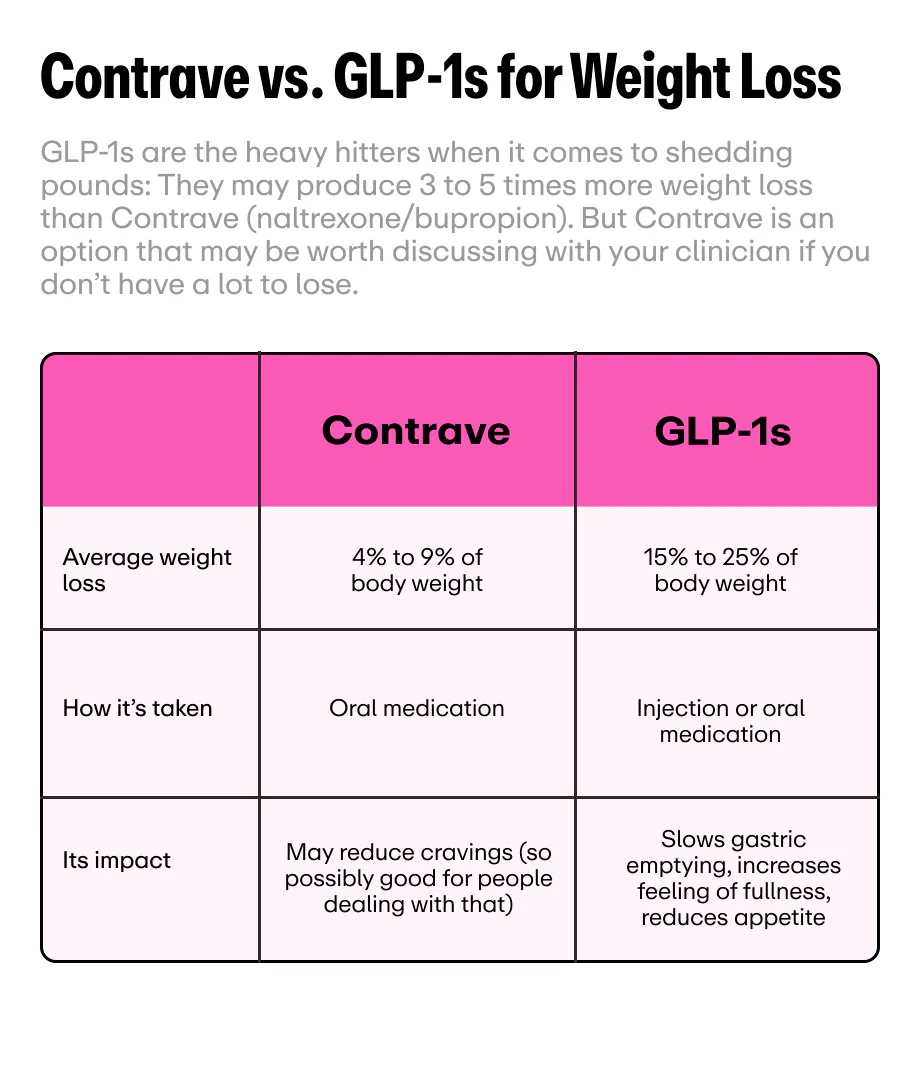
GLP-1 medications, such as semaglutide or tirzepatide (a GLP-1/GIP drug), may produce 3 to 5 times more weight loss than naltrexone/bupropion in some cases. After a year, GLP-1s can decrease body weight in people with obesity by 15% to 25% on average.
Some GLP-1s can be taken orally or injected, while Contrave is an oral medication only. They both come with potential side effects, most notably gastrointestinal ones. For both types of medications, one of the biggest risks is nausea.
If you’re looking to lose a mild amount of weight, don’t tolerate GLP-1s very well, or are mainly trying to manage craving-based eating, then Contrave for weight loss might be a good option for you. The right choice depends on your health history and goals. Guidance from a clinician (like a Midi clinician) will be a major help here—they can direct you to the best treatment plan for you and help you manage any side effects.
Midlife Weight, Hormones, and Where Naltrexone Fits
Weight change in perimenopause and menopause is caused by a whole lot of factors that directly and indirectly impact your weight and body composition, such as:
- hormonal changes that direct fat storage toward your abdomen
- loss of muscle mass that decreases metabolism
- menopausal symptoms like night sweats and insomnia that can affect your appetite
- midlife stresses that can trigger emotional eating and cravings
Contrave won’t address all of the above, which is why these weight loss medications are designed to fit in with a bigger health plan.
A menopause-trained clinician, like one at Midi, understands the impact of hormonal changes on weight. They’ll personalize your treatment plan based on your hormonal status, lab work, lifestyle habits, health risks, and more. Medications—both FDA approved and those used off-label—can be one part of a supportive, personalized midlife treatment plan.
Consider booking a visit with a Midi clinician to discuss medical weight management options, including whether Contrave or another approach, like alternate medications or supplements, fits your goals.

Key Takeaways
- Naltrexone is a medication that’s traditionally used to treat alcohol use disorder and opioid dependence. It works by blocking opioid receptors, thereby decreasing reward-based activity in the brain.
- Naltrexone and bupropion (an antidepressant) are two active ingredients in Contrave, an FDA-approved weight loss medication.
- Together, naltrexone and bupropion have synergistic effects on reducing appetite and curbing cravings, typically resulting in about 5% reduction in body weight over 1 year. Weight loss happens with changes in exercise and eating; the more intensely you make these lifestyle changes, the more weight you may be able to lose on naltrexone/bupropion.
- Naltrexone is also sometimes used off-label as low-dose naltrexone (LDN) for health benefits like reduced inflammation.
- A Midi clinician can help you determine if and how naltrexone fits into your weight loss plan.
Frequently Asked Questions (FAQs)
Why are doctors hesitant to prescribe naltrexone for weight loss?
Some doctors may be hesitant to prescribe low-dose naltrexone for weight loss because on its own, it is not highly effective. But naltrexone and bupropion for weight loss is an FDA-approved combination medication sold under the brand name Contrave to treat obesity and overweight. A trained clinician will carefully screen your health history before prescribing it.
Is naltrexone similar to Ozempic?
Naltrexone works by helping to block reward pathways in the brain, which can aid in cravings-based eating habits to support weight loss. Ozempic (semaglutide) is a medication indicated for type 2 diabetes. For weight loss, semaglutide is prescribed as Wegovy. Semaglutide works differently than naltrexone because it reduces activity in the appetite centers of the brain, slows digestion, and improves blood sugar control.
How long does naltrexone work for weight loss?
Contrave (naltrexone and bupropion) is expected to work within 12 weeks of being on the maximum maintenance dose. It is designed to be taken long term for lasting weight loss.
Does naltrexone make you lose appetite?
When combined with bupropion, naltrexone/bupropion (Contrave) can reduce appetite, but it won’t make you lose your appetite.
What is the best time of day to take naltrexone for weight loss?
Contrave (naltrexone/bupropion) is prescribed to be taken twice per day, once in the morning and once in the evening. Avoid taking the medication with a high-fat meal.
If you’re in perimenopause or menopause and want guidance from clinicians who specialize in women’s midlife health, book a virtual visit with Midi today.
Hormonal change is at the root of dozens of symptoms women experience in the years before and after their period stops.
Our trained menopause specialists can help you connect the dots to guide you towards safe, effective solutions.
Whether you need personalized guidance or a prescription routine to tackle symptoms—including brain fog, hot flashes, sleep trouble, mood swings, and weight gain—we’ve got you covered. Learn more here.
Midi’s mission is to revolutionize healthcare for women at midlife, wherever they live and whatever their health story. We believe that starts with education, to help all of us understand our always-changing bodies and health needs. Our core values guide everything we do, including standards that ensure the quality and trustworthiness of our content and editorial processes. We’re committed to providing information that is up-to-date, accurate, and relies on evidence-based research and peer-reviewed journals. For more details on our editorial process, see here.