
 Heather Hofflich, DO
So, tirzepatide has caught your eye and you’re curious if you qualify—but the “how” of actually getting there can feel like its own mystery. Who qualifies for this GLP-1, and is it right for you? Do you need a prescription for tirzepatide? What does it usually cost, and it it covered by insurance? Read on to learn how to get tirzepatide if you’re eligible, how to check insurance and cost, and how a licensed clinician (like one at Midi Health) can help determine if this medication is the right fit.
By now, odds are high you’ve heard about tirzepatide. Maybe you’ve read about its benefits online, or a friend brought it up at brunch. You might even know it’s a dual GIP and GLP-1 receptor agonist that’s helped countless women reach their personal weight goals. But what may be less clear are the logistics: namely, how to get tirzepatide.
The short answer is that tirzepatide is a prescription-only medication, and eligibility requirements, insurance coverage, and clinical monitoring all shape your access. Taking tirzepatide requires guidance from a healthcare professional to help you safely and effectively reach your health and weight loss goals.
Below, we’ll take you through the steps on how to get tirzepatide, who qualifies, and how a Midi clinician can help you get the answers and treatments you need.
How to Get Tirzepatide: Your Real Options at a Glance
If you’re interested in exploring tirzepatide for diabetes management or weight loss, you have several legitimate options for care:
- licensed clinicians on telehealth platforms (like Midi)
- primary care professionals
- medical specialists (such as an endocrinologist or board-certified obesity medicine specialist)
You may also have several ways to pay for the medication, such as via insurance coverage, self-pay programs, or brand discount programs or coupons.
Each of these legitimate paths requires an evaluation and—provided you’re eligible and interested—a prescription from a licensed clinician. If you see ads that say something like “no tirzepatide prescription necessary,” that’s a red flag—and it hints that the drug is likely sold by a gray-market retailer skirting important safety regulations. And without oversight from a licensed clinician you’re more vulnerable to side effects and health risks from these drugs.
What Is Tirzepatide? Mounjaro vs. Zepbound
Tirzepatide is the active ingredient in Mounjaro and Zepbound. These are two brand-name medications, which are self-injected once a week, are FDA approved for different treatments. Mounjaro treats type 2 diabetes, while Zepbound treats obesity or overweight. (More on this in just a bit.)
Tirzepatide is a dual-agonist GLP-1 and GIP medication. That means it activates GLP-1 and GIP receptors in the body to:
- quiet the activity of appetite centers in the brain to lessen cravings and reduce calorie intake
- change energy metabolism pathways
- boost satiety
- decrease gastric motility
- improve insulin secretion sensitivity
- positively impact fat metabolism
A wealth of data shows that tirzepatide is effective. In one clinical trial, participants lost 34% of their body fat mass after 72 weeks on tirzepatide, compared with 8% in people receiving a placebo. That said, results vary by person, dose, and adherence. Both Mounjaro and Zepbound are meant to be paired with healthy eating and exercise.
True Stories Of Transformation
Do You Qualify for Tirzepatide? Who It’s Approved For
A clinician will consider your BMI, weight-related health conditions (such as high blood pressure), and overall health history when determining whether you’re eligible for a tirzepatide prescription, whether in the form of Mounjaro or Zepbound.
- Mounjaro: FDA-approved to improve blood sugar and reduce cardiovascular risk in adults (and children ages 10 or older) with type 2 diabetes
- Zepbound: FDA-approved for weight reduction in adults with obesity (BMI of 30 or above) or those who are overweight (BMI 27 or above) plus have one or more weight-related comorbidities (type 2 diabetes, coronary heart disease, metabolic dysfunction-associated steatotic liver disease, or symptomatic osteoarthritis); also approved to treat moderate-to-severe obstructive sleep apnea (OSA) in adults with obesity
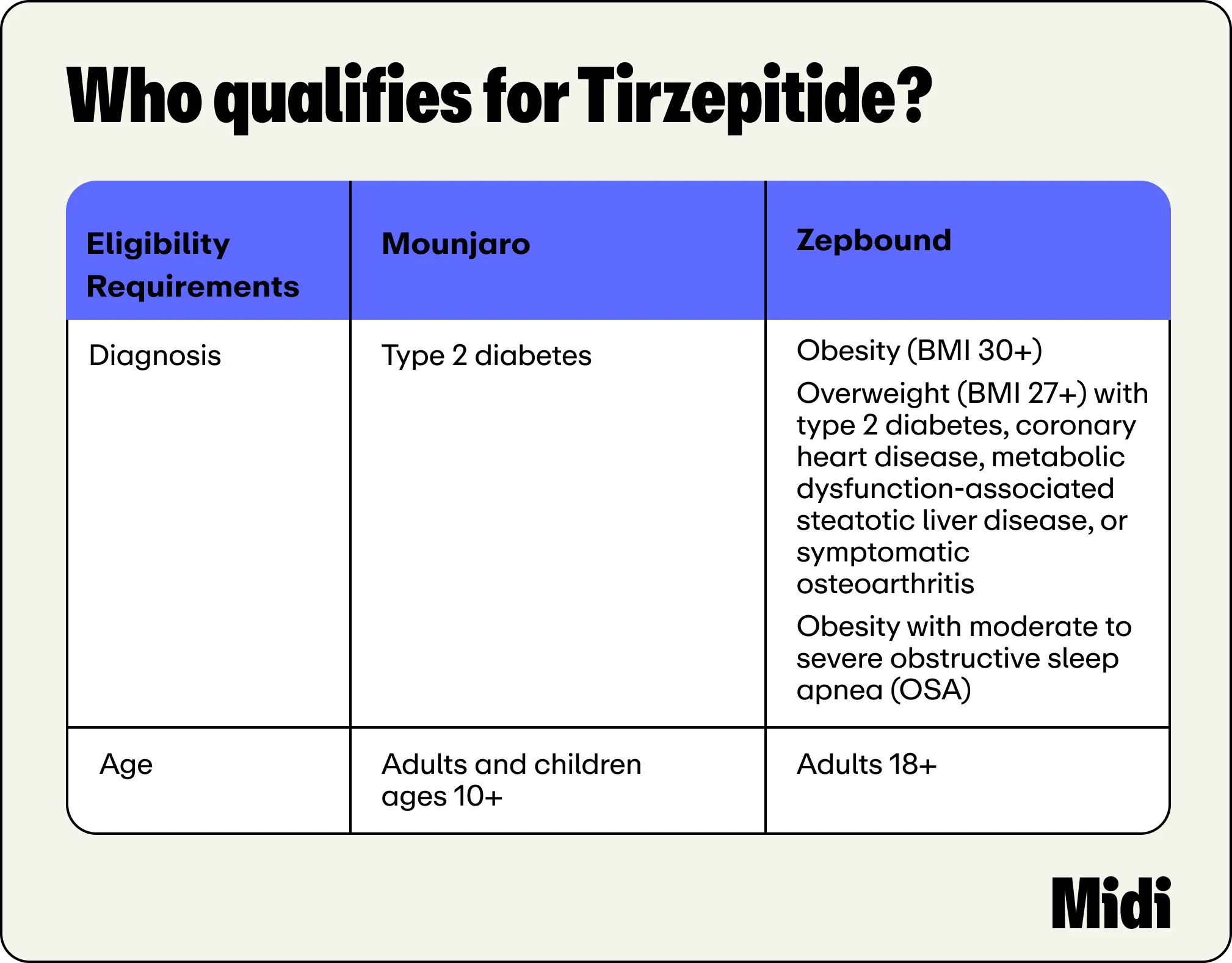
If you meet the basic eligibility requirements, your clinician will look at other factors to see whether you’re a good candidate for tirzepatide or if a different treatment altogether would work better for you.
Your clinician will talk with you about:
- current medications you’re taking
- your personal health history
- your family medical history
- your pregnancy/breastfeeding status
- other contraindications
- your weight loss goals
It’s important to be honest and upfront about each of these points. If you’re at greater risk for a certain adverse event or side effect, this doesn’t mean you’re automatically ineligible. Your clinician will talk with you about the benefits versus risks, so they can help create a personalized plan that’s best for you.
Also consider your weight loss goal. Tirzepatide produces greater weight loss than other weight loss medications like semaglutide. (One study comparing the two meds found a 20% weight loss with tirzepatide after 72 weeks and 14% with semaglutide.) People have different aims for getting to a healthy weight, and not everyone may need tirzepatide for their weight loss goals.
It’s also important to know that tirzepatide isn’t for everyone; it shouldn’t be used by anyone with a personal or family history of medullary thyroid cancer, MEN 2A or 2B syndrome, or pregnancy. Clinicians use caution in patients with a history of pancreatitis, gastroparesis, and a history of severe inflammatory bowel disease.
Getting a Tirzepatide Prescription: In Person vs. Telehealth
So, do you need a prescription for tirzepatide? The answer is a resounding yes.
The process of getting a tirzepatide prescription will differ a bit depending on where you go. Here’s what to expect:
- In person: At a primary care, endocrinology, or obesity-medicine visit, you’ll have a physical exam (such as a blood pressure check and measurements for weight/height), talk through your health history, and get referred for blood work (labs) when indicated.
- Via telehealth: Reputable platforms will feature a face-to-face evaluation with a clinician, who will ask your questions about your health and medical history. While your clinician will likely recommend baseline blood work (labs) to check your overall health and help secure insurance coverage, these labs are not always a strict requirement before you can receive a prescription.
If you’re using a telehealth platform to access tirzepatide online, look for one that connects you with a licensed clinician, provides guidance on insurance coverage and tirzepatide cost, uses vetted pharmacies, and provides ongoing support like regular follow-up visits. (Midi checks all those boxes.)

Tirzepatide Cost and Insurance: What to Expect
Currently, the list price of Zepbound is $499 to $1,086 per fill (generally 1 month’s supply), depending on the dose. The list price of Mounjaro is $1,112 per fill. But generally, think of those as starting prices before insurance kicks in or before you use the drug manufacturer’s self-pay plan.
Some people who have commercial drug insurance that covers Zepbound can pay just $25 for a 1- or 3-month supply of single-dose pens. And Medicare Part D patients may be able to access Zepbound for no more than $50 per month. A self-pay plan can also save you money, with a 1-month supply ranging from $299 to $699 (the price may increase with the dose).
If you have insurance, you can explore your coverage and pay options by contacting your insurance provider (or talking with your employer about your benefits) and asking about the requirements for tirzepatide. Depending on your plan, you may need prior authorization. Or you may have to follow a step-therapy process, where you try other, less expensive medications before tirzepatide.
Remember, a Midi clinician can help you determine the best treatment plan for you, your insurance details, and your health.

How to Safely Access Tirzepatide Online (and Red Flags to Avoid)
Telehealth and online pharmacies legitimately prescribe and sell tirzepatide. Some green flags that you’re getting legitimate care: The telehealth company requires a patient evaluation and eligibility check, plus recommends regular follow-up to track progress and side effects.
But the internet can be a Wild West, and you might stumble upon gray-market retailers that sell tirzepatide without a prescription. Buying unregulated tirzepatide like this comes with safety risks—for example, the drugs may be contaminated with bacteria, innocent-sounding ingredients like B12 that may interact with the medication, and unlisted active ingredients, according to a 2026 study.
These gray-market sellers have some obvious red flags: no clinician evaluation, no follow-ups, labeling that says “for research use only,” or prices that seem shockingly low.
Tirzepatide Dosing and Side Effects: What a Clinician Monitors
If your clinician decides tirzepatide is right for you, you’ll likely start off at the lowest available dose, which is 2.5 milligrams (mg) for Zepbound or Mounjaro. From there, they will increase (titrate) your dose gradually until you reach the one that’s the most tolerable and effective for you. Don’t self-adjust your dose or take an extra dose throughout the week.
Gradually increasing your dose this way will help you feel your best. A slow-and-steady approach helps limit and manage the most common side effects, including:
- nausea
- diarrhea
- vomiting
- constipation
- abdominal pain
- indigestion
- reflux
- fatigue
- headaches
Contact a clinician if any of these side effects are severe or don’t improve, or if you have new red-flag symptoms such as: ongoing pain in the upper left or middle of the abdomen that spreads to the back; upper abdominal pain with a fever; yellowing eyes or skin; clay-colored stool; decreased urine output; swelling of your legs, ankles, or feet; changes in your vision; a fast heartbeat; dizziness; or fainting. Call 911 if you have an allergic reaction (such as a rash, itchiness, swelling of the face/mouth/throat, or trouble breathing) to the medication.
Tirzepatide in Midlife: Why Menopause Changes the Plan
So many things in your body and health change during perimenopause and menopause. You might be hungry all the time now, fighting meno belly, or wondering why your metabolism is sluggish.
Whether or not you’re taking a medication like tirzepatide, healthy midlife habits can make a big difference. That includes focusing on moves that support a healthy weight and metabolic function, like:
- paying attention to your protein intake
- limiting or cutting out ultraprocessed foods
- engaging in regular resistance exercise
- sleeping well at night
Clinicians who understand midlife health—including what’s happening physiologically and common challenges during these years—are invaluable in creating a Care Plan aligned to your goals, individual risks, and preferences. That’s all a fancy way of saying: Find an expert who “gets” you—like the clinicians at Midi.
Key Takeaways
- When it comes to how to get tirzepatide, it’s safest to have it prescribed by a clinician.
- Tirzepatide is the active ingredient in two medications: Mounjaro, which is FDA approved for diabetes management, and Zepbound, which is FDA approved for weight loss and the treatment of moderate to severe OSA.
- This medication is available through in-person visits with a clinician, such as a primary care professional, endocrinologist, or obesity-medicine doctor, or via a reputable telehealth company like Midi.
- Avoid non-prescription online suppliers, such as via the gray market, as these suppliers may side-step important safety regulations.
- Midlife women benefit from working with a menopause-informed clinician who can carefully evaluate their eligibility for tirzepatide and guide them through starting and increasing the dose, as well as managing side effects. Regular follow-up visits help make sure you’re on the right path to reach your health and weight goals.
Frequently Asked Questions (FAQs)
Why is tirzepatide hard to get?
Although tirzepatide had been the subject of a medication shortage in the past, that’s no longer the case. Tirzepatide should no longer be difficult to get, though you may have to consider cost and insurance.
How do I get my doctor to prescribe tirzepatide?
Express interest in a tirzepatide prescription, along with your goals. From there, your clinician will determine if the medication is right for you based on BMI, current health issues, and contraindications that may increase your risk for adverse effects.
Where can I buy tirzepatide without insurance?
Tirzepatide is available through several different pay models, including via commercial drug insurance, self-pay, Medicare, or without insurance from the LillyDirect pharmacy or another preferred pharmacy.
How do you qualify for tirzepatide?
Tirzepatide is available as Mounjaro or Zepbound. Mounjaro is FDA approved to improve blood sugar in adults and children ages 10 or older with type 2 diabetes. Zepbound is FDA approved for weight reduction in adults with obesity (BMI of 30 or above), adults who are overweight (BMI 27 or above) plus have one or more weight-related comorbidities (type 2 diabetes, coronary heart disease, metabolic dysfunction-associated steatotic liver disease, or symptomatic osteoarthritis), or adults who have obesity and need treatment for moderate to severe obstructive sleep apnea (OSA).
Is tirzepatide available without a prescription?
Tirzepatide is a prescription-only medication. You should not purchase it without a prescription, because the potency and purity of the medication would be in question. It’s important for a clinician to determine your eligibility, dose, and proper follow-up to help manage side effects.
If you’re in perimenopause or menopause and want guidance from clinicians who specialize in women’s midlife health, book a virtual visit with Midi today.
Hormonal change is at the root of dozens of symptoms women experience in the years before and after their period stops.
Our trained menopause specialists can help you connect the dots to guide you towards safe, effective solutions.
Whether you need personalized guidance or a prescription routine to tackle symptoms—including brain fog, hot flashes, sleep trouble, mood swings, and weight gain—we’ve got you covered. Learn more here.
Midi’s mission is to revolutionize healthcare for women at midlife, wherever they live and whatever their health story. We believe that starts with education, to help all of us understand our always-changing bodies and health needs. Our core values guide everything we do, including standards that ensure the quality and trustworthiness of our content and editorial processes. We’re committed to providing information that is up-to-date, accurate, and relies on evidence-based research and peer-reviewed journals. For more details on our editorial process, see here.