 Rebecca Yee, MD

Early menopause means your periods stop before age 45—and that’s probably years before you might expect. So if you’re in your late 30s or early 40s and wondering whether your symptoms could be menopause, you're not necessarily too young to experience that (though it’s less common). Early menopause is driven by a complex mix of factors, and psychologically, it can knock you for a loop. We’ll walk you through the signs of early menopause, why it can happen, how hormone therapy can play an important role in your long-term health, and how a menopause-trained clinician at Midi Health can help you get answers.
If you're in your late 30s or early 40s and suddenly struggling with hot flashes, restless nights, or unpredictable periods, menopause might be the last thing you suspect. And if you've brought up that concern with a clinician only to hear “You're too young,” it’s easy to wonder whether it’s stress, age, or just another one of those fun surprises of womanhood.
But early menopause is real. It’s when you reach that point before age 45, and the impact goes beyond periods gone rogue. Early menopause can affect everything from sleep and sexual health to bone strength and cardiovascular health. It can also bring up some big, sometimes complicated questions about fertility and what the next few decades might look like.
Here’s the reassuring part: You have options, and you don’t have to figure this out alone. For most women who experience early menopause, hormone therapy is recommended until at least the average age of natural menopause, unless there's a medical reason to avoid it.
So, what are the signs, what causes early menopause, and how do you know if it’s happening to you? Let’s get into how it's diagnosed, what it means for your health, and which treatments can help. And we’ll explain how a menopause-trained clinician, like one at Midi, can give you the healthcare you deserve.
What Is Early Menopause?
Early menopause happens when you reach menopause before age 45. Menopause is generally confirmed after 12 consecutive months with no period, assuming there’s no other cause for it.
But Aunt Flow doesn’t typically catch the getaway train overnight. The lead up to menopause, known as perimenopause, can begin years before your final period. During this transition, you might notice irregular periods, night sweats, or mood changes as your hormones fluctuate.
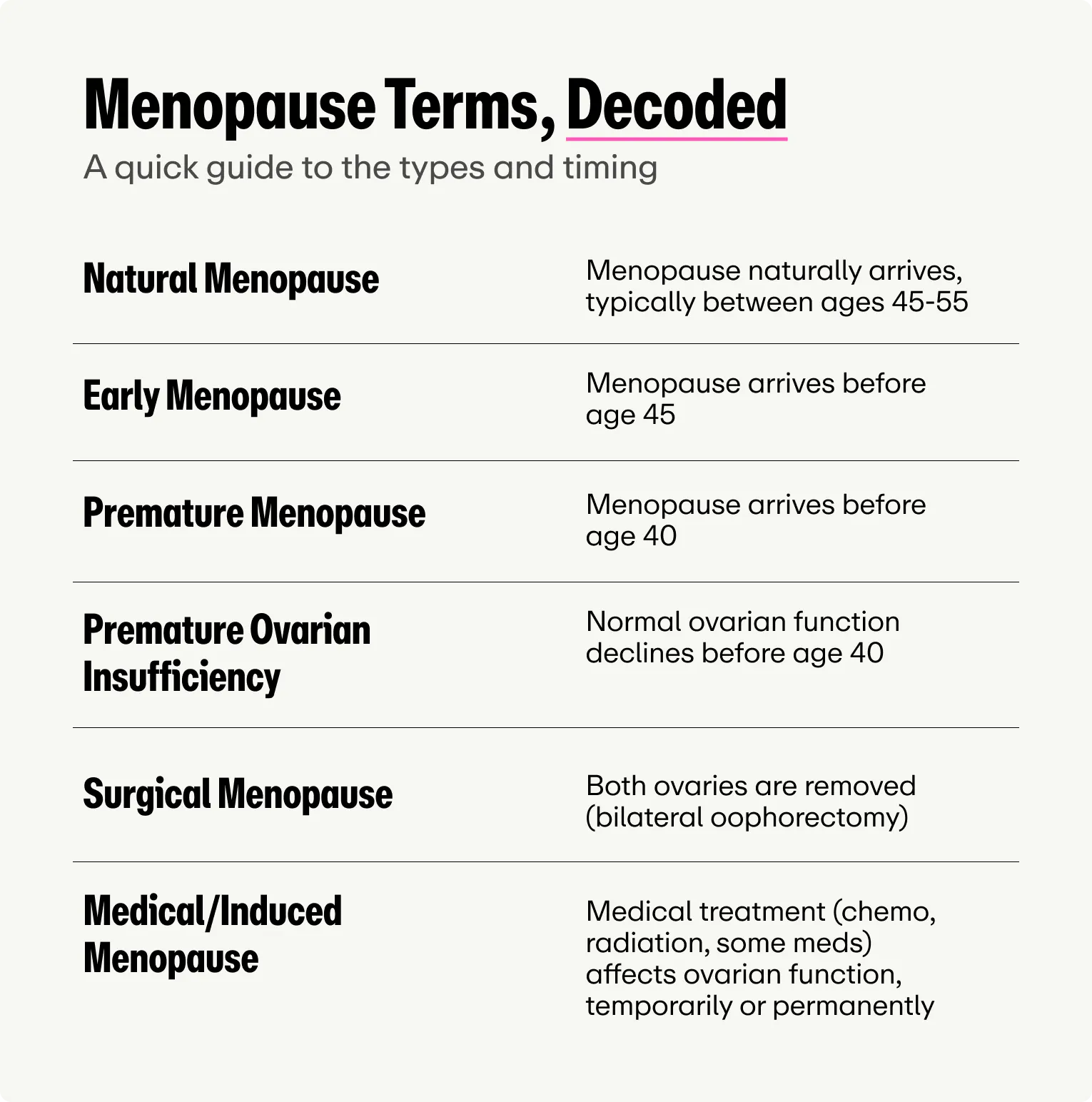
Here’s how the terminology breaks down:
- Early menopause: menopause before age 45
- Premature menopause: menopause before age 40 (this is considered an outdated term; major medical groups now use premature ovarian insufficiency)
- Natural menopause: menopause that occurs without surgery or another medical intervention, typically between ages 45 and 55 (the average age is around 51 or 52)
Estimates suggest that roughly 5% of women reach menopause before age 45, while about 3% experience it before age 40. Knowing where you are on the menopause timeline can help you understand what it might mean for your health down the road.
When menopause happens earlier, you may spend more years with lower estrogen levels than someone who reaches menopause at the average age. And estrogen does a lot more than just regulate your period: It also influences your bone health, heart health, and overall well-being.
That’s why recognizing early menopause is so important. It equips you to talk with your clinician about managing symptoms, keeping an eye on your long-term health, and exploring your fertility options, if that’s something on your mind.

Early Menopause vs. Premature Ovarian Insufficiency vs. Surgical Menopause
So, you’ve been down the online rabbit hole, trying to figure out what’s going on with your body. You may have come across a few phrases that sound similar, but there are some important differences:
- Premature ovarian insufficiency (POI) happens when normal ovarian function declines before age 40. It’s also sometimes called premature menopause, but POI differs from early menopause because the ovaries don’t necessarily “shut down” completely. Occasional periods and ovulation mean pregnancy is possible, with an estimated 5% to 10% chance.
- Surgical menopause happens when both ovaries are removed in a procedure called bilateral oophorectomy. This causes a sudden drop in hormone levels that can trigger more abrupt, intense symptoms than natural menopause. A hysterectomy (removal of the uterus) alone doesn’t cause menopause if the ovaries stay put, though it may lead to earlier menopause for some women.
- Medical or induced menopause can happen when treatments like chemotherapy, pelvic radiation, or certain medications affect ovarian function. These effects may be temporary or permanent.
What Are the Signs of Early Menopause?
Changes in your period are often one of the first clues that something is shifting. Your cycles might get shorter, longer, heavier, or lighter than usual. You might skip a month, then see your period make a surprise comeback. Eventually, it may stop altogether.
Other early menopause symptoms look a lot like you’d expect from menopause around age 50, such as:
- hot flashes and night sweats
- sleep disruptions
- vaginal dryness, discomfort during sex, or lower libido
- mood shifts, anxiety, and irritability
- brain fog and difficulty concentrating
- joint aches, dry skin, or changes in hair texture
These symptoms aren't exclusive to early menopause. Pregnancy, thyroid disorders, polyendocrine metabolic ovarian syndrome (PMOS, formerly known as polycystic ovary syndrome, or PCOS), and other conditions can cause similar changes.
Hormonal birth control can make things trickier, too. The pill can regulate or suppress your periods, potentially masking one of the biggest signs of early menopause. Instead, you might notice hot flashes, sleep disturbances, or mood changes. With a progesterone IUD, you may get light periods or none at all, which can make it challenging to figure out where you are on this journey.
If you've gone 3 months without a period with no clear reason or you're experiencing menopause-like symptoms before age 40, check in with a healthcare professional.

What Causes Early Menopause?
Sometimes, there's no clear answer to what has caused someone’s early menopause, but science has found several factors that can contribute, including:
- Genetics and family history: Research shows that genetics play a role. So, if your mom went through early menopause, your chances may be higher, too.
- Autoimmune conditions: Sometimes, the immune system mistakenly targets the ovaries. This can happen alongside thyroid or adrenal gland conditions.
- Medical treatments: Chemotherapy, pelvic radiation, and surgery to remove both ovaries can trigger menopause. The risk from cancer treatment depends on the treatment, dose, and your age.
- Smoking: Smoking is linked to earlier menopause and is one of the few risk factors you can take steps to change.
What about stress, birth control, in vitro fertilization (IVF), or tubal ligation? None of these is an established cause of early menopause. Stress can affect your periods and worsen symptoms of perimenopause and menopause, and hormonal birth control can mask changes in your cycle—but they aren’t known causes of early menopause.
The bottom line: Sometimes there’s an identifiable cause for early menopause, and sometimes there isn’t. Either way, you don’t need to piece together the clues on your own. Talking with your clinician about your history and potential risk factors can help you figure out what, if any, testing makes sense and what your options are.
Stories of Success
How Is Early Menopause Diagnosed?
If you suspect early menopause, you might be hoping a quick blood test will give you a definitive answer. But diagnosis usually takes a little more detective work.
Your clinician will start by reviewing your age, menstrual history, symptoms, medications, and medical background, including when your periods began to change, any surgeries or cancer treatments you’ve had, and whether early menopause runs in your family.
Blood tests can help provide context, but they aren’t crystal balls. Your clinician may check follicle-stimulating hormone (FSH), which helps regulate ovarian function, along with estradiol, a form of estrogen. A FSH level above 25 IU/L can suggest perimenopause or declining ovarian function, but it’s not a clear-cut answer on its own. Hormone levels can fluctuate wildly even day-to-day, so depending on your symptoms and results, your clinician may repeat the testing 4 to 6 weeks later.
They may also check for other possible explanations, including pregnancy, thyroid disorders, elevated prolactin, and PMOS. Depending on your age and symptoms, they may also recommend genetic or autoimmune testing, especially if POI is suspected.
And what about anti-Müllerian hormone (AMH)? It’s a marker of ovarian reserve, but a low level doesn’t automatically mean you're in early menopause. The American College of Obstetricians and Gynecologists cautions against using a single AMH measurement to predict the age that a woman will reach menopause. And when it comes to home menopause test kits, they have limitations, too, and shouldn't be used to confirm a diagnosis on their own.
Why Early Menopause Raises Long-Term Health Risks
Estrogen has a pretty extensive resume. It helps keep your bones strong, supports your cardiovascular health, and plays a role in all sorts of behind-the-scenes bodily business. So when estrogen levels drop earlier than expected, there are health issues to consider.
First up: Your bones. Estrogen helps maintain bone density, and when levels fall, bone loss can speed up. That means women who experience early menopause have a higher risk of developing osteoporosis and fractures later in life.
Heart health is another consideration, since early menopause is associated with a higher risk of cardiovascular disease (the leading cause of death among women). Researchers are also exploring possible links with depression, anxiety, and cognitive decline. The science here is more complicated, though, and an association doesn't mean that early menopause definitely causes these problems.
And then there are unwelcome symptoms that show up much sooner. Lower estrogen can mean vaginal dryness, painful sex, urinary symptoms, and a dip in your sex drive—which are all common. But there are treatments that can help with the symptoms.
Increased risk definitely doesn’t mean something will happen to you, but knowing what to watch for gives you a reason to be proactive about your health, even if your symptoms feel manageable.
Hormone Therapy for Early Menopause: Why Experts Recommend It Until at Least the Average Age of Menopause
If there's one thing to understand about treating early menopause, it's this: Hormone replacement therapy (HRT, now commonly referred to as menopause hormone therapy, or MHT) isn't just about getting hot flashes to find their chill. It’s also about supplementing the hormones that your body would normally still be making and protecting your long-term health along the way.
That’s why HRT is generally recommended for women with early menopause or POI until around age 51, the average age of menopause, unless there’s a medical reason not to take it. It’s considered essential preventive healthcare, not just symptom relief.
If you’re aware of earlier scary headlines about hormone therapy and breast cancer, blood clots, or heart disease, those have long been put into context, and here’s the latest update: The FDA recently approved the removal of boxed warnings about cardiovascular disease, breast cancer, and probable dementia on six hormone therapy products. The move reflects years of calls to align the labeling with current evidence, with support from the American College of Obstetricians and Gynecologists, The Menopause Society, and other major medical groups.
It’s worth remembering this: If you’re experiencing early menopause and receiving HRT, you’re boosting levels of hormones you would ordinarily still be producing. For women with POI, current guidance indicates that appropriately prescribed hormone therapy doesn’t appear to increase breast cancer risk beyond that of women the same age without POI. Your personal and family medical history still matter, so this is a conversation to have with your clinician.
Treatment is personalized, but hormone therapy generally involves estrogen delivered through a patch, gel, or pill. If you still have your uterus, you'll usually also need a progestogen to protect the uterine lining. Women experiencing early menopause need higher hormone doses for full physiological replacement than older women who are looking for symptom relief. And if preventing pregnancy is also a priority, combined hormonal contraception may be an option.
Hormone therapy isn’t right for everyone. Non-hormonal medications and treatments targeted to specific symptoms can help, too.
Ultimately, the question is about what makes sense for you. A Midi clinician can help you weigh your options and build a Care Plan that works best for your body now and in the years ahead.
Fertility After an Early Menopause Diagnosis
An early menopause diagnosis can bring up a complex wave of emotions, particularly if you hope to grow your family or aren't ready to close that chapter of your life. It’s completely natural to need time and space to process what this means for your future.
While natural conception becomes unlikely once menopause is established, it’s helpful to know that with POI, ovarian function can sometimes fluctuate unpredictably. Around 5% to 10% of women with POI may conceive naturally, though it isn't something that can be reliably counted on.
If building a family remains an important goal for you, know that you absolutely have options worth exploring. For example, IVF using donor eggs or embryos is a well-established route for women with POI. (IVF using your own eggs may have limited success once ovarian insufficiency occurs).
If you’re facing upcoming medical treatments like chemotherapy or surgery to remove your ovaries, ask about fertility preservation before treatment begins. Egg freezing, embryo freezing, or ovarian tissue preservation may be options.
Navigating these options and decisions can feel overwhelming, but you don’t have to figure it out alone. A reproductive endocrinologist can help you understand the possibilities, while a menopause specialist can support your daily symptoms and long-term health every step of the way.
The Emotional Side of Early Menopause
Early menopause can be physically and emotionally exhausting. And when friends are still having regular periods or trying to conceive, it can feel like you're suddenly out of step with everyone around you.
Then there's the experience of not being believed: Being told you're too young for menopause can delay diagnosis and add another layer of stress.
Hormonal changes can affect your mood, but so can the experience of navigating an unexpected diagnosis. You don't have to decide whether your anxiety is hormonal or situational before getting support, which can include talking with a therapist or connecting with a peer support group.
What Early Menopause Means for Women in Their Late 30s and 40s
If you're experiencing early menopause symptoms in your 30s or 40s, one of the biggest questions is whether you're in perimenopause or actually approaching menopause earlier than expected. Symptoms alone can't tell you where you are in the transition.
Perimenopause can begin years before your final period, and it can happen earlier than many women expect. But whether it’s perimenopause or early menopause, you deserve short-term relief and a plan for the long game.
That means your care may go beyond symptom check-ins to include bone density testing, cardiovascular risk assessments, and regular reviews of your symptoms and treatment. The everyday stuff still matters, too: strength training, eating a balanced diet, not smoking, and prioritizing sleep can all help support your health.
Working with a clinician who specializes in menopause, like one at Midi, can be a game changer. Early menopause isn't something every general practice sees regularly, so having a trained clinician who understands the nuances can make a real difference.
How to Talk With a Clinician About Early Menopause
If you suspect early menopause, it can be helpful to track your menstrual cycle and symptoms for a few weeks or months before your visit with a clinician. Note changes in bleeding, hot flashes, sleep, mood, and anything else that feels different.
It can also help to come prepared with a few questions, such as:
- Could this be early menopause, POI, or perimenopause?
- What tests would help clarify what's happening?
- How would hormone therapy help me, and how long might I need it?
- What should I know about fertility and contraception?
- How will we monitor my bone and cardiovascular health?
- Are there other treatments that might help with my symptoms?
At Midi, clinicians trained in menopause care can help connect the dots by reviewing your history, making sense of your symptoms, arranging testing, and creating a personalized treatment plan.
You deserve answers, not a dismissal that you're “too young” for menopause. Getting the right diagnosis and care can help you feel better now and protect your health for the years ahead.
Key Takeaways
- Early menopause is when menopause happens before age 45. The first clue is typically a change in your periods, and you may notice hot flashes, sleep problems, and mood changes, too.
- Early menopause affects more than just your periods. It can also affect bone and heart health, which is why hormone therapy is generally recommended until around age 51, unless there’s a medical reason to avoid it.
- Getting a diagnosis takes more than one blood test. Your clinician will consider your age, menstrual history, family medical history, symptoms, and health background to help clarify what’s happening.
- You don’t have to navigate early menopause alone. A menopause-aware clinician, like one at Midi, can help you understand your options and make a personalized treatment plan.
Frequently Asked Questions (FAQs)
Can you have perimenopause at 35?
Yes. While most women experience perimenopause in their mid-40s, it’s also possible at age 35.
What are the first signs of early menopause?
Often, changes to your period are the first sign of early menopause.
Is early menopause genetic?
Genetics can play a role in early menopause. If your mom or sister experienced early menopause, it raises your chances. While there can be a genetic component, sometimes there’s no identifiable cause.
Can stress cause early menopause?
There is not a direct link to stress causing early menopause, although stress can affect your menstrual cycle and worsen symptoms of perimenopause and menopause.
Does low ovarian reserve mean early menopause?
No, low ovarian reserve does not automatically mean you’re in early menopause. In some cases, it can signal an increased risk of early menopause, but it can’t predict when someone will have their final menstrual period.
If you’re in perimenopause or menopause and want guidance from clinicians who specialize in women’s midlife health, book a virtual visit with Midi today.
Hormonal change is at the root of dozens of symptoms women experience in the years before and after their period stops.
Our trained menopause specialists can help you connect the dots to guide you towards safe, effective solutions.
Whether you need personalized guidance or a prescription routine to tackle symptoms—including brain fog, hot flashes, sleep trouble, mood swings, and weight gain—we’ve got you covered. Learn more here.
Midi’s mission is to revolutionize healthcare for women at midlife, wherever they live and whatever their health story. We believe that starts with education, to help all of us understand our always-changing bodies and health needs. Our core values guide everything we do, including standards that ensure the quality and trustworthiness of our content and editorial processes. We’re committed to providing information that is up-to-date, accurate, and relies on evidence-based research and peer-reviewed journals. For more details on our editorial process, see here.