


If the menopause transition has you feeling sweaty, tired, moody, or just plain not like yourself, you may be wondering whether certain perimenopause supplements can ease your symptoms. With so many options on drugstore shelves and at your fingertips online, it can be difficult to know which ones can actually support your health during this life stage—and which ones aren’t worth your hard-earned money. The good news: Some supplements do have evidence behind them for specific concerns, from sleep to bone and muscle health. But others don’t live up to the hype. A Midi Health clinician can help you figure out which supplements, if any, make sense for your symptoms and overall health.
Walk into a health food store or scroll social media, and you’ll find countless products promising to make perimenopause easier. But which ones actually work? Some perimenopause supplements may help with specific concerns like sleeping poorly, feeling stressed, or losing muscle, while others have little research to support the claims on the label.
No supplement can make every perimenopause symptom disappear (if only we were so lucky), but the right one may still have a place in your routine. Some women turn to supplements when they can’t tolerate certain prescriptions or want to explore other options. And while they aren’t a replacement for prescription medications, supplements may be used alongside them to support your care.
The key is knowing what a supplement can realistically do—and choosing one based on your symptoms and overall health, not the latest wellness trend. That’s where a Midi clinician comes in: They can determine whether certain perimenopause supplements actually make sense for you and, if so, which ones may be appropriate. They can also flag any supplements that might clash with your current medications and rule out ingredients that aren't worth the risk.
Ahead, we’ll look at which perimenopause supplements are backed by research (and which ones aren’t); how to choose a safe, high-quality product; and when supplements alone may not be enough.
What Perimenopause Actually Does, and What Supplements Can Realistically Address
Perimenopause has a way of keeping you guessing. During the years leading up to menopause (which is defined as the point in time when you’ve gone 12 months without a period), your hormones don’t simply decline in a straight line. Progesterone may start to drop as ovulation becomes less consistent, while estrogen can swing up and down before eventually declining.
During perimenopause, your periods may be out of whack, getting shorter, longer, heavier, or lighter without warning. And these hormonal shifts can bring a host of other symptoms, like sleep problems, mood changes, hot flashes and night sweats, brain fog, and even bone or muscle loss.
With so much changing at once, it’s easy to see why many women consider taking menopause supplements for extra support. Some supplements may help manage specific concerns during the menopause transition, but there’s an important limit to what they can do. Supplements don’t replace the estrogen and progesterone your body is losing, and they may not provide enough relief for symptoms like frequent or severe hot flashes and night sweats.
Your needs may also change over time. During perimenopause, symptoms can shift along with fluctuating hormones. After menopause, when estrogen remains consistently lower, protecting your bones and maintaining muscle become increasingly important. A clinician can help you figure out what’s driving your symptoms and whether a supplement makes sense, no matter where you are in the menopause transition.
Magnesium for Sleep, Anxiety, and Muscle Cramps
If stress and sleepless nights are part of your new normal in perimenopause, magnesium may already be on your radar. The mineral supports muscle and nerve function and may play a role in the body's stress response, which is why some women take magnesium for sleep, anxiety, or muscle cramps.
The evidence is stronger for some uses than others, though. Research suggests that magnesium can make it a little easier to fall asleep and sleep better, but the findings are mixed, and more research is needed, especially when it comes to dosing and formulation of magnesium. It may also help ease mild anxiety, but the evidence is limited. Research also hasn't consistently shown it helps prevent or relieve muscle cramps.
It may also matter which form of magnesium is being used. Magnesium glycinate is often used for sleep and anxiety and tends to be easier on the stomach, while magnesium citrate and magnesium oxide can have a laxative effect that helps with constipation. Your body doesn’t absorb magnesium oxide as well as some other forms.
The dose depends on your needs, but generally, women shouldn’t exceed 320 milligrams (mg) of supplemental magnesium per day, while men shouldn’t exceed 420 mg. Common side effects include diarrhea, nausea, and stomach cramping. If you have reduced kidney function, talk with your clinician before taking it.
Vitamin D and K2 for Bone Health
As estrogen declines during perimenopause, your body can lose bone faster than it replaces it, speeding up bone loss. The tricky part is that you usually can’t feel bone loss happening, even though it can eventually increase the risk of osteoporosis.
That’s where vitamin D comes in. It helps your body absorb calcium, which is essential for strong bones. If your vitamin D levels are low, your clinician may recommend a supplement and suggest the appropriate dose for you. Because vitamin D is fat-soluble, it can build up in your body and be harmful if you take too much, causing side effects like nausea, vomiting, and weakness. Talk with your clinician about how much you need.
Vitamin K helps activate proteins that build and maintain strong bones, which is why you may see vitamin D3 paired with vitamin K2 in supplements. However, while some research suggests a potential benefit from taking vitamins D and K together, the evidence isn’t conclusive. Newer research also suggests that higher vitamin K levels alongside vitamin D supplementation don’t prevent bone loss.
If you take a blood thinner such as warfarin, talk with your clinician before taking vitamin K2 because it can interfere with how the medication works.
And remember, supplements can’t replace weight-bearing exercise, such as strength training, or adequate calcium and protein in your diet—all of which play an important role in maintaining strong bones.
Omega-3s for Mood, Joints, and Heart Health
Getting your omega-3s is important—these essential fatty acids support cell function and cardiovascular health. Omega-3 supplements are also popular for mood support and joint health, although the research behind these benefits is less conclusive.
EPA and DHA are two types of omega-3s found mainly in fatty fish and fish oil. Both can help lower triglycerides, but research on how they affect mood and depressive symptoms is less clear. Some studies suggest a benefit, but overall, the evidence is weak. Similarly, research has shown that omega-3 supplements may improve arthritis pain and joint function, but the benefit hasn’t been consistent across studies.
When choosing a supplement, check the amounts of EPA and DHA on the Supplement Facts label rather than the total amount of fish oil. Add the EPA and DHA numbers to see how much you’re actually getting. There isn’t an established daily intake recommendation for EPA and DHA, so the right amount depends on your individual needs.
Not all fish oil supplements are created equal. Because omega-3 oils can oxidize or break down over time, look for a product that has undergone third-party testing. Midi’s Daily Omega-3+ supplement is a third-party-tested option that combines EPA and DHA with other nutrients to help support heart, bone, and brain health.
If you take a blood thinner or other medications, check with your clinician before taking an omega-3 supplement, and make sure your healthcare team knows about any supplements you take before a medical procedure.

Creatine and Protein for Muscle and Strength
While it was once mainly associated with gym bros, creatine is now popping up in the perimenopause conversation. Muscle mass naturally declines with age, and hormonal changes during the menopause transition may contribute to that loss. Maintaining muscle helps support your strength, mobility, and bone health, so it’s understandable that women might be interested in adding creatine or protein supplements to their coffee or morning shakes.
Creatine monohydrate can help support gains in muscle mass and strength when combined with resistance training. While some women may be put off by concerns about kidney damage or weight gain, research in healthy adults has not shown that creatine damages kidney function. Some initial water weight gain is possible, but this isn’t the same as gaining body fat.
A typical daily dose of creatine is 3 to 5 grams (g). Midi’s Creatine+ supplement provides 3 g of creatine monohydrate per serving.
Getting enough protein from your diet is important, too, especially in midlife. About 1 to 1.2 g of protein per kilogram of body weight per day—roughly 64 to 76 g for a 140-pound woman, for example—along with resistance training can help maintain muscle mass.
Your protein needs may vary, depending on factors such as your activity level, so a healthcare professional can help you determine an appropriate daily target. And neither protein nor creatine is a substitute for regular resistance training. If lifting weights is new to you, working with a trainer to learn proper form and gradually progressing to heavier weights can be a good place to start.
Black Cohosh and Phytoestrogens for Hot Flashes
Black cohosh is an herb native to North America that’s been marketed to help with menopause symptoms, particularly hot flashes. A 2023 review found that black cohosh may help reduce hot flashes and other menopause symptoms, although it didn’t significantly improve anxiety or depressive symptoms. But the overall evidence is mixed on how effectively it can support menopausal symptoms.
Meanwhile, phytoestrogens––like soy isoflavones and red clover––are plant compounds that can have estrogen-like effects in the body. However, evidence that phytoestrogens can help with hot flashes is also inconsistent.
There are a few safety concerns to keep in mind, too. Rare cases of liver injury have been reported in people taking products labeled as black cohosh, although it’s unclear whether black cohosh itself was responsible. If you have a history of liver disease, avoid black cohosh unless your clinician recommends otherwise. And if you’ve had a hormone-sensitive cancer, such as breast or uterine cancer, talk with your clinician before taking black cohosh or phytoestrogen supplements.
Product consistency is also a concern in this category. Some products sold as black cohosh have been found to contain the wrong herb or other ingredients not listed on the label. That’s another reason to discuss supplements with your clinician and look for products that have undergone independent third-party testing.
And remember, botanicals and herbs aren’t a substitute for proven treatments for moderate to severe hot flashes. Hormone therapy is still the most effective treatment for bothersome hot flashes, though there are also evidence-based, non-hormonal prescription options for women who can’t or don’t want to use hormones.
True Stories Of Transformation
What Doesn’t Have Good Evidence and What to Skip
There are plenty of supplements and ingredients on store shelves and all over social media with a lot of hype but little proof they actually improve perimenopause symptoms. That doesn’t necessarily mean they won’t help, but the research may be limited, inconsistent, or focused on something other than perimenopause. Your clinician can recommend perimenopause supplements that are informed by evidence and backed by research to support your health.
Maca root, for example, has shown some potential benefits for menopause symptoms, but there isn’t enough evidence to draw firm conclusions. Other popular options, including valerian and evening primrose oil, also don’t have enough evidence to say whether they reliably relieve menopause symptoms.
Be wary of products labeled “hormone balance supplements,” too. That’s a broad marketing term, so always look at the individual ingredients and the evidence behind them rather than assuming a product can actually “balance” your hormones. Plus, several of these herbs have hormone-like activity—even though they are herbal, they may not be safe for women who are advised against hormone treatments.
Safety, Quality, and Interactions
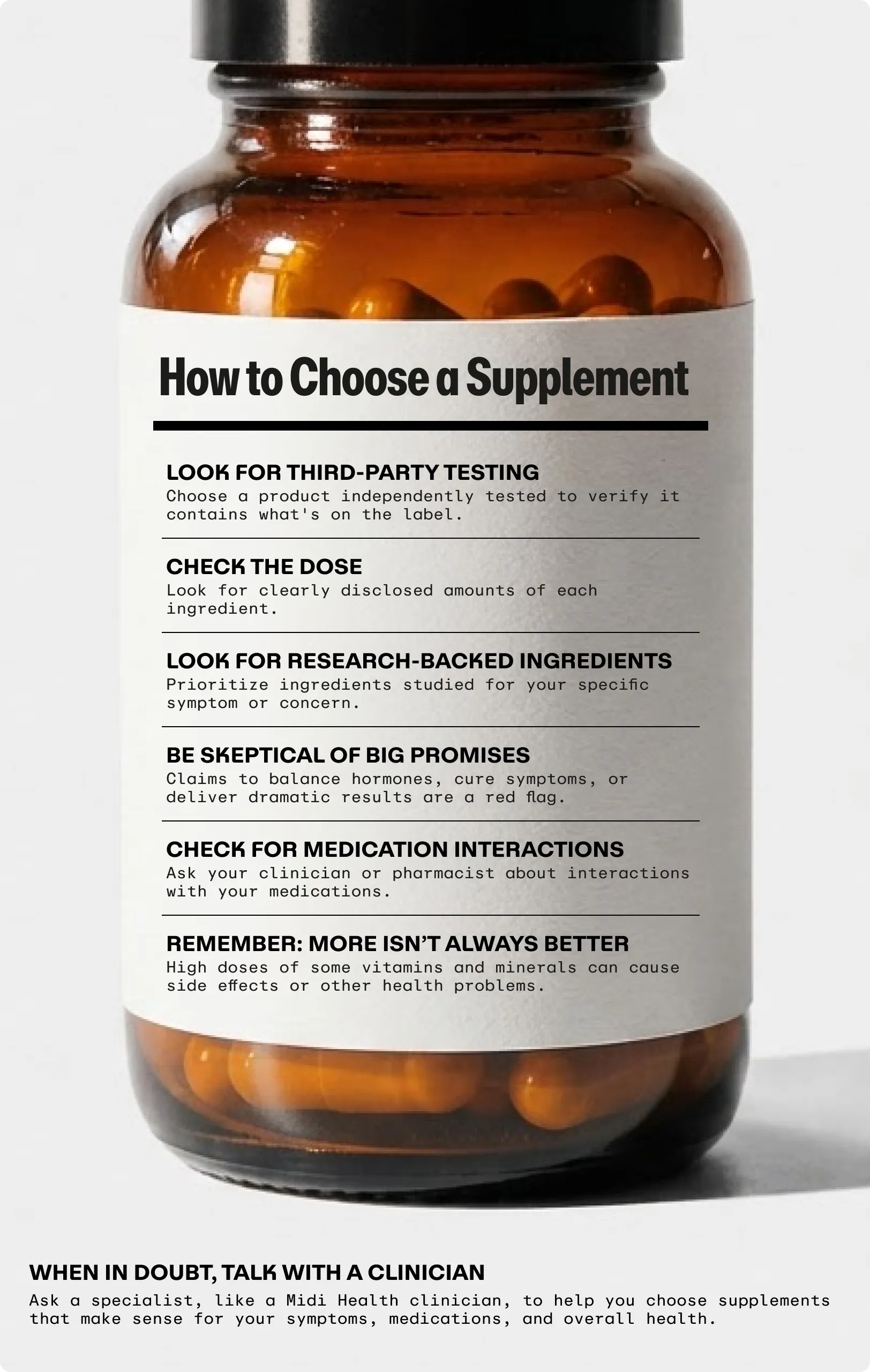
When buying a supplement, a few simple checks can help you choose a safe, high-quality option:
- Check for third-party testing: Choose products that have been third-party tested by an independent organization to help verify that they contain the ingredients on the label.
- Look for clearly disclosed doses: Look for clearly disclosed amounts of each ingredient.
- Choose evidence-informed ingredients: Look for ingredients that have been studied for the specific symptom or health concern you’re trying to address.
- Be skeptical of big promises: Claims that a supplement can balance hormones, cure symptoms, or deliver dramatic results should raise a red flag. If it sounds too good to be true, it probably is.
- Consider medication interactions: Some supplements can interact with medications, including blood thinners, thyroid medications, and certain antidepressants. Share everything you take with your healthcare team, including before surgery, and ask your clinician or pharmacist to check for potential interactions.
- Don’t assume more is better: Some vitamins and minerals have upper intake limits, and taking supplements you don’t need or at high doses can cause side effects or other health problems.
When Supplements Aren’t Enough
Even the best perimenopause supplements can’t relieve every symptom for everyone. When symptoms disrupt your sleep, work, or relationships, it may be time to seek treatment from a clinician, not another over-the-counter bottle of capsules.
Plus, what feels like a perimenopause symptom could actually be due to another condition that your clinician may identify and effectively treat. That’s why it’s worth talking to your clinician about treatment options, including supplements, before trying a new over-the counter product.
If it turns out perimenopause is to blame, your clinician may talk with you about hormone replacement therapy (HRT, now commonly referred to as menopause hormone therapy, or MHT). This treatment boosts hormones like estrogen and progesterone that decline during the menopause transition. It helps relieve bothersome perimenopause symptoms such as hot flashes and night sweats.
While many women have stayed away from HRT because of concerns about its risks, our understanding of those risks has evolved as research has advanced. Whether HRT is right for you depends on the potential benefits and risks, as well as your health history and symptoms.
There are also prescription, non-hormonal options that may be suitable for women who cannot or do not want to use hormones. These can include certain antidepressants and medications specifically approved to treat hot flashes.
HRT, non-hormonal treatments, and supplements are not mutually exclusive. Midi’s menopause-trained clinicians can walk you through your options, review what you’re already taking, and create a treatment plan with the full picture of your health in mind. You can book a virtual visit to get started.

Key Takeaways
- Perimenopause supplements can help with specific midlife health concerns, but some have more research behind them than others––and what works depends on the symptom you're trying to address.
- Certain supplements––like magnesium, vitamin D, and creatine––may support sleep and bone or muscle health, while products marketed for “hormone balance” require more scrutiny.
- Supplements such as black cohosh and other phytoestrogens are widely marketed for hot flashes, but the evidence is mixed, and they aren’t recommended as reliable treatments.
- Quality and safety matter: Look for third-party testing, check ingredient doses, and tell your clinician about everything you take to avoid potential interactions.
- Supplements aren’t a substitute for medical treatment when perimenopause symptoms are disrupting your sleep, work, or relationships. Your clinician may recommend hormone therapy, prescription non-hormonal treatments, supplements, or a combination based on your needs.
Frequently Asked Questions (FAQs)
How do I balance my hormones during perimenopause?
Hormone levels naturally fluctuate during perimenopause, so “balancing” them isn’t necessarily something you can accomplish with a supplement or lifestyle change. If you’re experiencing bothersome symptoms, a clinician can help determine what’s causing them and recommend treatment.
What is the best over-the-counter medicine for menopause?
There isn’t one over-the-counter medicine or supplement that’s best for every menopause symptom. Some supplements have evidence for specific concerns, such as magnesium for sleep or vitamin D for bone health, while others have limited or mixed evidence. What makes sense for you depends on your symptoms and overall health.
How can I raise my estrogen levels quickly?
There isn’t a supplement proven to quickly and reliably raise estrogen levels during perimenopause. Hormone therapy can provide estrogen and help relieve certain symptoms, but whether it’s right for you depends on your health history and individual benefits and risks.
What age does perimenopause start?
Perimenopause usually begins in your 40s, although it can start earlier or later than that for some people. During this transition, estrogen and progesterone levels fluctuate; periods may become less predictable; and symptoms such as hot flashes, sleep problems, and mood changes can occur.
If you’re in perimenopause or menopause and want guidance from clinicians who specialize in women’s midlife health, book a virtual visit with Midi today.
Hormonal change is at the root of dozens of symptoms women experience in the years before and after their period stops.
Our trained menopause specialists can help you connect the dots to guide you towards safe, effective solutions.
Whether you need personalized guidance or a prescription routine to tackle symptoms—including brain fog, hot flashes, sleep trouble, mood swings, and weight gain—we’ve got you covered. Learn more here.
Midi’s mission is to revolutionize healthcare for women at midlife, wherever they live and whatever their health story. We believe that starts with education, to help all of us understand our always-changing bodies and health needs. Our core values guide everything we do, including standards that ensure the quality and trustworthiness of our content and editorial processes. We’re committed to providing information that is up-to-date, accurate, and relies on evidence-based research and peer-reviewed journals. For more details on our editorial process, see here.


