


When you’re in perimenopause, spotting when wiping can be concerning. Any bleeding between periods—even just when your toilet paper is dotted with pink or red after you urinate—may need to be evaluated. But during this life stage, with its fluctuating hormone levels, light spotting is more common. In many cases, spotting in perimenopause is related to those normal hormonal changes, but the timing, amount, and pattern of bleeding still matter. Here, we’ll explain why spotting happens, what to do about it, and when it’s worth checking in with a menopause-trained clinician, like one at Midi Health.
It can be a disconcerting sight: You just used the bathroom, and you see spots of red or pink on the toilet paper with wiping. Perimenopause spotting when wiping, even when it’s just a small amount of blood, can feel unsettling when you’re not expecting it. You may feel the same way when you see spots of blood in your underwear.
Spotting can happen in perimenopause, a time of hormonal ups and downs. It’s normal, but you’ll want to pay attention to a few key factors: the amount of blood you’re seeing, the timing (for instance, if it happened after sex), whether you’re experiencing pain, and how long it’s been since your last menstrual period. This information can help you and your clinician determine whether what you’re seeing is a common part of perimenopause or needs further evaluation.
Perimenopause Spotting When Wiping: What It Usually Means
Perimenopause spotting is usually related to hormonal changes—that is, related to shifting levels of estrogen and progesterone during perimenopause. Unlike a regular period or heavier bleeding, spotting is light bleeding that you may notice only when wiping or when you see faint marks on your underwear or panty liner. The blood may be mixed in with normal vaginal discharge.
Spotting may appear pink, red, or brown. Though it’s usually linked to normal hormonal shifts, it’s worth tracking, especially if it’s new, recurring, or difficult to explain.
Spotting vs. a Light Period in Perimenopause
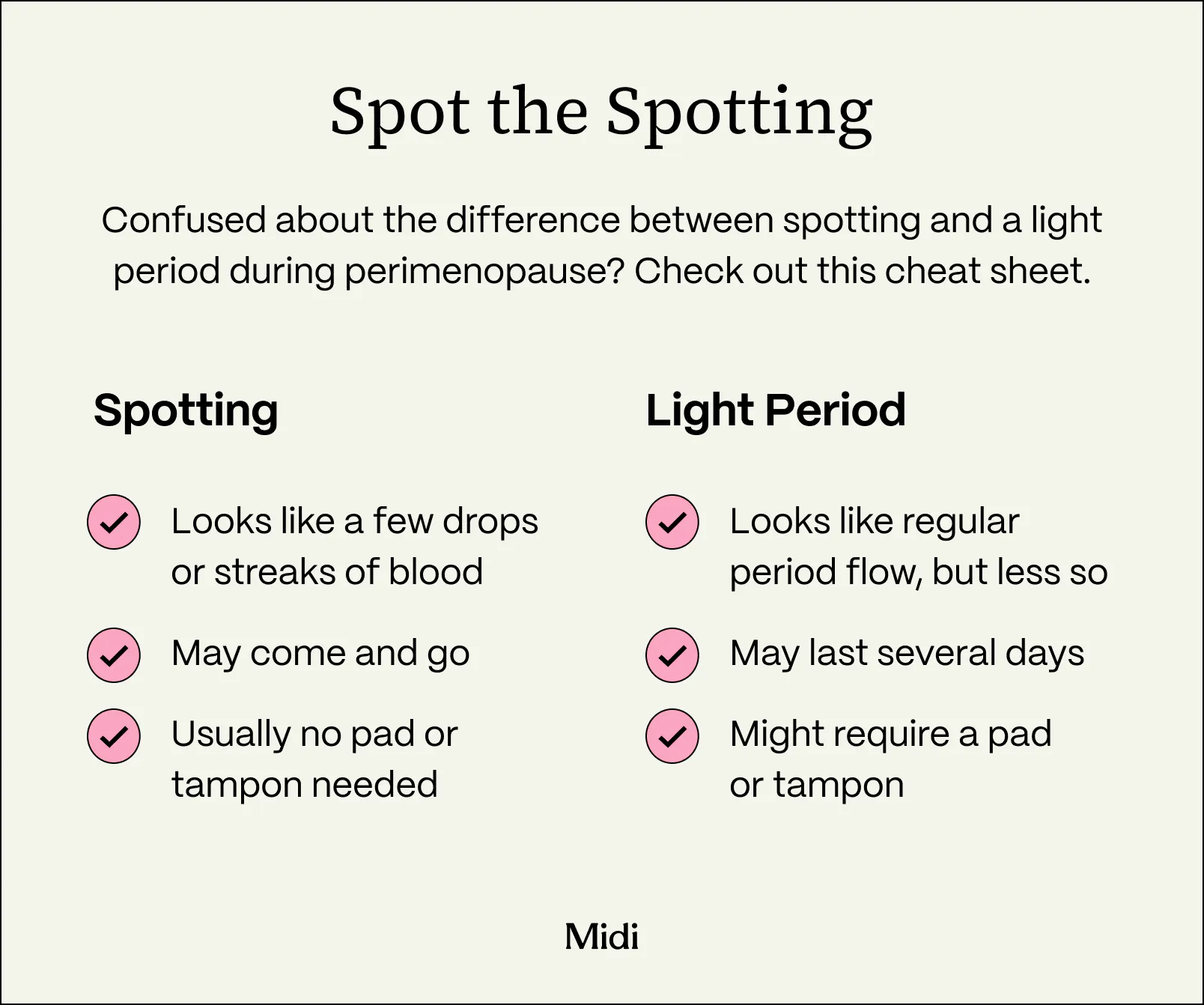
It can be hard to tell the difference between spotting in perimenopause and a light period, especially since periods tend to become more unpredictable during midlife. Some clues about the differences:
Spotting:
- is generally a few drops or streaks of blood
- may stop quickly or come and go
- is usually light or sporadic enough that you don’t need a pad or tampon
A light period in perimenopause:
- is usually a more consistent flow
- may last several days
- may require a pad or tampon
- generally resembles regular menstruation
While the pattern of your periods can change from month to month, the key to telling the difference between spotting and a light period is whether the bleeding is occasional, heavy, frequent, or unusual for you personally.
Why Spotting in Perimenopause Happens
Spotting in perimenopause can happen for several reasons. The hormone fluctuations that are common during perimenopause can cause the uterine lining to build up and shed irregularly, which can lead to spotting.
Irregular ovulation can also make bleeding patterns less predictable. When your periods are skipped or delayed, it may lead to spotting before your regular menstrual flow starts.
Spotting can happen either before or after a period. If you experience spotting mid-cycle, it may be related to ovulation. And alongside the spotting, you may notice some other perimenopause symptoms, including:
- hot flashes
- changes in sleep
- mood shifts
- vaginal dryness
If any of these symptoms are disrupting your daily life, or if they get worse over time, it’s important to speak with a clinician (like one at Midi).

Perimenopause Spotting Instead of Period
Perimenopause spotting instead of a period may also happen. The timing is different than spotting between periods, but it can be caused by delayed or skipped ovulation. As a result, bleeding may look more like light spotting than a typical menstrual period. In some cases, it may seem as though your period didn’t fully start.
Even though fertility naturally declines during perimenopause, pregnancy is still possible if you’re ovulating. If you’re spotting and there’s a chance you could be pregnant, it's important to take a pregnancy test and speak with a clinician about your symptoms.
And whether or not you’re spotting: If pregnancy isn’t part of your plan, talk with your clinician about contraception. You can still become pregnant until you’ve reached menopause, which is defined as going 12 consecutive months without a menstrual period.
Perimenopause Spotting and Cramping
Perimenopause spotting and cramping can sometimes happen together. Or you may experience cramps before a delayed or lighter-than-usual period begins.
But when spotting and cramping happen together, it’s not always due to perimenopause alone. They can also happen with:
- ovulation
- fibroids
- uterine polyps
- ovarian cysts
- infections
- endometriosis
- some gastrointestinal or pelvic floor conditions
It’s important to seek medical care if you’re experiencing pain that’s:
- new
- severe
- one-sided
- getting worse over time
- accompanied by heavy bleeding, fever, or dizziness
You should also talk with a clinician if cramping disrupts your sleep, work, or sex life.
True Stories Of Transformation
Other Possible Causes of Spotting
You also might experience spotting during perimenopause if you’re on hormonal birth control or your birth control dosage has changed. If you're receiving hormone replacement therapy (HRT, now commonly referred to as menopause hormone therapy, or MHT), you may also experience spotting, especially early in the treatment or after your dose has been adjusted.
Another potential cause of spotting in perimenopause: vaginal dryness, which is common during this time. With less natural lubrication in the vagina, the friction of sex can irritate it, and slight bleeding or spotting can follow.
Cervical or uterine polyps and fibroids are other possible spotting causes because they can disturb the lining of the uterus or cervix. Thyroid changes, infections, and endometrial conditions may also lead to spotting.
Is It Normal to Spot During Menopause?
Whether it’s normal to spot during menopause is a topic that needs clarity, because the term “menopause” is often used broadly to describe three different stages:
- Perimenopause: This is the time leading up to menopause, when your body begins to experience hormonal changes, but you’re still getting your period. Occasional spotting can happen during this time.
- Menopause: This is defined as the point at which you’ve gone 12 consecutive months without a menstrual period.
- Postmenopause: This is all the years that follow after that point.
Spotting after you’ve gone 12 consecutive months without a period is not considered normal, and your clinician should immediately evaluate any postmenopausal bleeding. Possible causes include vaginal atrophy, polyps, endometrial hyperplasia, hormone therapy effects, or, less commonly, endometrial cancer, which should be ruled out.
What to Track Before a Clinician Visit
Keeping track of when spotting starts and stops before visiting your clinician can help them figure out the cause. Also take note of the amount of blood and whether you needed to use a pad or tampon. The color of the blood—pink, red, or brown—is good information to note as well.
Other things to track for your clinician:
- Timing: whether the spotting happens before or after your period, mid-cycle, after sex, or after a missed period—using a calendar to track symptoms is helpful
- Symptoms: cramps, pelvic pressure, changes in vaginal discharge, odor, painful sex, hot flashes, sleep disruptions
- Meds and more: a list of medications, HRT, birth control, or supplements you take, which can provide important context for your clinician

How Clinicians May Evaluate Spotting
When you visit your clinician, they'll review your cycle history to consider where you are in the menopause transition. They will also review your medications, including hormone therapy, and they may recommend a pregnancy test if pregnancy is a possibility.
They may also suggest lab work to check thyroid function, look for anemia or iron deficiency, or test for possible infections.
In certain cases, based on your symptoms and medical history, your clinician may recommend imaging or a procedure to help determine the cause of spotting. This could include a pelvic ultrasound, an endometrial biopsy, hysteroscopy, or examination of the cervix. Not everyone will need these tests.
How Is Spotting in Perimenopause Treated?
Treatment for spotting in perimenopause depends on the underlying cause. If you're experiencing occasional light spotting, your clinician may recommend tracking your symptoms and keeping an eye out for changes. If spotting is related to changes in your cycle, individualized hormonal or non-hormonal treatment options could help.
If vaginal dryness is the likely cause, your clinician may suggest vaginal moisturizers, lubricants to use during sex, and/or vaginal estrogen.
If you have polyps or fibroids, your clinician can monitor them. Depending on your symptoms, these can be treated with medication or removed during a procedure. For heavy or frequent bleeding, your clinician may evaluate you for anemia and other underlying causes.
Your treatment plan should reflect your symptoms, health history, pregnancy goals, and where you are in the menopause spectrum. A clinician with an expertise in perimenopause and menopause, such as a Midi clinician, can be a big help in figuring out what’s going on and coming up with a plan that’s tailored to your needs.
Key Takeaways
- Perimenopause spotting when wiping is common and often related to hormonal changes. It’s important to pay attention to the timing, amount of spotting, and any symptoms that come along with it.
- Spotting is different from a light period and may happen before or after your period, around ovulation, or instead of a regular period during perimenopause.
- Bleeding after you’ve gone 12 consecutive months without a period should always be immediately evaluated by a clinician.
- You can help your clinician determine the underlying cause of spotting by tracking when it occurs, how much bleeding you see, and any associated symptoms.
- Treatment depends on the reason for the spotting, your health history, and the stage of menopause you’re in. It may include monitoring your symptoms, hormone therapy, or other treatments.
Frequently Asked Questions (FAQs)
Does brown spotting during perimenopause mean old blood?
Usually, yes. Brown spotting often means the blood has had more time to oxidize before leaving the body. (Oxygen mixes with the iron inside your blood cells and causes the iron in your blood to change color and become darker.) While brown spotting is commonly related to hormonal changes during perimenopause, you should still let your clinician know if it’s new, persistent, or accompanied by other concerning symptoms.
How long can perimenopause spotting last?
There isn’t one answer because spotting can vary from person to person. It may last only 1 or 2 days or continue intermittently for several days. If spotting becomes heavy or frequent or lasts longer than expected, talk with your clinician.
Can HRT cause spotting during perimenopause?
Yes. Hormone replacement therapy (HRT, now commonly referred to as menopause hormone therapy, or MHT) can cause spotting, particularly when you first start treatment or adjust your dosage. Your clinician can help determine whether this is an expected side effect or additional evaluation is needed.
Can stress make spotting worse in perimenopause?
Stress doesn’t directly cause spotting, but it can affect hormone levels and menstrual cycles, which may make bleeding patterns more unpredictable during perimenopause. If you’re experiencing persistent or unexplained spotting, it’s still important to discuss it with your clinician rather than assuming that stress is the only cause.
Can perimenopause spotting happen after sex?
Yes. Spotting after sex can happen during perimenopause, particularly if vaginal tissues have become thinner or drier because of declining estrogen levels. However, because bleeding after sex can have other causes, it’s a good idea to mention it to your clinician.
Can spotting mean I am close to menopause?
Not necessarily. Spotting can occur throughout perimenopause as hormone levels fluctuate, but it doesn’t reliably predict when menopause will happen. Menopause is officially reached after you’ve gone 12 consecutive months without a menstrual period.
If you’re in perimenopause or menopause and want guidance from clinicians who specialize in women’s midlife health, book a virtual visit with Midi today.
Hormonal change is at the root of dozens of symptoms women experience in the years before and after their period stops.
Our trained menopause specialists can help you connect the dots to guide you towards safe, effective solutions.
Whether you need personalized guidance or a prescription routine to tackle symptoms—including brain fog, hot flashes, sleep trouble, mood swings, and weight gain—we’ve got you covered. Learn more here.
Midi’s mission is to revolutionize healthcare for women at midlife, wherever they live and whatever their health story. We believe that starts with education, to help all of us understand our always-changing bodies and health needs. Our core values guide everything we do, including standards that ensure the quality and trustworthiness of our content and editorial processes. We’re committed to providing information that is up-to-date, accurate, and relies on evidence-based research and peer-reviewed journals. For more details on our editorial process, see here.