

Phantom periods describe period symptoms without bleeding. You might notice cramps, bloating, breast tenderness, mood changes, or fatigue—all familiar symptoms—but then your period never arrives. A phantom period (also called a ghost period) can happen for several reasons, including perimenopause, stress, pregnancy, or hormonal changes. But recurring symptoms are worth discussing with a clinician. Here’s what may be causing phantom periods and how a clinician well-versed in midlife health (like one at Midi Health) can help.
Your own personal constellation of period symptoms is well known to you, whether that means cramps, bloating, breast tenderness, mood changes, or any combination of those. So it may feel odd, then, when you have your usual discomfort, but your period doesn’t actually show up.
Phantom periods (also known as ghost periods) are essentially period symptoms without a period. They can happen for several reasons, including perimenopause, stress, pregnancy, polyendocrine metabolic ovarian syndrome (PMOS, formerly known as polycystic ovary syndrome or PCOS), endometriosis, and other hormonal or gynecologic conditions. The experience of, say, cramping but no period can be confusing, especially if your cycles have always been predictable.
While fluctuating hormones during midlife can make periods less predictable, factors like your age, symptom severity, and overall health history all help determine what’s behind phantom periods. Understanding the pattern behind your symptoms and discussing them with a clinician who’s trained in women’s health, like a Midi clinician, can help you figure out what’s going on.
What Are Phantom Periods?
“Phantom period” isn’t a medical diagnosis; it’s a term used to describe period-like symptoms that occur without an actual menstrual period. It can involve symptoms such as cramps, bloating, breast tenderness, mood shifts, fatigue, low back pain, acne, and pelvic discomfort—without the usual period bleeding.
If you’re wondering, “Can you actually have a period without bleeding?” Not exactly: A true menstrual period involves the shedding of the uterus lining, which results in bleeding. But it's possible to experience many of the symptoms commonly associated with a period, even when there’s no bleeding to be seen.
A phantom period can be a one-time occurrence or a recurring pattern. That’s a key factor to determine, because it can help you and your clinician start to figure out the cause.
Why Phantom Periods Can Happen in Midlife
Phantom periods may occur during perimenopause because shifting estrogen and progesterone levels can affect ovulation and menstrual cycles:
- Your body may skip or delay ovulation in some months. This is because the ovaries become less responsive to the hormones that regulate the menstrual cycle.
- Your cycle can change and become unpredictable, also, since ovulation isn’t happening on its usual schedule—it may become shorter, longer, lighter, or heavier, or it may even disappear for a month before returning.
Because it’s possible to become pregnant during perimenopause, know that phantom periods can also occur during pregnancy. So anyone who could be pregnant should consider taking a pregnancy test if they’re experiencing a late or missed period. Also worth noting: Having a phantom period does not meant that you cannot get pregnant.
Common Causes of Period Symptoms but No Period
While perimenopause is one of the most common reasons for phantom periods in midlife, it’s not the only explanation for experiencing period symptoms with no period bleeding. Other causes might include:
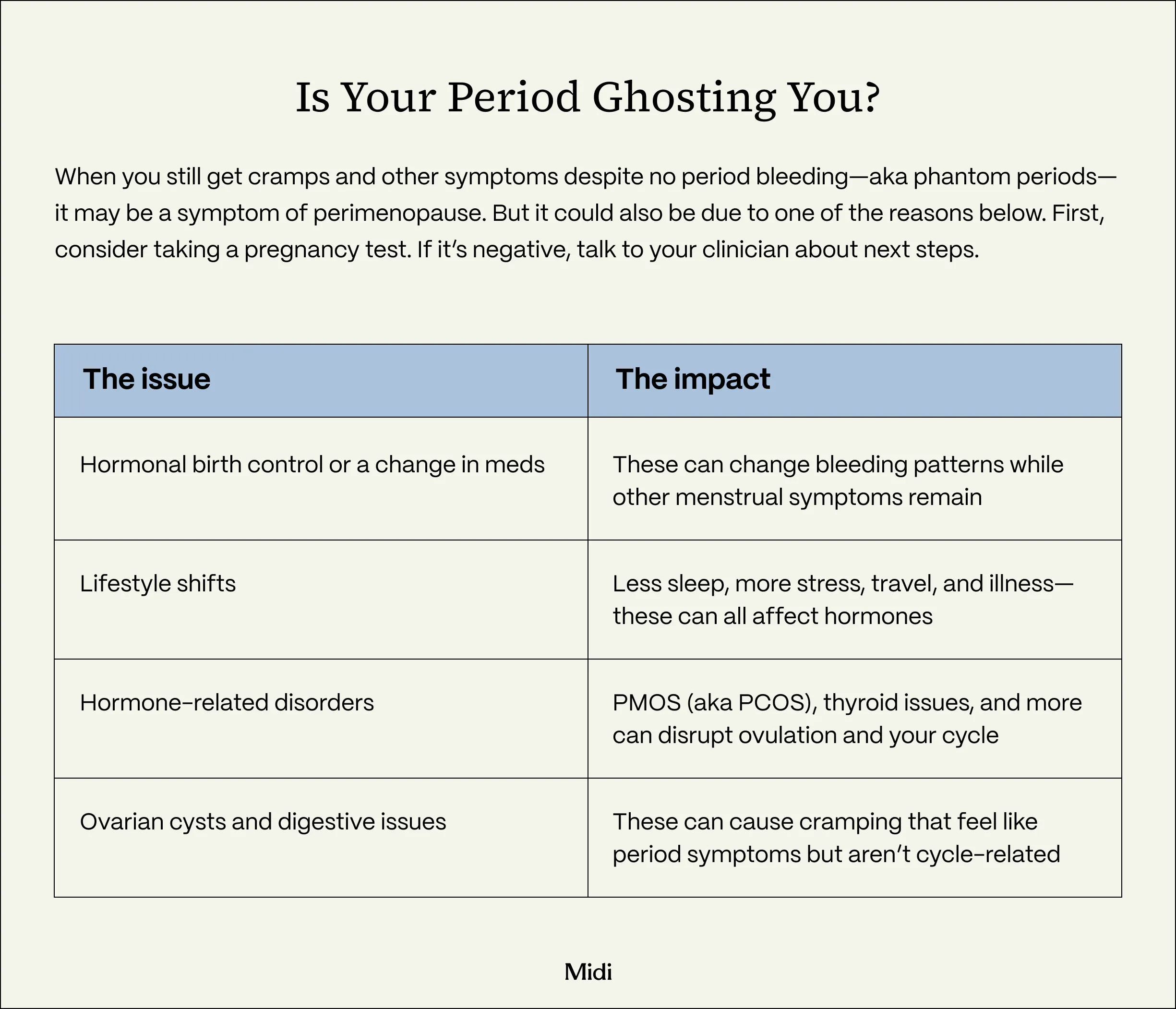
- Stress and lifestyle changes: Significant stress, poor sleep, travel, illness, weight changes, or intense exercise can affect hormone levels and menstrual cycles, potentially causing period-like symptoms without a period.
- Hormonal birth control or medication changes: Hormonal birth control, including hormonal IUDs, can alter bleeding patterns while PMS-like symptoms continue. Starting, stopping, or changing certain medications may also affect your cycle.
- Pregnancy: Early pregnancy symptoms can sometimes mimic premensutrual syndrome (PMS) and may include cramping, fatigue, bloating, breast tenderness, and mood changes. If pregnancy is possible, consider taking a pregnancy test.
- PMOS, thyroid conditions, and other hormone-related disorders: Health issues that affect hormone levels can disrupt ovulation and menstrual cycles, leading to missed periods or irregular bleeding patterns.
- Ovarian cysts, digestive issues, and pelvic floor tension: Not all pelvic discomfort is related to menstrual cycles or hormonal changes. Ovarian cysts, gastrointestinal conditions, and pelvic floor dysfunction can sometimes cause cramping or pelvic pain that feels similar to period symptoms.
Cramping but No Period: What the Pain Pattern Can Suggest
It can be confusing when you experience cramping with no period, but it can actually give you some useful information. The type and pattern of cramping you’re experiencing can help provide clues about what may be causing your symptoms:
- Mild, one-sided pain: may be ovulation pain
- Cramps around when you expect your period: could reflect a delayed cycle, pregnancy, or hormonal shifts associated with perimenopause
- Ongoing pelvic pain: may be related to conditions such as endometriosis, fibroids, ovarian cysts, pelvic floor dysfunction, or gastrointestinal (GI) disorders
- Sudden, severe pain: deserves prompt medical attention
- Pain accompanied by dizziness, fever, vomiting, shoulder pain, or heavy bleeding: requires urgent medical care
True Stories Of Transformation
Phantom Periods and Endometriosis
Endometriosis is another possible cause of phantom periods, though it generally comes with other symptoms that would point to the condition.
It occurs when tissue that’s similar to the uterine lining grows outside the uterus, which can lead to inflammation and increased nerve sensitivity. As a result, some people experience pelvic pain in a pattern that’s similar to cyclical menstrual pain, even when they don’t have period bleeding.
In addition to pelvic pain, symptoms that may point toward endometriosis include:
- painful periods
- pain during sex
- painful bowel movements
- chronic pelvic pain that interferes with daily activities
Some people also experience bloating, fatigue, and other symptoms that can overlap with PMS or phantom periods.
Because endometriosis can share symptoms with many other conditions, you should get evaluated by a clinician if you have persistent, severe, or recurring pain. They can help determine whether endometriosis, another gynecologic condition, or a different underlying issue may be contributing to your symptoms.
Phantom Periods After Birth Control, IUDs, or Hysterectomy
After you start birth control or get a hormonal IUD, you may have phantom periods. It may even happen after a hysterectomy. In these situations, hormone-related symptoms that seem menstruation-related may continue, even when bleeding becomes lighter or less frequent or stops altogether.
Hormonal IUDs may reduce or eliminate menstrual bleeding, but some people continue to experience cramps, breast tenderness, bloating, or other PMS-like symptoms. The same may occur with some forms of hormonal birth control that are used continuously and are designed to suppress all menstrual bleeding. Plus, when you start, stop, or switch hormonal medications, it can temporarily affect bleeding patterns and cycle-related symptoms while your body adjusts.
If you had a hysterectomy but your ovaries were not removed, they may continue producing hormones, and you may continue ovulating. As a result, some people experience symptoms that feel similar to PMS, even though they no longer have periods.
Any new, worsening, or persistent pelvic pain should always be discussed with a clinician, particularly if symptoms interfere with your daily life or are a change from your usual pattern.
How to Track Phantom Periods Before a Visit
If phantom periods are happening regularly, tracking your symptoms can help you and your clinician identify patterns. Consider keeping simple notes in your phone or using a period-tracking app to track:
- when symptoms start and stop
- the type of symptoms you experience, such as cramps, bloating, mood shifts, breast tenderness, fatigue, or back pain
- the location of the pain, how severe it is, and any triggers that seem to make symptoms better or worse
- whether you have bleeding, spotting, unusual discharge, or no bleeding at all
- pregnancy test results and when the tests were taken, if pregnancy is possible
- your recent cycle history; any medications; your birth control method of choice; and any major stressors, illnesses, travel, or lifestyle changes
The more information you can gather, the easier it may be for a clinician to determine whether your symptoms relate to perimenopause, hormonal changes, a gynecologic condition, or another underlying cause.

How Clinicians May Evaluate Phantom Periods
The evaluation for phantom periods depends on your symptoms, age, medical history, and whether pregnancy is possible. A clinician will typically start by reviewing your health history, menstrual cycle patterns, and symptom timeline.
You may be asked about recent cycle changes, birth control use, medications, stress levels, and symptoms such as hot flashes, sleep problems, or pelvic pain. If pregnancy is possible and you haven’t yet tested, your clinician may recommend that.
Depending on your symptoms, a clinician may suggest a pelvic exam and additional testing. This could include blood work to evaluate thyroid function, hormone levels, anemia, or other potential causes of irregular cycles and period-like symptoms.
If pain, ovarian cysts, fibroids, or abnormal bleeding are concerns, your clinician may recommend imaging tests, such as a pelvic ultrasound. The goal is to determine whether your symptoms are related to perimenopause, a gynecologic condition, or another underlying health issue.

How Phantom Periods Are Treated
Treatment for phantom periods depends on the underlying cause. While occasional mild symptoms may improve on their own, persistent or disruptive symptoms may need medical evaluation and treatment.
Treatment options based on your symptoms or underlying conditions include:
- Occasional mild symptoms: Heat therapy, rest, hydration, gentle movement, and over-the-counter pain relievers (when appropriate) may help relieve cramps and discomfort.
- Perimenopause-related symptoms: Lifestyle strategies, symptom tracking, and hormonal or non-hormonal treatment options may help manage symptoms related to fluctuating hormone levels.
- Birth control-related symptoms: If symptoms begin after starting, stopping, or changing a birth control method, a clinician may recommend monitoring the symptoms or adjusting the type of birth control you’re using.
- Pelvic pain conditions: Depending on the cause of your symptoms, treatment may include pain-management strategies, pelvic-floor physical therapy, medications, or referral to a specialist.
- Endometriosis concerns: Treatment is individualized and may include hormonal therapies; pain-management approaches; or other interventions based on a person’s symptoms, goals, and medical history.
When you understand what’s causing the symptoms, you can get on the road to effective treatments. If phantom periods become more frequent or more painful, a clinician can help you determine the best next steps.
Key Takeaways
- Phantom periods involve period-like symptoms, such as cramps, bloating, breast tenderness, fatigue, or mood changes, that occur without menstrual bleeding.
- Perimenopause is a common cause of phantom periods. This is because shifting hormone levels can affect ovulation and make menstrual cycles less predictable.
- Other possible causes include stress, pregnancy, hormonal birth control, PMOS, thyroid conditions, ovarian cysts, endometriosis, and other pelvic pain disorders.
- Tracking your symptoms, cycle patterns, medications, and any bleeding or spotting can help you and your clinician identify patterns.
- See a clinician for evaluation of persistent, severe, or recurring pelvic pain, especially if it interferes with daily life or occurs alongside symptoms such as fever, dizziness, vomiting, or heavy bleeding.
- Treatment depends on the underlying cause of your symptoms. It may range from lifestyle measures and symptom management to hormonal treatments, physical therapy, or specialized care.
Frequently Asked Questions (FAQs)
Can you have a period without bleeding?
Not technically. A true menstrual period involves shedding the uterine lining, which causes bleeding. However, you can experience many of the same symptoms associated with a period—including cramps, bloating, breast tenderness, fatigue, and mood changes—even when no bleeding occurs.
Why do I have period symptoms but no period?
There are several possible reasons for experiencing period symptoms without having a period. Common causes include perimenopause, pregnancy, stress, hormonal birth control, thyroid disorders, PMOS, endometriosis, and other conditions that can affect ovulation or hormone levels.
Is cramping but no period a sign of perimenopause?
It can be. During perimenopause, fluctuating hormone levels and irregular ovulation can cause cramps and other PMS-like symptoms, even when a period doesn't arrive. But there are other potential reasons for this, including pregnancy, ovarian cysts, endometriosis, digestive issues, and more.
Are phantom periods linked to endometriosis?
Sometimes. Endometriosis can cause cyclical pelvic pain, bloating, and other symptoms that may feel similar to a period, even when no bleeding occurs. Because these symptoms can overlap with other conditions, a clinician should evaluate any persistent or severe pain.
When should I worry about phantom periods?
Occasional phantom periods are often related to hormonal changes and may not be a cause for concern. However, you should consult a healthcare professional if symptoms are severe; recurring; worsening over time; interfering with daily life; or accompanied by fever, dizziness, vomiting, heavy bleeding, or severe pelvic pain.
If you’re in perimenopause or menopause and want guidance from clinicians who specialize in women’s midlife health, book a virtual visit with Midi today.
Hormonal change is at the root of dozens of symptoms women experience in the years before and after their period stops.
Our trained menopause specialists can help you connect the dots to guide you towards safe, effective solutions.
Whether you need personalized guidance or a prescription routine to tackle symptoms—including brain fog, hot flashes, sleep trouble, mood swings, and weight gain—we’ve got you covered. Learn more here.
Midi’s mission is to revolutionize healthcare for women at midlife, wherever they live and whatever their health story. We believe that starts with education, to help all of us understand our always-changing bodies and health needs. Our core values guide everything we do, including standards that ensure the quality and trustworthiness of our content and editorial processes. We’re committed to providing information that is up-to-date, accurate, and relies on evidence-based research and peer-reviewed journals. For more details on our editorial process, see here.