

Menopause hip pain is an incredibly common concern—it may feel like intense pain in your hip, a dull ache when you sleep on your side, or pain that shoots down your legs. The culprit? When hormones fluctuate and estrogen declines during midlife, the result can be more inflammation and less muscle mass. This can start as perimenopause hip pain and continue through menopause. The good news? There are a lot of ways to relieve hip pain in women, from lifestyle changes to over-the-counter (OTC) medication to hormone therapy. When you work with a clinician, like one at Midi Health, you can come up with a treatment plan together to help ease the ouch. Keep reading to learn more about menopause and hip pain.
One day, you can bounce from one activity to another; the next, you’re struggling to get out of your seat without moaning about your aching hips. Menopause hip pain can significantly slow you down, as a decline in estrogen levels leaves you with more inflammation but less bone density and muscle mass. Not only does this make you more susceptible to sore joints, it can also contribute to musculoskeletal conditions like osteoporosis and osteoarthritis.
While menopause hip pain may be a normal part of midlife for many, you don’t need to dismiss it as “just part of getting older.” The right diagnosis can help you find a treatment plan that works for you—which is why it’s essential to understand your symptoms and work with a trusted healthcare professional, such as a Midi clinician. Read on to learn more about hip pain during menopause, including common causes and symptoms, how to relieve pain on your own, and what to discuss with a clinician.
Menopause Hip Pain: What’s the Connection?
In short: Fluctuating hormones may well be the cause of hip pain in women. Once you begin perimenopause, your estrogen levels begin to decline. Your body goes through many shifts, and among those are changes in your muscles, bones, and ligaments where estrogen receptors are found.
Estrogen helps support healthy tissue, slows down the breakdown of bone, improves muscle mass and strength, and decreases stiffness. Without it—or even with less of it—inflammation increases, joints lose protection, and muscles become weaker. And that can lead to hip pain during menopause.
In fact, research estimates that 70% of midlife women experience musculoskeletal-related symptoms, with 25% experiencing severe ones. And during perimenopause and menopause, women can experience a significant loss of bone mineral density.
The potential result: more inflammation, increased rates of osteoarthritis and osteoporosis, and a decrease in muscle stem cells, all of which can contribute to hip pain. Perimenopause hip pain is especially common.
But while the menopause transition can be one reason for your aching hips, it’s also worth noting that hip pain is extremely common in adults as they get older. So in any one case, it may be hard to say whether menopause is the only cause or if it;s happening in addition.
But you shouldn’t just assume that age is why your hips are hurting. If you’re over age 40 and are experiencing new hip pain, it’s worth talking with a trained clinician, like one at Midi, about potential causes, so they can suggest treatment options that may work for you.

What Menopause Hip Pain Can Feel Like
Women can experience hip pain during menopause in different ways. Depending on what’s causing it, it might feel like:
- pain or tenderness on the outer hip, especially when you’re moving or exercising
- soreness when you’re walking or climbing stairs
- pain in the lower back that radiates to the hips
- sharp pain in the hips or down the leg
- a feeling of stiffness in the hips or down the leg
- hip pain with swelling
- pain during the night when you’re sleeping on that side
- reduced range of motion of the affected joints, along with tenderness and stiffness
Common Causes of Hip Pain in Women During Perimenopause and Menopause
Menopause plays a big role in hip pain, but it isn’t always the direct cause. It’s kind of a perfect storm: As estrogen levels drop, bone loss can speed up, and this can lead to other conditions that can make hip pain worse. These conditions include:
Gluteal tendinopathy
Menopause weakens tendons in your body, so you become more susceptible to gluteal tendinopathy, in which the tendon tissue in your hips and gluteal muscles break down. This can lead to severe pain in your hips, lower back, groin, or gluteal muscles, especially when you’re climbing stairs, getting out of bed, and lying on one side.
Hip bursitis
When your tendons weaken during menopause, it puts strain on bursae (fluid-filled sacs) located around the hip, making them inflamed and irritated. This can lead to hip bursitis, causing pain that can start out sharp and become duller over time.
Osteoarthritis
Menopause and estrogen decline can lead to osteoarthritis, a degenerative joint disease that degrades cartilage in a joint and causes inflammation. Symptoms include pain or aching in the hips after moving or exercising, stiffness in the morning, limited range of motion, and muscle weakness.
Osteoporosis
More than 200 million postmenopausal women are affected by osteoporosis worldwide—which isn’t surprising, considering that menopause can significantly increase bone loss. Osteoporosis increases the risk of fractures.
Referred back pain
Hip pain during menopause can also be a side effect of lower back pain, which can be caused by a number of factors, including weight gain, decreased bone density, and inflammation.
Sarcopenia
Sarcopenia, or the loss of lean muscle mass, happens naturally as you age, but the hormonal changes of menopause can speed it up. It can make it harder to walk, get out of a chair, or carry something heavy.
True Stories Of Transformation
Why Hip Pain Often Gets Worse at Night
If you’ve noticed that your hip pain feels more intense whenever you’re trying to fall asleep, there’s a reason. At the end of the day, the fluid in your hip compresses, which can lead to more inflammation and pain. Side sleepers in particular may notice the pain, due to increased pressure on the hip joint, which irritates the already inflamed tissue.
In addition, disrupted sleep can end up lowering pain tolerance, and next-day fatigue can make the discomfort worse.
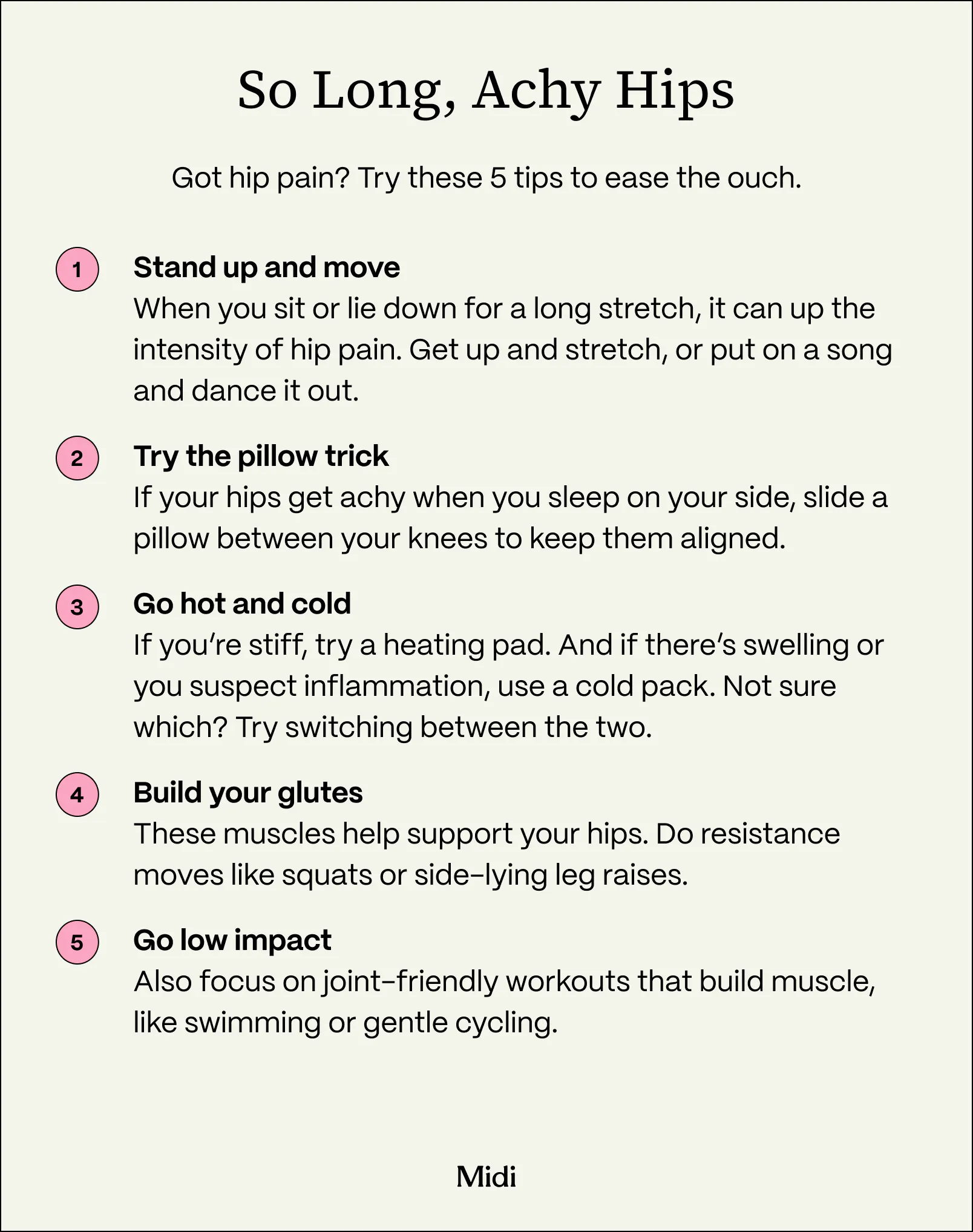
Experimenting with some new sleeping positions can be a fix. Try snoozing on your back; if that doesn’t work, stay on your side, but wedge a pillow between your knees. This can relieve pressure on your joints and keep your hips more aligned. If it’s an option, an adjustment bed can also help.
How a Clinician Figures Out What’s Causing the Pain
Hip pain, even if it’s fairly minor, can add a level of discomfort to your everyday life, so seeing a clinician is a good idea. They can help diagnose the root cause and help you come up with a treatment plan.
The clinician will base a diagnosis on the following factors:
- Symptom history: In the weeks before seeing your clinician, jot down your symptoms, including when the pain started, where it hurts, what the pain feels like (ache-y? sharp?), and what seems to trigger it the most.
- Physical exam: This can help determine exactly where the pain is coming from, whether there’s swelling or inflammation, your range of motion, and how the pain affects your strength and gait.
- Imaging, if necessary: Your clinician might suggest you get an X-ray or an MRI scan for a better look at what’s going on.
- Bone health evaluation: If the clinician suspects a fracture or osteoporosis, they may suggest a more in-depth bone health evaluation, such as a Dual-Energy X-Ray Absorptiometry (DEXA) scan. A DEXA scan is a quick, non-invasive test that measures bone mineral density, specifically focusing on the hips and spine.
- Labs, if necessary: If the clinician suspects inflammation, infection, or another medical cause, they may ask you for blood work.

What You Can Do at Home to Ease Hip Pain During Menopause
These tips may help you start to ease the pain:
- Try not to stay in one position for too long: Hip pain often feels worse after sitting or lying down for long periods of time. Try to get up and move as often as possible.
- Exercise whenever possible: Research has found that women with menopausal hip pain should focus on resistance exercise to help treat joint pain, improve bone health, and prevent muscle mass loss. Try strength training and low-impact workouts, like walking or cycling, to build muscle while still protecting your joints.
- Use hot and cold therapy as needed: Heating pads can help soothe stiffness, and cold packs can help ease inflammation and swelling. Depending on what’s causing your hip pain, one or the other might be more helpful, or try alternating between the two.
- Modify your activities if needed: Pay attention to what triggers aches and pains, and see if you can make adjustments to activities that bother you, so you can continue them with more comfort.
Treatment Options That May Help
When lifestyle changes don’t ease your aching hips, work on a treatment plan with your clinician. It may include:
- Physical therapy: Working with a physical therapist can help improve mobility and strength.
- Resistance and strength training: You can increase muscular power via resistance training with heavier weights and lower repetitive sets. Focusing on making the muscles in your glutes and legs stronger can help support your hips.
- Pain relief medication: Try OTC pain medications if necessary, like ibuprofen (which reduces inflammation) or acetaminophen.
- Hormone therapy: Hormone replacement therapy (HRT, now commonly referred to as menopause hormone therapy, or MHT) can help slow down the decline of estrogen levels, allowing for a smoother transition and less intense symptoms.
- Supplements: Vitamin D, especially when combined with calcium, has been found to improve bone mineral density to a modest degree in postmenopausal women. (This isn’t for pain relief but is good for general bone health.)
When to Work With a Healthcare Professional
Hip pain doesn’t have to rule your life, and a clinician can help with the right treatment plan. Be sure to reach out to your clinician if you’re experiencing any of the below:
- intense pain that consistently gets worse, won’t go away, or affects your everyday life
- trouble sleeping or insomnia due to hip pain
- pain that affects how you walk or exercise
Remember: Hip pain during menopause isn’t always solely due to a decline in estrogen. Work with a clinician who considers both menopause and musculoskeletal health.
When to Seek Care Sooner
If you experience these warning signs, it’s important to get medical care as soon as possible:
- sudden, intense pain
- fatigue
- skin changes
- inability to bear weight or move much
- fever, unexplained weight loss, or a general feeling of being unwell
- new, consistent pain after a fall or injury
- rapid loss of mobility, significant weakness, or pain in other joints in the body
Key Takeaways
- Menopause hip pain is often caused by a decline in estrogen levels, which can result in less bone density and muscle mass. This can leave you more susceptible to conditions like osteoarthritis and osteoporosis.
- Hip pain during menopause can vary. You might feel intense pain in your hip, pain that goes down your leg, a dull ache, or pain radiating from your lower back. The discomfort can increase when you’re getting up from a seated position, trying to sleep at night, or sitting or lying in one position for too long.
- To relieve hip pain at home, make lifestyle adjustments like changing your sleeping position, prioritizing strength and resistance training, taking breaks to move around when sitting for long periods, and focusing on low-impact exercise.
- You can speak with a clinician about a treatment plan for hip pain during menopause that could include physical therapy, OTC pain relief, hormone therapy, and more.
Frequently Asked Questions (FAQs)
Can menopause cause hip pain?
Yes, the decline of estrogen can contribute to hip pain. It can affect the musculoskeletal tissue, which can lead to bone density and muscle mass loss—and eventually lead to hip pain. Or it can cause other disorders and conditions that contribute to hip pain.
What can cause hip pain in a woman during midlife?
Menopause is a big cause of hip pain in midlife women. Other conditions that become more common as you age include osteoporosis, arthritis, gluteal tendinopathy, and hip bursitis.
Why does hip pain during menopause feel worse at night?
By the end of the day, the fluid in your hip compresses, leading to more inflammation and contributing to pain. And sleeping on your side can put pressure on your hip, making it feel more painful. Lying down for long periods of time and not moving can also make pain feel more noticeable.
Is perimenopause hip pain different from menopause hip pain?
Both perimenopause and menopause hip pain can be caused by a decline in estrogen. The difference is that fluctuating hormone levels during perimenopause can cause hip pain to come and go, whereas more steadily declining levels in menopause may mean hip pain sticks around longer.
Should I stretch or strengthen for menopause and hip pain?
Stretching is important for relieving hip pain, but strength training might be even more key. Focus on strengthening glute and leg muscles to support the hip.
Can hormone therapy help with hip pain?
Hormone therapy in menopause can help slow the decline in estrogen levels, which can help prevent or lessen muscle and bone density loss, along with joint pain. For some women, it can be effective for hip pain, if the pain is only from a decline in estrogen. But if the hip pain is caused by another condition, hormone therapy may not be enough.
If you’re in perimenopause or menopause and want guidance from clinicians who specialize in women’s midlife health, book a virtual visit with Midi today.
Hormonal change is at the root of dozens of symptoms women experience in the years before and after their period stops.
Our trained menopause specialists can help you connect the dots to guide you towards safe, effective solutions.
Whether you need personalized guidance or a prescription routine to tackle symptoms—including brain fog, hot flashes, sleep trouble, mood swings, and weight gain—we’ve got you covered. Learn more here.
Midi’s mission is to revolutionize healthcare for women at midlife, wherever they live and whatever their health story. We believe that starts with education, to help all of us understand our always-changing bodies and health needs. Our core values guide everything we do, including standards that ensure the quality and trustworthiness of our content and editorial processes. We’re committed to providing information that is up-to-date, accurate, and relies on evidence-based research and peer-reviewed journals. For more details on our editorial process, see here.