


Joint pain can make even the most ordinary things feel harder. Getting up from the couch, climbing stairs, opening a jar, going for a walk—suddenly your body feels older than it did a year ago. While hot flashes tend to get all the attention in this life phase, joint pain is actually a common symptom women experience during perimenopause and menopause. While supplements for menopause joint pain aren’t a quick fix or cure, certain evidence-based options can help ease discomfort. The key to making them work? Combine them with joint-friendly movement and solid sleep habits. Bottom line: If you're dealing with chronic pain, don't resign yourself to a life of aches and pains. A healthcare professional, like a Midi clinician, can help you find relief by combining several pain-fighting strategies.
No matter what stage you're at in midlife, you’ve likely noticed the hormonal shifts that affect far more than just “that time of the month.” Unfortunately, your joints don’t get a hall pass. If new aches and creaks are suddenly popping up, you’re not alone: 71% of women in perimenopause experience joint pain, according to a meta-analysis of 16 studies.
One major reason is declining estrogen, which can lead to:
- increased inflammation
- weaker joint tissues
- heightened pain sensitivity
Add in common menopause symptoms like poor sleep, hot flashes, and weight gain, and it’s no surprise so many middle-aged women are wondering what supplements for menopause joint pain can deliver relief.
The good news? Understanding that joint pain in midlife can be linked to the hormonal changes of perimenopause and menopause—even though this connection is often overlooked—is a powerful first step.
Below, you’ll find the evidence-based supplements that can help with menopause joint pain. While there’s no one-size-fits-all protocol, lasting relief usually comes from a mix of strategies, including movement, quality sleep, and targeted supplements. A trained Midi Health clinician can also help personalize supplement options for your health.
Supplements for Menopause Joint Pain: Quick, Clinician-Led Take
Before you start chasing every trendy supplement, hit pause. First, you’ll want to figure out what’s actually causing your aches and get a movement plan that supports your joints. Supplements work best alongside strength training and good sleep.
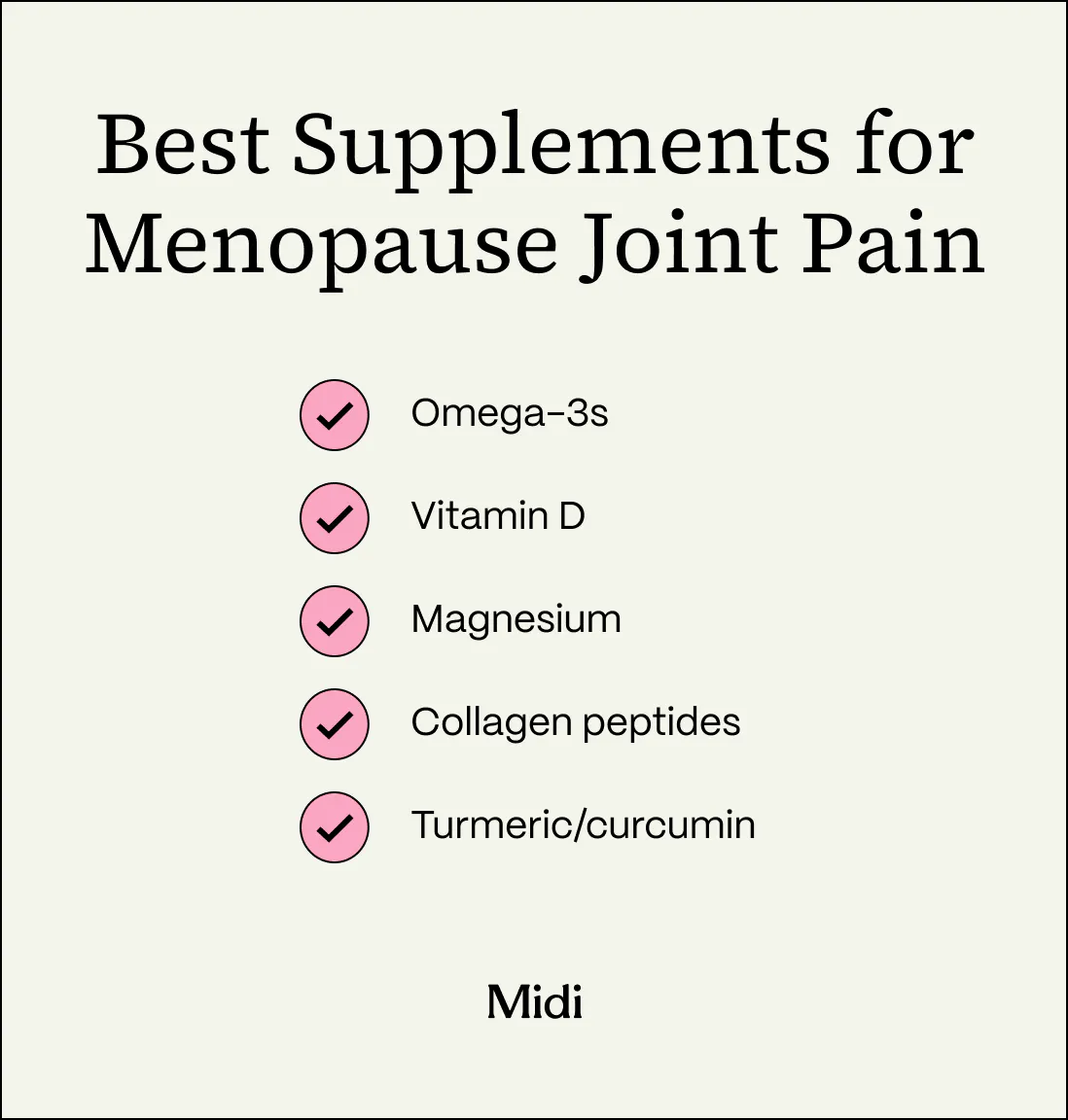
Not all supplements are created equal, so you’ll want to stick to options with the strongest evidence and safest track record, like omega-3s, vitamin D, collagen peptides, magnesium, and turmeric. Try each for a few months, track how your body responds, and adjust as needed. A clinician can help you determine the best supplements and dosage for you.
If your pain is sudden, severe, or persistent, don’t try to tough it out—check in with a clinician right away to rule out any underlying conditions.
Why Menopause Can Trigger Joint Pain (and What It Often Feels Like)
You’ve probably heard about (or experienced) menopause symptoms like hot flashes and night sweats—but joint pain? That one often flies under the radar, even though it’s very real.
Estrogen plays a key role in keeping your muscles flexible, your joints well-supported, and your cartilage healthy, so when levels drop, unwelcome aches and pains can appear. Depleted estrogen can make joints more vulnerable to injury, too. Women who have been through menopause also have a higher risk of developing osteoarthritis, which causes joint pain and stiffness.
Other midlife changes, like muscle loss, weight gain, and lower activity levels, can put additional stress on your joints. Menopause is a known sleep stealer, and those disruptions to your rest turn up the volume on joint pain and stiffness. This can manifest in different ways for different people, from morning stiffness to tight joints after sitting to achy knees, hips, or hands.
Is It Menopause Joint Pain or Something Else? (Key Differentiators)
General joint pain can show up at any stage of menopause (and is more common after you hit age 45). Some women notice it early on, while others may not feel it until they’re nearly postmenopausal—or sometimes not at all. Factors like your weight, past injuries, and overall lifestyle can influence when and how intensely joint discomfort appears.
One tip-off that hormones may be involved: Menopause joint pain tends to come and go. You may notice flare-ups that depend on how you slept, how stressed you are, or how active you’ve been. Some women feel stiffness in load-bearing joints like knees and ankles, while others experience sharp twinges in their hips, hands, elbows, or shoulders. Swelling and tenderness can also pop up, and the discomfort is often worse first thing in the morning or after sitting for long stretches.
To figure out what’s behind your pain, pay attention to patterns. Tracking when symptoms show up and what’s going on in your life at the time can help reveal whether hormones might be playing a role.
Joint pain can also be linked to things like:
- osteoarthritis
- autoimmune arthritis (like rheumatoid arthritis)
- thyroid issues
- vitamin D deficiency
- side effects from medications
It can also help to look at where the pain shows up:
- Swelling in hands or feet: could suggest autoimmune issues
- Stiffness in large joints like knees or hips: may point to osteoarthritis
- Sharp pain in tendons: could be from injury or overuse
If your joint pain interferes with your daily life, it’s worth getting checked out. Watch out for swollen or hot joints, fever, sudden severe pain, significant weakness, or numbness. These red flags deserve a closer look by a clinician.
Diagnosis and Testing: What to Check Before You Supplement Stack
While it’s tempting to jump straight into a supplement routine for quick relief, a little upfront prep will help you find the solutions that actually help. Here’s a game plan to follow:
- Start with your symptom history: When did the pain start? How long does morning stiffness last? Do you notice swelling, or is it triggered by activity, stress, or certain movements? This context is crucial.
- Get basic labs: Low levels of vitamin D can make joints and muscles feel stiff or achy, and an underactive thyroid can trigger joint discomfort. If your symptoms suggest inflammation, a blood test can help confirm it.
- Review your medications: Certain meds, like statins or aromatase inhibitors, can contribute to stiffness or joint pain. Before adding anything new, review all your prescriptions with your clinician.
- Track your outcomes: Once you start anything new (whether it’s exercise or supplements), take notes. Keep track of your pain levels, step count, strength sessions, and sleep quality. This makes it easier to see what’s working and what’s not.
- Know when to call in the pros: If you notice swelling, redness, or limited range of motion, or if you suspect an injury, or if you suspect an injury, a clinician may request imaging or refer you to a rheumatologist or orthopedic specialist. This can rule out underlying issues and make sure you’re treating the right problem.
Menopause Joint Pain Treatment Options: The Foundation That Makes Supplements Work Better
Prioritizing movement and quality sleep may give any supplements you add in a better chance of working. These daily habits can help keep your joints supported:
- Strength training: Hitting the weights or doing bodyweight exercises 2 to 3 times per week builds stronger muscles, which support your joints and can reduce pain over time. A regular routine can also tamp down systemic inflammation that might be contributing to your joint pain.
- Mobility exercises: Ever heard the saying “motion is lotion”? It’s true: Daily stretching or gentle range-of-motion exercises improve the flexibility of your muscles and ward off pain and stiffness.
- Low-impact cardio: Walking, cycling, and swimming get your blood flowing and help calm inflammation. Cardio also supports a healthy weight, which means less strain on your joints. And there's no need to focus on the number on the scale. Even small fitness improvements, like extra steps or better flexibility, can ease joint pain and improve function.
- Good sleep: Try consistent bedtimes, cooling strategies, and ways to manage night sweats or hot flashes so you wake up less achy and more energized.
- Hormone replacement therapy (HRT): Since declining estrogen is a root driver of menopause-related joint pain, HRT (also called menopause hormone therapy or MHT) may help address the underlying cause—not just the symptoms. A 2025 systematic review of nearly 4 million participants found women on HRT had lower rates of musculoskeletal pain, and Women's Health Initiative data showed estrogen users were more protected from joint replacement and incident joint pain than those on placebo. HRT isn't right for everyone, but if you're already considering it for hot flashes or sleep, joint health is another reason to bring it up with your clinician. A Midi clinician can help you weigh the risks and benefits for your health history.
Best Supplement for Menopause Joint Pain: “Tier 1” Options with the Best Balance of Evidence and Safety
We’ll say it again: Not all supplements are created equal. These evidence-based options for menopause joint pain have a solid safety record, making them a worthwhile option to explore with your healthcare professional or Midi clinician.
Omega-3 fatty acids
Omega-3s (fish oil or algae) help reduce inflammation, which can ease stiffness and soreness. High-dosage fish oil has even been shown to reduce joint swelling and pain in people with rheumatoid arthritis, highlighting its anti-inflammatory power. Your body can’t make omega-3s on its own, so getting enough through your diet or supplements is key. Bonus: Omega-3s are linked to better sleep, a major win when menopause is stealing your Zzzzs.
If you're looking for an omega-3 designed specifically for women in midlife, Midi's Daily Omega-3+ combines high-quality omega-3s with Vitamin D, Vitamin K2, and CoQ10 in a single daily supplement.
Vitamin D
In addition to its anti-inflammatory benefits, vitamin D helps your body absorb calcium and maintain healthy bones. A 2022 randomized trial published in BMJ found that people who took vitamin D daily for 5 years had a 22% lower risk of developing autoimmune diseases, including rheumatoid arthritis. Deficiency is common as we age, but make sure you’re actually low with a blood test before supplementing—too much vitamin D can backfire.
Magnesium
Often called a “shortfall nutrient,” magnesium is one that most of us don’t get enough of. It supports muscle relaxation, eases stress, and can improve rest—which all indirectly benefit your joints. Research also shows that magnesium can help alleviate soreness. Just go easy at first, as too much can upset your stomach.
Collagen peptides (oral)
Collagen isn’t a magic fix, but research shows it can help support joint comfort, especially when paired with strength and mobility work. Just remember consistency is key.
Turmeric/Curcumin
Turmeric is a natural way to give inflammation a little nudge down. Research suggests that curcumin—its most active ingredient—may help ease achy joints. Look for formulas designed to absorb well (like ones with black pepper extract), and check with your clinician about potential medication interactions.
Vitamins for Menopause Joint Pain: When They Help vs. When They Don’t
While not every vitamin directly relieves menopause-related joint pain, some can support your body in ways that make discomfort easier to manage:
- Vitamin D: Low levels can contribute to muscle aches, stiffness, and weaker bones, so getting enough can make a difference for joint comfort and overall mobility.
- Vitamin B12 and iron: Fatigue, weakness, or low energy may signal a B12 or iron deficiency. Addressing these can help support energy levels and blood health. Something to consider if you’re post-menopausal: Once your periods end, your daily iron needs go from 18 milligrams (mg) to 8 mg.
- Calcium and vitamin K2: Calcium and vitamin K2 aren’t a direct solution for joint pain, but they’re key for strong bones—which lead to better joint support over time and reduced fracture risk as you age.
If managing a supplement stack feels overwhelming, Midi's Daily Omega-3+ streamlines your routine by combining omega-3s with Vitamin D3 and K2—so you're covering both bone and joint support bases in one place.
Remember, too much of certain nutrients can be harmful or interact with medications. Always check recommended upper limits and review your supplements with a clinician.
Joint Supplements for Women: “Tier 2” Options (Mixed Evidence, May Help Some)
Not every supplement has rock-solid science behind it, but some tier 2 options may still provide relief. Like with the tier 1 options, approach them as small experiments, track your symptoms, and pair them with foundational habits.
These are the tier 2 supplements that may help:
- Glucosamine and chondroitin: Though popular for joint pain relief, these supplements don’t work for everyone. Some research indicates less stiffness and improved mobility; other studies found no real difference. If you want to give them a try, aim for a consistent trial of 6 to 12 weeks to see whether they help. Skip them if you have shellfish allergies, though, since many formulations are derived from shells.
- MSM (methylsulfonylmethane): MSM may support joint comfort for some women, possibly reducing mild inflammation or stiffness. Start with a lower dose to gauge tolerance, especially for your digestive system, since higher doses can cause GI upset.
- Boswellia: This herbal extract is often used to ease joint discomfort and may help with inflammation. Check for potential interactions with medications, especially blood thinners, before starting.
- Ginger: Ginger is a gentle, natural way to support joints and calm mild inflammation. You can get it through food—for example, in tea, as a cooking spice, or in a smoothie—before jumping straight to supplements. It won’t hurt to tr it, and it’s usually well-tolerated.
- Topical options (menthol, capsaicin): Creams or gels with menthol or capsaicin can provide localized relief without affecting the whole body. It’s great for knees, hands, or other spots that feel stiff.
Supplements for Menopause: What to Avoid or Be Careful With
Here’s what to watch out for:
- High-dose single nutrients: More isn’t always better. Taking high doses of a vitamin or mineral without a confirmed deficiency can sometimes cause harm. This is why it's important to review your supplement stack with a healthcare professional, like a Midi clinician.
- “Hormone balancing” supplements: Supplements claiming to balance your hormones often overpromise. Hormones are complex, and there’s no pill that can magically fix joint pain. Approach these with caution.
- Supplements that increase bleeding risk: Some herbal or natural products—like high-dose fish oil, ginkgo, or certain botanical blends—can increase bleeding risk, especially if combined with medications like blood thinners.
Peptides and Menopause Joint Pain
If you’ve been researching menopause joint pain, you’ve probably seen “peptides” popping up everywhere. The tricky part? That word gets used to describe a lot of very different things.
Peptides are simply short chains of amino acids—the building blocks of protein. They show up in powders, supplements, skin care products, and even injections. But their presence doesn’t guarantee joint benefits. Anti-aging creams, for example, use peptides to firm skin, not ease aches.
Collagen peptides
The oral supplements are the version most often linked to joint support for menopause joint pain. These are broken-down collagen proteins you can mix into drinks or smoothies. Research suggests they may support joint comfort over time, especially when paired with strength training and mobility exercises. Some studies show collagen can ease joint pain in osteoarthritis, improve arthritis symptoms, slow progression of osteoarthritis and osteoporosis, and even help maintain muscle as we age. Know that benefits usually appear gradually, not overnight.
Injectable peptides
The most talked-about options right now that are touted to accelerate tissue repair, reduce joint inflammation, and promote cartilage recovery by stimulating processes like angiogenesis and collagen synthesis are:
- BPC-157 (Body Protection Compound-157): In preclinical animal studies, BPC-157 has shown promising anti-inflammatory and healing effects, and a small case series reported joint pain relief in some knee pain patients.
- TB-500 (a synthetic fragment of Thymosin Beta-4): Has shown similar tissue-regenerating signals in lab research.
Currently, BPC-157 and TB-500 exist in a regulatory gray zone. They're not FDA-approved drugs, and the FDA has moved to restrict their availability through compounding pharmacies, though they remain accessible through some clinics and online sources, which is exactly why the quality and safety picture is so inconsistent.
Human clinical trial data is extremely limited—we're talking small case series and animal studies, not the kind of rigorous randomized controlled trials used to evaluate supplements like omega-3s or vitamin D.
If you're curious about peptides for menopause joint pain, speak with a qualified healthcare professional, like a Midi clinician, who can walk you through the risk-benefit picture for your specific situation. DIY peptide sourcing is a significant red flag. This isn't a space to experiment without medical supervision.
How to Choose the Best Joint Supplement for Women (Simple Decision Framework)
The last thing you want to do is cycle through random supplements without a plan. A simple, step-by-step approach helps determine what’s actually working.
Start with your symptom pattern
Matching supplements to your symptom pattern helps you choose more strategically.
- Stiffness (especially in the morning or after sitting) may respond well to movement, mobility work, and collagen support.
- Inflammation-style pain—swelling, warmth, or soreness after activity—may benefit from anti-inflammatory options like omega-3s or turmeric.
- Pain that worsens after poor sleep may point toward sleep support, magnesium, or better nighttime routines.
Check for contraindications
Some supplements can interact with medications or certain health conditions, so you should always check with your clinician. For example:
- Blood thinners may interact with some herbal supplements.
- GI issues can make certain options hard to tolerate.
- Kidney or liver conditions may limit safe choices.
- Allergies (like shellfish) can rule out some joint products.
Start with 1 to 2 supplements
Instead of stacking several supplements at once, start with one or two at a time. This makes it easier to tell what’s actually making a difference.
Give it a fair shot
Joint supplements take time, and a 6- to 12-week trial is reasonable for most options. Before starting, decide what improvement would look like. Less morning stiffness? Easier movement? Fewer flare-ups?
Working with a Healthcare Professional: When Supplements Aren’t Enough
If joint pain starts keeping you from activities you enjoy, it’s time to talk with a clinician. Keep an eye out for warning signs that could point to a deeper issue. These include:
- pain that doesn’t go away or keeps getting worse
- swelling in the joints
- reduced mobility
- visible changes or deformities
- other symptoms alongside joint pain, like extreme fatigue or aches in multiple areas
A clinician can review your labs and medications, suggest next steps, such as extra screening or physical therapy, and consider how managing other menopause symptoms might improve joint health.
Ultimately, the most effective approach is usually a plan that evolves over time—adjusting supplements, getting regular exercise, and trying sleep strategies based on how your body responds. Regular follow-up helps fine-tune what’s working and what isn’t, so you can move comfortably and confidently through menopause.
Key Takeaways
- Menopause can directly affect joints: Declining estrogen increases inflammation, weakens cartilage, and heightens pain sensitivity, contributing to stiffness and achiness.
- Joint pain varies widely: Symptoms differ by person—morning stiffness, achy knees, tight hips, or hand pain—and can be influenced by sleep, activity level, past injuries, and overall lifestyle.
- Track and evaluate before supplementing: Note symptom patterns, triggers, duration, and severity. Lab tests and medication review can clarify underlying causes.
- Build a foundation first: Strength training, gentle mobility work, low-impact cardio, and good sleep habits can improve joint function and make supplements more effective.
- Supplement strategy matters: Start with evidence-backed options (like omega-3s, vitamin D, collagen peptides, magnesium, turmeric) in 6- to 12-week trials. Avoid proprietary blends, “hormone-balancing” claims, and unregulated products.
- Know when to seek professional care: Persistent, worsening, or unusual pain—especially with swelling, redness, fever, or weakness—warrants evaluation by a clinician.
Frequently Asked Questions (FAQs)
What is the best supplement for menopause joint pain?
There isn't a single "best" supplement for everyone. The options with the strongest combination of evidence and safety include omega-3 fatty acids, vitamin D (if you're deficient), collagen peptides, magnesium, and turmeric (curcumin). The right choice depends on your symptoms, medical history, and whether inflammation, stiffness, poor sleep, or nutrient deficiencies are contributing to your pain.
Can menopause really cause joint pain?
Yes. Joint pain is a common but often overlooked menopause symptom. As estrogen levels decline, inflammation may increase, cartilage can become less resilient, and pain sensitivity may rise. Many women experience stiffness, achy joints, or discomfort in their knees, hips, hands, shoulders, or ankles during perimenopause and menopause.
Does collagen help menopause joint pain?
Research suggests that collagen peptides may help improve joint comfort and mobility, particularly when combined with strength training and regular movement. Benefits tend to develop gradually and may take several months of consistent use.
Is magnesium good for menopause joint pain?
Magnesium may help indirectly by supporting muscle relaxation, reducing stress, improving sleep quality, and easing muscle soreness. While it is not a direct treatment for joint pain, many women find it helps address factors that can worsen discomfort.
Can vitamin D deficiency cause joint pain?
Yes. Low vitamin D levels can contribute to muscle aches, bone discomfort, and joint stiffness. Because vitamin D deficiency becomes more common with age, it's worth asking your healthcare provider about testing before starting supplementation.
Are turmeric supplements effective for joint pain?
Turmeric contains curcumin, a compound with anti-inflammatory properties. Some studies suggest curcumin may help reduce joint pain and stiffness, particularly in people with osteoarthritis. Products formulated for better absorption may be more effective.
Can hormone therapy help menopause joint pain?
Research suggests that hormone therapy may help reduce menopause-related joint pain for some women by addressing the underlying estrogen decline contributing to inflammation and pain sensitivity. Whether hormone therapy is appropriate depends on your overall health, symptoms, and medical history, so it's important to discuss the risks and benefits with a qualified clinician.
If you’re in perimenopause or menopause and want guidance from clinicians who specialize in women’s midlife health, book a virtual visit with Midi today.
Hormonal change is at the root of dozens of symptoms women experience in the years before and after their period stops.
Our trained menopause specialists can help you connect the dots to guide you towards safe, effective solutions.
Whether you need personalized guidance or a prescription routine to tackle symptoms—including brain fog, hot flashes, sleep trouble, mood swings, and weight gain—we’ve got you covered. Learn more here.
Midi’s mission is to revolutionize healthcare for women at midlife, wherever they live and whatever their health story. We believe that starts with education, to help all of us understand our always-changing bodies and health needs. Our core values guide everything we do, including standards that ensure the quality and trustworthiness of our content and editorial processes. We’re committed to providing information that is up-to-date, accurate, and relies on evidence-based research and peer-reviewed journals. For more details on our editorial process, see here.


