


Just starting to experience perimenopause symptoms? You may be interested in progesterone pills, which are taken for relief of symptoms like hot flashes, as well as to protect the uterus. These are often taken alongside estrogen during hormone therapy, and while they come with some side effects, they also come with plenty of benefits (like helping you sleep—and right now, that may sound pretty great). To find out if progesterone is the right option for you, continue reading—we’ll go over all the details, from how it works for midlife women to the benefits of progesterone pills to common side effects to consider. We’ll also tell you how a menopause-trained clinician, like one at Midi Health, can help you figure out what’s best for you.
When you’re dealing with the rollercoaster symptoms of perimenopause—sweaty nights, cranky moods, you name it—looking into prescription hormone therapy could well be on your checklist. That might include progesterone pills, which can be used during hormone therapy, often along with estrogen. Progesterone helps protect the health of the uterus and reduce the risk of endometrial cancer, and may relieve some pesky menopause side effects, like insomnia.
Whether your clinician has already prescribed progesterone pills or you’re just getting ready to have a discussion about hormone therapy, you probably have a lot of questions. We’ve got lots of info for you below, including how progesterone works to help your body, the differences between various forms of progesterone, the reasons to take it at night, and the side effects you might feel.
Remember: Progesterone is a prescription medicine that always requires a chat with a trusted clinician. Midi’s menopause-trained clinicians can help you find the right treatments that’ll help you feel your best.
Read on to find out more about progesterone so you can stay as informed as possible about your options.
What Are Progesterone Pills?
Progesterone pills are oral capsules taken to replenish or supplement the progesterone that the body can no longer make reliably. They’re often taken alongside estrogen as part of hormone replacement therapy (HRT, now commonly referred to as menopause hormone therapy, or MHT).
During perimenopause, ovulation becomes less frequent and you may have months where you don’t ovulate at all. Since the body only makes progesterone after ovulation, progesterone levels will start to gradually fluctuate and then decline as you go through perimenopause.
The progesterone our bodies make has many roles—most notably, it helps to thicken the uterine lining and prepare the body for menstruation. It can also produce a calming effect that helps you sleep. When your levels fluctuate and decline, you may experience changes in your menstrual cycle as well as find yourself struggling to sleep.
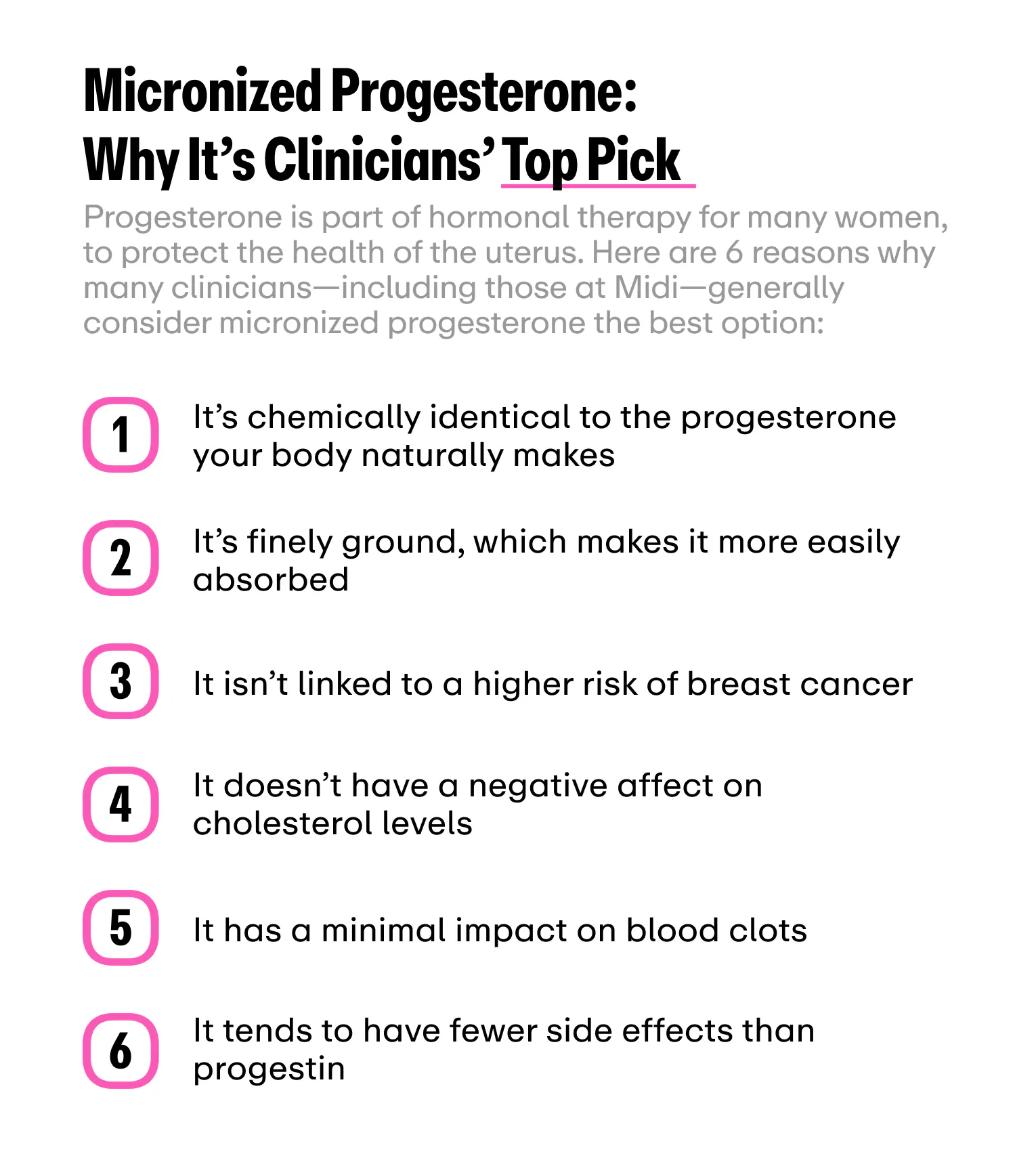
There’s more than one form of progesterone out there, but when it comes to HRT, micronized progesterone is the preferred form by many clinicians. It’s bioidentical to the progesterone made by the ovaries, meaning it has the same chemical structure. And because it’s finely ground, it’s more easily absorbed by the body.
Micronized progesterone pills are prescribed under the brand name Prometrium, as well as a generic version (usually labeled “progesterone” or “progesterone micronized”).
There are also over-the-counter progesterone supplements or creams, but these have different effects and are not regulated as prescription drugs.

Micronized Progesterone vs. Progestins: What Is Actually in the Pill?
Both progesterone and progestins are often prescribed along with estrogen as part of HRT/MHT, to protect the uterine lining from overgrowth. Here, quick definitions:
- Micronized progesterone: Bioidentical progesterone that is chemically identical to the hormone your body makes naturally. It’s been finely ground to make it more easily absorbed into the bloodstream.
- Progestin: A synthetic compound that mimics some of progesterone’s effects in the body but has a different molecular structure. You’ll often find progestin under names like medroxyprogesterone or norethindrone, and while they can help protect the uterus when combined with estrogen, they can come with different risk factors.
Micronized progesterone is the top pick among menopause clinicians for hormone therapy because it is associated with a lower breast cancer risk than synthetic progestins during the first 5 years of use, seems to have a minimal impact on blood clots (when given orally), and doesn’t negatively affect cholesterol levels (all of those are potential risks with progestins, depending on your medical history). On top of that, micronized progesterone tends to have comparatively fewer negative side effects.
To make things more confusing, there are also progestin-only birth control pills, sometimes called minipills. They may sound similar, but these are completely different medications. Progestin-only pills (POP) are a daily birth control pill made of synthetic progesterone and no estrogen.
What Are Progesterone Pills Used For?
When they’re part of HRT, progesterone pills are prescribed along with estrogen to prevent a build-up of endometrial tissue in the uterus, as well as to help manage other symptoms of perimenopause or menopause.
In the body, progesterone is naturally released after ovulation, helping to create an environment for a fertilized egg to implant. If an egg doesn’t implant, progesterone levels decrease, your uterine lining thins, and you get your period.
pDuring perimenopause, progesterone levels begin to fluctuate and then decline. If you’re in perimenopause and getting fewer periods, and you’re taking estrogen therapy, the endometrium stays in place and estrogen causes it to thicken further, and that can increase your risk of endometrial cancer. Research has found that taking progesterone along with estrogen helps to prevent the thickening of the uterine lining, to reduce that cancer risk.
Progesterone has other benefits for midlife women as well. It may:
- Ease menopause-related sleep issues: Progesterone acts as a natural calming agent in the brain and can improve sleep, and when levels fluctuate or decline, sleep issues can pop up. Study reviews have found that taking progesterone capsules may help improve the quality of deep sleep and help people fall asleep faster.
- Reduce night sweats: Research found that taking progesterone capsules decreases night sweats and lessens their intensity.
- Regulate heavy or irregular bleeding. Depending on different factors, a clinician may prescribe micronized progesterone or progestin.
Progesterone Pills vs. Creams
When you hear about progesterone, you might hear a couple of forms mentioned: progesterone capsules and creams. There are some big differences between the two:
- Progesterone capsules get absorbed in the gastrointestinal (GI) tract and processed by the liver before entering the bloodstream.
- Progesterone creams are absorbed by the skin, largely bypassing the liver.
With progesterone cream, less of the hormone enters the bloodstream, and—importantly—the amount is not enough to protect the endometrial lining. Progesterone creams also don’t help with sleep the way oral progesterone can.
How Are Progesterone Pills Dosed?
Progesterone dosing should be set by your clinician and will depend on your symptoms, needs, and personal health history. For women taking progesterone for HRT/MHT, the starting dose is often 100 milligrams (mg). Depending on your situation, it might start at or increase to 200 mg (and increase if needed).
There are two ways to take progesterone pills: continuous daily dosing and cyclic dosing.
- Continuous daily dosing: This refers to taking a progesterone capsule every evening before bed. This helps with consistency, and it may help improve sleep.
- Cyclic dosing: Cyclic dosing is when progesterone is taken every 10 to 14 days during the second half of your menstrual cycle. This can be helpful for women dealing with irregular bleeding.
Again, your clinician will help determine the right progesterone dosing for you. It often depends on your personal situation, like your estrogen dose, whether or not you have a uterus, and the symptoms you’re experiencing. Dosing normally starts low so the body can acclimate, and is then adjusted.
If you feel like your dose is too high (or too low), or you think you’re experiencing negative side effects from progesterone, talk to a healthcare professional, like a Midi clinician. They can talk to you about adjusting your dose or stopping the medication—you shouldn’t do either of those things on your own.

Why Take Progesterone at Night?
When your body processes progesterone, it produces a compound that acts on your brain’s natural calming pathways, helping relax your nervous system and promote restful sleep. This is why it’s recommended to take progesterone capsules at night. This is especially ideal if you experience sleep issues or insomnia.
It’s not unusual to feel groggy the morning after taking progesterone capsules, especially if you’re only recently started taking them. If the grogginess continues or is messing with your daily life, talk to your clinician. They may decide to adjust the time you take the pill, the dose, or even the form you’re using.
You can generally take progesterone capsules about an hour before bed. You don’t have to take progesterone with food, but if you do, your body may absorb more of it. And consistency is key: When you take progesterone at roughly the same time every night, it helps you remember to take it.
If you miss a dose of progesterone, take that missed dose as soon as you remember it—unless it’s almost time for your next dose. In that case, just skip it and stay on your normal schedule. When in doubt, reach out to a clinician (like a Midi clinician) for advice.
True Stories Of Transformation
What Are the Side Effects of Progesterone Pills?
Progesterone capsules can come with some common side effects (some of them temporary), including:
- Headache
- GI issues like stomach upset or bloating
- Drowsiness or dizziness
- Breast tenderness or pain
- Mood swings
- Vaginal discharge
- Swelling of the ankles, hands, or feet
If you experience the side effects below, reach out to your clinician right away:
- Chest pain or shortness of breath
- Allergic reactions like rashes, hives, or sudden swelling
- Breast changes, like a lump or discharge from the nipple
- Blood clot symptoms like pain, swelling, or warmth in the leg
- Stroke symptoms, like speech difficulty, face drooping, arm weakness, or confusion
- Depressed feelings
- Migraine headaches
Wondering if progesterone capsules can make you gain weight? Fear not: Research has found that progesterone capsules are not linked to weight gain for menopausal women. If you feel like you’re putting on pounds when you’re on it, keep in mind that you may retain water while on progesterone, which can make you feel bloated.
Who Should Not Take Progesterone Pills?
Progesterone pills aren’t for everyone. If you have any of the following, have a detailed conversation with your clinician before starting the pills:
- a history of breast cancer
- a history of or active blood clots or pulmonary embolism
- a history of stroke
- liver disease or dysfunction
- abnormal vaginal bleeding
- peanut allergy (progesterone capsules contain peanut oil)
- known or suspected pregnancy
For women who have had a hysterectomy, progesterone pills are generally not necessary. But because of their other benefits (like helping you sleep), they may still be prescribed.
If you’re thinking of starting progesterone capsules, your clinician will review your complete health history with you to make sure it’s safe and effective for your care plan. Having any of the conditions below doesn’t automatically rule out progesterone, but it helps your clinician personalize your treatment safely:
- a history of allergies
- whether you’re breastfeeding, or could become pregnant in the near future
- what medications, prescription and OTC, you’re taking (progesterone can interact with some drugs)
- a history of medical problems such as asthma, diabetes, edema, endometriosis, epilepsy, and more
If there’s a medical reason why you shouldn’t take progesterone capsules, a menopause-trained clinician (like one at Midi) can recommend other options with you.
How to Get Progesterone Pills Prescribed
If you’re interested in exploring progesterone capsules, start by setting up a visit with a menopause-trained clinician. They’ll go over your medical history, the symptoms of progesterone, and what to expect, and discuss what form is best for you, whether or not you need estrogen, and more. Come prepared with your medical history, any symptoms you’ve been experiencing (like cycle changes or sleep issues), and a list of the medications you regularly take.
A menopause-trained clinician will be familiar with progesterone and how it fits into hormone therapy. Midi offers convenient virtual visits (often covered by insurance) with menopause-trained clinicians. They can send prescriptions to your local pharmacy, and you can keep in touch to discuss any potential dosage adjustments and more.
Key Takeaways
- Progesterone pills are oral capsules that are taken to supplement or replace progesterone when your body makes much less of. It’s often used alongside estrogen in hormone therapy.
- Micronized progesterone, or bioidentical progesterone, is preferred by many clinicians, because it’s better absorbed into the body and appears safer than synthetic progestins.
- Progesterone pills may help you sleep better and reduce hot flashes.
- Progesterone pills are taken at night because they can make you drowsy.
- Common side effects of progesterone pills include headache, mild GI issues, drowsiness or dizziness, breast tenderness or pain, mood swings, vaginal discharge, and mild swelling.
Frequently Asked Questions (FAQs)
What happens when you start taking progesterone pills?
When you first start taking progesterone pills, you might notice a few common side effects, like feelings of drowsiness, a calming effect, headaches, mild GI issues, bloating, breast tenderness, and mood swings. These are typically normal and most likely will decline as your body adjusts to the medication.
Do you gain weight with progesterone pills?
Progesterone pills are not linked to weight gain. They may cause fluid retention, which may make you feel bloated and make you feel like you’ve gained weight. This symptom typically resolves on its own in 8-12 weeks.
How long does it take for progesterone pills to work for menopause?
While progesterone absorbs into the body right away, it will likely take a few weeks for your body to notice significant changes in menopause symptom relief. (You may notice that calming effect pretty quickly.) Plus, you may also need to adjust the dosing or timing at some point.
What are the downsides of taking progesterone?
Progesterone does come with some effects that can feel like a negative, like dizziness, drowsiness, or bloating. These generally improve over the initial weeks.
Why are doctors hesitant to prescribe progesterone?
A clinician mayavoid or defer progesterone if you have a history of stroke, blood clots, breast cancer, liver disease, or abnormal vaginal bleeding, or if you have a peanut allergy. Not having a uterus is another common reason a clinician may decide you don’t need it.
If you’re in perimenopause or menopause and want guidance from clinicians who specialize in women’s midlife health, book a virtual visit with Midi today.
Hormonal change is at the root of dozens of symptoms women experience in the years before and after their period stops.
Our trained menopause specialists can help you connect the dots to guide you towards safe, effective solutions.
Whether you need personalized guidance or a prescription routine to tackle symptoms—including brain fog, hot flashes, sleep trouble, mood swings, and weight gain—we’ve got you covered. Learn more here.
Midi’s mission is to revolutionize healthcare for women at midlife, wherever they live and whatever their health story. We believe that starts with education, to help all of us understand our always-changing bodies and health needs. Our core values guide everything we do, including standards that ensure the quality and trustworthiness of our content and editorial processes. We’re committed to providing information that is up-to-date, accurate, and relies on evidence-based research and peer-reviewed journals. For more details on our editorial process, see here.