


For many women, when it comes to choosing Foundayo vs. Zepbound for midlife weight loss, the decision comes down to one thing: Do you prefer a once-daily pill or a weekly injection? But there’s more nuance than that when it comes to which GLP-1 medication might be right for you, especially if you’re also contending with the tricky, often annoying challenges of perimenopause and menopause. A Midi Health clinician can help guide you, whether you’re just thinking about starting a weight loss medication or considering making a switch to a different one.
To say that midlife comes with challenges is an understatement. One of the most common and potentially upsetting issues is gaining weight that becomes harder to lose. For many women, GLP-1 medications have become a super-appreciated help—and in April 2026, the FDA approved a new medication called Foundayo. That’s brought up a question for many women: When it comes to Foundayo vs. Zepbound, what’s the best option for me?
Foundayo (the brand name for orforglipron) is a pill that’s taken once per day, and it’s one of the first oral GLP-1s approved for weight management. So it’s natural that women may be wondering whether a Foundayo or a weekly injection, like Zepbound (tirzepatide) makes most sense for them.
When you’re in midlife and contending with changes in appetite, body composition, and muscle mass, the decision about whether to try a weight loss drug—and which one—can feel overwhelming. Knowing more about your options and working with a clinician who’s knowledgeable about weight loss can help cut through the confusion. And when you can choose the option that works well with your body, you’ll have the best chance of success.
To help you think this through, we’ll go over how Foundayo and Zepbound work, the benefits and drawbacks of switching from Zepbound to Foundayo, and how working with a trained clinician, like one at Midi, can help you get to your healthiest self.
Foundayo vs. Zepbound: The Short Answer
When it comes to Foundayo vs. Zepbound, the differences are clear:
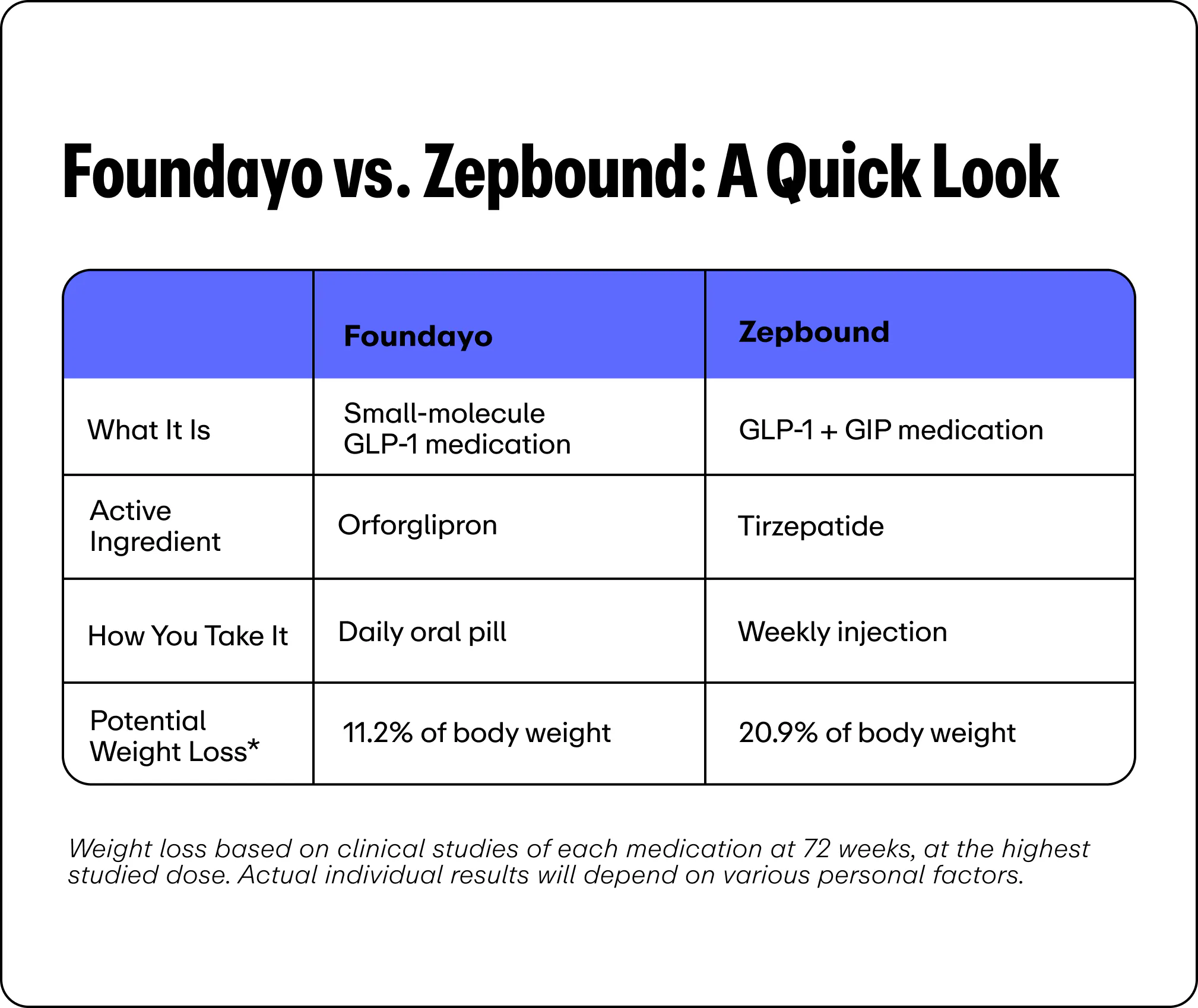
- Foundayo is a once-daily oral tablet. Its active ingredient is orforglipron, and it targets the GLP-1 pathway only.
- Zepbound is a weekly injection. Its active ingredient is tirzepatide, which targets two pathways: GLP-1 and GIP.
While Zepbound yields significantly higher average weight loss in clinical trials, Foundayo offers the convenience of an injection-free alternative.
There’s no single right choice for everyone. Which medication might make more sense for you is based on your personal circumstances, and we’ll dig more into that below.
How Do Foundayo and Zepbound Actually Work?
When you’re thinking through which weight loss drug could be right for you, it’s important to understand how Foundayo and Zepbound work in the body:
- Foundayo contains orforglipron, a small-molecule GLP-1 receptor agonist that can be taken in pill form. That small molecule size means that it can survive digestion and get absorbed normally through the gut, which is why it can be taken orally.
- Zepbound contains tirzepatide, a dual agonist that acts on both GLP-1 and GIP receptors. It’s administered as a shot, and because it targets two pathways, that contributes to its greater effect on weight loss.
When looking at Foundayo vs. Zepbound, it’s important to understand that they’re different medications with different active ingredients. But both work by slowing the rate at which your stomach empties of food, increasing feelings of fullness and reducing appetite. They both potentially quiet “food noise” and can help regulate blood sugar, too.
Daily Pill or Weekly Shot: What the Difference Feels Like
What does the experience of actually taking each of these medications feel like?
- Foundayo is taken as a tablet once per day, at any time of the day. You can take it with or without food and water; there are no restrictions about that (as there are, say, with the oral version of Wegovy, another GLP-1 medication).
- Zepbound is injected once a week with a single-dose pen or vial. You’ll need to stick to a consistent day of the week. Many people keep Zepbound refrigerated, though it can be stored at room temperature for shorter periods of time.
Practical matters are also worth considering if you’re deciding between the Foundayo pill vs. Zepbound. Do you have an aversion to needles? Do you travel frequently or do shift work that could make sticking to either a daily or weekly dose schedule difficult? For keeping a consistent schedule, it’s important to think about how each medication would fit into your life.
How Much Weight Can You Expect to Lose on Each?
The amount of weight that people lose on Foundayo vs. Zepbound varies individually. But based on studies of each medication, there is a difference in what you can realistically expect overall.
The two drugs haven’t been compared in a head-to-head trial, but you can get a sense from clinical research on each one. At 72 weeks:
- Zepbound: People taking the highest studied dose of tirzepatide lost an average of 20.9% of their body weight.
- Foundayo: People taking the highest studied dose of orforglipron lost an average of 11.2% of their body weight.
Individual results depend on a variety of factors, including your starting weight, the dose you’ve reached, how long you’ve been taking the medication, how well you’ve stuck to the dosage schedule, and the level of support you’re receiving—including whether you’ve made lifestyle changes. So the numbers above are averages; they’re not a prediction of how much weight you personally will lose.
Still, if maximum weight loss is your priority, the numbers are clear: Current trial data favor Zepbound for greater average weight loss, though that benefit comes with an injectable rather than a pill. If losing a smaller percentage of weight would get you in a healthy zone, then Foundayo may be an ideal option.
Side Effects and Tolerability: What to Expect From Each
For both of these medications, the most common side effects are gastrointestinal (GI), including nausea, vomiting, diarrhea, constipation, and acid reflux.
GI side effects are often most noticeable when starting treatment and when the dose is increased. If you’re already dealing with disrupted sleep or fatigue during perimenopause, adding GI distress to the mix can be challenging. But with both Foundayo and Zepbound, the dose is gradually increased to help make the side effects more tolerable. Your clinician can work with you to figure out the dosing schedule that’s best for your body.
Both Foundayo and Zepbound carry more serious warnings, including thyroid C-cell tumor warnings and contraindications for people with a personal or family history of medullary thyroid carcinoma or MEN 2. Again, your clinician will help you gauge any risks of orforglipron vs. Zepbound.
True Stories Of Transformation
What Do Foundayo and Zepbound Cost?
For many people, cost is a major factor in choosing whether to take a weight loss medication, and which one to try.
- Foundayo currently costs $149 to $349 for a 1-month supply through Lilly’s self-pay program, depending on the dose.
- Zepbound starts at $299 per month for the starting 2.5-milligram (mg) dose. The four highest doses (from 7.5 mg up to 15 mg) are available for $449 per month through Lilly’s self-pay program for eligible people who meet refill requirements.
For both medications, manufacturer savings programs and direct-purchase options can help lower the cost for eligible people.
Insurance coverage for weight management medications can vary widely from person to person—it depends on your individual insurance and your personal health profile. It’s definitely worth confirming coverage with your insurance company before committing to one drug or the other. (For a deeper dive, read about how much Zepbound costs without insurance.)
When factoring in the costs, it’s a good idea to look at the monthly out-of-pocket amount you’ll be paying over the long term. That’s a more realistic number to keep in mind than the sticker price of the medication alone.
Can You Switch From Zepbound to Foundayo?
If you’re contemplating switching from Zepbound to Foundayo, there are some important points to consider.
First off, it’s not a lateral switch—the medications have differences when it comes to how they work and their potency, and with both, results and side effects are individual. Your clinician can help you weigh the pros and cons.
When you switch from an injectable to an oral tablet, research suggests that you may preserve much of the weight you’ve already lost. In one study, people who had reached a maintenance level plateau on tirzepatide after 72 weeks and then switched to orforglipron retained an estimated 74.7% of their previous weight loss. (The study didn’t include a group that continued on tirzepatide, so we don’t know how switching compares with staying on Zepbound.)
If you’re already having weight loss success on Zepbound, it’s important to think through your reasons for wanting to switch to an oral tablet
“The real issue for a patient is to consider why she wants to change and how critical is that for her?” says Midi clinician Renee Fogelberg, MD. Before making any changes, speak with your clinician about your current dose, results, side effects, cost coverage, and reasons for wanting to switch.

What Should Midlife Women Consider Before Choosing?
Choosing between weight loss medications is always a major decision, even more so when you’re in the menopause transition. These life stages can change the weight loss equation because of declining estrogen and shifts in body composition. And an increase in belly fat can make it feel like you’re fighting an uphill battle.
Muscle preservation is also key in midlife, so when you’re losing weight, you should make sure to eat enough protein and focus on strength training, regardless of which medication you’re on—or whether you’re on medication at all. Bone health should also be considered, since menopause can speed up bone loss, and significant weight loss may compound that concern.
You can also discuss with your clinician whether to consider hormone replacement therapy (HRT, now commonly referred to as menopause hormone therapy, or MHT) as part of your overall menopause care. While HRT is not a weight loss treatment, it can help manage menopause symptoms for many women—and if, say, getting symptom relief helps you sleep more and stress less, that can have a positive impact on your weight.
Who Tends to Do Better on Foundayo, and Who on Zepbound?
How well anyone does on a specific weight loss medication comes down to their individual needs and preferences, among other factors.
Foundayo may be a better fit for those who have a strong aversion to needles, travel frequently, have unreliable access to refrigeration, or simply prefer the routine of taking a daily pill. Those trying to hit a higher weight loss target may want to discuss Zepbound with their clinician, since trials have shown greater average weight loss with tirzepatide (Zepbound) than with orforglipron (Foundayo). And if you’re already having success on the injections or your insurance covers the medication, those are also good reasons to consider staying with it.
Of course, for some people, neither of these medications may be a good fit. A healthcare professional, like a Midi clinician, is the best source for recommendations on other options, based on their assessment of your medical history, preferences, and current health.
How to Talk With a Clinician About Which One Is Right for You
When talking with a clinician about Foundayo versus Zepbound, bring along a list of questions, which may include:
- “Which one is more likely to work for my health history?”
- “What will my out-of-pocket cost be for each?”
- “How will side effects be managed, and how will my progress be monitored?”
A clinician who is familiar with weight loss medications and midlife health will do a baseline assessment and go over a titration plan for increasing the dosage of your medication at a safe pace. You’ll have regular check-ins for any symptoms or side effects and lab monitoring where indicated.
Be sure to share the full picture of your health with your clinician, so they can help you make the best decision. This includes any menopause symptoms you’re experiencing, current medications you’re taking, and your budget, since all of these factors can come into play.
At Midi, our clinicians are trained not only in weight loss medications but in midlife health, so your weight care can be managed in the context of perimenopause or menopause, rather than as a separate issue. A Midi clinician can help you consider your options and decide which approach makes the most sense for you.
When to Seek Care Right Away
While most side effects of Foundayo and Zepbound are GI-related and manageable, some symptoms call for prompt medical attention. Contact your clinician or seek medical care right away if you experience:
- severe or persistent vomiting or diarrhea, especially if you’re showing signs of dehydration
- severe or persistent abdominal pain
- signs of a serious allergic reaction, such as swelling of your face, lips, tongue or throat, or difficulty breathing or swallowing
- symptoms of low blood sugar, such as shaking, sweating or confusion—the risk can be higher if you’re also taking insulin or certain other medications that lower blood sugar
- a lump or swelling in your neck, persistent hoarseness, trouble swallowing, or shortness of breath
Key Takeaways
- Foundayo is an oral GLP-1 medication you take once per day. Zepbound is a once-weekly injection that targets both GLP-1 and GIP receptors.
- Zepbound has produced greater average weight loss in clinical trials, while Foundayo offers the convenience of a pill without injections or refrigeration.
- Side effects are similar for both medications and are primarily GI-related, including nausea, vomiting, diarrhea, and constipation.
- Switching from Zepbound to Foundayo is possible, though it isn’t a direct swap. It may affect how much weight you maintain or lose. A clinician can guide you through the process.
- For women in perimenopause and menopause, factors such as muscle and bone health, menopause symptoms, lifestyle, cost, and medication preferences should all be part of the decision.
- There’s no single right choice for everyone. A clinician can help determine which medication best fits your health history, weight loss goals, and lifestyle.
Frequently Asked Questions (FAQs)
Does Foundayo contain tirzepatide?
No. Foundayo contains orforglipron, a GLP-1 receptor agonist taken as a daily pill. Tirzepatide is the active ingredient in Zepbound and targets both GLP-1 and GIP receptors. Although both medications are taken for weight management, they are different drugs that work somewhat differently in the body.
Which is better, Foundayo or Wegovy?
When comparing Foundayo vs. Wegovy, neither medication is automatically better for everyone. Foundayo contains orforglipron, while Wegovy contains semaglutide. Both are GLP-1 medications, and both are available as oral tablets (Wegovy also comes as an injection). Because Foundayo is a small-molecule GLP-1, after taking it you don’t need to wait 30 minutes before eating, as you do with oral Wegovy.
Where can I get Foundayo?
Foundayo is available by prescription, so you’ll need to speak with a licensed clinician, like one at Midi Health, to see whether it’s appropriate for you.
What is the most effective weight loss pill?
There isn’t one weight loss pill that’s most effective for everyone. The best medication for you depends on factors including your health history, weight loss goals, side effects, and other medications you’re on. A clinician can help you compare your options.
Why are older people stopping GLP-1 medications?
People may stop GLP-1 medications for a variety of reasons, including side effects, cost, or difficulty maintaining the treatment routine. For older adults in particular, preserving muscle and making sure to get the nutrition they need can be important considerations.
If you’re in perimenopause or menopause and want guidance from clinicians who specialize in women’s midlife health, book a virtual visit with Midi today.
Hormonal change is at the root of dozens of symptoms women experience in the years before and after their period stops.
Our trained menopause specialists can help you connect the dots to guide you towards safe, effective solutions.
Whether you need personalized guidance or a prescription routine to tackle symptoms—including brain fog, hot flashes, sleep trouble, mood swings, and weight gain—we’ve got you covered. Learn more here.
Midi’s mission is to revolutionize healthcare for women at midlife, wherever they live and whatever their health story. We believe that starts with education, to help all of us understand our always-changing bodies and health needs. Our core values guide everything we do, including standards that ensure the quality and trustworthiness of our content and editorial processes. We’re committed to providing information that is up-to-date, accurate, and relies on evidence-based research and peer-reviewed journals. For more details on our editorial process, see here.